Certainty Is a Lie. Clarity Isn't. | The Casey Zeman Show #5 ft. Keith Cowing
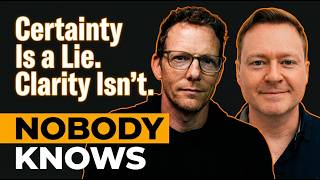
Casey Zeman talks with executive coach Keith Cowing about leading through change and uncertainty. Cowing argues that clarity of vision matters more than certainty, that single decision-makers beat committees, and that trust built on integrity and consistency replaces the illusion of knowing what's next.
Chapters
What's up everybody, it's Casey Zeman and this is the Casey Zeman Podcast. Yes, it's just my name. I've tried every other name for podcasts and I friggin' just had to say it and just use my own name. And welcome to the show where we dig into entrepreneurship, business, and all things as it relates to hypergrowth and the challenges, the good, the bad, and the ugly of building a business, a brand that you love. We talk about family, we talk about hardship, and we talk about massive success. And today I'm very pumped to have Keith Cowen here with us today. He is an executive coach for CEOs, CPOs, and he helps leaders find clarity in the chaos, navigating high-stakes decisions and driving results fast. I'm excited to talk to him today because obviously I, as my leg shakes, I think I'm one of these hyperactive CEOs who are always thinking into the future, thinking about what I have to create to compete all while navigating, you know, what, what, what changes are happening in the market, what changes are happening in the world and how I can ride that wave or Be crumbled by it, right? So he's also, by the way, the host of Executives Unplugged, where founders and executives share the playbooks they use to build world-class teams and companies. So Keith, welcome to the show and thank you for being here. I'm taking a breath.
Casey, thank you for having me.
Of course. You know, I want to, I want to talk to you about all this stuff. Obviously you got into leadership, um, and, um, and that had to come from somewhere, had to come from, maybe your own experience. I mean, I know that you have been a founder previously, so I want to ask you some of these questions like, what, why leadership, and how does that relate to your own journey and how you got here?
Ooh, tough question. And leadership means a lot of different things to a lot of different people. At the end of the day, it's, are people willing to follow you if nothing else because they're curious? And are you not just leading by authority, but are you leading by setting a direction and going that way? I think it's a few things tied together. I think I've always been an independent thinker, which is one part of leadership. I think I love building things and just from scratch, from the ground up. There was nothing, let's create it. I get a rush from that. I really love the teamwork. I think the messiness of scaling an organization was not something that came natural to me, or maybe I was particularly good at, at the time, and I've learned the hard way going through, making every mistake in the book. And that's a lot of what I work with founders and CEOs on, especially folks that, are by definition at the biggest moment in their career and trying to handle it. And so there's a lot of different areas within that, a lot of things I've learned, made a lot of mistakes, mostly by trying to emulate others, really, before I could figure out what leadership actually meant to me and how I can bring that to the world in my own flavor, if you will.
OK, well, based on that, what does leadership mean to you?
So there's a few different things that it breaks down to. One is clarity. Do you have a vision for the future? Can you articulate what success looks like? A shared vision where other people can literally look and see the same thing. So we're going to climb the mountain and be on the northeast ridge and watch the sun rise tomorrow morning. That's vision. And then being able to identify a path and help people get there. A lot of it's servant leadership, get out of the way, give your team what they need to be successful, and be willing to roll up your sleeves and be along the way, but enable them to achieve that thing. And then everything else is means to an end. So it's a mindset It's clarity, it's communication, it's communication, it's communication. Clarity is not you being able to understand it, but it's everybody else on your team being able to repeat it, which is frequently the piece that's missing. And then being able to enable them to actually do it. It's giving hard feedback even when it's uncomfortable. It's about everything that it takes to get everybody to see what success looks like, row in the same direction, and then get that cadence humming so that you're moving quickly.
Right. That's, I think, the biggest challenge. I mean, as someone who's a leader, I completely agree. Now I want to ask you a question. So, um, you know, leadership— what if there's multiple leaders and, you know, and multiple leaders are brainstorming multiple things and one leader feels that a direction— this added to the direction and that added to the direction can be layered together? Does that make the nuance more challenging when you— are you faced— what have you seen with success? Does there always have to be one mass head Or can it be multiple mass heads sort of as long as they come together? I'll let you answer that question instead of me trying to infer what you mean.
This is one of the trickiest ones. I'll tell you a funny story on an aside. There was a psychological study. It was actually on hens laying eggs where hens have a natural distribution of how many eggs they lay. And they took this group of hens and they put them in different henhouses. They took all of the top egg layers and put them in one henhouse. They expected a ton of eggs and they only got one egg because they all pecked each other to death except for one. And you end up with that. Scenario sometimes by accident if you hire a whole bunch of people that want to be CEO and put them in a room and don't give them structure. And so when you have a whole bunch of people that want to be the head, if you will, it takes time and energy and clarity. And there's some ways that process get in the way. I think decision-making process is actually one of the highest leverage things that you can do, is providing clarity for your team on what it looks like to make a decision. And so I am a big fan of directly responsible individuals. A single person makes a call. They have to get feedback from everybody. They need all of the inputs. They need the intellectual debate and the rigor. But at the end of the day, they need to make a call and they're accountable for that. If you picture an NFL team, you have an offensive coordinator that calls the play. And there's no question, when it comes down to 2 seconds and you have to call a play, that person's going to call the play. It may be a good call, it may be a bad call, and they'll get feedback on that. And they'll lose their job if they make bad calls over time. But in the moment, you can't group make the call or you just won't call the play and then you'll lose. You guarantee that you lose. And so— I'm a huge fan of pushing decisions onto individuals and forcing them to be accountable, but that also means getting all the input from everybody around them. And if you don't run the process well, that's part of your feedback as well. If you look at a spectrum from committees making decisions, one of the biggest committees in the world is the US Congress, and they design the US tax code. That's the output of that committee. On the other side, you have the iPhone, and the output of the iPhone was a small empowered team of designers that made great decisions. You cannot get the iPhone if you put it in front of Congress. 100%. Something tells me you've dealt with both of those products, the iPhone.
I mean, absolutely, absolutely. And so that's really interesting, like committee, you know, the sort of like stalled growth from any type of committee or any type of like, you know, group decision that, you know, that the more you add to the pot, the the more challenging of getting an outcome becomes, right? An outcome that actually has one linear direction. So that's very interesting to me. So tell me a bit more about you personally. Like, are you, so you've been there, done that. You were a CEO of a company before. Tell us more about that.
Yeah, I founded two early-stage companies. So I've been a founder in the early stage, and I've been an operator, a VP, a CPO in the later stage. And I've also worked for a couple companies that were just recently public at the time, LinkedIn, Twitter. So I've seen a variety of different scales and I've learned a lot about myself in the process, mostly by getting everything wrong the first time and then iterating as I go.
I mean, I think that I seem to— every experience I've ever had as a leader has been in the trenches and having to figure things out as I make and stumble, you know, on every bad decision ever made. What would you say? What would you say to, you know, to a company that, you know, uh, has been in the market for a while, like, uh, that, that, you know, uh, what, what do you say? Like, I'm curious about some of these things. Like, um, we're, we're talking about, we're making sort of a pivot, you know, we're at kind of changing some of the direction we're going because of AI and, and, and the components there. And we're, we're, um, adding kind of a suite of products, right? We historically were a webinar platform, but now We've rolled in a CRM, and we are now, because of that CRM, focusing a lot more on conversions, which we've been— that's kind of the vision that we've kind of— the shared vision that we have pushed. I am a co-founder, so we've created this vision of a conversion platform, like a conversion, you know, operating system, basically, right? Because that's what people get when they use like a webinar or tool like a webinar because it's used for sales and marketing and onboarding, which improve conversion rate overall. And because we've added the CRM component to it, now it kind of adds to that, right? Now it's like more sales on top of that. But with some of these elements, you know, what do you say about companies that do a big pivot? You know, or is, would you like, is that when you see something like that, That make you nervous? Like with their, they're making a big pivot or they're adding some of these pieces or, you know, um, like what, what's your, what's your take on AI and how AI is sort of, um, uh, is, you know, whether I say manipulating people's decision, decision-making or being a big influence in their decision-making. Are companies scrambling? Are they making the right move if they're going AI-focused? Like what do you see there in the market? Because I feel like it's not just us that are making these sweeping changes and big, you know, large turns instead of, you know, shorter, you know, smaller turns, right? What's your take on all of that?— you know, with what you're seeing right now in the market, and what's your thought?
So first of all, yeah. Anyway, I'll let you go. First of all, everybody's dealing with this. Everybody is trying to figure out what does it look like now. I'll give you a quote to kind of anchor how I see the world. We were interviewing— when I was at Flatiron Health, we interviewed a Navy SEAL who was coming out of Stanford Business School, and we were saying, well, we really understand your skill set, but how does your skill set apply here? What can you do here? And he thought for a took a second, then looked us dead in the eye and said, I am very effective at making critical decisions under pressure with limited information quickly. We're like, oh, yeah, we could use that. And I think that's very representative of where we are today, where every day you wake up and you have to reorient. You have to completely reorient of what does the world look like today? And now what are we going to do? And you have to erase a lot of the history. And you can't be biased by it, even though it's what you've always do. And that's really, really hard not anchor on what you've done in the past. And so, yeah, um, I think the people that lose will be the people that don't refresh and say, hey, brand new world, now what? You have to do that. Now, it doesn't mean you have to change, because some things will change, some things won't. But you have to ask the existential question: are there beliefs that we've held dearly that have served us really, really well that will hold us back going forward? Um, and what are those, and how do we change? And then, are there beliefs that we hold dearly that are still true? And you have to test them. And when you think about leadership, it comes down to clarity, Do you know what you're optimizing for? Do you know who your customer is? Do you know how you're differentiating in the market? It comes down to your team. Do you have the right people on the squad? It comes down to your systems, just how you operate the company, your cash, your customers, your tech. And it comes down to your, your energy as a human, as a person, just how you show up every day. And I think all of those are getting— you have to re-question them with AI. So on clarity, I'll give an example of my coaching. I coach and I have a background in product. I have— I've been a founder. And so I was looking at coaching CEOs, coaching heads of product, coaching directors. And when I first started, I said, well, what if AI blows up all of the coaching for the director tier? What if there's AI coaches that are just as good? What does that mean? What happens? And to me, it didn't mean existentially changing coaching, but it meant, well, maybe I have to go upstream. Maybe the budgets at the director tier actually does get eroded because there's stuff that's good enough. But the CEOs who have the decision-making power and really do value a confidential, you know, person who can give them a space to think through things and make sure they're making the right decisions, etc., that that still plays. But that means I have to position myself accordingly and focus on that and not go down the director route if I don't think that's the future. And so I think sometimes there's a painful— something that you could do today easily that you have to turn aside to go after the thing that's actually going to differentiate you in the future. That's one part of it. Team-wise, I see a lot of this right now, and it's hard, and it's messy, and it's the hardest thing is looking around the room and saying, now we're in a world that changes 10 times as quickly. Do we have people that can navigate? Not just people that know the route. It's not, do you know how to get from here to the store? It's the route's going to change every single day. Can you take a compass and a map and figure it out? And being able to make sure that you have those folks in the team and you have the right communication patterns, because you got to find out when things are going wrong immediately and whether it's working or not. And that, yeah, you know, seeking the truth. A lot of this stuff has always been around— your judgment, your leadership, your creativity. It's just all of a sudden been exposed, or it's 10 times as important now because you can't assume anything that happened in the past is true going forward. It may be, but you can't assume it anymore. And that the speed with which we need to test our assumptions has become uncomfortably uncomfortably fast.
Uncomfortably. Very true. And that, you know, because obviously it's like many, many companies don't necessarily pivot messaging or pivot strategy right away. Like they have, you know, especially, especially if you're talking about 100-year-old companies that, that have, you know, sort of all been, you know, they, they, how, how quickly can they pivot? How agile are they? Can they, can they really make these moves and sweeping decisions. But I think based on what we see in the market and what we see companies doing, they are making those decisions. They are making very strong decisions. And I think you're right. I think it's, there are points where now it's a question of like, can AI fulfill that role? How does it apply? There's a lot of, this is that educational moment. Right? It's like a lot of education, a lot of information that we are all having to consume at a rapid speed, especially as it relates to AI, to know how it will affect what we do going forward. Right? And so, not only is it about us as having to now learn and adapt, but it's, as you said, the team. The team has to know how to learn and adapt. It's using the AI tools, but not just using the AI tools, it's like, you know, it's like having to have like the feed of information sent, you know, almost like on a daily basis to know how to use the most recent up-to-date AI elements and tools and understand how that technology, if it's not applying right now at this very second today, how it may be applied a week, 2 weeks, 3 weeks, a month from now, you know. And so it's like, it's, it's a very interesting time in that regard. Um, you're right, everybody is moving and scrambling. What do you ex— what do you suspect may happen in the next 16 months with, with companies right now who are, I guess, especially software companies that, you know, like, because of all of this? I'm, I'm curious.
Let me pull my crystal ball out for a second. This is the, the range of potential outcomes feels broader than than I've maybe ever seen it. And I think it's one of those moments where multiple things can be true at the same time. In the dot-com bust, there were a whole bunch of companies that went to zero and the internet changed everything. Both were true. And I believe that AI is going to change everything. I really do. I also think that some stuff is going to get exposed and go to zero. And some stuff is overreaction where software as a service, as you've probably seen in the market, a bunch of companies have lost 75% of their market cap over the past year. And you had 10x multiples on revenue, and now you're down to companies being worth 3 times revenue. And you can buy a plumbing services company for 3 times revenue. So it's like not worth what software used to be worth. Is that an overreaction? I think in many of those cases, probably. And the market just hasn't figured out which ones yet. And so when you look at the different— I think you have to break down what AI means, like within a company, let's say. Into layers of— at the bottom is your system of record of where you store your data. I see companies doubling down on the systems of record where are they going to be able to charge as much in the future? Who knows? But they're not swapping out their ERP, they're not swapping out their CRM, they're not swapping out their— if they have Snowflake or Databricks or some kind of like fundamental database at the bottom, they're really committing at that level and saying, okay, this is our data. On top of that, we have context so that we can use AI effectively. On top of that, we have orchestration so we can have agents that do things. And then at the very top, you have the actual agents and you have the models and you have the apps. I think people are, are swapping those very quickly and experimenting with a lot of them. But then down the stack, they're, they're locking in because you need your data to be continuous over time. And so when companies look at that stack and say, hey, where are we going to play and where's the value going to accrue, they're placing bets.. And you have to know what you're betting on. Are you betting on you're a system of record, people are going to keep it? If you live on top of a system of record, do you need to become the system of record in order to, you know, have any space? Or are you going to move up the stack and just be like amazing user experience? I've been using Granola a lot. It's a recording and transcribing app, and there's a lot of transcription software out there, but Granola is working really hard, as you can tell, to innovate on the UI, which is hard., and it'll be really interesting to see where that goes. But that's their bet. That's their play. And I'm sure under the hood they have some better bets on data as well. You look at something like Notion. I've used Notion recently for a lot of my automation as a personal user. I'm a huge fan of that because it's structured and it's ready for AI. HubSpot I see as being structured and ready for AI too, because they're really investing in that world. And I don't think people are going to swap out their CRMs. And so I think there's some, some overreaction. Some companies are going to be worth a ton in the future. It's hard if you're public to be able to make that shift. The companies that are private and have founders at the helm, they can figure out what they're betting on, have strong clarity on it, and then just go for it. And everybody that wins are going to be the people that hit the gas and go for it. Just because you go for it doesn't mean you're going to make it. But if you don't go for it, I think you're just going to get lapped in this race.
So data of record. I really love that you said that. That's very interesting. I mean, I see companies that are, that are evolving from you know, where they find themselves, you know, middle market, wherever, you know, if they find themselves as a, you know, marketing tool, etc., etc., you know, it's like they're having to sort of build more. Like, we're kind of like moat strategy, sort of, you know, adding all the other components that our customers would want. Just building it into the system so that, you know, they, they, they, you know, if they're creating content, they're creating content. If they're pushing that content through a webinar, they're creating it that way. If they're pushing it into, you know, a hub, they can create it that way. They could pay and gate that content. They can, you know, so, so many points around that and how that applies to, you know, content that then translates to conversion, you know, down the road. So it's like, this is interesting that you even mentioned that. And I think you're right. I think there's a bit of— you have to be agile, you have to be able to pivot, and you have to be able to test market different segment pockets and know, hey, wait a minute, this is the one that I think is going to now move the needle, whereas before this this subset that actually we, we've had for a long time now is no longer even in existence. You know, it's like now having to sort of re-pivot, um, the where we're positioning ourselves in the market, which is a very interesting thing. So I'm, I'm curious. I ask these questions because I need a crystal ball, uh, so that I know if we're, you know, if we're going to be around, other companies are going to be around in in 16, 18 months.
So this is very, this is very interesting that I appreciate your, uh, your candor on, on my, my, my one crystal ball prediction is that the companies that learn the fastest are the ones that will win, full stop, that are, that are right than the competition. Yeah, you will find the answer because none of us know what it is yet. We literally don't. But if you're constantly reassessing every day and iterating based on the facts, making bold calls and moving, then you'll figure out what it looks like while the other people are still 2 iterations ago. And, and that to me is what's really going to get there. Obviously there's some strategic bets that have to happen, but I, I think that's one of the really key pieces. And what I would also say from a leadership perspective, which we were talking about earlier, is there's a difference between certainty and clarity. We cannot provide certainty in this world. It's a fallacy. We can throw that out the window and say, okay, nothing is certain, but we do have clarity. We know what we're betting on and we know what we need to believe for that to be true. And we know why we're betting on it. And here's all of the reasons and we're going to do it. And guess what? It's imperfect because everything's imperfect, but we're doing something and we're going to make it happen. And then as data comes in and we get results, we're going to refresh and we'll have clarity again on the next move. We will never be lacking in clarity. We're always going to be in this world lacking in certainty. You cannot give people certainty. And if you pretend to, I think it's just a problem in and of itself because you're almost guaranteed to be wrong at some point. But certainty is something as leaders I do think we owe the team.
I agree. I think that we can have a, you know, I was listening to another podcast around how like, you know, like some CEOs and founders have historically been, you know, some are very data-oriented. You know, you look at the data, you make the decision based on the data. Some are intuition-oriented. And I think early founders, early-stage founders have a lot— they have to rely on that intuition to be able to guide them. But I feel like right now there's such a lack of data that there is that intuition that has to almost be there again. You know, based on like here and there, like looking and doing some data analysis, but But ultimately, it's like, here's the gut feeling that I think we need to go in based on where we think the market's going to be at in 16 to 18 months, you know. So it's— so I feel like that is kind of more of a need right now, sort of this creative, like a creative founder or creative, you know, visionary is almost going to be a more important one than than a data set, you know, where it's like, you know, based on just solely data alone. What are your thoughts on that?
Yeah, I think trying to predict the future based on information that's already here is going to be really hard. And so I think data can give you a good feedback loop long term on if it's working, if your customers are sticking. Like there's certain things that you're really looking for. Yeah. But I don't think data is going to tell you the move to make. And I don't think AI is going to tell you the move to make. Trust me, I've used it a ton and battle tested it and sat down I don't think it has good judgment. But I do think it can help you frame things, and then you can apply your judgment. Judgment is still incredibly valuable and needed. And with good judgment, which includes data, but also the limitations of the data, then you push forward. I like the example of Facebook in 2007 when they unleashed the newsfeed. Before, you had to click on somebody's profile. There was no newsfeed in any of social media. When it first came out, there was a huge revolt against it because everybody thought it was an invasion of privacy to just see this stream of what everybody was doing. And every single data point in the company, from what I hear, pointed against doing it. All of the metrics were down. There were people literally lined up in Palo Alto, like, picketing outside the company. And Mark Zuckerberg just said, no, we're going to do this because it was a vision, it was a judgment. And, and that's a, you know, bet the company type thing. And now all social media is based on the feed. And so you couldn't have data tested your way to that. Now, there are other things when you're optimizing. When I worked at LinkedIn, we were running 100 A/B tests on the site at any point in time, and billions of dollars in the valuation of that company when it went public and sold to Microsoft were certainly due to these little tunings and optimizations throughout the business. But that's really tuning something that's working. If you're trying to place a bet on a fundamental 0-to-1 thing or a shift or a pivot, I think there's a lot of judgment involved. And I'll tell you one skill that people forget about that I think is one of the most important ones for CEOs right now is listening. Are you familiar with the 3 levels of listening?
Potentially. Go through them for me.
There's a co-active model which outlines 3 levels of listening, and it's a coaching thing, and I study a lot of coaching. And level 1 is when it's internal listening. So you're talking to somebody and you're listening to what they say. You hear the words, but your internal chatterbox is going on. You're trying to figure out what you're going to say next. You're trying to figure out your next question. You want to sound smart. Maybe you're thinking about those 3 tasks that you forgot to do and, oh, it's on my mind. I got to write it down later. What you're going to have for dinner, et cetera. Our chatterboxes go all the time. Level 2 is focused listening. So when you and I are talking, it's turning off the chatterbox. And literally, it's not about me. It's about you. I'm just hearing what you're saying. And then level 3 is global listening, where you're taking in everything, including the nonverbal stuff. What's the vibe in the room? How is— how are things changing? How are people feeling? Was somebody uncomfortable with this particular topic just because of the way they shifted in their chair? Like, I need to go follow up on that to figure out what's going on. And so when it comes to user interviews and design and coaching, listening is really important. And I think there's an analogy for that in the market right now where people are so frenetic right now that their chatterboxes are just running wild because of the uncertain times. And you have to quiet that and truly listen to the market and what your customers need. And that's gonna give you a lot of the intuition that you really need. And people forget that. And they're trying to sell, they're trying to push, they're trying to force. And sometimes if you listen, you just might find out the answer.
That's a really good point. There's so much, and this comes to the fact that there's just so much information always being thrown at us and our attention spans are lessening more and more and more and more and more, which obviously then makes it really hard to have that focus. As a guy who has ADHD, I think, you know, I tend to see a lot, hear a lot, and open myself up to a lot. But I agree wholeheartedly that that can be a damage when you're letting an external thing influence what you're doing in that very, at that very moment in time. And I've been, I feel like I've been someone who's done this, you know, in my life before where I, you know, I fall victim to this where I am, you know, I hear something and I'm like, we have to move in this direction. We have to do it. I heard it. It has to be the way. Now we have to take that action. And what I like about what you're sort of referring to is like, is like that focused listening of, of, still like thinking about how it, how this applies and is this external versus applied internal, you know, listening and data that we've already gained and had thoughtful discussions on and do we need to make this massive pivot just because we hear about it on social media, we hear about it from some Elon Musk interview, we see the market trend change. And so it's like, so it's very challenging to, it's easier said than done, those 3 levels of listening. It's important.
It's extraordinarily hard.
It's very hard.
But it's extremely hard.
Especially right now. I feel like especially right now. Can you dig into like, what are some ways to sort of filter that noise out? What are your thoughts on that?
Well, so the number 1 thing is just being aware of it. The first practice, it's similar to meditation where when you meditate, you get pulled out of your meditative state and you don't fight it, you don't combat it, you don't get guilty, you just bring it back. And so with levels of listening, the next time you're talking to a customer or a team member, you can simply practice it by just being aware. Am I in level 1 or 2 or 3? And if your chatterbox goes off, you know you're in level 1 and you just try to bring it back. And, you know, most of us live in level 1 most of the time. And if you can get to level 2 and then hopefully level 3, It does a huge good. You'll get drawn out. You'll end up back in one. You're like, nope, turn it off, get back to level 3. Same thing is true in sales. The best salespeople are not the people that speak the most. They're the people that speak just enough and then shut up and wait for all of the clues that they need. Because on the other side, people are still processing. If you give a big presentation and then, you know, the best salespeople wait a minute and they'll let it pause and then the person be like, but we have to get John from finance to sign off and he needs A, B, and C. It's like, great, now you have a clue. You can actually go win the deal. And if you had opened your mouth before that, you wouldn't have let them finish the thought because they're just thinking about it and you never would have known that. You would have lost the deal. And it's the same thing as a CEO in this market, but it's the market version of you're listening to Elon just did this thing. You're listening to Jack Dorsey just laid off half of the team at Block. You're listening to all of these things, but then listen a little bit more to what's really happening and And I think you're like, a lot of people have great intuition, but we let our chatterbox get in the way. And it's not the lack of intuition and judgment. It's turning off the chatterbox while you're listening. And if you can do that, it actually doesn't take time, but it takes focus. It takes mental energy. And a lot of that actually comes to your state as a leader. There's a— I facilitate workshops, and there's this saying in facilitation that state is more important than script. In other words, at the end of the night before when you're preparing, you shouldn't stay up all night getting the perfect preparation. You should sleep and come in energetic because how you show up is more important than having the exact sentences right. And there's times when that's not true, but a lot of times it is. State is more important than script. And so as a leader, you got to take care of yourself. It's the old-fashioned thing on the plane. It says put on your oxygen mask before helping anybody else. If you don't show up as your best self, then you're not going to be able to help everybody else manage through this chaos. And so ironically, I think just taking care of yourself physically, the old adages, lets you show up as your best self every day. When you show up as your best self, you have your full mental you know, a gas tank, and you have the energy to be in level 3 listening. And if you don't, you're, you're, you're just skipping the rest periods. It's like doing a HIIT workout, high-intensity interval training, but skipping the rest. Anybody who's done those knows if you skip the rest, you're not a superhero, you're just poor training. Um, yeah, so you got to show up as your sharpest self.
I loved, uh, yeah, I absolutely love that you're talking about this. As someone who has, has has been, you know, in the workshop world, doing workshops, teaching people how to run workshops themselves, or webinars, or, you know, speeches, public speaking, things like that. Like, all of those things resonate. It's more important to just be in the right state, as you said, instead of, you know, the right script. And because then when you show up and you're, you're And I've done the opposite where I've been like, oh, this presentation isn't perfect. Like, I need to change this and this and this and this around. And I'll spend hours of depletion on it. And knowing in my mind that I need to not do that, I need to not focus on that. I need to understand that my capability as understanding what I'm sharing is enough as me without this. Sometimes I even tell people to, you know, if they have a presentation— this is just going off on a slight tangent— but if you have a presentation, like, remove the presentation completely, put it away, and just focus on speaking to your audience directly. You will find that you are living in a higher state of energy, and you are now not kept within this box that the presentation has kept you in, right? And by doing that, you oftentimes create more of a connection, interpersonal connection with the people that are watching, and it feels better. You know, you feel like you're more in tune with yourself. So I love that you said that, and as I, you know, bring it back to a CEO position, CEO, I think those are important elements as well, that it's not so much about the perfect, you know, sort of template. It's about the state in which you're in to make good quality decisions going forward. And so I really appreciate that you even brought that and made that connection to being a CEO, being a leader, and having to push through hard decisions. Um, this was really, really great. I'm looking at the time. I'm trying to think if there— you know, I, I could probably talk to you for quite a while on these topics because, uh, I, I love, um, you know, I, I love that we're talking about AI, the state of the world. Let me just finally, finally ask another question. What, you know, with, with how things have changed again with where we're at. The world changes, I feel like things are moving a mile a minute. We, in the last 2 days, now we are effectively in a war. What's your take on these macro changes, these macro moments, and how those are now additional influences on what we're going to be doing. Can you talk a bit about, you know, on that topic?
Yeah, it's— the word that comes to mind is scary, where it's scary for people. And I think we underestimate how people feel when they're on a team. So when you think about leadership, people on your team, whether you want to admit it or not, they're craving status. They want to be represented and treated well in front of their peers. They crave certainty. We can't give them certainty right now. It's just been thrown out the window, and this stuff just accentuates that. They crave autonomy. They want to make their own decisions, do their own thing. They crave good they crave relationships, they crave equity and fairness. There's these things that humans crave. And there's only so many of them that we can give at any point in time. And so if certainty has been thrown out the window, well, then what are we going to do? It's like, I want to give you autonomy, but now I'm swooping into the details because I'm maybe pivoting this and founder-mode-ing it, etc. And I think we got to be really honest, like, I'm not going to take any positions necessarily on like, where we should go from a macro perspective. But I'll take the leadership view of given macro as chaos, What do we do in our team to be able to enable people to operate and make those decisions under uncertainty, which is extraordinarily hard? And when we wake up tomorrow, we don't know what's going to happen. Like, everything's on the table at this point. And if that's the world that you live in, then what can you do as a leader to give them trust in the process? And trust is— it may be a good thing to finish on here— is there are really specific components of trust. There is integrity, which is what you stand for. There's your intentions, which is what you optimize for. There's your competence— are you just fundamentally good at what you do? And then there's your consistency— do you show up and make decisions in the same way? The best leaders, a lot of times something happens and the team's like, oh, I know what she or he is going to do in this situation because, you know, the principles are strong, or at least they know the process you're going to run to do it. And so In a world of trust being eroded and disappearing everywhere and certainty being eroded and disappearing everywhere, I would say it's triply on your role as a leader to double down on trust and share with your team very explicitly things that demonstrate your integrity, like what you stand for, what your mission is, things that demonstrate your intention. What are you optimizing for? A lot of times they believe otherwise if you don't tell them. If you don't tell somebody, they're going to make up their own story, and guess what? Their story is going to be 10 times always worse. It's just a human trait. And then with the consistency factor and the competence factor, it's just you have to overcommunicate. And I actually think AI is amazing at this because you have AI in your meetings and your notes and all these documents. And then at the end of the week, you could say, hey, create a quick blurb to my team that shows decisions that are coming down the pike that we're about to make, how I'm going to make those decisions, what the key tradeoffs are, and outline this thing and that thing and what our goals are and what's changed in the world and what hasn't changed in the world. And I'm going to share that with them. And it actually makes a lot of the extra work to communicate, to generate the consistency, a lot easier. Where it used to be, that's the extra thing I never have time to do. Now, with a little bit of automation, you can do a lot of communicating that wasn't possible before, of not just summaries of projects, but how you're thinking about the world. And I think that sharing how you're thinking about the world with your company is one of the most powerful things that you can do right now to earn trust. And if you earn trust, then you're going to create a team environment where you can at least survive the chaos that is the outside world.
Right, right. I, I, I think you're right. I think what you're sharing is absolutely correct. I, I think that, um, you know, being able— it's like over-communicating. It's over— it's everybody also analyzing. I think, um, you know, I, I, I've always loved doing this, coming into meetings and brainstorming. Like, brainstorming has been my favorite thing, sort of like thinking about, are we making the right decisions based on this and that right now? Some people have said, Casey Zeman, that that takes away execution when you're, when you're too much in your, in this brainstorm phase or conversation, or where's the market, where are we at? It removes the ability to execute, um, uh, because we're kind of in this particular state. But I, I think based on what you're saying is You know, with the data that we have now, we can, we can summarize and say, as you said, make decisions and execute on those decisions based on some of the, some of the points and plans that we're now tangibly applying to what was brainstormed. So I think that is what I'm sensing from you is like, These brainstorming sessions might be a great way to not only build that trust, but also to have the conversations that now globally in your team, everybody feels or understands the same energy. And now it's a question of how do we attack that and to achieve the result that we're now searching to achieve, right? And it's all, all can be done in sort of an automated way, whether you're using— I've started, I've started using a couple of things. We have Microsoft Teams. Teams. So we have it, we have that built into any Teams session that we're running. You know, it's, it's Copilot's automatically going on and we can summarize some stuff. But I love that. But what we've started to do less is those brainstorming sessions, and I feel like we need to add those back in. And right now they're probably even more crucial than ever to, to have those as a, as a leadership that then trickles down to everybody else.
And one of the things I think you're saying there too is the framing of it, where I'll add that one of the most frustrating things when you're working as a team is when people are in different modes and they either realize it or don't realize it. So diverging, which is coming up with all these cool ideas, is very different from converging, which is we have 10 ideas and we're going to pick 2 and we're going to make a call and we're going to go. If somebody's trying to diverge while somebody's trying to converge, it just doesn't work. It's a huge amount of friction. And so you got to get people in the right mode at the right moment. And there's, there's a cadence for different things. Um, 3 quick examples. I see a lot of people dealing with team structure right now. A lot of people dealing with pricing where pricing is changing a lot. Is it usage-based? Is it token-based? Is it seat-based, et cetera? Um, and then a lot of people are dealing with how AI actually fits into their product and how they bring it to their customers. Each of those things may be in very different states of like, Okay, we need to diverge on like how our team structure is because we've got some brainstorming to do. Oh, but we're converging over here on pricing because we already did the brainstorm. We don't need more brainstorming. Like more brainstorming is just going to clog things up. We did that. Now let's move on. And so, you know, there's time boxing when it comes to brainstorming of you want just enough, but you go too much and, you know, it drowns people, but the right cadence, the right framing in ahead, ahead of time. So people know what to expect. And then, you can really get the creative piece mixed with, but we have to move fast to make calls as well.
I appreciate that you said that. There is a difference between the two. And I've been, I feel like I've been guilty of diverging when my team wanted to converge. But what we tend to see is like, if I come in with a diverge, typically they're like, all right, we're going to, we can add that to the list, but now we're going to choose what we're going to be focusing on. So we're going to take that, great, we're taking that, we're acknowledging it, but now these are the 3 things we're going to apply because these, you know, because we, we have to make a decision on this and that. So I, I, I, I see kind of both, and, and it's, it's too— it's a kind of a level of, um, of imagination and sort of, um, you know, all the elements of skepticism, cues in the market that, that apply to Diverge as well. And then execution is where, you know, the Converge is a bit more defined around execution and applying these, you know, very specific things to create, you know, to create the outcome that we're all trying to achieve, right? So this was really great, man. Keith, as I said, I could talk to you forever, but where— so thank you Thank you so much for sharing time with us today. And where can people find you? You know, I know you have the Executives Unplugged podcast. Any other place where they can find you? Website, etc., etc.?
Yeah, you can find my website. It's Casey.Zeman.coach. And you can also find my podcast Executives Unplugged. It's at Execs.TV.
Casey.Zeman.coach. That threw me off for a second. And I absolutely love that. That's what it is.
The full spelling is KeithCowen.com, but people misspell Cowen and Keith, and so I got a short URL specifically so I can verbalize it and people get it right. So far it's working.
KCcoach.coach is what it is.
Yeah. Yeah.
Brilliant. I love it. That's so easy. We'll put it in the show notes. Thank you, Keith, for your time today. Guys, go check out the podcast Executives Unplugged. Go to KC.coach, and if you're a CEO and founder, And again, thanks, thanks everybody for coming to the show. Please like and subscribe if you enjoy this and we'll see you in the next episode. Thanks again.
Thank you so much, Casey Zeman.
More from Casey



How to Scale Your Business With AI | The Casey Zeman Show Ep#7 | ft. Gary Guseinov & Sean Whiteley
Terrible at Golf, Great at Building an Audience | The Casey Zeman Show #6 ft. Kira Peterson