Welcome to the live webinar!

Casey Zeman shows how to build a webinar that converts. A 5% live conversion rate becomes 30-40% sales through follow-up. His platform auto-generates scripts, pages, and email sequences from a description of your audience.
Chapters
So the 3-part webinar sales method is part 1, establish authority and rapport. Okay. Part 2 is break false beliefs. All right. Yeah, yeah, and you're going to take about 15 to 60 minutes. This is the framework for a 3-part webinar sales method. So you're going to want to take some notes here. All right. So as I said, part 1 is establish authority and rapport. That's for the first 15 minutes. Part 2 is break false beliefs. That's going to be in that next 15 to 60 minutes. And that's where you're sharing, you're sharing kind of your framework and how, and how you were able to achieve your framework. And, and you're going to share the relatability of what you went through to help break their false beliefs. I'll share with you what that means in a second, but then part three is present irresistible offers, and this is where obviously in the last thirty minutes you got your offer that makes sense, your framework, and you've already handled a couple objections, right? So here's how psychological content works. All right, all right. So part one is you you introduce your framework. All right, which clearly presents the structure of your main product or service. Like here's an example. Like So my 5-module course shows you how to build a profitable online business in 90 days, right? Um, part 2 is you address their internal beliefs, right? So directly challenge common internal limited beliefs because this is what happens with people, right? They— here's an example. You might think, I'm not an expert yet. But you don't need to be a PhD. Your students are just a few steps behind you, and that's who needs your help. So it's like you have to handle the internal false belief that they're speaking about themselves, right? Oh, I'm not good enough. I can't do this. I, you know, I haven't gone through the training. I'm not a— you know, for webinars, I always say people think like, I'm not a neurolinguistic expert, so I can't handle this, or I'm a stutterer, so I can't do a webinar, or I'm an oversharer, so I can't do a webinar. And all that is false, is BS. Um, and that's your job to break that down, because like, if you are at that point in your, in your business where you're like, I don't want to get on camera and look like an idiot and, um, and say the wrong things or do the wrong things, you know what? Um, that's how I felt too. But what I noticed after having run webinars is that the audience was very forgiving because as long as I was just showing up, even if you know there were problems as I showed up, people still saw me showing up. You know, it's like bam! You get hit, you stand back up. Bam! You get hit, you stand back up. Bam! You get hit, you stand back up. And when you do that. There's a consistency of showing up. And I, you know, even though I was a stutterer, I'm gonna tell you right now, with my first year of running webinars, I did a— I built an email list of 14,000 people and I did $245,000 worth of course sales from webinars. All right, from webinars, that's what I was doing. And the idea was, you know, and the year before I was making $15,000. I made $15,000 the year before, and I had built a course called YouTube Revealed, and I launched it out and no one was buying it. Um, no one was buying it. And basically because of that, uh, um, I, I, I started to pivot and look for other directions. And finally someone said, have you tried webinars? And I said, uh, no. And they were like, here's what you do. Just go live and you share, you share information. I was like, okay, I think I could do that. So then I did. I got out there, I shared, um, information. I, I, uh, I, as I said, I was an oversharer, but people kept coming back. They kept coming back. And by the way, I was terrible at selling and I had not sold anything yet off the webinar. I was just kind of just wanting to do free no-pitch webinars just to connect and, and, and talk and, and kind of even remove the pressure, um, remove the pressure, um, from, from what I was doing, right? And so that's what I did. And, um, and basically from that moment, uh, people started asking me, Casey, do you have something to buy? You keep doing these weekly presentations. Uh, I was doing 2 to 3 live webinars a week And they were like, do you have something to buy? And I said, um, yeah, I mean, I have this course called YouTube Revealed if you're interested. And so they were like, yes, we want to buy that. And so I started selling it at a low price, like, uh, $97. But then I had someone who said, this course is too good, you should be selling it at $197. And so I upped the price to $197, and an amazing thing happened. I noticed that I had more buyers at $197 than I did at $97. Um, and then what happened— what happened after that, um, is, um, I had another friend who said, um, hey, I want to promote this, but it has to be $297. Um, okay, so $297. So I raised my price to $297. This guy promoted me, and what— what— and then I, I was— I was like blown away by what happened when I did it at $297. I had the same number of sales when I, when I upped the price to $197, but then I seemed to have better buyers. Like, I noticed that people weren't asking so many questions. I noticed that they were coming in and they were actually serious about, um, going in, getting into the, um, getting into my program. And so I realized that, oh, a buyer's— so, so, so pricing is actually a qualifier for finding the people that are going to take action versus not, right? And so then I had another affiliate who said, I'd like to promote this, but I need it to be at least $1,000. So I upped my price for this same program to $1,000. And when I did that, um, I only added 2 coaching calls, right? So that's what I did. I added 2 coaching calls. And once I added those coaching calls Uh, kind of a cool thing happened. Like, um, I, I sold just as many at the $1,000, but I had zero refunds. And the reason I had zero refunds is because, first off, I added a guarantee. Um, and the guarantee was that, hey, you know, go through my training. Um, and if, if you go through my training and you still aren't getting results You know, I'll you can I'll refund you your money back, right? Like if they went through the training and took action, did the modules, did the homework that I had at the end of the modules, then then and they still didn't get results, they would they would they could refund. Now no one did that. They submitted their homework, but because they submitted their homework, they actually did the result, right? They got the result, and therefore they didn't refund. And so that's what I noticed about pricing. And so when I got much better at that and better at that. I realized that, that I could sell off a webinar. I could get 30 people to show up on a webinar once a week and get 3 people to purchase my $1,000 program. And because I was able to do that week over week, I went from $15,000 the previous year in the whole year to now making about $12,000 every single month. And what happened in that first year is that it compounded. So instead of just 30 people, I had 60 people on and so on and so forth. And so it kept growing. And that's when in that first year I did about $245,000 in sales. The reason I'm mentioning that is because that was my progression of learning this process of my framework, you know, highlighting the internal beliefs that someone have that you need to break down. And then finally, part 3 is addressing external beliefs because oftentimes People think that there are other things that are going to stop them, like, oh, the expensive equipment and a studio. Like, oh, for me to get on camera, I need expensive equipment, nice mics, and all sorts of stuff. I can't do that, right? Or we had one client who was a child— they had a child psychology program and they were talking to parents and they were talking to parents, uh, all about, um, how to start at— how to get a child to start communicating at 1 years old. And what they— the parents had an external belief that they didn't have time to train their children, right? I have a full-time job, I don't have time to do that. And so we had to break that down and say, actually, this can be done over the weekend, it's an hour of commitments, uh, you know, every single, um, hour of commitment once, once a week. And so you break those barriers down by, uh, in that. So think about how this applies to you. All right, can you, can you think about how this can apply to you? If you can, put in the chat, um, yes, I can, or start to think about what it is that you can apply for yourself. Okay, now. Let's talk about revolutionizing the sales conversation. All right, this is the difference between selling information, which is a commodity, right? That's basically selling a product en masse on a mass platform, right? Or selling transformation, which is premium. So a transformational product is an offer that combines essentially essential information with practical tools. It's designed not only to execute a proven framework, but also to help customers overcome their internal and external limiting beliefs. This approach provides your customers with the shortest route to the result. Okay. All right. Does that make sense to everybody? I just want to make sure that you guys are clear on that, right? Secret number 1 is addressing their internal and external limiting beliefs. All right. And not overteaching. Number 2, is how to test your webinars before you scale. All right, and most people look— overlook this crucial step leading to stagnation, right? Testing bridges the gap between hopeful assumptions and proven results. So let's dig in. Now here's the fatal mistake: people record once, right? They create a single version without validating, right? They go from one webinar to like, now I want to automate the entire thing, so I'm going to put this make this as an automated webinar, right? Um, and I said automate immediately. They deploy it, uh, live to their audience and then, and then automate the whole thing and, and start running ads to it, and then the ads aren't working, right? Go figure. Hope for the best, cross fingers, and wait for results. But this approach hides the real objections. You're never— you'll never actually know what's not working because you never gave yourself the chance to see it live. But The data you need only reveals itself through human interaction. Like, here's an example. We had a client who also child psychologist. They they were doing pretty good on their webinars. Their webinars were converting at like I think ten percent to twelve twelve percent live and then five to seven percent automated. But so what we did because we're trying to scale up even from there, which those numbers were actually pretty good. But what we were trying we were trying to scale up. So what we did is. We know we went into the chat. So every, every webinar has, you know, chat roll, right? There's a chat roll here. And if you run multiple ones of these, there's many chat rolls. And so we went in and looked at all the chat rolls of his webinars. And then what was amazing is we noticed common trends. We noticed certain things that were happening and people were asking these questions that we weren't addressing before the pitch. See, that was the key that we were missing. We weren't looking at the data to tweak how we're coming, how we're showing up so that they now say, oh, I understand. And now it's, it's much easier. See, the pitch isn't the pitch. The pitch doesn't happen at the pitch. The pitch happens when you're going through your storytelling and showing how you relate to them. You're showing your uncommon solution, which is your framework and program. You're basically handling those internal and external beliefs, and you're not oversharing. You're creating transformation while you're working through these things, right? And that's the key here. And what I teach, and you guys, if you're in this, you've seen the Webinar Sprint Method, probably in my book, if you read the book at all. So the webinar sprint method is, you know, here's here are the four steps, right? You run and deliver a webinar live to a real audience, right? Number two is you review it. You analyze what landed, what fell flat. Number three is you refine. So you make targeted adjustments based on feedback. And number four, you run again with improvements. All right, and here's the thing: most breakthroughs happen between runs four and five, right? Four and five meaning four and fifth webinar. You're really starting to get cooking, right? People are you really things are starting to come together. It's pretty awesome how it how it all starts to how it all starts to flow. And you know what? I noticed I'm not on my. Normal network. Let me see if because I know we had some connection stuff. Let me let me see again. I'm I'm pulling from a different network. So that's so interesting. Is this not work? I wonder if this network isn't working. Yeah, this could be this could be on my side with weird internet stuff. Are you guys still hearing me though? I just want to check in for those who are here. If you can still hear me, let me know. And I apologize for the for maybe for what's going on. I think it's the internet on my side, but it's one of those things, man. It's all this stuff kind of happens sometimes. But the the webinar sprint method, it's like this, and you could take a screenshot of this if you want. So this is basically it's it's a week worth of promotion, right? So. On Monday, Tuesday, and Wednesday, you're promoting this webinar. You're, you're putting it on social media. Maybe you're making a Facebook Live event and, and you're telling everybody on social about it, and you're pushing hard for 3 days. You're sending, uh, emails to your list to get people to show up, right? On day 4 is when your event happens, right? Your live webinar. You're kicking it off. You're sharing the value. You're sharing the transformation. And then Friday and Saturday, 2 to 3 days, okay, you have the replay open. So it's a 48 to 72-hour replay window. And by the end, you have the urgency and scarcity, meaning that the offer and whatever fast-action bonuses you have are ending 3 days after your webinar, right? That's how that works. And what live testing reveals is Live user sessions uncover critical friction points that, you know, that screw with conversions, right? See, unlike replays, real-time reactions expose subtle issues that impact users' engagement and outcome, right? So confusion points pinpoint the exact moment users become distorted or disengaged. Emotional resistance identifies subtle hesitations and objections. Through users' questions, or if you have their cameras up and they're in the room with you, you could check with their body language, right? Or clarity gaps, right? Uncover missing explanations that leave users uncertain about the next step, right? That's what testing reveals. And the whole point of this is you validate your offer, your message, how you show up to your audience, and that you know your audience's pain points before you ever automate. Okay, and once you've iterated on your webinar and observed consistent conversion patterns, you're ready to scale. So you pull the best performing version, right, that yields the most impactful result. Okay, and then you automate it into a like-live experience. Obviously that's using EasyWebinar. We have that full automation. That's how EasyWebinar started, as an automated webinar tool that allowed you to scale your best presentation through, through poll, having polls and offers. And basically this same experience can happen in an automated webinar. Okay, basically that's how that works, right? Um, and then monitor and optimize continuously. That's the key. So evergreen works after testing. Skip the testing phase and your evergreen webinar becomes an expensive experiment instead of predictable revenue engine. All right, that's kind of what happens. Now, once your webinar converts— are you guys with me still? Put a 1 in the chat or send thumbs up or, uh, some other reaction, uh, so I can see if you guys are still, uh, rocking and rolling with me. Okay, let me know, let me know, let me know. Um, and, uh, so once your webinar converts live and then moves to an evergreen funnel, scale becomes a system problem, not a sales problem. Okay, let me say that again. Scale becomes a system problem, not a sales problem. All right, and what that simply means is like you now are putting the system together, and it's those subtle minor tweaks and refinements that you measure. So secret number 3 is how to scale without burning out or adding complexity. And this is where system matters. Growth should be simplified and not complicated. Okay, so why scaling breaks. So you should take notes here as well. Scaling fails when the underlying foundation cannot support increased weight. Businesses often stall due to like the operational friction, right? And not a lack of demand. So like as an example, If you have disconnected tools like siloed platforms like webinar, email, CRM, all that can impede a real clear flow that creates gaps, right? Another one would be missing follow-ups, right? Critical leads slip through the cracks. Inadequate timing and tracking leads to lost opportunities and slow execution. So tasks that should take minutes consume hours, right? Every campaign becomes a complex project, not a simple deployment, right? Complexity kills momentum. Every additional tool integration or manual step creates friction that slows growth. Okay, these are the things that can break things. So the solution is an all-in-one shift, right? So the— and the market has evolved, y'all. Like, this is what's happened over time, right? To Smart businesses are abandoning fragmented tools. They want like an all-in-one, and that's what we've been working on our end. So the old way was sort of Frankenstacks, right? Because Halloween is coming, so we can talk about that. So webinar tools, you know, plus email platform, plus CRM, plus automation, plus analytics. These are all separate things that you'd have to buttress together, right? They constant integration maintenance, data living in multiple places. Manual export-import workflows, learning curve for basically every tool. But here's the thing, the new way is a unified system, a Moat system, everything in one command center, right? Built-in integrations that work, single source of truth for all data, automated workflows across functions, and one platform to master, right? So it becomes less tech, more leverage when your tools work together seamlessly. You spend time on strategy instead of troubleshooting, right? Um, and so that's why I wanted to introduce you to, uh, the new EasyWebinar. But here's what I'll do here. Um, so you see my— I'm right here, y'all, so you can probably see me. Um, uh, I'm gonna send over this right here. Um, let me see if This comes up.
But before you go live, there's the script, the registration page, reminder emails, your offer, CRM, and all those integrations. And then you're live. Questions come in, polls open, and people start to engage, click, and buy. But when it ends, who showed up? Who showed intent? And who needs what next? When those signals are split across different tools, follow-up loses the context that makes it relevant. The live room is only the middle. What happens next is where attention becomes revenue. So, what if that entire journey stayed connected? Meet EasyWebinar, the webinar revenue platform. One connected system from idea to revenue. It starts with your idea, your audience, and your offer. EasyWebinar AI creates your webinar script, branded registration page, reminders, polls, and offers, all in your brand and voice. Then, when you're ready to go live, EasyCast multi-streams that same webinar to YouTube, Facebook, LinkedIn, and more. So your webinar goes wherever your audience already is. And when someone's ready to buy, the journey doesn't break at checkout. EasyPay keeps checkout inside the webinar experience, so the purchase stays connected too. Every registration, question, poll response, viewing signal, click, and purchase stays tied to the person in EasyCRM. Now, follow-up responds to intent and action, not just attendance. A no-show gets one next step. An engaged prospect gets another. And a buyer gets the right next step. Then, when the live webinar ends, turn that same webinar into replay, simulive, automated, or evergreen. With audience context, purchase data, and follow-up intact. So the same conversion system keeps working 24/7. And now you can see the entire path from registration to revenue. Learn what drove revenue. Improve what comes next. EasyWebinar, the webinar revenue platform. Turn attention into revenue. You only wanted to run a webinar, but before you go live, All right, now let me know, can you hear me now?
Does my microphone work for you now? Um, Sheila, can you hear me? Let me know, let me know, let me know. Um, all right, let me go back and share my presentation. Okay, continue where you left off. All right, so here we are. All right, so basically what this is, is this is— I'm gonna, I'm gonna change my layout. I'm gonna come over here. I'm actually, I'm gonna bring myself, uh, I'm gonna take me off camera right like that. Is that okay? Um, okay, so back to no sound. So Sheila says no sound. Um, uh, and Katrina says no sound. Okay, all right. Um, let me reconnect and see if you can Hey, you guys, can you hear me? Let me know, put a 1 in the chat or just mention in the chat if you can hear my voice. I'd like to know. And we put up a handy-dandy poll that if you have time, it would be great to fill in. What's up, Mike, Rob, Dimitro, Chris, Kathy, Puneeth, Juan, Steve, Stuart, Chris? There's more more of you guys coming in the room right now, so that's good. Yes, you can hear me okay. Great, great, great. Um, awesome. And and do you see me? I'm I'm in the corner. I'm in this pocket corner. Shh! Don't tell anyone I'm over here in this secret corner. Okay, good. How about over here? Does that tickle your fancy? Is that a better position? I feel like the way I'm gonna probably do this is, you know, I'm gonna probably do it this way. You know, okay, we're gonna do the picture-in-picture. I think that's the plan. Thank you guys for being here. You know, we're gonna be sharing some stuff today. I'm pretty excited. And I will probably also remove my face every so often just so I don't have to look at it. But just so you guys are clear, I see the camera is over here, but I'm down here manning all this on my desk on my MacBook Pro right here. Okay, and for those of you who are brand spanking new to me or anything else that I've done, hello, I'm Casey. I'm the founder of EasyWebinar, and today I want to share with you Uh, some good stuff. We're going to talk about webinars that, that sell themselves, right? And how experts basically turn cold leads into buyers with, you know, with webinars. And, and then basically they, they get really good at running webinars, and then they leverage one specific webinar after they've tested out live webinars over and over and over again. They get really good at it, uh, and then They have a main asset that they put into their business as their heavy leverager to get more sales and leads in their business. Okay, we're going to be discussing that on today's call. Then, so I'm going to be sharing with you some some shifts that you'll want to pay attention to that are going to be that are happening this year. I'm then going to go in and show you how it used to take. Several. It used to take a long time to build a webinar, right?
It did.
I mean, let's let's face it. Let's be honest, okay? It's you know webinars. They are. It's the highest level of of content of conversion content. It's conversion content basically, right? And content that's conversion-oriented content is hard. The hardest thing to create because it has so many different psychological elements to it. You know, you have to paint the picture of of understanding your the the. The problem that your audience is facing, your solution being the uncommon solution, and then the outcome that you want people to achieve. So there's so many different things and elements on that. Well, we realize that because when we would get messages in the comment box, it would be from people saying, I just haven't started, I haven't started, I haven't started, Casey, I haven't started. And it sounded like, is this the same person punking me over and over again? But it was true. They hadn't started. Now listen, my my belief system is this: you just start. It doesn't matter when you're ready. Okay? You just put yourself right up here and and show you in front of the camera, and you just go. Right? If you have a product, service, whatever, you are an expert. It's all up here. People want to see this in the the brain, everything that you have. Maybe there's elements of controversy. Maybe there's elements of of pain and problems that you went through trying to figure out how you can make the business you're doing work or whatever you discovered, right? Your sort of hero story discovery. They want to see all that, right? And a lot of us have blocks around that. So, and by the way, in a world of AI-driven madness, Yeah. It's very important to have your own way that you talk, communicate, and connect. It's not outside of you. You just be you. You just be the most you possible, right? So share stories. Like share, I always share in my webinars that, you know, I was a course creator who was struggling to try to figure out how to generate sales. And it was true. And while all that was happening, I was going into foreclosure with my home. And, you know, and I was in default and literally I was like having, needing something to work. And when I started using webinars to sell my online courses, programs, software, that's when everything clicked. That's when I was actually able to make a consistent living. And in that first year of using webinars as a newfound course creator, I made about $245,000 selling my online courses. Whereas the year before I made $15,000.
Wow.
And that's when I almost lost my house. So again, these stories are your— these stories are basically your, like, blueprint that helped you evolve to the next stage. And if you don't share them, then you're doing a disservice to your people. And especially, as I said, in this AI-driven world, they want to see all that. They want to hear all that. They want to be with you on that journey. Through that, right? So that's that. I want to preface this entire experience that we're going to be talking about with that first. Okay. All right. Because my belief is that, hey, all you have to do, you buy a platform like EasyWebinar, you come in, you push start, you know, or let's go, or you, you, you, you know, you buy it, you go live, right? Like with this system, you can go live with YouTube. You can go. Yeah, I can make this. This exact system right here, this is what you're seeing right here. I can push that into YouTube and I can also push it into LinkedIn and Facebook. And the power of that, being able to stream your audience and being able to share, is the baseline for anything you need to be doing right now. Like, that's ultimately how you get your message out into the world, okay? So again, my belief is do it messy, let it happen, right? And, uh, and don't hide from, hide from it. Don't hide your story. Um, and so, so those are my very strong beliefs here. Now, in this particular call, I am going to be sharing with you some very specific things. So buckle up. Um, my, my goal is that it's not more than 45 minutes. And, um, but by the end, there are some opportunities to, uh, to work with, uh, my team, myself, um, and, and do some cool stuff. So, so, um, I'm gonna, I'm gonna start digging in if that's cool. And, uh, and we're gonna, we're gonna get into this here. And I'm gonna just go full screen here so you can get the full effect. Now, before I even begin, tell me a bit more about your business. Go ahead and put in the chat what Who is it that you serve? What is it that you do? And you know that I want to know. I want to know more about you, um, uh, because it's, it's always, you know, it's, it's important. I want to— Lois and Peter and, um, Ray and Steve and Kathy, Mike, uh, you know, everybody put, put more— tell me about you, all right? Tell me about you, um, and how you want to use webinars, you know, or maybe you are using webinars, or maybe you haven't used webinars because You have some of the blocks that I mentioned, you know. Does that feel— it makes sense? Okay. Rob says retirement and tax strategy strategist. This is so funny because I literally typed that in when I was showing off our AI builder, and that's the one thing I didn't share with you, right? I believe that it's important for us to just, you know, get on camera and flow, but a lot of you guys have blockers with that. So what we did in EasyWebinar is we removed the block of people saying, I, I don't know how to start, I can't get started, I can't get it going. We basically built an AI webinar builder that allows you to create a full webinar experience from script to pages to emails, um, to polls that are intended to, to understand your audience more, polls that are intended to validate your offer more. Um, to the offer itself. So all of that is built and baked into the system. So we have removed the problem of I can't get this going because now you can get it going in 5 minutes, and we're going to talk about that. Okay, we're going to actually be sharing about that. Um, uh, LOL and annuity, cool, cool, cool. Invented a device to collect, uh, to collect, store, and deploy different types of lines, extension cords, ski ropes, rappelling ropes. Wow, that, um, that is— Steve, that is super cool. I mean, I feel like I need that behind my desk. It's like, uh, it's, it's atrocious back here. Um, uh, Stuart Miller, healthcare information technology leaders and executives, uh, both on the customer side and vendor side, with a parallel audience of 55+ solopreneurs who are AI challenge but want to get their shit done. Um, or S-H, you know, uh, uh, T done. Uh, Mike Watson. Mike, what's up? I'm a, I'm an Episcopal priest. I teach about serving others, uh, changes your life. Wow, I love that. I absolutely love that. You know, we've had, um, folks that have used EasyWebinar before to actually bring in people to their congregation. Joshua Wagner, I think his name is, he was a priest and he brought people into the congregation by using EasyWebinar. I don't know if I have that slide deck today that I'm using, but I could always show you what he said. He said EasyWebinar was the backbone to his bringing in more people into the congregation. I thought that was so cool and very interesting. Kathy said, I train therapists and healers to get extraordinary results with their clients. That's— I love that. I absolutely love that. We have a lot of healers, a lot of therapists who have used EasyWebinar. And, you know, part of this is you guys all have— these are your brands, these are your businesses. So, you know, you probably have stories as to why you got started in this field. You know, there You know, I, all of you have such probably so interesting stories. Stuart, by the way, I interviewed. So Stuart, who's here, I interviewed him in a podcast. So, you know, I would love to, you know, maybe we could do some podcast stuff with you guys, you know. And of course, what I also love is I love highlighting customers. So, and their stories and how they got started and how their webinars are doing and like talking and digging into those things, those. Those are, that's really what fuels me to kind of help, uh, clear, you know, clarify like what you need to be doing in your messaging to really hit it home. Um, says, I help businesses and individuals to find their unique voice and use it on stage as leaders, um, as entrepreneurs or brands. I do this through live and digital learning experiences. That's awesome. You know, I, I really could use, I really could use the, the onstage stuff. Um, that's the, that's the next phase I want to do. We want to do some online events. Um, I'm sorry, live events. I say online events so often that I— that's the baseline of how— what I say. So no, but I want to do a lot more. That, that's so cool. Um, and so you're, you're helping people with, uh, finding their unique voice. I love that personally. You and I resonate because I feel that's a bit of my calling as well, trying to help people with finding their unique message, their unique story that then aligns with the content that's high converting, right? Like, let's say, let's be honest with you, a webinar is all about creating high converting content that has your story peppered in psychology and all the things I just, I mentioned before. And those are so important. Juan says, GTracker is a daily KPI tracking and early warning system for businesses with multiple units. Um, I don't understand all of that. I know what KPI is. Um, businesses with multiple units— are we talking physical units or, um, or, uh, unit as in like, uh, like, uh, human resources or anything like that with that that you need to, to sort of track? Yes, like restaurants or hotels. Oh, I see. I got it. Got it.
Got it.
Got it. Wow. That is so— that's really cool. So you have a software company, right, Juan? That's what you're running. And you're thinking webinars for, you know, a couple of things on this. You know, webinars also break down a complex, right? A complex can be sort of like over— it can explain too much, right? It can be like Like, just imagine, you know, just imagine you're a calculus teacher and you're trying to cram 10 years of calculus into a 1-hour webinar. That's what we commonly do as people that are, you know, experts in our field or, you know, and we like to share those things. And I am one of those people that have done that. I am a classic oversharer. When I first started out, I would do free no-pitch webinars where I was just vomiting information. Now, that was okay to some degree because people still, they resonated with me. They came on, they connected with me because they liked that I was just sharing value. However, when you get to a conversion metric and looking more at conversion content, conversion content has to have a layer of clarity and transformation. And clarity and transformation, clarity being the top of before transformation, Because clarity creates the transformation. And if you have an over intellectual topic that is over, that can be a bit too confusing depending on who your audience is, right? Because obviously you need to speak to the audience that you're talking to. So if they know some of this, some of these languages, like they know KPIs, cool, but maybe they don't know all the rest of it. Like you have to Fill in the gaps. It's really important to find the clarity, you know, and this and the simplicity in the confusing, right? And I know I have companies that they have long sales cycles, and they have long sales cycles because a security or cyber company that has to explain what the product does, and and and they didn't have a webinar, so they they had this these long sales cycles. And what I've been working with them on is. Reducing those sales cycles by creating a little clarity and simplicity in the message so that when someone comes through a message that has clarity, transformation, and takes away the confusion, they then go into a book a call at that point with a sales rep or some sort of rep or consultant that then has such an easier job of actually converting those people to clients, right? That, that's what I want for you guys. I want your webinar to be the heavy lifter. I want it to be the thing that once you get good at it, it allows you to basically, um, uh, you know, take, take a break. You know, you can like, once you, once you have a really good webinar up, you can drive more traffic to it. You can have, uh, teams on the backend taking calls. Um, and you can close more deals, and it systematizes storytelling, right? Story, but, but content that is conversion content and storytelling, right? That's what it leverages. Okay. All right. So I hope that was okay to kind of, uh, uh, go, go into a little blast right there, but this is really helpful for me to know who you guys are, what your, what your businesses are all about. You know, you can always share with me some of the challenges you might be facing, right? Like, and thank you guys for those who did do the poll. I really appreciate it. To sell my products and services, all the above. You guys want to generate qualified leads, sell programs, onboard clients. Yeah, so the majority of you to sell your products. I appreciate that. And, you know, I want to ask you, let's see, are you thinking that you wanted to, and maybe you don't know yet, but are you thinking you want to run a live webinar because you like, you know, to do this, you know, have the energy in the room? Are you thinking you want an automated one where it runs on autopilot? Or are you thinking a mix? Like, I want to have both. And if, and if you are putting both, that I'm gonna tell you right now, that is the key. That is the key because first off, you can't get good with an automated webinar until you start doing live webinars so that you understand what your audience's needs are and you validate your offer and you validate the message completely through front to back. The other part of this is that in an AI-driven world, it's still very important, I think, to have this connection. You and I coming together, meeting, you know, not face to face necessarily, but talking, communicating. You get to feel who I am. I get to understand a bit more about you. That's still so important, especially with watered-down content and watered-down communication that AI has created, right? So I still think it's very important to have both because automated storytelling, I don't think, is going to go anywhere. In fact, Creating pre-recorded video sessions that are your perfect show is just such a great way to do exactly what I've said around qualifying your buyers and closing deals while you are doing other things, you know. Automated webinars helped me to go through the adoption process. When I was going through the adoption process with my kids in 2016, I wasn't available in the business. I went back and forth to Haiti like 19 times. I had to learn Haitian Creole. And in that year, I was just not around, but I had 2 strong automated webinars running and my team. And they were, so we were able to still generate sales in that year. I remember in 2016, I think we, yeah, we generated a decent number, you know, high 6-figure sales. Just because we had automated webinars going constant, you know, consistently while I was doing other things. Now, your your other things could be sitting on the beach and chilling and drinking Mai Tais. That was my thing while I was going through that that very specific time in my life. Okay, let's let's dig in, you guys. You guys ready? You guys ready to dig in? And and thank you for thank you for. Being here, thank you for spending time with us. Let's let's dive in. So, you know, before I say anything, let me tell you what this is not. Okay, this is not a webinar about how to be more engaging on on camera. Okay, I I'm not I'm not it's not about that. This is not a master class on storytelling framework or slide design or how to write a better hook. And it's definitely not one of those vague sessions where someone tells you to grow your audience and trust that money will follow somehow. If that's what you came for, is probably not. Webinar for you. But if you are a business owner, consultant who already has something you're selling, you're tired of revenue, of your revenue depending on your, you know, on how it shows up, like maybe some months it comes in, some months, you know, are better than others, then, you know, you're in the right place. So stick around. In this session, I'm gonna show you how webinars are working today in 2026, okay, and why most people sometimes think they don't, and how to build a webinar funnel that actually can sell your offer without you having to manually chase every lead. So guys, stick with me, and again, people think this stuff doesn't work. We're in an AI-driven world, but trust me, you're gonna wanna stick around. In this session, I'm gonna show you how webinars are working in 2026, why most people You know, think they don't, and how to build a webinar funnel that can actually sell your offer without you having to manually chase every lead, as I said. And more importantly, this is not just something you're going to hear about during this session. I'm going to actually walk you through the exact process of building a webinar funnel from scratch live. Okay. And under, well, you know, under 10 minutes, I'd say more like 5. You know, is more accurate, right? So you can see what makes it work, what needs to be in place, and what it takes to, you know, to get this running in your own business. Now, if this is your first time, hey, I'm Casey Zeman. I'm the founder of EasyWebinar, and listen, after watching thousands of webinars succeed and fail, I can tell you this: webinars are not dead, but what bad webinar funnels are. Okay, so let's get into that for a minute. Okay, I want to be clear about something. I'm not the best webinar presenter you're ever going to encounter. I'm not the loudest voice in marketing. I'm not here because I have the most followers or the biggest personal brand. I'm here because of what I've seen. You know, EasyWebinar, the platform we built over a decade ago, has hosted Almost 200,000 webinars, 69 million people have registered for events running on our infrastructure, and 23 million plus of them actually showed up and attended. And so when you sit at the intersection of that much data, you stop having opinions about what works and start having pattern recognition. I didn't figure out what works by just testing my own funnels. I actually watched 196,000 other people test theirs. Does that make sense? I've watched coaches with massive, massive email lists convert at 1%, and I've watched people with 200 subscribers close $400K in a single webinar series. So I've seen it. I've seen what works. And I've watched brilliant presenters launch beautifully made webinars that made nothing. And I've also watched awkwardly nervous, first-time people read from a script, okay, and generate more revenue in 30 days, uh, than they made in their previous year combined. Okay, the difference is, is never what people actually think it is. It's never the presenter, it's never the niche, and it's never the size of the audience. And I want you guys to really understand that right now. Okay, that's, that's what I want you to be, uh, really clear on. So let me show you what that looks like in practice, okay? Because I want you to see this as an outcome, not a concept, okay? So let me introduce you to Carla Bessinger. She was running live events, real events. She was good at them and people were showing up, results were happening, but the model was exhausting and it didn't scale for her. Every dollar of revenue required her own physical presence, right? She transitioned though to a fully automated evergreen webinar system, smart scheduling, you know, automated attendee sequences, seamless integrations, and she basically stopped showing up manually and the funnel kept selling. That is the idea. It kept selling and the results Excuse me. We're basically $5 million from one evergreen webinar funnel, not a product launch, not a seasonal campaign, a single automated system running continuously while she focused on the work she actually wanted to do. Now, but there, she's not the only one that has had success. Here's Susie Moore. She's an author. She's a life coach. She's 25 courses. Course sales is what she sold in three weeks from Evergreen Webinars. These are her words, not mine. It removed the exhaustion of going live every time. Listen, I I don't want to beat up live webinars again. As I keep saying, I think they're super important. But if you're if you want something where it's selling 24/7, moving. Moving the ecosystem from live into automated is the best and most powerful way to do this, right? And she she she did this by the way with two different niches, two different price points, and two different audience sizes, right? It's it was pretty incredible. And what's really interesting is you see that both of these ladies, you know, started to figure out like. What running these webinars without their daily effort actually looks like, right? So it's pretty powerful stuff. Okay, before I go further, I need to address though the thought that just crossed your mind, right? You might be saying, webinars, really? In 2026? People Don't people just scroll past these now? Well, I want to give you the honest answer, not the marketing answer, right? Yes, bad webinars are dying. Webinars that are basically a 45-minute PowerPoint followed by a sales pitch, those are dying and they deserve to die, okay? Because they're boring and they waste everyone's time. Are you— let me— I'm going to go out on a limb. Are you bored right now with me? Just let me know if I'm boring. To you, let me know. I'll take it. I'll accept the boring. I'll take it. Stuart, the two exclamation points. Thank you, brother. Thank you so much. I really appreciate it. So yeah, because they're boring and they waste everyone's time. But conversion webinars, the ones that build a psychological buying environment rather than teaching presentations. Those win. Okay. And I want to show you something that most webinar experts will never show you because it demystifies the magic they prefer you to believe only they actually possess. Okay. And, and let's dig on that. A webinar that converts is not about charisma. It's not about slides. It's not about how well you tell stories or how confident you sound on camera. It's a 4-part engineering problem. And engineering problems have solutions. So let me take you inside each layer because understanding this is the difference between building a webinar that teaches and a webinar that sells. Okay, so let's dig in. Okay, so let's dig in. Here is the layer 1 is the pre-frame traffic. Okay. Now here's the thing. Most people treat their webinars as a starting point. They build their presentation, set a date, run an ad, and hope that the right people show up. But the webinar doesn't start when the webinar starts. Okay. It starts the moment someone sees your ad. Okay. Um, and/or any promotional content that you use to invite them to the webinar. That ad or email or post—it's not just a promotional tool; it's the first frame through which your prospects will interpret everything that follows. The creative, right? You with me? The creative they see, the headlines they read, the promise that gets them to stick—all of that is doing psychological work before you know a single slide is ever shown. And and it's it's and if. And if it attracts the wrong person, someone who isn't a really good fit for your offer, no presentation on earth can actually recover that. You'll have a room of people who are never going to buy and you'll walk away thinking webinars don't work. That's what we see a lot of, right? The webinar worked fine, but it was the preframe that failed. Okay. So let me dig in the next slide. So here's something that took me a long time to actually fully, fully appreciate. Even after watching 196,000+ webinars on our platform, the single biggest variable in a webinar conversion rate is not the script, it's not the slide, it's not the presenter. A conversion webinar built for the right audience will convert at 15 to 25%. The exact same webinar presented to the wrong audience will convert at 1% or 2%, and the presenter will conclude that webinars don't work. You know, this is the thing: targeting isn't just a media buying decision; it's a pre-framing decision. Every targeting choice you make—the interest, the behavior, the lookalike audience, the exclusions—is a decision about. Whose beliefs, fears, and aspirations your webinar will actually talk to, right? If you get that right, your content lands on fertile ground, and you get it wrong and your presentation is talking to people who are never going to be convinced regardless of how well you delivered, it's not gonna work. The preframe begins in the targeting before the ad is ever written. Savvy? You guys with me? Let's keep going. All right, let's talk about layer 2 belief architecture. Okay, now here's the fundamental truth about buying decisions. Nobody buys a product, they buy a belief. They buy the belief that the outcome is possible. I mentioned this outcome-oriented marketing. This is the, this is the whole thing. The belief that it's possible for someone like them, the belief that this particular solution is the right vehicle for it. And the belief that the risk of acting is smaller than the risk of staying where they're at. Let me say that again. The belief, uh, the risk of acting is smaller than the risk of staying where they're at. Okay, if you need to write that down, that's very, very important. You know, um, every one of those beliefs has to be built. None of them arrive pre-installed. So when your viewers show up on your webinar, they carry a set of existing beliefs about your category, your market, their own situation, and what they think a solution is or what they've dealt with and tried as a solution. And most of these beliefs are working against the sale, not because they're bad people. It's because they've been burned before, you know, because they've been burned before, been disappointed before. Or simply haven't been shown the right evidence yet. So your job in layer 2 is to teach them things, right, that move the needle. Your job is to move them from belief by belief, okay, from the left column to the right column. Everything you teach in the webinar should be reverse engineered from that journey, basically. Does that make sense? Let's keep going. Okay, before you can, you know, before you can shift a single belief, you have to earn the right to be listened, basically listened to. That right is called trust, right? And it can't be declared, it can't be claimed by listing your credentials, it literally has to be felt. So here's how trust is actually built inside a webinar, not through your authority statement, but through 3 very specific things. Take notes here, okay? The first is specificity. When you describe your viewer's situation in language more precise than you would use themselves, when they think, how does this person know exactly what my Tuesday looked like, right? Trust is built in that moment, not because you're impressive, but it's more so because you understand them. Does this make sense? Hold on, let me drink a sip of coffee. The second is honesty. Truth is built by telling people things that cut against your own interests, right? Acknowledging what doesn't work, admitting the limits of your approach. A presenter who only says flattering things about their own method is a presenter who is clearly selling. A presenter who is willing to say, this won't work for you if, is a presenter who is trusted. All right. So take that down. Show, let them know that you're not infallible here. Okay. The third is being seen. People trust people who see them, who reflect their aspirations, their fears back to them with accuracy. And by the way, without judgment. Right? When your viewers feel genuinely seen by you, their defenses are lowered. And once the fences are down, you know, the belief can actually shift. All right. And the thing is, trust is not a soft prerequisite. All right. It is literally the conversion mechanism. Every, every other thing, everything else in layer 2 runs on top of it. Okay. Let's go to the next slide. Okay, all right, here's the thing: data informs, story though transforms. This is one of the most important distinctions in a conversion webinar and one that most consistently is misunderstood. You see, when you present a statistic, your viewer's brain receives it in the analytic cortex, they evaluate it, they decide whether to believe it, They file it away. But when you tell a story, their brain does something completely different. It simulates the experience. Neurologically, the listener lives through what you're describing, not as an observer, but as a participant. And when they live through a transformational story, something happens that data alone can never produce. They begin to imagine themselves In that story, right? And that imaginative leap— that could be me, right— is the precondition for every purchase decision. This is why the case studies in this webinar are not testimonials. They are transformational arcs. For example, Daniel Ryan wasn't just a guy who, who made $1 million. He was someone who had the same positioning problem you may have right now, but who found a specific mechanism that solved it. And who crossed the threshold that changed what was possible for him. Your story matters because it gives you, your viewer, basically a map. Not a map of your journey, a map of their journey. The before, you know, the before they recognize, you know, the catalyst they're looking for, and the after they want it to be enabled, right? When the story is told well, belief doesn't need to be argued. It's just felt at that point. So let me dig in. So here's something I learned from watching thousands of webinars succeed and fail. The fastest way to undermine your credibility is to announce it. Hey, I'm, I'm expert. I've helped thousands of people. I've been in this industry for 15 years, right? Your viewer has, you know, they've basically heard one of those statements from every presenter who ever pitched anything, right? Those statements have been so overused and they are basically now basically like trigger mechanisms that creates skepticism rather than trust, right? Real credibility looks a bit different. It looks like knowing the exact numbers behind a specific result. It looks like describing a pattern you've observed across data. Not just your own experience, right? It looks like being willing to say what doesn't work, right? Which demonstrates that you know the terrain well enough to have an honest opinion. And most powerfully, real credibility looks like understanding your viewer situation before they describe it. When a presenter says, you probably think webinars are dead, and that is exactly what the viewer was thinking in that moment, they don't question the presenter's credibility. Now they They basically wonder how the presenter knew it, right? That's the credibility you want. Not a title, not a badge, not a, you know, years in business number. The credibility that converts is the credibility that demonstrates you understand this space, these people, and this problem at the level that only comes from genuine depth, right? Genuine expertise. Right? Knowledge. Everything we covered in the preframe layer, the data from 196,000+ webinars, the specific results across specific niches, the pattern I've described, that is all credibility infrastructure, right? Not stated, it's demonstrated because it's what has been rattling in my brain for so long, right? So Let's keep going. All right, now this is the practical execution of everything covered, okay, and is the single mindset shift that separates a webinar that educates from a webinar that converts. So when most people build a webinar, they sit down and ask, you know, what do I know that would be useful to share, right? Well, the question produces Content, it does. Good content, sometimes. Interesting content, you know, occasionally. But content that converts, girl, almost never. The question that builds a conversion webinar is, what does my buyer need to believe that they don't believe yet? Start there, okay? Write that down. List every objection, every doubt, every limited belief that stands between your viewer and the purchasing decision. Not the objection they've they they'd say out loud. It's too expensive or something, but the ones they'd never admit, right? I've tried things like this before, and I always end up not following through. I'm not the kind of person who can build a real business online. This probably works for people who are already successful, but not for someone at my stage. You know, every piece of content you build goes on the right side of that. Table basically, right? Designed specifically to dissolve one of those beliefs. The webinars that, that the webinar that results from this process doesn't feel like a pitch. It basically should feel like a mirror, right? Your viewer watches it and thinks, this person understands exactly what's been holding me back and they just removed it. Okay. That is, that's, that's teaching is selling, right? Right? And it's the core of layer 2. All right. Layer 3, let's dig into layer 3, the offer mindset, right? The offer mindset, the offer moment. Okay. So if you've done layer 1 and 2 correctly, if you put the right people in the room and move them through the right belief arc, then by the time the offer appears, something very specific has happened in the mind of your viewer. They have arrived at a question, not, you know, not what are you about to sell me, but how do I actually get this? That's the question that you want their minds to move to. That shift from passive viewer to active seeker is the entire goal of the first 40 minutes of a conversion webinar. And when it happens, the offer doesn't need to be pitched. It needs to be revealed, right? The difference between a pitch and a revelation is everything. A pitch is imposed on the viewer. It arrives as an interpretation, the moment where the teaching stops and the selling starts, and everyone in the room feels the gear change, you know, and you lose half the audience, right? A revelation arrives As kind of like a completion, right? The viewer has been walking towards it without knowing it, and when it appears, it feels not like a surprise, but like a conclusion they were already getting to, they were already about to reach. And then the entire architecture of layer 2, the belief shifting, the trust building, the storytelling exists to produce the single moment That single moment, this single moment when layer two is done correctly, layer three almost takes care of itself, right? So it's a natural fold right into it.
Okay.
Now let me see here. Okay. There's one sentence. In a conversion webinar that carries more weight than anything else. It's not the hook, it's not the close, it's the transition to the offer. Okay. Most presenters signal the transition in a way that broadcasts, right? The selling is about to begin. They shift their tone, they change their posture. They say something like, now let me show you how you can work with me. And the entire room consciously or not feels that change in energy. Okay, that signal activates the viewer's defense— defenses, like their defenses go up. The trust that was built across the 40 minutes of content can erode in one clumsy sentence. The transition should feel like continuity, right? Not interruption. It should make the offer feel like the logical next chapter of the story that you've been telling, not a commercial break, right? The framing that works is like, by this point in a session like this, like this one, the question has already shifted in your mind. It's no longer whether you should build this, it's how. Let me show you exactly what that looks like, right? Notice what this does, right? It narrates the viewer's internal state back to them, which itself is a trust-building act, and it positions the offer as the answer to a question They've already started asking, you know, one sentence done correctly. It makes everything that follows feel earned, right? So again, that sentence was, by this point in a session like this one, the question has already shifted in your mind. It's no longer whether you should build this, it's how, right? And let me show you exactly what that looks like, how you are going to build this. You see, a webinar is, is the what and the why. And your program is the how. Okay. So once you, when you position what it is, why it's going to be beneficial for them, um, you're going to transition into, and here's how you can make it work for you. Right. And, and, and I built this thing for you to get you to that point. Okay. All right. And, and you'd notice what that does. It narrates the viewer's internal state back to them. Right. One sentence. All right, let's keep going. All right. Okay. All right. Now let's talk value stacking. Value stacking is one of, is, is, is one of the most talked about tactics in webinar selling and one of the most consistently executed incorrectly. See, most presenter stacks feature, you know, you get this, the platform, you get the CRM, you get the course, you get the community. Normal value is $9,000. You pay, uh, you know, only $1,188, right? The viewer's brain receives that as a list and immediately starts discounting. Do I actually need the course? I probably won't use the community. So really I'm paying about $1,188 for the platform And the CRM, right? The feature stack invites the viewer to mentally subtract their way to a smaller number. An emotional stack, okay, an emotional stack works completely different. So instead of listing what they get, you describe what each component prevents and removes or makes possible. The CRM isn't a CRM, right? It's the mechanism that catches the 30 to 40% who will buy within 90 days but will disappear without a follow-up system, right? The AI builder isn't a template tool. It's the elimination of the 6-week, $15,000 process that used to stand between you and an actual live webinar funnel, right? When each component is framed as a specific problem solved or as a specific fear removed, The viewer stops calculating and starts feeling, and feelings close sales that calculations you know never do. And by the time the price appears, they shouldn't be asking, "Is this worth it?" They should be asking, "How did they manage to price it this low?" Basically, right? One second. Every purchase decision. At its core is a risk calculation. Okay. On one side of the scale, the cost of buying money, time, potential embarrassment if it doesn't work. On the other side, the benefit of buying, the outcome, the transformation, the problem solved. Your job in layer 3 is to not just make the benefit side of that scale as heavy as possible. It's also to make the costs side as light as possible. And a guarantee does exactly that. I love guarantees. One second. But they have to be done right. Here's the important reframe. A guarantee is not just a defensive measure to reduce refunds. It's an offensive closing tool. When a guarantee is framed correctly, it doesn't just lower the barrier to buy, it actively makes the case for buying. You know, like try it in 7 days, build the funnel, use the platform. If at any point in those 7 days you decide it's not the right fit, email my team, we'll refund you every dollar, no interrogations, no hoops, right? That framing does 3 things simultaneously, right? It demonstrates confidence in the product. I'm willing to tell you, you know, let you test it out because I know what happens when people get inside. It removes the primary objection to action, right? There is now no financial risk, uh, to trying, and it reframes the decision. The question is no longer, should I buy this? The question is, do I want to try this for 7 days? And, and almost everyone, if they're genuinely interested, they say yes to trying something for 7 days, right? The guarantee is, is not the safety net. It's the basically the final push. So let me give you an example, a simple diagnostic you can apply to your own webinar, okay, or to any webinar you've ever watched. So ask yourself this: at the moment the offer is introduced, does the energy in the room change, go up or go down, right? In most webinars, I'll tell you what, it goes down, right? The tone shifts, the presenter becomes slightly more Formal, slightly more salesy, the pace changes and the viewer who is wired to detect exactly this shift feels the presentation end and the pitch begins. That energy drop is a conversion killer and it is entirely avoidable. In a conversion webinar, the energy at the offer moment goes up because the offer arrives at a solution to a problem. The viewer has been feeling for the last 40 minutes. There is no tone shift because there is no conceptual shift. The teaching and the selling are part of the same arc, right? The offer is not a departure from the content. It's the conclusion of the content, right? When this is built correctly, viewers don't feel sold. They feel served. And that distinction between feeling sold to feeling served is the entire, you know, difference between a viewer who closes the tab and a viewer who clicks the link. Right, right. One is something that happens to them; the other is something they choose. Right? Okay, let's dig in. Let's go to to layer four, the follow-up engine. Okay, you guys with me so far? Yes, you you good? You guys with me? Do a check-in. Say yeah, we're here. We're good. Taking notes. You know what what have you? I'd love to love to hear. Okay, wait. Wendy just asked well twelve minutes ago. I have Easy Webinar and set up everything. How is the best way to sell Easy Webinar? Oh, I don't have a lot of emails yet, but I provide one-on-one coaching for my program. I authored a course and a membership. I'm having a hard time selling it, and ads are so expensive. Any suggestions? Yeah, well. Yeah, Wendy, I have a couple thoughts. Um, oh, we'll continue going through and just, just, uh, uh, stay, stay here for a little bit. And, um, I think we have a solution. Um, uh, I have EasyWebinar set up, everything. How is the best way to sell? Are you saying sell your programs with EasyWebinar? I think— is that what you're saying? Or do you want to be a partner or an affiliate to promote EasyWebinar? Sorry, just wondering, uh, just to get clarity there. Sell my programs. Got you. Yeah, yeah, I, I, I think I may have a solution, so stick around and, uh, and we'll, we'll just go through this and I'll— we'll, we'll talk, um, in a little bit here. So, um, the webinar is not the sales event, it's the activation event, right? It's the activation event. Okay. This is the most underestimated layer in the entire conversion stack. And statistically it's the most profitable one. Here's the mistake almost everyone makes. They treat the webinar as the sales event, right? They measure the success of the webinar by how many people bought during the live session, the cart closes, they count the sales, they move on. And here's the thing. They leave most of their revenue on the table. The webinar is not the sales event. The webinar is the activation event. Okay, it's the job. It's its job, basically, the webinar is to create genuine interest, shift and necessary beliefs, and make a compelling offer. When it does the job well, it activates a group of people, right? Some of whom are ready to act immediately, but many, many more of whom are interested but not yet decided. Okay, so Understanding this doesn't just change how you build the follow-up sequence in your webinars, but it actually changes how you think about what a webinar is for. Okay. This is where you're going to have a little bit of a mindset shift. A lot of people think, oh, you're just buying off the webinar, but really the webinar is already doing the conversion for you. But Sometimes people don't buy right off the webinar. Okay. The conversion reality, only about, only about like 5% of your attendees are ready to buy at the moment the offer appears. You know, they're sold, they click, they purchase, nothing else is needed. Right. But there's another group. And this is the group that separates profitable webinar funnels from unprofitable ones. And that represents about 30 to 40% of your total attendees. See, these people were genuinely interested during the webinar. They considered the offer. They may have even had the checkout page open, but something stopped them in the moment, right? Their phone rang. Maybe they got distracted by a work notification. They decided they wanted to think about it overnight. They had a question that didn't get answered, right? Life, basically, in all its mundane, unavoidable forms. Interrupted the decision at exactly the wrong moment, right? These people would will say yes. Many of them will, but only if they're caught, right? So without a follow-up system, they go back to their lives. The moments pass. The urge fades. You know, within 48 hours, they've half forgotten about the you know forgotten the webinar happened, and within a week, they've moved on entirely. And with the right— but with the right follow-up system, these people are caught, their questions get answered, the urgency is recreated, the decision point is brought back to them in the right way at the right time. So, you know, out of 100 people, only 5 will take action immediately, but another 30 to 40 convert within 90 days if you have a strong follow-up system that keeps them engaged and delivers a personalized experience based on their interests. Okay. And here's, uh, here's where most follow-up systems fail, right? Not because they don't follow up, but because they treat everyone the same. The person who watches the entire webinar, uh, reached the offer and didn't click is very different from the person who registered but never showed up in the first place, right? One has high intent, the other needs like a re-engagement, right? And that same goes for someone who dropped off halfway through the webinar versus someone who opened the checkout page and didn't complete the purchase, right? These behaviors, these behavioral signals, they signal different levels of interest and they should trigger different types of follow-ups based on that. This is where most systems fall short, right? They send the same message to everyone regardless of what happens. What you need to do is simple: track key behaviors—watch time, clicks, checkout activities—and group people into segments like hot, warm, and nurture. Send follow-ups that match their level of intent, right? Their level of interest, level of intent. It's not about perfectly predicting psychology, right? You can't do that. It's about responding to real behavior, though. And that shift from generic blasts to behavior-based follow-up. Is what captures 30, 40% that otherwise would just completely be lost. Okay. So let me make this completely concrete, right? Because I want you to feel the weight of what this layer means before we move forward. Okay. This is the same webinar, same audience, same offer. Okay. Without a follow-up engine, here's the numbers, right? Without a follow-up engine. 1,000 registrants, 600 attendees, 30 buys at a 5% live conversion rate, right? Still pretty good. That's $30K in revenue if your offer is $1,000. With a properly built follow-up engine catching 30 to 40% of the remaining interested attendees, we're talking about $120,000 to $180,000 additional buyers. Okay. That's $150,000 to $210,000 in revenue from the exact same number run to the exact same audience. Okay. And that, so you can see that is not a small optimization. It's a 5x to 7x difference in output from the same input. The people who built a webinar funnel and didn't see results, this is almost always why. They, they built layer 1, layer 2, layer 3, and stopped, right? Uh, the webinar ran, some people bought, they, uh, the, the rest disappeared, and, you know, they concluded that the model was kind of flawed. But the thing is, the model wasn't flawed. Layer, layer 4 was basically just missing. If you ever run a webinar and felt like the results were, you know, underwhelming, right? I want you to hear this clearly. You did not have a webinar problem. You probably have a follow-up engine problem, and that's the most fixable problem in the entire stack. That is literally the most fixable thing, right? So, you know, you get one layer wrong Underperforms. You get all 4 wrong, it compounds. Here's the thing about this model that took me years to see clearly, right? These 4 layers are not genius, right? They're no secret. They are a repeatable engineering pattern, right? The same pattern runs underneath every high-converting webinar funnel in our platform's top 1%, right? The people running those funnels aren't better than you. They aren't more talented. They just found this pattern first. That's it. And you know, in about six minutes, you're gonna watch me build all four of these layers live inside a single platform from scratch. Not a concept, you know, as an actual working funnel. Okay, so what I'm about to show you will change change your math on this. Permanently. Okay. Now, before we jump into the demo, I want to ask you something specific. And I want you to take it seriously, right? The people who get the most from this session are not just the ones who just watch. They're the ones who build alongside me. So in the next few minutes, I'm going to show you exactly how to build a complete live revenue-generating webinar funnel from scratch. I mean, from start to finish in 10 minutes, actually, maybe shorter. Let's see if we can do do it. All 4 layers of the conversion stack built in real time. And if you have your account open while I do this, you can leave today with a working funnel, no notes, no ideas, a live funnel, right? If you're only watching, you'll leave with inspiration and inspiration without implementation kind of fades fast. So right now, if you can get full access to EasyWebinar Professional for $1 for 14 days. This is not a demo. It's not stripped-down trial. It's the full platform, the same one used by 8-figure coaches. I made this available exclusively for everyone inside this webinar so you can build with me instead of just watching me do it. You can get this $1 offer on our website. We created a special page for this session. I think it's going to expire right after this. The link is— let me see here. If we even have it saved. One second. I'll have— I don't have it here now, but here's the thing. I can get support. I think Rakesh is on. Rakesh, can you find that dollar, the $1 link? I think it's on the thank you page of this particular webinar. Can you grab that and put it in the chat just in case, uh, these lovely folks don't have it yet, right? Um, but you are able to build alongside me if you have it. This is something, uh, you, you— this is— and this is not something you get outside this webinar. We had this in the flow. Um, so if, uh, if you have it, um, that'd be great. And if you're already a customer, that's, that's great too. Okay. Okay. There we go. Thank you. Thanks. So the link is there. You can jump in, right? And I want every one of you to leave this session with a complete, fully functional funnel ready to go. And for those of you who already are inside, welcome. You're about to build something real. Uh, for everyone else still watching, it's $1. There's zero risk. So, okay, let's do this. Let's, uh, let's dig in. All right, so I'm gonna, I'm gonna share my screen, okay? And we're gonna, we're gonna, uh, dig in and, and show you some, uh, some fun stuff here. All right, now, um, let me just pull myself back up. All right. You should see my screen, and inside here, this is inside Easy Webinar. Now, what I wanted to do is show you what you can build with basically with our new AI builder. Okay, so this AI builder removes all of the you know I can't do this myself. Right, and I want to, to change that. I want to show you that it is possible, um, that you can do it. And, um, so what I'm gonna do is I want to actually, um, grab, uh, let me see, because I wanna, I wanna do this right. So I'm gonna, I'm gonna go full screen so you can see better. Now I want to grab one of your, um, what you guys do. Right. Okay, so I'm gonna grab healthcare information technology leader and executives both on the customer side and vendor side with a parallel audience of okay, okay, okay. Let me grab this one. I'm gonna grab yours, Stuart. Right. And, uh, and then I'm going to go, go back over and, and, uh, add that. So build, build me a high converting, high ticket. Okay. So I'm going to say your, your, what you offer is a, is high ticket, right? High ticket. Um, Build me a high-converting, comma, high-ticket, high-converting webinar to sell and position my high-ticket consulting, consulting program. Let me. Okay. My niche is healthcare information technology. I help leaders and executives both on the customer side and on the vendor side. Okay. Um. Um. With a parallel, the parallel audience of 55+ solopreneurs who are AI challenged but want to get, uh, um, who are AI challenged but want to leverage AI, to leverage AI to streamline their lives and business. Something like that. Let me— a high-converting webinar. Somebody— okay, my health is healthcare information technology. I help leaders in the— both on and on the vendor side with a parallel audience. Okay, um, leverage AI to streamline their lives and their business. Um, Stuart, what are, uh— let me just ask very quickly, what are some Just tell me very quickly, or you can, you can put it in the chat, um, if as well. Um, awesome. Uh, you may— okay, if you don't have credits yet, guys, we'll, we'll, uh, don't worry, we can, we can, we can help you, uh, with that. Um, but Stuart, very quickly, help me with this. Um, what are you, what are you solving for them? What's, what's the, what's the— you're wanting AI to do what? Like, what What's the pain point that they're having? They wanna do it, but they're not able, they don't know how to leverage it effectively. They're, you know, they're, are they, you know, they know that this is the way to go or are they like, you know, what's, give me a little bit more about who the audience is and what their needs are, if you can. And if you, While you're doing that, let me just look. Go back here and look. Okay, so I want to leverage AI to streamline lives and business. They are working in a field that changes at the drop of a hat and want to have the skill set set to know how to navigate. The waters of AI in the right way. They, as, as an older segment of, of people, they feel that sometimes their knowledge is, uh, is not as great in this field or not as great around AI and that they are having to play catch-up to a younger audience. I don't know. Does that sound about right? Maybe day-to-day. Okay, I see what you wrote. Let me grab that as well. All right. They want to accelerate their day-to-day consulting to research clients, research problems. Manage their knowledge base, automate and improve their communications, communications, communications and writing. Okay. All right. So I am going to do a quick create. Now I have only 393 credits. We'll see if this actually works in this account, but because I think I need more credits possibly. But so we're gonna generate this. So what's gonna happen is, you choose what to generate. Here's the script. It's gonna create registration pages, email sequence, audience polls, sales offers, and this is what it's intended to do. So I'm gonna click generate. Now again, I, uh, you know, I only have 393 credits. This might not be enough. Uh, we'll see. So I'm— because I'm doing this live, you know, anything could happen, right? Um, and by the way, this is, uh, this is in beta, so you may only see a couple of credits that you may have in your— inside of your, uh, experience, but where we can open that up, um, for you. Um, so here's the deal, you know, it's generating, it's got to work through, um, some pieces, right? So it's got to work through the script, um, and it's got to do a few other things. Like you can set the script, you can choose to have the slides, uh, longer. Like you can have, uh, you know, up to 20 slides at this point with our, with our system. Um, just for the sake of, uh, of, um For this, you know, demo, I'm just going to do 12. But while that is going on, this— so the idea behind this is that I want to let you understand that this AI has been built basically to know a framework of a webinar, right? Like, it's basically been built so that it, you, so like it's been taught all the elements of a webinar framework that I have, you know, we fed it my book, The Sales Experience, we fed it so much information so that it can create a high-converting webinar based on your structure, right? Like Claude will not be able to do it this well. ChatGPT will not be able to do it this well, right? Um, and, uh, you know, and, and that's why this specific AI, um, works better for creating scripting, um, because it follows the psychological framework that we were discussing, right? Now again, sorry it's taking a little time. Uh, you know, this is kind of just what happens when it's building it out. Now, uh, if it doesn't work for whatever reason, um, you know, uh, because I don't— as I said, I may not have enough credits. Um, and if that's the case, then, you know, then we can, uh, then I'll probably, uh, show you something else. But we'll see. Um, let's see if this, uh— okay, there.
It's generating.
So now it's, it's kind of going through, it's, it's building some stuff out. You know, this does take some time because, you know, it, it builds out a whole thing. So, you know, go get a coffee, um, you know, put a piece of toast in, eat a croissant, you know, do, do something while you, while you let this sucker cook, right? Um, you know, and, uh, and so that's, that's the idea. Um, okay, so it has 11 sections, right? Uh, and if you notice, you, you have a couple things here. If you notice to the, um, to the left, it has, you know, um, it has the title AI Mastery for Healthcare IT Consultants: From Overwhelmed to Indispensable in 90 Days. Um, the hook and pattern interrupt, uh, the uncomfortable truth about AI and healthcare IT. Okay, you're not behind because of your age. You're, you're behind because AI wasn't built for your expertise. The younger generation has speed. You have wisdom, though. What if AI became your unfair advantage? The next 60 minutes will change how you see your future. And so what this does is it gives you speaker notes, right? So first, this was the speaker bullets, but then it will actually build out the speaker notes. So this is what it— this, this would be your first, you know, in your first, uh, 2 minutes to 5 minutes, 2 to 5 minutes, right? You see it says hook and pattern interrupt. So let me start with something nobody says out loud. You're sitting here probably feeling like you're paying— playing catch-up. Maybe you watched younger consultants throw around AI terms and there's this nagging voice asking if your decades of healthcare IT expertise still matter. Well, here's what I know about working with hundreds of leaders like you. You're not behind because you can't learn AI. You're behind because nobody teaches AI in the way experienced consultants actually work. The 25-year-old, uh, the 25-year-old has ChatGPT. You have pattern recognition from thousands, uh, uh, from 1,000 implementations. Today I'm going to show you how to combine both and, um, and become absolutely indispensable. If you're 55 plus, you're— and you're in healthcare IT, And if you're tired of feeling like technology is passing you by, you're, you're in exactly the right place. You know what we, what we discovered? So then we do the welcome and credibility, uh, establishment, right? Welcome everyone, I'm thrilled to have you here, uh, live with us. My name is your name and I've spent X years in the health— so if you feed it a bit more of your bio and stuff like that, you know, Stuart, it would, it would fill in. Uh, X years in healthcare information technology, working with both vendors and healthcare Uh, organizations. I've helped leaders navigate everything from EHR implementation to interoperability challenges, and now the AI revolution that's shaped everything we do. Here's our agenda. Okay, first I'm going to show you exactly how the, the way most people are learning AI is completely wrong. So I could keep going, right? But this is what it does, you know, and it— and then, um, problem amplification. Right, let's talk about what's really happening right now. Every week you, you delay getting AI fluent, you're paying a hidden tax. First, there's the opportunity cost. I've watched seasoned consultants lose contracts to younger, less experienced people because, uh, they, they mentioned AI-powered, you know, analysis in their proposal. Um, it stings, doesn't it? Second, if you're spending hours researching healthcare regulations, vendor capabilities, client history, So again, this builds out a full script. Now, do you have to add anything to it? Yeah, this doesn't have your stories in it. And again, it's also assuming some case studies, but it's giving you case studies, right? So it's giving you how the structure of a case study would look, right? So let me tell you about Margaret. She's 58, been in healthcare IT for 25 years, primarily works with hospital systems on, on vendor selection and implementation oversight. You see how it, it does that? Uh, then it goes to core framework reversal, right? Pillar 1, intelligent client and market research. Pillar 2, dynamic knowledge, uh, base management, automated communication excellence, strategic AI positioning and thought leadership. Each pillar has specific tools, prompts, and workflows, right? So then, you know, then it, then it goes into the pillars. This is your content, your main content piece, right? And it has script, scripts, a script for the whole thing, right? So again, like, this is, this is the power of, of the, the scripting itself, right? Um, uh, okay, I won't throw it away. I won't. I will not throw it away. Uh, yeah, because that's Uh, that's— I, I've done this for a couple people and they're like, hold on, keep that, I want to use it. Uh, and yeah, like, that's the idea. Like, this is the baseline. This is a baseline. This is a baseline that we use, you know. Um, and it creates— it is so good because, you know, again, that we've— all the numbers I shared with you, the 196,000+ webinars that we've seen, what works and what doesn't, all that has been distilled into this AI. And it's been— this AI has been specifically trained around this, right? Social proof and results, what customers are saying, you know. And it's— and it, you know, and it— so, so that's, that's what this is. But this, this is the first step. This is the first step. When you click continue, and you know what happens after that is now you're building your web pages. So now you can say, okay, I want professional, I want a minimal Right? You can pick manually or have AI pick your theme. I'm just gonna have AI pick my theme. And now what it's doing is it's building out the webinar pages, right? Webinar registration page, thank you page, waiting area page. And and again, as I said. It's the power of this. You know, the really the true power of this is the continuity. You see, the messaging of the webinar flows into the pages. The messaging from the pages flow into the emails. So one of the biggest problems with how people also have webinars that sometimes don't convert is the continuity of message is, is off somewhere. Maybe the ads that they had doesn't— don't align with the message of the registration page. Maybe the, the registration page doesn't align with what the webinar is about, right? But in this scenario, it pulls in the data and you can see it's— this is a page builder, so you can do, you can do all sorts of stuff. You can build out speaker notes and, and speaker bios. Webinar agenda. Um, you could build, you know, uh, bonuses. You could, you could do stuff. So it's— this is not fully incomplete, right? You still have things that you have to fill in and do, right? But it's a start. And again, as I said, everything is editable. So like, I could go in here and add a— go into images, and I have this image already here, but I could always upload an image Right? Insert image. There's— this is my wife and I at the children's hospital with our dog, who is a— he volunteered at the children's hospital. He doesn't do it anymore. He's too old. But this picture, and then, you know, you could— so you could do all this stuff. And I pulled this picture up because I did this for one webinar that was about how to walk your dog without a leash in the big city, because that's what I've been doing for 13 years with Wendell. So that's why. This was like this anyway. So it's built out the thank you page, the waiting area page, right? Here's the, you're registered, you know, here's the date, right? Join the webinar. You know, you can join now, what you're gonna learn, what to expect, check your email, right? And then here's the countdown timer, right? The page that's before the webinar starts. Okay, so I'm just going to continue. Again, these things could be edited for sure, you know, but now it's going to be building the, uh, the emails. Okay, so now it's, it's building, it's building the emails. What it's also going to be doing is it's going to be positioning, uh, polls as well. Excuse me. By the way, are you guys with me? Are you guys with me so far? What do you think? You're only seeing EasyWebinar. What do you mean? Still only seeing EasyWebinar, not your content, your other content. Is there a lag for other people? What you should be seeing is inside EasyWebinar. That's all I've been showing. That's all I've been, that's all I've been showing. And so now it's building the webinar emails, right? You can see, I refresh my browser to see the updates here. Presenting. Oh, about, uh, the page builder. Yes, but I stuck from your talk. Oh, I see. Okay, sorry about that. Um, well, let's keep, let's keep going then. So now it's, it's finalizing the emails. Okay, it's just finalizing the emails. And, uh, and then, so, you know, then what's happening here is like it's building out all the emails, the follow-up experiences as well. Okay, um, and again, as I said, this is like— it's giving you baseline of, of, you know, what you can, what you can create here, right? That's the idea. Now let's just continue. And, uh, and then, you know, once we continue on, it's going to go into the poll section. And it actually will build out polls based on what it assumes around your industry. So what should these polls help you accomplish, right? Increase engagement and keep attention, understand audience pain points and challenges, gauge interest level in your offer. So I'm gonna do understand pain point. I think that's a good one. Identify best prospects. Get, get feedback on content delivery, segment audience for follow-up. Okay, I like that. Uh, and, uh, increase engagement and keep people's attention. Okay, I'm gonna use those, uh, 4, uh, polls. And now it's going to analyze and build the polls for us, right? So it's like you don't have to come up with the poll ideas, it's going to give you poll ideas based on what you're actually trying to accomplish with those polls. If that makes sense, right? So here we go. Let's just get that going. It's gonna take a little minute again. So, you know, this takes a little longer maybe than 10 minutes, but there we go. So we created 12 polls for your 60-minute webinar based on best engagement practices. Um, what's your biggest frustration with AI and your healthcare IT consulting work right now? I don't know where to start or which tools to use. Uh, I'm feeling— I, I feel like I'm falling behind younger professionals. I'm overwhelmed by how fast everything is changing. D, I struggle to trust AI outputs in healthcare context. E, I don't have time to learn while running my business, right? Here's poll number 2. How does time— how much time do you currently spend on manual research and administrative tasks each week? Less than 5, 5 to 10, 10 to 15, 15 to 20. This is quantifying the time burden audiences face to demonstrate potential ROI and emphasize the 10 to 15 hours per week reclaim promise of the program. Do you see they even— this even tells you where you would have this show up. Does this make sense? See this first one: identify the primarily primary emotions and practical barriers preventing AI adoption to tailor program messaging and address specific pain points during the webinar, right? They told you— they tell you where these are showing up. I'm gonna say have all of them. Uh, which area of your consulting practice feels most overwhelming without AI support? Client and market research, managing an organization, my organizing my knowledge base, writing proposals and communication, staying current with healthcare, healthcare IT trends, problem solving and strategic analysis. Pinpoint specific workflow pain points to showcase relevant use case cases and demonstrate how the program addresses their exact challenges, right? So, so there's that. And then this, but there's more, right? They give me 3 different options for every choice that I made. Now, I don't have to have all of these. It's like you decide which one makes the most sense for you. Um, I'm just going to pick this one, identify motivation aligned with high-ticket program benefits, right? So you see how the polls here are, are basically used as a psychological, uh, tool to, to basically at every stage of your webinar. Audience segments. Tell us about where you're at. Maybe at the end of the— when you're talking about your program, what's your timeline for making a decision about investing in professional development this year? You're now segmenting your buyers' timeline to create appropriate follow-up cadences and offers, prioritizing hot leads while nurturing long-term prospects. Right? And then if we want the engagement, like, uh, we can grab re-engage attention with a reframing statement that challenges limited beliefs, creates cognitive dissonance, and sets up key teaching moments, right? So that's what's cool about these. And I'm just going to select them and boom, um, now we're going to be saving these, uh, these polls, right? So here's the whole draft here. Right? And you basically, um, what you, what you can do at this point is, uh, you could publish the webinar so you could really understand what AI is doing. Now that's one thing. The other thing that we have, um, that's very valuable that you're not going to find with other tools and other platforms is we also want to make sure you're, you're stretching your, your your leads out, right? With Easy— with this, you— we have this platform, the CRM, right? This is an easy CRM. You can call it Easy Sales if you want. We're doing— what we're doing is it's baked in the EasyWebinar, and it allows you to basically drive, you know, anyone registers, you can— all those leads who are registered and you can auto-dial them. Um, and, uh, and I, uh, these are— this is proprietary information. I can't really show this to you. So, um, but technically what, what happens here— here's what I'll do. I'll do an— I'll show you how to do this with a, uh, with what is also built into this platform, which is a, um, uh, which is a lead finder tool. Okay. So I want to show you, uh, this lead finder, and I'll, and I'll work through this. So this lead finder tool is a tool, uh, built inside of, um, you know, in, in the CRM that allows you to actually— if getting qualified leads is a problem for you, then you can use this, especially if you're doing like local leads. Like, um, here's an example, you know, uh, you know, you said you're in healthcare, right? So If we go to healthcare, uh, health, right? And maybe I go like IT professionals in healthcare. I select the country, um, you know, let's say United States. Uh, I select, uh, California. I select, um, uh, let's say Anaheim. Uh, I, I wonder what I'll find. Like, uh, let's see, IT professionals, find leads. Okay, so now it's finding all these local leads for IT professionals. If you're someone who has a local business or a business that can thrive on, you know, like, like you have people that— a local business basically. If like, if, if you serve an audience, um, like a service-based audience, like this would be perfect for you. So anyway, here's what you can do. Like, first off, um, with this system, leads that come into the webinar are pushed into here, right? That's the first thing you should know as it relates to EasyWebinar. That's one element that's really cool because now you can follow up with these people that come from the webinar. You can auto— you can auto-dial them to get them to show up to the webinar. You can also follow up with them in a clear way so that you get more sales. But beyond that, here's more that it does. Um, you can use our Lead Finder tool to then select all these leads, save these leads, and call these leads. Now the power of this is almost like a reverse cold calling effect. Watch this. So I'm going to select all— I'm going to select 50 of them. Now I could send them all an email. That's— and this is just simply hooked up to Gmail or hooked up to Outlook, right? Or I could auto-dial them. Now, when you auto-dial them, you're basically going through and you're going to be calling every single one of these guys. And while, while doing so, you can actually— here's what I would suggest when doing cold calling. I, what I like to do is I like to talk, I like to drive people to a webinar. So I cold call them And then I tell them, hey, I have a workshop all about how to leverage AI in your business. You know, if you've been struggling to try to keep up with all the changes of AI, I help IT professionals in the healthcare space leverage AI in a better way. You know, if you say that I have a workshop that I put together, can I send you the workshop? And they're like, yeah, sure. It's a short workshop. Great. What email? What's the best email to send to? And then you get the email and then now you're doing kind of a reverse cold calling effect. That is, that's kind of like the power of the CRM. You could use the auto dialer to get more people into the workshop that registered. So if you wanna get 'em to show up, you can dial them, but also at the same time you can follow up with them and actually close more deals, right? And you can, so you can close more deals. So yeah, it's pretty dang cool. And by the way, are there any questions on what I showed you with the software, like the AI builder, anything else? Like, let me know any questions on what you just saw. Do you see how the detail of the AI builder and how the basically the I can't get a webinar going has been sort of lifted because The scripting is there for you guys, right? It's it's it's it's been set up and it's and you know ready to go for you. So if you saw that, let me know. You know that'd be that'd be great. Cool cool cool. I love the EasyWebinar process. I will be going back to school in the fall. I want my webinars using EasyWebinar. My first webinar, these webinars set up and I do have follow-up emails set. My problem is. I usually get word of mouth, which is hit and miss as a coach. So I want to sell online using the EasyWebinar product for my webinars, but I'm now needing to know how to sell online with it without it being so expensive with ads, or is that my only option? No, I— you're— so Wendy just asked this question about does she need to have, you know, does she Does it have to be so expensive with ads? And the answer is no. The answer is no. You can actually drive people with content, you know, and also depending on ads, you know, you can actually create more with— you don't have to spend a lot, right? You can kind of go slow, right? You can say, okay, let's see how the leads are doing. Right, bringing them in. You know, again, it's, it's all about the right leads, right? If you have the right leads, then it won't be, it won't be a problem. Um, Wendy said, how do you get the phone numbers for the CRM? Yeah, you would sign— so the phone numbers, you can actually create a phone number inside the CRM. Um, can I bring the webinar over to my CRM? Um, yeah, if you already have a CRM, you don't need ours. Um, let me say, let me, let me preface this though. We have a lot of people that already have their CRM platforms, and we integrate with those CRMs. So if you have like GoHighLevel or HubSpot or Marketo or Salesforce or Kit or any of those, we integrate very deeply into those platforms so that you can do follow-up experiences inside of those, right? And all leads are driven into those platforms. What I— what this is, this Easy CRM that we've added. It is, it is an additional tool stacked on designed to drive more eyeballs to your webinar and to, and to assist in closing sales, right? You probably have a CRM that maybe have like a bit, a bit more like for email automation and things like that. This one is very specific around the sales experience. Right, and creating more sales on the back end. You probably don't have an auto dialer in your CRM, right? Your CRM probably doesn't have an auto dialer experience that you can— where it will call for you. The CRM also, our CRM has a calendar integration where it will call you. Like, you can set up a calendar invite, and what will happen is 5 minutes before the call, The system will call you saying, Casey, um, you know, you're meeting Stuart on the phone in 5 minutes, um, so just wait and we'll patch you through to Stuart. So then it, it does the work of, um, patching you through. You don't have to call, right? Um, if that makes sense. Uh, what is Wendy's business line or offering? Yeah, a good question. Um, but I, I know we could, we could definitely probably help you. Um, Going back to school in the fall, I want my webinars using EasyWebinar. Yeah, yeah, yeah, I totally get it. Um, so let's— yeah, so let's, let's talk about this, right? Let's talk about this. Um, you know, so what you watched, you know, uh, it's not— so, so it's not a preview of something that's going to be possible someday. It's, it's the thing that we have right now that's— that we're, you know, that we're rolling out, right? Um, you can go ahead and start building your webinar funnels immediately with this stuff. Whether there might be, you know, there might be some of you who are wanting to do that. You some of you might want to do it yourselves, right? And this this goes for Wendy, right? There might be some of you who want to do it yourself, but some of you may not want to do it yourself, right? And so for those of you. Who don't want to do it themselves, I want to introduce you to another option, which is a done-for-you webinar build-out. Okay, now Wendy, this might, this might make sense for you specifically because we basically can design, build, and install a complete webinar funnel inside of EasyWebinar ready to sell in 30 days. So we can do The work for you, right? A few things that happen in this process and flow. Okay. Number one is we build a business foundation for you. So we understand your, your ICP, you know, we understand— you get clarity on that, the buyer psychology. Obviously, the ICP is super important because if you're driving ads, you want to find the right people. And that's kind of like what your question was. You were saying, I want to make sure I target the right people well, and I'm not spending money on ads that don't make sense, that doesn't make sense, and overspending. And the way to not overspend is to really understand your ICP and having that understanding. In this done-for-you offer, we also create— we help you with your offer positioning and pricing alignment. So if you're confused on what you should be pricing your program at or products at, we help with that. Okay. We also help with the core mechanic mechanism and promise, right? So what your big bold statement is, what your promise is, right? We can help with that as well. And then the webinar conversion goal. Okay. You know, are you, are you doing a call at the end of the webinar? Right? Or are you doing a direct sale? Like, what is it? Are you selling a service that you want the webinar is just there to like really qualify the leads in a bigger and better way? And then boom, you get them on a, you know, at the end, you get them into a book a call opportunity with you, right? Maybe that's the direction. Well, we do that for you, right? So the outcome is absolute clarity before anything gets completely, anything gets built. Right? Um, and then the presentation, you know, built from scratch. Okay, this is, you know, obviously you saw what we can do with AI, but I'm going to tell you right now, there are elements that, that only we— you can add into this, right? Which become testimonials, right? Become testimonials. Um, your own story. So the— so what will happen is we'll— we're basically get on— we're going to get on with you If you do this, we'll, we'll get on with you for an onboarding that will clarify a lot of those elements, right? So that we can take, um, you know, the framework we already know. And again, that framework was taught to our AI so that you could use the AI to get something going, you know, faster and easier. So you did— so there was no barrier there. But if you want mastery, if you want a layer of mastery that is customized to you and your— you and yourself, your brand, everything, then that is what this is, um, without you having to do it yourself. Of course you can do it yourself, obviously, but this is, um, if you want, uh, our team who are masters at doing this to do it. So complete webinar deck, this is structure and slides, um, the persuasion-driven flow, the You know, hook, problem, mechanism, proof, call to action. We'll have all those elements in the pitch and objection handling baked in, right? As we talked about, like it's, you know, where it just makes sense and a replay-friendly structure. So meaning that we can scale this into an automated webinar and by, and the power of that is that Because it would become an automated webinar. Now you're, you know, you're, you're, it's working for you, right? The webinar is up and running and it's working for you and it's driving qualified buyers into your business, right? Full funnel. So the other element of this is full funnel and automation build. Okay. So we built, we built the entire, built entirely inside EasyWebinar plus supporting tools. And this is like you get the registration page confirmation and email reminders, EasyWebinar event and replay setup, follow-up email sequences, calendar and CRM handoff. We'll do all of that, right? So it's, you're not having to do anything, you know, and then you don't have to do any of the manual effort on this, okay? We're also gonna QA it. You know, quality assurance. We're going to test. We're going to launch readiness. So end-to-end testing, replaying email logic checks, tracking validation, 30-day delivery timeline. That's the idea of what we're looking to do. 30 days. We want to be able to build this thing out in 30 days. And this is 30 days of getting you closer to your goal. You know, if you've been really struggling with getting this going, you know, then this, this, this can get you to the place that you've been trying to get to maybe for, for years. By us being able to, to build this out for you, it pulls away all the, you know, the times that you maybe you hesitated to do something or you've tried something, it hasn't worked. We know this, this, this is highly effective. And not only that, You know, just imagine where you can be if after 30 days this is built and ready and actually driving qualified leads through it and you're closing deals. You know, what would that do in your business, right? Like, it's kind of an investment in that regard. Like, you know, what's the— and as I talked about earlier, you know, what happens if you don't do this, right? Um, you know, where— what, what will happen? Uh, will you just be sort of in that same situation, you know? Um, so the other thing that we'll go through is Traffic Helper Pack, right? Um, so, uh, we'll have, uh, meta ad starter assets, right? So 5 to 10 static ad creatives. These are images plus text concept concepts. 3 ad copy variations per creative, 3 headline variations per angle, and hook-based angles mapped directionally to the webinar. Okay. So all of this is, we're going to create the assets that you're going to be, the creative assets you're going to use to drive traffic. Okay. Direct outreach scripts. So here's more of what you can use. So we're going to give you Instagram DM scripts. Okay, these are conversion-based, not spammy. These are scripts that you can go— that can go out so that you can drive people from a web— from Instagram to a webinar, from LinkedIn to a webinar, and then do follow-up with those same people, and we'll give you all the scripts for that. Okay, sales enablement. Right? If it's call-based, we'll, you know, the call framework aligned to webinar message, we'll make sure of that. You get the qualification logic, objection handling angles, right? And the clean handoff from webinar to call. Okay, so all of that is done in the sales enablement, right? If it's call-based, so we'll set all that up, right? Um, now all you have to do, peeps, is book a call. So let me just make sure that this is showing. Let me publish this so you can book a call with our team and, uh, and, and we can, we can help you out here. Okay, um, I just showed it, um, and while, while you're doing that, I want to share with you some of the things that we have that are aligned with it. So bonus number 1 is, you know, you get a year free access to the full EasyWebinar suite, right? So you get everything that comes with it, the live and automated webinars, evergreen events, email and reminder automation, analytics and tracking, all the things that come with EasyWebinar, including the CRM, including the AI as well, okay? So you get the AI builder, And you get the CRM and every other piece. So you can run live webinars, automated webinars, you can run simulated live events, and we explain all of what those are and the opportunities behind them. You can do paid workshops in EasyWebinar, you know, and you can obviously do highly engaged live events as well, right? Bonus number 2 is Webinar Revenue Blueprint. So this is a simple breakdown of how to scale from first webinar to evergreen, you know, when to optimize, duplicate, and expand. Again, we're going to do this work for you and you'll basically figure out how we're doing it and it will make so much sense for you that you will be, you'll see how the webinar performs and you'll now know how you should be doing webinars going in the future. That's the power of going and working through this is that you also get sort of this baseline that you can now take into the future. Bonus number 3 is like 90-day, is a 90-day webinar scaling roadmap. So it's giving you the things that you need to focus on after a launch, you know, when to add traffic, when to improve conversions versus volume. So again, it's not all about like, it's not all about like just throwing money at it, right? Or, you know, before, before you see The numbers make sense. The bottom line is conversion is the first metric of anything we're doing here. You have to have a high-converting webinar. If you have 10 people show up to your webinar, you have a $1,000 offer, you should be selling one of those $1,000 offers. Or people are booking in your calendar, maybe you get 3 people booking in your calendar out of 10 or something like that. The metrics and then finding out about, of those people that get on the call, how many are qualified? Right? Like it's, and then what messaging do we have to do to tweak and refine to get those people to be qualified? Right? All of those elements are worked on before we spend a boatload of money burning through cash. Like that's not going to happen. You won't be burning through cash. Bonus traffic asset is included. The webinar promo email. Okay. That's for your existing list. We'll give you, you can just send out to your existing list to promo the webinar. Social post captions to promote the webinar organically, and then also retargeting messages. Excuse me. Retargeting message angles like awareness to decision, right? So these are these are these would be retargeting messages that you can have and push through any paid platform that you're that you're working with, right? Bonus number four is a webinar KPI dashboard template. What numbers actually matter and how to know if it's working without overthinking. This is really powerful because when you have a KPI dashboard, you just see all the metrics and you know, and again, this is this is not about like blind faith. This is about numbers, and at the end of the day, you know webinars are that engine that drives sales. It's a sales engine. It's a sales experience, and the The thing that you have to continue to understand is that knowing the numbers and knowing and having people that understand the numbers and having people that have been there, done that for different clients, this is going to serve you in a much bigger way because, because we've done this for clients before, we know what works and what doesn't. We know how to, how to, what the numbers say. Right? And we know how to use numbers, what kind of metrics we need to do to track everything, right? EasyWebinar has wonderful tracking. You may have a CRM system that already has tracking, but we'd probably also put a layer of our own tracking on so that we can tell what's happening, when it happens. And maybe people aren't buying directly off the webinar, but they're maybe touching your website and touching some other points and then buying, right? So we can give you all of that. We know all of that. Um, and so, so if this sounds interesting to you, not, you know, again guys, it's not going to be for everyone. This is going to be, you know, the, the, the webinar, EasyWebinar, you know, if you're not in there, um, getting in there, you'll be able to, to use it and run automated webinars, live webinars, use the AI tool to build, you know, a framework that you can use, you know, that you can then tweak and refine. But if, if you're someone who's a bit more serious in terms of speed, you want to get to the goal faster and you don't want to have to, to have all the guesswork involved and you want us to remove that barrier for you and build out a webinar that we know can convert and build out a system of testing and refining that we know works. Then this would be the thing to do. So again, as I said, it's not for everyone. It's only for those who want mastery involved in their process and who want someone to do all of it, right? And again, this is, I just wanna be clear on this, like, you know, getting EasyWebinar, you know, whether you're, getting the annual package of EasyWebinar, which I, I can, I can, uh, offer you guys up the annual package if you don't have the annual package of EasyWebinar. I have a discount and deal that I can give you on that annual package that includes the AI, includes the CRM. Um, but this one is not that. This, this is for— this is, uh, this is a, you know, basically it's, it's 3-month commitment of our time. And so it's not going to be as, you know, there's an investment and the investment is more than a couple thousand. It's more than $5,000. I just want you to be clear, um, on this. But, you know, if you're curious about what we can do and how we can do it, um, you're serious about needing someone to support you, go ahead, schedule a call, you know. We'll talk through what your business objectives are, what you're trying to accomplish, and, and, you know, we can see if we're a good fit. Again, it may not be right for you at this point in your business. This is only for those who want to speed up their process, get it done by, by those who have been there, done that. Again, I wanted to give you 2 options. One is EasyWebinar that has some of these opportunities in there so that you can use the AI to kind of create a baseline, you know, and there were so many things I didn't show in EasyWebinar, like the EasyWebinar has other page builder areas, like there's the AI is one direction to go in, but inside EasyWebinar, we have a few others that you can use, like we have high converting templates that you can completely build out, Right? And then, you know, you can do a live webinar or simulated live event, and I can show you more of that if you're curious. For those of you who want to know, you know, if we're a good fit, you can simply get on the— get on and click that link. I think it's start.easywebinar.com/survey. And it will go through a survey and check in to see, you know, where you're at and if we can help. Don't worry, we're not— there's no high pressure here. If we find that we're not a good fit, it's all good. It's all love. So, you know, if you— but if you're curious to see, you know, if this would make sense for you to get a result in 30 days so that you can qualify your customers in a better way, if you can stop stressing out about you know, uh, business growth, or stop stressing out about, uh, you know, inconsistencies in the business, we can help with that. So yeah, um, any other questions? Uh, any other questions? Um, yeah, and, uh, Erica, you can create, um, yeah, can you create 2 webinars? Yeah, if you want to create 2 webinars, you know, if you want us to create the webinars, we can, you can actually talk to one of our team members and you can get clear on what that would look like. Or if you want to do it yourself, you could just go to the link and sign up yourself. But if you want us to do that, we could do both webinars for you. And, uh, and our, our team is super solid. The webinar that you watched, you know, before we went to the, um, before we went over and kicked off into the, um, uh, the demo, that was, that was written by my team, uh, and they know my voice, you know, they understand it, um, but that, that type of quality of webinars is what you're going to be getting, uh, when we Do this? Yeah. Okay. Any any other questions? Just want to check any other questions from you guys. You can put it in the question area if you want, and and I think I answered all the other ones. How many of you are are signing up for a for a a free call, let me know. If you're going through the survey, let me know so I can, I can flag it up. Um, the other thing I can do— okay, sounds good. Thanks, thanks, Stuart. One final thing I'll do is I will come in and I will share a bit more of EasyWebinar so you guys can get a sense of, of some of the things I haven't shared yet. So when you're creating a webinar, we have 3 different types of webinars you can create. You can create a live webinar, a simulated live webinar, or an evergreen webinar. These three differentiation. These these are three different types of webinars. So live webinar, you know, you can you could do it. It can be recurring or one time in your attendees' time zone. A simulated live webinar is a pre-recorded session that plays at a scheduled time like live, but is pre-recorded. But you can have live chat with it. Okay. So if you choose something like that, you would say. And this is, this is our builder, um, simulated live event. I'm actually gonna have it as paid, uh, okay. I have my Stripe account. I'm gonna make it a $12 event, uh, okay. And schedule. Now, um, I'm gonna have this scheduled for, uh, let me do Okay, Tuesday, right? In Pacific Standard, so I'm gonna do it in my time zone. The next thing is choosing a video. Now, the cool thing about our system is any event, any live event that you do, all those live events can be turned into automated events. So I just had, you know, obviously the, you know, these are different, videos that were uploaded, but in here you'll see the recordings. These are my previous recordings that I've done, right? And so I could use maybe my, my best high-converting webinar and have that as my simulated live experience, right? Now, if you didn't want to do that and you just wanted to upload your own video, you can upload your own video, right? Right, where maybe you already have an event that you've done, or I mean a webinar that you've done, and you want to and you want to to use this. You can you can certainly do that, right? Let me just pull this over like that. And for the sake of this video, though, I'm going to use a different record. I'm going to use this hour forty recording. Okay, that's the one I'm going to use. So I'm going to click that, continue to template, and now here it— we have these high-converting templates. Now remember I showed you the AI? AI is one direction to take. You have the AI builder you can use, but now these are, are high-converting templates that, that are templatized. So you can choose like As an example, I am going to choose this one, and what this does is it takes me into the page builder tool that we have, and it allows you to then customize this page. So as you can see, if you've ever used anything like like GoHighLevel or ClickFunnels, basically it does the same thing. Right? You can build out the pages of your webinar. You can see what it looks like on the iPhone, on desktop, and basically that's it. So I'm gonna click save. Obviously I could edit this all up, learn how to jumpstart your photography portfolio on this free webinar. I could change all this around, but for the sake of this, I'm just gonna keep it simple. Keep it and I'm going to close. And now basically, um, I, I've pulled the video in, I've built the pages out, and now I could build out my call to actions, right? Like these are my CTAs such as like buy now or whatever, right? Here are— you can also create a poll here. So polls are here as well. Yeah, see, and again, this is the manual setup. Right? This is not the AI setup. This is the manual setup that you would do. The AI, we have that, but this is if you wanted to do everything yourself. Um, now chat for a simulated live event, I'm gonna go with live chat because what I want to do is I want to have a moderator on doing the live chat while my video is streamed in real time. Okay, that's what I want to have happen. And then now that I have that, save changes. I'm going to go promote and share. So now I can, you know, I can share this link. Here's the registration link. As you can see here, save your spot. Okay. And I can, it's $12, so I'd have to pay for it. Right. So this is the, this is where it saves it. This is a registration widget. That can go on any page. So if you have a third-party page builder, you can take this and put it on any particular page you want, right? Um, that's very cool. And in fact, uh, we did that with the, uh, the most recent— the one, the webinar you came through, uh, was a widget on an external page. Um, and we do that sometimes to test out a flow and to get a sense of what converts well. So yeah, um, anyway, that, that's another feature. And then as I said, the notifications, you know, the, the AI will build out a, you know, a welcome email, and then it will build, you know, 24 hours before, uh, 6 hours before, 1 hour before, you know, and then it will have follow-up. But in EasyWebinar, um, The follow-up, uh, the attendees on the follow-up, they are— you can have them as action-based. So, um, you know, attendee actions such as like if they, if they showed, how much they showed. So, um, so yeah, it says upgrade now, so I'd have to upgrade to be able to use this. But, um, the, the follow-up here, the follow-up has 2, 2 things: those who missed and those who attended. But this follow-up, leave anyway, this follow-up here is for those who showed, but how much did they watch? Did they leave early? Did they click an action button? Did they watch a poll? Did they comment? You know, like, so it has a lot of segmentation that happened after the webinar, right? And of course, some of you guys were mentioning like, what do your integrations look like? So all of that data that I just shared with you, the what you could, you know, all that, all that actions performed, all that can be pushed through your own email autoresponder if you have any of these, which chances are you probably do. And then you can build out the replay page. You know, if you're running a live webinar, you can just turn this on and, and the replay page can be no expiration, but you can actually expire the page, which is really cool. That means that you can like have an urgency of messaging here. The replay customization, I'm just gonna do a webinar replica, and because then that just duplicates whatever my live experience was like or whatever the, you know, the live simulated live event was like, right? And then yeah, that's that. And then of course, you know, the messages, this is where if people are asking questions during your webinar, They you they will come here and you can type and reply to them. Say, "Hey, hey Sam, saw your message. Let's chat." Right? So you can reply to them, and it's it's a great way to to have your simulated live sessions going, and then you you know you have the moderator in doing their thing, right? Okay, I that that's about it. I just wanted to to flag that up that we have. All those elements, uh, and along with the analytics that, um, you know, the analytics are, are so good. They, uh, you know, with, with, they, they are enabling, enabling you to basically track to see your registrants, your attendee percentage watched, your replay watched. Um, you could see all of your customer data here as well on these pages. And then we have this thing called People, which has all of the people that have come through your workshops before, right? So it's kind of like more of a global experience. I won't stay on that too long because it has proprietary information. So, um, so anyway, there, I just wanted to, to give you guys a sense of, uh, all of all that was going on there. Um, and, um, and you guys, thank you so much. Uh, let's see, any other questions? Um, yeah, so you could embed the code anywhere? Yes, you can embed it anywhere. Uh, widget can be embedded on all external pages. Yeah, that'd be awesome for my Substack page. I suspect LinkedIn algo would downgrade it as they hate, uh, taking traffic of LI. Okay, yeah, uh, if you need any further assistance or clarity, feel free to reach out. Great. Um, I think that was it, guys. Let me know if there's any other questions. Uh, we're about, you know, we're at the 2-hour mark. Uh, this is a pretty long event. Thank you for sticking with me, for being here. I hope you gained some insight. I hope there was some knowledge gained, and I hope you figured out a way to create at least a high-converting webinar faster, you know, so that you can get to, you know, the thing that truly matters, which is the sale, right, or customers, you know, and by creating customers, you're also You're creating impact, you know, like, you have to really think about this is that if you're an expert who has capability, then those getting access to your capabilities are missing out on you. And that is a travesty in the world. So my big goal and vision and mission is to elevate you so that you can get found by those people in a bigger way. And you can impact them, right? Um, so that's my goal for you. Thank you for being here today. Really appreciate you guys. Much love, and I will talk to you soon. Bye-bye, guys. Hello, hello! Hey, you guys, can you hear me? Let me know, put a 1 in the chat.
More from Casey

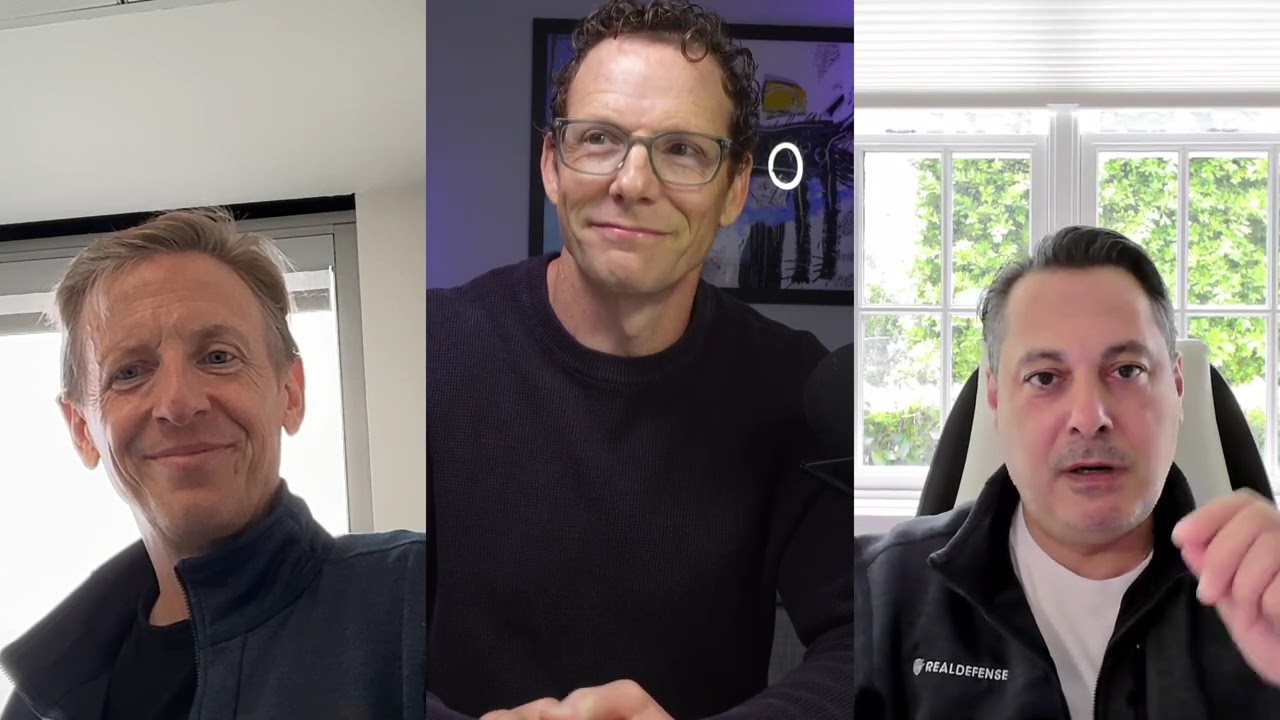

How to Scale Your Business With AI | The Casey Zeman Show Ep#7 | ft. Gary Guseinov & Sean Whiteley
Terrible at Golf, Great at Building an Audience | The Casey Zeman Show #6 ft. Kira Peterson
Certainty Is a Lie. Clarity Isn't. | The Casey Zeman Show #5 ft. Keith Cowing