How to Scale Your Business With AI | The Casey Zeman Show Ep#7 | ft. Gary Guseinov & Sean Whiteley

Gary Guseinov and Sean Whiteley built Real Defense to $100-150M ARR using a hybrid direct-to-consumer and B2B2C model with partners like HP and Lenovo. They use AI to test creative and target ads, not to replace strategy, and rely on data-driven decisions over gut instinct to manage rising customer acquisition costs.
Chapters
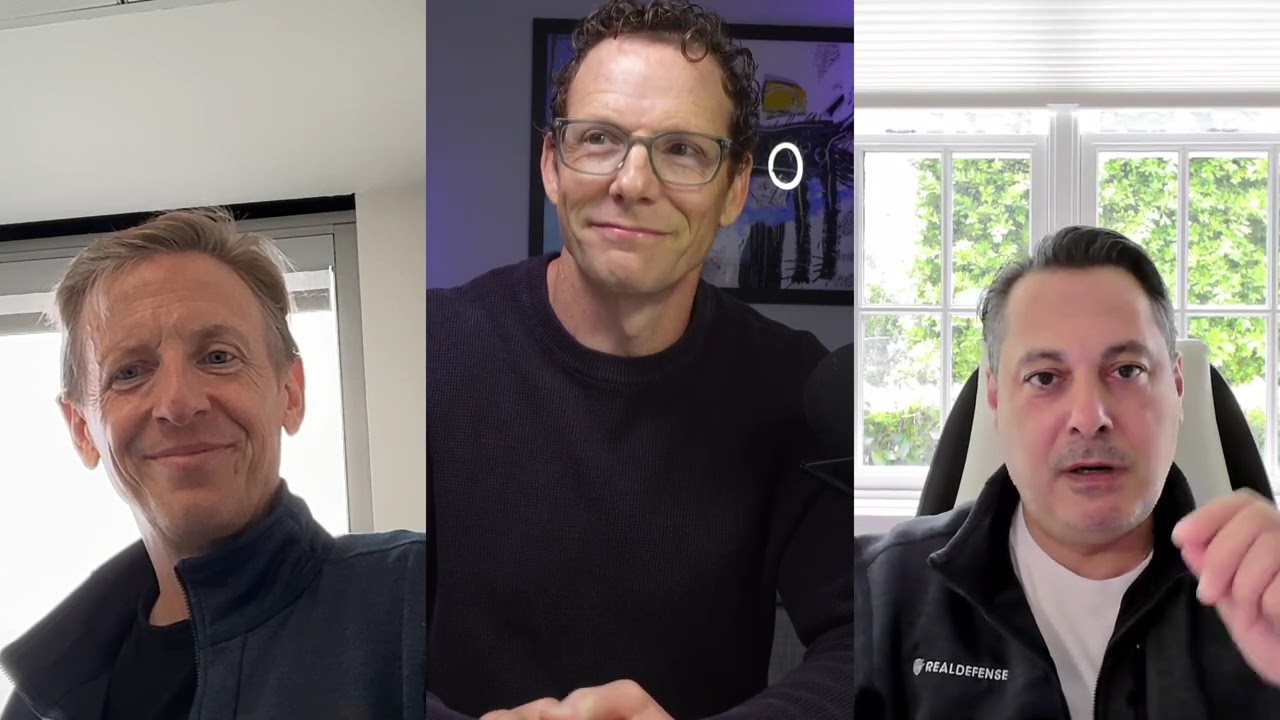
What's up, everyone? I am so excited about our interview today for the show. This is a real treat. I have a dynamic duo on today. I have Gary Gusanov and Sean Whiteley. These guys are responsible for ushering in Real Defense. It is a cybersecurity company that is trusted by millions to protect privacy, strengthen security, and boost productivity. I actually had an opportunity to meet Gary recently at his house. He has a beautiful baby girl, and I learned all about some of the things he's been doing in business. Both these guys actually have been in business for quite some time, scaling and growing companies. And Gary, you also, from What I remember, you also are a senior operating advisor at Korbel Capital Partners. Is that right? You still do that?
Yeah. Korbel Capital.
Korbel Capital Partners.
Okay.
And it's a $1 billion structured debt fund and where you leverage your expertise in new business development, customer relationship management, and it supports growth and you support the growth and success of the fund. Is that how you two Met through that? Or tell— let's step back a bit. I would love to know how you two came together because from what I see, Shawn, you are an investor. You are the president of Real Defense. How did you guys come together and how do you guys tag team on the growth of the company? Because it looks like this company is growing Exceedingly fast, top 500 in terms of growth in the last couple of years, it looks like. Tell us more about your partnership and how you guys got together.
Gary and I have been friends over 20 years. So, we've been swimming in the same circles for a long time back when Gary ran a publicly traded company, Russell 2000. And I was an entrepreneur. Started lots of companies, and Gary and I were just socially friends and worked together on some little things, nothing big. And after chasing the whole VC train for 20-plus years, I decided it was time for a change. And Gary and I got together and said, well, why don't we work together? And that's when the partnership really started. And it's been a really successful relationship, and we're really good partners.
That's amazing. Shawn, have you been with Gary since then?
That was the thing about Gary and I getting involved in leveraged buyouts. We really cut our teeth with Business Hangouts, which he acquired and had allowed me to come in and join with him on. And we proved ourselves. We bought the company for very little and were able to turn it around in a very short period of time. And it came down to when you're doing leveraged buyouts, you're buying companies that already have existing cash flow. And I like this a lot better than the traditional, you know, start in a garage, start from zero, and, you know, go like hell to make the thing work. And so, once we proved ourselves on that small— it was a relatively small acquisition, although I think we turned it 4 times. I'm not— I'm not remembering the exact numbers.
Wow.
But we, you know, then immediately went and got our next, you know, acquired our next company together, and the rest is history. And it's been, you know, It's been 8 years now, over 8 years now, and 7 acquisitions. And, you know, it's a great business model.
Can we talk very quickly about what you guys are doing now with Real Defense? Who are you serving at the moment with Real Defense?
Well, we have 2 parts of our business. One is direct-to-consumer. So, we go to consumers and market them directly through pay-per-click, affiliate marketing, social. And then, we have a a B2B2C platform where we market to businesses who also have consumer subscribers. So companies like HP, Lenovo, McAfee, they're all part of our base of partners. And we have dozens of big partners. We have a billion plus TAM between those partners. So we market into that TAM effectively. We generate, this year we'll do over $100 plus $150 million of ARR, um, for our partners. And so we found a model that works. We found a platform that makes sense for our partners. We have a credible 10-year history doing it, and, and it's, it's gotten to a point where we're signing up companies almost every, you know, every month. So it's, it's very exciting.
So you guys have been together, you said, for 20 years or so. acquiring companies, and with every acquisition, you probably had to— you learned a lot. That's why it's exciting to have you guys both on. You've learned a lot, and you've probably had to find those different moments of growth. And so, I wanted to ask you, you know, with what you're doing with Real Defense, at what point did scale start working against you, you know, or did you know some of those elements ahead of time before going in? You know, when you scale, you start to break. Did you find any moments of break that, you know, that were— that you put a pause on before moving to the next level?
That happens all the time. You've got infrastructure risk, you've got fraud risk, you've got— especially with digital marketing, there's significantly more risk there now today. competitive risk, price risk, fulfillment risk. There's all kinds of risks as you grow. And so that doesn't stop. There's no point of time where we say, oh, the risks are gone.
Right.
It's the bigger you grow, actually, the more compounded they become and the more relevant they become and the more profound they become. And so what we've done is we've condition the business as best as we could, can to see, you know, what's around the corner before it happens. And so I think we're gonna get better at it. And if we see problems coming around the corner, we can address them before they become problems. And so, but if you wanna break it down to like fundamentals, I think that most businesses, if you're selling an online product and you're, and you have a customer acquisition cost, you have a CAC, Then you have average order value, and you have LTV. Those are the most fundamental concepts behind a customer acquisition strategy. You're gonna find that as you get bigger, the customer acquisition costs will creep up on you. It'll become more expensive because your TAM and your TAM is actually could increase, but the consumer you're going after is the next person is gonna be more expensive to get. because they're a wealthier individual or they are more educated or they have, you know, more considerations. And so they are harder to convince. And so then you've gotta spend more money to get that customer.
Mm-hmm.
That's considering no significant pressure from the competition. And so you have to have a product or an offering that can, you know, sustain this constant increase in customer acquisition costs. whatever that is. So if you're selling a product that costs $29, you're gonna have a very hard time selling that product through digital marketing, any kind of marketing for that matter, right? Even if it's retail. And so you have to have a product that has elasticity built into it. So there's a $29 version, $50 version, $100 version, and maybe a $1,000 version, maybe a $500 version. And so if you can't build that kind of a you know, spectrum of products where the price goes up, you're gonna have a very, you're not gonna survive in a competitive environment, full stop, because customer acquisition costs are creeping up to like over $100 online. So how could you possibly survive if your product costs $20, $30? You can't sell a $20, $30 product.
The math doesn't add up.
The math doesn't work. Yeah.
So let me ask you, how important is data for you guys in your growth? Like, you guys like live and breathe by the data, or how much, how important is gut and the experience you've already had? And where do those align?
I'd say it's everything. You know, when Gary and I acquired US Tech Support back in 2013, sorry, 2017, it was 2 of us in a room with an engineer, and we were doing the search marketing. And you could kind of get by by just spending your money each month and seeing the customers come in and see the revenue go out. But as you scale, you need, you know, to figure out to have the right person at the right time helping you grow the business. And so as we started to add the right people, and this is where Gary and I, you know, bring our experience to the table as operators, we make sure we bring in the right people at the right time as you're scaling the business. And when you have, when you significantly increase your spend, you've got to be more strategic in how you deploy that capital. And so you need to know exactly what's happening and where. So in the beginning, you could just spend money on Google and see what's coming out the other side. But then as you go deeper, you need to know the keywords that it's coming from and which keywords are driving the highest LTV. And then if you go into new channels, you go into display or programmatic, or you go into affiliate channels, you need to know exactly where your traffic is coming from. And each, at each level, Things break, right? And that's just, that's inevitable. You know, we spend a lot of money online now. We spend, I, in the last year, I think we increased it 3x in the last year. It's been really tremendous, but it introduces new challenges and you have to get deeper to understand which are the good customers that you want and the ones that you don't want and how do you identify where your opportunities are to keep levering up and scaling more.
So, you know, there's, there's a lot of, you know, obviously AI is, is helping in so many different ways and so many on so many different channels. There's a lot of, times where AI is being used to, uh, to do ads, advertisement, you know, whether it's Google Ads or whatever, whatever, um, you know, ad, uh, media buying platform or solution you're looking at. Do you find that AI is, is helpful for, uh, kind of deploying those, those nuances that you're talking about? Because as you, as you mature, your mastery shows, right? Um, I feel like everybody is, is kind of like so focused on just leveraging the AI. Uh, um, yeah.
And essentially you bring that up because we're, we're going through that right now. So you can't, like, if you're a solo entrepreneur and you've got one, you know, it's you and then you have your website and your app, whatever, and you're trying to get more, more, more customers.
Yeah.
It's actually easier to execute on this because you are the final decision maker. So you build an ad, you build a marketing strategy, you go use a bunch of tools that are out there and you execute against it. There are people out there as case studies, out there are people doing it very successfully, but that's not most of the businesses, right? Most of the businesses have staff, they have legacy, they've got subscribers, you've got to maintain all that. So you have to look at the process you're trying to improve and not assume AI is going to do the whole thing. So let's just talk about marketing for a sec. For example, let's say you have a media buyer, you've got content creators, you've got, you know, maybe compliance, maybe you've got a copywriter. You don't just say, hey everyone, tomorrow I'm gonna start using Claude to make yourself more efficient. Go, go do it. Okay. You know what the outcome's gonna be? Garbage. Nothing's gonna happen. There's gonna be sitting behind a computer for hours trying to figure it out and nothing will come of it. What you want to do is you want to create a process that augments your existing process and inserts AI in the right places to create efficiency and scale that didn't exist before. So for example, micro-targeted ads, okay? You have an ad that's performing, you want to apply the same ad to wider demographic so you can scale. The incremental improvement with one ad can add to increased LTV, reduced CAC, improvement in AOV. And if you can measure, to Sean's point earlier, you can measure these very, very unique instances of performance, then you can say, instead of having one ad, I wanna have 1,000 ads.
Right.
And those 1,000 ads maybe end up being 100,000 ads and they become extremely narrow, extremely, you know, targeted to the user. That's AI.
Okay.
Because a human cannot come up with those variables, cannot come up with the nuance to address that particular opportunity, right? So AI can be very efficient there. Competitive analysis and content creation using competitive analysis. Build me a landing page, but look at the market and tell me what the market is missing build me a page that addresses the gaps in the market and build me a landing page that has the highest conversion, easiest use in this particular demographic or this particular psychographic or whatever I'm trying to, you know, sell into. And then what tools are you gonna use to do that? So maybe the person, your existing web designer doesn't lose their job, What they're doing is they're being asked to use different tools that are more scalable and address the bigger opportunity. So it's, I look at AI more as like, how do I do what I do today better and faster, but more efficiently? In other words, I'm creating more opportunity for myself rather than, oh, I'm just gonna build a website in 2 hours versus 2 weeks. That's great. But how is it gonna really impact your business? Not a lot.
Yeah.
But if you can say that I'm gonna have a bunch of ads that are more efficient, I'm gonna buy media using AI, I'm gonna, you know, engage an AI tool to drive, to run my PPC ads. And now I'm finding opportunities that didn't exist before. The same person is using the, the same person that was using, you know, managing PPC is still there.
Yeah.
Now they're just using tools to become more efficient. Now instead of a $10,000 a day budget or $100,000 a day budget, whatever you want, now it's a million dollars a day budget because they're a lot more efficient. Well, imagine what that would do to your business if that person became more efficient, if their ad buy became more efficient. How does that make your business, you know, grow? And it certainly—
Yeah, so, so it's like every channel, um, on how to effectively use AI to scale with, with every, with every human resource still sort of manning the— manning that particular channel.
Yeah, you can't just walk away and say, hey, let AI handle it. We're not there yet. Like, people think AI is like this robot that comes in, just kind of fixes your car, makes you a meal, pats you on the back, and goes to sleep. Like, that's not what we have. What we have is tools that are better than the tools we had before, and they have more access to data that we didn't have before. So AI, like, AI is also very inefficient in some instances. If you ask AI what time it is, AI goes and hits a bunch of servers and databases, burns a bunch of trees, you know, creates all kinds of, you know, CO2, and it comes back and says, I think it's 5 PM. You're like, wait a minute, I need to look at my watch and I know it's 5 PM. But AI has to go and get sign-off from the president to figure out what time it is. And the reason that's happening is because AI is built that way. It has to probe a bunch of places to give you an answer. You don't need all that. So they have to understand like where do you need AI for your business and where you don't need it.
Hmm.
And so I see a lot of people using just ChatGPT, for example, for the most benign things and they rely on it because they think it's the truth and it's not. Like don't get medical advice there. Don't get financial advice there. Don't, you know, it's not designed for certain things. And then when businesses start doing it, I see a lot of mistakes. In fact, 95% of businesses Like, well, more over 90% of businesses that use AI are not successful with it. It's because of these things I'm telling you about it that they—
The one-offs.
The one-offs, they go like, everybody start using AI. There's no strategy, no plan, no integration. It just kind of wastes time. So—
How much do you guys spend planning before execution? Are you quick to execute or would you spend more time on the planning, the strategic meetings prior to execution? Like, what's that speed to that execution?
That's a good question, Casey. That's a company size question. When Gary and I were in a room, he could scream across the room and say, I want to try this, and we would just try it, right? I mean, it's not, you know, when you're small, you've got to be opportunistic and look for things. And as you get bigger, there's a cost to doing everything. And so, it gets to a point where you really have to measure twice, cut once. And so, we have to have a thesis for everything that we do. We have to have, you know, an idea board where we go and look and see how do we weight these opportunities? You know, what's the LOE? What's the expected outcome? Is that a guaranteed outcome? Right? So, for us, it comes down to the bigger you get, the more, the more you have to be methodical about how you make these decisions. You can't just execute as fast as we would like to because Gary and I, at our hearts, are entrepreneurs. And, you know, we've started a lot of companies and sometimes, you know, we always laugh. Because we're so big right now, we'll say, you know, this is a great idea, but this is a whole nother company. And we're just going to put this— this is going to go on our no list for now. And we're going to focus on the business that we have and keep scaling it.
Yeah, I think a lot of business owners have half-built bridges where they've attempted execution and they don't finish those bridges. I've noticed larger companies obviously are having to accept the nos and say more nos than yeses. And do you guys find yourselves doing that? It sounds like you do, that you're very specific about what you're executing on. Is that right?
Yeah. We're able to measure level of effort and economic impact. So, ideas are not ignored, they're just prioritized. And so, we have a business that we plan for a year ahead and we measure daily and we report monthly and quarterly. And so we look at our quarterly performance, we look at our historical gaps and whether or not we're going to hit our milestones next quarter and following, etc. So we're really much structured like a publicly traded company. So we expect certain performance over time and we get to make sure we manage the company to hit those performance metrics. But in terms of ideation and execution, as you get bigger, that becomes harder because resources are aligned tightly. Level of effort is quantified differently. There is oversight. There are board investors, LPs, like they all care about your performance and giving you more money. And here's, you know, $100 million. I'll make sure you execute. So you have less tendency to go off to, you know, off the reservation and go do fun stuff. But here's where I think opportunity is. With AI, you can iterate, you can create micro tests, you can create micro campaigns and execute fast and fail fast and learn from it. That has to be part of your, you know, DNA. And if you don't do that, you're not going to evolve. And so I also think that approaching ideation asymmetrically, meaning be creative, craft stupid things, do stupid things, like get very like, have obscurity in your ideation because symmetric approaches sometimes don't work. In fact, in the future they won't work at all. And the reason is because you're facing AI on the other side. Okay, right now you're not competing against AI. Right now when we're buying advertising, driving traffic, The people, the systems on the other side, they're not sophisticated. In the future, in the next 3 to 5 years, they will be. In other words, everyone's going to be using AI, and you're going to see AI-to-AI confrontation. What AI does not confront is asymmetric approach. So something that it can't predict. And if you come hit it with an asymmetric approach, AI is going to get confused and do nothing. Until it figures out what your predictability is. And so as a, as a builder of products, if it's digital products, you know, not digital, you have to think of the market as this complex fluid thing that keeps morphing and changing constantly.
Mm-hmm.
And you have to kind of adapt to that. And if you don't do that, you'll evaporate because AI is, is I mean, you'll have one company that'll just go dominate the whole space. How do you look at SpaceX? It's just what I just said. Look at what Elon Musk is doing. He's taking certain categories, just dominating them. There's no, there's no number 2, there's no number 3, right?
Yeah.
So imagine that happening everywhere else. So in SaaS, in clothing, in home manufacturing, somebody is going to figure out how to scale those businesses with using AI and they're just going to dominate the whole space and you're going to have like 90% of the market with one guy and 10% of the market with a bunch of little tiny little businesses who are trying to scratch for the bottom, you know, that's what we're going to see.
But you're saying asymmetrical, like a vision, asymmetrical vision is what got those guys there, you know, like thinking outside the box, being completely left field from the norm. Got these guys there. And, and you really think AI is going to be able to, to, to have that same, um, you know, that same, uh, vision, uh, in the future, you think?
Well, I don't think AI has asymmetric vision. I'm saying that AI has very symmetric vision because it, it's sort of, right, it builds on top of, you know, information that it can gather, and it doesn't see it's not emotional, right?
Right.
So it's very logical, right? So it looks at things and says, okay, if 1 1 1 1 is 4, then another 1 is a 5. Like, that's how it thinks.
Yeah.
The asymmetric view is 1 1/2 0.777 is 2, right? Like, asymmetric vision view is not built on— it's the opposite of symmetry, right? So you go like where no one is looking. And so, investors are saying, hey, double down on AI stocks. You run away from that. You go somewhere else where there is deep sea energy infrastructure, or you go into Mars mining and minerals from Mars back to Earth. I don't know. I'm just— Throwing stuff out there.
Yeah.
But it's, it's, it's about like, if you bring it down to like a small business level and as a small business operator and you're trying to figure out how to get your next, how to get your next customer, stop relying on the tools that everybody else is using.
Right.
Everyone's using PPC, they're using social. Okay. That's not all there is. There's all kinds of, there's billboard advertising. There is, uh, you know, there's companies that paint on the ground and they put your logo on the floor. There's companies that do sky advertising. There's all kinds of other forms of marketing that most people don't utilize because we're so confined to these few places, Google, Bing, Meta, TikTok, right? Like we all live there, YouTube, right? And so—
What we've also been seeing very interestingly enough is like that companies are becoming media companies too. like they're adding these media arms. So it's like, just imagine that you guys developed a show or something like that, that then markets your business, right? We've— I've been seeing that pop up more and more. That's kind of like one of those, you know, sort of out of the box, like some of those things that I think companies are now trying, especially with the— How the popularity of vertical shows, you know, the vertical platforms are now growing. So it's like more content creators are establishing themselves with business owners, and then the brand now is developing into this media brand. Do you guys see that on your side too?
Well, we're not— we haven't seen it in our area yet, but I know what you're talking about. I think that's going to be a hot area. I think it's going to be a hot space, the content development. If you're going to make a short movie, or even a regular movie, a feature film, you know, arguably the tools that are there for you to do that.
Yeah.
I think what's exciting is, you know, imagine being able to use actors that normally would never do a film for $100,000 or $50,000 and be able to do it. So imagine if you're going to pick a celebrity that you've seen on TV, you're familiar with them, and license their goodwill their brand, and apply it to your film that talks about SaaS software.
Mm-hmm.
Did you know that if you had to go to this person, you know, and put them in a movie about SaaS software, A, no one would ever give you any money for it. Number 2 is it'd be so expensive to get their name to use in your movie, you'll never do it. But now you can fractionalize the, the license and go to the celebrity and say, you know, I want Sylvester Stallone to be in my SaaS movie, and I'm gonna pay him, you know, 100 grand. And all you've done is taken their likeness and applied it with AI, and you've got a movie. So that's exciting. I think that, you know, content creators, you know, if they're smart about this, are gonna go build their niches and get into these businesses and tell a story. That's interesting. Theatrical sort of releases that are engaging and entertaining, fun to watch, and explain their product if it's a Particularly if it's a complex product.
Yeah, I think this isn't a new concept. You know, this has been around forever. And if you think about the kings of infomercial TV started out with having celebrities push, you know, cream. Guthrie Renker was the best at this. And it's all happening again. I think as we talked about earlier, as a business swims upstream, right? And we say this all the time, whoever can spend the most wins. Right? So think about insurance companies like GEICO, right? Why can they spend so much on that lizard? It's because they have a ton of margin to play with, right?
Yeah.
So for us, we're always focused on unit economics, and the more you can spend, the more you can invest in like what Gary's saying— have, you know, possibly Sylvester Stallone pitching your SaaS product, right? So it comes down to how much can I make per sale? How much margin can I generate per LTV minus CAC to be able to reinvest in marketing? I think sort of famously, I think back in the day, I think it was either Bob or Dropbox was spending like $10,000 a customer because they were saying that, no, look, I'm talking about having a customer for 20 years. And so if I'm out there to do a grab right now, I should spend as much as I want to go grab those customers and, and it will pay off in the end. So it's just about timing. It's about, you know, efficient use of capital. And, you know, at the end of the day, you're going to find new creative ways to, to leverage AI in your marketing to be able to, you know, further increase your user reach.
Now, you guys have a pretty substantial partner channel, and has that always been that way? Was that the original model for the business, or did you find that channel over time? And then, you know, speaking about this, of course, the unit economics of— obviously, you have to You have to share revenue with those partners. You've had to obviously think through those unit economics as well. How long have you had that channel? And is that one of your largest channels?
So, Casey, I'll tell you a story and it's funny and kind of sad at the same time. So, we bought a business. I can't tell you the name of which business, but there's 7, you can figure out which one it is. So, we bought a business and we closed the transaction. We financed Send them the wire, the whole thing is done. And we go into the office and we're like, okay, we're here, here are all these employees and this tech stack. Great. Let's just keep iterating. Right? And I start looking at all the contracts the company had, just reviewing them. I already reviewed them, but I didn't review them in great detail. So I start picking the ones that I think are the biggest names in terms of brand names. And I started reading them and I found this one contract and it says, do X, Y, and Z and we'll pay you, I think, like $4 per unit or something. And I went to the team and I said, why isn't this launched? And they said, oh, it's not a priority. I said, well, look at this partner's name and it's a big company. We should probably prioritize. They said, well, it's, we'll get to it when we get to it. I said, you know what? How about you make this priority right now? You go, go execute it. So they go execute it. This thing goes from $0 to $50,000 a month. Next month, $150,000. Next month, $300,000. Next month, $1.7 million or $1.5. I don't know. It was like the top line, $1.5 million. a month in revenue from this one partner because nobody cared. Nobody in this company cared to go and look at this deal actually execute on. So we said, okay, well, we think we have a business here because of this one relationship. Let's go iterate. Let's go do more of the same. And so we hired a bunch of people to do biz dev and enterprise marketing. And we—
Yeah.
Now we have a real business there, but it didn't, it wasn't like we sat down and said, Let's go out and build enterprise-facing, you know, business. We actually did the opposite. We said, let's not touch B2B, let's not touch enterprises. We only want to focus on B2C because that's its own, you know, it's got its own challenges. And we sort of stumbled into enterprise and it became a success because we figured it out.
So, I mean, I'll add to that, Casey. I'll give him more credit than that. We, well, I wanted to, when we had our, you know, when you buy in a company, you have to have a plan. You know, and our plan was to shut down their B2B2C business because it was like breakeven. And I was like, Gary, let's go shut it down. He goes, let me just look at the contracts for a minute. I just want to look for one minute. And now, you know, we have a lot of people working full-time on supporting all of our enterprise partners. So, sometimes you stumble, there's a little bit of luck along the way and you stumble into it. But, you know, you have to be opportunistic as somebody who's— if you're acquiring a business or starting a business, you've got to see the opportunities and go after them. And that's, That's where you'll find your success.
Well, it sounds like you guys, you did an evaluation of your customer base, of the different opportunities, and you said, oh, well, this is the opportunity that's probably going to gain us the biggest result instead of like looking at, you know, obviously it's one of those things where it's like, do we want to be partner-heavy with just this one partner? Because then our resale value is not as great, right? And I totally understand that. I'll tell you what, from my own, my own experience, partner growth was the number one thing that allowed me to like scale my company. Thank you guys so much, by the way, for all the things you shared today. People know where to find, find you guys, where to learn more about you.
Yeah. Okay.
We're very responsive. Anybody wants to reach out, you know, we're, we're very responsive to entrepreneurs and we like to give back to the community. So we're happy to You know, we're always fielding questions and help people out when we can.
All right.
Thanks so much, guys.
Thank you so much. Thanks everyone for watching. Bye.
More from Casey


Terrible at Golf, Great at Building an Audience | The Casey Zeman Show #6 ft. Kira Peterson

Certainty Is a Lie. Clarity Isn't. | The Casey Zeman Show #5 ft. Keith Cowing