Terrible at Golf, Great at Building an Audience | The Casey Zeman Show #6 ft. Kira Peterson
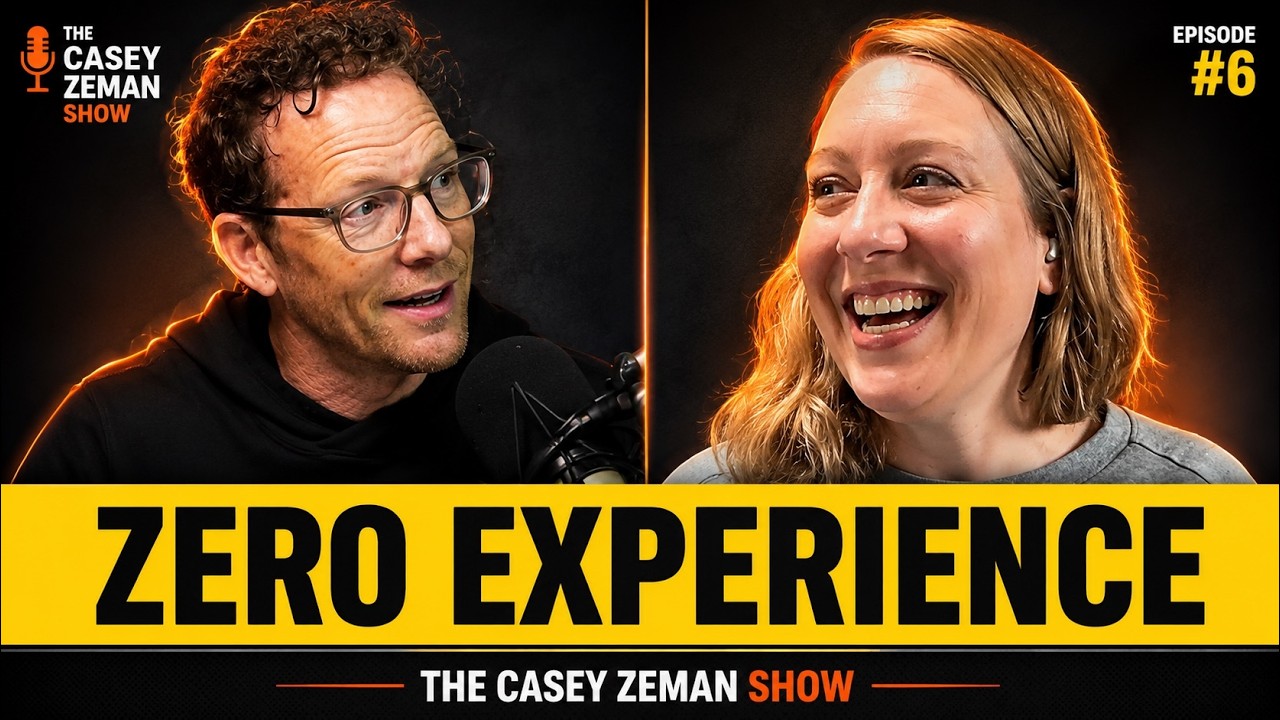
Kira Peterson left marketing to build a golf content brand from scratch, despite being a beginner. She's produced over 100 videos teaching fundamentals to adult newcomers and landed sponsorship deals by pitching at the PGA Show. Casey and Kira discuss monetization through affiliates, sponsorships, and courses.
Chapters
Hey, what's up everybody? Welcome to the Casey Zeman Podcast, and I'm excited today. We're, we're jumping in again, talking and sharing stories of entrepreneurs who are creating content, getting out in the world, creating brands, building businesses, and the good, the bad, and the ugly of all of that. And today we have Kira Peterson on, and Kira, actually, she's been building a brand all around golf, and it's really been an interesting direct sort of way that she's been tackling building this brand all about golf because she just recently started golf. And so she's coming at it from this angle of people that are following her are people that are like, oh, I can actually play golf and I can jump in. And it's a very wonderful intersection of like finding, you know, a thing that sort of, you know, is defined within a sub-niche, right? It's like a niche, but then a subcategory or sub-audience of that niche that really resonates. And she's been growing her account rapidly because cause of creating this wonderful content. And so I wanted to welcome her and I want to talk to her about how she got to this point, some of the things that evolved to getting here and, you know, roadblocks and stumbles along the way. That's kind of what we talk about here. So Kira, welcome to the show. Thank you for being here.
Thank you, Casey Zeman. Thank you for having me. It has been a journey. Let's just put it, everybody, every entrepreneur has their own My favorite saying for anybody who's interested in getting and starting their own job, there's always a breakdown and then there's a huge breakthrough. So if you think your entrepreneurship journey is a big failure, just wait, you'll have a breakthrough. I feel like every time that I have had my break, a breakdown where there's maybe a massive cry or you just want to scream, Casey, you probably know that you'll have a breakthrough right afterwards. So. Don't think you're the only one. It happens to all of us.
Yeah, I, that's like, I'd like to talk about that for a second. You know, the oftentimes it's like, what happens with that breakdown? Is it, we, we, and I don't want to call it retreating, retreating back to like a job that felt safe or comfortable or, or, you know, and things like that, because there are different seasons for when a job might be a very necessary component of what you're doing right now. So I don't ever look at it like a job is bad and entrepreneurship is good. I kind of look at it like there are moments when both are going to, both are going to be necessary for you and feed you when they need to. But there's going to be those breakdown points where maybe, you know, you lost your job because of the job market. You, you tried other things. You could not figure out how to get another job. It was challenging. It was the hustle of having to try to find something that fit. Meanwhile, you're still losing money every day, you know? So it's like those challenges are very real. And it's only until we start to face those challenges that we see that a job or career has— is just as bottomless or protective as entrepreneurship. And that realization can oftentimes be the stepping stone for going and becoming an entrepreneur, going and creating your own thing. Trying to become, you know, like creating a business that, that you can control. I mean, my, that was, that was kind of my story when I started. It was the, you know, I, I couldn't get another job. I tried to find another job when I lost my job in real estate and I was going under foreclosure, right? I almost lost my house twice. And so I was kind of pushed up to against a wall in terms of what I could do.. And that's when I came to the realization that there's no safety net in either working for somebody else or creating your own thing. So you might as well, you know, do the thing that you can maybe control a little bit more of. And so that was my journey, but let's talk about your journey for a second. What was it? Where, where were you before you doing this? Were you working in corporate America? Like what was your sort of job status?
So my story happens back when I was I was still in high school. Shocking, that was a while ago. I was actually a huge— as the old older young adults know, I was a scene kid back in the day. I was, um, really into like Fall Out Boy back when Fall Out Boy was becoming a band. Um, so I took a picture of a concert and my mom goes, Hey, that's really cool. You should do that. And I was like, okay, I don't know what that means, but I'll figure it out. So through the years I was the email, um, I was emailing publicists, marketing management for concerts that were coming to the Milwaukee Chicagoland area. Got to take photos of musicians performing live, getting to interview them at these concerts. I have learned that. You might think that they're these amazing people offstage and lo and behold, they're all like everybody, like you and me, Casey Zeman. So, um, that was kind of my background. And then about maybe 7, 8 years ago, I quit my job cuz I didn't like what I was doing and it kind of felt lackluster. Let's just put it that way. Yeah. And I left that job and I said, oh my gosh, I have to find a new job now. And. I had this intuition to either go to one coffee shop or a different coffee shop. And I went to Starbucks and lo and behold, I sit down and maybe a couple of minutes later, this guy sits down next to me and says, we start talking. He goes, hey, are you looking for a job? And I said, yeah, I just quit my job. So it was in golf and travel and media. And when I came home from the coffee shop, I told my parents and as Any parent would say, if a guy says, hey, I wanna hire you, but my office is in my house, somebody has to come with you. You don't wanna be naive enough to go into somebody's houses. So my dad actually met my future boss and he was like, okay, this seems normal. I'll leave you guys to figure this out. And okay.
Yeah.
My status was, it was marketing manager. And that's where I started. Didn't know anything about golf. I was there for about 3 or 4 years and I became VP of the whole company and I was doing website, digital magazines, website, you name it, I probably did it. And the LPGA, which is the women's tour, came out with a hashtag, an initiative to bring women into golf. My boss at the time said, hey, Keri, you've never played golf. We should create a series. And I said, okay, like, I'm okay with it. We create a series, but at the end of the series, I was supposed to learn how to hit a golf ball. And unfortunately COVID happened and that stopped. And like everybody else, we had to pivot. And after a year of doing that, I quit that job and I started doing my own thing. And I said, well, there's still, I still love golf and I still want to learn. So 4 years ago on Women's Golf Day, I took my first golf lesson with, um, at our local golf course, and my friend was my coach and he said, "Kira, you're terrible, but you can only go up from here." So I kind of thought there was not enough, or there weren't, there wasn't really anybody showcasing people getting into golf as a young adult or an adult. And I was nervous because I knew I was, would suck and No matter what, you're gonna suck at golf. You're not gonna be Tiger Woods. So, um, I had to push that aside and 4 years later, here I am.
Yeah. Oh, I love that. I love that. I love that. Um, because you know, often we, like, we think we, we have to be perfect in terms of like, you know, a channel or being in front of it. But like at the same, what people love, I think is when you can almost be like a guinea pig and they can be on your journey with you because they're on the same one. And so I think it's, it's so great that you were more of an amateur, just having an amateur channel around golf because that's the majority of people. They're not, they're not professional golfers. So it's like, totally makes sense. Could we go back to the, the during the time of the pandemic where things were sort of shuffling, like what, what happened exactly there? And, and was that a struggling, was that a hard time because of some of the, you know, the shifting that was changing? Like it sounded like you had been working there for quite a while. And then a year later you kind of had to stop. So what, what sort of happened there?
So my, my boss at the time moved down. Well, you know, St. Charles, so it's about an hour from where I live. And, um, I wasn't really having that stability of, you know, having downtime. I was always on the, on the clock. I mean, as an entrepreneur, you're always on the clock no matter what. The only time you're not on the clock is when you're sleeping. So I, kind of felt like my mental health was probably— I was feeling fatigued and I was like, I gotta focus on myself and my mental health. And then as everybody knows, January 6th came and I've never had a panic attack in my life and I had the worst panic attack and I said, okay, this is the wake-up call of me needing to take care of myself. Took care of myself and less than a month later, decided what's the point of doing all this stuff if I'm not, we're not monetizing it. Is it for, you know, my boss's ego or, you know, I'm not making monetary gains that would make it beneficial for my health. And I decided to step away and recover that way and kind of see what I wanted to do. In the back of my mind, I always wanted to get back into doing something golf related. And so a year after that sabbatical of golf, I said, I have all these followers. I might as well make this beneficial for myself and people that want to learn golf. Because like I said, it's terrifying if you're learning something new, no matter what it is, as an adult.
Absolutely. That is the, that's the fear, right? That's the, that's the challenge. But, but I think it makes sense that you had a sort of a come to Jesus moment in your own life where you're like, you know, I'm not, I'm not I'm not making the money I want to be making here. I'm also, you know, if I continue down this path of serving somebody else and not really holding space for myself, what will that mean in the future? You know, where will I be in 10 years, you know, 5 years, 10 years? And those are important questions to ask ourselves as entrepreneurs to really sort of know that we, that we are wanting to create our own thing, but allowing that tremendous amount of maybe a gap of knowing how and a gap of fear of like the how, but also the fear of the when, right? And so these are two fundamental pieces that are like tacked on to when you're an entrepreneur. It's like, how do you get through that? And one thing that I've, I was able, the one, the thing that helped me when I was going through that, I was going through the same exact thing where, you know, I, started working for— I stopped working for this guy who I worked for for years because just the market crashed. And so I had to figure something else out. So I started to— I just started learning about YouTube marketing and then I quickly pivoted to being a YouTube consultant and I found a client and that client helped me to find another client. And so I had 2 or 3 running, 2 or 3 or 4 running clients at the time, you know, paying me a couple thousand bucks a month or something. Right. Was helpful and that was kind of what I needed while I'm making this shift and adjustment. And then while all that was happening, I built a course all about YouTube. And then from creating that, that online course, which took me like 6 months to create it. And then when I finally launched it, I had to redo a lot of it because it was all about YouTube and YouTube changed its like layout, algorithm, stuff like that. So I learned my lesson there about how long I should take when I create a product online. But like when I launched it, no one would buy it. I couldn't get anyone purchasing. I posted in forums. I tried everything until I started using webinars. And once I started using online events and webinars, that was— everything shifted. I could get into a live room with people and I could share too much. I was like an oversharer, a stutterer, and I was terrible at public speaking. But all of that, even, even with all those things, people started to come more and more to my, these live sessions that I ran., and these live sessions, I built an email list because they were coming to my registration page and putting their name and email in and phone number. And so I, while I was doing these free, no pitch kind of webinars, I was building my email list up. And then after all of, after doing that, people started saying, Casey, do you have anything I can buy? And so they started to, I started to say, yeah, you can, you can buy my course. Here it is. How about for $97? And so they would buy it. So many of them, people said, this is like huge value for what you're charging. And, and that got me thinking that I should up my price. And so I, I upped my price to $200 for the program and I had double the number of people buy at that point because I think it was an intersection of them understanding that I got better buyers, basically people that were more interested in solving the problem. Now, if they have the money, they're more interested in solving the problem. That's hands down. And I got fewer refunds because of those people are more serious buyers. You get the low ticketers, tire kickers. I got higher ticket. And so I jumped at that point to $1,000 for my price point of my product, because I had a guy who was like, I want to promote you to my email list, but you have to, your course has to be $1,000 to do that so we can make money. I was like, $1,000? I've never sold anything for $1,000. I don't think I could do that. Anyway, so he, so we ran a webinar and it was in the, this back farmhouse. I was in Iowa at the time for Christmas holiday with my wife's family. And it was in this back trailer in this farmhouse, the dead of winter with a busted up PC and like the inboard microphone, no camera. And, and like you could hear the heater blaring in the background and, and like the internet was coming in and out and just wasn't working all the time. But so, and I was over a classic oversharer. So I did like 2.5-hour-long webinar, but there were like 300 people registered and showed up to this workshop. Wow. So, so I just shared and vomited information. And then basically I was like, okay, here's the pitch. $1,000, it's my full course, but you also get a 2-hour onboarding coaching session with me where we go through and strategize your go-to, you know, market strategy to get your business off the ground with using YouTube. And, uh, and then I was, and then I had another bonus, which is like templates or something like YouTube skins. But the course stayed the same. I didn't change the course at all. And, um, and all said and done, that webinar I made, this is from, this is one of my better results. I made $2,000 off that. Wait a minute. No, that one was the one where I did for $200. That one I made $2,000, but in the, the one I finally sold for $20,000 from that, from that one webinar and zero refunds because I created a, um, a, uh, it wasn't a 30-day guarantee. It was, it was money back, but it wasn't like unconditional. It was conditional. They could get their money back, but what they had to do is go through the course, submit homework back to me, just send me an email showing me they did the assignments. And then if they did that, if they did that, completed the whole course, I would give them their money back. And so of course, when people signed up, no one refunded because when they would do the work, they would get the result. And if they get the result, why would they want the refund? Right. So it was, so I, because I created that, that was my, that was the experience I created. And that was the way that I finally, when that first year became a course creator and I went from making $15,000 the year before to now making $245,000 that year as a, as selling my online course through webinars. And then from that experience, I then turned it into— then that's when I was like, found out like webinars were the thing that worked. So I then hired some software engineers to create what is known as EasyWebinar, which is my tool that we have, you know, thousands of entrepreneurs using, coaches, authors, experts, you know, using it to basically position their own programs, coaching and things like that so that they can, you know, generate generate money and, and be recession-proof. That was really my thing, you know? So anyway, that, you know, tho— those are sort of like the experiences I had around, you know, monetization as an entrepreneur. Let's talk about what you're doing, you know, with this. Like, you know, I always wonder like what comes first, the chicken or the egg in terms of like, are you building the, the audience or are you monetizing? Like what is the, where, where's your focus right now in terms of what you're working towards?
So last year I, Create a series called Golf from the Ground Up that partnered with my local golf course. Shout out to Hawksview Golf Club in Lake Geneva. Nice. They're great.
Love it.
If you need a coach, go see them. Love it. But I realized that there was, I mean, there's a lot of hurdles of learning golf. It's like, you know, what's the appropriate attire? Why should I get fitted for golf clubs? Why can't I use my grandpa's golf clubs from 50 years ago, there's certain things that, I mean, there's dos and don'ts, like what is a par? What is a birdie? What is a bogey? So I put this down with my, with Hawk's View and I said, well, let's just film for a month. And it was, we filmed and I got to produce and lovingly edit 115 short form videos of my own and, um, that was an experience. I mean, I've done videos editing before, so it wasn't that big of a deal. It's a little tiring when you do it 115 times. But, um, now that I realize how much growth it is from looking at YouTube, I didn't know that my YouTube following was growing and people were excited, excited to watch the videos. I mean, they're only about a hundred or a minute and a half at most, maybe 2 minutes.
Mm-hmm.
And so in January of this year, I went to the largest golf trade show, which is in Orlando. It's called the PGA Show. It's closed to the public, so you have to be an insider. And I said to myself about 2 weeks before the show, what am I going to pitch to them? Am I going to pitch myself as a golf influencer or I'm going to I'm going to pitch myself as the storyteller of Golf From The Ground Up and say that we're doing product placement videos and while we're on site. So I pitched that at the PGA Show and brands loved it and they understood it's not just a one-off, it's a series of grow— actually growing the game of golf in an authentic storytelling way. And I came back from the show and I said, oh, I have a lot of rebranding and rebuilding of my website, my media kit, my, you know, my business plan, my marketing plan, you name it, I had to rebuild it. And so I've been kind of rebuilding in the final stages of having my IT guy rebranding my website. Um, slowly coming back from the rebrand and getting ready to launch in the next couple weeks, hopefully. Um, end of May, early June, we'll start filming.
Okay. So you're going to start filming, uh, a new, like, season of the show. Is that the idea?
Yes. Yes. Yes.
And then, so were you able to, you got some product placement, it sounds like, or, or sponsorship or, or working?
Right now we're working towards that. I had, I'm in talks with a bunch of brands. I actually know through the years of being at the event and they said, once we're ready to go, just let them know what the budget would be to be a part of it along along with, you know, what's next steps. So just trying to finalize the website and finalize those business plans that I need to update again.
Yeah. Well, I'm always curious because I've never, I've never gone the, the user-generated content route or sponsorship route or anything like that. I've always sold my own stuff to my own audience. So I've never, I've never gone that route. So I'm very fascinated by it in terms of like the circles that where you would get those sponsorship dollars, where you'd find those sponsors. You know, I love that you went to an event and talked to the sponsors directly. They showed interest because obviously a lot of these bigger sponsors are really care more about micro-influencers and the audiences that they bring. So it's, so it is really interesting that that is, that is money out there that is available. It's just like, I've never never known how to do it myself. I have, I have companies that reach out to me that are like, hey, we're running this campaign. I think you'd be a good fit, but I don't know enough about it. And I also, I'm like, is it, are they going to pay me $5,000 to make a video or do this and do that? Like, so I don't know the numbers. Like, I, like, I know the numbers when I can sell to my audience, you know, like I know if I run a webinar, I can, and I have a price point for my course and program that gets this result, you know, I can generally, you know, sell X amount of those, you know, or if I'm selling my high-ticket program, you know, I get only 30 people on, but maybe I get 4 applications and then 1 person or 2 people sign up for my $10,000 mentorship program. Right. So it's like I know those numbers, but I don't know the numbers of the sponsorship stuff. I'm curious because maybe there's more money there. I have no idea though. I need to learn about this.
It's a lot of trial and error. Let me tell you, it's, you know, depends on the size of the brand, how big the brand is. If they're like, have a budget, you know, they might tell you what their range is. It kind of, there's also like affiliate sales, which I mean, you're promoting the, the brand or the product and to your audience and you maybe somebody will buy it. I mean, it's kind of a crapshoot when it comes to affiliates and if I'm doing actual product placement, I feel like that's not necessary cuz your, your product is gonna be in the website and in the series the whole time, the whole season. So it's kind of a, you, you have to like be detailed along with— it's a case-by-case study depending on the brand and the company.
You have to— I'm sure you also have to reverse engineer because if you're going to say, well, here's what we're going to do. This is going to be a $10,000. You're going to pay me $10,000 to have a product placement through the entire season of the show.
Right.
So they're going to say, what's the viewership? Right. So then you're going to have to say, well, We don't have the viewership of this next season, but we, we do have viewership of last season and this is what it is, right? So it's almost like you have to reverse engineer. So this is what viewership looked like last year, 350,000 views from last year, right? Or whatever. Of that, do they define what are engaged viewers versus drop-off viewership? And then do they also include Is there, is there like, what's the cost? Then, then it's a question of like, how much do they pay per view? Like what's the pay-per-view cost? And you know, if you're like, okay, well, so this is what I do. I don't know any of this. So I'm just like, like kind of like making it up in my brain. And I'm like, okay, if it's 350, if you have 3, uh, you know, and maybe this is how you've done it before, uh, you know, you have like 350,000 people that watch, you know, your stuff, right?
Right.
Over a period of time, if you can say, you know, and that becomes one season, then you know that this next one we're on track to do the same or higher. Then it's like, you know, I don't know, I guess, can you charge like, you know, 5 cents of a view or, you know what I mean? Like YouTube will pay you what? Like what does YouTube pay for viewership? I think they pay like, something like 1,000 views is X, you know, it's like not that much. Um, so I get, I think it's like, you know, like if it was like 5 cents, you know, like, or 0.0, yeah, 0.05 or something like that. That's $17,500, right?
Um, wow.
So, so, you know, it's like, I don't know. I don't know. This is how I do numbers. This is what I have to try to do in order for me to figure out also how to sell my own stuff. Like I say, how many people are gonna— there's 60 people registered for the workshop. I know that historically 50% of them show up, 30 people are gonna show up. I know that I can convert 10% of those people into buyers. So once they, once they're there, I'm doing a webinar that, you know, that talks about a problem, their problem, aggravates the problem, talks about the solution. The uncommon solution is my program. But it's gotten results for these people as well as myself. This is how you join. And then 3 people buy, whether it's $1,000 product, whether it's 3 people apply to work with me, you know, on a mentorship level, which is like a $10,000 to $15,000 thing, which is like over a span of 8 weeks, 12 weeks or so. And then it's like annual, it's like group coaching for a year, but it's like the core training is like a 12-week type of, uh, it's, it's 8 to 12 weeks depending on which program we're talking about anyway. But, but so I have to reverse engineer the numbers to know that. Yeah.
Right.
And so that's what, that's what I'm trying to do here is trying to reverse the numbers, you know? So is that how you would do it? Um, when you're talking to these brands?
I usually do like 6, 3 months of like my engagement on Instagram. And then I kind of go, well, in the past 90 days I had X amount of impressions with reach, clicks, viewership, engage. Like it just kind of, you kind of give them the broad summary of, hey, this is how many people you could potentially reach. Um, I don't like. Kind of going, being a big number just because I feel like sometimes it's unrealistic. Like I said, depending on the brand. I mean, if you have Billy Bob's, like, you know, golf balls, maybe they, they don't have a budget of $5,000. I mean, it just really just depends along with brands that I really want to work with. There's leeway because If I know them personally and I know that they're good people to work with, it kind of just, it just really just depends on the situation.
It's a case-by-case basis.
Yes. Yes.
Yeah, that makes sense. That makes a lot of sense. So, you know, to, to kind of summarize some of what I've like learned, uh, you know, or, or gained insight from in this interview is like the idea of that, that you devoted a lot of time and energy into the audience, building the brand, building the audience, and you're still doing it. And if I— and, and so I think that what's impressive to me about that is that, you know, when you, when you just focus on the brand, you can build a loyal following and then monetization can happen. It's just a question of which type of monetization you're looking at achieving.
Right, right, right.
So, so for me, when I was, you know, this is kind of how I started. I, but I did it in a kind of a different way, like lead generation. I was like doing these like webinars, webinars, webinars, lead gen, lead gen, lead gen, email, get their emails, email, and then, and then mail back out, you know, have people on my email list. Right. Like that was the way I built an audience was doing things like lead gen things like a, like live webinars that had value and then drove them to whether it was a mini course a masterclass, you know, whatever, always building my email list and then having my email list was the thing that allowed me to like then go back and mail on a new product launch or a new or some sort of thing, you know, that was happening. Another webinar, maybe a $27 masterclass that then brought people into my higher ticket mentorship programs. It's like once you build the audience, I think it's a, it's a, I think it's, it's, it's at that point that you funnel the audience, right? Like Right. So from social funnel them from social into your, your email list, right? Newsletter, whatever. From their email list newsletter, they're, they're now able to buy something from you, whether that's you sponsoring these balls, you know, these golf balls, like they can affiliate money comes through those channels, but not just affiliate money buying your own programs can come from those channels as well. So it's, I, I love that you've created the brand. I've loved that you building the audience. I'm excited to see your journey. Of where that takes you because, you know, the hardest thing is finding an audience that really resonates with you. And when you've done that, it's like that's half the battle. And then the other half is like coming up with that right monetization strategy on the backend. I'm really excited to keep an eye out on your journey. And by the way, am I pronouncing your name right? Kira?
Yes. Yes. So Kira means sun in Persian. Yeah, I'm not Persian, as you can, you can probably see. Um, but you know, yeah, my parents were hippies, so I mean, my middle name's Rose, so.
Carol Rose.
What I was gonna say is to anybody that's like looking to, to be in entrepreneurship, be, be flexible to pivot. I mean, Casey, like you said, your journey wasn't just a linear trajectory.
I mean, yeah, it really is like a fly who was trapped in a bottle, like, and trying to figure out how to get out.
Along with, don't be, don't be afraid to ask for advice and mentorship. Like, if you're interested with what Casey's doing, reach out. I mean, along with the SBA, um, administration has a mentorship program. I don't know if they have it all in each state, but if you're like stuck, like how I was stuck, it might be helpful to find a mentor that can help grow your business with you and, and it's free. So another little tidbit of information, it might be helpful for people to— if there's any inside scoop of somebody that grew their business, definitely check it out.
That's great. Does the SBA, you know, so, so can you register as a, as a mentor with the SBA? Is that how that works?
I think each state, from what I understand, is like, if you do like SBA mentorship program, I don't know if like, that's what I, that's why I put it in. And I put, well, I'm in Wisconsin, so I put it in Wisconsin and they kind of brought up, here's your local office. And so I reached out and you have to kind of have, take a course called the Entrepreneurial Mindset class, which, um, it was interesting. I kind of knew what they were gonna be talking about cuz this isn't my first rodeo, but, um, yeah, I mean, it's all, and also everybody read books, like read entrepreneurship books, read memoirs of your favorite business owners. I've been reading the past year and a half and there's a lot of great stories that will help. You understand that everybody goes through the same process as an entrepreneur. I mean, everybody from Bill Gates to, you know, Steve Jobs, Casey Zeman, Kendra Scott, you name it. Everybody has gone through that journey to get to where they are.
Yeah. I, I have a couple friends have podcasts all about entrepreneurship and those are great to follow because authors will be, you know, will come onto those and share their stories. Yeah. Stephen Bartlett, Diaries of a CEO is a great podcast to listen to. Lewis Howes, who is a friend, School of Greatness, Entrepreneur on Fire, John Lee Dumas. That's a good one. So there's all these different programs and options out there for you to listen to different podcasts that talk about entrepreneurship, rise and fall of this stuff, and how to kind of create a longevity for you. But I think fundamentally the biggest thing is entrepreneurship and non-entrepreneurship, they, they both have the same, same thing underneath. When you start to understand that there is not a lot of safety in the job market, but also not a lot of safety in entrepreneurship in terms of knowledge, the more knowledge you have, the more safety you have. So when you are able to learn from a mentor, as you just said, that adds more knowledge and insight. This becomes the thing that saves you. Becomes the thing that helps you keep the roof, you know, roof over your head, the kids fed and everything else. And so that's, I always honored entrepreneurship and understanding, continuing to learn because the knowledge helps you to know how to ride out the hard times and really kick it down in the good times and how to have a business and life that you love. So Thank you, Kira, for, for coming on today. It was a lot of fun. And where can people find you, by the way?
If you want, where we're right now, the website's being redone, but it's www.misskirap.com, or you can follow me on Instagram, miss.kirap. That's my Instagram. That's my only Instagram. You can follow along with my journey in golf and behind the scenes. Of what's going on with my crazy life and it's about to get crazier. So we'll see what happens this year. Woo-hoo!
I'll be very excited. Thank you for being on with us today. This was so lovely. And guys, we'll, we'll see you very soon. Be sure to like and subscribe to the channel for more on entrepreneurship, you know, designing a life and brand that you love. I'll see you guys in the next episode. Take care.
Bye-bye.
More from Casey


How to Scale Your Business With AI | The Casey Zeman Show Ep#7 | ft. Gary Guseinov & Sean Whiteley
Certainty Is a Lie. Clarity Isn't. | The Casey Zeman Show #5 ft. Keith Cowing