A Day In the Life Of A New York City Luxury Real Estate Broker With Charles Noonan.
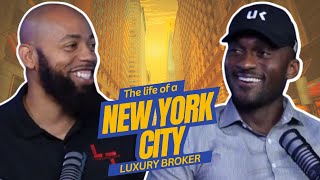
YouTube episode of The Land Bank Show hosted by Charles Noonan interviewing Osimedi ("Eddie") Igariva, founder of Pasia Realty. They discuss how athletic experience translates to sales and business resilience, Osimedi’s pathway from college basketball to B2B sales to NYC luxury rentals and fix-and-flip investing, and practical NYC market details (rents, unit sizes, deal and partnership models). The conversation also covers contractor relations, team-building, and outreach/hiring; the episode closes with sponsor mentions, an event promotion (October 6 D Day), and contact information for Pasia Realty.
Questions this video answers
Osimedi (Eddie) Igariva — Pasia Realty (contact@pasiarealty.com; Instagram: @edeegharevba spelled as in transcript).
$9,700 per month.
About 350 to 550 square feet.
Approximately $4,000 to $5,000 per month.
Two-bedrooms: roughly $5,000 up to about $9,000+ depending on luxury level; Three-bedrooms: commonly $7,000–$11,000, with luxury three-bedrooms reaching ~$15,000 or more.
Chapters
Here's what I find though. It's something about athletes and sales that it's just like a perfect match. 100% it's a perfect match. And I think because athletes are confident, right? You, you gain certain characteristics about yourself where when you get those goals, those quotas, like you said, you did your two a week, that's eight a month, you cool now you could, you know, you do it easily too. And what I think the difference is between athletes and non athletes is that we have confidence that we could just go do something 100% we get the quota. We've been trained through practice and drills and winning games. And winning games when we're down a certain amount, winning game closing games out when we're up. So we're just trained to like go and accomplish. Welcome to the revision.
Where we highlight.
Some of the most creative and non traditional ways to make money in real estate. We will showcase some of the world's greatest male and female real estate developers and teach you how you can make money by using the same strategies. Now it's time to develop. Here's your host, Charles Noonan. Welcome to another episode of the Land bank show where we highlight dope individuals that have run up a bag through non traditional methods in real estate. We got my guy Eddie from UK Realty, sir in the house. Guys, I'm going to just be honest, I couldn't pronounce the name so Eddie formally. Right. I know you doing dope stuff in real estate. I know you killing it on the basketball court, right?
Yes.
One of the best dress brokers that I ever met. Right. Every time I see you, man, you killing it. Appreciate you introduce yourself the right way. Way with the right pronunciations. Come on.
All right. Yeah. So my name is Osimedi Igariva, but everybody just calls me Eddie for short. And I actually own my own brokerage, it's called Pasia Realty. We do sales and rentals in the five boroughs. Also Long island with concentration in Manhattan, Queens and Brooklyn.
Nice, nice. You also do flips?
Yes, yes, yes. So personally I do a lot of fixing flips in Jamaica, Queens area. I got into it and 20, 20 year to date I've done about five personally and I invested in about eight, all in New York City.
Okay, so you partner with some individuals that are doing development or renovations.
Yeah, so my first couple deals being I was very green in the real estate, you know, market. I partnered with people who had the experience which I felt was beneficial. You know, they was able to guide me. You know, we worked out terms. That was a win win for both parties.
Yeah.
And it was cool. Then after I learned, I learned the game, and I kind of like branched off on my own.
That's smart, man. That's a smart way to do it.
100%.
Guys, guys like me just try it on our own because we're so greedy and we want to keep all the money.
Yeah.
But there's lessons to be learned in both.
Yeah. I just. I looked at it as like it was a win win for both parties, you know?
Yeah.
They were making money, I was making money. And I also learned a lot in a short amount of time versus having to have the headache of dealing with bad contractors.
Yeah.
You know, just local municipalities knocking on doors like, hey, what are you doing? Etc. Etc.
So you partnered with a contractor or somebody that just had a history with good contractors.
So I partnered with an investor in Queens. I was introduced by one of my colleagues.
Yeah.
At one of the firms I was working with in Manhattan, small boutique firm. Her boyfriend at the time was doing a lot of fix and flips in the neighborhood I was from. And I guess she seen what I was doing in the brokerage and, you know, the numbers I was doing. So she introduced us, and the rest was history. We clicked right away and we just got into it.
Right, and then you started to do it on your own.
Yeah. So my last two deals was by myself. We just sold one. I think it sold maybe about two months ago. And we have a couple of things in contract currently, so.
Nice.
Just trying to keep things rolling.
Nice. You're killing it, man. You killing it. All right, so tell me this. How did you.
How did.
How did you get into real estate? And what made you decide? Right. Because you. You went to college, you played basketball.
Yes, sir.
You went to a couple of different schools and usually, like New York City. Right. Basketball players. We're going to school for basketball.
Right.
And the perks that come with it. Right. So we're going to school for basketball. But I'm finding, like, people are not. Have navigated their way into real estate for a number of other things.
Yeah.
So what got you into just real estate?
So being really honest, like what you said about the whole basketball situation, you know, growing up in inner city, for the most part, you think the only way out is sports.
I know.
Or rapping or, you know, entertainment. Your physical attributes. But growing up, I kind of always had a little edge to myself. You know, I was into my books. A lot of people didn't know that, but I was into my books. So I'm out of college. I got a job downtown. I was a B2B sales rep. And my job description was I had to go to businesses in Midtown east, okay, and try to pitch them on this new platform that Staples was rolling out, you know, and I was very good at it. So at the end, at the end of every meeting, I'll be talking to the CEOs, and, you know, they'll ask questions about myself and my history, et cetera, et cetera. And I start to probing what they was into. And the common denominator, whether it was like a doctor, lawyer, insurance guy, was always real estate. They always had a portfolio.
Yeah.
So I'm like, I'm looking at a common theme here. All these guys have nice offices overlooking Central park, et cetera, et cetera. And a common theme is real estate. So two weeks later, I got into it. My job at the time was I only had to be in office one time and the rest was out in the field. So I would get my two wins early in the week, Monday, by Monday, and then the rest of the week I was doing real estate. Now do my manager. No, no. But I already did my job. I was producing. So it wasn't a conflict interest. Yeah.
Here's what I find, though. It's something about athletes and sales that it's just like a perfect match. 100% it's a perfect match. And I think because athletes are confident, right? You gain certain characteristics about yourself where when you get those goals, those quotas, like you said, you did your two a week, that's eight a month, you cool. Now you can, you know, you do it easily too. And what I think the difference is between athletes and non athletes is that we have confidence that we could just go do something.
100%.
We get the quota. We've been trained through practice and drills and winning games and winning games when we're down a certain amount, winning game, closing games out when we're up. So we're just trained to like, go and accomplish and get things done and.
Overcome adversity for the most part, too. I'm like, sure, you experience those things too. When you play, it's just like, you just keep going no matter what. You take a loss, you might be sad about it for that day, but tomorrow you have practicing for the next. The next game, the next game, next opponent.
Yeah.
And it translates to the business world all the time.
I'm starting to figure that out. It took me a while in hiring, and then I'm like, whether it's baseball, football, basketball. There's something about an athlete and sales and accomplishing goals that's tied to immediately, directly to success.
Yes.
And I think it makes us. I'm going to say taller people for some reason, likable. Right. People have a certain respect for athletes. Did you tell people, hey, used to play basketball, or did they ask you.
As soon as you walked in? Because of my height. So, yeah, it's like a. A giveaway. Oh, yeah. Did you play basketball? And I always tell them, yeah, in my past life.
Yeah.
Yeah, right.
Like, don't ask. I'm not here for basketball.
No, I mean, we'll speak on it, you know, because, like, a lot of people are fans, you know, like, yeah, I'm still a basketball fan even though I don't play anymore. So we'll speak on it. But, you know, I kind of will stay the conversation into business, you know, because that's what I'm here for, for.
The most part, and control it. That's what sales is all about. But, yeah, it helps, though. It helps get into doors. It, it, and it. And I didn't think about it or realize it until later on. And then I started to hire athletes because, you know, like, if they have a bad day, they're just trained to be like, all right, so the yeses are coming.
Yes.
That's just like a bad shooting quarter where you, like, all right, I gotta.
I gotta.
You know, you start thinking, like, your next shot is going in, even though you missed four. And that's why I think athletes make the best business people and the best business owners 100%. Because we just, like, we're just not afraid to be down. We know that we've overcome and we've won so many times that it happens that way.
It's resiliency for the most part.
Yeah.
It just piggyback on what you said. Yep.
All right, so now you cheating on the job. All right. You went as an athlete, you said, let me just score this quick, too. And then you started working for a small brokerage.
You said, yeah, yeah. So at the time, one of my clients was actually a real estate office.
Okay.
And I just knew in the back of my mind, I was like, all right, cool. I'm working on my license currently, but once I'm done, I'm coming right here. Yeah. So as soon as I got my license, I came back. And being that we had a good rapport meeting when I sold, when I switch into the platform, yeah. They hired me right on the spot.
Okay.
I stayed There for about a year. Then I went to another boutique firm and that's where I really start hit the ground running.
And were you doing rentals or sales?
Yeah, so I originally. All right. So I really started doing luxury rentals in the city. Now when I would tell people I was doing rentals, they were like, kind of like just smile or laugh, you know, because, yeah, rentals, it depends on market you want. It's not really how I say this. It's not. It's like the bottom for the most part. It's like sales in the real estate market is sales.
Yes.
Rentals is like, okay. But there's a lot of opportunity in Manhattan. Just think about the numbers in Manhattan.
That's the unique part of being in New York City.
New York City.
Our rentals ain't small.
Like, so I started out in the Manhattan market. And you know, just the back when I was. When I started out, the studio was going from like anywhere from 25 to 3,000. Yeah. One bedroom is like anywhere from 35 to 4,000. You got two, two bedroom, 55. 6,000 on the high end, maybe seven to 10,000, depending on your market. Who's working with.
What's the highest, if you don't mind me asking, what's the highest amount that you've ever rented an apartment for?
The highest apartment I ever rented for in New York City was maybe around 9,700.
9,700Amonth.
9,700Amonth.
Interesting.
It was a building on 39th and 3rd. Sheesh. It's called. What's the name of this building? It was brand new. It was just built.
You don't got to give out the.
Source because it's a very high end house 39. There we go. And they gave you a robe? They gave me a robe on when.
I closed the deal. Oh, yeah, the building is.
Gave you a robe. They gave me a robe. I came into the office with the House 39 robe. It was like I was new. I was literally like maybe two months on the job. Month in a home. Yeah, I was new, so.
Oh, so your intro to real estate was crazy.
It was pretty nice.
So let me ask you this. Depending on what time people got into real estate, the compensation structure changed.
Yes.
It used to be people had to pay broker fees.
Correct. They still do.
People still do pay broker fees. There's another model where the building pays the broker fee too now. So you got that whole broker fee 15%. Was it a whole lot? And if I ask you anything that's too personal financial Information, just say, I.
Don'T really like your talk numbers, but I don't mind it.
Yeah, yeah, yeah.
But for the most part. So clients could pay. Clients pay brokerage fees and building manager pay broker fees. Now, for the most part, in Manhattan, because the numbers are so high, you'll get agents doing one month's rent.
Okay.
Now in other markets, like Queens or Brooklyn, you'll see people doing 50% because the rents a little bit lower.
Okay?
So, but there's this. Our agents in Manhattan that charge 50%, they're. The units tend to move a lot of. A little bit slower and add a disadvantage to a guy like me who's charging one month's rent. That's how I got. I got in. It's like, okay, they charge you 50%. I work with you for one month. I was looking at more. So, yeah, I was looking at volume. I want a lot of clients versus the dollar amount. Because if you. You have 10 clients in that month, you're charging them one month versus one client charging 50% less client. Yes. You're making a lot less money. So that's how I approached the. I approached that. I was like, all right, I'm not gonna beat your head with the 50. I'm gonna undercut the big guy. Go for one month. Let's do it that way.
Smart, smart, smart. So you're saying even at a level where people are paying $10,000 a month rent, that little, like, let's say $1,000 or $2,000 difference matters to them?
Yeah. Everybody wants to save money. Everybody. Everybody.
Doesn't matter what level.
No matter what level, even I find the highest level, they really like to save money.
Yeah. If you can talk, that's impacting the bottom line. Savings, 100% value and the same service. They'll go with it. Those are, like, indicators for, like, retaining a client versus glamour glitz. And, you know, we do this all the time, but we're 15%, 100%.
So I learned. So, like. Like, I don't know. Let's piggyback a little bit. When I told you I was a B2B sales rep. Yeah. I learned that from that. That. That experience.
Yeah.
There was, like, the company I work for, Staples Advantage, like the corporate version of your retail Staples store.
Okay.
You know, but we was dealing, was going business to business, and they had a whole Staples way, meaning, like a pitch that they want us to speak, like, talk to the clients, you know, you know, just a guideline. A sales guideline, a sales pitch. And I realized that these Guys care about that. They all care about the bottom line. Correct. So I went into the. I went to the offices like, what are your high. Your. Your 10, 10 items you're buying on. On a monthly basis, they'll give it to me and I'll price it cheaper than what they're already getting it for, and I win their business just like that. So I realized that everybody wants to save money. No matter how much money you get, right? You want to save, and the more money you get, the smarter you are with it. You don't spend it on, you know, stupid things. So I realized that. And so when I got into real estate, I just applied the same. Same method.
That's awesome, man. That's smart. You would think luxury rentals. You think luxury, you think white glove, you think high end. But really at that level, it's higher educated. And they're okay with. They're okay with you saying, hey, we're not going to charge you a whole lot, but we'll get you the same units. So.
So let's talk about the deal at House Renown. Like, that was one of my first deals I did when I got into real estate. He was a brain surgeon, right? And his whole idea was, my office is right there, and if I don't spend this money, I'm gonna get taxed on it.
Yeah.
So he got him a nice apartment for him and his wife.
So really was savings.
Savings.
It was all about, like, savings. And one thing that I learned in business, too, is that companies that find a way to make tons of money and they're able to do it consecutively now they start talking about how do we get more profit out of that. So we're gonna do, you know, $92 million. We've done it for the last three years, but we've only profited like 32, right? So it's. Now how do we get that 32 higher? And it really comes from savings, like trimming fat. Meeting with consultants to find out how do they get more profit? Because they really cornered, like, a lion's share of the market. Whatever company, whatever business they're in. And it's all about consistency, right? Being consistent, impacting that bottom line, making more, like squeezing more out of the 92 million that they do. And then they talk about, like a conservative method of making sure it maintains. So a lot of times I've learned they do a lot of preventive work. So they may know an inspection's coming. All right? They may start preparing for the inspection two months ahead of time, right? And just kind of like forecasting out months ahead, weeks ahead, years ahead to make sure that they could stay where they are because they're profitable and killing it where they are. But now it starts to come from a bottom up approach, 100%. Look, let me just take a minute out to highlight our sponsors. Our first sponsor of the Land bank show is unsoldland.org unsold land is the one stop shop for everything land. The reason I like Unsold Land is because they really do a lot of the homework for you. They're going to show you Google maps, Street maps, Earth, Zillow. You get everything you need@unsoldland.org thank you unsoldland.org for being our sponsor for the Land bank show. Our second sponsor, Star Homes car home in Alabama. Star Homes is your one stop shop for everything. Tiny home, modular home or manufactured home. Give Star Homes a call, tell him Charles from the Land bank team sent you and he will take care of you with super southern hospitality. All right? All right, Eddie, back to you, man. So you like? Sounds like you came out gangbusters, bro. I don't know that many people have that opportunity. Right? So we don't grow up in like midtown Manhattan for the most part.
Right.
Queens, Bronx, Harlem, whatever. Right? Wherever, wherever. But it ain't a whole lot of us. Midtown.
Right.
So you got started in that, in that neighborhood, in that area. And what do you say is non traditional about your start, aside of it was luxury?
I would say non traditional about my start is that I got right into rentals. A lot of people when you start to get right into sales.
Right.
And it was also, I didn't, I didn't go into like the big remax, Keller Williams or exp. Douglas elements. I went to small boutique firms by design. I feel like you learn a lot from small boutique firms. I mean, the broker's a lot more hands on, accessible. Yes, he's accessible. And you guys develop a relationship, you know.
Okay.
And that's that, that's what helped me for the most part.
All right.
Yeah.
What made you open up your own brokerage to having like 12 people working for you?
So what, what got me into that was during the pandemic.
Okay.
I was doing, I was doing well at the brokerage I was at. But every time when I was there, I was just always thinking about what's next. I know for the rest of my life I had a good relationship with the brokers, my coworkers, everybody was great. But during the pandemic, it was a unique opportunity in the commercial sector. A lot of the rents was dirt. Dirt cheap for the most part. Not dirt cheap, but cheaper than what it is originally, you know.
Yeah.
And me being a real estate business, I was always a good negotiator. I was able to negotiate in a good rate.
And I noticed during the pandemic, did the rents go down because a lot of people were leaving the city?
Yeah. So the rent in the commercial sector went down 100. Now it's. It's rising up now, you know?
Yeah.
At that point it was. It was down. I had a couple. I had some reserves.
Okay.
I'm also had the. The credits that was needed to open up your own brokerage. Yeah. So I did enough sales and rentals to the point where I was able to get my brokers to sign off on.
Let me ask you something, though. When we say rents being up or down, we're talking like mid. Is it a region or an area in Manhattan that you're. That you were focused on?
It was pretty much the whole Manhattan. Everybody was just leaving because Manhattan was very dense. And during COVID everybody wants to be in open land, you know, because what the media was telling us to do.
Yeah. So here's my question. Because our audience on the Land bank show, it's a national audience. Right. A little bit global too. We're starting to get into a lot of the islands. We're starting to get viewership and some feedback. Give an idea on understanding today a one bedroom, a two, a three, and a penthouse. What those will cost?
So it depends. So now Manhattan, you have dormant building, non domain building. So I'm just gonna speak on dormant solely. Doorman right now. Let's say if he was getting a one bedroom, you're looking anywhere from like 4,000 to 5,000 for a one bedroom. One bedroom. Correct. Crazy madness. Yeah. Two bedroom. Right now you're looking anywhere. You can get anywhere from 5,000 to 7,000, 7,000 range.
Okay.
Studios, you're looking anywhere from 22 to around 35.
How many square feet? Because people don't know. People know it's small in New York, I'll tell you, but they don't know how small. How many square feet on this, on the studio side?
Studio looking anywhere from. You could say anywhere from like 3, 4, 350 to about 550.
350Ft.
350 to about. I'll say 550. The ones with 350, you know, those are dirt cheap.
Yeah.
550, you know, those are going for a Little bit more money.
Okay, now we got your twos, threes, and penthouse.
So now the one bedrooms, the I say the square footage will range anywhere from around. You could say 580 to 725, 750.
Still small. Still give me prices though. Two bedroom, three bedroom and penthouse.
So two bedroom. You can get a two bedroom anywhere from around, I say 55 to if you get something super luxury, two bedroom range, like 9,000.
Right.
You know, it all depends on your building and you know what you want to spend. Yeah, there's two bedrooms that go for 15,000, 20,000 in certain neighborhoods. You have townhouses, you know, so. But I'm just speaking on, you know, the average New York City rental.
Yeah, I just want, I want people to know that New York City rentals, where we say low, we're still talking about four or five thousand $1 bedrooms, five to nine, $10,000. 2. Give me the threes.
The threes. So the Manhattan market, there's not a lot of buildings that have threes, but when you do find them, you're looking at 70. Anywhere from like 72 to 10, 11,000 even goes higher.
Yeah.
Like if you're in a luxury, a super luxury building that has all the amenities and stuff, you can find three bedrooms, like 15,000.
Yeah.
You know, but that's not the average New York City. It is. It is.
When you factor everything in. Right.
It is. The average Manhattan renter. It is. You know, New York City is very big. We have Brooklyn, Queens, man, Bronx and Staten Island. But Manhattan is, you know, king for the most part. And I'm referencing those numbers. Yeah.
And give me penthouse numbers.
Penthouse. You're looking anywhere north of 20,000, 25,000. You know, it depends on your neighborhood. If you're in Tribeca, you're looking at, you know, Upper east side. It all depends on location and geography for the most part.
I used to, I used to live in a three bedroom in a building called the Monterey on the upper east side. 96. Yeah, 175. 96.
I know that building very well. I've done business with them.
Yeah, I had a three bedroom there for like four or five years before. So I was in corporate America for a while.
Got it.
And I had some home run years.
Right. What sector in corporate America?
I worked at American Express as a credit card manager and director of business development at American Express.
Got it. Did that lead you into the Land bank team or not yet. Got it.
No, I was just a bulldog in corporate America. But it's so easy for athletes it's like, all right, what do we got to do? This is it.
All right, let's do it and get over it.
This is what it feels like, right? And guy, tell me if you're an athlete. Tell me if, if, if you agree or disagree. When you go into corporate America as an athlete, it's almost like you're building a relationship with fans, right? Would you agree?
Yes, yes, yes, yes, yes.
100%.
100%.
So they want to talk to you anyway, that's how I felt. So when I. When I. When I went into corporate America and you see the people that, like the CFOs, the CEOs, I work with the C level individuals, it was so easy for me. It was like, they want to talk to you. Anyway, as a tall African American athlete.
A lot of my fans let them watch college basketball.
They love college basketball. Like, they die hard. They're alumni. They're part of their group.
Yeah.
And they're looking at you like, like, oh, like the conversation is, where'd you play? How was it? Where'd y' all travel? Then you tell me, you win a championship, right? It's over. It's over. It's like, just based on your history. So when I come back and I'm handing in numbers, they like, the hell is going on? What are you doing? Walk me through. Take me on your calls, on your meetings with you. And I'm like, yeah. He's like, oh, he's really cool. You know, we just talk basketball. And then at American Express, you had the suites, the key to the city, basically. You got the suites at the Garden, you got the suites at the Barclays Center. So now you're actually entertaining and taking them to games and stuff like that.
With you, it helps them with your business.
It's everything.
Everything.
And here's the key. When I entertained and I used to train people, I would tell people, don't talk business when you're entertaining. Just talk basketball, talk games, talk life, like you just said, right? We're talking about family, kids, fun stuff, hobbies. So now when Charles Noonan calls your office, you're picking up the phone. Regarding. Oh, that's my guy. That's Charles, right? You had fun last night at the game. You have a card, right? It's a sweet. They're getting drunk, they're having a great time entertained. They go home. It's like you almost become a friend. You build that relationship. So that's a little key, guys, if you want to make a lot of money in corporate America, go Be an athlete. It helps if you're tall. It helps if you do well. It helps if you win some games. That stuff is controllables. But being likable and relatable just helps in corporate America.
It does, yeah. So you've seen that in your field and I've seen that in my field. Of course. I don't think I would be here if I wasn't. If I didn't play basketball, go through the things I went through when I played basketball. It just actually shaped me for the business world.
Yeah, it does. So, all right, we are where we are now. Right. I run the Land Bank Team Impact. People change lives all over the country. You run your brokerage and you're changing lives, too, and impacting lives too, because there's scenarios where people have to move and don't know where to go. Right, right. The city is so big. If you're coming into the city, you don't know what's safe and what's not safe, what neighborhoods, what. What building, specifically.
Correct.
Because there's building. And here's the unique thing about New York. All the buildings are mixed in together.
Correct.
Right.
You got.
Yeah. You got like the people that do really well right next door to something that. That. Where they don't do really well. Right. So you don't know. So consulting with you, hiring you, you really are making a difference. Saying, I got. You meet them. I got the perfect place for 100. Right.
It makes the process easier for them for the most part. It's like a lot of people come like, I'm like this Manhattan for the most part. They don't. A lot of people that live in Manhattan aren't from New York City.
Yes.
90 of Manhattan is foreigners. People from like.
Yeah. Foreign countries that always wanted to live.
Here always want to live. Or foreign countries or just not different states. Alabama, California.
Yeah.
You know, that's what I really got, a client from New York. And if they were from New York was mostly Long island, they want to move to the city.
Yeah.
So with that being said is just like, we have that expertise. It just makes the process a lot easier. And they always, they. They always refer me clients and stuff like that. So that makes me feel good that I made their life easier, that they want me to make someone else, like.
So that's what.
I appreciate that.
That's what it's all about, man. But tell me about a time anywhere where life wasn't like it is today. Right. Where you don't have your own brokerage, you make your own Schedule. You wear the finest design stuff, man. I know that helps too, man. I know that has to help.
Yeah, you gotta look the part, man.
It has to help. Tell me about a time where it wasn't like that for you, where you had to, like, you had the vision in your head of where you wanted to be or go, but you wasn't there yet.
Yeah. So I grew up in Rosedale, Queens. It's in the Jamaica, Queens neighborhood. South Jamaica, Queens neighborhood. When went to public school, went to. In Rosedale. Then, you know, my father seen, you know, how I was headed, where I was headed. So he put me in a private school for about two or three years. Then I went back to. I went back to public school after that. Yeah. Now I want to talk about the primary school setting because that's what really kind of changed my side playing basketball. For real. Okay. I just started. Once I started playing basketball, then I stopped getting to trouble, you know, because, like, all the teachers to tell my parents, like, oh, this kid is smart, but he just has too much time on his hand. So when you have too much time as a youth, what do you do? You hang outside with your friends, you get into trouble, et cetera, et cetera.
Was it the wrong crowd, wrong environment?
I would say a mixture of both. You are a product of your environment, you know, like, when you're young, you don't choose your friends. Your neighborhood chooses your friends, you know?
Yeah.
So, I mean, I, like, I have friends. We still cool to some of them. Some of my friends are still cool to this day. But. Yeah, so I got. I started playing basketball, and that kind of, like, kept me in a straight path.
Yeah.
After that. And then when I got into college, it was. It was. That's why I feel like I faced my most adversity. High school was a little. It was a little adversity in high school. Like I said, like, basketball kind of like kept me away from a lot of.
It passes. It passes you through a lot. Yeah, it's just like.
Because, like. All right, now, let's. Let's just talk about it, like the average. The average day. Right. So I'm going to school, Thomas Edison in Jamaica, Queens. Yeah. And after school you have practice.
Yeah.
So when I. When everybody was going down the hill or it was going to dawn, I'm in practice, you know, I'll hear about the stories after. And I'm like, oh, that's crazy. You know, So I, like, I have a big, like, that's why I have a big love for the game. Just because of, like, how it steered me into this path. That absolutely was great. And I like. I'm like, if you talk to my parents, they probably would say I was. Would be their problem child of knucklehead, you know? Okay. But it was just because I just had my own vision, you know, that's what. I had my own vision and kind of what I want to do. And they steered me, you know, they gave me advice, even though I wasn't listening at that time. But, I mean, I'm pretty sure they see now that, you know. Yeah, that work got through to me. So after. Let's just talk about the high school days. I was playing in all. All kinds of tournaments. Almighty Force. Yeah.
What's the famous one y' all got?
Including isa.
Isa Roy Wilkins.
Parkinson's Park. Yeah. So that's where you. You always have. Yeah. Wilkins park is probably one. Then you have all these other small. Not small gyms, just gyms that they'll use, like. Yeah. Something was big going wrong, so I played Almighty Force, all the local isc. It was great. You don't get me wrong.
Yeah, nice. It was great.
I met, like, all my, like, all my friends, all my guys.
People. People in other states don't realize how big basketball is in New York City. To a kid, right? When you. When you're a basketball player in New York City, it's all you do, right? You might play a game at 11, then you got something else at 1, then you got another one somewhere else.
So it keeps you. It keeps you busy.
It keeps you busy, keeps you out of trouble. It builds you for, like, you're still going through that adversity, right? You're learning how to lose, right? Because you're gonna get your butt kicked sometimes. You're learning how to win, and it's forming you. But it's so much of it available to us that it really. It becomes a world for kids, right? It's just what you do. Your friends, everywhere you go, we see this. We. We recognize the basketball players that we played against. Whether you scored a lot against them or whether they killed you, there's still a level of respect, and it becomes who you are. As much as you play in New.
York City, it's like a small fraternity. That's how I say it's like everybody's connected. Even if you don't like. Even if you don't know him personally, you know, you played with him on this team, etc. Etc.
You know, where they're from and what that. Their home tournament Is.
Like, I played in all of those V1. I have my house. You go to my basement. Yeah.
Everybody has tons of trophies.
Tons of trophies and stuff like that. But I'm grateful for. I'm grateful for that. For the game, for the most part, for, you know, staring me on that. That right path.
Right.
I think that's important for any young male, you know, in urban communities. Is that just sports? Yeah, like sports. And just some type of extracurricular activities that can keep you. Keep your mind. Yeah. Looking forward. Because it's just not all about physical attributes. Yeah. A lot of. A lot of people in those urban communities have minds, you know? You know, even me, I look back on myself when I was younger, I was a pretty smart kid. But growing up, the environment is telling you it's not cool to be smart. So you kind of like you. You downplayed a little bit, you know.
It's a fine line.
It's a fine line. It's a fine line.
Being cool, being good in basketball and then. And being good in school, it's like, it's not easy. It's not easy to be like, oh, yeah, I gotta go home and study. And everybody else after the game is trying to. Trying to go to a party or going to something else. It's like, hey, I gotta go. Go lock in.
No, I know. So, all right. High school, I didn't really study because.
No, no.
I didn't really study in high school because the work wasn't as challenging.
Nah.
College, I studied a little bit, but in high school, I really study, so I'll go play basketball and I have fun with my friends, too. I was living that life, you know, I was having fun. I didn't. They didn't. None of my friends knew, like, how, like, what I like my mental capabilities, you know, I never spoke about it.
Yeah.
You know, I just.
But you always did well.
I always did well in school. I was actually even asked in my. Thomas Edison is a vocational technical high school. They have a geek squad. What geek squad does is they go and fix the computers around the school.
Yeah.
After school, I was a computer computer repair program. I turned it down. The reason why I turned it down to do it is because I had passport practice at that time.
Right.
And he said he was the first kid to ever turn that opportunity. Swimsuit squad. But at that time, my life. Basketball.
Yeah.
That's what I was selling at, you know, so. Yeah. So I always had that. But nobody knew it just because I looked.
And now in your business, you can apply as much intelligence as you want. It's all about, like, being better, being faster, making more money. Is growing. Growing the brokerage.
Yeah. So. And the business world is all about mind.
Yeah.
Your vision, your vision and stuff like that. So I'm not gonna say it's easy. It's very hard. You know, anything worth having is. Doesn't come to yourself, but it keeps me. Keeps me going. It's a challenge. So I know, you know, so.
So let's talk about. Let's talk about some of the challenges that you may have had along your journey. Like, what was the hardest part of your journey so far?
People.
People.
Yeah, I wouldn't say people. I would just say managing different personalities.
Okay. Being ahead of it.
Yeah.
And trying to build a team.
Build a team.
People that see your vision, your vision the same way.
I mean, honestly, the people will never. No one's ever going to see your vision, you know, the vision you have for yourself and. And the goals you have. No one's ever going to see your vision, you know, until you start putting the action in and they start seeing the results. I'm pretty sure you want that in your life. You had a vision and people was like, oh, no. Until you started putting in the actual work. And then people start to follow suit.
So here's the thing, right? We both have a sales background. Here's what I'm learning. You always have. You have to sell your team as well. It's the same sale. So the way you add KPIs, psychology, the science behind selling a product, product or service, you have to do the same thing to your team. You have to. If you take it with the same approach, you'll find, like, your team, you'll get that buy in, and then they. They start to align with the vision a little bit. I'll give you an example, right? And I hate to use this right now live, because the person is in the room, but we have a vision for the podcast and what we want it to look like and what we want it to sound like.
Got it.
So when I came in this morning, I heard hammering on the wall, and it was Sydney who was hammering, like, the 3D wall on her own in here without me coming in.
Got it.
It's a huge shock, right? But. And then.
But that's when.
When you were having a conversation with her, right? You like, all right, look, I gotta learn more about this land bank thing. And she's like, oh, it's phenomenal. It's awesome. It's really interesting. The more you learn the more you're going to, like, love it because of the opportunities and changing lives. So I hate to say this in front of Sydney, but Sydney is sold through proof of concept, through just since she's been working with me, hearing how many people's lives have been changed. She's watching people buy properties for $1,000. She's watching people buy land live on a call that we had where someone who had no clue where to buy land, they bought land yesterday. Right. So she's hearing that. So. And she doesn't have to sit on those calls when I teach her do stuff like that. Right. But I invite her in so she can buy more into the vision. Right. She's a success coach, so now she feels like she's winning as well. A part of her probably feels like, man, I helped somebody buy a half an acre yesterday. I helped somebody who came from nothing buy their first house.
Yes.
Right. And she's guiding people on best practices on how to do it.
Yeah.
So, yes, Sidney, I sold you. I sold you on the vision and she bought it. But if you just think about this, right? We as business people, we're starting to learn how smart we are, how intelligent we are. We're starting to learn best practices of major corporations. Think about how often you hear this. Drink the Kool Aid. Drinking the Kool Aid, right. From an organizational standpoint is all about the company selling you on, believing more of their vision. 100%, right?
Yes.
And when you think about your experience in corporate, they're like, man, you go into that meeting, they gonna be having you drinking the Kool Aid. But that's what it is, is they're selling you on the vision, the company's mission, the company's vision. And now you're going to go out and you're going to get those eight. You might even get 10 or 12%.
Right. So what I meant when. I mean, it was mostly on a, I guess, on the fix and flip investing side.
Yeah.
On the brokerage side, 100% with what you write. It's like you just. When you, when you, you show people the vision. All my agents, like, they none of them really had prior real estate experience.
Okay.
And then they came to the company and it was making a lot of money, you know?
Nice.
So kudos to them.
Yeah, of course.
So. So when I said people, I meant more on the investment, fix and flip side because you're dealing, you're juggling with a lot of contractors.
I didn't want to go down that ugly road, man, but I did not want to go down that road.
In New York City, a lot of contractors, they just have egos because they've been in it for a while and I'm a young guy, you know, and they're older. So taking, you know, sometimes direction from someone younger could be a little bit, I would say intimidating.
I don't know, it is a little intimidating.
So I had to, that's what I meant when I said people just navigating that meaning like, hey, listen, I know I'm young, but hey, I've done this, I've done that, I had the knowledge. So this is what I want.
It's the same thing, man. And I'm going to tell you, push those guys as hard as you will push anybody. And when you came in, I was on the phone with my project manager and I'm pushing him the same way, right? You told me last week, seven day turnaround is eight days. Where's my stuff?
Exactly right?
He's like, no, we said 10. I'm like, no, you said eight, you said seven. He's telling me like, it's just contractors, people in general.
And that's what I meant for the most part. It's like that's the hardest part of the business, you know, just dealing with the, the personalities of the contractors and the subcontractors in, in, in terms of the fix and flip investment side of real estate now the brokerage, you know, training is something I love to do and yeah, getting people to, you know, buy into the division where we're, where we're trying to go.
It's still people though, because people, a lot of times people may be realtors, right? And don't show, don't go to work. Things don't look good, they don't get deals. They start looking at part time jobs, they start looking at, oh, I gotta make money. And it's like if you would just do the work I've told you. Exactly. Killing it.
Now. A lot of people don't understand the level of work that comes with being a real estate agent because during the pandemic there's a lot of, I don't like to blame social media, but there's a lot of saturation on real estate and what you can do. And people's not telling you the real, you know, they're going to tell you, hey, you can come into real estate and make all this money. It takes a while. It's turnover, right? You got to really build and book a business. You have to have the right clientele. You got to know the market. Market knowledge is very key. So sometimes you're battling like the clickbait, you know. Yeah. Realize that. Listen, it takes time. Like, I'm like, for me, it didn't happen right away.
Like, reality is.
Yeah. Like I told you about a deal that I got, right. But I didn't tell you the stuff before.
It took a whole, took a whole.
Lot of prospecting and going to the office, long nights, you know, going. I'm sorry, I had a, a full time job and going to that and meeting the client here, et cetera, et cetera, you know. So it took time for me to get to a point where it's like, all right, cool, I don't need that job and I'm just gonna do this. So I would say that in like, it's just more so just having a realistic approach.
Yeah.
So what the job description is going to require and just being it for the long haul.
I think a lot of people show and this is just my vision. Right. So I'm not on the sales side. I'm more on the development side.
Yes, Right.
I think a lot of people show and this is just what I see on social media. They'll show walking into a luxury apartment, right? All the luxury accessories, the pool, the rooftop. And the agent is showing all of this to everybody that follows them. Friends, family, industry, people, not industry. So what it looks like to us is y' all walking in the best buildings in New York City. You're showing them all. And I'm looking, I'm like, damn it. No, that job, they get to just go to these dope places and rent them out. Like that's your job. Like that's how you make your money. Doorman, white glove, valet parking.
Nice views.
Views of the city are like unlike anything I've ever seen. Right. Central park overlooking it, whether you north overlooking it. South, east, you get the, the bridges, right? So I had like almost 360 views of the city and, and the Monterey. So I was able to see east, west, south and the George Washington Bridge. Yeah, I saw my apartment was the top floor on the, on the curve. I was able to see everything. Okay, so we think that you guys just go look because this is what they show. They just look. Showing the apartment in and out and then that's. And then they turn it off.
Yeah, it's not like that.
It's not like that at all. Connecting so many dots behind the scenes.
Now, don't get me wrong, there are those properties that are in New York City, but yeah, I'll Say like even a luxury agent who's doing, handling luxury, they're also doing smaller days too, you know, of course you're going to promote the luxury deals because that's what clickbait I get. So get people to follow.
So you're telling me the person on Instagram and I follow a lot of realtors in New York. Right. A couple of the events we went to. Right. I follow all of them.
Yeah.
They're friends of mine. Right.
Yeah.
So they're showing the Monterey, the rooftop and everything. Monterey is known for his roof. I'm guilty also. You know what to say.
Yeah, well, no, go ahead.
They're showing that. But are they renting a six story walk up?
No. I mean, no, no, no.
Like, well, one bedroom.
Renting and selling those buildings also. But they're also renting and selling walk ups also. So what I mean is that it's a balance. You gotta understand like all your, like all your, all your clients aren't going to be high net worth individuals. Now you have some.
Okay.
You get what I'm saying? But what happens when they're already situated, just gonna leave everybody else and not.
They're doing the walk ups to this whatever floor. Four, four story walk up.
Yeah. Every like.
And they renting out the.
They're doing everything. They're doing everything. So from, from people I know that's in luxury. They're doing that. They're renting, they're renting. Selling high end buildings, but they're also renting and selling low end buildings too. And I don't, I don't shun at it because it's like it's a dollar.
But so here's the thing. They don't show that part.
No, no, no. Because it's not going to get you clickbait. You're not going to get. You're not going to get.
I think, I think what I would. I'm sorry, I'm laughing because like you're unveiling the truth.
Yeah, it's the truth.
Look, if you in the luxury real estate market and you rent in some penthouse apartments like that got the rooftop, top over views of the whole city overlooking east side, west side, Central Park, East River, Harlem or everything. Right. And you also rented that five story walk up. I need y' all to show that too because I could, I could, I could relate more to that. Right? That's so funny. Man.
That is so like I've rented high enough, rent low and I've sold high so low. And it's just like. Yeah, but usually on the low end, if I get a deal, I probably just, you know, buy that for myself and. Yeah. Try to renovate it and put it back on the market, et cetera, et cetera.
I'll be looking and I'll be like, damn, Realtors is killing it out there, yo. Like, I'll be like, I want to move back to the Upper east side so bad.
Upper side is. That's actually what I still know. Upper side is definitely.
Oh, yeah, yeah, I know you do. Because you know the building. You know exactly what building it is and everything.
Yeah, it's a. It's quiet up there. You know, know, stay focused.
But it's a neighborhood.
Yeah, neighborhood. Just to piggyback on what you were saying about the whole luxury versus knowledge. Yes, I know luxury agents, I'm that do high end, but they're also doing small deals. You gotta. It's all about volume in this game.
Yeah, I appreciate you sharing that, bro.
That's just the ugly truth about the business.
It's work, though. It's okay. I show, I show the abandoned property a lot. I show me in the abandoned properties a lot. I don't show. And I really show a lot of the success. And like on social media, I really show the success of my team members more so than anything. I don't necessarily go fix anything at this level that I'm at. I do tell team members, though, about fights I have with contractors. Like at every level in real estate. Everybody fights with contractors, people. And I posted yesterday, I posted, I said, do all contractors lie?
No. No.
Everybody told me, yes. Like, I haven't. I did a poll. No one told me no.
I had one good solid contractor that.
You got a good, A good one. He's never told you, like, he'll be done by Friday.
See, that's a lot. So time on, time on is always subject to change.
Yeah, but that's a lot we can accept.
Yeah, yeah.
They be telling me, like, they play games sometimes with pricing. They'll get you in on a price to start a job. Once they do the job, the price or once they start it, it's like a thing with contractors. They know they got you halfway in, you paid already. You can't stop paying them, fire them and hire somebody else. Be a loss. It'll be a loss regardless because that new person is going to come in and say, what? I got to take this whole thing apart again. Right. And start all over so they know they got you and then they. Then they hit you with the. Oh, I didn't see this. I didn't know this was here. And now you got like, you paying like an extra 30 on your job. I see that coming all the time.
Yeah. So that happened like, all right. So that's why when I originally started, I partnered, so I don't have to add that. That problem with contractors, but when I first got my. When I started doing things by myself. Yeah, originally, contractors, they're just going to test you because you're gonna. Yeah, especially New York. It's a dog eat dog market, you know.
Yeah.
Contractors want to maximize on their profits just the same way you want to maximize on your profit. So if they can get you for an extra five, ten grand, they will. But if you show them that you know how much things cost.
Right.
The breakdown, all that goes out the window. So it's really like they'll play on.
Your ignorance for a little bit over time. Over time you get the relationship.
Exactly.
They know you not playing around. They know what you. They know you know, cost of stuff.
Yes. And you're giving them a lot of business too. So at that point it's like, all right, cool, this guy give me a lot of business. I don't want to end this relationship because then I might not make money this month or that month or this month, et cetera, et cetera.
That's tricky too. Right. The way you dress. Right. Going into me with a contractor at the beginning is cool. Hey, I know this. I know how much this costs. Knock this out for me the first time.
Yes.
When it comes to your fifth or your sixth flip or your fifth or sixth time, do you find they start to charge you more because they know you have money, they know you making money on flipping, or are they starting to keep it the same? Because I feel the opposite. But go ahead, let me let you answer.
From what I see, it's the same or even less because now you have even more. More knowledge. So you know that if you can get this for this price, all right, I'm not gonna do the job. I give somebody else. So now they know that you have more market knowledge.
Yeah.
It's no more playing games, you know? Yeah. But it takes a while to get to that point with contractors. Like your first couple of flips. Even me. Something like, I'm like, I'm like, what, 67 in. Yeah, that's not a. I started like three years ago in New York City. In New York City, you know, so it's a little bit tougher in New York City, but there's, you know, it's people that's like 30, 30. And they've been doing this for like 10, 15 years. 30, 30, 40, 50 properties in. So their knowledge on what to look for is. Sir, you know, at a higher.
I'm 20 years in.
20. Got it.
I have to change contractors every once in a while, every couple of years, and this is why. True story. I own a block of properties on the east side of Michigan, of Detroit.
That's not bad.
The guy knows I own four more on the west side. Four more duplexes. The first roof, he did for me like $4,000. See me, he's watching me. We're new. The second roof, $4,000. He drives by, he's asking me about the four duplexes that I have on Elmhurst on the west side, right? He sees I got people working on those too. He's looking. He's watching me make money. He's watching me turn the city. Turn this block around. And he's watching the growth. The third roof, the guy's like, oh, this one's gonna be seven.
Was it more damage or he just threw that off?
Same roof. I'm just doing new roofs on all of them because the rules were like a problem. I'm thinking long term. These properties are for my sons. I'm trying to get rid of all capital expenditures for a while so that they don't have to go through that.
Okay.
By the time we get to the fourth property, the roof, he's trying to charge me like eight, nine grand for. The plumbing is going up, the electrical. Electrical is going up. They are the same, exact identical houses. They're all like 900 to 1,000 foot bungalow properties. And I find that even in New York, contractors start to count your pockets. Yes, yes, they counting your pockets. They're looking at the properties you have. I swear to you, I used to park my cars two blocks away and walk to the properties. Because if they see what you're driving trick. If they see what you driving, they're ra. They're taxing you on it. Yes, they taxi. And I've always struggled with that. It's like, all right, I can't show them what I drive in. In Michigan. I never could show my social media. I don't say my whole name. Like, they never will know my actual information.
No.
Some of them might watch this, but they don't. I hope they don't. And I tell team members like. Like just say Lambe team. Don't be mentioning my entire full name. I mask a lot behind a management company. As well then. I have some strong relationships with people at this point, But I try to make them so much money that they don't look at the money, that they don't count the money that I make.
100%. Yes. Now, what you're saying is 100% true.
So are you lucky? But you said you only on your fifth or sixth.
Yeah.
Keep going. And I guarantee you.
Did you replace that contractor? That one? That you have to.
I have to. So here's the thing. When I replace them, I'm replacing them with the guy who's saying, I'm gonna get this done for $3,000.
Yeah.
It's just. It just right back. It's the same work. The electrical. We know how much it costs. We know what the yellow wire, the white wire is gonna cost. We know what it is. And it's just. They're watching, and I think it's. I don't know what it is. I'm super nice. I overpay. I tip. I'm buying lunches, whatever. When I'm around, they already know the level of treatment they get. Right.
Loyalty.
But they still tax like crazy, so.
Yeah, I understand. So I guess I just got lucky. Tenants to Tenants to you.
You got to move. You can't.
You got to.
You got to move in a certain way, bro. You can't come with the Ferragamos belts and all that so hard.
It depends on where I'm at, you know? So, like, if I'm going to. In the Queens area and I'm prospecting properties, I'm not with the. I'm. I'm simple guy.
Basic Bob, you know?
Basic Bob, you know, I park around the corner, et cetera, et cetera. Yeah. You know, just because I understand, you know, I understand. I understand people, you understand. I understand how they. How do you think and operate for the most part. So if I was to come. If I'm telling, I'm coming to your property and I'm pulling up my car, I'm dressed eventually, and I'm like, hey, I want your property for this amount. And you see what I have on. You're going to tax me, of course, because you think I have it, you know, versus if you think I'm a regular Joe Smo, you might be more in agreements to give me a property for the price I'm offering.
Yeah. So you got to always be selling people, bro.
Exactly. So now on the contractor side, I just really feel like. Like I always get different quotes from different contractors. So I have a couple of friends who Are like electricians and. Okay, no plumbers and stuff like that. So that kind of, like, helps me with. With those kind of jobs, you know?
Friends that you knew before. Real estate.
No, after.
Because my friends taxed the hell out of me.
So what I mean is these are like friends I met post. These are friends that I grew up with. It's people like, Right, just fix.
You know, fix your mic, because this is important. This is. This is a topic we got to talk about.
I feel like there's day ones, and you also have day twos.
Yes.
So your day ones are the people you grew up with. Your neighborhood.
Yeah.
Sandbox. You know, you guys, right, Got fought together. You guys went through a lot of things.
Right.
You know, and then you become a man and you leave the neighborhood, you go to school, you figure out yourself, and then you develop day twos. Okay. People that, you know, you've met on your second journey, you know.
Right.
So when I'm speaking to friends, I'm speaking out, you know, the day two is people I met that's in certain sectors that help my business.
You know, who charges you more? Day ones or day two?
Day ones. Why?
If that's like, your guy.
But it's because they. I guess because they. They feel like a sense of. I knew you from since she was 5. Or sense of entitlement a little bit.
But I mean, so I have it. That doesn't mean. Yeah, I'm still. Like you said, we started off with talking about, like, the. The mated mindset is to not spend it all.
No, no, no, you're not.
I didn't get it to where I am because I just be throwing it out there like that.
You want to be frugal, so I'm like, frugal a little bit, you know, And I've learned that from other businessmen that I've. Like when I was in. I told you when I was conscious, I'm like, this guy has this. And he's not spending. Like that person who has only this.
Yeah.
Like, when you. When you have a certain amount, you don't want to know. You know, it's just like, you kind of want to just keep plugging and keep doing the things that. Going to get to where you want to be.
Day ones are hard.
Yeah, day ones are. But you. I mean, you got to love them, though.
They come. So here's the thing where I struggle with day one. They know me personally, right. They know I drive a Maybach. They know I have a Rolls Royce. They're in my house. As friends and family. So they see how we actually live.
Yes.
When I had a furnace at my first property, right? Yo, my man, my bro taxed the hell out of me.
I mean, that's. That's how it's going.
But here's the thing. So I'm cool with it.
Was it.
The work was good. Plumber, I said, I hate to give my bed up. Most gotta know in my circle who this is. Plumber does his thing. Tax me crazy on a furnace.
Understood. Understand?
And I'm like, serious. He's like, yeah, man, you got it. You know, whatever. Just, you know, this is what it is. Just, you could pay cash or just send it to my office or whatever. And I'm scratching my head like, I wouldn't. I wouldn't have charged you that much if it was me.
Sometimes you do things for free for.
So now I'm buying more properties, right. I got properties in the Bronx. I'm going crazy. This is my initial real estate journey before I got into land bank properties. I didn't use them.
Got it.
I'm using my day tools. I'm using the Hispanics I met. Right. I'm using everybody else except for him. But at the same time, he's in my circle. He's day one, he's seeing it, and he's starting to get, like, pissed off.
Yeah, I understand.
It's a. It's a fine line.
It's really a fine line, but, like, as you get older, you kind of learn how to juggle it.
Yeah.
I think, like, my dad told me something else I feel like was very important. He said, I'm gonna say, like, what we're talking about D ones, they're not going to really help you get to where you want to be. It's gonna be complete strangers.
Yeah.
I mean, that's 100% true. And now for the most. For the most part in our community, you know.
Yeah.
And I've helped. And it's kind of. It's kind of true. I mean, things that I've seen in my life, etc. Etc. So, I mean, I love my day one, you know?
Yeah. They say there's stuff going that goes around the Internet that says a stranger will become a client faster than someone, than a friend or something to that effect. But I get it. It's like they know us so closely, so well, and to contribute to more of your success for some wild reason seems hard for them.
Yeah.
But then you'll meet somebody that will overpay you and pay. Pay you and be Gracious and thankful for the work or the service that you're doing for them and give you more and then champion you more than the people that know you, that know you. So a long time ago, man, I. I learned, right? Because I. I went back and forth, entrepreneurship, corporate America, entrepreneurship. I really just. I worked like, amex for a long time, but that was it. I, like, came out of college into real estate.
Got it, okay.
So I learned in. In every business that I start, I never tell friends and family for two reasons. One, it's like a sales job. You don't want your sales for your first month to be friends and family because it's not real.
It's not real.
They're buying because they like you. They're supporting you. Hey, let me just sign me up, Give me five, give me two, whatever it is. So it's not real. And then second, you can't sustain a business on friends and family. And I would say our community, you have to have, like, the right business model is you have to provide so much value that you can sustain and scale off of other people, like total strangers.
100%. And I feel like what you're saying is 100% true. So, like, the notion of keeping the money within our community, I get that. 100%.
Yeah.
But you can still do business with other communities.
Of course.
You know what I'm saying? Because everybody does that. Every community does business with other community.
It's a business model.
Depends on where you spend that dollar after you make it.
That's true.
That's what's very important.
So New York is just tough, I think where it's starting to turn to where I see like it more. It's a lot more common to. To support each other, to champion each other. Your friend is doing something to just go, go, go, spend. We're not asking for discounts. We're not asking for a whole bunch. We're just supporting each other.
Yes. But with that, it also has to be some type of customer service and level of expertise. Yeah, yeah. You know, we just don't want to just because, like, that's. That's. I feel like that's another issue that we face as a community is like, okay, Joe Schmo just opened up a barber shop. He doesn't know how to cut hair.
So. Right. Support me, support me, support me.
You just. You open up a shop now, you have to be good at what you do to gain some type of support. So I feel like if everybody just raises their level to that high level.
Right.
You'll be all right.
If you just bring it and you bring your business, it's easy to support.
It'S easy to support.
But if you just shouting out, support me, support me, support me, then it's tough. It's hard to get support when you just screaming out, support, support, support me. But if you got a kick ass product or kick ass service, it's so much easier for us to support you.
100.
So, yeah, that's a good takeaway because it's a fine line. Right. Everybody has a tracksuit, a clothing line or whatever. When you wash it, it's like three sizes small.
What is this?
You like, what is this?
I supported you because. I supported you because you're the day one.
Right. Right. Because I just rock.
And I want you to also grow also.
So, so how does that happen in your business? You're a broker now. Now that you're in position to hire people, you're in position to get people six figure salaries, six figure incomes. Right. How does that work? Do you go back to everybody you know and like, hey, I found a lane. I got 18 buildings in Midtown, 10 on the Upper east side, four in Chelsea.
So let's go in the beginning. Yes. When I first started. Yes, it's your circus, your sphere of influence, you know, you was people that you felt that, you know, was in a real estate business or who can do well. You reached out to them, see, you know, if they can be productive also. As of late, no, it's.
That changed.
I'm also just interested in the best candidate for the job.
Okay.
No matter how you look, where you come from, I just feel like that's the route to take.
If you can perform the work, if.
You could do the job, the ethic, let's work.
I'm working.
That's work. Yeah. So in the beginning, it was more so like, you know, I was trying to like bring people up and this, I feel like everybody does that when you first get into business.
Yeah.
You want your, the people, you know, to come along and try with you. Then after a while, you realize at the end of the day, the only color that really matters is green.
That's a good point. I don't have my friends either, or family anymore. But what I will do as a give back. Because sometimes you feel guilt. There's a part of that, right? You, you, you, you do like a killer month.
Yeah.
And then you go back around your friends and they're getting the same salary, the same paycheck that they've been getting at their job. And you like, damn. So here's what I do to kind of offset that. I'll teach them everything I know about it. And if you really want it, I tell my friends, like, all right, here's how you open. Here's how you get the broker's license. Here's how I can help you get it. But I'm not gonna work with you.
You got to do the work.
You're not going to take a desk on my team. And you got poor work ethic.
100.
So my. So I kind of offset that by saying, bro, I'll show you how to open. Matter of fact, I'll give you a building on the upper east side. 175 96th Street, Monterey Dope ass building, right next to the Q and the N or whatever. Train six. Train six.
Yeah.
But no, they got a new. The new line. The queue.
Yeah.
Q goes right to 96.
96. Yeah.
All right.
But the entrance. Yeah. Not so. Is the Q&A6. Yeah, the Q&6.
I don't take the trade. So the Q is on Lexington, the N is on second or third.
Correct. Correct. Correct.
And I haven't been on the trade forever, but it is what it is. I just teach and. And that should be good. And I feel personally. Right. Me telling you exactly what to do, it's more valuable. I feel like it's more valuable. Of course they want to do it with me because they know I did all the work. They know I'm a show up. They know I'm a body equipment. They know I'm a pay. I'm a find everything and do everything. And that's why. Those are the same reasons why I don't. It's like, if you really want it, go do it yourself.
Just to piggyback on what you said, I remember when I first met you at the event out in Manhattan on the west side. It was in Hudson Yards. It was the Greater Harlem Real Estate Board that had an event.
Yeah.
And you gave a girl award.
Yeah.
So I'm pretty sure, based on what you just said right now, you. You gave her the blueprint, and she went out and did exactly what you said.
Exactly.
Resulted in her winning six properties in six months. Yeah. That's crazy.
Crazy.
Right.
And she knew she had no real estate experience. Right. Six properties, six months. She just ran it. And that's another thing why I'm like, look, I can teach people how to do it, but I don't partner with people either.
I think she was in a southern.
Market, and she got Michigan, Ohio and Alabama.
Got it.
Those are where her properties are.
And so you just coached. She joined your program.
She joined a team, Land bank team. Watched the course, showed up on the calls, but she took action immediately.
That's important action.
Yeah. Some people I heard this from, from a speaker the other day. He said, don't make your notebooks smarter than you. Meaning don't write all these notes and educate that notebook with how to find a property for $2,000, how to find contractors, how to protect your investment, where to find the money. And don't do anything because you just made your notebook smart. Right. This guy, his name's Storm Leroy, he I like. That was my take.
Take away from seeing it.
He said, don't, don't, don't make that notebook super intelligent. And then you go back to work the next day and you just get back into your routine. It's like take action. And I charge people with the task on my team not to be window shoppers. So if you join a Land bank team, we're not window shopping. We're buying properties. I don't want you to sit. I don't want my program to be an insurance policy for if you get fired. It's like you joined, you paid already. I'm a show up every single Tuesday and teach. I want you to show up and I'm charging you with the task of buying that first property because you're going to own it debt free. Stays in your family's name. I don't care how fast you renovate it. I don't really care what you do with it. You could do that stuff at your pace. But while there's still opportunities to grab these properties at these really low denominations. Grab.
Grab them. Got it. Yep. And she did it and got an award for it.
Yeah, we got so many. We're doing something too. October 6th called D Day for everybody that is going to be in Alabama.
Got it. It's gonna be going on. I'm gonna cut you up. I'm going to Charlotte. So I'm trying to get. See what's going on with the Southern market. So maybe I'll stop by in Alabama.
No. October 6th, bro. You're welcome to come. And here's the thing. It's a bus bowl right now. Right. We're probably halfway full. 50, 50 passenger bus. We're probably at the 20 person mark.
Got it.
It's probably 70. It's probably 80% women that are booked and scheduled to go right now. So you are welcome to come just for the diversity Aspect of it, right? I don't want to hear. No offense to women, but I don't want to hear women talk about women stuff on a whole ride, man. I need some balance on this trip. So if you're welcome to come, man, I'll be happy to have you. And we're just gonna go. It's a celebration, okay? We're gonna go to everybody's properties that has land we're actually building. And I was on the phone with the developer, with the project manager, and he's lining up, like, the septic tank installers to attorney for quiet title action. Yeah, we're gonna do a master class right after.
Got it.
So not only did I teach them how to buy the land, where to buy it, I'm having a master class, and we're walking them through the steps of developing these duplexes.
That's smart. That's a good idea.
October 6th, man, you're welcome to come 100%. All right, cool. So, look, we got to wrap this up, man. Sydney is about to kick us out of here. Right? So, look, tell people where to find you and. Are you hiring? Would you hire right now?
Of course. I'm. I'm definitely looking for dedicated real estate professionals who have a drive for the real estate. Just. Just love real estate. All things real estate. Sales, rentals, you know, investment side, you know, fixing flips, things like that, buying holds, you know. So, yeah, if you. My Instagram is at Eddie Gadiva. I spell it for you. It's E D E E G H A R E V B A. And if you want to reach me on the email side, it's contact pasiorealty.com so contact at your UK P A S I A realty.com. you can shoot me an email. I'll respond swiftly, and then, yeah, we can see if you can work together, stuff like that. Also, I do. Also, I don't really sell courses. Real estate investment courses. I actually just kind of like, push people to go find deals. And if you find a good deal, I have the infrastructure to help you guys get that deal from start to finish. And. And you make more money that way as opposed to paying on a. Paying for a course. So, yeah, like anybody say, oh, why you not doing no courses? Hey, I could teach you how to get a deal, and you can get that dealer contract, and then you can partner. You'll make a lot more money that way versus just love it, buying my course, et cetera, et cetera.
Now, what level of work do they have to do? So they find the deal. Right. House worth 500,000. They can get it at 300,000.
Yeah. So let's say if you're having trouble negotiating the deal again down to the price. But that works. You can give me a call and ask if I come in with the expertise to help you get it down.
To that point, you are coming and negotiate. Close that. What about the work?
In terms of what is it? Construction or.
Yeah. Are you taking the deal? Like, find a deal. I'll grab it and buy it from you. Are you partnering?
It depends on worse for that person. So if the person does it, one doesn't have any money to invest in the deal.
Yeah.
Then they can just sell the deal. But if you have the capital to invest, I'll be a partner and we split 50. 50.
Nice.
Nice.
I love it, man. Partnerships, relationships. It just leads to growth.
Growth.
I love it. I outwork people. So I don't partner that much. I just, I. I need to. Maybe I need to find more people that will work as hard as I will to get to get deals done.
I'm just like you. I don't partner a lot neither.
Like, you just threw it out there, though.
It out there because I realized I put this. I don't really partner, but the reason I threw it out there is because expansion you have. It's only so much. I can. Yeah, I know my capabilities. I know I can get this certain amount of deals here. But if you want to go to a bigger. To a bigger audience and have.
Yeah, you need to partner with people to scale.
Helps you scale. Because like, I'm. I can't do everything right. I think that I can, but, like, I'm a superhuman. I can. But yeah, when you get to a certain point, you're like, man, I could really scale more if I start teaching individuals, if I start partnering with individuals.
Yeah.
Now, hypothetically speaking, let's say I do whatever. I do 10 deals a year and I have purchase me no partners on that.
Right.
And I help other people. 20 or 30 other people do deals. I just scaled my business, you know, And I also impact other people's lives also.
So, yeah, I got to learn from you on that. You got to talk. We got to talk more about it. But you said right away, like, I don't part. I'm like, I don't like.
I don't like.
You know why?
Too much heads, too many people talking.
I wake up and I get right at it.
Yes.
At 6am I'm messaging contractors. Hey, did you do this? I Need you to get to my property first today. Like, I want to. I want to work. I want to get my projects done. Other people like that. Oh, I'm a calling. I got his voicemail. And if I say, hey, you're going to get. Get the windows done, right? Right. I got plumbing and electric, and then the windows aren't done, and you giving me excuses, and I got a break bread. 50.
50 with you. So it does.
It. It. It makes me sick.
Sick.
So, like, my stomach turns. I'm like, oh, so you know what I'mma do? I'm gonna call my window guy. Hey, bro, we got 18 windows. I need you to measure them, frame them out, installation, how much?
And.
And I'm like, hey, by the way, you heard from Mike?
No.
Mike who? He said he called you. Nah, he called the guy who you came in with last time, who you said is gonna call. Nah, he ain't called me. So now I'm sitting there like, yeah, so now we done and I gotta give you half.
So, no, it depends. Every partnership is different, right? Or whatever.
But I did your work for you. I still gotta get.
It all depends.
It just depends. I don't like it.
Yeah.
When I meet some. A person, group, whatever that is gonna match my work.
That's how you do 50, 50.
I'll take less. Just get it done in this amount. I'll take less because I still got my own. I got so many projects going on.
Right. So what you, like, what you said? You hit the nail on the head. It's like, meaning, like, you can't find. Like, I remember when I first got to business, like, I was like, yeah, I don't wanna. I don't want nobody else on my team. The guy was like, why? He was like, because we feel nobody can do the work, just like you. And I was like, yes, I've.
Exactly.
I've dealt with people where it's like, I'm up and going. You're not up and going. It kind of slows you down.
Yeah.
So I get what you're saying with that. But when you meet someone who's on the same level. Yeah. It's a beautiful experience.
I gotta find better partners.
As you have to. And it's hard right now. I have no partners. You know, when I first started, I have partners.
All right, cool.
But it took me a while. It took me a while to find that, you know.
Know.
Yeah. To find, you know, those partners who was on my, like, who was on the same level of passion.
Yeah. Just on it, like, getting the job done.
Just like, yo, listen, we're here together. Let's get the job done. Like you know, that's, that's what it was. So once I found out, it was a beautiful circle. Right. Currently, right now I don't and I realize that if you want to scale, it's best to have people that, who are looking for deals who you can.
Yeah.
Partner with to smart. Take advantage to another level.
All right, cool. I thought you knew something not different. I know it's the same thing.
I totally get what you say.
I appreciate it. Yeah, I bet. So look, we're going to wrap it up, man. I think we might have to do a part 200. You get some partnerships, Land bank team. I, I, I champion this guy. If you guys want to do any real estate deals, you got deals in New York City. Are they limited to New York?
No.
You do out of state.
Out of state too. So like all my deals up until this point has been in New York City.
Nice.
But now I'm trying, I'm looking to expand into other markets.
It might work.
Yeah.
And here's where it might work because we have properties in Ohio, Cook County, Michigan, a ton in Detroit, development deals. Right. So maybe it'll be a good idea for you to come to to D Day. For real. Because they're doing developments. Yeah, they're doing developments, but a lot of them are new so maybe a couple of expertise. But we're going to work, man. Lambing team. I champion this guy Eddie. He knows what he's doing. He's made tons of money through non traditional methods in real estate and unlike me, he's willing to partner. So guys, he told you how to reach him. Hey, we gonna close out. Thanks for coming, man. I appreciate it. Of course. Another dope episode of the Land bank show. We'll see you guys. Make sure you subscribe, Follow on Spotify, YouTube, Pandora, Apple Music everywhere. They have podcasts. We are on and growing very quickly. Till next time. I'll see you guys soon. Thank you.
Take care.
Please leave a review for this podcast and give it five stars. Also follow on Instagram @charlesj.noonan and share with others as we want to share this these unique strategies with developers across the world.
More from Charles


She Made $65,000 Selling LAND… Not Houses! | Nicole Taliafero’s Real Estate Strategy
How to Scale Your Business with Funnels, Live Events & Paid Ads | Featuring Milly "The Funnel Kween"
The Biggest Real Estate Expo Ever. Learn how to pick, purchase and profit from your 1st property.

CBS News Birmingham Is BOOMING! How Developers Are Turning Vacant Land Into Wealth LIVE Sept 18-19

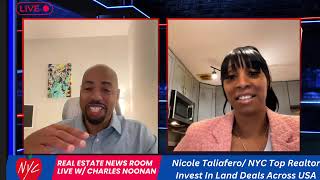
NYC Realtor Has 6 Streams of Income and will be a Millionaire. Nicole Taliafero and Charles Noonan
This Land Flipping Software changed my Real Estate Business, and you get it free.