From Humble Beginnings to Land PowerHouses: The Inspiring Journey of The Acre Boyzz:260 Acres Bought
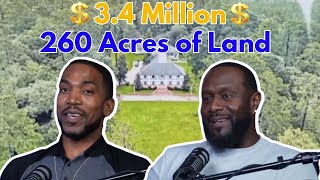
YouTube interview with Charles Noonan and guests Ray and Jay (The Acre Boys) describing their journey from low-paid/physically demanding jobs into land investing. They explain moving from small illegal/underground activities to legitimate strategies (tax-deeds, low-cost land purchases, seller-finance flips), their proof-of-concept wins (very low buys flipped for multiples), building a course/program to teach others, and their biggest publicized deal: a 260-acre compound bought for $3.4M and marketed at $8.9M. Emphasis is on non-traditional, high-volume, low-ticket land investing (25–30% on the dollar acquisitions), virtual transactions, seller-finance residual income, credibility, and community impact.
Questions this video answers
260 acres
Bought for $3.4 million; currently selling for $8.9 million
25 to 30% on the dollar
Bought for $50 and sold for $750
Bought two parcels (combined $100) and sold for $4,500
Chapters
Our biggest deal to date, right, Is the property you just talked about. That's the video that you saw. That property is 260 acres to start off, right. Has a 10,000 square foot mansion on it. It has three other residential homes, two commercial buildings. Has a horse stable on it as well. It has three acre lakes that are filled with catfish and trout and all these different things, all that. Right? Right. And it's crazy because, you know, it's urban, urban boys going the country space. So we bought that property for 3.4 million, currently selling for 8.9.
Where we highlight some of the most creative and non traditional ways to make money in real estate. We will showcase some of the world's greatest male and female real estate developers and teach you how to how you can make money by using the same strategies. Now it's time to develop. Here's your host, Charles Noonan.
Welcome to another episode of the Land bank show where we highlight some dope individuals who have made tons of money through non traditional ways in real estate. Today we got two of New York City's finest, the Acre Boys. They run a phenomenal program. They've toured the world, they've been on stage, tv, teaching what they do. And what I like, most importantly is that they teach people how to get rural land 20 to 30% on the dollar. Welcome, Ray.
Welcome.
Jay.
Peace. Peace, please. Thank you for having us, brother. Peace.
Thank you for having us about being here today.
Absolutely.
Sure. Hey, we had a funny behind the scenes moment.
That's a fact. Almost crying.
Yeah, man. So I'm, I'm excited to have you guys here because I love like collaborative efforts. Right. I love to see two strong, powerful people get together. Right. Two entities get together and just do, do like magnificent, magnificent things that they would possibly not have been able to do by themselves.
Sure.
So we talk a lot. Right. We in the middle of doing some business together for sure. Right. And it just, it's a pleasure to have you guys here because we're in a similar field, same city, and we're both like agents of change, right. We're changing the landscape of real estate for our people, our programs for sure. So, so if you guys see me laugh, smile, it's that excitement, that like that energy, right. I know it's about to erupt.
Right, right, right.
I know we gonna do something. I already know we gonna do something. Like definitely somebody's gonna look and say like what the hell just happened? Right, right, right. So I want you guys to introduce yourselves, man. Just tell the audience of the Land bank, show who you are and let's get into how you got started. Okay.
Yes, sir. My name is Ray. That's the tagline.
Oh, we go. We're going to go. Okay. All right. I'm ready. I'm ready.
My name is Ray.
My name is Jay.
And we are the Acre Boys. We have to start right there because that's funny. We so used to doing it. He didn't catch the cue, but.
Right.
That is our tagline.
We got it. We got it.
Chopped it up right. You know, he's just in chill mode.
Yeah.
This ain't so mode, man. This is. We're gonna teach people.
Yeah, for sure.
How to run it up.
For sure.
Non traditional way. Because there's so many times, like, there's so many entry. There's so many barriers to entry in real estate.
For sure.
And I wanted to put this show together to show people, like, if you can't get in the traditional way. Oh, we got some ways to run.
It up for sure.
Where you can still make money, if not more. More waiting in those lines for all these conditions that the banks have to offer and all this other stuff.
So.
All right, so we got Ray and Jay.
We definitely have some gems today, man. Ray and Jay. We are the Acre Boys. We run a program where we show people how to invest in rural vacant land for 25 to 30% on the dollar. And I don't care where anyone is living at. I promise you that America is primarily vacant. And we just need to know how to tap into that vacant land so we can capitalize and monetize on it. Most of us live in city areas, right?
Yeah.
And what we fail to realize is that somebody beat us to the punch in these city areas. Just look outside your window, go into your local neighborhood, and you'll see that it's developed already. Can you still make money there? Sure. Because many realtors still make money right there in these neighborhoods. But what about the outskirts? What happens when these city areas get overcrowded and these developers can't develop no more? All they do is they move out, they move outward, and they tap into the rural land. That's what is like the non traditional. We call that. Me and him, we call that. That's not the sexy. That's not the shiny place. Most people see the shiny houses in. The sexy houses, especially when they remodeled it, look real nice. I love them myself.
Yeah.
But when you look on the outskirts, that's the hidden money. That's what they don't want you to know about. And that is the future right there. Because when you can't build no more, you have to go and tap into things that's available for you to build on. And that's what we do for sure.
And just to jump in on that, too, you know, when you're coming from city areas like, you know, Charles, because you're from New York, because you're conditioned just to go ahead and look outside, you think everything looks like that just because you're in those particular environments. Right. But not far. When you go outside of those cities, you're going to get to rule America. Now, the craziest part about a lot of the markets that we go ahead and tap into, the crazy craziest part about it, is that you're talking about buying property, undervalued property, for 25 to 30% on the dollar, mind you, that most people don't care about no more. When we go ahead and acquire this land, we're not just buying land, we're buying situations. Situations where somebody may need money for a certain circumstance or just something that they're paying taxes on and not using, or somebody bought the property a long time ago, thought they were going to build on it, and now it's just sitting there. And now they might have relocated. They might live in North Carolina. The property may be in Arizona. So use for that property. They don't have a use for it anymore. And on top of that, drop another little gem for y'. All. Length of ownership. We find that with the length of ownership in the shortened, condensed period of time, what happens is they're more emotionally attached to that particular price. But the longer the length of ownership, the less they seem to care about the price. So that's definitely a jewel that I want the audience to tap into. For sure.
Interesting. I just learned something myself, man.
Definitely was. Yes. Yes, for sure.
So if they've owned it for a shorter period of time, there's an attachment to it.
Absolutely.
But for longer, it probably starts to lose value. Right. And that's why sometimes they're able to let it go for less.
Yeah. Well, I'll give you another scenario. Right. So let's just say I have somebody who was the property was, let's say, inherited property. Let's just say, right. That property was inherited or whatever the case may be. And now the person that inherited the property doesn't have the same love for the person that initially bought it. Right. So what happens is that asset is something. It's more like a burden to them. They have to pay taxes on that Asset every, every year, Right. So now property becomes a burden. So now that particular asset right there gets to a point where if they get a letter from us saying, you know, I'm looking, it's worth a hundred thousand. We send them an offer for 35,000. The likelihood of them taking that offer is likely because they're not doing anything with it anywhere. And most of the surprising point about all of this is most of the people who sell us their property, they didn't even think about selling the property before they got that actual correspondence from us. So it's like I got this thing that's just sitting here. I'm paying taxes on things that I'm not using. Let me go ahead and purchase, let me go ahead and sell that property to them. And on top of that, they're talking to the actual buyer. They're not talking to a real estate agent. They're not talking to anybody. They talking to the decision maker as far as that transaction is concerned.
Nice.
Yeah.
Now I got a question, man.
Sure.
I buy land.
Sure.
And when I tell people that I buy land and about my portfolio, they give me a weird look, right? Tall black guy, New York City, born and raised. How the hell did you get into land?
Sure.
You guys gotta tell me. And this is why, like, I kind of tapped into. I'm like, damn, they're in my city. Like, they buy land too. Like, immediately I'm like, all right, it's different, right? It's crazy. Our conversations are different, right? We actually spoke about earlier. Sometimes when we buy land and we sell it to somebody and it's a first time land owner. We said earlier, like, we don't realize we're impacting a kid. A hundred years ago, a hundred years from now, 200 years from now, somebody's going to say, oh yeah, my granddad bought this property, My grandmother bought this land. Or my great grandmother. Right. We don't know which is so unique. So I have to ask, I have to ask this question. How did you guys get started in the land business?
Oh, short answer is, you know, we call it Suck them Old. When you get tired of being in Suck Them all, you start looking for things to do. And we were looking for things to do. We tried a few things and cried. Tried.
What is sucker mode?
It's a real thing too. But let me explain that.
All right, all right. So I'm born and raised in the Bronx, right? Uptown, Bronx, Harlem. Harlem and north is most of my time. Where are you guys from in New York City?
We're in Long Island. When I was Long island, five minutes away from Queens.
Yeah, yeah, yeah, yeah. I so, so the language, same city, same everything, but I don't know, we call it suck a mode.
Give me more.
Suck a mode.
Suck a mode. I mean it's New York City, let's talk sucker mode is when you know you're doing things that ain't really pushing the envelope, you know, that's beneath you. You know what I mean? You work in a job, it ain't no you can't see yourself out of it. You know, we was working jobs and I'm late in the union because I was doing things before the job. I actually started working in the work field. So I was late into getting into union. I got into union when I was in my 30s. So the average person that got into the union was, which was the stage hand, you know, stagehand, set up the concerts, Madison Square Garden, Barclays center, all of that type of stuff. Average young man going to that union, he's starting when he's like 18. So they can retire when they, you know, maybe 50ish somewhere around there. I got in when I was in my mid-30s. So me retiring will be in a grave, right? So you understand what I'm saying?
You see that? That's like suck them all. That's not going to work. That's backwards.
And no matter how much they pay you on the job, I mean because, and to be totally transparent, before I was on that job, I wasn't even seeing the kind of money until I got on that job, I was making over six figures, which you think is a lot of money, right? But really there's no big difference in six figures. Making 100 grand or making 40 grand. Especially when you live in New York. We live in New York. The pressure to perform here is at an all time high for sure. So when I started making six figures, all that did was allow me just a little more breathing room, right? I could pay a little more bills on time, but it wasn't, I couldn't see the end. Like, it wasn't like, all right, now I'm free now. I never felt that way. I felt like I was tied down to the job and once you become like a main, I became like a main guy on the job, right? And that required a lot of my time to make the money. I had to be there and I didn't like that. So for six, seven straight summers, I had no summers, right? Spend no time with my kids, couldn't take no vacations, bills was paid up Right. All my bills was paid up, but I was suffering in every other aspect of life.
Quality of life is.
Quality of life was down, back hurting. I mean, you know, it's a physical job.
Yeah.
And you know that sucker Mojo, it's.
Like, now I get it now.
Yeah.
I get it because my son. Both of my sons play basketball.
Okay.
Right.
And I've been an entrepreneur all their lives.
Okay.
So I've been able to come to their games and stuff like that. And I could just imagine if I wasn't able to go do the things that I wanted and it was because I had a boss or somebody telling me where to go, I would feel like a sucker.
Right? Yeah.
So sucker mode basically is like when. When you really don't have control over your life and the things that are important to you, you in sucker mode because they're telling you what to do, where to go, and what time you gotta be there.
Yeah, for sure. And there's one. And there's one thing he always says too, about, you know, I'll let him tell the story. And this. This is a. This is a good one. It's about having. It's like, hey, boss, I gotta. You gotta. You got a nice car out there. This one had always resonated with me, and I think you'll resonate with it too.
Did y' all work together?
No, no, no. I was actually. My job was different. I was a garbage truck driver. Garbage truck driver. You know, right around. I was making six figures too, as well. My time was a little bit shorter. Cause there was a completion job. Completion mean when you finish a route, you get to go home. So if you start at 6 o' clock and you finish at 11 o' clock or 9 o', clock, you get to go home, whatever the case may be. But the problem with that is back issues. You know, instead of using your mind to work, using your back to work instead. So it got to the. It got to the point where you ever feel like, you know, you've been misplaced. Like, I feel like you've been in a place where, you know, just over brain capacity and everything else that you know already that you're worth more, but it just hasn't caught up into reality yet, right?
No. I think one of the rappers said it in one of the songs, like, this can't be life, right.
It's got to be more.
You're doing the same thing and you. This can't be. Like, this can't be it.
That's for sure.
So you work in sanitation where was your. Were you in. In Queens? No, I was in Queens.
I was in Long Island. Yeah.
Yeah. Well, I don't know. I don't know about.
Good. Because some people get it confused about that. Depending on where you are.
Right.
It's just as. It's just as. Depending where you are, really. Yeah, for sure. I'm talking about. I'm talking about filthy.
I always feel Long island is like clean, fresh air. You made it. Y' all got big houses. It's like nautical mile. Right, right. That's our vision.
That's your vision? That's your vision? I can take it to some other places that ain't like that.
You know, we laugh all the time because that's like 90% of Long Island. Is that right?
All right, cool.
But we stay in that 10% of Long Island.
Oh, y'. All. Y' all was in the 10?
Yeah, it was 10.
We were in the 10% that it's not what you think it is.
Give me one neighborhood in Long island without crossing that Queens border that's like that 10% that I wouldn't know the name of.
I'll give you several. I grew up in a town called Roosevelt. That's one of them. You have Hempstead. You have Wyandance. All of these areas are all black areas.
Yeah, yeah. Hempstead, Roosevelt. I know those names, but they're still not associated, like. Well, I' ma say Harlem, uptown with bad.
Right, right. And probably because they don't know. Yeah, that's what I would say. Probably because they don't. Because. Because the same activities go on. Yeah, right, right, right. Yeah. Same activities going.
I mean, you can find trouble wherever you at, you're uptown, you can find trouble. If you're on Long island, if you're looking for trouble and you want to be a knucklehead, you're gonna find trouble there.
If you go to.
If you go to Georgia and you're looking for trouble, you're gonna find trouble.
Yeah.
I mean, not that we was looking for it, but those neighborhoods are more impoverished. It's not traditional Long Island.
Right.
I don't. I don't know nothing about the Hamptons and things of that nature. Right, right. Visited there, actually worked out there a couple of times, but it's not that where we grew up at. It's expensive still.
Yeah.
Nevertheless. But not as expensive as the other 90 of Long Island.
All right, so how did y' all meet and start this program? I got. I. Like I told y' all when I first spoke to y' all. I was like, yo, I ain't gonna lie, man. Yo, y' all doing that together, that's dope, right?
Right?
I might be doing content, right? I mean, I got my team. It's like, it's nothing like camaraderie. Like, if you're doing it with somebody that you really rock with, right? It's so much easier because it's like we get to grow. I could grow in this area, you could grow in that area. Then we come together, we do what we gotta do, and we could both work on the same business at the same time. Immediately, I was like, yo, I know y' all gonna kill it for sure.
Definitely. Definitely.
So how did y' all meet and really decide to start a program?
So if we. If we're going back to where we met. We met a long time ago through somebody else who was a sucker, to be quite honest with you. You know? You know what I mean? But, you know, he fell off or whatever the case may be. And, you know, every. Every space that you in. In life is not the most clean one, right? So. So what happens is, you know, we had a friend, actually, he was from Brooklyn, you know, and it was around the time he had all these houses and different things like that, right? So we wondering, like, how was he. How was he doing this? You know what I mean, as far as all these houses and stuff like that. So to make a long story short, we decided to grab a couple of houses. You know what I mean? It's not the traditional way of getting a house, you know what I mean? By no stretch of the imagination, but we decided to go ahead and get these houses. This is at a. A lower point, you know what I mean? We decided to get these houses. So now what we did is we came in, you know, did some work.
Yeah, I was working. Y' all went and applied like FHA or conventional loans for.
No, no, no, no, no.
This is.
No, this is. This. This is what you call underground. This is what you call underground. So the houses were not in the most. Wasn't done anything. It was nothing traditional about it. They were acquired in sucker mold. That's why I would say they acquired in. Suck a moan. So basically what we did, they, my friend, knew the loopholes and all of these different things as far as real estate is concerned. So we go ahead. We had houses for there for three, four, five years before we had to ultimately give them up. Because the rightful person that comes along to that entity can come back at any time, whether it be a bank or whatever the case may be, and go ahead and take the property back. So, yeah, it was just at a. At a lower point in our lives and feeling like, you know, like the system is getting over on us. So we're going to get over on.
The system pretty much, man, that, you know what, New York City breeds that sometimes because of what it costs. I tell people all the time, like New Yorkers that are, let's just say Manhattan, for example, we dress in an unassuming manner for the most part because we're all mixed in right next to each other.
Yep.
Right. You can walk down 86th street right now. There's somebody that lives in a project building on the east side, right next to a building where the rent is $10,000 a month. Right. And I think from a creative standpoint, like it just breathes this level of creativity where you have to navigate for a little while until you really start to get what I was. We were just coining out of sucker out of sucker room.
Right, right.
There's an area, there's like gray area.
There's a great area right there.
Yeah, for sure. Where New Yorkers to stay in New York. Right, right. Because we've all seen friends leave and go say, oh, wow, I got 5,000 square foot house for 600,000.
For sure, for sure.
To stay here. It takes a level of navigation, Right. Where you have to figure out, all right, how, how do I allow or how do I make money to where I'm on par with the cost of living in New York.
Definitely. For sure.
All right, so definitely way back, y' all figured that out and what happened, Y' all gotta taste the real estate, like so, so.
Right, right, right. So I was doing a lot back then. I was doing the garbage. And my first taste of real estate was first of all, I took a class at night. I still remember the real estate school. It was a appraisal class. So I went ahead and got my appraisal license from there. I couldn't get anybody hired me to do the appraisals part time because I was still doing the garbage. So they went ahead and said, why don't you try mortgage broker? If you go in there and be a mortgage broker, you'll meet a lot of appraisers. So initially that was what I saw. I went inside of the mortgage space. Now that's was my taste of like real money. Because inside of the mortgages, like anybody know that was around there in that era, they were almost closing without appraisal at that point. Quicken Loans and all these different things like that. If you had a post and a 580, 600 credit score, they were giving that loans back then at that point.
You know, it came up during that time.
Yeah, for sure. So that was wild, wild west. That was the wild, wild west.
There's a company called Better Homes Realty.
I heard of that before.
They would take the trashes homes, put them on the market and sell them. As the. As they were renovating, they were adding on money to the houses.
Right.
So it's like you could get it.
At 100 for sure.
But if I do this, you get it at 140 if I do this. And I used to go to Hempstead, Long Island. That's where all the banks are. That's why I don't associate anything negative with him. Said y' all got all y' all had, or y' all still have. All the banks are in Long Island. Right. Everybody in the Bronx had to go to Long island to close. Like that was what it was.
Right, right, right.
Well, you could do like the no income, no asset, right. Stated loans, right. You show 16,000, and you could go buy X amount. You go buy $200,000 house. So I came.
That's right. That's right. I remember those programs stated, stated all of that.
All of that. It was just like you said, if.
You had a post, it was a. Yeah.
They were pushing you through.
Yeah.
And those from back then, from the flips to all of those different things, I mean, it was crazy back then, but that was the first taste of actual getting money, real money inside of that space. But eventually, of course, that, that tapered off, you know. You know how that goes. So me and him were always looking for something to do, you know, it was me, him, and my other guy. We were always looking for something to do. So there came this thing of. Right. Paying for information, which we were adamantly against in the beginning. So it's like, I'm gonna pay. I'm pay this guy to teach this. How do I know he knows? It was kind of like, you know, trying to get a validate who the poor information is coming from.
Yeah.
So to make a long story short, our first guy that we actually paid to do something beat us for $5,000 right on the Internet.
So y' all bolt, y' all put y' all money, put our money together. 25.
25. Yo, this. This is Charles. This is the Land bank show, right? Yeah, yeah, let's. Let's. Let's just take the gloves off, right? Let's take the gloves off. This New York. This New York City. Let's take the gloves off. Because I'm talking to somebody right now. I know somebody gonna resonate with this. Right. We were running around doing unlawful things, Right. And when you get tired of putting your life on the line for money.
Yeah.
You start to say, I gotta make some real changes. And that's what was happening. We was running around and it was working. We were successful. It was working on unlawful things. And it always works until it doesn't work anymore.
Exactly.
Right.
So when we got enough. Enough examples in front of us to see where it didn't work, right? So now it's like, you know, smart. Smart people are like, all right, we got through that month, Right?
Right, right, right, right.
We got through that one. And then you start to.
Right.
Invest or start to look for that change.
Right, right, right.
But it's, you know, sucker mode is the equivalent to survival mode. And when you're in survival mode, you're not even thinking rational. You're just thinking about, I need to get you a dollar the smartest way I can at that time. You know, you're not making the wisest decisions, but you see that there's a dollar attached to it, so you do it anyway. So that's the mode that we was in. That's the lifestyle we was living at that time. Into things always. Because I don't know any successful unlawful people, ultimately. I don't know any that had a bright future in breaking the law and.
That are still thriving.
That says, like, I think I forgot which movie, but it said, like, drug dealers don't retire, Right. They don't just hang it up and say, all right, guys, I did my 50 years.
There's a pension attempt.
Yeah. I'm just gonna leave out with my pension and I'm gonna sleep this stuff for you.
Right, right. For sure.
So we all know that.
100. 100.
So what happened was when we were getting those houses, yeah. It exploded. And when the jig is up, you left there holding the bag, like, now what? Now we back at square one. We was just up here, right, with what, four or five houses? And now you back down here, right? Starting from all over again. From the beginning.
Yeah.
So you have to start to figure things out. And we know, we both said to ourselves, like, look, we don't want to keep putting ourselves in position to potentially, you know, put us in some trouble we can't get out of.
Right?
So that's when he said, we came in and we Said, yo, look, what can we do? Let's. Let's pay somebody to teach us something smart, right? So we went online because now the Internet is booming. Everybody's coming along with ways to make money online. So we put our money together. We took a guy was supposed to teach us six streams of income, how to make six streams of income, right? He charges $5,000 for not gonna say his name. He was definitely a sucker because he beat us out of five grand. But in hindsight, we beat ourselves out of five grand because we didn't really do our homework thoroughly. And after he beat us, when we really started looking into him, other things that came up showing that he's beat other people. So we're not gonna blame him, we blamed ourselves.
But did you take anything away from that? Like, was there anything you learned? Even the concept? Did you learn anything from that experience? Because sometimes, right, with what I do, I teach people how to buy land bank properties. But you literally can just Google land bank properties, right? It's not as easy and simple, but the concept is there. It's clear. Like land bank properties, right? What people buy from me is they get the community, they get to see other people doing. They get to see like minded people doing it. So it's not so much, it's more so like the concept. So if you sit around me long enough, you're going to know, I bought. I bought 34 land bank properties. This is where I bought them. You could figure out how to rent them out, you could figure out how to renovate them, right? Did you guys from that program get anything? Like I. Six streams of income, something that made sense? Where you, like, all right, if I got like one river and I branch it off to six dreams, we could run a bag. Because sometimes I look at losses and I'm like, but that concept is fire. Like, if I could make that concept real, or I'm just gonna make that concept real, right? You take three, you take three, and now we got six, right? So, yeah, it wasn't good information, but, like the thought process and the mindset of having six streams. Did y' all get anything from that or was it straight trash?
I think no, we got absolutely nothing. He straight beat us out of $5,000.
Okay.
However, what it did do was it made us look into him. And we found the guy that was a partner of his that was teaching the same concept, right? Who was actually legit. So it's just funny how things work. One thing leads you to another thing. So in investigating him, his partner who was Legit in teaching. Six streams of income. We got in contact with him, and he said, wow, I can't believe he beat you out of the money. I teach the same thing for a quarter of the price. Right. Y' all should have came to me first. We said, well, we didn't know.
So did y' all have to pay him?
We paid him. We had to pay again, all right.
Because they were separate entities, so, yeah, you still had to pay him too.
So New York a little different, Right. The reason why I asked that. Is that a legit question? Because sometimes, like, yo, if that's your boy. Right, right, right, right. Just give me the info. You already know I paid him. Right, right. I'm not gonna pay you too. Right, right, right, right. Yeah, yeah.
From. From that point, you know, he was like, you know, I wasn't involved. I might have got. Gave him the information for you, but I wasn't involved in beating you. So those are two different things. Either you can rock with me. That's cool. Or you can try to get whatever you need to get from him, but, you know, good luck with that. So. But when you feel like your back is to the wall and you know you have to do something, you're willing to, I said, you know what? Let's go ahead and pay for the information. Now this whole concept of paying thing starts to pay off further because that was a foreign concept to us as far as paying for information, like grabbing a mentor. The main thing that a mentor does is condense timeframes, right? So say, Charles, you got 10 years worth of experience, right? 12 years worth of experience. If you could condense that time frame down to four or five months to help me get an expedited way to that particular destination where I want to be at, that's worth it because it consolidates my. I don't have to go through the bumps and the bruises and all the money you lost and all the people that you had to meet. You giving me those skills and resources up front. And that's the power of those programs. The one that you run in the one we run, that's the part. That's the power programs. Yeah.
Then you get confidence. You guys sell land in places that people aren't familiar with. But if you showing them, hey, I bought this many and I've sold them and made this much money, they get the confidence to do it.
Sure.
Like I said, people know these sites, right? They know you. You can look up a lot, but you can't look up that confidence until we get in Contact with you guys, and you say, oh, no, what I've done already. Right. And now they gonna buy real quick, and then they selling them real quick. Right? Cause y' all super fast.
For sure.
So we got. So that guy. The guy who bought. We bought in. We paid again to teach us the six streams of income. His words exactly was. He said, look, I could teach you six streams of income, but if you're not into any of these things, then none of them are going to work for you. So what are you guys into? Jay had the mortgage background. I flipped the house of three before my time. So we said real estate. So he said, how about you look into tax deeds? And we was like, well, what's that? I had never heard of the term tax deed. What's a tax deed? Gave us some information and some homework to do on tax deeds. And we said, okay, you know, let's. Let's give it a shot. Let's dive into that space. From diving into that space, seeking more. We found another group that was teaching all about that. So we joint. We paid more money. Now we paying, still paying. We paid more money to join that group.
I call it investing.
Well, investing. That's exactly right.
Investment, man.
That's exactly.
But at the time that you're doing it, you can't see that. You think I'm spending money. That's what it looks like. You know what I mean? I'm just spending money.
I didn't really get overturned yet.
Yeah. You know what I'm saying? Yeah. Right.
Before your mentorship. Right? You like giving it, like.
Yeah, yeah. Sparingly, like. Yeah. I'm not sure.
Yeah, right, right. So we paid and we joined that group. Nobody in the group looked like us. I believe we was the only ones of color in that. Inside of that.
This was the land group.
This was a tax D group that taught you how to invest in tax deeds.
Right.
And when we got inside of that group and the. The. The numbers that they was just doing inside of that group was, like, mind blowing. And now let's jump into the land space in the land world. So we started buying tax deeds and, okay, they were buying tax deeds for $50 and selling them for $8,000, selling them for $10,000.
And that's when the light tax deeds for $50 and selling tax deeds for $8,000 all day long.
Crazy.
And it was like you had, like that Patrick from spongebob, like, damn, I've been living under a rock all of this time, and they're killing the game. Like, their Whole group, everybody's thriving. And. And 50 was selling for 80. So what about when you were spending, you know, 2500? They were buying properties for 2500, selling them for 15 grand. 20 grand.
Nice.
And this was the whole group thriving.
Yeah.
So we was like, yo, let's. Let's test the waters. Let's. Let's buy some. We got. Our personalities are more. They more matched now. But in the beginning, I'm the guy that was like, yo, let's go down there and buy them all. Jay was just like, let's buy one or two and see if this works.
Man, if one of us say something, we all gonna go be small like that, right? If. If you show me one 50 purchase that sells for 8,000, yo, we all in. Everybody's going to be small, right? Like. Like, there's no hesitation because, like, the way that we have operated growing up, we know there's money out there, right? We live next door to people, right? And you guys, even Long island, you're seeing, like, huge mansions, yachts, everything. So, you know, the money is there.
But.
So whenever I get an idea of how to get it, like, we be on it, like, we're on it. Like, no. No hesitation.
That's a fact now. And I also want to crack another myth, because this is one that proved to be not. Not true as well. I always used to think because of being in a mortgage office and doing loans in New York primarily, that you have to invest a lot of money in order to make a lot of money. We got into that space, we found out real quick that that wasn't true. You talk about if you take, let's just say a property, say these lower tax deed properties, and you're selling, you got the audience from 25, you sell them two in a day, that's $25,000 a day, right? If you do that six days a week over the year, that's $1.5 million. See, we don't think of it like that because we don't come from that space. But the guys that we. That we learned it from, they're doing it. They're not selling two property, they're selling 10.
Yeah.
They're selling 14. And it's a machine. They got a system behind it that's having these things move like that. So these little small properties everybody talking about, that's. That's trash, that's junk. And they said, keep on thinking that way because I don't want you winning anyway. So let me go ahead and do this in those big Properties that you think that you're making so much money to take 3, 4, 5. I'm selling those things in a day, and it's taking you five or six months to close one transaction. So that's what changed the whole mindset when it comes to those low properties. Got a lot of money. Walmart model model, low ticket, high volume.
The same money is base hits. Basic.
Same money.
Base hits, man.
So that was our first one. Our first one was a buy for $50. We sold it for $750.
So I know a little bit about this, about the story, right? I go to bed early, right? And I get up early, and I go crazy.
That's me. That's me. Yeah, Right, right.
So you. So you. You got it sold. And you was like, I know he sleep, but you hit him up. And what happened?
Yeah, I was at work. I hit him up. We had put it on ebay. This is where you still could sell properties, deeds on ebay. A lot of people don't know that. And it's sold. I got the notifications in my phone. I was at work. 750. I called them. I see you're that property. So it's like, yeah, I'm up now. He's wide award. You know, that's the poc. We call that proof of concept. Yeah. Once we got that proof of concept, that's when we dove in and said, all right, it's not a matter of buying one. It's a matter of how many can we actually do on a calendar month and how fast can we turn these over? And I think our biggest flip on a $50 buy was we bought for. We bought $250, two parcels side by side, and we paid $100 for it. And I think we sold it for 4, 500. Okay.
That was the biggest initially. You were selling 50 for 800.
Well, that was the first one. We didn't even know how to price.
Them, so we just wanted 8,000 for 800.
You.
They were buying in the group 50. $400 is doubling your money. And oftentimes people don't look at stuff like that, too. They're saying, like, I'm not doing that $100 transaction. But if you have a system and a process in place to double your money, you're doubling your money. That's all I look at is, like, the math on it, right.
I took the Frank Mathis approach, right? I said, let us be the lowest on the market so I can sell them the fast. Like, you know, we coming from. From the Herb from the streets.
Yeah.
If I could buy them for $50 and turn them over for 1500, 20, 500, three grand. Right. And I know I'm the cheapest on the market.
Yeah.
That's why our prices was that because we kept it low. We wasn't trying to max out and get thousands and thousands of dollars off.
It's just different. It's success. It's different concepts. And some of those concepts are there's more people with $750 than they are with $7,000. With 75,000. With 750,000. So now, like, you have a product that you can sell to weight, like, your audience. Right. Your customer base is way bigger than if you were selling something that's 75,000 or 750,000.
So that's what allowed us to do a high volume. Sold a lot. We sold thousands of those things.
Right.
And in our travels, we ran across another method and another way to do it that we wanted to scale. Right. You started making some money. Now you want to scale up to. To make more money.
When y' all bought that first property, was that your lowest point where it was like, we gotta get out of here. Like, this. This stuff ain't working. We doing. What was the lowest point? Where. Before y' all even sold that property, or was that the lowest point for both of y'? All?
No, I think the lowest point was those houses that we had. We were living in those houses.
Okay.
The lowest point is when the bank came to take those houses back.
Right.
You know, and then knocking on doors and.
Yeah.
And you're ducking. That's. That's the lowest point for me. You know, I had my family in the house with me.
Oh, yeah.
Yeah. So, you know, when you hear.
And the bank was saying, like, y' all gotta go.
Yeah, you're being evicted. And, you know, we took these houses and renovated them. You know, these are A1 houses at this point.
Right.
You had to go and you had to go. You had options. Your options were, we could have bought those houses, which we. We went into contract with one or two of those houses, didn't pan out ultimately, or you had to go. And it's not a good feeling when somebody tells you you gotta go, especially.
Everybody, you know?
But then, like you were saying before Charles, that pressure on New York, different. The same South Carolina, say, North Carolina, that pressure hit different. You know what I'm saying?
You know, having to go in New York, it makes you.
It makes. You know.
Yeah, for sure. It makes you stronger. Yeah, yeah.
Like, we can't just get up and we. In Long island, you just can't get up and go, all right, go get another house up the road. $50,000. I mean, houses is 500 grand. You know what I mean?
Yeah.
So if you ain't in position to go, just get up and go. Wheels start spinning. And wheels start spinning really quick.
So you get that one, he calls you and what are you saying? Are you jumping up and down? Because.
Right.
Go ahead.
You did more than 10x that 50. Right. So now is the wheels going crazy. Like, this is it. We made it. Because everybody has that moment. All you need is, like, to see it. Because we know how to go crazy with something. We know how to just go straight beast mode and grind. We know how to do that, but we just don't have access to the information to get in that lane. We could really ride out.
Right.
100.
So that light bulb going like, yo.
That light bulb hit great.
Let's put it.
I couldn't sleep the rest of the night because then. But see, listen, this is how I've always thought, right. Until I've done it, as theory.
Right? Yeah.
So I know this is. This might as well be fairy dust until it actually hit the bank account.
Right.
Once I get that. That proof of concept like he was talking about now, you know, it's time to go crazy. Now I'm looking back on the list, looking for more properties after he get off. He's doing this. We are combined. We slept. We. We lived on those lists for months. Going to sleep nine, 10 hours, you.
Know, with those lists, man.
Dog, like, you know, once I find out. And he. Especially him too, dog.
I don't care. I don't give a damn what else is going on.
It's time to go. Let's get more, let's get more, let's get more.
The way I got that 300, I used the VA, I'm like, look, put an application in for every single property. Like, hire your friends, cousins. I don't care how much it costs. So I stayed up overnight doing it myself. And I'm like, this can't be it. This cannot be it.
And then that. The va, That's a fact at that point that you're speaking from right there. We didn't even know nothing about VAs at that point.
So when you come. When you come in from those places, yeah, it was even like, what's the va? Virginia?
So I have businesses already.
Right.
Right.
Some of they've been good for some things and not good for others. But I've been clashing with VA's, right? And that's why I have, like, a real team now. Because they just can't do what my team does. There's language barriers. They say yes to everything.
To everything.
But. Right. They never say they don't something.
Yeah, we could do it.
Yeah. And they. You come back and they're like, what did you want?
Yeah, right, right.
So, yeah, man. So I figured out, like, for. For admin tasks, like, action, if you can give, like, clear, actionable steps. And that's how I just went from like zero pieces of land to over 300. I hired Bas, and we put applications in for so many, right, that they started just ringing in. And then I use real team, right, to do. To buy stuff.
Like, so what was helpful for us was actually starting from getting it out the mud and starting from the ground up. Because we didn't know all the logistics of the space. So learning that, like, even if I hired a VA at that time, I wouldn't have known what to tell them what to do. You understand what I'm saying? So now that's why we're able to teach it and teach it so well and so fluid and speaker, so flow. Because we actually literally did every aspect of the business and learned it from the ground up. Even though we did have some mentorship doing it. But even in the mentorship, I know they not gonna go as hard as me when I'm in the trenches. Like, I knew every property on the list, and it was well over 400 properties. I knew every county. I knew when the date it expired. Because, you know, this is how I'm eating now. So if this is how I'm eating, I need to know everything about it. And that's what we did.
You gotta go hard, right? It's like we have to get up early because we know what's on the other end. We know what's at stake, right? It's easy. I can't even sleep sometimes too late because I know, like, where I'm trying to get to. I know what my goals are. So I don't sleep super comfortably when I'm trying to get to a certain point. It's like I gotta pop up and just go hard. And then when I'm really in grind mode, right, it's like I gotta fall asleep at the computer attic going that hard, because I gotta get there for sure. And that's one of the things that I think New York does to you. It teaches you that work ethic, that dog Mode where like you get into a mentorship group and you passing everybody that been there for two, three months, four or five months, six months, getting the same information, same information, but just going be small.
I used to say all the time when I was back in the mortgage office, somebody will go ahead and quote somebody a rate, whatever the case may be, I go out and speak to the client or whatever the case may be, I give them the same rate. They just go with me because they like me more. It's not because I'm giving them anything different. Have more personality, you know what I mean? So it was like, okay, I'm. I'm gonna go with you. I'm not giving them anything different. Then that's example of what you're talking about. Yeah.
Same thing with those tax deeds, right? Cool.
Cool.
We made a lot of money selling tax deeds. They were really cool.
Yeah.
When we came up, when we started to really come up, when we started going, director, owner, okay. And that's what the program is. Our program is going direct to owner. And once we learned that concept, that's when we started seeing a lot more money and a lot faster.
Nice.
Yeah.
So that investment, right. Would you tell anybody else that's like in sucker mode, what we say now, right. To get out of suck a mode, would your first kind of bit of advice would be like, invest in yourself?
Definitely.
Right.
For sure.
100 things didn't start to change for us until we changed. Right?
Okay.
That was the first thing. And what I mean by that, I mean, you maybe hear this a lot of times, but when we changed ourselves, we started reading books, right. We cut the TV off. We stopped tapping into the basketball games, the football games we never had. You know, you're only going to do what you've been raised to do, right. Based upon your environment and where we was coming from. Nobody ever spoke about going inside of yourself and tapping into meditation and finding out, sitting with yourself and just stop everything that's around you. But all that stuff is real stuff because we didn't start seeing results until we started doing that stuff. That's where it really started from when we went inside, start to change our mindset, started reading books, start listening to seminars and start listening to. To success stories that gave us the belief that, oh, wow, like people, people that look like us is actually out here doing it on a high level. Having six and seven siga. Six and seven figure days, not years. Right. And then it was like, oh, wow, all right, so how do we get there? And once that, how do and that light went off. That's when things start to change at that point.
I call this sometimes. I did a podcast maybe two months ago, and this guy spoke a lot about. He's like, this is the information age, right? Where you could literally buy the information to excel and to level up. We never had anybody to teach us information or to say, hey, I made. I made a million dollars last year. This is how.
Right?
Like, imagine we're 20 years old and we got people around us that saying, hey, you know, Charles made did seven figures. Mike did seven figures. Joe gets this seven figures. My program's only X amount, right? But it's going to show you exactly.
And then.
And then you're going to be in a group where everybody else that's doing seven figures, for sure, most are at six, but they're going. They're on the way to seven right there. Just imagine we had that at 20 years old.
Yeah, for sure. It was crazy.
You know what, General? You know what Jerome says? Jerome says, you have. You got all these entrepreneurs who tell their story, package it, and put it in the book, giving you a complete breakdown from A to Z of how it is they did what they did. And most of us won't even go to the library with a free library card and read the book.
And that's. That's the thing. And just to piggyback off that a little bit, you know, I would question, like, this is the story that I saw one time, right? And it says just two differences mentality, both seeing the same thing. One. One guy flies to Africa and he goes ahead and he's a shoe salesman. He flies to Africa and says. He gets to Africa and says, take everything back. Nobody's wearing shoes here. Second shoe salesman comes over there and says, bring all the shoes. Nobody's wearing shoes over here, right? Just that split little twist, the difference in mentality and how you. One saw no opportunity, the other one saw all opportunity in the world. And that makes a difference to where you land. I'm saying absolutely.
Mindset is so important. They talk about, like, having paradigm shifts, right? Changing the lens in which you see things, and then sometimes you see no opportunity and failure by somebody else to see opportunity and say, hey, I just got to get them to try them on.
For sure, for sure.
If I could get one of these people to try them on and spread the word, I got everybody in the continent wearing shoes now.
Everybody. And what makes the slight shift is only perspective.
How do you see it? So I love that.
Yeah. Yeah, for sure.
That so Here we're going to get into your biggest accomplishment, right, Your biggest sale. Because I, I want to even just tap into how I got wind of what you guys do. I got to just take a quick break to our sponsors.
Sure.
Our first sponsor, unsold land.org unsoldland.org is your one stop shop for everything land. Unsold land.org has auction opportunities, Buy it now opportunities, and they give you tons of pictures and information as well as confidence on where and how you can buy land. Our other sponsor, very close company of mine, because I'm using them to develop several parcels of land in Alabama. But they don't only cover Alabama, they are open to other areas as well as putting, as well as developing the land that you guys have. So they cover everything from modular homes, tiny homes, manufactured homes. And my guy Adam there at Star Homes will get you. Right? He's super, like, he's competitive. They work with the rates, they work with funding. They'll get everything you need for your modular homes or your tiny homes, everything you need for land. All right, so I'm on the Internet, right? I heard about you guys. I heard you guys, New York. I'm like, yo, that's, that's dope. That's a dope name. Acre Boys. Then I came across this video, right? I see two guys that look like me, two guys that look like my friends. Like, we could just all be at a bar together. Nobody would think, like, we don't know each other forever. Right?
Right.
But y' all on this mega, mega freaking size development, right? This piece of land y' all talking about. I got oil, y' all riding ATVs. But y' all sound like everybody else.
In New York, right? Right, Right.
I'm like, what the. What is this?
Yeah, for sure.
So tell me about that first. And is that like your biggest accomplishment when you guys have been buying land or do you got even bigger? Because that property was ridiculous, bro.
Yeah, that's. That's what we say when urban needs rural. That's when urban. Urban needs rural. Yeah. So our biggest deal to date, right, is the property you just talked about. That's the video that you saw. That property is 260 acres to start off, right. Has a 10,000 square foot mansion on it. It has three other residential homes, two commercial buildings. Has a horse stable on it as well. It has three acre lakes that are filled with catfish and trout and all these different things, all that. Right? Right. And it's crazy because, you know, it's urban. Urban boys going to the country space. So we bought that property for 3.4 million. Currently selling for 8.9.
I told you at lunch last week, right? That's the biggest flex I've ever seen. That is the biggest humble flex I've ever seen. How many acres?
260. Half the size of Disney World.
260 acres.
You got to walk on 260.
Two individuals from New York, you. I can't walk 200. I got to get on 18.
We went to see the property, and that's why we call it urban. M. Rural. He wore some white uptowns to walk and.
Crazy.
Urban, right?
Yeah.
So you represent and you get there. It smells different, it looks different.
Every. Everything's different. It's a. It's a compound.
How did y' all find it?
Same thing. We sent out correspondences to owners, and basically what we're doing, putting a. Putting a price on the correspondence, looking to buy the property. But I think he'll tell the story a little bit about how we came into that particular owner, because I think we didn't send him an offer for that property. We sent him an offer for something else. He just so happened to have other property that he was willing to sell.
Okay.
Yeah, for sure.
So it's getting. Being in the game. Being in the game all the time. Being in the game is going to help you.
Sure.
A garbage pail gets a mistake every once in a while, right? You just gotta be in the game and working hard. The results will come. I tell my friends, I work out. Gym don't lie. Right? You working out, it's gonna show when you play, when you get on the court, you've been working out in the lab, it's gonna show on the court. You've been in the gym, you've been working out. You take your shirt off, it's gonna show. Being in the game, Being in an entrepreneurial ship game, you're gonna have losses, but you're gonna have wins. You be in the game long enough, you really got some work ethic. You get some information, like, you can change it. You can turn your life around.
Definitely.
For sure. Yeah. Because, you know, we hit. We like the singles, we like the doubles, but occasionally you catch a home run or two.
Man, that's a ball. Y' all got a ballpark. You can hit your own home run, right? You can hit your own home run.
On 260 football fields. That's what it would.
All right, so I gotta know this, right? And. And. And I tell people this all the time when they sell my Sales team, I tell them, don't sell with your own wallet. Right? So if you pour and you can't afford my $25,000 program, that doesn't mean other people can't afford the $25,000 program. So don't not pitch my 25, 000 program just because you ain't got $25,000. What gets you mentally to disconnect and say, all right, I might not have 3.4 or whatever to buy it, but I'm gonna send out the letter or you know what I'm saying, I'm gonna send out the letter and I'm gonna take a swing at this.
Yeah.
What makes you guys just say like, yo, we could get this one, we.
Could get these inside of our program. We heavily backed by funding, so we don't even, for the first time in our lives, we don't even worry about money. We just worry about finding deals. You know, just become a good deal finder. The money will be there. And in fact we are. If you're looking into this camera, we're looking for funders, minority funders that want to partner up and do these deals because the funding that we have now is not from people that, that look like us, but all money is green. So I'm not knocking my funders. I absolutely love my funders.
However, I'm in the, just talking about.
Being in the game.
I'm in the game.
Sure. Because now, here, now take a look at what we're doing. We're also building business partners for ourselves. So this is what cross breed of what you were saying. You know, people are not, we're telling people, don't mail with their wallets kind of thing. Once you send your mail out there, look for those properties that are worth a hundred thousand, one hundred fifty thousand, whatever the case may be, because there'll always be more money than there are deals, always. So if you can, if you understand how to find an undervalued asset and you bring it to us, we'll make sure that that deal gets funded regardless. Because no good deal is going to go to West. Now if you bring me some trash and it's something where it's like there's not enough margin in there for. Let's just say this goes wrong and that goes wrong. Too close to breaking even or possibly losing money. That deal we're going to put, it has to be something that makes sense financially, you know what I'm saying?
Can I shout out, I want to shout out one of our, we don't call Them students, we call them investors. I gotta shout this young lady out.
Go for it.
No prior experience in real estate? Nope. Never ever even heard of land investing. But she heard us speak at an engagement. She decided to join our program. She's a single mother, has a son, and she took the program, completed the course, and she just actually received her check for her deal. She landed a 20. A two acre. I'm sorry. She landed a two acre that she bought for 19,000 and she sold it for 40,000. Zero money out of pocket, right? Zero money out of pocket. Investor put the money up. Investor got his money back. By the time it was all said and done, she walked with 10 grand on that deal. It's her first deal, so you know who I'm talking to. Congratulations. Super proud of her.
I love it, man. So we're gonna get into the teaching aspect, right? Because we all talk about that and how impactful that is and how we're changing lives. So let's get to how you guys decided to start teaching it, because now you running it up right now. Life is changing right now. Y' all making money?
Yeah.
You're high five in?
Yeah.
Things is good. The family's good. Now they see, like, all right, they could breathe comfortably, right? Because they be on our backs.
Yeah, for sure.
Kind of pushing the same way. Like, I hope that deal he working on. I hope that thing works. We gotta pay for stuff, right? They looking at us to paper stuff.
Yeah, for sure.
So how do y' all go from running it up to saying, all right, let's start teaching people this. How does it. How does the program come about?
Well, are you in it?
I mean. Well, we were just doing what we were doing and handling our business, and we decided to start just posting a couple of accomplishments on Instagram. We didn't really. We didn't even have a social media page. Jay had never even had a Facebook page. So. But we said, let's just make a profile for what we were doing and put a couple of things up. A couple of people saw it, contacted us, and was just like, yo, man, y' all doing a huge disservice to the community by not showing other people how to do what you do. It was like, I didn't know anybody had any interest right, in. In learning to do what we do. And so that's how the program came about. We put the program together. We had never done a course. Never was our intention. So it took us probably four months to complete the course. Because you wanted it to be perfect.
A lot of work.
It's a lot of work with the part. It is, right? It's hard for New Yorkers. So I didn't have Facebook and Instagram either. You won't buy old content for somewhere. We laughed about that the other day. Right? It's like some. It's like sometimes you want to have quiet money, right? You don't want to put all your stuff out there. It's just like it could be perceived the wrong way. Right. And then posting friends and family. New York is small. We got our friends and family, so we don't really need to post them because we on the phone with them, we hanging out, we're in the barbecue. We on each other's blocks and everything. So people don't realize, like, right. It's hard to really get online and talk to a camera in a room where nobody else is in that room. And you're talking to this device. It's not that easy. So it took me a while. But for me teaching, I learned from a friend of mine where we did so much business together who was teaching online. And I saw he made like 3.4 million. And he's like, Charles, like, you. The money that you. The money that you made from real estate to get into this other business, he's like, you doing that in your sleep because we going hard in this respective business. But he like, damn, you. You just. You. You just got 40 more thousand. I'm like, yeah. He like, the next month come. He like, you got 38. I'm like, yeah, wow, what's up? He's like, nah, like, that's a whole nother animal.
Right, right, right.
So he's like, I'm teaching this particular industry means, like, I know you got something. Because I've never seen people make money off of vacant properties like that. And then I'm like, yeah, they just land bank properties, bro. They not. Is like the bottom of it's vacant. It's ugly. Like, you don't even want to really walk into him. But he's like, nah, people don't know about that. He's like, I'm teaching people how to start with making like a hundred dollars. Then I'm teaching them how to make a thousand. Then I'm teaching them how to make 10,000. It's like you crawl before you walk. So he's like, there's so much value in it. He's like, look, I'm. I'm gonna show you the way, and I guarantee your program's gonna be successful. So to get in front of A camera. Right. New Yorkers, it's not easy. But what motivates me is stories like what you said. Right. Impacting people that didn't have any opportunity, didn't have an idea that they can go buy real estate, that they can buy a property for a thousand dollars. And then the thank yous, the fact that these are debt free properties, like you guys are invest. Teaching people how to invest in dirt that eventually could be developed into something that could pay them for like the rest of eternity, so to speak. Right.
Sure.
So that's something that, that really helped me teach. And kudos to you guys. Right. Hats off to y' all for really sharing what I feel personally is like the sexiest product out there today. Like y' all don't see it because y' all are in it.
Right? Right, Right.
But land beats everything.
Well, that's, that's the cornerstone.
It's so versatile. Like you could do any. You could build a playground, you could build a parking lot with land. You could build freaking. What do they call those where you go take the pictures at weddings? Right. Like every wedding ceremony, they go to a remote place to take. Right. There's so many things that in my group, because I sold a few pieces of land probably like under 100, maybe around 80.
Okay.
I'm being privy or exposed to all the things that they want to do with land and I'm like, man, look like landing. I ain't selling it like that, but like. Right. I got it for my own portfolio.
But.
But it's like a killer product.
Yeah. I mean primarily what we sell these days, the hottest product is just. Is agricultural land and that's primarily used just for recreation. Yeah. You know, and, and we selling that like wildfire recreational land outside of the city limits.
Yeah.
Sells really heavy in demand, especially in the southern states because they want these properties to go hunting on. They want these properties to do camping on. And the new thing too is you can Airbnb your land as well. A lot of people don't know that that's moving really well. People just want this. They call it, some people call it glamping. You know, they taking a piece of land and pretty in it up and they call that glamping. And they have Airbn, Airbnb sites just for land. People will pay you 150 a day just to go camping on it. And you come back, the cleanup is, is really nothing on it because there's really nothing to clean up.
Man, there's so much you could do. So I got a Client, she wants to do a farm, but she wants. She has kids, so she's going to do like a petting zoo. I think it's called agritourism is what she's doing. So I actually connected her with. I think it was like an acre and a half.
Okay.
And she's getting sheep and things like that. She's gonna do like this petting zoo. And then I think of driving to the country. Sometimes you do see petting zoos, but they're super crowded, right? She's gonna turn this thing into this huge business. It's a. It's a legacy plate for her, for her kids got. But just thinking about the opportunities, man, Land is like, it's that thing. I had to have y' all on this show.
Yeah, yeah. It's a. It's a. It's a hell of an asset, that's for sure.
Yeah.
Let me leave you. Let me leave your audience with this one jewel, right?
You gonna drop something today.
It's a real jewel that. Go implement this play, right? What you need to do, right, you need to learn, first of all, go learn where to go and buy some land, all right? This is how you make a quick $5,000 reserve. Residual, right? Residual money. It'll come to you for the next five, six years, residually, month after month. So you go and you buy these properties, right? There's places and he'll tell you, join this program. He'll show you where to find undervalued land at. And you could pick up a piece of land for, let's just say, 300, 400, right?
Right.
Let's say you start with. Let's say you got $2,000, right? That'll give you five pieces, right?
Yeah.
So you buy those five pieces, you put them online, and you advertise them for seller finance, right? You say you want your down payment to be $500. That same $500 that you paid, that's the down payment. That's a dope place, right, that I want for the land. Charge them $150 a month for seller finance. Put them in a two or three year contract, right? So you're going to sell a property from anywhere from 2,500 to 3,000. It'll take them two, three years to pay that off. Yeah. So 505 pieces of property times $150. Effectively already you're at $750 a month. Keep doing that till you get to 20 properties. 20 times 150 each time. You're not out of pocket Anymore. Because the down payment that you're asking for is covering the price that you paid for the land. And that's how you get residual money from flipping land.
Man, y' all heard it first from Ray of the Acre, boy. I knew that. I got friends that do that.
Okay.
I got friends that do that. Land is home. Yeah, Casey.
Gotcha.
But they do it on a. On a huge.
You can run it. I'm giving you the minimal, like ground floor level.
Anybody.
Anybody can do that.
Yeah, that's dope. What they do. Land is home. And he's a friend of mine, so I gotta say, he's. He's the. He is one of the only people that I. I know that owns an island. He's got an island for sale, right? His land is home. It's not a flex like your flex, though. It ain't. It ain't a flex like y' all flex. Y' all flex is different to this day. That is the biggest flex I've ever seen. Two African Americans on 200 sun acres. Like, like that trumps my Rolls Royce mayback. There's no other flex. I could have 40 houses. Y' all could have like 490 houses on that, right? So that's. That's like hands down, man, I always give it up. Y' all have the big. And y' all so humble with it too. So it's like. Yeah, yeah. So we got some oil over there, we got gas, we got timber. The timber alone is worth like a ton of money, right?
Yeah.
So. Yeah, but what they do, what he does, he seller finds, seller finances all of it. So they know how to acquire it. They sell a finance everything. And it's such an easy way for our people to get in. But they don't really market to our people. Our people don't really know about it. It's like his community, his people. But he's such a good guy, man. I don't have any reservations of mentioning him because he'll sell it to anybody, right? But his residual income, it's all residual. He's like, I don't even want.
You don't want to sell quick.
Yeah.
Because there's so much more that you can get. And the value of it is like a fair exchange where it's a win win. But he can calculate his money every single month. It's maintenance free, right? There's no maintenance on land, right. It's maintenance free collecting a crazy check.
Let me share one more secret about that with what he's doing. And you can Also do it yourself. Is that those seller finance deals, 90% of them never go to full term.
Yeah.
So once they default on the property, they usually last for like a year or two. Right. Once they default on the property, you just rinse and repeat, you put it back on the market for another down payment. And what happens in those circumstances is many times the people that defaulted on the property, they've made improvements to your property. Right?
Yeah.
They went in, they maybe added a. Well, they maybe added some. Some dirt roads that went through it, maybe added electricity, they maybe planted some timber. All of these improvements that makes your property more valuable. So 90 of the people never go to term. So it just keeps you in the game longer on that one.
I didn't know that. That's crazy. That's a whole nother fact. Land bank team members, though, man, I'm tell you, they're gonna move. They gonna, they're gonna pay that off. They gonna take that ownership completely.
Right, right, right.
And I'm gonna push them. I'm gonna push them so hard because it's just stuff that we don't know that we have the information on. So we know how to get it developed. We know how to run the wire, the electric, we know how to install that septic tank. That's another thing. The value of our programs, we're giving people so much information. Like you said, 20, 30 years. 10, 15 years of information for sure. The mistakes, the confidence, people really can level up through investing in themselves.
Absolutely. Definitely.
To me, it's a no. It's a no brainer. It's like, yeah, you know, $2,000 a month residual, I'm sure can help somebody. And we, we always deal with the minimal numbers. We can all talk about big numbers. We got big deals that we, we got deals now. We sell them for 100 grand, you know, 150,000. We don't really advertise those to social media because our audience is primarily us.
Yep.
And most of us are not willing to pay for a piece of. Piece of dirt. 150,000. Because they don't really see what can be done with it. Right. Maybe if you're a builder, builder gets the game. So they'll tap in with us and they'll take a look at it. But for the average person, we try to put them in a position where they can come in with minimal money. Right. You know, we're selling deals now, and Jason mentioned it earlier, is it's a lot of money and small money. Right. So we're selling deals now and you see us on social media, we selling a deal a day. We, we sold for, for 2500. We sold a property a day for 14 days straight. So what's 14 times 2500? It adds up, of course. So instead of always waiting for the big lick and catch, instead of selling a 30 acre for 80 grand at one time, all right, we'll take the turtle route and we'll sell one a day for 2,500 and we'll do that for 14 days, take a couple days off, come back and do it for another eight days.
Skill set. Yeah, it's the skill set, right? It's doing the work that I always say, and I said it last time, right? Making that first million dollars is the hardest. First mil is the hardest million. The second, the third, they're doing the same thing, right? You sell fourteen, twenty five hundred dollar properties in fourteen days, right? You're building that audience, that customer base. So now the price goes to, goes to 5,000, then it goes to 10, then it goes to 20. But it's the same group, it's the same activity, it's the same skill set. You got to post it, you got to do the homework, you got to get the parcel number, you got to get the land use, you got to get the address, right? And it's just that it's teaching. And that's why I say your program is so dope. Because little do they know, they're starting to buy for 50 and sell for 800, right? But eventually, right, very quickly, you start to buy for 5,000, right? You start to buy for 50,000. It's just giving the confidence and the skill set to where the impact that we're having with our community is far more than we'll ever be able to really see. All of it for sure. But just know like our legacy in itself and what we're doing today is going to live on forever.
Yeah, for sure. Just even, just going back to the guys. So unassuming. Even the guys, the tax deed thing, man, you're talking about, you know, people that don't look like us just on their phone going around making 20, 30, $40,000 a day, Sony phone, just walking around and we had no clue that this is even going. That's why we always call it hidden in plain sight. It's always been there. You just, they just wasn't taught to you, you know what I mean? So it's always been there. Yeah, for sure.
So even when we selling deals, we still sell them undervalued. Like we're not maxing them out because we know who our audience is. So you getting a piece of land for, you know, $2,500. It's yours. We was on the phone with a brother and his brother, and his brother was a builder just yesterday, and he was like, yeah, my brother's a building, so I'm getting it at a great price. It was in the nice side of the town where we were selling them at. So just five people. You still getting entry level deals, you know what I mean? It's tough to find. You can find them, but it's tough to find land for $2500. That's in a nice area. Absolutely. So that's what we come in at. And we're not trying to max it out to our people. We're still leaving some room in many cases. We sold a piece of land to a young lady in Arkansas. We sold a piece of land to her for, I think, 2500. She turned around and sold it for six grand. So it's still meat on the bone in a lot of stuff to.
To a millionaire friend of mine yesterday, right? And here's what she told me. She has flexibility to adjust her margins, but she doesn't, right?
Right.
And she says when she doesn't do that, it makes it easy to do business with. But what it. What else it does. It makes it easy to refer business to, right? When you say you got something that's worth 10,000 for 4,000, right? It's easy to be like, all right, Charles, go ahead. He gonna get you something, right? 4,000. But if you got something for 10,000, for 9,000, it's like, man, I ain't really do all of that well, right? It's like. It's borderline. It's right there. Could lose some. But what I'm learning, the higher. The higher I really start to research and just be around people that do well. They don't try to crush every single deal. It's like squeeze everything out of everything.
They don't try to do that.
What I'm learning is more volume. Volume is volume longevity. Get that base hit. Get another one. They don't try to go dunk right on the first. The first try. It's like, let me get some layups. Let me get. You gonna get a dunk. But really, they practice in layups and repeating that over and over and over and over again. Yeah, you're gonna get a fast break and get a dunk, and it's gonna feel great. But the whole crowd, all your fan base, all Your customer base is going to come from just you being consistent for sure and just hitting those home, hitting those base hits over and over.
And here's the funny thing about it. We found that once you go north of $50, $60,000, your buyer base starts to decrease.
Yeah.
But if you can keep these properties low like we were talking, what you do at the land bank, what we do at Land and Legacy, you keep those properties low, your buyer base expands a thousand x because there's more people with $2,500 in their pocket, especially with how the economy's going, high interest rates and everything like that. There's more people who can go, they can take that off their credit card. 2500, $3000. There's more accessible to that money than you're selling property for. 100,000, 150,000. So now people who didn't even know that they could be a landowner or a house on the land bank, now they're coming and buying these properties for low denominations and they're happy with it.
I love it.
Last but not least, before we get out of here about that, I just want to say in order to do that, people be credible like we spoke about, you can't be in survival mode and succom old and if you scamming and all of that stuff, you're not going to last in the game. And I think that's a testament to us and yourself. That's why we're able to sell these properties so fast, because the trust is there and we haven't found anybody in our practices. So you always get what you're supposed to get from us for sure. And if you, you stand the test, the time and people see that you're credible and you got a good product, they don't have a problem with coming to do business with you.
Yeah.
And in the beginning we used to have to send over our license to sell the property because everybody thought you were a scam.
They didn't know who we were, they.
Didn'T know who we were.
We're just popping up online with all these private. In the beginning we had to send our license because we had no credibility. Nobody knows you for doing that.
Right.
As you start to scale the credibility now we got to talk to nobody no more. They just go by.
Yeah, No, I think the word gets out.
Yeah, for sure.
People know and, and it's, it's mind blowing what we do as it is. Right. When you hear buying a vacant property, but testimonial like the word spread and there's Just people, Countless people saying, they have a Land bank house. They bought one, they bought three, they bought six. We got crowds coming out. Right. That. On my team that own property.
Right.
So I think that stuff, like the cream, I'm gonna say rises to the top. The real, like, people that are helping people. And what I think helps us a lot too, or I'll say gives us separation, because I don't really. I don't get a lot of that non credible space just because of what I've done, showing my portfolio and people that have so many properties.
Sure.
I think one of the things that helps us out is that people can see passion. People can see who's trying to help people. Right. You guys own the properties that you own. Right. You don't necessarily have to go back and say, hey, I'm gonna do a program and teach you guys how to do it. We're already like, my portfolio is already there. You guys have the biggest flex on the Internet, regardless of color. Right. So you could stay in the lab. Right. Y' all, too, could just go to lunch and just make money all day long. But I think people. One of the things that people take away is that when we talk, it's more about who we helped, the stories about how many people we help. Like you mentioned the lady, the young lady who, like, single parent, who just got into the game.
Right, right, right.
And had success. And I think things like that, people start to sniff out and be like, all right, they want to help people. They're not just here like, I'm here for legacy. I want, like, 100 years from now, now somebody like, yeah, so my granddad bought this house from some guy off Instagram, some Land bank program. This is a Land bank house. And somebody like, Land Bank. What the hell was that? And they say, well, 80 years ago, there was a program. But no, you know what, too? In Harlem, they used to sell houses for like a dollar 25. Right.
I remember. I remember my grandfather had some of those.
Exactly. So I want to be. I want to be that guy where they like, yeah.
So there was the.
This Land bank program that my grandfather took advantage of.
Right.
And that's still. That's like my legacy. That's my win for sure. Like in. In some connected capacity. That's legacy. And you guys getting people land. And I see y' all sell it first to go up. I get home, take my phone back out, and it's so. And I'm like, damn, they moving. They moving that property quick. Yeah, they going, so, yeah, I think Definitely testament to you guys in our programs that, of course, it's a. Like, it's all official. And I think our passion to help people and impact people.
Yeah.
Plays a big role, for sure.
Definitely.
Anything else y' all want to mention about the program? Because the program is dope, right?
Yeah. Yes, sir.
Anything else y' all want to mention about the program? And then after that, you got to tell the people where to find you.
Yeah, for sure. I definitely want to tell people that when we purchase this land, something we did not touch on, is that it's all done virtually. We're not going to. We. We are probably about our 380th transaction. The only one property that we saw in person was that 260 acre state. Everything else is digital, and it's done online. There's no visiting the properties. There's no. None of that. All of the resources and tools are given to you inside of the program so you can do it from the comfort of your own home, which provides flexibility. You could be on vacation, you could.
Be anywhere in the world and do.
The business, still run it effectively from your computer. That's one of the. That's one of the most powerful things that I like about it. You know what I mean? You could be everywhere and nowhere at the same time. That's what I like.
I gotta tell y' all something. I don't think I told y' all this, right? I bought a piece of land from Arkansas off of y' all free ebook. I don't even think I told y'. All. I bought it over. It took like four or five days, right? So the auction starts, you do your bed, and then it takes a few days. I woke up, I was like, oh, but I think y' all were on tour. I ain't get to tell y'. All.
Right, Right, Right.
So, hey, I. Oh, y', all, I appreciate it.
So I will say, look, if you. If you're looking to learn how to buy undervalued land, you have to get under some type of mentorship. Whether that's the land bank or whether that's land and legacy. Our program. Get with some salad brothers. Do your homework, do your research. Make sure you're getting with some credible teachers. We know the game. We've been in the game. Now going on our seventh year, we're passionate about teaching it. And we don't hold back. We tell you all the steps from A to Z on how you can come in and buy undervalued land at 25 to 30% on the dollar. Put you on the fast track. If you got that dog in you like you, like we got in us, you can really run it up really fast. But be prepared to work and, you know, just be prepared. Keep an open mind to learning something new. Because half America is vacant and undeveloped. 47 of it is undeveloped and vacant. So me teaching you something doesn't affect me one bit at all because it's more than enough to go around for everybody.
And last thing, I want you to hit them with that. What's the average of Realtors and full time land investors?
The comparison between the two, you know, it is no competition in the land space compared to traditional real estate. And traditional real estate, there's roughly 150 million realtors spread across the world. Land space is less than 10,000 investors. Traditional real estate, they pull from 500 million dollar homes across the country. Land space, we pull from 1.9 billion acres that's available.
It's different.
It's not crowded. There's no, there's the. We free.
There's.
There's no, there's no crowd. It's not crowded over here. It's not congested. When we get them offers out there, we're not competing with anybody because nobody's doing it.
And we love our Realtors. Realtors are still crushing the game.
Yeah.
Yeah.
In a, In a crowded space.
Yeah.
What happens when you remove the crowd?
Real estate in general, man, it's. It's just. It's a dope industry for sure. It's made the most millionaires than any other industry. So I love it. And we both found a lane where.
Yeah. That we explored that we. For real.
Yeah, man. So. All right, so where can they find you? We got Instagram, right?
Yep.
Where can they find you guys?
Acre boys. A C, R e B O Y2Z's anchor boys at. On. On Instagram.
And you can check us out. You can go straight to our site at www.landsc and legacy.info from there it is. You can see all the products that we offer. That ebook that you got, your Arkansas properties.
Yo, do y' all remember I was on that webinar?
I don't.
You.
Do you remember me on the webinar? I don't, I don't.
Yo, I'll be. I'll be low, bro. I was in your webinar asking questions. I do my homework. Yeah, for sure. That's one thing I didn't know that. I do my homework. Homework.
Right.
I do my homework. And then so I sat through a webinar I gave the ebook and I asked, like, where do you sell it? Because I say this all the time. People know where to go buy a Gucci belt, but they don't know where to go buy land.
Right, right.
And when you say that to somebody, kind of put it into perspective, like, then where do we go? So you really don't know. Right. So it's a niche product that we're opening our people to. But I did the research. I sat on probably like 2 or 3, y'. All. Automation is dope because it's. It tells you when is the next webinar. And what I like about it is, y' all webinar, you actually do it live, right? Yeah, some webinars on auto replay, which is still effective because you're giving the same information. But y' all do. And then I ask some questions, and y' all answer them very thoroughly, knowledgeably, and I execute it. I like that. I got that book. I went through the steps. Listen, I went right on that. That site. I'm not saying the site, by the way. I'm not giving y' all give away all y'. All. I'm not giving the way. This ain't the free. The free info show.
Right, Right.
This is the landmark show. I'm highlighting y'. All. But that. That ebook got some power in it, bro. Y' all giving that away, man.
That's you. You're executing, man. And that's what I like about you. Because, you know, you said it before. Before we started talking, you know, collabing over competition, man, this brother reached out to us and said, yo, we need to do some things. We need to bring that Ja Rule and Fat Joe New York coming together. You know what I mean?
I like that.
Instead of us, like, always clashing with each other, you know, coming together and. And putting a power team together because it's right in our own backyard and, you know, the knowledge that you got and what you're doing. First of all, I tip my hat to you with your community. You know, you said you like what we do. We certainly admire what you're doing over at the land bank. And we didn't. We didn't know nobody else in the space either, especially that looked like us that was doing it on a high level for sure. So it was like, you know, the. To hear what y' all doing over there, because we know about the land banks. We got a ebook that. And I'm gonna give you that. That book for free. Because that ebook, we put everything centralized. We got every Land Bank. All you got to do is click on to the link, take you straight to the Land bank or OTC online auction.
Yeah.
And it takes you straight to there. So your community can tap into that if they find it useful. You know, take that for you. Only other people, you know, man, they got the.
I give them the whole map. I give them the National Land bank map and tell them go crazy with it. And I demand.
It's plenty, man.
Like, plenty. I give that map out. Yeah, it's again, like I said earlier, man, it's about people that you can tell who wants to help people.
Right.
You could tell. Like, we in New York City talking about land. And I did a live shouting y' all out one time while I was in Arkansas.
I've screen recorded it and then I put it up.
Yeah, like, yo, shout these dudes. Because once you. We don't get to see it in New York City. You don't see, like, forest and forest and forest. One of the things I saw, right, you see the forest, you see the land, you see. Just see trees. But then across the street, it's a whole developed. And I'm like, this is what they teach.
That's what it could be.
This could be this. That's. If you could just see that. If you could understand that. Then I said, when the Acre Boys put that stuff for sale, y' all better go grab it, because they're showing this part right here.
Right, right.
That looks like this. And it was just right across the street. So I had to shout y' all out.
Yeah, for sure. I had to clip that up.
Hey, that's what we're doing, man. There's enough for everybody. So we gotta start. We gotta start making sure we get it.
For sure.
Our people get it, and we're here to lead. Lead them on that path.
Definitely.
All right, we gotta wrap it up, man.
Yes, sir.
Hey, thank you for watching this episode Land bank show with the Acre Boys. Like the video. Subscribe to the Land bank show and we'll see you at the next episode. Thank you.
Peace, y'. All.
Peace of love, y'.
All.
Thank you for listening to the Landing show with Charles. Please leave a review for this podcast.
And give it 5 stars.
Also follow on Instagram Instagram at charlesj. Noonan and share with others as we want to share these unique strategies with developers across the world.
More from Charles


She Made $65,000 Selling LAND… Not Houses! | Nicole Taliafero’s Real Estate Strategy
How to Scale Your Business with Funnels, Live Events & Paid Ads | Featuring Milly "The Funnel Kween"
The Biggest Real Estate Expo Ever. Learn how to pick, purchase and profit from your 1st property.
CBS News Birmingham Is BOOMING! How Developers Are Turning Vacant Land Into Wealth LIVE Sept 18-19
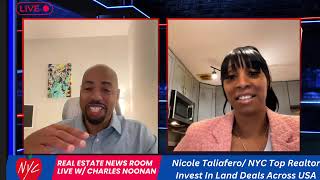
NYC Realtor Has 6 Streams of Income and will be a Millionaire. Nicole Taliafero and Charles Noonan
This Land Flipping Software changed my Real Estate Business, and you get it free.