How Dana Christian Built 60 Doors with 7 Steps to Real Estate Success. W Charles Noonan
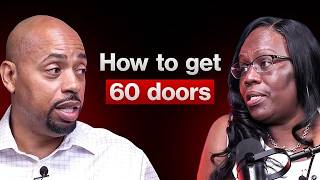
This is a recorded interview on the Real Estate Newsroom where Dana Christian (real-estate investor and teacher) describes how she builds cash-flowing portfolios by buying rent-ready properties and using out-of-state, landlord-friendly markets, auctions and land-bank listings. She outlines practical steps (market selection, entity setup, funding via business credit and DSCR loans, use of Zillow/auctions, hiring property managers, contractor red flags) and explains her teaching programs (free tier → paid tiers, done-with-you, inner circle). Dana emphasizes quick time-to-cashflow (30–45 days claim), risk controls (pick landlord-friendly states, estimate full-gut rehab costs), and social impact—helping thousands of mentees achieve rental income.
Questions this video answers
Snellville, Georgia (Atlanta area).
2020.
She started in 1996 and went out of work from an injury in 2018.
Rule-of-thumb: calculate (annual rent ×12) / purchase price; target at least 17% before expenses (so it may fall to ~12% after expenses); guarantee at least 12% cash-on-cash return before buying.
Buy under $100,000 with rents around $1,500+/month as a target example.
Chapters
Welcome to another episode of the Real estate Newsroom. Today we got a very special guest. We got a New Yorker, Dana Christian, real estate mogul, real estate expert. Welcome to the show, Dana. How are you?
I'm fine. Thanks for having me.
Awesome. Of course. My pleasure. So, you know a disclaimer. Being on the Real estate newsroom, we qualify every single guest we have. So right off the bat, you got to teach us something.
Okay, no problem. I love teaching.
I know. I see you online. I see you in the trenches. I see you in Michigan. I see you all over the place with people. So I know you enjoy doing it.
Yes, yes.
But just for the audience that we have, I need you to give them something that they can't Google.
Okay.
Don't start telling people going, go on Zillow and buy no house with a realtor.
So I'm gonna give people seven steps to getting your first property. And Zillow is part of the process. Right. So can I do that? So the first step.
Educate. I know you get into it.
Okay. Yeah.
So that's your camera right there.
So the first step is picking the market. So the reason I said the first step is picking the market because you might live somewhere in New York where it's really expensive, or even Atlanta. So you want to pick a market where the price to rent ratio is higher, right? Meaning that where you can buy probably under $100,000 and get like 1500 or more in rent. Right? So you want to pick a market.
Those still exist, of course.
Yes.
Under 100.
Yes, yes. We had our computer up right now. I can show you. Right. But yeah, so you want to pick a market, and then you want to make sure that market is landlord friendly. Right? Because if you have to evict someone, you want to be able to do that. Right? Pick a market, set up an entity in that state. Because we definitely buying in businesses. Our business name, we're not buying in our personal name. Right. Then you want to go to heruser.gov you and check to see how much rent you can collect in that state. Right. So after you do that, then you want to go on Zillow and find the property.
I've been going, going, going, going, going, going crazy. No, you can't blame me.
You.
Ain'T got to wonder how we.
Right. So you want to put in your filters as to what state, your price point. Under a hundred thousand dollars. Right. Three bedrooms, one bath, and home. You don't want manufactured homes or. We're not looking for land. Right. So that's the Filter. So once that comes up, then you're going to see a realtor there, you're going to contact that realtor. Then once you contact the realtor, you figure out your return on investment. And to figure out your return on investment, you're going to take how much rent you can collect and you're going to multiply that by 12 and divided by the purchase price, it's going to give you a return on investment. So saying that you don't have all your expenses, you want that number to be at least 17 or higher. Because once you get your expenses, it might come down to 12%. Right. So once you do that. Oh, I missed a step before that, right. You want to open up a bank. Yeah. You want to open up a bank account, right. You want to open up a bank account in that state. You want to apply for a business credit card because now you have to buy this house, right. So you're going to use a business credit card in conjunction with a DSCR loan, which stands for debt service cover ratio. That's a rental loan, 30 year fixed. And it's based on how much income coming from the property and not solely based on you. Meaning that they will check your credit. Right. But you don't have to have a job. They're not asking for tax returns or anything like that. Then you want to look for a property manager to rent this property out for you to. So then you go to thumbtack and find the property manager and make sure that you make sure you interview at least three to make sure you're the best fit for you. And that's just steps to get in the property.
Those have all come from. And the reason I had a reaction to every single one of them, they have all come from pain points for me. Like I've been through the wringer with, like with real estate now I just buy land and build my houses from scratch. And I'm a rewind what you said and I'm gonna start from the beginning. So I got beat up in real estate trying to manage properties myself. Okay, that hurt, right? That damn. That took me out because like people will take advantage of you knowing you are the landlord. Going to places looking like money only is going to hurt you. Oh, because they looking like you got it. I could be right.
That's, that's what they doing with my rent money.
So I got my butt kicked there. What else? You said that something stuff really stuck out but I didn't want to interrupt you. What else is in there? What's the first Thing you said.
So the first thing is pick a state, a landlord friendly state.
Oh, I got beat up again too. Right. Y' all know New York. So let's take one more step back. Where you from?
So I'm from New York, but I live in Atlanta.
All right. We not claiming that. Where you born and raised?
Oh, Harlem, New York.
That's the one. That's the answer I'm looking for.
Yeah.
Now we love Atlanta, of course. Right. We love Harlem too. But you know, I'm born and raised in the Bronx. So my, my neighbor. My neighbor borough. Right, right, right. Bronx and Harlem in here. So I have property in Harlem that kicked my butt through landlord tenant court. I have property in the Bronx that really kicked my butt because they are so savvy. Tenants are super savvy when they know the law, the housing court law. Man, they could get you.
Yeah.
In New York. I don't know when you left, but they got professional tenants.
Yes, yes. But I have never owned properties in New York and probably never would because it's not a. It's a tenant. A rental friendly state, not a landlord. Yeah. Not landlord friendly. So I wouldn't recommend investing in New York City.
That's why I don't.
Yeah.
I have nothing left. I own two houses here that I live in. I have no property left in New York and don't want any.
Yeah. So that's so step number one, finding a family friendly state.
I love that one. That's like his home for me. Because it's part of the game. But if you don't know the game, you can really get. Get taken advantage of. You can lose your shirt in real estate, like straight up in New York City. And I'm just going to go on record. Tenants know how to get in and they know how to stay. All without paying.
Correct.
Right. So that's, that's like. I was like, preach, talk to me. What else you got in there?
So that. Get hiring a property manager so you don't have to deal with the tenants. I remember when we first bought our First Property in 2006, and the lender we use at the time, he told us, never let the tenant know you're the landlord.
100.
Tell them you're the property manager. Because just in case they come with a sad story, you could say, well, let me ask. And then come back and tell them no. So I learned that a long time ago. But honestly, some of my tenants know that I own it, the house, and I don't have a problem with it. But that Was a lesson that I was told years ago when I first got started.
Man, you dropping gems, they may sound basic or elementary, but those are super high level gems in real estate because, like, people relate to us where we have our properties. They see how we live and think for some weird reason that we don't need the rent money or they don't have to pay for some wild, crazy reason. I don't like to talk to tenants. I don't like to let tenants know that I own the properties at all. I want to be as far removed as possible and run it just like a business.
Yes. Because it is a business.
It's a business. If you could remove the emotion, remove the heart. The heart out of it, you'll be more successful. And that gets done with a property manager. You late. After a certain time, you getting served with eviction notice. Right. It's not me. It. It's just a process. It's how the business is run.
And the property manager only charged 10%. So if you collect the $1500, $150 is a small fee to pay not to hear from the tenants when they have issues.
Plus, you don't get the call in the middle of the night when there's a flood, a toilet issue. The window broke on its own. Broke not. My kid broke it. Hey, I just wanted to let you know your wind.
What?
How? Right.
Yeah.
So you don't have to field any of those calls. So get the right property manager is extremely important.
Yes, yes.
All right, so I got to ask you, how has real estate changed your life?
So real estate allowed me to have time, freedom, and financial freedom. Right. Because I was working at the post office and I was to have anxiety attacks. And I'm like, what can I do? Because I didn't have any experience besides being a cashier. So after watching hgtv, I was like, wait a minute, I can do this. I can flip a house and I'm gonna make $1 million. Because that's what they tell you on TV. Right? So I was like, all right, so I just have to find some money. So I took out a line of credit for my primary resident, went to Home Depot, found a contractor, and found a realtor to find me a property. And that started me on my journey to investing in real estate.
Where was your first property?
So it was in Atlanta, Snellville, Georgia.
Okay.
Yeah.
So you left. You were working in a post office in New York.
And then I transferred a job down to Georgia in 2004.
Let's just. We're Going this door and close it real quickly. You know, my guys at the post office, as soon as you said these people, like, we instantly became friends.
Right.
So, you know, can I say it or no?
Yeah. No, no, it's fine.
All right. So you know Mike Hunt. I ain't gonna say last name. You know, Mike George, which are, like, two super close friends of mine from Mount Vernon High School. That's how long I know them.
Yeah. Yeah.
Do you know Deshauna deshawn?
Yeah. Yes. Yes. I grew.
I went to high. I went to elementary school with deshawna. Fourth grade. We were like. Like this. Yes, fourth grade. So, like, automatically, like, I just had this appreciation for you because you know my people.
Yes. Yeah.
Now, there's something about working at post offices that changes people's lives. It's either. I'm on the outside, but I know. I interviewed a guy, stock trader, T, last month. He couldn't wait to quit his job at the post office. He started making his check at the post office to trade in stocks. He's like, yo, I quit. I can't wait. He went in there. He's like, you better start talking to me nice, or I'm outta here. But the people that I know that work at the post office, they seem to like. Those three that I know seem to kinda like it.
So, you know, the crazy thing is, when I worked at the post office in New York, I loved it. We was like a family. Like, we encourage each other, like, to do overtime. We hang out afterwards, drink on the job.
Oh, you can't say that. I got friends. I still have friends there.
Well, I don't think they drink anymore.
But, yeah, you can't say that. We don't edit here, so, like, we don't edit. Everything is so.
Yeah, but that was. Yeah, that was years ago, but we was like a family, right? But once I moved down to Georgia, it's like they had a different mentality. The way the supervisors talk to you, which I didn't have a problem, them talking to me like that, but they just talked to people like we were still on the plantation, like, real crazy. So I think that's what just gave me the anxiety. Like, the way they was teaching, treating people, and it was like, I hated here. Yeah, I didn't hate Georgia, but I just hated the post office. I just hated the job.
There's a lot of people that love their job but hate the people they work with or love the people they work with but hate their job or opposite. Right?
Yeah.
Love the job, hate the People love the people. One of the two.
Yeah.
But, yeah, so working, I experienced that real quick, and I was like, oh, this ain't. This ain't. This ain't really, like, for me type of thing. And I kind of got out of it. All right, so you worked at the post office. Now what I see on the. On. On Instagram. Right. What I see is this super successful woman that drives these really nice cars.
Right.
You drive one of my dream cars, by the way. Right. That just teaches people real estate. And you look like you're so well achieved. Right. So you have to be at a certain level of success to turn around and give back the way you do.
Correct.
And you'll be giving back the real way, showing, like, the losses. I know one of your daughters bought a house and had an issue with a tenant. And remember I told you, I said, hey, I got swatter protection. Called my guy. You were like, I think I got it. I want to do it the right way. I was like, nah, we're not gonna let nobody take advantage of us like that.
Yeah. Yeah.
So, yeah. So it's funny to know. It's shocking to know that you worked at the post office. How long were you there for?
So I started in 96. Okay. And I got injured and went out of work in 2018.
Okay.
And I started teaching in 2020 because I realized that most people is one injury emergency away from being able to pay their bills. Because when I didn't get. When I got hurt at the post office and went out of work, they didn't pay me for five months. But the only reason I was still able to pay my bills is because I had that rental income coming in. So I'm like, I have to teach people how to invest.
Yeah.
That they can have another source of income.
What got you into the Detroit market?
Price point. Price point meaning that the properties is much cheaper than in Atlanta. Right. And then they have an annual auction every year where you can find properties, pennies on the dollars.
What did you think when you first saw my content and me talking about Detroit houses for a thousand dollars? Oh.
I was like, I need to do this. Even though I haven't bought any that cheap. And from the land bank. But I'm like, this is something that everybody can afford. Everybody have $1,000.
Yeah.
Right. You can save 1,000 and buy a property, bring some family members together. And even if you buy a property for $1,000 and don't have the money to rehab it, you can always sell it maybe for 5,000 and make a quick $4,000.
You got to do some stuff for the land bank to. To get the release of interest. But yeah, you can do that. I did that a lot of times. I did that 47 times. So I got. I ended up in the Detroit market. So I did real estate way back in the days. Then I stopped because the bubble, the real estate bubble popped. Right. But I made. I was so lucky, like the grace of God, I was able to come out of real estate unscathed. And I was like in my early 20s, and I was cashing out like $200,000 on properties that I had in New York. There was a company called Better Homes Realty that was buying vacant propert. And they would put them. Put them for sale, but as they're renovating, they would increase the price. So I used to grab them kind of like pre have. Throw tenants in them and kind of. That's how I got my start in real estate. And I was buying them like $200,000 for a two family, 250 for a three family.
Right.
All this stuff could be looked up on Acris.
Yeah.
Right. So they started to double in value as the real estate bubble started going crazy in New York. And then as I seen, like, I can make $200,000, which I never had before, I sold my first house, 903 Home street in the Bronx, right off of Tremont, right around the corner from Juman. I don't know if you know.
Of course.
Yeah, Right. So Home Street, Tremont is like right around the corner. So I sold my first house, then I had more, and I started selling them because the prices were going crazy. I was going through hell with the tenants anyway. Right. Some wasn't paying. Some I chopped up into rooms. Some. Some people were calling like the department of buildings on me because they were rooms.
Yeah.
But I had to find a way to make money. So I was just doing all kind of stuff to make it happen. Then the bubble popped, Right. So I had money early, like real estate. I struck gold early, spent a lot of my money, and then it was like, all right, I know I need to get back into real estate. But when I went to go back into real estate, the prices were like 6 and $700,000.
Yeah.
Psychologically, there's no way I could pay 200,000 for a house and now it's worth two. Like, it's costing $600,000. There was no way I could mentally do that because it just didn't make sense.
Yeah.
The rents didn't automatically jump that high. So it was like I couldn't do it.
Yeah. But, you know, that's why I started investing out of state, is because in 2017, when I was looking at prices of houses that people that bought these houses between 11 and 15, they was paying like 10,000, but selling it for a hundred thousand, I'm like, this, this don't make sense. Yeah, right. So I was like, you know what I learned about Baltimore from Real Estate Meetup? Somebody spoke about it. So I'm like, if I can find properties cheaper in Baltimore, rent ready, that's where I'm going. And then I went to the Cleveland market next because I'm like, it doesn't make sense.
So where do you buy your first? Cleveland. So Baltimore or Detroit?
So Atlanta first. Right. And then 2018, I went to Baltimore and then Cleveland, then Detroit.
So we talked about this a little bit. Kids. The reason I bought properties, I got back into real estate, was to just build monthly cash flow for my two sons. So I was willing to buy houses anywhere in the country that were rent ready. This is my mindset at the time as a parent. Anywhere in the country that's rent ready, I'm just going even just 800 profit, whatever, just put it in accounts for them, let them have their money, let them start to build some money. So I went on Zillow. So you're to your credit, right? I turned Zillow upside down, lowest to highest, right? You know how you sort low to high. And I started seeing these $1,000 properties from the Detroit Land Bank. So I was prepared to spend like 50, 60,000 just to get the cash flow the way that you're doing it or the way that you say to do it. And I found 1,000. I'm like, all right, shoot. I could buy like 10. I could buy 10, right? And just manage through renovating. And that's where I found the Detroit Land Bank.
Yeah, that's how I found the auction in Detroit on Zillow. And that's why I said, like Zillow, it will lead you somewhere else to another, you know, auction site and stuff like that.
Are you cool with giving that auction information?
So, yes. So Alex and Cooper. Okay, so Alex and Cooper in Baltimore is where I purchased the property. I bid it like 70.
Baltimore, too.
Yeah, that's. I went to Baltimore first.
Oh, yeah. Teach me something on my show.
Yeah, Baltimore, Alex and Cooper, Right. So they have a lot of rent ready properties there, and you just bid on them. Like the property I bid at $70,000 and it was worth 134, 000 at the time and the tenant was in it paying twelve hundred dollars. So this was back in 2018.
So you bought them with a credit card?
Some auctions, yes. So Alex and Cooper. That one. I paid cash, but I could have did financing. So if I could have did a hard money loan.
All time, time, time, time, time, time. Where in the world did you get $70,000?
Actually from my retirement account. Cuz I was still at the post office at the time. So I borrowed it from my, we call it thrift savings. So I took it from my thrift savings.
And you spent all that money, you spent 70,000 to make 1200amonth?
Yeah. Think about the return on investment, right. If I have $70,000 sitting in the bank, how much interest will I make? You know, even in the retirement account, maybe 8%, but it was automatically 17 return on investment by investing in the property and then the money doubled. Remember the Property is worth 134,000. Right.
So it makes sense.
Yeah. So yeah, yeah.
200,000.
Yeah. So it makes you make more money investing in real estate.
Of course.
Yeah. So that's where I got that money from. And then when I went into the Cleveland market, I didn't have no more money. So that's why I start. That's when I started using the business credit cards in the Cleveland market.
What got you investing in the Cleveland market?
Just looking on Zillow different states and tumble across properties in Cleveland at that time in 2018, you can get a duplex for $10,000.
Damn. Does it ever strike you to ask why aren't they buying these properties?
Oh yeah, I already know because I have a friend that live out there and she was like, why are you buying the Cleveland? She, she. These people don't pay. I said, yes they do. You went to Section 8. A lot of times people can't see, see the, you know, outside. They back. Yeah, can't see outside. Because when I think back to Harlem back in the 90s, the 80s, when they was doing houses for a dollar, most people was like, I don't want that.
Yeah.
You know, and honestly I still have a desire. One of my goals is to buy apartment building in the Bronx. Even though financially won't make sense, but I feel like, like that's something that I always wanted to do.
So if I can buy, why are you gonna come to my borough? No, the Bronx ain't burning no more. No, no, no, don't get into. The Bronx isn't burning anymore. The Bronx is up and Popping.
I just always felt sorry for the Bronx.
Well, you want to go to Mott Haven area, right over the bridge. You want to go to 145th, 149th Haven. Where you want to go?
Anywhere in the Bronx. I just felt sorry for the Bronx. Like I wanted.
The world's not that bad.
I know. Not now, but this is something. Years ago when I used to look up houses like on LoopNet. Yeah. And I always wanted to buy something in the Bronx, which I know the numbers is not going to be a high return on investment. Right. So. But that's something like one of my.
Goals, my stretch dream or long term goal for real estate. And outside of building, this is where I think is best. Buying an A class property.
Yes. As we get older, definitely A class properties. Because right now I'm still buying like seeds.
Yeah. Because A pla. A class properties are like the best properties in the best areas. Usually your downtown areas. Usually people in A class neighborhoods care about their. Their credit.
Yeah.
They don't have time to be going to court. They'll just leave.
Yeah.
They not going to stiff you out of your rent. Now it may happen sometimes, but out of a building with 50 people, you might get that like once or twice a year. I'm assuming an A class neighborhood.
But you know, the thing is, I never talk about really A and B class neighborhoods because most people that come to me can't afford that. That's for a person that's cash heavy. That build. That business is making, you know, seven figures plus eight figures a month and need to save on taxes. So that's really a tax play. Right. To save on taxes because you're not really cat. Because you're not cash flowing and you're going to get depreciation as years go on. So you might. So your return on investment might be 5%, 6%.
It depends on where you buy. You buying auctions? I don't know.
Yeah. Oh yeah.
You're never gonna see A. Yeah, yeah.
Maybe. Maybe B. Maybe B. But it's definitely a good play because I know as I evolve I'm going to better classes. Like where I'm not. I really don't want to buy indeed classes anymore.
I just, I've been stopped.
Yeah. You know what I'm saying? But I started there. So at the same time, I don't want to discourage a person because you have to start somewhere. Right.
It's a really good place to start. Especially with people like you teaching like how you're going to pick a contractor. Yeah, right. Because in the D class neighborhoods, you typically going to get people that are willing to go work in the D class neighborhood, which are D class contractors.
Contractors.
All right, so let's do this. Let's bust a myth right now. Give me three things to look out for to spot a dirty contractor.
One, they ask for the money in full. That's. That's one. Second, they. They not licensed and bond. Third, they don't have insurance. Right. So that's the main thing. If they ask for the money in full, they don't have insurance. And they not like. Well, license and bond and insurance is the same thing. Really. And so let me think of another one.
No, that's three. That's.
That's three.
Because if you. Because if you have, they won't allow.
You to put them under a contract. You always want to give your contractor a contract.
Yeah, yeah, yeah. And it'd be as detailed as possible.
Yeah, correct.
But here, what I find, license is extremely important because now, even though licensed contractors still oftentimes live job to job.
Correct.
Their license is on the line. You can go complain, there's some recourse. You can tell on them when they don't finish your job. You can tell on them when they take your money. You could tell on them when they do shady stuff. So license is extremely important. It's not licensed for the sake of having a license because would you agree there are some fire contractors that don't got their license.
Correct. Yeah. Yeah.
I almost want to say some of the best contractors don't got their license.
Yeah.
They do some killer work. Right.
Which is true.
So I never entered the Cleveland market, but in Detroit, I feel like Detroit contractors are born skilled and talented. They just don't go get their license.
Yeah.
Don't pull permits they don't want. No, that's not common. Like pulling permits in Detroit is not common.
I know, I noticed that. Yeah.
Because the city in Detroit, they don't care. You can do a whole house, get it renovated, rented out and everything. Nobody cares. Right. So I found some killer contractors in Detroit, and they weren't licensed. So eventually, over the long term, they beat me out of some money. And I wish I had found licensed contractors, but when I was in Detroit looking for licensed contractors, they would tell me, now I'm not going to work over there. They're going to steal my tools, they're going to steal my truck, they're going to steal your stuff out of there. It just doesn't make sense.
Yeah.
So it's tough. So my history in real estate. Right. I went to Detroit to get back into real estate. I got 47 Land bank properties finished. Right. I have 47 doors in total. And it was just this perpetual fight and tug and pull with contractors. Then once I got the houses up and running, the tenants was a tug and a pull. It was like, man, I got like over $3 million in this market and I think I could have a better use of $3 million doing something else or somewhere else.
Yes.
So one of the contractors that ripped me off, he taught me this lesson. So Land bank houses are vacant, dilapidated. They're the. They're the houses that nobody wants.
Yeah.
So they go from tax, lien, sale, nobody buys them. Tax, deed sale, nobody buys them for whatever reason. They got liens, whatever, super damage, whatever. Then the Land bank gets them and that's how they sell them for a thousand dollars with the exchange of. The new owner is going to renovate the house, turn on the gas, the electric, the water, all the utilities and kind of put. It's going to be money that could. We could be made on our tax bill, pay the taxes as well. Right. So I'm renovating a property. I got a Land bank property and a guy that was fairly honest. They all start out honestly, do a little bit of work up front just to hook you in real good, right. He said, man, why don't you just knock this house down? I'm thinking in my head, I don't know how much it's going to cost to knock a house down. He's like, we could just build a house from the, from the ground up. It'd be way easier, conceptually. I'm not even understanding.
Yeah.
That it is easier to just build from the ground up than to pull a roof off, then put it back on, take the bathroom floor apart, the tiles, the subfloor, then do everything back over again. I just didn't understand it. Then I got to the point where I was like, I'm doing something wrong because I'm not really making a whole lot of money. But I got like $3 million in this market. So that started to resonate. The COO, Chief Operating Officer of the Detroit Land bank, introduced me to the head of the Birmingham Land bank because I started to do. I started to teach there, right. I started bringing busloads of people showing them tours and things like that. And he's like, man, I've never seen anybody give back the way that you're doing. Like, I've never seen anybody make it and bring people right back to where they made it from. So he introduced me to the, the person at the Birmingham Land Bank. But at the time, all they had was land. So what I did was I bought a bunch of land in Birmingham. I just bought it to buy it, right? You know, it was like super inexpensive. So I'm like, shoot, we don't know anything about land in the Bronx and Harlem and things like that. So I just bought a bunch of it. Then I started to dig on building and what I could do with it. So I started flipping it. And then it just hit me one day. The guy was like, hey, it's easier to build. So I started to inquire about building. And I have to say this right, no disrespect to anybody else's strategy. Strategy. I will never renovate another property again in my life.
Yeah, it is easy. So do you build to rent or do you build to sell?
We build to rent. We build to sell. So we're now putting pre sale signs. So we take the plans of what we're building, put it on a sign, stick it on the construction site, and whoever in my community owns that land will start to get calls on buying the house before it's actually built. Okay, we got, I got Airbnb that's doing like $3,200 a month in Birmingham. So. So we build to rent, we build to sell, we build for short term rentals. But I don't really like the short. I don't, I don't. It's just all strategies work and when. But I don't like the short term rental strategy more than I like the group home strategy. So this first house I'm doing, I'm trying to open up a group home. I'm in the process. They got my application. The idea is to build houses and building is less. Way less expensive to build houses and have a community of group homes on a lot of the land.
I like that.
Yeah, but I do like your strategy. Your strategy is really good, and I'm gonna tell you why. When I was first teaching, I was teaching people to buy land, bank properties, go get a contractor, do all of these precautionary things to make sure you don't get ripped off. You gotta go get business credit. You gotta do all of this stu. To finally get to cash flowing. And having a tenant is cool because you get a house for a thousand, you renovate it for 3, 500. So you in $36,000, maybe. 30, maybe. Let's just say 40, right? You end at 40,000. But to get from Point A that vacant house to actually getting it completed and renting it is so far apart.
Yeah.
It is not easy.
Six months to a year. And if you deal with contractors and stuff like that. And a lot of people are still working jobs and don't have the time.
Exactly. Right.
And need to invest out of state. Right. But can't run back and forth because they work in a job in the state they live in is too expensive. So that's why I teach people just rent ready properties. Right. And then later on we can move in, move on to something else. But start with rent, you know, cash flowing properties. Yeah. So you don't have to deal with all those.
I didn't think about that. All right, so let's get to this. How many people have you helped buy rent ready properties.
Since 2020? Probably, I don't know, maybe about 3,5000.
You know what?
And then I heard that number even.
No, you're not glossing over that now. You're not glossing over that.
It's a lot. And even if I think about now, those are people that to be in, you know, one of my programs. But the people that just came to like free webinars, we got a group with probably like 25000 people. So how many people in there have bought so a lot. So. A lot.
So Dana Christian has helped over 3, 000 families buy rent ready properties?
Probably more than that, but yes.
How long does the process take?
Honestly? You can have a rent ready property in 30 to 45 days.
Be cash flowing. Cash flowing out of there. I see you doing your thing now. I know how you got that car. Right. It's easy. You just get four properties, right? Damn. All right, so I see you doing your thing. I see you taking people to stuff. I see you showing the real side of it with the evictions and everything else that you do. I didn't know that. That's a fire concept. And like shout out to you for helping that many people. Now we. This is funny. We have. How do you say this? Cross mentees across students. Right? Because some people come, yo, man, I'm a Danish program, blah, blah, blah. I'm like, all right, cool. They come to you, Charles program, whatever. They get land. Some people have portfolios. Five from you and five from me, right? Shout out to. I could name a couple of them. What's my guy's name? Bruce.
Bruce is one.
We got some more too. Cora. Cora. Yeah, yeah, we got a few.
We got.
We got some success stories out there. I didn't know that's what you were doing. Yeah. Damn, that's fire. All right, I gotta send you some people that's ready. So how much money do they need to get started?
So, money. Credit cards, at least, I would say 30% of the purchase price. So you're looking at at least $30,000. $30,000 is a good starting point.
And you can help them get some of that money in business credit, correct? You that's part of your program?
Well, I can. Yes. Like where I tell you what banks to go to. Like, I don't charge you extra to get you funding.
Mm. Say it again. You probably gonna hurt some people.
But, you know, it's. You know what? Okay, so don't get me wrong. Right. I want to make money, but it's not always about the money. It's about the success. And I don't have to make every penny.
Yeah.
Right. It means more to me that a person is getting access to funding, buying a property and changing their family life. Because I'm going to make money in real estate.
Yeah.
So sometimes when. And I don't know who I'm talking about. Right. So I'm not talking about anybody in particular, but if you trying to nickel and dime your client, your mentee for every penny, are you really making money in the business or is this is how you're making your money?
Yeah.
So I think that's where it comes to. Right. You have to really want to see people to, you know, succeed. Because when they succeed, guess what? They're going to refer somebody else.
Yeah, man, that's crazy. I didn't know that. So they can join your program. You walk them through finding a property. You identify a property that's going to cash flow. At least 12% return.
Yes. At least 12 guarantee. Yeah.
Oh, I love that.
Right.
Don't buy it.
If it work, the numbers don't work. Don't buy it. I tell you what banks to go to for funding, how your credit report supposed to be structured and all of that, how to set up your llc. So we're not even charging you for setting up your llc, because my daughter does llc, but she would teach on the class. This is how you set up your llc.
Nice. I like that. And then you just help them, Then they cash flow.
And then cash flow. Yeah. And you just repeat the process. Correct.
And that's impactful for you because you know how it. How important a thousand dollars extra months could be to somebody.
Yes.
It could hold them over from a really dark space. Yeah. And then in our community Income is the leading cause of a lot of stuff.
Yes.
It's the leading cause of divorce. It's the leading cause of domestic violence issues. It's the leading cause.
Health issues.
Health issues. Right. You start making poor food decisions, you start abusing your.
Your children because you stressed out. So. Yes.
Yeah, I. I went through some of that too, as a kid. I got some beatings. I still don't know why. I got the beats, but I got hit with some stuff. I still don't know. I'm like, why does she throw that pot at me? And I asked for such and such.
Right.
It was like, we've all heard, like, before you go in the store, don't ask for nothing.
Yeah.
They just. It. It.
Yeah. And that was financial reasons. Yeah.
Like, why are we. Why am I going home? You walk me through the store, let me see all this stuff, and I can't get nothing. Like, damn. All right, so, yeah, that's impact, Right. So I do what I do. Impact is big to me.
Correct.
I had a very hard upbringing, so I try to teach people. And you see how I give and teach, right. I just throw the information out there. Detroit Land bank go buy you some land. Wayne county auction every Sept. I just throw them out there. Wayne County, Pennsylvania, you can go buy properties of 600. There's a reason we have people that say they got properties from us because we just. We want to see the change.
Yes.
So people probably don't go through some of the stuff that we went through.
Yes. Yes.
Yeah. That's awesome. All right, so let's get into this part. You have a program that you've been running since 2020. You told me a little bit about it, but is that it? That's the. The meat and bones of your program where you teach now?
Well, yeah. So I have three left. Three tiers, I like to call it really, four tiers. The first tier is always free, Right. Come and see what I have to offer for free. Right. Then I have a community.
Hold on.
Stop.
Yo, this. This is so fire. Yeah, this is so fire. Like, it's not about money for you. It don't have nothing to do with money. You can pay. So I started teaching, right? And I'm gonna be quick with this point I started. Obviously, we could talk about this for five hours, Right. I started teaching because I told my friends in the Bronx what I was doing when I bought my first seven houses from the land bank. I gave them everything. I'm like, yo, we on a group chat. Ask me anything you want. Go, here's a contract. I mean, they said, bro, let me just pay you to walk me through it. I was like, why just do the work? And they like, no, no, no. Like just walk me, walk me through the first one.
Yeah.
I'm like, why would you pay me? And I'm telling you everything. But I realized there's an extra level of support and confidence and guidance and leadership.
Correct.
That people are happy to pay for, although you gave it to them for free.
But you know what it is? The information is free. But what you're really paying for is the time it takes you to understand. So that's what you pay with. Information is free. That's why we have the free classes, the free webinar pick content on Instagram. But if you need me to help you to understand it, then that's why you are charged a small fee.
That's an interesting perspective because I'm, I actually, I'm in a mentorship because I just like to learn. I actually watched all the coursework and I paid a lot of money for it. I still don't understand it. And I actually paid for a heightened level of interaction with the mentor to help me understand it.
Yeah. And that's what you pay.
And they gave me everything. Like they taught me the strategy. They taught me everything.
Yeah.
And I'm still like, the dots aren't connected.
Yeah.
So if some people can get it, go, go do your thing. Run it up.
Yeah.
But some that want help understanding. You have what, what you, what do you call that?
So that will be more of. So in. That's more of the tier once we get to the tier three. Right. So that would be more of a done with you program. Right. Where I teach, I show you exactly how to do it and then you do it on the call. So that's the done with you. And that one is four weeks. And then if you need more time, I have more of the inner circle. And that's a three month program.
I like it. I see why you said you, you needed a vacation because you, you in the trenches with these people.
Yeah.
And I know you're one of who's deed to you.
So D, she's a, a coach that helps with the tax liens and tax fees.
I see her. So we're connecting dots too because D, I kind of spoke with her a lot because she's heavy in auctions. And as I was getting land from auctions, I saw she was talking the same language. I'm like, damn, she pretty cool. She knows her stuff. Yeah, like, she's an expert.
Yeah.
Then I seen her with you. I'm like, oh, Dana, program gotta be crazy. I'm like, wait, she teaching in there? So you help people. Do they buy property or just land?
So if it's so mostly property. Right. I had one or two to buy bought land, but mostly people buy properties. But that would be where the higher tier program where I'm teaching you fix and flips.
Yeah.
Right. So that's not. The other programs is just really buying hoe. Because I need to spend more time with you.
Yeah, I love that. That's a. That's a killer program. You got a nice program going on. All right, what else? So how do people learn from you outside of that? What else you got going on?
So right now, that's it. Those programs, Even though I am doing, like, a day with Dana in Detroit in August. Yeah. But that's already sold out within the community. I even have a chance to, you know, promote that on Instagram. Because we go every year in August to get ready for the auction.
In September.
Yes, in September. So we go in August to look at different areas, learn how to bid from not going inside the property because, you know, auction properties, you can't go inside. So how can you identify if it's a full rehab, a light rehab, or. Yeah, a mid rehab. So that's what we go to Detroit to do, y'.
All. You send somebody to go and open.
The door in the door. No. So lose either. No, no, no, no, no, no, no.
I'm just being real. I would just send my guy, bro, go in there and take the pictures for me, please, so I know how much I need to bid. And by the way, since y' all in Detroit, I know the plumbers got the water key. Turn the water on to make sure it's not cut. I'm just saying that's what I would do.
No. So.
But I'm out of the Detroit market.
But you know what? So because I don't want somebody to do it, be like, well, Dana taught me this way. And now the police knocking on my.
Door say, char, I didn't say, do it. Send your Detroit guy.
But then when they see that, please.
Don'T be out there.
Like, that's true. That's true. But from looking at the outside, you know, if it's a full rehab, and a lot of times when I'm doing my numbers for the Detroit auction, I'm always assuming that it needs a complete rehab. Yeah.
So you just estimate or your contractors estimate square footage yeah, square footage, man. I'd be wanting to see. I mean, Detroit. I'm gonna just keep it real, y' all police don't be outside like that. I've gone to Detroit for weekends and have never seen a police car and.
You know, an attitude.
You go to Detroit too, you don't see no police.
Now that you think about it, I don't like.
Oh, she said never. Well, let me just tell you. The car, car. The cars are black and white. They're black and white. Cuz I've had to go to the precinct. I'm like, oh, this what y cars look like?
Yeah.
So I ain't afraid to say it. Please. Detroit don't got no police outside.
Oh my goodness.
Don't go to the gas station after dark. The ones with the blinking green lights.
The.
Those gas stations are being recorded and sent directly streamed directly to the precinct. So if you really need to.
Go.
Check, you could do Dana's thing. You could do Dana's strategy, which is estimate a full gut renovation based on a pro a renovation amount per square footage. So if it's a hundred dollars a square force, 25 a square foot and it's a 1200 dollar. 1200 square foot house is probably going to be like $30,000 something to that effect.
Yeah.
All right, I'll do the dirty work. Go ahead, keep going with your program. I mean, I. That's how I had to survive in that market.
Yeah.
I've had to tell these people because I bought a house where the water line was cut. So that's like five, $10,000 to turn. It's 10, but I can get it done for five now. So now I'm like, hey, bro, go in the Land bank house, take pictures, bro. Turn, take your water key. Because they all got water keys. Turn the water on. See if the water's on. If it's on, cool. I could buy the house. So I started teaching to that level of safety to make sure that we don't get burned.
Yeah, that's true. But you know. Yeah, that's true.
Well, Land bank houses are way old. They're much older.
Yeah.
Than the houses that you guys buy. They're not as dilapidated.
Yeah.
Those are the houses that I say nobody wants. Yeah, they. They had big liens on them. So they fell through the auction. People didn't buy them. And then they had to sit for a certain amount of time before the land bank got them. So. Yeah. My process is different from yours. Yours is better.
Yeah. They both is good though.
They both want to make sure black people don't get hurt.
Yeah.
Financially.
Yeah.
Because the worst thing somebody needs is to spend $20,000 on a house and then have to spend 10,000 on a water line or have to spend 40,000 to resupport the foundation of it. Right.
So. And you know what? And that's true, because foundation issue is definitely a deal breaker for me. So if you are buying a property from a land bank auction, you might want to check that out. That's true.
The land bank site, so they put the pictures of the foundation.
Okay.
Check the land banks out. Building Detroit.org. just check it out. You might see some stuff on there. You like auction houses. Started a thousand and own it now. Start at a thousand.
Okay.
Yeah. It's called buildingdetroit.org.
Okay.
In New York, if you want to do New York, you got the Greater Syracuse Land Land Bank. You got Detroit Land Bank. Those houses are like 30, but they're not that bad.
Okay.
If you ever wanted to like it, back into New York State market.
Okay.
All right.
All right.
I see you going crazy. You went crazy with a challenge. Somebody came in my community and they, like, they just finished your challenge. Talk to me about challenges and why you do those.
So I do the challenges really, to challenge people to take action. Right. And loosely, my challenge, I teach three things. One, first, how to pick the right market to invest in. Right. If it's landlord friendly, check the prices. Then second. Oh, my goodness, I can't think. And then second, I teach them how to pick the right strategy for them. Right. Because fix and flip might be for me. Right. But somebody else might not have the time or somebody might not have the money. So I go over the three strategies. Wholesale and fix and flip and buy and hold and choose the best one for you. And then on the third day, I would teach them how to use other people money to invest. So I go over, like, four different strategies. Whether you're using credit cards, personal loans, hard money, DSCR lenders, or partnerships. Right. Because you might not have the credit or the funding, but you might have an auntie with some money or grandmother with some money. So that's the challenge, like, really challenging you to take action.
You really out here covering everything. Yeah, yeah, everything. Partnering up is the final stage. Meaning. Meaning we know you need money. We're gonna turn over every stone to make sure you get it. And I know even from the start of this, this. This conversation that you've been down the road for real. Because the first seven things you taught were fire. Right?
Off back.
All right, when's the next challenge you having?
So the next one is August 18th through the 20th. The date for September I don't have yet, but it will be posted in my link tree.
Could you, can you send me the link for it? All right, perfect. I'm going to put it in the, in the description. All right, final phase of our, of our conversation. Give me the most successful story that you've had that impacts you the most from one of your mentees.
So I always got to go back to the student that I had that was 86 years old that bought a property and she was determined to leave a house to her, to her family. So that was the, that's the most impactful one, I think. And the second one would be a single mom that I have a mentee that lives in Louisiana that purchased six properties in Detroit and never even been to Detroit. Right. Because all the times we hear that, well, you marry so you can do this. I can't do this if I'm single or if I'm a mother, but my mentees have proven to me that you can be single and make it happen.
Nice. So the 86 year old story menti, did she come out yesterday?
No, no. She live in Florida.
She said I met her yesterday.
We had, we had a couple of older people people there.
Yeah, but, yeah, isn't it, isn't it funny that I feel like the things that make people take action and extenuate them circumstance, they get fired, they run to us. Oh, Charles, I need eight properties right now. I got to make up 6,000amonth. I'm like, what? How long you been following me? Two years. So, so, so I'm supposed to make up your whole job in my five month mentorship?
Yeah.
Right. An extenuated circumstance. People that are young that want to get into it from something that they learn very early, then there's a gap, there's an age group gap. And then there's the older people that realize I'm not going to leave anything behind for my children. I've never owned any property. I've never owned any land. I don't have my last name on anything.
Yes.
So it doesn't surprise me. I've never mentored anybody. 86.
Yeah.
But I've mentored some older people and helped them get properties and it's just as rewarding. It's about like, we know we need real estate. We know we have to leave something behind. We know we have to find other ways to make money. And I think for our People, the sooner you. You understand that, the better because now we can help you take action. And your program is killer.
Yeah. Thank you.
You feel like you can help anybody.
That wants it, so anybody that wants it. And it depends on your resources. Right. So you have to have even good credit or have the ability to partner with somebody or have some money. Because I don't really teach the wholesale strategy. Like you could start with no credit or cash. So as long as you have some type of resources and really want it, you can make it happen.
Yeah. Cool. I'm give you some land sites too, where you can help people just buy land and flip it to really get their weight up. One of them, I'll give you the Wayne County Repository sale. That website has properties that are usually valued at $6,000. They do quarterly auctions. I'm sorry. Their values are usually $10,000. And they usually have 500 per quarter and they're usually under $1,000.
Okay.
So if you can get them to buy those at 6,700do dollars and sell them for even 5,6000 dollars, they can start to get some cash. And if you only need 30% of $70,000, three times seven is 21. They just need $21,000 to get in the game.
Yeah.
That DSCR loan could kind of excuse them for having bad credit because they're getting a loan on the property, on.
The asset or the money alone. They still want you to have like a 680. They. But. Yeah, but we can work to a 680. Are you somebody else in your family? Somebody got a 680?
I'm not mad at that. That's just showing like. Yeah, like you wanna help them.
Yeah.
What about your cousin in the background? What's she looking at? All right. Yeah, bring her in.
Yeah. So really just being resourceful, that's what it's really about, being resourceful. And I think that's where we lack. You know, a lot of times we think that what I versus thinking we right or who not how right. Who do I need to get in position to help me get to the next level? Yep.
All right, last question before we head out. Worst scenario that you've had since you've been teaching and how do you end up turning it into a positive? You laughed. You already know. I know you. It hit you so quick. Worst scenario that you've had since teaching and how did you turn it into a positive?
So the, the worst was. So remember I said that I teach, I show and then you do. Right. So I had one Mentee that called my assistant and said, dana is not trustworthy. Right. She didn't do what she said she was going to do. So my daughter was like, let me call. I said, nope, let me call her. So when I call her, hey, Dana, I'm so excited to hear from you. I'm so happy. I said, what did you tell my sister? So she was like, yeah, I couldn't keep up. She said, I had a computer. I had my laptop up, and I couldn't keep up. I said that one time. And I always tell them, because I talk fast. If I'm going too fast, tell me to slow down. I said, not one time did you say, dana, slow down. Not one time did you put in the chat, you need help or assistant.
I'm lost. I'm sorry.
Yeah, Not. I said, so you didn't say anything. So she was like, all right, so maybe I used the wrong word. So I was like, yeah, maybe you did. You know? And then she kept on going. I was like, so, are you gonna apologize? So, you know, she apologized and stuff because I told her we was ready to give her back her money. So she was like, no, don't. I don't want my money back. I'm gonna be your best student. And like, I told. I was like, I'm going to Even log in 30 minutes early for anybody that feel lost from the prior class. So we can cover that before we get into the teaching. Right. So I try to go over and beyond. Nice. You know?
Then she finally. You turned her around and got her. Right?
Yeah. Yeah. And she started asking questions. Like, ask questions. I said, don't be that person that sit there and clueless or can't keep up.
Yeah.
You know, because I can't work a computer and a laptop at the same time. Right. And just say, can you slow down for a minute? You know, And I'll be like, okay. Because we don't move on until everybody gets it.
Nice. Yeah. It's tough teaching our people. I. I did an interview recently. Somebody was teaching a live audience. I said, bro, our people, you gotta say things four times for them to get it. Then he's like, what? I was like, you gotta say it four times. Then as he started to teach, I was like, I told you, you gotta say it four times. Yeah, but. Yeah, but. So just for people that are, like, looking to be mentored and under and. And kind of, like, understand, when we've helped over 3,000 people, we actually know what the heck we're talking about.
Correct.
We've actually Done it over a hundred times. Right. So people could kind of understand if there's a problem, it's not us. No, we've done it. We've dragged 3,000 people through the same channel that we're teaching you. So going forward, if anybody has a problem with a mentor that's actually not doing what they say they do, like, live real time and has taught over 3,000 people take the approach of, hey, I must have missed something. How could we kind of get this done and get me on that path?
Yeah.
Because it ain't us. We can fix every single thing, right or wrong.
Yeah. And you're right. And I always tell people, like, they come to me and tell me that they took somebody else program. I always say, what did you do? I said, because the information work. I said, so my question is, what did you do? Did you apply the information? And most times is, is no, because you have people that would join the program. And I check to see how many times you open up the course. Yeah. And you didn't open up the course. So how can it work if you're not applying the information?
But at this point, though, like, that stuff doesn't bother you.
Yeah, it does.
It does.
It does.
It doesn't bother me.
It bothers me. Why you?
You know it ain't you.
I know it's not me, but why are you wasting your money? Because you know why? Because I do this, I'm not gonna act like I don't get paid. I get paid. Right. But I do this because I care. And if you're not taking action, then I could be on the beach somewhere.
Yeah.
You know what I'm saying? Like, so I. I still get upset. I. Or we can be on calls, and if I'm saying, putting something in the chat or telling you analyze the deal and everybody's not putting their answer, I get so upset.
Yeah, yeah, yeah, yeah. Here's what they don't understand. We are successful already. Right. Buying a property doesn't really thrill us much. It's just a number. It's just a unit. Our enjoyment is really. When you guys buy a property for the first time.
Yes.
So that's why I push. That's why I have all these channels in place, like super laid out steps, like breadcrumbs you just gotta follow. And then I have a success coach Tara, who like, holds their hand with them along the way. So I layered up with my team. I have like a VP of enrollment to make sure we're. We're allowing the right people in. Because I don't just want any. And I just can't help everybody.
Right.
And then I have Tara, who's a success coach, who's really going to hold your hand, who's available for you to pick up your phone and call her 10 hours a day, six days a week.
Okay.
Yeah. So we want you to win. We need you to win because. Shoot. I gotta turn my 3,000 into 4,000.
Yeah, right.
Somewhere.
Woo.
Your number. Crazy.
But I've been doing this for a long. Mentoring for a long time.
Kind of new. Ish. Not new anymore.
I'm five and a half years.
Maybe three. Almost three for me. Not even. But yeah, once we like, we know how to help people because we do it, it's kind of easy. So yeah, we need you guys locked in. So Dana, your challenge. Well, tell. Tell my audience how to find you.
So find me on Instagram. It's always Instagram. I am Dana Christian.
What about you? Don't have a big Facebook group.
So it's just Dana Christian. But it's like not really. So I post on Instagram and then it goes over to Facebook, but I never just go and post on Facebook.
Me the. Oh my Facebook.
Not.
It's just because it's like two different things. I don't do that.
Yeah.
So where do you house your group?
So school community. And then. And. And yes, on Facebook and then I'm doing a lot of the telegrams now.
Chat did my homework.
Yeah, I know.
It ain't just.
Yeah.
All right, so what's the name on. On Instagram?
I am Dana Christian.
I am Dana Christian. They can find the link to the.
Yes to the challenger and my tree.
And then do they DM you or is there a number up there they can reach out to you?
So I don't know if it's a number, but they can definitely DM because somebody's always checking my DMs.
Okay, cool. Dana Christian. She will help you with a killer strategy. I ain't gonna lie. I love this strategy myself. I'm like, like, I seriously might look for a partner. If somebody need a cash partner, I might be willing to do it for real. All right, so that's going to conclude our episode of the Real estate Newsroom. Very qualified dope guest today, Dana Christian from New York.
Yes.
Now she's Harlem. Harlem, Harlem. New York is all the same, but straight out of Atlanta as well. Props to all because I love Atlanta too. And I'll see you guys at the next episode. Make sure you, like, subscribe and comment on this episode. Peace.
More from Charles


She Made $65,000 Selling LAND… Not Houses! | Nicole Taliafero’s Real Estate Strategy
How to Scale Your Business with Funnels, Live Events & Paid Ads | Featuring Milly "The Funnel Kween"
The Biggest Real Estate Expo Ever. Learn how to pick, purchase and profit from your 1st property.

CBS News Birmingham Is BOOMING! How Developers Are Turning Vacant Land Into Wealth LIVE Sept 18-19

NYC Realtor Has 6 Streams of Income and will be a Millionaire. Nicole Taliafero and Charles Noonan
This Land Flipping Software changed my Real Estate Business, and you get it free.