How this loan originator funds 28 Unit worth 25 Million
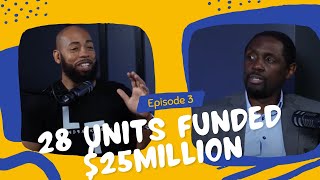
A recorded interview on the Land Bank Show (host Charles Noonan) with mortgage broker Lamar Parker. Parker describes his 20-year mortgage career, funding a 28-unit (≈$20–25M) deal, and why loan origination can be highly lucrative. The conversation blends personal background (Far Rockaway upbringing, college basketball, early investing in Bronx two-families/SROs), lessons learned from landlording during the 2000s cycle, operational details of mortgage work (licensing, paperwork, efax/apps), and practical financing options for land acquisition and new construction (one-touch construction loans, hard‑money-to‑conventional conversions, land-as-collateral). The episode closes with Parker’s contact/Instagram handle (LPthefunder; Lamar Parker).
Chapters
There's a reason why loan officers, mortgage brokers, they ride in different cars, man. They travel different. When they travel, man. There's a financial piece to this side of what you do.
Absolutely.
That you got to tell us a little bit more about. What's the biggest deal you ever did?
Oh, my goodness. So the biggest deal I ever did was a 28 unit apartment building.
Okay.
I want to say somewhere 20, 25 million.
Geez. You funded a 25 million dollar deal?
Absolutely.
Nice.
Welcome to the real estate show.
Where.
We highlight some of the most creative and non traditional ways to make money in real estate. We will showcase some of the world's greatest male and female real estate developers and teach you how you can make money by using the same strategies. Now it's time to develop. Here's your host, Charles Noonan.
Welcome to another episode of the Land bank show where we highlight dope individuals that have made money through non traditional ways in real estate. Today we have a special guest, Lamar Parker with two Rs. Lamar, thanks for coming, man.
Thanks, brother. Appreciate you. Absolutely.
All right. So you already know what we do, man, and this is probably like our third or fourth time meeting in New York. Yeah. So I wanted to have you on and I want to just find out a little bit more and share with our viewers who you are and what you do.
All right, that's good, that's good. So again, my name is Lamar Parker. I am a mortgage broker, loan officer, however you want to term it. Essentially what I do is I finance your dream to buy a home or to buy property, you know, such as yourself, your land bank team, if they find a piece of land, you will come to me for the finance and to not only purchase the land, but now build on top of the land or if there's already property there, I would help finance the purchase of the property.
Nice, nice. So you, you're the guy that makes people's dreams come true.
Absolutely.
Right.
Absolutely.
All right, cool. We're going to dig, we're going to dig into a lot. A little bit more about what you do. And because it's not the traditional form of real estate, so you're in real estate making people's dreams come true. But when you think about being in real estate or any, anybody that had aspiring dreams of being in real estate as a kid, they don't think I, when I grow up, I want to be a loan officer. Right. I want to be a mortgage broker. However, you guys really do well, right, with loans. And I don't want to speak to your pockets. But you guys tax man, you guys make a lot of money on that side of the fence where you're on.
Absolutely, absolutely. I mean it's, it's a good, a great profession. I enjoy it. When you want to buy property, we're probably the last people you think about, but in reality, we're probably the first one you have to go through because you need to know how much you can afford, how much you qualify, you know, based on what you do. So it's. I love it. I'm not even going to lie to you.
Cool, man. Appreciate it. All right, so before we go any further, man, I really have to just say a thank you to our sponsors. One of our sponsors is unsold land.org they are your one stop shop for land. Most real estate deals don't start with land, but they're all on land. So unsold land.org found value in sponsoring us because part of the land bank team, we buy land all the time. So they became a sponsor of ours. Our second sponsor is Star Homes in Coleman, Alabama, a vendor of ours. I did so much business with them and we had so many meetings where we shared exactly what they do. They took the liberty and they actually offered it, offered to sponsor the Land bank show as well.
Very nice.
So, yeah, definitely have to thank the sponsors because they are a big role in what we do.
Absolutely.
Yep. All right, so. So back to it, man. We're going to dig into this career and this non traditional way in which you, you run it up in, in real estate.
Let's do it, man. Let's do it.
So how did you start as a loan officer? How'd you get into that?
That's funny. That's a good, good question. So when I got out of college, I've always wanted to know, I wanted to be in real estate. That's funny you asked. Even in high school, I knew I wanted to be in the form of real estate, but I, I wanted to be an investor. I didn't really. The finance part of it didn't really come to me. So I got out of college, I was still kind of playing basketball, semi pro. And a friend of mine, a mentor, I would say, he was into it and he was a mortgage broker and he was like, yo, you should try it. You know, you get your own time. Your time is free. It's a good way to make a lot of money and it's fun and you know, he kind of brought me under his wing, taught me the ropes of it and you know it's been 20 years going strong.
20 years.
20 years. Wow.
So I gotta say, you are a pro, man, and you know exactly what you're doing. But just take a little step back, man. So you play basketball?
Yes. Played college basketball. A little semi pro. Absolutely.
Really? Where did you grow up playing ball in New York City?
Yes. I am from Rockaway Beach, Far Rockaway.
Okay.
Played in high school. Archbishop Malloy. Got a chance to get a basketball scholarship to Division 1 UC Irvine.
Nice. Nice.
Yeah, California was great. And then I came back home, you know, and the rest is history. Played some semi pro and did some mortgages while I was doing that.
Man, that's super interesting because you always look familiar. Since we first met, I grew up playing basketball in the city, too. In the Bronx. Uptown.
Okay.
More so. Like just everything from Harlem and up. Yeah, but where you are, you guys, y' all have your own tournaments over there where they're killer, man. So give me one tournament you played in growing up that you. That you always looked up to playing in, and then you actually went and played in it really well.
Wow. I would say Rucker. Rucker was one of those, you know, it's. It's Rucker park, so.
Right.
Everyone knew about it. And then, you know, if you're good enough or you're lucky enough, somebody come and ask you to play and, you know, just do what you got to do.
Nice, man. Those are super fun days. And I'll tell you a little story about growing up in the Bronx, right? So there's a tournament called Gun Hill. Did you ever pay in Gun? You played in Gun Hill? A couple times. All right. So ever since I was younger, I used to always go there and stand on the cage, right. And look down because Gun Hill is like a cage. I used to look down and the older guys from where I'm from would go play before I was even like 10, 11, 12. So me growing up, I always wanted to play there. That was like it for me. I played everywhere in the city. But realistically thinking, like, when I was younger growing up, I always wanted to play in Gun Hill. They always had pros. There was always like super high level competition in Gun Hill.
Absolutely.
Every team when I was playing had a seven footer or Right. So I used to look as a kid at these seven footers, like, wow, they were like superhuman. And then that was a place where a lot of pros came to play too, every summer. So when I first played there, I don't remember how old I was. I was really young And I was good in my neighborhood, but none of the stuff that I used worked when I played there. Different level. I happen to know the ref because we had our own little hood tournament, right. So I happened to know the ref. He was like, yeah, man, you got to get stronger. And I was like, why didn't you call that? He's like, nah, bro. Like, you got to go harder. And none of my stuff worked, but it just made me so much better.
Absolutely.
Growing up, playing against those pros and playing against bigger guys, smaller guys that were better, and it really sharpened my skills. Taught me some. Some characteristics on that transfer over into the business world, Right. We've all won games, down 10 with two minutes left, and. And it's really not hanging your head. And that transfers over almost into real estate, where sometimes deals are on the line and they don't look good.
Yes.
But if you've been there a couple of times before, right? You're like, all right, I just need to connect this guy or get this right. And then you.
You figure it out a little bit.
Y. Yeah. So cool, man. Interesting that. That. That we connected on that, because I didn't know. I know you from real estate. Right. But makes sense now. It makes sense. Yeah. Cool, man. All right, so tell me, like, growing up, right, in New York, give me the journey. So I know 20 years in.
Yes.
You do really well today. Right. And I have to say, shout out to you and your. Just your due diligence and getting in contact with me after we met, the process in which you were just so strict and so consistent about, hey, I can help the Land bank team and some ways that other people can't. It really caught my attention and saying, all right, I got to meet with this guy because, you know, the person that introduced us is like, the plug of New York City. Right. She knows everybody, but she spoke so highly of you. So now that, you know, we've connected a couple of times, I wanted to know, like, how'd you get into it? What. What took you down that path and really made you say, all right, this is where it's at for me?
Right, Right, right. Well, first I want to say, like, although I know the value I bring the value that you bring just to people in general.
Yeah.
You know, I just want to give you a flowers, man. Like, oh. The way you operate the business, the way you help others and achieve in their dreams is just outstanding, and you should be commended for that, man. So.
Oh, thank you. Appreciate it.
Appreciate flowers. Take your flowers now. Yeah.
How'd you like that party we did?
Oh, my goodness. And I gotta tell you, I. I knew a little bit about what you did, but then when you got up and kind of went into a little depth, I was like, oh, this is, like, this is outstanding. I was telling some. Some random person, like, what he's doing, because there were some people kind of chatting in the back. I'm like, whoever's talking right now is missing out on a Jewel opportunity. So outstanding party, man.
Cool, man. Thank you. Appreciate it.
Yeah. So how I got into, you know, how I started to love what I do is really the question. Like, you know, we all have mentors that kind of guide us in certain areas and certain circumstances, but to be honest, what. What made me kind of fall in love with the mortgage process is when you have people buying their first home or their first piece of property, they may be the first person in their family to ever own something.
Yeah.
And when they close the deal, the satisfaction and the just pure joy of the accomplishment for them is what kind of drives me, you know, you know, a lot, especially our community. You know, a lot of times I run into people in our community, they're the first homeowner, and home ownership for us is big. You know, it's what. It's what helps our community continue to grow. So that's what really is just exciting for me, getting that. Connecting with that first homeowner, that first landowner, that first property person, and them being able to realize their dreams, and I'm being able to finance it and be a part of that process.
Nice. So I have a question that I asked the Land bank team from.
Right.
Because I impact people in the way that you're familiar with where I. I help a lot of new individuals, aspiring realtors, aspiring developers, get into the game. Right. So based on your experience 20 years in, man, tell me, what exactly is that moment where it really hits them that they're homeowners?
Right.
Because I did a survey, and some people, it's like it takes a month for them in the house to hit, and then that tear sheds. Right. And then you got some people who might cry at the closing table. One of my team members, her name is Ashley, she almost cried in the car on her way back to. From her closing.
Right, right.
So you. You see it all, right? Do you go to closings? I do most or all.
Most of them.
Some you just.
Just, just fine. Like, one could be here and the other one is another state, so. But I try to get to 80.
85% of them, but there's that emotional point, right?
Absolutely.
Where I'm going to say you and I make or play a part in making somebody a homeowner for the first time. Where do you see that first tier shed? Like, where are you most familiar with it?
I would say two places. And it usually has to do with the key. The first. Yeah, some is at the closing table when they exchange keys and they're holding the key in their hand. Like, is the golden rule. Yeah, Like. And it's like the key is glowing. You can see the look on their face. Like, I finally did it. But to me, there's still some. Like, is it mine yet? But then the solidifying moment is when they open the door with the key.
Is when they first open the door open. That's when it could hit.
Yeah, yeah. And it's dumb and it's empty. And it's like, wow. They look around and go, I made it.
Finally.
Finally, I'm finally here. So that those two. Again, it's the key, but is what the key opens. Opens up to you. So, yeah, I would say that for me, it's more.
It's more. It's more a transaction. Now, for me, I don't really get the luxury to get those moments. And that's why I'm so passionate about my team, because I share in those moments. When I make somebody a homeowner, I. And I tell them, you know, most of the team, when they buy that first house, sometimes it's when they win a bid.
Okay.
Sometimes it's the closing table, sometimes it's seeing the property, sometimes it's when they get home. It's different for everybody.
Absolutely.
But for me, it's more transactional at this point. And I remember my first house, it was like, it took a while.
Yeah.
And I think it was like, it rained. Like, it was like the first day it rained. Right.
Right.
And then I was like, man, if there's a leak, I gotta fix that.
Right.
And I smiled like, yeah, but, you know, that's like this. That's. It's my house and I have to fix it, but it is what it is, and that's where it really touched me.
Yes, I agree. When I first brought my first property, I was probably a mortgage loan officer broker for about five years before I bought my first property.
Right.
And my first property, oddly enough, wasn't one I wanted to live in. It was an investment property.
Okay.
I was still living with my parents, you know, five years out of college. I'm doing my thing. They're giving me the Time. And so it was a little weird. I was like, oh, I own this. But it wasn't somewhere I knew I.
Was going to move, right.
So it wasn't until I got the second one where I was like, oh, I'm living here.
It became a little different.
Like, I get to move in.
Yeah.
I get to make decisions. I kind of, you know, get the move. And so that was, for me, which is a Kind of weird because most people buy, the first one they buy is where they're gonna move. Yeah, not necessarily. So that was a little different for me. But, yeah, I. I tell them, we definitely get where you're coming from.
My first one was an investment property.
It was.
Yeah, it was way back, man. There was a company in the Bronx, you might have heard, you may have heard of them, called Better Homes. You remember them? So they. This was the time where they were just giving out. So. Yeah, they used to buy properties, right. They were like, the first company I've ever seen.
Okay.
They would buy any property, and they would just lowball the hell out of people. Right? They'll do some renovations and then sell it. But they were connected with the mortgage companies.
Yeah.
Back then, all the mortgage companies were in Long Island.
Okay, Right. Yeah, yeah.
Remember that?
Right.
They were all in Long Island. So they would connect you to a mortgage company in Long island, and I think it was like, you could just buy, like, stated or no income, no asset loans. You just show the money that it was in your account, and they would just give you the property so you.
Breathe and you can get a mortgage at a certain time.
That was a good time, wasn't it? Yeah. Lamar, I got to tell you, man, that's where I got my start.
Really?
Yeah. I'm going to say, oh, two.
Oh, two. Okay.
Maybe 2003 first came. So I got a taste of real estate in college.
Okay.
Right. They asked me to sign on some papers. Family members asked me to sign some papers to help with a deal in the Bronx on Bryant Avenue. Right. I didn't know what I was doing just signing. I signed off, right. Right before I went away to school, right. It was probably like senior year. I was going into senior year in college right before I went away to school. They're like, hey, we need you to help out with. With this mortgage. Just sign here. Right. So I signed, and I ended up getting a scholarship to a private school in New Jersey. And the habits. This is where I learned credit to learn. Like, I didn't learn credit. I learned the principles of credit.
Okay.
Meaning like, only buy what you can afford to pay for. Buy what you can afford to keep. Right. Don't spend money that you don't have yet. Things like that. So the school that I went to, those principles were already instilled in those kids. So me coming from the Bronx, going into that environment, I automatically adopted those characteristics. So I had good credit. Meanwhile, my friends in New York City and that went to other schools in different areas. They were opening credit cards in college, and a lot of them that screwed them over. They were throwing credit cards out like crazy.
Right.
To kids in college. Yeah. You just don't know. Right?
Yeah.
They give it to you for a bottle of water. For a water bottle and a keychain. Right. Or flashlight. Right. So that's what I really learned. And then when it was tax time. So tax time comes around the. And you know, we have a family cpa, so he's doing our taxes, and they're like, all right, so, yeah, we're going to do yours. Just sign here and you're good. And I was like, what do you mean? Sign here. So I really started to dig into my taxes, and I saw there was like $48,000 being made, but nobody really was working for it.
Okay.
Right. It was almost like passive. Passive income, but it was made. I was like in on the deal to help get the deal closed.
Right.
So at that point, I was like, so you guys just gonna throw me like $500? Like that's.
Didn'T. Right.
So my start in real estate, my education or. Or my exposure came from actually a place like that.
Right. Wow.
But I knew when I came home, I knew what I was gonna do with my money.
Good.
And then I just. I connected with a guy named Andy who owned Better Homes some way, somehow.
Ended up meeting full circle came you.
So I knew what I was gonna do. And somehow I connected with them on a property in the South Bronx. And I actually did like a. Like a deal with two of my best friends, and we bought a two family home. It had to be like 2002. 2002, 2003. One of these days, I'm gonna look up everything in Actress, all the stuff that I owned in New York. I'm gonna look it up and I'm gonna post it one day.
Yeah. Oh, nice. That'll be. I need to do that too. I didn't even think about that. Yeah.
I just started to dig into Acris and start to look up all my old stuff. It's pretty cool, man. So, yeah, that's how I Got my start.
Very nice. Yeah. So I just had a question. When you. That first deal, the first two family, was that something you were renting out? Was you gonna flip it and sell it or what was that?
All right, so here's the story. So it's three of us, right? We're young, we fresh out of college. Now basketball's going crazy because now I'm older, I'm strong, I'm playing all over the place. I've played all over the country in school. So now I'm like feeling like the best player in the city. Right, Right.
Got you. You got your man's muscles, right?
I got some man muscles. So we just running crazy, everything and a couple of friends, really. We talk about this. Like when I came home, like when I finally graduated, they were like, I was. I was like peaking, like, I realized, like, working out really helped in high school. I didn't realize that.
Right.
It was like I could jump and shoot. So I'm cool. Weights are gonna throw me off. But what I learned was like, it really helps increase your range and everything else. But it's just like everything else. It's practice, right? It's practice and working out that's transferable to anything that you do in life. Yeah. So what we did, we think we thought we were like kings of the city. We thought we could run, we thought we could do anything. Right. You get that invincibility aspect to you as a young person in New York City. Right. We took a two family home, we chopped it up into rooms.
Really?
Because so we're doing. We're doing the math. I think I bought it for like $208,000. It was 908 Home street which somebody actually who we sold it to converted it into an eight family.
Wow.
Which I had no knowledge of. I drive by now and I'm like, so look, this is what we did. And this is why I love and hate real estate in New York City.
Yeah.
Right. We chopped it up into rooms as a three bedroom over a two bedroom. So now we got. And we're charging like $125 a week for rent.
That's good money back then.
So we got like four or five rooms upstairs. We got like three or four downstairs. You know what a New York City kid's going to do with the basement? Right? Right. So we're invincible. Right? Right. Finished the basement. Got three rooms in the basement. It's fairly big size. Right. So I always prided myself on being a landlord and an owner. I always wanted to give people A better place to grow up in and to live than I did.
Absolutely.
So I made the units really nice, and some of, like, some of the older Bronx houses are really big.
Yeah, yeah, yes, yes, absolutely.
Right? So we definitely did everything we could. Took care of everybody with really nice places. But then you run into the problem, right?
It's always going to be a problem.
You got people that can't pay the rent. You got people that don't want to pay their rent. We had people, Lamar, pulling up in really nice cars.
Oh, yeah.
Mountains and. Mountains of groceries, right. And saying, hey, I don't have the rent. I got to get back to you. So what do you think we do at that point? Three strong six footers, right? Muscles, we know everybody, right? You play basketball in the city. You know everybody, everywhere. What do you think starts happening, man?
Oh, goodness, do I want to know? So I want to be a part of it.
We start fighting.
Absolutely.
What? Not me, Right, right. We start throwing mattresses. We start going crazy. People start calling the cops. It starts to get out of hand, really. So. And then. So we tried the legal route, taking people to court, and they're like, dude, you're doing an sro. So, yeah, if it's. If you didn't legally trans transfer it into an sro, you probably can't take them to court. If you do, the judge might tell you you have to give them all their money back and that they don't owe you anything.
Right?
So now I'm like, all right, how do we do this? Right? Because. And the only reason I did that is because it wasn't enough profit for everybody.
Right, right, right. I was gonna say, the three of.
Us on a two family, we charge it, right? It's like. But so much you could charge, but it worked. And when it worked, it worked for a long. We did it for a long time, too. We did it for a long time, and then we scaled. So here's the deal. We structured, right? I put up 50% of the money. My other two friends put up. They put up 25 and 25. It probably came to like 16,000 in total. So I put up 8, 4, and 4. Here's the plan. We're saving all of the money until we can get. Until each of them can get their own.
Okay? Yeah.
So now we had a property on Home Street. We had a property on Teller Avenue. Are you familiar with Teller Avenue in the Bronx? Belmont Beaumont. So we have properties.
Y' all buying it together?
Yes, but we're refinancing each other Off. Right. So that they can get their own.
Got it.
So I owned mine by myself, and I have my own portfolio, but my two other best friends had their own. So we're building our own portfolios.
That's winning.
It was winning, but it was trouble.
I'm sure it was, man.
Just. Just think. 2003, 2004. Right.
The good old days.
The good old days. Right. The good old days. We're going around. So we would go. We meet up on Saturday mornings, We go knock on all the doors to collect the rent.
Best, best time of my life when I collect rent day. Yes.
So we. So we walking around with this much money.
Yes.
We're dimming up the money amongst, like five, six out five, six houses. All SROs. Right. All booms. So it's going crazy, but when people don't pay, right? So I'm from the Bronx. I got another best friend from Harlem. He's from the east side. Another one grew up on the west side of Harlem. Really good basketball players, too. Right. So just imagine someone telling us, like, with an attitude, right? No, I don't have the rent. They're blasting music and they're just showing all this fancy stuff or whatever, and it just didn't work.
It.
It. It was.
We were like, ain't no way.
Ain't no way we about to. We going to get arrested this Saturday. Somebody. Something's going to happen, right? So it just got crazy. And we started to. It just started to get crazy. It just started to escalate every single week. And then they don't want to get out. It's like, all right, you can't stay here. And then some had attitude, so it just got a little crazy. And I figured. I knew, like, all right, this isn't. This has to change.
Yeah.
Fortunately enough and lucky enough for all of us, right. I think 08, like, the mortgage crisis came, that stuff started to come to a halt.
Yeah.
I was smart enough. I started to branch out into Connecticut. I had properties right next to Yale. Yeah. Yeah. I just. I just knew, like, this model.
Yeah.
It was ahead of its time. So now you go register SRO the SROs everywhere, and you can do it the right way. But we just had no clue. Like, we just jumped in.
There was no map to do it.
There's nobody to tell us. There was no YouTube. There was nothing to tell us. And it's not like you can go in the Bronx to the Department of Housing and ask them how you do something. The first thing they're going to say is, Are you doing it now? And who's in there? Right. And they may want to come see, but we got like eight people.
Eight.
Eight different people living there. So it's like, all right, let's stay away from the department building. So it just got crazy. And what we were all fortunate enough to do is sell those properties right before.
Right before.
Right before. So I was mad. We sold like two hundred thousand dollar profit each house.
Yeah, yeah. So, yeah, from 020. Yeah. I made some good money on.
Killed him.
Yeah, yeah.
Killed the game. Absolutely killed the game. We still have a few pieces left, but that was my way to. It was just like, the signs were like, the real estate gods were like.
All right, time to go. Yeah.
And we're maturing, we're growing. I got my own property, my own house way uptown, Westchester County. Right. And it's like, I'm going into the city. We fighting every week. People are calling the cops. People are like gearing up for war on Saturday if they don't have the rent. So, you know, we cut our teeth in that respect. And then we, we were able to jump out safely. Right. None of us got hurt in that crisis. However, we sold some of those $200,000 houses for like four. Some change, like ridiculous property.
That was a good time. Once the property values, and I'm guessing those property values after you sold them dipped a little bit like, like 10, 11.
Yeah.
Because they were saying, oh, they were overvaluing properties from.08 to 10.
Yeah.
When 11 and 12 hit, they were like, these ain't worth what they sold for.
Yeah.
You got out jail, you got out a good time.
But it's cyclical. Right. Because if you look at those properties now, right back up 8, $900,000 for a 3 family in the Bronx. Absolutely. Right. Is that what you see in your markets?
Oh, absolutely, absolutely. I mean, even now after the, the, you know, 2020 with everything with COVID there are some different properties because people, interest rates were tremendously low. 2 and 3%.
Yeah.
And so now people was like, well, they can, they can afford a $800 increase in the price of the property because now the rates are.
The rates are low.
Yeah. Now the rates are going back up. Now those same people that weren't able to sell when the property. When the interest rates were 2 and 3%, price point was still 800.
Yeah.
Now they got to come down to.
You know, to make it make sense.
Exactly, exactly. And if they brought with the intention to flip, now they're in trouble.
Okay, cool, cool. So I mean, I brought you here, man, to hear a little bit more about your story. But that is exactly how I got into Land bank properties.
Nice.
It was time to get back into the game, Right. So I went corporate America. I made tons of money there and I started thinking about the future, thinking about my kids and I'm like, all right, how do I get back into the game and not get hurt? So naturally, you know, rent is the biggest factor where people lose their shirts and go crazy in real estate. And that was really what caused a lot of problems. It was like, all right, so I have a mortgage where I live. A mortgage on this property, you can't pay your mortgage. So I now have to pay the mortgage hit because you can't pay your rent. So I figured out, all right, I got to get back into real estate, what could I do? And what came to mind was just cash flow. Just buy, right? Just go buy, just cash out and just go buy the cheapest houses you can to accumulate the most doors. And now you got debt free doors.
Absolutely.
You winning. I don't care what nobody says at any capacity of real estate, if you own a property debt free, regardless how much you pulled out, you have just created like infinite amounts of wealth.
Totally agree, Totally agree.
Yeah, man. So your start in the mortgage game. What were some of the, some of the low points? As you were, as you were riding the wave.
So the low point you were lucky enough to get out? Yeah, so I owned I think probably like five or six doors between.08 and probably not brought those in.06. So 06 and say 14, 15. The problem was that twofold, one, I was a mortgage, I was in mortgages and mortgage. The mortgage industry was going through a change which didn't allow you to do as much volume as I was able to do. When you can do stated prob. Stated income, all that good stuff. So I had that fighting against me. My main source of income, which is mortgages was taking a dip just because the industry changed.
So they limited how many deals you can close per month.
No, they didn't limit the amount, they didn't limit how much you can do. The, the issue was not everyone now qualifies with the new industry rules and regulations. So now you had to show all your income. You had to show, you know, you had to show all your.
The bubble is over.
Yeah. So I go from, I go from, I think probably from 05 to say 010. I think my income was somewhere around 250 a year. Yeah, you know, just solid I could just write bank it in.
That's not bad. By the way, for 2005.
I had a good run, bro.
2005, 250,000 is not bad at all.
It was a very. It was a very good time. But also now I. I've accumulated property. I'm getting same thing with you. First of the month on those Saturdays, I'm in my car, I'm riding around to everyone.
Listen. Yeah.
How you doing? Good, good, good. Rinse, dude. Blah, blah, blah. But if you remember that time, also, there was a lot of job loss during that time.
Yeah.
So now a lot of my tenants were not able to pay.
Let me ask you this question. This is something used to burn me up, bro. So here's a couple. Couple things. My initial question is, don't you hate when tenants don't call?
You just let me know, give me.
A text so they know you're coming.
You know?
Right.
We've already established it.
They're gonna let you drive from your house to their house, bruh, Knowing you coming and don't have the money.
Wow.
Isn't that the worst feel? That's one of the worst feelings.
Right. Let me tell you. I. I've experienced that so much. Yeah. And I tell you one. A quick story. I had a lady like that. She had a family. This lady tried to. And didn't tell me she wasn't paying, but then tried to flirt and offer me extra.
Oh.
Like, I'm not here for that right now.
Now, that comes with the territory. That comes with the territory. And so. So just imagine the traffic we used to get renting rooms. Right? You know? So they're in the room. The drug dealer, the hustlers, the runaways. It's like, yeah. Like, yo, like, I don't have a cash.
Yeah.
And I'm like, what?
Like, what are we talking?
I can't pay my. I can't pay the mortgage on this property with anything else but cash.
That's all the bank is taking. Yeah. They're not taking special favors or anything.
Yeah.
I need my money.
I'm not gonna say no names, but there's people in my crew.
Oh, my God.
That have had a moment of weakness that they probably figured they wasn't going to get the money anyway. Why not?
Listen, there's only one time.
Never me. The money always paid the mortgage for me.
I need my money.
And I always ran it like a business. That's funny.
You have to.
So that's one of my questions. My other question is why the hell didn't we use management companies back then.
I don't think they were scaled. I. I was trying to figure out how I could. I'll be honest.
Yeah.
When I looked into would have. It would have cost me money because the management companies were mainly focused on the apartment building.
Yeah.
So that's how their pricing was fit for the large apartment buildings. I don't think they were fit for people that had. Because I. I didn't buy anything. But two families.
Yeah.
I bought it and I got it as an own. Occupied. So I can just keep.
Yeah.
Two family. Two. I. I've never had a single family.
I guess we all did the same thing in New York, man. That FHA played. We ran that.
Yeah. I don't think it was able to scale to. To fit the pricing for someone who owned five, six, two families.
I didn't know about them.
You didn't know. Okay.
I had no clue. I didn't hear about it. There was no knowledge of a management company at all.
Right.
So I didn't grow up in a building. Right. I grew up. Grew up in a private house.
Okay.
But it was just like 14 of us. And then from there I went to college and came back. So I didn't know anything about commercial real estate. I didn't know anything about management companies. I probably never even heard of one back then.
Really. Okay.
Now, if I could have paid a management company or if I could have had an office and 10 is nothing compared to, like, almost getting arrested. Right. Almost getting stabbed. All the, all the war stories, all the crap we got got to go through. Right. As landlords.
Absolutely.
If. If somebody would have said, hey, you know, we. Instead of collecting, Instead of paying you 1300, we just going to deposit 1190 into your account. Right. We're just going to deposit 1200.
I would have jumped at it easily. I would have jumped that.
And we all get to stay home on a Saturday morning.
I would have jumped at it.
Right.
It for me, because, you know, I was young like you, but I still had a heart. So I had a couple of single mothers.
Yeah.
Couple kids. And there were times where I know they were doing this intentionally. They knew rent was due. They would come to the door with the baby crying, running back with like a half bottle of water, knowing I'm looking at this now, I gotta have a heart to be like, I need my money or, all right, let's work something out. So if I could have been detached from it and let someone else deal with it like yourself, it would have definitely been not only emotionally Easier, but business wise, it would have been more efficient for me.
I never went into any of my businesses with my heart in mind.
Really? Yeah.
Never.
That was one of, probably my biggest. My biggest issue.
I would just ask, if you don't have them, if you don't have the rent money, do me a favor and stay somewhere else. Is what I would always. Is what it would always be for me. It's like, all right, so I got it. You don't have the money, do me a favor, just go live somewhere else. Because I had to pay the mortgage. Right. And again, in my mind, I always knew and understood how important credit was today, even today, credit is everything. I don't. I never knew the intricacies of credit and utilization and lates and collections and how to maneuver it. I just knew to pay everything on time. I was taught really early to set everything up on autopay.
Okay.
And you back, work as hard as you can to make sure the monies are in your accounts by those dates.
Right.
So my hustle, my grind, everything was I. The 15th or the 8th or whatever date, the money had to be in my account to manage that auto pay is what really drove me to go really hard.
Okay.
And I've never had a blemish on my credit.
Yeah, listen, I can't. I wish I could say the same. I mean, thankfully. So my mother always was big on credit. She was like, yeah, credit, credit, credit, credit, credit. I had a dichotomy. My dad, on the other hand, you know, street dude.
Yeah.
Cash money, baby.
It was kind of like cash and carry.
Cash and carry. So I had kind of like a influence of both where it was good in some instances, but it. It didn't. It wasn't positive for me in other instances.
Right.
Although I knew, like, this money got to be there. It was just kind of like, you know, as, you know, when you. Where you grow up, influences how you act and how you, of course, operate. And so it was an environment, right? Yeah, absolutely.
If you are around everybody who managed credit the right way and who was able to teach you, and it was the norm for everybody to have a perfect credit score, perfect payment history. And. And then sometimes there's something called client hell days where you can actually pay some of your stuff ahead and get credits for if you, if you. We grew up in an environment like that, Right. If that was the. The thing in the Bronx, a lot of our individuals would have different credit scores today. Way different.
Way different.
Yeah, man. So you did SROs as well?
I had one SRO. The other ones were, you know, I had families in there. The one SRO was behind York, and I don't know how I foresaw this.
In Jamaica.
Yeah. Right behind. Yeah. So the area was a terrible area. Pocket. Yeah.
That train. So I know York College.
Right.
And then there's, like, the train. Was it on the other side of that track?
It was on the others by the projects.
Okay.
Projects. They think, you know, young. 50 onyx. Yeah, yeah, yeah. Total train wreck. But it was. Happened to be behind York College.
Yeah.
And if anyone knows about York College, there's a lot of young students, but there's also a lot of adults going there for nursing.
Yeah. So they need adult education. Yeah.
They needed a place to stay. So that was my one sro. Just because I. I thought it would be a better fit.
Okay.
You know, you got. I've always. You always have a college student in there.
Absolutely.
You know, you. There's always going to be. Now, the. The kind of. The bad part is it's an area I don't know about now, even then, it was riddled, you know, with drugs and.
Yeah.
And craziness that was going on. So it was interesting. I made some good money. I got out in time, but.
Okay.
I was the one sro. I had that. Cool.
Cool.
My experience.
I used to have an office on Jamaica and Parsons. Jamaica, right. On Jamaica. Parsons Boulevard.
Oh, yeah, I know the office.
Yeah, yeah, yeah. That was my office for a while, man. I used to have a couple of offices spread out throughout the. The city. But that one intersection right there was always. Yeah. Busy as hell. Always live. And I performed really well there, man.
Yeah. That is. So I caught the bus to go to school. High school there. That's. That was where we transitioned from the train to bus. Yeah. So I was on. I was there on that block every day for you.
Cool, man. So. So on the lower end of the mortgage, the mortgage world. Right. By the way, that test isn't easy, bro. Right. That test isn't easy. By the way. Compliments to you.
It's a lot of information.
I actually took it and passed it.
Yes.
Right. I did. I. I had to take it twice, though.
That's all. Right.
I thought I could wing it the first time.
Right. No. Yeah.
Right.
So I feel like something.
I feel like I'm smart, and I think I did online courses to do it. And then I failed by a couple of points. And then I was like, whoa, there's some stuff on here that I really got to pay attention to.
Right.
So I knew it wasn't easy. And then I just locked in, retook it the very next time. And then I did it, and then I passed it. Then I did some mortgages, but I didn't love that side of the shop, man. No, the documentation, it's heavy. You gotta. Yeah, right. So it was a. A tough time, so to speak, where you had really have to just qualify and then getting documents from people. It was. And I'm well connected with realtors, right. So a lot of realtors are good friends of mine. So I would get leads, but it was just. It was just a challenge for me. It wasn't what I wanted to. My future in real estate to be.
Okay.
It was more so like paperwork. Like, I got to get out of here. I can't. I can't be getting paperwork. And then this actually was the time where apps first started to become a thing.
Okay.
So people would have to upload or people had the ability. But I was pushing for the technology before it actually happened. And I'm like, why they got to send it to me? Why do I have to do this? Just can't they just upload it and y' all don't got the technology? All right, man, call me back when you get the technology, man. Because I ain't going to be sitting here scanning and faxing and uploading and all of this stuff. So I probably closed like three or four deals.
Listen, you close. But interesting enough. That's funny you say that is before the technology. So I was working out of home. I didn't actually go into an office until like, my mid-30s.
Really.
I worked out of home mortgages.
Nice.
It was. And what I would do is, in lieu of going to see every client, I got a Efax. This is when EFAX started.
Yeah.
And I used that as my technology. So they would just Efax me everything.
Yeah.
And that was kind of like. I was like, why aren't everyone else doing, like. Yeah, sense. Why I gotta go through 30. 30 different apartments and.
Right, right.
Send me. Go to. Go to. I think it was like, not. What was the. It was a place that had Efax or Office Max.
Yeah, go to your FedEx Kinkos or.
Yeah, go to your Kinkos. Fax it to this number. I have everything. And I would have my envelopes on my computer in my file, and it come right. But fast forward, I'm like, I should have been. I should have had a better thought of creating this app because I was way. I know I was ahead of everyone.
Imagine you would have created the technology. Imagine you would have created the technology. Front and back, driver's license, exact tax returns.
Exactly.
Whatever else you need. All that stuff, man. So cool. All right, so the mortgage game, right. We know the downside. What's the downside to it?
So the downside, honestly, is you have to. As a mortgage broker, I literally have to work with everyone in the process.
Okay.
Right. I got to deal with the appraiser. I got to deal with both attorneys. I got to deal with the buyer. I have a little bit of interaction with the seller, but, you know, if their personality quirks, if someone is not as efficient as others, I'm the person. Because at the end of the day, I'm the money. And if. If the money is not where it needs to be.
Yeah.
The deal doesn't work. Right. So I'm the person that has to massage everyone's ego and stir the pot.
Like, you got to get that insurance.
Binder and sure, I got to deal with the insurance person. Right. You know what I'm saying? So I got to. Any underwriter.
Yeah.
So I have to massage the pot to make sure everything goes smoothly. So, you know, it closes on time.
Right.
And everyone is not pissed off.
And then you get to see that person live their dream.
I get to see them live their dream once. Once behind the scenes, as I always tell everyone. I'm like, you see a duck floating on top of water. They're cruising.
Yeah.
But a lot of people don't know, underneath water, their feet are moving so much, going on thousand miles a minute.
Yeah.
And that's what I am. I'm. I'm the duck. On top of what? I got to make sure everything looks smooth.
Yeah.
On top of the water.
Cool. Cool. So the downside is, like, the behind the scenes work that has to be.
Done, everything that needs to be done to make it go smooth.
Give me some of the positives. Give me some of, like, those days where you are super happy and proud, like, right. Damn. I'm a mortgage, bro. I can't, like, I love this job, bro.
I'm going to tell you, the stuff that you didn't like, the paperwork, When I look at that stuff, I like puzzles. I go, all right, because believe it or not, people think, oh, I spoke to my friend. We got the same credit, we got the same income. You know, the house price is the same. But the reality is, every deal is different.
Okay?
So to me, I enjoy the process of putting the puzzle together.
Nice.
I. I very much. That's part of the. Probably the biggest part and the most fun for me.
Right.
I love seeing people, you know, get in their home. That's fun to me as well. I enjoy that. But putting that puzzle together for each individual person so they get to that point is, is, is where it's at for me. I'm not even gonna lie.
Making it happen.
Yep. Absolutely.
All right.
Absolutely.
So that's, that's, that's, that's phenomenal. Right? We both do that.
Yes.
Right. We both make deals happen for people. We both make it. Make it what it is. What about the financial side, man? There's a, there's a, there's a, there's a reason why loan officers, mortgage brokers, they ride in different cars, man. They travel different. When they travel, man. There's a side to this. Right. There's a financial piece to this side of what you do.
Absolutely.
That you got to tell us a little bit more about. What's the biggest deal you ever did?
Oh, my goodness. So the biggest deal I ever did was a 28 unit apartment building.
Okay.
I want to say somewhere, 20, 25 million.
Geez. You funded a 25 million dollar deal?
Absolutely.
Nice.
And listen, here's the thing again. Maybe you think so or not. Whether it's 100,000 or 25 million, this is the same paperwork.
Same. Okay.
Nothing changes. You. You may just have a little bit thicker stack for the 28 unit.
Right.
Because there's more apartments and all that other stuff. The appraisal may be a little bit bigger, but the documentation is all the same.
Right.
And that's why I say people go, you know, why don't you. What's, what's with the smaller deals and the bigger deals? I gotta do the same thing no matter what. Yeah. Now I'm getting different money. I love those commercial deals. Don't get me wrong.
Right.
I secretly, I go a little harder just because the money's gonna be a little bit bigger. But listen, the money, if you, if you work hard at what we do, if you treat people right, if you develop good relationships, you will make a lot of money and you will live very comfortably.
Nice, nice. So give me a little bit of detail about the educational piece and what has to happen to become a loan officer.
Sure. So. So the thing is, they've changed it over the years. When I first started, when I first started, I was in like a baller room. I was in a room with five other dudes with phones and Rolodexes. There was no electronic. Everything was written down. And that's all I had to do. I didn't even have to take a test.
Really.
Yeah. I just had to. I had to take fingerprints, make sure I wasn't a criminal, make sure I have no financial issues going on as far as embezzlement. But outside of that, I didn't have to do anything. Fast forward to now after the mortgage crisis. We have to. 23 hours, New York. You have to do 23 hours. Then you have to take the exam. You still have to do your fingerprints. So you have to know the laws. You know, each state has different laws. As a broker, I have to be licensed in every state. Each state has different laws. So I have to. There's a lot of knowledge now there's some general stuff from state to state that's connected. But, you know, New York and Texas told. They do things totally different, clothes are totally different, you know, so these are things that you have to know, have to have knowledge, working knowledge of. And then once you take the test, as you know, the test is inclusive. It's not difficult work. It's just a lot of knowledge.
Yeah.
And that's the part that people, they, they don't connect the dots on the knowledge and how it works, you know? Yeah.
There's a lot to it, man. It's not, it's not as simple as we think today.
Absolutely.
But it's worth it. And it's good knowledge, it's good information. So I learned a lot in that process as well.
If you don't want to become a loan officer, still seek the knowledge.
Yeah.
Because it, it helps you. And whatever aspect of real estate, whether you're a real estate broker, whether you're investor, you know, going in. All right, this is what I need to do this. I need to game plan, but absolutely.
All right, cool. So, you know, I lead a team of investors, right. They buy land, they buy vacant properties. How can you help a new aspiring investor? They typically. A lot. Some have really good credit. The credit ranges.
Ranges, Right.
It ranges. Which if someone's good, great. They come in and probably get funded from you if it's not so good. At a minimum, they could probably go into the pipeline while they work on that, but at least they have properties to leverage.
Right.
How could you help and assist land bank team members?
Absolutely. So just knowing how you guys operate, let's just take the land, the land acquisitions, for instance. So there's two, two main programs in acquiring land. And if you want to put a structure on top of the land, you know, you have your Typical conventional loan. And then you have maybe your fha. The key part with that is if you're looking to say, put a single family, when you construct or build property, you have two portions of. You have the land portion and then you have the actual house. In the past, you had to do essentially two loans. You had to do the acquisition of the land and the construction portion, which is typically a hard money or a short term loan.
Okay.
And then you had to follow up with a more stable loan, a long term loan where there's actual mortgage on the property, whether you're going to sell a property, whatever you're going to do with it. That's the essential. There's developed a program where now is a one time. One time touch. Right. Why is that important?
They're doing everything together.
They're doing everything together, Absolutely. The reason why that is important is if you have two different loans, that means you're, your costs are going up because you have two different sets of closing costs.
Right?
Right. In the old way, you had to qualify hard money. Usually your interest rate is higher, so you have to qualify for that. And then now you got to qualify for the second loan.
Okay?
Right. With the One touch, you qualify for the one loan and you're done with it. You can do your construction, you take care of all that. So that's a more streamlined way. I think for what your team is doing. The one Touch is probably best for your single family homes because that cuts out a lot of paperwork.
We own the land already. I teach them where to buy it.
You teach them where to buy it.
Yeah.
Perfect.
On the land bank team, man, we got those resources where we buy land. You buy the land, pennies on the dollar. We buy the vacant homes, pennies on the dollar.
I'm gonna have to join your team.
So, so then when people are saying they own like the woman who won the Accelerated Investor award, right. I think she has like three or four properties and two or three pieces of land.
Okay.
She, she owns those outright.
That's, that's outstanding.
I try to teach that debt free.
Motto, man and listen. And that's, that's the best way to do it. If you can clear the debt on it.
Yeah.
Now that gives you leverage now, Right, Right.
Here's another question I wanted to ask. Can the lenders that you use use the land as collateral for parts of the loan?
Yes. So we do have lenders that, that do collateral lending.
Okay.
And they will use the, the value of the land.
Some of it as.
Yes. Some of it as Collateral.
Awesome.
Towards whatever else you need to do with it.
Okay, cool, cool.
Yeah, absolutely.
Help me with this piece.
Right.
So I'm developing In Alabama, okay, 10 lots while I'm putting 10 duplexes on. Right. We're in the middle of that. And Friday we actually have a meeting with my project manager and I'm actually going to invite the land bank team to that meeting. They're going to just kind of like sit and observe on the zoom while they see the layouts, the design and all the process that I'm going to go through as a developer. But my question to you is in that you need to qualify for funding, certain credits, I'm going to say as a developer for ground up, for construction, for new construction. Could you share with me what a workaround would be for someone who's fairly new? They may have done one or two flips with their land bank properties. What, they own land and they're trying to do new construction on that?
That's, that's a good question. So they're trying. So you're saying they, this is maybe their first construction, first new build, first bill. Okay. And the work, the question is, how do they work around? Maybe they don't have the experience.
Correct.
Maybe they don't have. So generally in that, in that case, I just had someone like this, actually, I'm dealing with a case like this now. The, the, the most efficient way in that case is the workaround is start with a hard money, okay. And transition it into a conventional. And the reason why is the hard money, they don't really look at what the individual or the entity that's doing the property. They look at the profit of the property. What's the profitability? Yeah. How much? What's the plan going forward? If you have a plan, you have people in place to execute the plan. They go, okay, fine, all right. We know you don't have the experience. We know you know, there may be certain things personal that may not fit the traditional lending for you. But we see the long term goal of this property, right? And we see where this property is going. We want to be a part of it because we know we're going to get our money plus interest once everything is done right.
So my private money hard money guy doesn't care about a lot of that stuff. He cares about what your plan is with the property.
Exactly.
The only thing with him, and this is why I wanted, why I thought it was important to have you on the show. He doesn't lend in Alabama.
Okay.
He doesn't have a lender that will lend there.
That's too bad for him. We do.
Absolutely. Exactly. That's why I knew it was important to get you here, man. That's why I said I, I think this will be a perfect fit.
Absolutely.
Because one of the deals that we got that I worked with the Land bank was to buy certain segments of real estate in Alabama. So I opened up the door for Land bank team members to come in and they can buy and they have acquired several parcels of land that they own for themselves. So now I'm super excited. We now have a lending partner who will connect us in the space where individuals that don't have the experience and ground up construction or new build can now partner or we at least find a non traditional way to now become a developer where they too can start to put one families, duplexes, triplexes on.
Some of their properties when it's a win win.
Awesome, awesome, awesome. All right, man, so look, we coming up to the top of the hour, we want to wrap this up, let viewers know how can they find you.
Absolutely. So I'm on all your social media on Instagram is LP the funder LP_t h e_funder with a pH and anywhere else you can find me under Lamar Parker. You know, I try to keep it simple. Lamar, don't forget the second R P A R K. All of my Parker on your Instagram, on your Facebook, your Twitter. I have a YouTube page. You can check me out on that as well.
Awesome, awesome, awesome. All right, man, Cool. Thanks for stopping by. I appreciate you coming. This was a fun episode.
Absolutely. I enjoyed it.
Yeah.
We gotta get you on the court though.
More business to come. I'm not playing ball. These old knees, man, that stuff is over with. All right, guys, like subscribe and stay tuned for the next episode of the Land bank show. Thank you.
Thank you for listening to the Landbank show with Charles Noonan. Please leave a review for this podcast and give it five stars. Also follow on Instagram @charlesj.noonan and share with others as we want to share these unique strategies with developers across the world.
More from Charles


She Made $65,000 Selling LAND… Not Houses! | Nicole Taliafero’s Real Estate Strategy
How to Scale Your Business with Funnels, Live Events & Paid Ads | Featuring Milly "The Funnel Kween"
The Biggest Real Estate Expo Ever. Learn how to pick, purchase and profit from your 1st property.
CBS News Birmingham Is BOOMING! How Developers Are Turning Vacant Land Into Wealth LIVE Sept 18-19

NYC Realtor Has 6 Streams of Income and will be a Millionaire. Nicole Taliafero and Charles Noonan
This Land Flipping Software changed my Real Estate Business, and you get it free.