HOW TO CLOSE MULTIPLE REAL ESTATE DEALS IN NYC W/ NINA LEIGH.
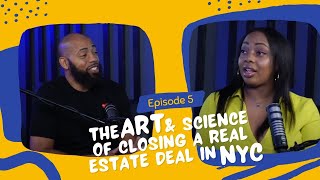
Nina Evans, founder of a luxury real estate brokerage in Harlem and the Bronx, started in property management and got her NY salesperson license at 18. She tracks permits and developer signals to spot emerging neighborhoods, runs a boutique firm handling multiple deals, and explains NYC transaction mechanics: licensing, broker qualification, commission splits, and landlord-paid commissions.
Questions this video answers
75 hours (New York pre-licensing course).
About $500–$1,000 depending on options/materials.
About $50.
You must know roughly 70% of the information to pass.
About two years of qualifying experience (or equivalent management/transaction points).
Chapters
Like what do you like most about it?
I like the hustle.
Okay.
I like the fact that I don't do the same thing every day. Even though it seems like you're doing the same thing a lot, it's different people daily. Every deal is unique. Every deal is like it's kind of like a rush, right? Like it's like playing like a video game or something. You gotta beat the level every time.
Okay.
Because a deal could fall apart, right. And got to make it work.
Is it the rush of like closing the deal?
Closing, closing.
So you do rentals more or sales, Luxury sales or.
I've done sales and rentals, yes.
What do you like more?
I don't have a preference.
It's just closing. It's just. Is it the check or is it the win?
It's the win.
It's the win.
Which I want to check. But I like this the way.
So you'll say the way. It's a combination of both. 50.
50. You get both. You get both. But yeah.
Alright.
Welcome to the real estate show.
Where.
We highlight some of the most creative and non traditional ways to make money in real estate. We will showcase some of the world's greatest male and female real estate developers and teach you how you can make money by using the same strategies. Now it's time to develop. Here's your host, Charles Noonan.
Welcome to another episode of the Land bank show where we highlight dope individuals that have made bags of money through non traditional methods in real estate. Today we have one of New York's own, Nina Evans. Nina, introduce yourself.
Hi, my name is Nina. I'm the owner and founder of a luxury brokerage here in the Bronx. We primarily focus on Mott Haven and Hudson Valley which would be like New Rochelle. Yonkers is basically lower Westchester and also the city.
Awesome, awesome. So when we talk about non traditional, right, you have luxury brand Mott Haven. Tell me how those two mix. Now I know I'm a New Yorker, born and raised in the Bronx. So like I know that area is like next to go crazy, but tell me how, how you decided to mix those two and open your shop there.
Well, a couple of things. I'm really good at identifying emerging markets. So I was on the Harlem train before Harlem really took off. I was on Washington Heights train before Washington Heights hit the numbers. And I realized that you couldn't tell in the paperwork a long time ahead. So I was privy to some of the developments that had been scheduled to come up and I made a decision that I knew that this was going to be the next area and we just needed to get a foothold in the area as it grew and redeveloped.
Awesome. How many luxury firms are there in that Mott Haven area?
So there's not a lot of brokerages that are from Mott Haven and Mott Haven, but there are a lot of luxury buildings in the area. So we're probably like the only one that I know of that specializes in luxury in Mott Haven.
Nice, nice. For those of you who don't know, give us a little history about Mott Haven't.
So Mott Haven is traditionally a depressed area in the Bronx. That's the right word to say. It's been through a lot, but it is waterfront property. So for a long time, people just associated it with crime and lower income and they didn't see the potential in it. But because it is waterfront property and that always eventually cycles back. In real estate, if you look at real estate, it goes up, it goes down every 25 to 50 years. You just have to know where you are on the curve. And my Haven was due for another rise.
Absolutely. And every time I drive, like going across 138th Street Bridge, right. I see new developments. They're like 149th, 143rd. They're just all over there. New restaurants are there, new supermarkets. So you really are ahead of the curve.
Yes. So we have. We're so close to Manhattan. There are only 35 minutes to Midtown on the train. Six train goes right to Manhattan. Four or five train goes right to Manhattan. Also on 149th street you have like the two and the five trains that you have access to the west side and east side, which is actually a unique thing in the Bronx in that area, because as you travel more north, you don't have that same access to both sides at one time from one train station or one central area.
Awesome. Cool, Cool. So you really, you did a good job of, I'm going to say, like, hedging the market, right?
We did.
That's something that I'm going to say. I practice in my own real estate experience and in my own world. I get a lot of information from banks on where the next developments are going to be. Insurance companies tell me a lot of information too. So I use a lot of insurance brokers, banks and developers, because they obviously they have to go to the banks first to get the money. So the bankers, like my. My relationships that I have with people is in the banking world, they give me that information and I try to invest in areas like that. So that's a pretty good strategy that you use. You know it's coming back.
Yeah, we look at the permits, we watch permits, we watch what permits are being built. Because you can't do anything without a permit. Right.
So that's even better.
We watch permits, we watch to see what's being a demo permit, we watch to see what's being filed with city planning as far as redevelopment. We watch to see what bids are going out in what areas and things like that. So then that way we know what's coming to the area, how many units are coming to the area, what kind of units are coming to the area. And then from there we just build partnerships with small businesses in the area, make sure that we are part of the neighborhood in a real way and then move forward with that.
That's smart. And I think you have to have like extensive experience in New York to kind of do research like that to get ahead of the market. So tell me a little bit about your history in New York.
Well, in truth, I've been in real estate since I was like 17 or 18 years old. And my family owns a considerable amount of real estate in New York and outside. So I learned because I got into property management at 18. I just started working in a property management firm, a mid sized firm in Manhattan. I got my license at 18 because I wanted to make a little extra cash on a weekend.
What license did you get?
I got my New York state real estate salesperson license.
Okay.
Which is the first step before you become a broker. You have to have a certain amount of experience after that. But it's, you take a class, few hours, you pass your test on the state level and your license, you find a brokerage to sponsor you, you move forward from there.
Cool. Did your family sponsor you also?
No, they don't own a brokerage. Actually my mom worked for a large property management firm and got me a job. And then, and then my grandfather got me another job by throwing his weight around because he was on a condo board and next place worked at. I got a job over there and that's where I learned a lot more about the back end of real estate from, at that midsize firm.
Nice. So. So that's how you got your start, right. 18, you applied for your license, you, you got it and then you started to do sales or was it rentals?
I started doing rentals in Battery park, actually. Right. So at the time in Battery park, because of 9 11, the prices, pricing was depressed, people didn't want to move down there at All. And we were trying to push those units again. So I got my license so that I could be allowed to rent on the weekends by myself in the office and get my little commission checks from the office. And then I was like, well, I could do this on a bigger scale. So I got licensed by another firm, and then I started working in Washington Heights and Harlem, mainly Washington Heights, because I spoke Spanish.
Okay.
And I was like, I could close these deals. A lot of my leads would be people who, like, didn't primarily speak English and things like that, but had the money. And I'd say, okay, fine, I can figure out how to get this point across, and started renting and getting those checks. And I was like, I'm not going back.
So did you see it like a change from people wanting to go to lower Manhattan to Washington Heights?
So the thing with Washington Heights was at the time, Columbia Presbyterian was doing a lot of, like, investment up there, there. And so the pricing was changing a lot. And they were bringing in a lot of doctors from out of town, and they didn't quite have the same real estate foothold that they have now. So doctors and subsidiary staff were renting, and they were using brokers because they were coming from out of town. And I just became, like, a relocation specialist. Like, if you want to come, you want to be near your job, I can find you a place. I really know the area very well.
Right. Awesome. Do you feel, from what I'm hearing, it sounds like you're hedging, like, different trends in the market and things like that along your journey? Do you feel like that's something that you have to do to be successful in real estate in New York?
I do think so. I think niching yourself is important. I think that you can't do everything and be everything to everyone. And if you try to, you will burn out and you won't make any money at all. Because there's so many different classes of customers in New York. And if you don't serve what you're doing well, you won't have the knowledge to serve it well.
Makes sense. I always say in every industry, right? And all the businesses that I get exposure to, I notice the people at the top, they are very, like, niched in their field. Like, they know a specific area, like the back of their hands. They know, like, zip codes. They know, like, there's always. I always say this. They know, like, one thing really well. So for that, would you say, what's the area that you would say that you know really well? Like, the back of your hand.
Currently my haven. Right. But I also know Harlem very well. I know Washington Heights very well. And I think that the part that people forget is that you have to, to your point, learn that area very well. It's not just learning like the streets, but it's learning what businesses are on the streets. Who owns those businesses?
Yeah.
Who lives over there? Right. Like, supporting those businesses, supporting those things like that. Walking around in that neighborhood. Right. You have to kind of know what's going on in the daytime. You have to know what's going on at nighttime to know what it looks like in winter versus what it looks like in the summertime. So that when your clients are asking you questions or your clients are telling you what their needs are, you are placing them in the right place. Because the second part is referrals. Right. So I can get anyone into anything, but if they're not happy, are they going to refer me? No. So my business is primarily built upon people trusting in my integrity and telling them, sometimes this is not the best product for you, or I don't have a product that matches your needs.
Okay.
And good luck.
So tell me this. What. What made you decide to go luxury versus just like. Like a variety of things. And that goes again to the same. The same concept we just talked about, like, niching down into luxury. And when you say luxury, it kind of leans to. I don't do regular listings that come up on a regular basis. Right. So what made you decide that you wanted to do luxury?
Well, two things. Right. I've worked in every aspect. I've done everything from affordable all the way to luxury. Right. And I realized the amount of paperwork that they all have. Right?
Yeah.
And I realized the amount of opportunity that's there for each level. Right. And I decided what I like best and what I gravitate towards best, which for me was luxury. I like having products that kind of sell themselves, and I like to kind of have products that I myself want to live in. And I feel comfortable saying, yes, I would live here too, with a serious face.
So it's more. So, like. Right. You're going to. Would you agree? Like, it's more so you want the purpose of your work to be putting people in places that you think are, like, quality places.
Definitely. And also there's like a risk reward part. Right. So when you're first starting out, how much risk are you willing to put out for your reward? Right. And I learned that at different levels, sometimes the work that I had to put in wasn't worth the check. That I was getting, hopefully that that changes at some point in the industry, which. Because it's a little unfair, But I found what worked for me, and I kept doing it.
Got it. Got it. Understood. Understood. All right. So you're at the point now where you're working as a real estate agent.
I'm a broker.
I know. No, no, but so. So in just your journey, right, You're. You're an agent. At what point did you decide that you wanted to be a broker and open, like, your own firm?
So I had decided I didn't like other people in control of my dollars and my destiny, and I didn't want anyone else. I wanted to expand my footprint in a different way. Right. And I knew that the first step was that I needed to own my own house, if you will. And I also wanted to mentor new agents, and I wanted to teach people how to do what I had become great at doing and so that I wouldn't always have to do it all by myself. Right. So part of that was I need to open my own doors.
Okay, how'd that go? How'd that work? Like, how'd you. How'd you transition? So you've always been in real estate since 18?
Not. I've done other things, but primarily I stopped in and out of real estate.
Right. As it goes up and down, you probably added on some stuff.
Yeah, I did. On a job here, a job there.
But for the most part, real estate is where it's at. Right. So what. What started that transition? Was it like one thing, like some event happened? Or did you just. Was that the plan all along?
Well, that was the plan for a little while, and then finally I was like, time to jump out the window. Like, you know, how did, like, the commission splits that I had with the brokers that I had, and I was like, I do all of the work. Why am I paying them so much? I could just do this myself if I just have my own brokerage. So that's kind of where it started at, because I was going out building my own relationships, building my own list, because I'm like, what am I paying for?
It's usually something like that, right? It's usually. And this. It's. It's a. It's a common theme, right? It's. People are fine with doing the work. Right? And. And most industries is very similar. People are fine doing the work, but when it comes to the paycheck, then they're looking like, all right, this. This isn't. That's where it gets uneasy. Where it's like, all right, I got to give them X amount and they're making X amount. I'm making this much. But I did all the work.
Correct.
So after a few checks came in, bigger deals.
Well, the thing was, is that I also found that I wasn't getting the mentorship. Right. So I'm like, I'm paying you for what? Right. Because I was okay with the commission splits when I was being mentored and I was learning and I was like, okay, great. You know, like there's value for dollars here. When you're not getting mentorship or you can't get your supervising broker on the phone, you're having a wing it and you're having to build networks and call other brokers from other brokerages. At some point you're like, why am I, like why am I, what am I paying you for?
Yeah, I get it. No, you, you realize, right, that you. So here's the thing. It kind of made you build the building blocks to now go out and build and create your own company. Correct. So there's always a neck, there's always a positive in something like that because it makes you, it forces you to grow a little bit more. And then look what you've grown into right now. You have your own luxury, luxury shop, which I absolutely love. And you got to tell me, you, you have to tell me and also my audience, like, what's the process to becoming a real estate agent?
So it's actually a quick course. It's like 75 hours in New York and I think it's 500 to $1,000. And I think a thousand dollars is if you buy every add on possible. Right. But if you're good with just like getting the bare materials and reading, you can probably pay about $500 for the course. You take the 75 hour course, you take the school test that you got licensed pre licensing course from and then you get that certification and you go to the state, take a state test. The state test is like $50 and you pass that. Pass or fail. You have to know like 70% of the information. Pass or fail if you pass your license. Right. And then the next step is you have to find a sponsoring brokerage that you can hold your license and it goes from there.
So is the course online only?
No, they have online courses and in person courses. You can look up at department of state licensing and they will give you the list of all the schools based on county.
Okay.
That are accredited for the course.
But you can do all of it online.
You can you can do. I went to New York Real Estate Institute and I was. I did my. I did my courses in person back then. It was only 35 hours. Has since changed. But you can do it online. You don't have to do it.
Right. Is that somewhere in the 30s, like 35th Street?
It's in the 30s. Yeah.
Yeah. All right.
There's.
I went there for. I went there a long time ago for my license. I actually got it, but I never used it.
Oh, no.
Yeah, so I got it. That's how I know it is. It's like rei. Yeah, yeah, yeah. So.
So they're very popular, actually.
They probably do the most marketing. Yeah, right. Like if you Google New York State real estate exam or license or whatever, they pop up. So that's how I, I got it, but I just, I didn't use it. I. I was more so on the landlord side and just continue to invest and buy and grow my portfolio. But I didn't get to. I didn't get to use it. Yeah. So you get your license. If anybody wants to follow in your footsteps. Right. You get your license. Now what's the process to becoming a broker? That I never did. And I don't know.
So there's a certain level of transactions. Right. And it's a combination of points, if you will. Right. I shouldn't air quote the points. It is points. The points can either be generated by dollars per transaction or they can be generated by a combination of experience. So in my case, I had property management experience. I did have dollars per transaction under my belt, and that allowed me to qualify as a broker. So basically they want to know that you know the industry and that you are qualified to advise other people and to mentor other people in an advisory space in the industry.
So once you sell or do a certain dollar amount of transactions, you can now go test and correct.
I think it's two years. I took it so long after the time period, but I believe it's two years. And that dollar amount and. Or management experience amount and. Or the combination of both. Right?
Yeah.
And then you take the. It's another class, of course, like another 30 or 35 hours, and then it's another test with the state and then pass that test again, pass or fail. And now you can have your own.
Business and you can open up your own real estate brokerage. You're a broker, you can hire.
I can hire agents and do whatever I can. You know, they're independent contractors. They don't technically, like, they're not employees. But I can Supervise agents? Yes. And they can work under my brokerage.
Nice. What is the best part, right, of being a real estate broker in New York City? Like, what do you like most about it?
I like the hustle.
Okay.
I like the fact that I don't do the same thing every day. Even though it seems like you're doing the same thing a lot, it's different people daily. Every deal is unique. Every deal is like. It's kind of like a rush, right? Like, it's like playing, like a video game or something. You gotta beat the level every time, okay. Because a deal could fall apart, right? And got to make it work.
Is it the rush of, like, closing the deal? Closing, Closing. So you do rentals more or sales? Luxury sales or.
I've done sales and rentals, yes.
What do you like more?
I don't have a preference.
It's just closing. It's just. Is it the check or is it the win?
It's the win.
It's the win, which I'm going to check.
But I like this the way.
So you'll say the way. It's a combination of both. 50.
50. You get both. You get both. But. Yeah.
All right, so what's the worst part about it?
It's a hustle that you said.
That's the best part.
It's the best part, too. But you have to remember, like, I think for some people, they worked long enough that they don't understand that, like, if you take a day off, you lose money, right? If you decide to check out, you lose money. There's no safety net. Right? So the best part is, yes, you close. You make this money. It's the exhilarating thing. It's the hustle of, like, yes, I made this thing happen. This is my thing. But then the worst part is, like, what's your downtime? Like, what's your. What's your personal life like? It's a little bit more difficult at that level.
Do you feel like you're doing, like, a lot of hours when you say it gets into your personal.
Yes. You work all the time.
Give me a number. So this is the stuff that I don't know. This is the stuff that I'm gonna say. My audience doesn't know, like, to be in New York City practicing real estate. Right. I look at you as, like, the queen of Mott Haven, that whole Harlem area. Mott Haven. We talked about your history of where you lived and where you have your expertise. So I want people to know, like, it's not just all glitz and Glamour, where you just connecting people to apartments and units and selling them. But there's a lot behind the scenes, so help me understand, like, give me hours. What does that look like for you? On a weekly basis.
It'll make me sad if I count them, but it's a lot.
That many?
It's a lot. Yeah. Like, I wake up at like probably like six in the morning, seven in the morning, get up, check emails. By like eight or nine, I'm like responding to ad inquiries.
Okay.
By 10, 11, I am trying to post new ads, post new material or go out and film content or whatever. By like maybe 12, one I start seeing clients. I might see clients till like 7 o' clock at night sometimes, right. And then I come home and I'm making sure that the applications went out and that the applications that I got in are out and the offer letters are written and all that other stuff. And if it's a sale, it's an offer letter, right? So you have to stop what you do right then and there. Send an offer letter because it's time sensitive. The longer it takes you to get it in, you might not. It's a timing thing, right?
Oh, so there's a lot of parts to it.
It's a lot of moving parts. And it's kind of like it goes all day.
So also don't forget, like we met.
At a networking event and you go to networking.
That went to like, what time?
I don't know, like, what's like 10?
That was on a rooftop in.
Correct.
20 Something Street.
Correct.
Yeah. The High Bar, was it?
Yeah, we were at High Bar.
That's a beautiful spot. But I think I stayed there too long. I usually shut down at like 4, maybe like 3, 4.
No, I don't even get to. I don't have. Because then afterwards. And then it's the board. So I'm. I'm a member of the Greater Harlem Real Estate Board. I'm a member of.
Oh, nice.
So you have board meetings. You have. Well, not you. I have board meetings. I have different networking events. Because you are growing your brand, right? And you are building brand recognition and you're getting people to know your business. Because again, people can't buy from who they don't know. Right. You can't rent with who you don't know. You can't have a consult with someone you don't know. You have to be out there. So that's another component to it. Right? So where's the time to just relax?
All right, So I didn't know That I thought I'm wired in a very, like, systems and process way where when I do a business, I really try to do it to where I could kind of like, remove myself and have it run without me and then kind of peek in, make sure, like, my job is to kind of work on my business. And then the way I structured the Land bank team, right, it runs. It's the community runs itself throughout the week. I have mentorship calls on Tuesdays from 9 to maybe 10:30. And that's my, like, responsibility. That's my hourly, weekly responsibility. I've never missed a call, and I could do it from anywhere in the country, anywhere in the world. So I've done calls from, like, Ghana. I've done. Which was, I think was like three something in the afternoon from Italy. I've done calls.
But y' all make me mad right now.
A lot goes into the call, though, right? So I'm. I'm responsible for those people buying land, bank properties, and sometimes they want them in different parts of the country. So it's not easy. But, you know, I do the homework before I show up on the call. So it's not like, you know, I just come to work once, one hour per week. But I didn't know that you guys work that many hours. And is that just like the life of what it is? And you love it, so it's not even considered hours.
You eat what you kill, right? So because you eat what you kill, if you don't want to eat that much, you don't have to kill that much, right? I like to eat.
You motivated, driven.
I like what I like. Also. We're scaling, right. So we're growing our business in a different direction. So that's another thing why I'm so hands on. We're building. I really am working to build our brand so that team members can come and rely on the brand like they rely on the brand of larger boutiques.
Right?
What the thing that people don't realize is that when you're a smaller boutique firm, you have to build that trust with muscle. Right? Yeah. I don't have the big name of, like, Keller Williams behind me. I don't have the big name of Corcoran behind me. It's just Nina at Evergreen. Right. So.
Right.
You have to like me and know me. I have to face forward in building that. So I put a lot more hours in than somebody who just goes, oh, I work at this firm. That's already known.
It makes sense. But you know what, Once you build it, it's your brand, it's my brand, it's your brand, it's your relationships, their personal relationships. And those go a lot further. Because what I've always learned and experienced growing and building your own company and your own brand versus being a part of a bigger brand is that you, you're able to give like customized unique experiences that the bigger brands can. Right? You give that one to one service where bigger brands sometimes you just looked at as a unit and they have so many systems and processes together that it's kind of hard to be unique and not give that cookie cutter approach. With a unique shop like you have, you're able to kind of like give that customized one to one service.
Correct. We believe in integrity. I always say I'm not gonna lie to my clients, right. I don't. I'm not as interested in the contract as a whole as I am interested in making sure that people are happy and satisfied and can walk away from experience with myself or my team saying, huh, I really, I'll call them back if I need something else.
Right, Right.
It's a great thing. So part of that is knowing when to say no, right? Sometimes some things, everything is not something you can take on. And it's also knowing what your limitations are or what your niche is. Right. So when I first started, everyone would call me and I would feel bad. I try to help everyone, right? Like, yeah, you call me, I'm like, I'll figure it out. And I had to start saying, no, we don't do that. Yeah, good luck on your search. The best words I ever learned were, good luck on your search.
Is that what you tell them?
Yes. Because this is the thing, right? If I can't serve you, I waste your time.
Good luck on your search. Sounds like you don't want to serve. Go search.
Some people.
Sounds like it's not your wheelhouse part of the time.
People just ask you for things that are just non existent. Right.
Okay.
And you can't. I manage people, right? So I can tell you what the market has. This is what you want. This is what the market has. If you are insistent on something that is non existent, I cannot help you.
And what's the slogan?
You tell them good luck on your shirt. I love it. You know, you get people sometimes who have found things or have gotten, you know, New York is the, the town of the homie hookup, right? So you have people who have gotten like sublets and these got these great deals, right? Like I have a sublet in midtown and he's only paying $1,200 a month, Midtown East. And I'm like, good luck on yourself. I don't have anything for you. I don't even know. That's not.
If he's renting, let me know too. Right?
Let me know too. I want to move in too. So sometimes it's situations like that where we're just like. Rather than exude energy and waste your time and hours on something that we know categorically because we know what we're good at. Right. That's not something we have. It's not something that we see on the market. It's not. We've built relationships with people who have other things. Right. So none of my friends have it. I don't have it.
Yeah. And the market doesn't have it.
The market doesn't have it.
All right, Nina, give me one second. I have to. I have to acknowledge our sponsors. So one of our sponsors, unsoldland.org unsoldland.org is the place that I go when I want to buy land. It's a one stop shop for everything land. It has two options to buy properties. You can buy through the own it now process where you buy it now process where you just click and you actually purchase the property or they do, I think daily and weekly auctions where you can actually participate in an auction and grab a property there. Our other sponsor, Star Homes of Coleman, Alabama, Star Homes is your one stop shop for everything. Tiny homes, manufactured homes, modular homes for sale. They're located in Coleman, Alabama, but they cover like that tri state area. So anything in the South, I recommend you call my guy, Adam. Tell him Charles sent you and that you got his information from the land bank show, and he will find that home. They also will build homes. They'll build the concrete slab as well as put those modular manufactured homes right on top of your property. All right? Now, good luck on your search. Right. That means not in my wheelhouse. No, thank you. Not wasting my time on this thing or not Harsh. No. Good. That's what good luck. So in New York, that's what good luck on your search means.
Well, I also mean sometimes, like, you're not allowing yourself to be well managed. Right.
You're not allowing yourself to be well managed.
Correct. Okay, so you're asking for something or making a demand for something, and you're asking for someone with expertise who's telling you this is what's available, and you're determined to create what's not there.
Got it.
And I think that as a business owner, not Just in real estate, but across the board. Sometimes you have to know, like, this thing is not there, or if it's there, I don't have the capacity for it. Right. So we try to help you as much as we can. Because if I don't do it, I would say I know somebody who does. Right. So that's part of building a network. So maybe you ask me for something, I'm like, that's not in my wheelhouse. But Charles does that. Right. I don't know a lot about land, banks, but, like, Charles does. Call Charles. I put you in touch. Right. But if you're calling me for something that I've reached out.
Yeah.
It's not there.
Say it one more time.
It's making me sound terrible.
It's such a nice.
Hopefully we can help you in the future.
All right, so. So for the audience watching. Right. On the. On give me. We talked about the hours that you put in. Right. We talked about some of the benefits from a financial perspective. Give me, like, average deal price or should we say like commission price or check or I'll say deal price. For people that may be interested in hopping into real estate, going through the process and becoming a broker, what are some of the deal or check amounts that people can look forward to getting into?
Okay, so just numbers, because I'm going to do mental math and I have my phone in front of me. Let's say if you sell a house that's $100,000, which does not exist in New York, not in the five boroughs anyway, you would typically get 3% of that. Right. Because it's 6% of that.
Okay.
So it would be split between the two brokerages. 3% of $100,000 is what you would make on that deal. Right.
Okay.
And that scales up throughout. So and then on the rental side, you can. There is no standard in real estate for commission. Also, that's another thing that people don't realize is that it's whatever. The deal is negotiated. Right. There are things that people typically negotiate, but we're not allowed to collude a price.
Okay, so let me just take a step back, because that was a lot. I caught that. Yeah. Because I'm doing math real quick in my head, and I know the prices are probably, like, more so than, like, starting five. Yeah. Five, six, seven, eight, nine. A million is really what I see. That's. Those are like one families, too, by the way.
Correct.
All right, so it's 6% or 3%.
So typically there's two agents on the deal. Right? So the listing agent negotiates the gross commission. So listing agents typically will try to negotiate 6%, but that is a number that could be 5%, it could be 4%, but let's just say at the 6 is the most higher end of it or more common end of it is 6%. Right.
Okay.
You have a cooperating agent or broker, and that's someone. Maybe you're the seller and you get the buyer's broker. And the selling broker will tell the Brian buyer's broker, if you bring me a buyer, I'll give you half of my commission. Right.
Okay.
So that's how the buyer's broker gets their 3% set. Sometimes that doesn't happen sometimes. But to pay the buyer's broker directly, if you are that. But you have to negotiate all that.
If you're an agent. Right. And you're buying and you're selling a house of someone, that someone else's listing, do you get the whole 3% or you have to now split that with your broker, with your broker. How does that split work? Typically is that half and half too?
Whatever's negotiated.
So everybody is running around New York City as an agent, but some may get one percent, some may get one and a half correct. To something in that area.
So. Yes. So let's just say that it's usually a tiered split based on your experience. Right. Newer agents typically wind up with a 50, 50 split with their broker because they're just getting a lot of mentorship and things like that. So. Yeah. So a newer agent may get of that 3%, 1.5%.
Okay.
A more experienced agent may be getting 2.5 or 2% of that 3%, depending.
On what they have going on. All right, cool. On the rental side, this did not pass me. You said there's no cap on how much you can charge.
So that's. There's a capital pay, though, right. There's never a cap on what you can charge, but there's a capital what people pay. So there's people who pay 15% of the annual.
Yeah.
So if it's, you know, you take the monthly rent to multiply that by 12, and then 15% of that is what the broker is charging you as the fee. And then you have some brokerages that charge one month, some brokerages charge a month and a half. So. And like I said, every deal is different, so there's no standards. So it's really. When I talk to a client, I ask them what they're comfortable with paying. Right. Like, are you comfortable paying a Fee, if so, what fees are you comfortable up to what amount. Right. And then it's a decision if you want to take on that client or not.
So you don't have a set fee, you'll ask that. And if they say, how does that go, though? It's like if they really want to move. If they're like, hey, I love this apartment. I know this area is changing. I want to be right over the water, right next to the 6 train, 4, 5, 6 or whatever, to go right downtown or whatever. They're motivated. So are they willing to pay up to 15?
Well, we are. Luckily, we have partnerships with almost every luxury building in the air area. So we don't have to charge.
I know.
You just got to be qualified. We don't got to charge you.
There's another side.
So there's another side where the landlord pays us.
All right, so look, this is really good from an educational perspective. So you can get paid. Can you get paid from the. No. You see where I'm going? You answer that real quick.
You used to be able to. They changed the law.
All right, so you have to decide, am I going to charge the client or the landlord? Landlord.
I would advise if you could charge a landlord to charge a landlord.
So the landlord's going to pay more than a client. No, but it just makes the deal easier.
Makes the deal easier and go faster. It makes it easier. It makes it more likely to close. Right. Because I'm not dealing with. I'm dealing with a certain price point and that becomes very expensive.
Yeah.
And even if you have it doesn't mean you want to spend it. Right. So if you're thinking about you're spending 4,000amonth in rent and then you like 12%, 15% of that is a lot. Right.
So I think in New York, though, and I guess the markets change. Right. I haven't rented an apartment in a long time, but I used to just be prepared to pay one rent once, one or two securities and a broker fee. It was like, that was just common. So that's changed that much, huh?
That's no longer legal.
Really?
You can only pay one month security legally? Everywhere in New York, you can only legally pay one month security. Oh, they can't charge you two months security through that. Those days are over.
Nice. How long has it been since that changed?
Oh, please don't make me quote. I don't remember, but it's been a little while now and then. So you might have one month's rent, one month security, typically, and then you can charge brokers. Feel like I said the brokers fee might charge one month.
Yeah.
They may charge up to 15% of the annual. They may charge you. They can charge whatever they want. It's just whether or not you're going to pay them. Right.
Nice. That's cool. So now you have. And I kind of feel like I remember the game changing a little bit because I moved into a building on the Upper east side called the Monterey on I think it's like 90, 96 and second or third. 96 between third and Lexington. And I didn't pay a lot outside of rent to get in. I went like a broker got it for me, but I don't think I paid like a lot on the back end. Like security and whatever.
Sometimes they're deals like currently where I'm at. A lot of the buildings that I work with have security deals where you're only paying maybe 500 security or $99 security.
Some of them still luxury building.
Yeah.
And then the building is paying you.
Correct.
Up to 50. What's one month?
Or maybe the building pays you one month. Right. So the building is paid. So if the apartment is 4,000, the building is going to cut me a check for 4,000. Right.
Quickly.
Define quickly.
Like here's the lease, they sign and.
You gotta invoice them. It's a process.
Like a month.
Yeah. Net 30.
But you're getting a whole month's rent.
Correct.
What is. And hopefully you don't mind me asking you this, what's the highest amount of rent that you rented an apartment for?
7,000.
7,000.
7,000Amonth.
So you know the building. Right?
Correct.
You work whatever out with the owner of the building or management company. Correct. They list, they show, they give you their list of open apartments. You did an ad, somebody called you said, hey, I like to see the apartment, I'd like to rent it or whatever.
Correct.
And Mount Haven is small. Harlem's right across that bridge. Like, like that bridge is like a two minute drive. Right. Not even. So you took somebody or do you meet them there or they come into your office first?
So I do, I meet them at the properties. There's no. It's very rarely a reason for anyone to come to my office, honestly, just.
To tell you how, how long it's been since I rented a bar.
Applications are done online.
Yeah.
I have market on Facebook. I mark it on Tick tock. I mark it on.
Wait. You don't have to give all you like yourself.
I mean everyone does that. Right. So social media is A big thing. You have to pull in your clients, but also getting people to know you. Right. So shameless self promotion. Like everywhere I go, I'm like, hey, I'm a broker. If you need anything, let me know. If you want to move into the area, let me know. And like I said, I'm very visible in the area, Right. So like, you can catch me at any of the small businesses over there. So typically, people who have an interest in the area meet me organically or refer friends, family, organically to the area.
So look, I'm wired a certain way, right? You talk about $7,000. So they call, you do your marketing, right?
Correct.
They call your phone directly.
Correct. Or however they're going to catch up.
This is crazy. So they call your phone and this is all uptown. Like, what's the furthest, lowest you go?
I mean, I'll do anything. I've worked in Hudson Arts too, but I primarily focus on like Mott Haven.
Harlem, at least like 106 and up.
I kind of go wherever my client goes.
Wherever they want?
Yeah, it depends. I'm client centered, so it's not so much area centered as client centered.
All right. You're not getting away without. Without explaining this to me. So you advertise the apartment. $7,000, right?
Correct.
You don't own the building.
No.
At all. You're a broker. The person, you do the marketing, the person calls you Nina. I like that apartment. I want to see it. You tell them then to just meet me there. You give them the address and you tell them to meet me there.
I do. Ask some questions first.
Qualifying questions.
Qualifying questions.
When you list the units, though, you list the price, the rent.
Yeah.
All right.
If I post.
In their mind, they know how much it is, right? In their mind they know what it is. And in their mind they're saying they qualify. Right. Because. Or they're saying they can afford it because they want to look at it.
I mean, they're qualified, but yes, they think that they can afford it. Correct.
Okay, well, they're prepared to pay seven grand.
Correct.
So now you, you hop on a train, Uber, whatever, go to the place they say they like it.
Correct.
You then walk them to management. Is management typically on site, always on site?
Well, some places, yes, some places, no. But they're also, like I said, everything's online. So what happens is that they schedule a tour with me. I have a pre qualifying questionnaire just to verify that they have the income and credit and all the stuff that management is looking for for affordability. That they're likely to be approved. Right? Because I don't want to waste their time or mine. And then I get there and I'm like, hey, let's see the units. Some buildings I have keys to. Some buildings I just have codes.
Access.
Yeah. Have access to. So we'll go, we'll tour. I show them the apartment, I show them the amenities. I expect them, the fee schedules or whatever else is necessary. I sometimes, if they're not familiar with the area, I'll walk the area with them and say, hey, this is here. This is there. This is kind of like, what's going on over here? And then after that, they say, hey, I want to apply. And I'm like, great, let me send you the link. And I send them the link and they go from there.
Is that like the sale? Like, are you. So you think they're a good fit? Now you're saying, I look, this. This area, this community is good for you because you got your laundry right here. You got the dry cleaning, you got the doctors. Like, everything. This community, they got all the foods, all the bars, and now you're selling it or is. Does it sell itself?
I don't think I have to sell it. Right. I think that I have a resource of information. Right. Which is you like the space. You like aesthetically what the space looks like. You come, you see it in person to make sure it matches with what the pictures or videos look like. Right. And then after that, I'm like, hey, are you familiar with the area? Right? And if they're like, no, I just came because I like the price point or I wanted to check out something new, I'm like, okay, great. Let's introduce you to the area a little bit better so that you could decide if this is where you want to live at or not. Because it is a community, Right. And it's not just about renting the apartments, about, hey, join the community. This is what's going on over here. Because again, back to integrity. You need to be comfortable where you're about to live. I'm not going to usher you in and out of the building.
Yeah.
And try to go, don't look this way, don't look that way. Right?
You want them to envision themselves.
And this is your new home. Let's go.
But it's not really selling. You're giving the information, providing the information.
That I built, right? Like, so I could walk you into some of the restaurants, and the owners know me and the staff knows me, and, hey, yo, give them a.
And then when they say yes, you direct them or walk them to management. How fast? It's a link.
It's a link.
You just. Boom. You send them the.
Send an email.
An email. It's an email for them to apply.
Correct.
Does it have your. So you have your own link that has your.
So I'm registered with management. So it's. Once it comes from me that this is the client. This is. I register the client. That's part of the pre qualification. I get that information that I need to register you as a client. So once you're registered as my client with the property, it's not anything the client has to worry about. It's my job on the back end to make sure that stuff is taken care of.
How fast? And we're going to make some brokers out of this. I'm telling you, at $7,000. How fast do does management make the decision?
Depends on the landlord. Some landlords are run by AI, which is becoming increasing.
Automatic approval.
Automatic approvals. Some landlords are still doing it with a team in the back office. So just depends on which building you apply for.
And what are you doing? Income verification and pay stubs.
I mean income verifications, credit, bank statements, credit and taxes.
One to three days. You get an answer.
Depends on the landlord. But it could be that fast.
All right, so now if we rewind back, you saying like there's a rush to when you get a deal, to when you win and close and all of that stuff. Now I see it clearly, right? You, you get the listings or you call, hey, what listings you have, or they show them, you post them, your phone rings, you go right down the block and show it. It's in the link. And you've made $7,000 off of that regularly? Yes, man. All right, so I'm happy I asked you to explain to everybody how they become a real estate agent. Now here's the thing. Are you hiring?
I am hiring.
Awesome, awesome, awesome. All right, cool. I love.
We're hiring licensed agents, though.
Licensed agents. Yeah, yeah, yeah.
To clarify, I'm not hired.
Yeah, no, we. You told the process. So at least they'll know what they have to do to get a job with you. But I feel like. I know you said it's not system and process and it's custom and boutique, but I feel like, and this is just again, how wired you could put some really cool systems and processes in place and some key metrics in place to really like go crazy in the world of real estate, especially in New York and how transient it Is.
So I think the first thing is the most important process is knowing your products, right? So taking the time to go through every building, know it's draws and know it's drawbacks, right? Like, what's the pushback gonna be about this building? Or what's not likable. And then the second thing is, like, knowing your landlords, right? Knowing how fast they are or how not fast they are, right? So that when clients are coming to you and they're saying, it's the 28th and I need to move by the 1st, I like this building. You're not gonna get an answer by the first at that building. Yeah, you're gonna get an answer by the first at this building. So if you would like to move by the first, we're going to look over here as opposed to over there. So it's about product management, right? And then the last part is on the back end, there's like billing and stuff like that. So I have a system in place to keep my billing up to date and to keep. Because you can rent all day, if you don't set an invoice, you're not getting paid, right?
Oh, that billing. Oh, trust me.
So you got.
I don't think there's many that's going to forget out or miss out on the 7,000.
But you're busy, right? So you. You have to.
Not that busy. Not $7,000 busy.
Make sure you set up.
I think everybody in here will be like.
But not everything.
All right?
So. Yeah, but not everything is seven. So some of. We start at. I think the lowest is like maybe 2500 to 3000. Right. And it goes up to that 7 range. And there are apartment. Hey, listen, 7 is not even that much money in New York City, Right. Because I've seen things for rent that were 150,000amonth.
I know.
So I'm like, we try to grow. We are growing. We are not there yet. We are trying to get there.
Is it just a matter of you getting, like, connected with the buildings, connected with the people?
Because you have to have clients out, right? So you have that. Yeah.
If you're doing ads, I would just market the hell out of it.
Yeah, but at a certain level, it's. You do market, right? It's marketing and then there's referral. Right. At a certain level, I think, like, you have to be in the right rooms, which is why we go to networking events and we meet people because we want to meet people who can afford.
I always wonder why y' all network so Much.
Yeah, like.
Like, seriously, like, I need to meet.
People who can afford that, right? So, like. And not all of my clients just come from an ad. Some of my clients come from me being out in the streets, and it's like, oh, what do you do? And I do this. And it's like, oh, great. Um, I've had clients that I've met at different functions that may do other things completely.
We got to do a part two. Because y' all agents and brokers meet way too much. Y' all network way too much for me. I'm more so system, process, hire agents, make your calls, do your ads, rent your apartments. Why we keep meeting our competition and everybody else. I never understand why y' all network so much.
There's enough money for everyone, right? So you're not really my competition, Right. Because you do what you do very well, and I do what I do very well. And so why are we talking networking.
And y' all be drinking? I have the best networking events. Real estate agents drink the most. Real estate agents in New York City drink the most and have the best networking event ever. But they do it far too often.
It's because we don't have a life. Okay, we don't have a life. But. So, for example, this is why we network, Right? Like, you have a land bank, correct?
I have a land bank team.
Team. Right.
And we have land bank houses.
Hold on. You have a house that you get at the land bank, right?
Yes.
And you have a team member who wants to liquidate, right?
Yes.
Instead of that team member googling me and hoping to land on my page and my company's page, I met your team member at a networking event. So now when they're like, hey, I want to get rid of this house. I have a house in that I just bought from a land bank. I don't know if you know, but whatever. I know Nina's.
They're more in a capital region.
I know, but I'm just saying in theory, right? This is a theoretical. I know her. I know who she is. I know how she handles business. I like her as a person. So when I need to sell my house, I'm going to call Nina and say, hey, Nina, guess what? I have a property that I need to list. Can you come take a look at it? Would you be willing to list it? Right. And that's how you do business. The other part is I can't be everywhere, right? Talking about niching down, right? So I'm not heavily necessarily in Brooklyn or Long island or Queens, but I know someone who is. So if I meet you as a entity at a place and you say, hey, Nina, I was looking for a brand new house. I want a mini mansion on Long Island. And I say, no problem. I know someone who can help you. And we do referral business. What people don't realize is that on the back end, you still get a check from that. Right? So I can call the agent who I know knows Long island like the back of their hand and say, hey, I have this client. He's qualified. He wants a mini mansion. His budget is $10 million, right. Can you help him? And they're like, yeah, I got this house. I'll give you 1% of the deal for the referral.
Right? All right, all right, all right.
Now it makes sense.
It makes sense. It makes sense. I would just try to rent every single unit in that 7000.
Physically do it.
I don't see why not.
Because you're tired.
I would do all the marketing because you're tired for $7,000. So here's the thing for showing. I would just.
I would.
I would move next door to that building, right? And be like, yeah, so what do you want to come see it? Come see it right now.
So this is the thing, right? And I tell everyone you can pre qualify to narrow down.
Yeah.
Kind of like not so serious people. Right. But everyone is not a win. So every time you show a unit doesn't mean that you're renting that unit. Right? So I may go out on a tour or I might be out on tours for like 20 hours a week, 30 hours a week.
Before it gets rented.
Before it gets rented. Okay, Right, got it. So you have to like, kind of. And it's. You have that one. You have ones that are 4,000. You have ones that you're working on a maraud of things, right? So you're doing all these different tours. You have like six people who saw this apartment. Not. And by the way, not every apartment you get is worth what they're asking for. Right. You're still gonna sell it.
I guess so.
Some of them are. Some of them are not. I've had ones that weren't. Right. But because I have a relationship with the landlord and they have a whole bunch of other products that are easy to sell or. Or worth. Or worth what they're asking for. When that landlord drops off that difficult one, you don't. If you want to preserve your relationship, you don't get to say, right, I'm not doing that one. It's hard, you know, What?
I mean, I get it, I get it, I get it. All right, cool. So for the audience, if anybody, anybody sees value in becoming a real estate agent and probably getting some mentorship from Nina, tell them how to find you.
So we are on Instagram. I'm on Instagram. N I N A L E I G H realty. R E A L T Y so it's at Nina Lee Realty. Find me on Instagram. I am on Tick Tock at L U X E L I F E M E Luxury life me. I just got that one and I don't recall the other one that I have.
We're going to put the link under the.
We'll put a link.
We'll put a link to the other.
One I hired someone to help me with.
But are you mostly, Are you mostly on Instagram?
I'm mostly on Tik Tok and Instagram.
And so they could shoot you a message there.
Yeah, if you, if you message me on Instagram, I'll see it fastest. I'll see Instagram before I see t. Awesome.
Hit her up on Instagram. She is doing big things. Non traditional this. I learned so much about what you guys do as brokers today. Non traditional ways, people that make a lot of money through non traditional ways through real estate. So I appreciate you coming in. We have to do part two. There's so much to learn and so much to unpack in what you taught me and what we talked about too. So guys like subscribe comment on this episode of the Land Bank Show. Until next episode. Thank you.
Thank you for listening to the landbank show with Charles. Please leave a review for this podcast and give it five stars. Also follow on Instagram @charlesj.noonan and share with others as we to share these unique strategies with developers across the world.
More from Charles


She Made $65,000 Selling LAND… Not Houses! | Nicole Taliafero’s Real Estate Strategy

How to Scale Your Business with Funnels, Live Events & Paid Ads | Featuring Milly "The Funnel Kween"
The Biggest Real Estate Expo Ever. Learn how to pick, purchase and profit from your 1st property.

CBS News Birmingham Is BOOMING! How Developers Are Turning Vacant Land Into Wealth LIVE Sept 18-19

NYC Realtor Has 6 Streams of Income and will be a Millionaire. Nicole Taliafero and Charles Noonan
This Land Flipping Software changed my Real Estate Business, and you get it free.