How to get better at wholesaling in 2025 (Even If You're Starting from zero)
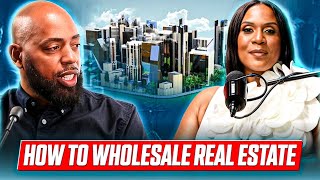
YouTube interview (Charles Noonan with Nyah Ball) about virtual wholesaling and real-estate entrepreneurship. Nyah describes her 20+ year real-estate background, explains "virtual wholesaling" (doing wholesales without visiting properties), recommends reverse-wholesaling (secure buyers first), shares valuation/offer math (ARV→30% buffer→repair costs→seller offer), and discusses land and commercial wholesaling, NOI/cap-rate concepts, mentorship and course offerings, and diversification into cash-flow businesses. She emphasizes relationship-building, systems (lead generation, dialers, teams), and teaching others (including her children).
Questions this video answers
$30,000 a month (she teaches students to make $20k–$30k/month).
About $60,000 on one deal (a mixed-use commercial + residential property).
$1,000.
Over 20 years.
She said they bought their first property when she was 22 years old using their tax return.
Chapters
I've been going, going, going, going, going, going crazy.
No, you can't blame me. You have a hustle crazy.
I've been going, going, going, going, going all summer.
In this video, I'm gonna introduce you guys to an individual who makes $30,000 a month, has a multi million dollar business. And the thing I like about it most is that she teaches her kids how to do it too. Introducing Nyah Ball.
Hey, how are you?
I'm doing well. Welcome to the show.
Thank you for having me. I really appreciate it.
Nice, nice. So from Philly, right?
Born and raised.
Born and raised. I got some friends in Philly. Are you familiar with the permit plug? Mm, no. All right. She's a good friend of mine. She helps people expedite the permit process.
Oh, yeah?
Yeah. So all the real estate people in Philadelphia, she's like, I do have a.
A permit, per. I mean, an expediter.
Oh, you do?
Yeah. But I don't know this one, so I'll definitely have to connect with her.
I got to introduce you to her. She's like a sister to me, but she is phenomenal.
Oh, wow. Cuz, listen, that permit process down at the city of Philadelphia is no joke, is it? Yes. It's a lot going on down there, but to have somebody to kind of help to expedite things and get through, you know, jump through hoops for you is amazing.
All right, so right now you're confusing me, because I know you as the virtual queen of real estate. So how does the virtual queen of real estate now you got. Now you need per. You don't need permits for virtual real estate.
You really don't need permits for virtual real estate. However, we not new to this. We're actually true to this. We have. I've been investing in real estate for over 20 years. We started. My husband and I invested in our first real estate property when I was 22 years old using our tax return. So we started out fixing and flipping.
All right, so you got physical real estate, which you run up $30,000 a month in virtual.
Yes, and here's why. I'm older now, right? And so for 20 years, I've been in the game. So we started off fixing and flipping before that whole use other people's money. So we were using our other. We were using our own money. And. And in addition to that, we were, like, out there putting up drywall, painting and spackling and all of that before we had an actual crew. And so now that I'm older, like, I don't want to be on a job site all the time. I don't want to be managing, you know, general contractors.
Sounds a little bit like me. I'm at the point where I just do new builds. I don't do fix and flips just because I don't care to go through that process of working with contractors. They want half of the money up front for deposits and all. I don't want to do all.
Yeah, I'm not doing that either.
Yeah, I. But you got some left. You got a few properties left.
Absolutely. I'm always going to hold real estate.
You say it. So. So here's the thing. You do wholesaling, right? The whole thing with wholesaling is control everything, own nothing. How you doing? Wholesale. How are you the queen? You holding and you control it and you hold it. What's going on?
Because it's called diversification. Like, I have to diversify my portfol portfolio. When I think about it, sometimes at the end of a flip, I would see $30,000. Okay, I can make $30,000 just flipping paper, right? And I don't have to be on a job site. I don't have to physically manage a.
Grown person out time out. I don't know what that means, flipping paper. So here on the real estate newsroom, right, our audience tunes in to learn from people that don't gatekeep everything they can about making real. About making money in real estate. So when I said $30,000, you know, you're gonna have to break that down to us, right? Flipping paper. I don't even like you're gonna have to explain that to us. You cool with all that? Because I know, you know, some people don't share, right? You got the multimillion dollar portfolio, and some people just don't share.
I am sharing all of it because that's what I do every day, essentially. I share information and I teach individuals how to make 20, $30,000 a month in virtual real estate as well. So the first thing that we can cover is how we actually flip paper. Virtual real estate.
That wholesaling is wholesaling.
Yeah.
Break wholesaling down for me, please.
The reason I say virtual, though, right? The reason I coined the term virtual real estate or virtual wholesaling is because I don't physically go to these properties. I don't physically go there and. And inspect them or anything like that. I do this entire transaction virtually, right?
I like it first.
So in addition to that, virtual whole. Virtual real estate is essentially like abc. So the seller is person a me as the wholesaler, I'm person B and the end buyer is person C. So all I essentially do is connect those individuals and collect the check at the end of it. What? Be forever younger. Got a new wasted product for my waistline. It's lit, girlies. Yeah, I'm getting it right now. Right now, right now.
Walk.
Now. Watch it in the light. Watch it shine. Just how like my face was shining by the end of this video.
This is me.
This is me modeling the product as I should. And this was me dancing to the product also as I should. So as I was giving y' all the slow wine, I was moving upwards with the product, as y' all should, to get that snatch waistline. So my waist has been snatched. I've been using the product for gently about a week, and it has strongly got me sleep.
How is that different from a real estate agent?
So with a real estate agent, you have. I tend to market to individuals where the traditional real estate agent can't even do. Like, for an example, if the property is up for foreclosure, right. That's not really a property that a real estate agent is going to want to deal with because, number one, there are liens on the properties. You know, a property can not even be sold if there's a lien on the property. And so with me, my buyers are investors. They care nothing about liens. They're. They're very much aware that they're going to make their money on the back end. And so just makes it interesting.
I need you to educate me on something. Tell me if I'm smart, if I'm crazy, or if I just did the total wrong thing. A big part of my real estate history is I was buying vacant houses in Detroit from the land bank for $1,000, giving them to two wholesalers and telling both of them to market. Whoever sold the property keeps whatever they put on top. And whoever didn't sell, just for marketing it, I gave them $1,000. Was I smart or crazy for doing that?
I think he was smart for doing that because 90 of this business is relationship building, right? And so while that first investor or that first agent wasn't able to move it for you, you never know. You know, you never know who that other person knows. And so I'm all about building relationship, and I'm all about strategic partnership as well. Because, you know, while this one person may not be able to make that connection, you, you know, that other person might. And so I think you were smart for doing that. At the end of the day, you were getting the deal sold, but at the same time, you were building a relationship with that other person.
Is it any of my business how much they sold the properties for?
Why, why. Why does that matter to you?
I'm just asking because I never asked. So I have. I had, actually, an individual that was a wholesaler. My guy in Michigan, his name shout out to Byron. And he was so thankful to me. He loves me. When I. When you could tell when somebody really loves you, this guy loves me. And I always wonder, like, damn, how much did I do for him? Like, how much money did he make off of me? So I buy the house. 4,000, 2, $3,000 of light, renovations, right? Windows, clean it up, whatever, give it to him. He'd wholesale it for like 18 to 25,000. And he had people from other countries. He had investors from other countries, other states, other cities. They would buy, come and do the rest of the renovation and do whatever, either sell it or rent it out as a buy and hold.
Charles, we all got to eat. And essentially, that's like, that's how I feel. I feel I don't really care what the wholesaler is making. I don't care what the investor is going to make at the end of it. At the end of the day, like I mentioned, it's about strategic partnership. So I'm getting paid, right? I'm simply getting paid by connecting people.
So who. Where do you start in wholesaling? Like, do you start looking for guys like me? Do you start. Look like you go to the foreclosure?
I love that question. Where do I start? A lot of wholesalers mess up because they start their process inverted. They start their process by reaching out to the seller and getting the deal under contract. I don't do that. I do something that I call reverse wholesaling because I make sure I secure my buyer first. And that's where you're able to scale your business. That's how I'm able to scale and scale so fast, because I identify my investors, I identify those buyers, and they're already ready by the time I get something under contract. I don't have to then hold that property and wait for somebody to come along to buy it. I've already secured my buyer.
Interesting. So you go, let's just say, recruit investors that want a specific type of property. Whether you buy and hold, whether they want to fix and flip or whatever, you get those. Get 10 people with money and find out what their. Their appetite is for, what they. They want to invest in their buy box. Then you go finding a deal. Then you go find a deal. Let's just say you meet a guy like me. I'm selling a house for $50,000. You correct me if I'm wrong. I just want to understand wholesaling. You then say, charles, let's go on a contract. I must buy it for 50,000, add on top. Give me, give me what you would add.
I don't like to give me less than 20,000. So I would.
So you're going to add 20,000 on top, bring it to your investor, say, hey guys, I got a great deal for you. $70,000. ARV is 140. The math works. Let's go.
Absolutely.
That's it.
Absolutely. So I, I want, I. One thing that's very important is also understanding the math, right? And so in order for me to be able to put $20,000 on top of that deal, I need to make sure that it makes sense to the seller, but that it also makes sense to you as the end buyer. Right? And so I'm doing those calculations. I'm making sure that the ARV works. I'm doing all of those things because if the math works, I, I get to determine what my paycheck is.
I love it. Sorry, let me ask you this. I want you two paying attention, Kaden and Nelly, because they're the younger generation and I want to know, I want, I want to find out if they're understanding wholesaling from a younger, from a 20 and under perspective. Because you said you teach kids too.
Absolutely.
Now the have the kids made 20 grand in a month?
Yes, the kids are making deals right now. My son is 30. He's a beast at this.
I love it.
But this is one impulse buy that I don't regret. I decided to try the plump perfect because I wanted a little more volume without getting lip injections because I've seen so many go wrong with other women. I can't risk that. With the plum perfect containing natural ingredients such as collagen, how could I go wrong? I saw results as fast as seven days. Now, there's only two reasons why you should try it too. Number one and most important, it actually works. And number two, it's cheaper than lip injections. Shop Be Forever Younger.com before the Plump Perfect sells out. We were in, in Phoenix and my little cousin, she, I was sitting down working and she's like, what are you doing, cuz? And I was explaining to her what I do and she sat with me for maybe about an hour and by the time she got Up. She understood the whole concept. Wholesaling is nothing different from what Amazon is doing right now today, or Walmart. Right. So Amazon, they don't build and manufacture all of the products that you buy. All of those different little Amazon packages that you got coming to their house every day, they don't manufacture that. But what they do is they might reach out to a vendor or they might reach out to a distributor or wholesaler and they'll say, hey, I want to purchase those selfie sticks from you. $10 a piece, right? So Amazon is going to pay 10, $10 for the selfie sticks and then they're going to sell you the selfie stick for 30, $30. And so they're going to make $20,000 in between.
I love how you position that. I really do. There's a negative connotation with wholesalers. It is that they, they, they be pushing to get people out of their deals only to make more profit to sell it to somebody else. Let's address that. So you got, you got, you got Steve, who just got his grandmother's house, who she been working, she'd been working her whole life, paid the house off. It's a little bit neglected. House is worth $200,000. Taxes are behind or whatever. You gonna hit up Steve? He's interested in selling. He's a motivated seller. Is that a term? That's a term you guys use? Right. He's a motivated seller because he don't want to pay the taxes or the upkeep. It's worth 200,000 after repair. Right. If everything was good, working condition, 200,000, you come in, Steve struggling six months behind taxes. The roof is leaking. Is it Cor. It's in your best interest to get the house from Steve as low as possible, Is that right?
I would say it's in my best interest to get the property for a price that's going to make financial sense for me. I don't always approach for you, for.
Steve, or for your investor.
Let me. For everybody. Because let me say this, I don't always want to make the most amount of money on the deal. At the end of the day, it's about helping my, my seller, right. If I don't help Steve, the roof going cave in. If I don't help Steve, the city is going to take the property for tax delinquency and Steve is going to walk away with nothing. And so my goal is always to see how I can help Steve out, how can I help the seller.
So a house that you know needs $20,000 worth of work. Steve don't know that. Steve is. Steve lives in Nebraska and he's just trying to manage everything. Granny died. Your investors are hungry for property in this area. You got Steve on the phone. It's worth 200. It only needs 20. How much are you offering Steve, by the way? We keep it all the way around.
Does it, does it only need 20,000? Are we sure about that?
You eyeballed it and you say 20.
So this is what I do. There's a formula for everything. So what I do is I start with the ARV, which is 200,000. I take that number and I multiply that number by 30%. The reason I multiply that number by 30% is if that property is going to be 60,000. So are we taking off 60,000? So if, if for whatever reason we're going to finance their property or I need a loan to purchase their property, I need to make sure that I'm accounting for any type of fees, interest. So that's why I take the 30. 30% off once I do that.
So now we have 140.
We're 140, right. And then from that I'm going to take off the $20,000 for estimated repairs. So now we're at 120.
120.
Okay, we're at 120.
Something got to go to you and then.
Exactly. And so I'm going to, you know, determine how much money I want to make on this deal.
Let's say 20.
Let's say 20. So now we're at $100,000. That's going to be the offer to Steve on a property that would be valued at 200,000.
Okay, now let's teach. How would a student have that conversation with Steve in like a 10, a 20 second clip. How would you have that conversation with Steve?
So the first thing is, before you even get on the call with Steve, you need to know what the ARV is. I need to be sure that the.
After value is 200. You want to call this dude no.
1 okay.
Who juggling all real life Granny house, everything going on. He know it's worth 200. But he, he can't pay the taxes and all of that stuff. Now he on the phone.
The first issue is I need if Steve is out of town, Steve don't know the condition of their property. And so I need to somebody told.
So go ahead, give me 30 seconds.
So I need to be sure I know that it only needs $20,000 worth of repairs. And the way that I'm going to find that out from Steve is I'm going to find out when is the last time the. The roof was done. When is the last time all of your mechanics were taken care of? When is the last time that you got a new heating system, plumbing? Because I need to account for all of those things. And I can tell you now, if granny been gone and Steve ain't even been there, I don't know if this $20,000 is even a thing, but I'm just gonna.
So now you talking about a $200,000 house. You now gonna dip below 100? You might. You might. You might be at like 70,000, 80,000.
I'm gonna be at what? Okay, so here's the thing. I'm never going to go into a deal and lose money. And so if the property needs $70,000 worth of work, am I supposed to only account for $20,000 worth of work?
No.
I need to do an evaluation. Nobody's in this deal to lose money.
Right?
Right. And real estate can either make you a lot of money, but if you don't know what you're doing in real estate, you can lose a lot of money at the same time. And so while I'm not trying to take advantage of Steve by any means, I also can't come into a deal underwater. I'm never going to do that.
So when you say come into a deal underwater or take advantage of Steve, are you insinuating that when you go into contract that you're buying it and then selling it to your people, or you just get it under contract?
I'm just getting the deal under contract.
So you're not putting any of your money up anyway.
But my investor might.
And you don't want to lose your investor money.
I don't want my. My investor. Here's the thing. My investor is going to do the same calculation. So my investor is not going to spend more than what they need to, depending on how much work the property is actually going to need.
Okay, how much information do you bring to your investor when you bring it to them? Are you doing like a full fact sheet? A full. This is the cost. This is what it costs to repair. This is what it can sell for after repair value. And it'll qualify if someone needs to buy it at 80% loan to value. Are you doing all of that? Are you saying, hey, here's the address, do your due diligence?
They're going to do their due diligence anyway. Hopefully. But I do an assessment for them, and I'M also a realtor, and so, you know, I have access to the mls, so I have pretty accurate numbers when I take my information to my investors.
Okay, so you really are, like, looking out for Steve, looking out for your end buyer all at the same time.
Absolutely.
And you got to be realistic with Steve and say, steve, people ain't doing roofs and windows and everything for 20,000. It may be a little bit more. So we have to offer this price.
Absolutely. And guess what? Sometimes the sellers are not willing to do that. Sometimes. A lot of times. A lot of times. See, here's the thing. I. I do both residential wholesaling, but I also do commercial wholesaling.
Right, right.
When it's residential, individuals are emotionally attached to the properties. They think that their properties are valued at much higher than they really are. They don't account for repairs like you would. They would say, oh, okay, let's just shampoo these carpets and keep it moving. But my, my. The people that are coming to rent this property, they don't want old, funky carpets. You know what I mean? And so I'm looking at it from a perspective of how can I get. Get, you know, purchase the property, put money in your pocket, but also make sure that it's rentable at the end of this.
Right, right.
So I have to look out for everybody at all parties.
Got it. I was always curious about that. Like, do they. Do wholesalers really drive the purchase price as low as possible, or are they typically reasonable and educating people on what they should be getting and then putting what they charge on top and then selling it so it kind of makes sense. I like how you do it or how you explained it.
I also feel like, you know, with what's happening right now in our economy, with the tariffs that are happening, people like, the cost of goods is skyrocketing. And so it's essential right now for people to understand how much it actually costs to do a renovation. And sometimes I don't think people get that right.
All right, tell me this. How exactly do you make $30,000 a month without leaving your house?
So, like I said, you. I built relationships with investors, individuals who are. Who've shared their asset types, they've shared their buy box. They've told me exactly what they're looking for. And see, the thing about it is, investors don't have time to do what I do. Investors don't have time to be on the phone following up, reach out to sellers and so forth and so on. And so investors need me. Investors need wholesalers.
What's the most amount of money you've made in virtual real estate in one deal.
And one deal. About $60,000 in one deal.
Geez, 60,000 without leaving your house?
Without ever leaving my house, absolutely. And if you think about it, commercial transactions. And, and that deal was actually a mixed use property. And so it was, it was a commercial space down at the bottom and then it had apartments upstairs. And those deals are so much easier to close. Why? Because those sellers are not emotionally attached to the properties like residential.
It's a unit.
And then in addition to that, with commercial real estate, and when you're wholesaling commercial real estate, you are doing a different type of evaluations. So you're determining what the NOI is and you may be doing that evaluation based upon a category.
You gotta break down NOI.
Operating income and the way to determine that. So when we are operating with commercial real estate, we're paying close attention to how much the what the revenue that that property is actually making. Right. And so for an example, we'll use the $200,000 number again, let's just say say for an example, every single year the property is going to gross $200,000. In order for me to get my NOI, I have to take the $200,000 and I have to multiply the expenses. Right. Typically what you'll do is you'll reach out to that seller or a broker and you'll ask them to give you the P and L statement. And on that P L statement, profit and loss statement. Right.
Some of our audience don't notice.
Yeah, I'm just flowing like they get it right. So they're going to send me a product, profit and loss statement and that's going to determine what all of the expenses are. Right, Got it. And so then we take whatever the, the expenses are and we deduct them from the gross income. And once we deduct the expenses, we are now holding the noi. That NOI is going to drive every other formula. Right.
Every other no, how much it's worth and what do you sell it a multiple of the, of the Prof. Of the noi.
Well, it depends on the asset type. So if I'm doing an apartment building, I'm going to determine what the cap rate is. Right.
Okay.
And so, um, typically with cap rates, I like to be anywhere 2% above the prime rate for the cap rate. So once I do that, that figure. And that's why with commercial real estate it's, it's less cumbersome because they just understand the Cap rate is going to be what the cap rate is. There's no emotions attached.
All right, all right. You, you, you. You going, like, real estate master class right now.
Okay.
Were you always like this? No, was. Was like, were you born into real estate? It sounds like it, right? It sound like you was like, you got a master's degree in real estate.
I was older. I've been there. I've been through. I've been through a lot of things, and I'm.
All right, Nya, do this for me.
Yes.
Because you sound like. Like, Yeah, I did 60,000 in one deal, right. I got the multimillion dollar portfolio. Tell me about a time where it wasn't like this for you. Cause I could tell if you want to crank it up right, you just lock the door in the house, get food for the whole family. Y' all gonna come out the end of the month with like 200,000.
Oh, we can. We could do that. I know the matter is. But getting people to sit down long enough for you.
That's why I said lock the door and order the food, Right. If you do that, they'll stay in. There's no reason to leave. Let's get this money. Tell me about a time where it wasn't like that. Like, where'd you get the drive and determination to be this just boss of a family or beast of a family in the real estate game?
So it all comes from my mother, my upbringing, where I come from. When I was born in Philadelphia in the 70s, I'm not going. You know, I don't want to tell my age too much, but when I was born in Philadelphia, the city of Philadelphia took me from my mother. The Department of Human Services removed me from the home. And not because, you know, she was neglecting me or not taking care of me, but it was simply because she was disabled. And so my mother couldn't use her arms, she couldn't use her legs. She was a quadriplegic. And so the city took me. She went to court, she fought, and actually won custody back of me.
Love it.
However, life wasn't really easy, and so she was determined not to allow me to. I mean, she was determined not to rely on family or relying on people for help and support, which, you know, that pride thing, you know, got to her. And so housing wasn't always the best for us. You know, we've lived in houses before where there was no water or where the power went out or, you know, where we had to actually put a pot on the stove in order to Heat up our water. Okay. No. You know what I'm saying?
Get the rice pot. Usually put the biggest. But go ahead. This ain't my story, but I. I've been there.
Go ahead. Okay. And so as a result of that, my resolve was I was never going to allow my kids to suffer from housing instability. Right. Even though we went through all we went through in the household, my mother always made sure that the house had love, that we always had support, that she did the best that she could with her limitations. But that's where my love for real estate was born. And when we purchased our first property, it was family that lived there. And to this day, I still rent to my family, really. Right. Because the ultimate goal was to make sure that we eradicated how housing instability. And so that's how I started building my portfolio, and that's where it all began. So I started with. With residential real estate and renting and all of that stuff. Renting and holding and fixing and flipping and stuff. But once I realized that I could make the same amount flipping paper, doing wholesaling, as opposed to the, you know, dealing with the contractors and all of that.
Yeah.
I said, I might as well just do this.
In our community, that's really all we know or all we hear or that's all that's pushed to us. They glorify the fix and flip, right? And it's really just taking one house that a developer built, right. Who made the money initially that he. He basically made all the money. Then they're gonna tell everybody else to fix it. Flip it, flip it, flip it, flip it, flip it. Which is like they go. They build in our neighborhoods. Then they say, all right, y', all, flip it. And try to add on 20,000 and add value, a value add. And then do this again and do it again. And then we got a bunch of fix and flippers that are broke. And then the contractors are robbing each other because they're going from job to job. They really don't have the money. When they take your deposit, they're spending it and not putting it back into.
The property where they're trying to finish another job, which is a deposit.
That's the name of the game. That's why I don't do fix flips anymore.
You also do not allow a contractor to get ahead of you either. What I mean by that is, if I'm dealing with a contractor that needs multiple deposits from me, you not my contractor. Right. Because I'm not gonna pay you for work that's not done.
But Oftentimes, the contractors that have the money want to really work in the hood. We're trying to be like the real estate moguls and start in the hood, but the ones that could afford to do the work are either going to come in the hood and charge us a lot of money. They don't trust us. So they're really not doing the work and they're asking for the pay. So that's where the deposit really comes from.
Absolutely.
I started. I've been in the game for a while, too. It gets a little. It's gotten ugly and it gets ugly and I'm aware. So.
I love that you. I love that you do land. Right.
And.
And the reason that I transitioned from fix and flips, fix and holds into virtual wholesaling is because of just versatility. Right. And things are changing all the time. And I realized that I can flip just about anything when it turned when it. In terms of paper, because I can also. Wholesale land.
Right.
There are so many different.
Do you wholesale land?
Absolutely. Absolutely. Let me tell you.
Look, do me a favor. Look into that camera and say land, bank, community. I can teach you guys how to wholesale land.
Land, bank, community. I can teach you guys how to wholesale land. And I'm gonna do it. I'm gonna start right now, today, right?
No, don't tell them right now. You want to tell them right now. Tell them in three steps. Three steps. How do you do?
Why? First of all, doing a survey, understanding the purpose of the land. Right. You have to determine what can be built on that land. Right. And then second, a lot of times you, you know, you definitely want to make sure the zoning is what the zoning needs to be. But here's a major gem. Can I give a little bit of game?
Of course.
All right, so what's happening now in this up and coming economy is energy companies and solar companies are dying for land. You ever see a piece of land just sitting there and you think it's just idle and nothing's happening with it or. Well, a lot of time. These energy companies are actually leasing these pieces of land for years and years and years, right? And that's a major opportunity for passive income. If I'm an investor and I purchase a piece of land and I lease it to an energy company, there is no trash toilets, no tenants. I have absolutely no maintenance on this piece of land yet, and still the energy company is paying me for that piece of land.
You ain't got to sell me on land. That's all I do. I got a whole Portfolio of it sitting right in my book bag. Yeah, I love land because even when. When I sell or finance land, they're making payments to me. However, if they don't make a payment and my contract, if they miss two payments, we take the. We take it, take the control of it back. The contract is null and void. So I don't have to fight with. There's no phone calls in the middle of the night. Like, my toilet broke, the furnace isn't working, the light's not working. I don't get any of that. And then they, they. They happily pay me for it every single month. And if they don't, I just don't give them the deed.
That's it.
We give the deed at the end. So I think what we're putting together right here is you go out and get your. Your land investors, your people that bought that want to buy land, don't have the time to find it. Then you go to land banks, right? Like the Muncie Land Bank, Shelby County Land bank in Tennessee. You get your land for 4, 5, $600, and then you could sell it to them for whatever you want. Four or $5,000.
Absolutely.
That would be pretty cool.
And they buy it no matter what cost you put.
Of course. Land is the new sexy. It is land is the new sex. Would you agree?
I agree.
There's so much about land going on, and the education of land is like. Is new right now. Now I feel like our people are learning more and more about land today than we ever have.
Yes. I'm just entering into the land space, and so I'm learning. I'm. I'm sure that there's a lot about land that you can teach me.
Yeah.
People typically, like I said, I often reach out to my buyers first. So my buyers tell me what they want, they tell me what they want, and I just go get it.
That's so smart. That's a really cool way to do it. It's hard to teach people because there's some work associated with getting buyers. And if we could figure out a way to get people to do that work to find the buyer, we know where we can just go grab the land from the land banks.
Just like with everything else, though, whenever you're providing a product or a service, the smartest people tend to sell whatever somebody is asking for. I'm giving you what you're asking for.
Yeah.
The people that struggle are the ones who are selling people or giving people things that they think they want. So instead of you going out and getting A whole bunch of land.
And then you get the order first.
Get the order first.
That's super smart. All right, let's get a little bit further into it now. What's the most amount of money? Because virtual, wholesale. Virtual real estate. I assume there would be no. No downside for you is. Is there an amount of money that you've lost in a wholesale deal?
Oh, no, I don't lose money in wholesale deals, because I didn't. I never put my money on the table. But I will tell you this. In order to be successful in wholesaling, you have to be willing to invest in yourself. You have to be willing to. There. There is a minimal amount of money that you should invest into your business in order to be successful. For an example, lead generation is something that's. So. I'm sorry. I just got a little distracted.
Lead generation, you were saying, is important. You got to invest in yourself. So you buy leads. Do you have a dialer?
I have a dialer, yes. I have a team that actually does the, you know, does the cold calling, because I also don't cold call either. Another.
Do you have a team from overseas?
Yes.
I hate when they call me. Look, I'm gonna just put it out there, talk to all the wholesalers, all the real estate people. Stop getting these people that's gonna randomly call me that really, like, they be messing up everything when they call me. And they call at the most inopportune times. Right? Please, for every wholesaler, every person out there, because I own over 400 deep prop pieces of land, please take my name off y' all list. I'm just putting it out there because they, like. Does that work? Do people.
Actually, I. I think that cold calling can be. Can be really tricky, right?
I feel like if you called me, hey, Charles, we just bought a piece of land right next to yours. I'd like to buy yours too, because I'm building two houses there for me and my family. I'd like to build a bigger house. I. I would entertain that conversation. No offense to some. To the other countries out there, but when people be caught, they be calling you too, right? Whenever people call me, I immediately want to hang up. I get upset, and I have an attitude. I'll be like, I'm not selling. And they'd be calling with properties I don't even own anymore.
Oh, my.
And that's.
Even the information is bad. They just. So what we also do is we run ads, right? And we. We. We, you know, get people to actually reach out to us. So you can create a website and you can let individuals know that you are, you know, purchasing real estate, and they will reach out to you. That's a little different because the person is clearly calling you to tell you that they're into.
Are all those bandit signs, Wholesalers, like, we buy houses, Houses for cash?
Yeah, absolutely.
That's all wholesalers.
That's all wholesalers out there.
I respect it. I respect it because I see him a lot. I. I respect when people promote their business. I really do. Because there's so many excuses of why people won't promote themselves and their. And their business. And then you start to see a lot of marketing for like one or two companies, and then you wonder why they get all the business. It's because they. They. They're investing.
Like, they putting in that marketing money and you.
All right, so I gotta ask you a couple more questions. Who taught you how to wholesale? Is there a mentor you invested in that taught you? Like, Naya? This is what you need to be doing.
I just, honestly, I studied a lot of Grant Cardone. I study individuals online, and I learned a lot that way. But being in real estate, so long, like, you hear these things, you hear these terms. So I don't really have a direct mentor when it relates to wholesaling, but I watched my mother purchase her first property, right?
Okay.
She purchased a condominium. So after we had been through all that hell, and that's kind of like what. What made the spark happen for me? We've been through all of this. We were living in apartments or living here, living there, and never really having a home of our own. And then at some point, you know, I guess I was about to 19 years old and she purchased a condo. And I was like, what. What is this?
I love it. So you were born into real estate. You tried to deny it, you tried to hide it.
I think I was born and you.
Were born into real estate. Funny enough, my mother and brother bought the first house in my name that was ever in my name. I didn't know about it, but it still. It still was.
Well, at least they ain't put the phone bill in your name and jack your credit.
Of course we have phone bills.
Okay.
Plus, I have phone bills in my name. Electric bills in my name, too. I had all. But. Yeah, and so.
But imagine that, right? Because when my kids first came home from college, they were like, listen, lady, we out of here. Right? This is. This whole house is nice and everything, but we need to be on our own. Because they had gotten used to Their independence. And they were like, listen, we're buying it. We're going to get a, an apartment. We're going to rent an apartment. My son was going to go live with his homies. My daughter was going to rent an apartment. And I said, over my dead body. I was not gonna allow my kids to rent and build somebody else's legacy and not build their own. And so they purchased their first property together. Right. And so that's there essentially gonna be their first investment property. But it's in us. Like you. In order to, to be it, you have to see it.
Yeah. In New York, though, like, we don't mind renting.
Yeah.
Sometimes like my sons say they want to go live in Midtown or the Upper east side or something. I'm cool with it.
Yeah, no, I get that.
Ultimately, yes, you'll own. I mean, we, we have plate. They have houses already that they can live in when they get older. So I have a few houses. I don't. I can't live in all of them. Right, Absolutely. They kind of have places of their own.
I mean, but everybody doesn't have that story. Right. Some people are, are serial renters. They're going to rent for the rest of their lives. And if you think about the amount of rent that you spend over the course of your lifetime and you think about what you could have done with that money, I just was not, you know, in a position.
It's convenience, though. So I worked in corporate, got a crazy bonus check one time, balled out, and I lived on like the 29th floor of the Upper east side. It served a purpose for me.
Right. Okay, so let's talk about this a little bit. What about cash flow? Like, at some point you want to be able to reap the benefits of the investment that you made. Think about how much you spent in that apartment over a course of 10 years.
It was worth every penny of it, though. I threw huge parties on the rooftop. I entertained like crazy. I had the convenience of like a doctor in my building, a dry cleaners, maintenance porters. They'll come and put my groceries away and do everything. It was like, it was worth it to me.
Oh, you mentioned dry cleaners. So with that being said, what we've been able to do is I've taken the process profit that I make from my virtual real estate deals, and we actually purchased a dry cleaning business last year. So what we're doing is we're also buying cash flowing assets. So it's about, like I told you earlier, it's about diversification. And so I don't want to just teach people how to make money in virtual real estate. That's like the easy part.
Yeah.
The hard part is building legacy.
All right, let's get into it. Right? So we both were born into real estate, so to speak. For people that were not born into real estate.
Okay.
For people that were not born into real estate. Give me the first three things, because somebody's watching, this is gonna say, I want to be like her. Right. What's the first three things you need to do to wholesale real estate?
The first thing that you need to do is be able to build relationships and have a conversation with people. Like I said, you know, you second thing. All right, so building relationships, doing research, Doing the research, knowing the numbers, that's very important. And being able to bring it to the closing table. Right. And so you're. You're essentially. Oh, and negotiation. Negotiation is a major, major, major thing. Yeah.
How do they sharpen that negotiation skill? Because I could already tell you have a skill set and a talent to negotiate. Right. But I know everybody's not born with that. So is that something that got better over time? And especially as you start to teach it, because you can. You can let somebody listen to one of your phone calls, and then when they try to do it, it sounds completely different than how you said it. There's no swag, there's no rapport building. They don't make sense of what they're saying. There's no connecting of the dots. Is. Is negotiate. Are the three things you said are those things that. That people can work on and sharpen?
Well, my mentor always says this. Some things are taught and some things are just caught. Right. And so caught by being around it, exposing yourself to certain things. And when it comes to negotiations, if you're. If you're approaching the deal to make the deal, to make the money you already lost, how do you approach it? You approach it by building the relationship. When I get on the phone with a seller, when I get on the phone with Steve, what I'm doing, the first thing that I'm doing is I'm first of all, humanizing him. I'm letting Steve know that I understand his circumstance, I understand what he's going through. And I am getting to know Steve most of the time. Most deals are made in the follow up. And so I may not make the deal the first time I talk to Steve, but if I get to know Steve on the first call and then the next time that I talk to Steve, I bring up something that resonates to him. I'm just building relationship and building rapport. And that is what sells deals, building relationships.
How much of everything in life, with all the businesses and everything you have, how much of it do you think is building relationships?
Maybe like all of it, 100%.
So everything is built, is building relationships.
So to speak, and also creating a win, win situation. The reason why I'm so successful at this is because every deal that I approach, I'm not just looking out for myself. I'm going to make money, period.
Steve's going to be happy, your investor is going to be happy.
Absolutely.
You find a way to that an amount that makes you happy too.
Absolutely. And sometimes a loss is a win. And what I mean by that is I may not get the 20,000 that I want, but I might get 10 or I might get five and Steve might get the other five. Right. But at the end of the day I've made that relationship and Steve might own another property that he needs to sell.
So that's thinking long term. What's the least you've ever made on a deal?
Thousand dollars.
You did a wholesale deal, paperwork connected by everything for a thousand dollars?
Absolutely. Did it.
How long did it take?
The same amount of time that it takes for me to do this.
The $60,000 deal and the 1,000. The 60,000 DOL and the $1,000 deal took the same amount of time and signatures.
Absolutely same amount of time.
Okay, cool. So minimal losses, minimal investment in the business. The investment is in yourself and your resources.
Here's the thing about virtual real estate. Anybody can do it. Like I told you already, my little 18 year old cousin came home from that vacation on fire. Right. But you can be, you can have no college degree, you can be had, been in jail for 30 years, come home straight out of the penitentiary. You could be from Penn State or the state Penn. It doesn't even matter. I don't care where you're from. You can actually virtually wholesale real estate as long as you have the proper strategies, the tools, the systems. And that is what I teach. And I think that's where the most value comes. People think it's as simple as picking up a phone and making phone, you know, having conversations. At the end of the day you have to make sure that you have the proper systems, just like with any other business. Right. And as long as you have those things instituted and you understand how to make sure that everybody gets that there, gets what they want, you can do this.
So you teach it as well?
Yes.
Like you You. You have outside of your kids, which is just straight proven you can teach anybody. Because if you can get your kids to listen to you and pay attention and actually do some stuff, that's a gold star right there. Talk to me about how you teach. What do you. You have a course?
I have a course. What made me start teaching was people always are constantly asking me, what are you doing? How is it that you're making money in real estate? It doesn't look like you're really out there doing much, because I'm not. Right. And so I decided to find a way to be able to share this information with other people, other individuals. And I have a course that I teach. We meet a few times a week. And the thing that really sets my course apart is I. I literally not just tell people what to do and send them about their way. I don't gatekeep the information. I. I'm on the. I'm on calls with them. I'm holding their hand, just showing them exactly how it's done, as opposed to just telling them what to do. I show them how to do it.
Okay. Is that your mentorship? Do you have them? That's it.
That's it. So I have a course that they can kind of follow along. Video tutorials, tutorials. I also meet with those individuals every other week.
Really?
Bi weekly. Q A. I answer questions. I literally go through the contracts with my students.
Nice.
Line by line. I want you to understand what a contract is. I want them to understand what those two pieces of paper actually mean. Right. And how to actually assign their interest in their property to somebody else. So am I. But my mentorship is. That's a completely different thing. Where I meet with them more frequently, they have more access to me as well.
What do you like about mentoring?
What I like about mentoring is it allows me to fulfill my purpose. My purpose is to build legacy. Right. But mentorship allows me to not just build my legacy, but I get to help other people build their legacies as well.
Absolutely.
We are in a, in a, in a climate in this country right now where entrepreneurship is no longer, you know, maybe I can do it, maybe I can't. It's actually required. It's mandatory. It's no longer an option. And so for me to be able to empower people to do that, and the fact that I've been able to do it with people 18 or 80, like, I got some old heads in my class too. Right. That for me, is legacy.
What do you. What do you not like about it?
I Don't like when people don't do the work. Hated it. Like, people will pay me a whole bunch of money to teach them a skill set, and they sit on it, and they don't. They don't, you know, execute. That bothers me a little bit.
Give me your biggest success story for a mentee. I knew you were gonna smile too.
Oh, how'd you know that? Well, I've been working with a young lady who just. She was in a space like, you know, just got out of a divorce, bad relationship, was feeling her absolute worst, and was just, like, giving up and then lost her job. So she was just, like, really struggling and wouldn't even pick up the phone. Didn't believe in herself. And so a lot of this work, a lot of successful comes from mindset. And so being able to help to build her, you know, help her to regain her confidence. And this girl is smoking now. Absolutely smoking. And to see her go from her lowest place in life to being successful in this virtual real estate game empowers me more than.
Yeah. And she's appreciative to you?
Oh, my gosh. Yes. I have testimonial after testimonial of. I feel like a lot of the work is more mindset than anything else. Right. So I do teach the skill set.
But I think people. I would agree. People that learn from us oftentimes borrow our confidence.
Oh, yes.
They. They. They heard of it. They. They. They understand it, they know it, but they don't feel like they could do it. They pay us. They get in the room with a bunch of other individuals that are doing it, and all of a sudden, it happens for them.
Absolutely.
Just being around it, like the environment. Do you teach more one on one, or do you do some. Some groups? How do you teach?
My program is one to many.
I love it. Yeah.
My program is one to many, but I'm on the phone one on one more than I probably should be, because I care so much.
Yeah.
Like, I care so much, and especially if I see somebody who I see is really trying, they really want it, and they just need that extra push, that extra confidence, that extra bit of information, because sometimes it's just one little piece to the puzzle that's not there, and if I can give them that piece of the puzzle and then send them on their way, it's just, like, so rewarding.
So amazing. Yeah.
Thank you.
All right, so you want to have a bigger impact? You want to impact more people?
Absolutely. I'm going to impact more people. There's no Way.
I want to help. Oh, I want to help. I want to help. So I want to invite you to speak to the individuals that are in the Land bank community.
Wow.
Because what we do, we're a group of like minded individuals. It's close to a thousand of us, right? Group of like minded individuals. And we meet and we focus on buying land, selling it, but we sell to individuals through ads. So we'll, we'll sell our properties on land.com, unsoldland.org, facebook marketplace. But I really appreciate what you said and the perspective that you come from is like, hey, just go get the, go get the buyer first, right? Recruit the buyer. And I have some ideas on how they could do that too. But recruit the buyer and then now go to the auction. So we go to the auction first, buy the land and then market it. But what you're saying is go, go, go find your, your buyer then. Now you could go to the auction way more confidently because he already told you he's looking for 2 acres and he's paying 20. So you can now go to the auction and pay, right? You're writing your check. If you paid 2,000, you make 18. If you pay 4,000, you make 16. But you already know for sure you're selling it.
Absolutely. It's sold. Actually, before you even get it's sold.
You just putting up the money until, right until you get the deed. And some auctions will give you the deed on site. They have their county people there, they'll stamp it, give you a deed for the property. And then now you can just go take that straight to your buyer. Wow, that's pretty cool. We're going to have a big impact on the community.
I believe that. And I would love to come and talk to your people because I would love to see if we could strategize and find a way for them to not even have to buy the property before they sell it.
We never give up the auctions, right? That's the plot, that's the wholesale. That's the place, right? That's the inventory. We don't give those up. We don't tell anybody.
But what if they could essentially go to. They know what the criteria is. I have to think about this because I'm wondering because in wholesaling, the end buyer pays for the whole transaction. They pay the earnest money deposit, they pay for the purchase of the property.
That's okay because you're writing the check is written already. He's waiting to pay $20,000 for two acres. You got to be able to put up some, like land Banks. Got 5, 6, $700 properties. You get an acre from a land bank for $900 if you go to the right, the right one, or the right auction.
And even if the deal falls through, you still got a piece of it.
You still got it. You still got the rest of your list. So I think that the big piece here, and I'm so happy to have you on the real estate newsroom, is that now our thought process is not only because we actually have a list of people that buy for inquiry, people that call us for inquiries. So I teach them to get the land, do your ads, save every lead that comes in through your marketing. And then when you get more, you can blast text, or if you want to sell it faster, you can do a price drop, blast text, the price drop, and things like that. But now we'll have a group of investors. So there's the window shoppers, the people that are looking for land to store a boat or to do a farm or whatever. There's those people, I'll say retail buyers. And now you just gave the idea of getting investors, which is super smart. All right, so let's do this. Can you please look? Can you look into that camera right there? And can you tell people how to find you?
Absolutely. So I am on Instagram at the Legacy Builder one. That's primarily where you can find me. I also have a website and I have a course that you can also find the link in my bio where you can learn more information about the courses that I teach and just more information about me and my company.
The Instagram is what? One more time.
The Legacy builder. The number one.
Love it.
The legacy builder one.
Is there a website, too?
Yes. Www.macunlimitedinc.com.
I love it. All right, so that's going to conclude this episode of the Real Estate Newsroom. Guys, make sure you comment below. If you found value, make sure you like and subscribe, because we have more individuals that are going to be sharing game just like this. Until next episode. Thank you.
More from Charles


She Made $65,000 Selling LAND… Not Houses! | Nicole Taliafero’s Real Estate Strategy
How to Scale Your Business with Funnels, Live Events & Paid Ads | Featuring Milly "The Funnel Kween"
The Biggest Real Estate Expo Ever. Learn how to pick, purchase and profit from your 1st property.
CBS News Birmingham Is BOOMING! How Developers Are Turning Vacant Land Into Wealth LIVE Sept 18-19
NYC Realtor Has 6 Streams of Income and will be a Millionaire. Nicole Taliafero and Charles Noonan
This Land Flipping Software changed my Real Estate Business, and you get it free.