Million Dollar Listings: A Real Estate Agent's Secrets to Closing Big Deals!
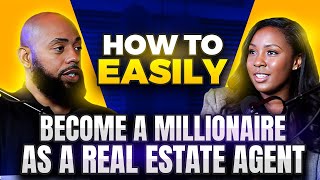
This content was created by Charles Noonan. This content was uploaded by Charles Noonan. This is a YouTube video titled "Million Dollar Listings: A Real Estate Agent's Secrets to Closing Big Deals!" featuring a conversation between Charles Noonan and Valisha Johnson. The video, created on September 29, 2024, discusses Valisha's experiences and strategies in the real estate industry, including her journey from property management to becoming a successful real estate broker, her views on real estate market trends, and her personal experiences in the field.
Chapters
Biggest deal, single family home.
It was just under 2 million.
So some realtors might close 12 deals a year and make seven figures. Where some may do 29 and not make seven figures.
73% of realtors in 2000, the first quarter of 2014 had zero deals.
And you've had months with seven deals.
Yeah. I literally was like, I'm gonna do what it takes. I was driving Uber, I was driving Lyft. I, I said, I am going to be a full time realtor. I will not go back to anybody's nine to five. So you can do the struggle if you want to do the struggle. I'm just telling you that most people are not going to trust you as a full time realtor if you don't have skin in the game. I moved to Maryland without a job. I moved to Maryland for love. I'm a hopeless romantic.
You moved from Arizona?
I did. For love. I was with my ex at the time and we lived together. Things didn't work out. He ended up packing up my things and we went our separate ways. He accused me of cheating and I ended up having to live where I work.
In your situation, you were in a relationship with a man, paid everything. What are your thoughts on men paying everything in a relationship?
Everyone's 50. 50 is different.
Can you tell us a squatter story?
I went to show a client of mine a house. I remember it was in Fort Washington and I couldn't get in the door. I did the whole lock thing. I un unlocked the door. The locks are, are moving but for some reason the door still wouldn't open. So she saw the window open and this lady comes, she's walking out the backyard just like, she's not looking back. Oh my God. I just saw that lady. She was just here at my open house and I was like.
Welcome. Highlight some of the most creative and non traditional ways to make money in real estate. We will showcase some of the world's greatest male and female real estate developers and teach you how you can make money by using the same strategies. Now it's time to develop. Here's your host, Charles Noonan. Welcome to another episode of the Land bank show where we highlight dope individuals that run up a bag of money through non traditional methods in real estate. Today we have the real estate dream catcher, Valisha Johnson, licensed in Arizona, D.C. maryland, Virginia, also a broker and did the application for PA so you can be the realtor for the Land Bank.
Let's go. Yes, let's go.
I love it. I love it, I love it. Now, I want you just to tell me about Arizona because I know there's a lot going on. Arizona is a. Is one of the top markets. It's not Birmingham, but it's one of the top markets. So tell me about Arizona.
It's. It's definitely not Birmingham, but I will say a lot of people are getting to know Arizona because it's a resort state. If you like golfing, it's definitely something you want to explore. And all of the people from Cali, when Cali was getting too expensive, they navigated their way to Arizona. It has great food scenes, great weather. So yeah, Arizona is a. Another Cali without water, I like to call it.
You advocating real hard for Arizona, are you?
I'm from Arizona.
Exactly.
Arizona is home. Arizona is love. I escaped back to the east coast when it's 115 degrees.
Okay, cool. So born and raised Arizona.
Born in Dallas, raised in Arizona.
Okay, so you love it?
I don't love it.
I'm confused. You just went so hard for Arizona. Are you a broker in Arizona?
I'm not. I'm a broker. Where? I love dc.
You like DC Better than Arizona?
I love the east coast now.
Why?
Arizona raised me, but D.C. made me. Oh, yeah, bro.
She.
She's not in some trouble saying it's true.
All right, Is it. What do you like about dc Upwardly mobile, black city.
It was something new to actually see. Definitely the culture. Seeing a lot of black excellence was not something I saw every day coming from Arizona. So as much as I can appreciate Arizona for what it is and what it has to offer. Lifestyle, great. But actually seeing people who look like me living that lifestyle hits different.
Okay, cool. So you're known on the Internet for showing these fun, these beautiful houses. Right. Do you do a segment where you show really like really nice properties, beautiful houses, or is that just normal for you?
Well, it depends. My clients range. It doesn't necessarily have to be luxury all the time, but on Sundays, I have something called Dream Sundays where I like to go live and show homes that are luxury. It gives inspiration. It also is for clients who are looking and currently in the market and also people who just want to see what's out there as far as maybe decor.
That's really creative. Cuz I'm building a house right now.
Yeah.
And I'm looking for some kitchen stuff, some bathroom stuff, some stuff that's fairly new.
Yeah. You get to know like the Bosch and what you should actually do to make all of the things and sink in your kitchen. Don't Buy Mitch Match appliances if you have a million dollar home, honey.
All right. No, no, no. It's a $250,000 home.
Okay, well, you can still get some inspiration from that.
Yeah. So good use of marketing with that too. So you just decided, let me go show some higher end homes to draw inspiration, create a desire, and just to be consistent and feed your. Your following.
Well, it started in, during the COVID time where people were not going outside. So I was like, let me get outside where people are too afraid or not able actually health wise to do. So I'm going to do it for you. And I wanted to be able to showcase homes that were inspiring for me and learn a market that was new to me.
Okay.
Yeah.
Now you told me before you did a million dollar deal. Yeah, right. Was it one of those homes in D.C. or was it in Arizona?
It wasn't until Arizona that I made my first million dollar deal happen.
Yeah, but you love D.C. but Arizona paid you. So Arizona made.
I've made millions in D.C. i've made a couple million in Arizona.
Oh, all right, all right. I don't know. There was a S on both of those, so I don't know which one. But look, all right, you killing it out there. I get it. Now tell me, because I also see you educating. Your Instagram is the real estate dream catcher, Right? Right. I also, I also see you educating. Can you tell us about the change in laws? And was the change in law, is it state specific or is it like Countrywide?
So it's actually a national lawsuit. So I actually take a lot of pride in educating. So I've started that as well during COVID just to be able to educate my clients to understand the process of buying, selling, and step by step, it makes it easier for me. But the new law is basically just more transparency in real estate so that people know how we're getting paid and how much we're getting paid and who's paying for it. Basically, before it was a little sketchy where some sellers didn't realize that they were paying the buyer's agents commissions. And it was a thing where when you get to the closing table, they're like, oh, like, what's this amount? Why am I paying for their side of the table? Now we have to make it clear. We have to put it in the contract, we have to have it out there how much is being paid. And it's really getting a little tricky though, because we want to have independent representation and if a seller is not willing to pay for a buyer's agent, the buyer may have to pay for it themselves.
Okay, so how did that affect you? What's the most percentage you can get for selling a house? Is it 6% for a realtor?
It's not necessarily a cap, obviously. Now we have to have transparent contracts upfront. If I'm going to be showing you a house, I have to be able to tell you how much my fee is. I can charge you 1%, 2%, 3%, 5% on my buyer side, but it's really about what you're willing to do as my client and what I'm servicing you for. That's between us now. Now, if you want me to go to the other side and ask for them to pay the commission, that's where I have to now negotiate that fee for you from the seller versus just expecting that I'm going to get paid.
Okay, so all this change, all this news we hear, is it about disclosure of fees or is it now where your fee now where realtors would make less?
It's really just disclosure because at the end of the day, if you look at the status ever since this law has come about, sellers are still paying our commissions, but now you may see they're paying 2.5%, 3% on average. But now it's clear and we're asking for it from them versus just expecting it as part of the contract. So nothing's, I won't say nothing's changed because obviously, like I said, transparency has changed. It's now part of the contract. And it's very rare, depending on the area that you're in, that the buyer is actually going to pay for their own representation because it's so new. It's too new.
Okay. How did you get into real estate? Today's episode of Brick by Brick with Charles Noonan is sponsored by unsoldland.org Unsoldland.org is your one stop shop for everything land. Unsoldland.org has property in the available states. Alabama, Arizona, Arkansas, Michigan, Mississippi, Pennsylvania, Texas, Virginia, and many, many more. Prices start as low as $1,000. Unsoldland.org go there for anything land. They will also finance your land as well. Back to the episode. Make sure you guys like and subscribe. Thank you.
I fell into real estate. Real estate found me.
You fell into real estate?
Literally.
You tripped?
Yeah, yeah, yeah.
How'd you get in? Seriously, because this is an industry that has so many different looks. We see like the glamorous people selling. There's a show called Owning Manhattan.
Yeah.
Where they sell like $250 million they got selling Sunset.
They got them all.
Yeah. And then there's, like, a very low end, which I think all are great and all make a lot of money. In addition to purpose, I feel like realtors add purpose to this change in someone's lives.
Yeah.
So I know for. For an aspirational perspective, there's so many different reasons and. And models that people want to do, but how'd you get into real estate? How did it happen for you?
Well, for me, I say fell into real estate because I moved to Maryland without a job. I fell into it because I moved to Maryland for love. I'm a hopeless romantic, and I did come here from the legal field without a job, just assuming I would be able to jump back into the legal field. That didn't quite happen. And I ended up getting into property management because I saw a posting for no experience needed, and I hopped on that, and I fell in love with real estate because I was able to have the impact that you mentioned.
Yeah.
Even if it's something as small as renting, you just never know how much that is. For someone to actually have keys to something new for their family, and that alone, even though they were not homeowners, was something that I enjoy doing.
Okay, so you moved from. From Arizona.
You got to go back on it. Let's go back. Bring it back.
So you. I know the story.
Yeah. You want.
So you moved from Arizona.
I did. For love. I did. I did.
You moved from Arizona to Maryland for love?
Uhhuh. Yeah.
And then you just tripped into a property management job.
Yep. That's what happened. That's my story, and I'm sticking to it. Yep.
All right, cool. So you're at the property. We'll. We'll leave it. We'll leave it there. So you at the property management company, Right.
You.
You live by yourself now?
I was with my ex at the time, and we lived together. Things didn't work out. Yeah. He ended up packing up my things, and we went our separate ways. He accused me of cheating, and I ended up having to live where I worked. So it was a whole. Property management literally became my whole life. Like, I lived where I worked. It became my whole life. And, yeah, that's how I kind of felt.
You didn't share that much of the story with me, so I'm. Thank you for sharing that. So for a relationship, I mean, this is the silver lining, right? The relationship. You came to Maryland for a relationship. It didn't work. He packed her stuff.
Yep.
And you Moved into where you worked?
I did, yep.
Okay, so you, you got a job kind of like the same time as the breakup, you found a job?
Yes, thankfully. I mean, I was going to school and I was also working in the service industry. And then I saw a posting for no experience needed. We were going through our rough patch and I did move into an apartment community, and that was where I worked. And they gave me like a discounted rate to live and work there. So I was across the country on my own. He was my provider, so it worked out that I just happened to be able to have that opportunity.
Okay, man. When you say he was your provider.
Yeah.
Meaning he paid for everything.
Yeah, he paid the rent. He paid for. I mean, he kept the lights on. I. I mean, I had come to Maryland with my own money, but not enough to say that I'm keeping the lights on.
Okay. And the reason I asked that there's a. There's an argument that goes across the. That like floating on the Internet about should. Should men split the bills? Like, should men go 5050 or should men pay for everything?
Yeah.
And your situation, you were dating someone or in a relationship with a man paid everything. Would you still agree with that or what's your thought? What are your thoughts on men paying everything in a relationship?
I'd say I'm a little old school comparison to some people. I HEAR Today everyone's 50, 50 is different. So when I say he was the provider, obviously he had provided as the roof over my head. But our 50, 50 was different. If we were going out, he'd pay. But inside I'd probably buy the groceries. I'm probably cooking. When it comes to taking care of home, he still wanted me to be the person to help out with that. He had a child. So also I prepare his meals. So everyone's 50, 50 is different.
So you're on the 5050 side, not men pay 100%.
Well, I think he's paying for. I don't. I just don't know what people view as 15050 because to a degree, he is the provider because he's paying for the majority of things.
Okay.
But for me, I am still contributing. So if you're not putting what I contribute as monetary, then it's still considered 50 50. Right. Like, I'm still making the meals. I'm still babysitting. Your babysitting. I don't know.
I know what you mean. You know, I think I know what you mean. You know what? I don't. I don't. I don't know what to call that, but it still is to me like a mutual agreement. Not a mutual agreement, but like a mutual mutual input.
Yeah.
Maybe not monetary, but like the household seems like it's c. It's being carried by both.
And I'm making house home because also when his children Multiple are here, it's. It's not just a bachelor pad now. It's a home. It's just certain things that I think people's values are different. But as far as 50, 50, if we're going out on a date and this is somebody I'm just dating and I'm not in a relationship, that's a different story. I'm not. I don't. I'm not paying for the check. If you want to take me on a date, that's how I feel personally. Because if we're friends, sure, let's go Dutch. Let's go 50. 50. But if you want to show me interest and you're taking me out, then I am going to expect you, you know, take care of me. Is this funny?
A little. It's because here's. Here's the thing.
You asked me out. I'll sit at home. I didn't ask to come out.
Right. So you go from dating the person. The guy pays for everything. Then you go from the relationship advances to him providing. But what you said to me was sound a little unhealthy. In the event that y' all broke up, you weren't necessarily in position to. To sustain and maybe stay where you were living. It sound like you. You. Well, you got packed up.
Yeah.
And had to leave. But I think if you were. Maybe if it was more. If you had a little bit more into paying stuff, I don't think it.
Was necessarily like a bad thing because I think it was just for me knowledge at the time, if I had known or been in a different mindset to be able to do something different with my money, then I would have been fine. Like if. If I could restructure that now and have someone paying for my rent and my utilities, and then I'm going to go ahead and invest and I'm going to go ahead and make money, then I would have been fine. I think that would have been a great position that most women would want to be in. If you have a. If you're smart.
Yeah.
I mean, you don't have to just get comfortable and think like this is it and I don't know how to pay my own bills. And ah.
Like that happens though, because women, some not. I'M not saying just women, but sometimes one party in a breakup doesn't expect to be broken up. So they do get lax. And I hear oftentimes when people break up, like it really cripples them financially, male and female, because sometimes female, because they don't know everything that goes on financially on the financial side. So when the sudden breakup comes, they're. They're a little bit helpless.
Yeah, that's different.
And they don't know how to operate financially.
Yeah, now that's a little different. I was still financially independent before him, but when he became my provider, obviously I moved in with him. So I knew I was already in my own place before him. I was paying my own bills before I had my own things before him. So it's a little different. Someone who's maybe, I guess, dependent on them fully. It could definitely put you on crutches. I could see how that could happen.
Yeah. All right, so here we go. You move into this development. You're working there and you're living there, and you're living there.
Yep.
How did you become a real estate broker from there?
So first and foremost, I again, I say I fell into it because I was supposed to be going to school for my job. And instead of going to school, well, I did go to school. I went to real estate school. They just didn't know it was real estate school at night. So I got off work early because I happened to see a posting that says, take your real estate classes now. And you know, I called it and I was like, well, I should elevate because I really like what I do in property management. And someone had said to it to me in church, like, why don't you become a realtor? And then I saw that sign. It was kind of like, like, you know, sign to look into it. And so I did and I became a salesperson first for Maryland. And that was part time. So I had my full time job as property management. And then I did maybe one, two deals a year for the first two years.
Okay, awesome. So what made you branch out into all of these different states?
Well, one, when you're living in the D.C. metro area, it's common for you to have all three because they're so close. That's why it's called the DMV. You have D.C. maryland, Virginia within 30 minutes of each other. So it makes sense to, to have all three so that you're not, you know, crippling yourself and you're not making money. But I am a little different because I like to Be someone who knows their areas and I don't dabble where I don't know. So for a long time I didn't have D.C. i just started with Maryland. I went to Virginia because I lived there as well. And then I just became broker in D.C. i actually had Arizona before I did D.C. because I wanted to make sure that I had the knowledge to be able to assist my clients before I jump into any industry.
Got it. And you recently, because I asked you to add. You're adding on Pennsylvania?
Yes, I am. Because I want to know more about how I can contribute to the Land bank team and see what you guys are doing and have purpose there.
Awesome. I appreciate it.
Yeah.
No, and we've had tons of people, so here's a. Here's a couple. Couple points. Why? There are a lot of people building in Pennsylvania. So I want you to get it there because I want you to be like our resident real estate agent. Right. So for building and selling, I want you to sell. I want to keep everything in house on the team, but we don't have to kind of like go outside. And everyone has to find their own realtor to sell their property. So hopefully you could step in. The point of that.
Yeah.
Sometimes people sell land. So I have a team. I teach how to buy land and then how to sell it, but I have a team behind me. I have like an internal realtor who sells my listings. Why it's important that we have you who's licensed in the state is because I think when people want to sell their land, if. If they had you to maybe do the listings and sell the property for them, because a lot of times they're at work and they can't field all the phone calls. But if they could pass that business on to you, that would be a big help to us as a team.
Oh, yeah. Definitely looking forward to it. And they have reciprocity with Maryland. So. Yeah, I want to know more about it and see more from the auctions that you're having as well.
Yeah. So we go. We're going to an auction November 22nd.
Okay.
You want to come?
Let's go. I want to know more.
All right. How far is PA from where you live? Like, what city do you live in?
I'm in Silver Spring, Maryland. So if we're talking driving, driving is a little longer because it's probably going to be three hour drive. If I took a train, it'd be like maybe under two.
We'll figure it out, but we got to get you there.
Oh, I'm There.
All right, perfect.
This. This is a big deal, and I appreciate the opportunity and the purpose behind it. Cool.
So for our audience, that's your camera right there. Can you tell them why they should use you as your Realtor, as their Realtor?
Well, one, I like to do things a little different. I'm very patient. So when it comes to educating you step by step through the process, I think that I am the one who's going to be able to handhold if you need it. But I'm also a chameleon. So if you are the type who. You have it down, I can flex. And I really think that's important because the person that you work with, you have to have a good relationship with who's going to help you actually understand everything, because it's a big deal. So I'm not just a Realtor out here just to make your money. I'm a realtor with purpose, and this is my passion.
Valisha Johnson. That was a commercial.
Listen, this is real.
It is, it is. And again, I asked you to be our Realtor because we need quality individuals on the team that are here to serve. So I appreciate that. Now, let's get into the real estate thing. So you. Oh, you do a segment also on Instagram, Dating Chronicles, right?
Yeah.
Do you still do it?
I do it. And actually, it's so funny, because dating and real estate relate in what way? You should know what you want going into the market when you're dating, and you should know what you want when you're going to the market to look to buy a home. Right?
Yes. But the first thing that Realtors do is educate people.
Yes.
Right.
Yes.
So is that what you're. What the. What the Dating Chronicles special.
Yes.
Segment is about?
They are, but there are a lot of them are personal experiences. And through my personal experiences, you're getting education through my personal experiences.
Right.
And there are things you can learn from. You can learn from what I just mentioned about, you know, the situation I stepped into avoiding that. People can learn from that.
Awesome. I agree. Cool. I just want people to tap into.
Listen, tap in. Get. Get with me so you can learn how to buy a house and avoid my troubles from dating. Okay, that's funny. Avoid it.
All right. Real estate stuff. You're showing houses. Do you. You. You show houses that other people list or do you list and have other people show?
I love this question. And this is why we have gotten sued on a nationwide level, because so many people don't understand what we do. I actually show listings for other people, if my buyer is on the other end, I'm representing them. The listing agent represents the person who is selling their home. So it's two sides and that's why we now have transparency. So yes, I show homes for whatever other brokerage it is, I show homes for my own brokerage. It's just better if it's within because that means my broker and my brokerage is getting dual agency.
Cool. How does one become licensed in real estate?
It's not hard to get licensed in real estate. You're going to do the education, you're going to have to take the courses you're going to have to have. They only require a GED and you're going to pay the fees. And I think the hardest part in real estate is more. So once you're in the business, I'm passing the test. That's the hardest part. Pass the test and then the rest we can teach you later.
So it's what, a hundred point, 100 question test.
So there's two. You're going to have the national exam and then you're going to have your state exam. And then obviously if you're going to get licensed elsewhere, there's some states that reciprocate, there's some that don't. So you have to take more education courses.
Nice. My next question to you, what's the most amount of deals you've closed in one month?
I would say my most is six. It doesn't sound like a lot, but six for me is pretty great. I don't even count anymore because I don't just work on my own. And one of the things about being license in several states is that I can have my name on a deal, but I'm not working it because I'm in Maryland. So I had two deals closed last month and I never went to Arizona, but then I had, you know, five in the DMV on my own. So it's a little different.
Where the money too. The money's not about volume. The money is not about volume. It's not deal size too.
Yeah.
So some realtors might close 12 deals a month, a year and make seven figures, where some may do 29 and not make seven figures.
Oh my God. 73% of realtors in 2000. The first quarter of 2014 had zero deals, so 72, 73.
And you've had months with seven deals.
Yeah. So this, it's been rough for realtors. It's been a lot of changes that obviously have occurred, but the average Realtor does One or two deals a year, like I mentioned, with myself, starting out part time. Yeah. So it's definitely not easy. As though we make it look great and look easy, but the average realtor is not having at least a deal a month.
I didn't know that.
Yeah, it's not.
Would you recommend someone to be a broker or an agent right now?
It's tough times. People come to me and they ask me that and I really tell them the key is sowing your seed. If you have something else going on, I recommend do not quit your full time job yet because I think that it's going to take some time to sow seeds in real estate. I really want you to be able to get the ground wet, see if you are able to make your plant grow before you quit your full time job and see if you actually love it. Because it takes a lot of patience, a lot of catering to different personalities. I wear so many hats and most realtors don't make it to year two. So I definitely would say don't leave your full time job yet and see if you really want this.
That's interesting because I would tell somebody, quit your full time job and do real estate 100%. Sow all the seeds, plant all the seeds, water all the seeds, live it, drink it, sleep it, eat it, breathe it until it works and don't stop.
That's great. That is great. For some of you with the Charles mentality, I love that for you, I did quit my job without warning. I did that right and I was like, I'm going to do whatever it takes. Because I was thinking the Charles mentality because I was so pissed. I literally was like, I'm going to do what it takes. I was driving Uber, I was driving Lyft. I said, I am going to be a full time realtor. I will not go back to anybody's nine to five. So you can do the struggle if you want to do the struggle. I'm just telling you that most people are not going to trust you as a full time realtor if you don't have skin in the game. That's just the way it is. Your family's not coming to you. Most of your friends already knew somebody who's been in the game. I'm just telling you my experience is to get your foot wet, feet wet while you have a full time job.
Interesting. People wouldn't know. People don't need to know how long you've been in the game.
They, they don't.
They're gonna ask. They're Gonna say, hi. Yeah. How long you've been a realtor?
Yeah, because everybody and their mother is a realtor. So if you just pop up one day and you're like, I do real estate, they're gonna be like, oh, yeah, you and Susie down the street, like, so most times I get people who come to me and they're like, oh, are you still doing real estate now? You want to come back around? After me being in it for nine years now you want to trust me. And now my family is like, oh, yeah, she actually knows. Oh, you see, my niece, she's doing this, she's doing numbers. They don't play. And most times I even tell people now, as a professional, because I understand it, ask the realtor questions, interview them, ask them, is this their full time job? Like, they're going to try to avoid that question because so many realtors don't know what they're doing. This is not their bread and butter. This is not their, you know, main ends. So it matters who you choose.
Secrets of the real estate game. Most of y' all don't know what y' all doing. Most of y' all doing it part time. And what else?
That's why they cracking down on us. Most of the realtors just got into it for the money. They do not know what they're doing. They are in it for the, they were in it for the money and it's just wasn't taken serious. So we are getting back to professionalism in this industry. And the weak ones will be cut out.
Oh, only the strong survive.
Only the strong will survive. And that's where we're at.
So I gotta ask, I'm asking one more time. You're going into real estate or somebody is aspiring to be in, to be a realtor.
Yeah.
Would you recommend they jump right in, do what they have to do, Struggle at first and then eventually you're gonna make it. But the part time thing, you seem to just say like the opposite. Like, yeah, y' all have timers, y' all part timers. Y' all ain't gonna make it.
No, no. I mean, I just feel like you eventually have to take the leap. I'm saying you should. I'm encouraging you to have funds because I don't want anybody to be on the street broke. I don't want you to be a squatter, but I do encourage you eventually to take the leap when it's so scary to be able to do that. But you should at least get with a team first or someone who's Going to show you the ropes.
So I see what you're saying. Give it like 3 months, 90 days. Will you split, learn he done made.
Up his own time frame.
No, because you're kind of saying both. You're saying like, not right away, but eventually. Take the leap.
Yes. You have to be able to take the leap if you want to be successful. I don't think. I mean, there's a lot of part time agents who are likely killing the game and that could probably, you know, run laps around some of these full time agents who don't take it as serious, but that's rare. So I think in order to be successful and really do numbers, you should be full time.
Cool. I appreciate that perspective too, from somebody that's in the game.
Yeah.
All right, you brought up squatter. Can you tell us a squatter story?
You know, it. I really. This was kind of in the beginning of my career. I went to show a client of mine a house. I remember it was in Fort Washington. And I couldn't get in the door. I did the whole lock thing. I unlocked the door. The locks are, are moving, but for some reason the door still wouldn't open. So I had to call the listing agent. Like, something's going on. Like they had like that little hotel lock, the extra security lock or something on it. And I'm like, someone's in this house. So she's like, no, no, no, it's vacant. I was like, okay, well, when you.
Turned it, you felt somebody turn it back?
No, I just know it was. Oh, I felt it open. Yeah, I felt it open completely. So I, I did. Well, maybe someone did turn it back because honestly, I did the top lock. You know, they have the bolt. And I did the bottom lock and it didn't open. And I did the top lock again. And then I was like. And then the little thing at the top just wouldn't let me in. Like a hotel door. So I said, someone's inside. It has to be someone inside. So I called the listing agent, she came down. She happens to be a friend of mine to this day. And she went around the backside because she's like, no, I don't know what's going on. And she saw the window open. And this lady comes. She's. She obviously just left from out the house. And she's walking out the backyard just like, she's not looking back, like. And she's like, oh, my God, I just saw that lady. She was just here at my open house. And I was like. I was like, when did you have your open house. She was like, on Friday is Sunday. She was like, I'm so sorry. Like, she was literally squatting in the house.
So you saw the squatter as you were jiggling the keys to show the house leave out the back?
Oh, yeah, we saw, because I just called her and I was like, there's no way that this house is vacant. Someone's inside. Like, I just had a feeling. You could. You can tell?
Yeah.
And so when she went around the back, the lady already got. Obviously she already knew we was trying to get in. She had time to open the window, get out. So when she went around the back, it's a big enough yard where she saw her at the edge of the yard walking away. And she recognized her, and she was like, oh, my God. Like, she was just here this weekend. Wow. So she was squatting in the home because it was vacant. She went to the open house. She was testing the water. So this is what my friend told me. She was testing the water. She was asking her questions about the electricity, how long the electricity will be on if the owners come back often. Like, she was asking very strange questions. So she knew that it was the same person. So she was, like, scoping out the scene to come back to squat. So when I show my client, she was like, you interrupted me. This is my house.
Yeah, basically. So she just got out for you to show it?
Yeah, she was like, I'll be back.
Yeah. What's. What's your take on. On squatters? Listen, because you have a very interesting take.
I am saying that was very smart of her to be able to scope out the scene, find a vacant home with running electricity, running water. If I were homeless, isn't that smart? Is that not smart? You don't see, like, I'm not saying it's right, but, like, that's not clever. If it's cold outside New York City, a song.
Squatters and landlords kill each other. They fight, they stab.
Okay.
They shoot, they take. They get paid. Fifty thousand dollars to leave, eighty thousand, a hundred thousand dollars to leave. It's a huge war. Okay, you gonna say squatters are smart?
This was the beginning of my career before squatters actually started getting all these rights, I feel like, because she literally just came just to get out of the cold and just to have a temper. She left for me. She gave me my time to show the house.
She just.
And she. She wasn't the squatter. You gotta, like, come with guns for. So that's smart. Right? She said, once I hear somebody Knocking. I'm gonna go out the back door. That's not smart. That's the squatter you want. I mean, you know what?
She just said that. She just said, that's the squatter you want.
No, I mean. Never mind. Let's take that.
No, no, no, no. I see. If you had to pick a squatter, this is by no means right, but I kind of understand what you're saying.
Edit.
There's a squatter. We don't edit on the show. But I get what you're saying. In a sense, there's a squatter that's gonna, like, let you show. When you get a tenant, you can have it back and things like that. And then there's the other squatter, which is, like, gonna get mail there, change the locks.
Yeah.
And everything else.
They're on something new now.
So what you're saying is. Let me let you restate.
No, I mean, they're on something new now. I've heard about people squatting and not leaving places, and that's not good. Obviously, you're paying the money. I can't necessarily justify them using your utilities and staying in your home. That's not what I'm saying. Saying. I'm saying as a civil person. If I were homeless.
Go.
That's it. I can't.
You would be a squatter.
I am not encouraging people to stay in your home. If I am listing your home, I will not allow that. I'm just saying. It's nothing. I'm done. Let's move on.
We've. All right, we just go move on, however, to all the landlords out there. Right. Make sure you use your padlocks, your code locks, the lockbox, cameras, and everything else.
Tell your realtor, don't give too much information at the open house.
There are realtors out here. There are realtors out here that are spying on your spot to be a squatter in the event that things got rough.
Not realtors. There are people with needs.
All right. People with needs.
Yeah.
But you. You kind of respect the. You respect the squatter.
I plead the fifth.
All right. We'll leave it there.
All right. Thank you.
I've never had someone give credit to a squatter before. I'm sorry. I've never seen that before.
He's still going. He's still going.
All right. We wrapping up from the squatter?
He's still going. Yeah.
Okay. Biggest deal, Arizona. Arizona. What'd you sell? A house. Condo.
Single family home. It was just under 2 million. Yeah, I'm still, you know, trying to get to those 7, 10, 10 people my way. 15, 20. I'll take the 20 million dollar deal too.
Now did you have to do a lot of work for it or was it the same work for $200,000 house?
I think like you work harder for a $200,000 house than you do for a $2 million house. Because people at that price point, they know exactly what they want. They've been through the process before. They're probably financially, they have financial literacy and money is not new to them versus someone who's making their first investment at 200,000. It's going to be very delicate for them and they're going to need a lot more education and they're going to be very specific because they feel like it's a bigger commitment versus someone who's been there before. They've been through the rodeo, they've seen the ropes.
That's why, that's why I appreciate you as a person. Because I know you'll do both.
Yeah.
Even with some land deals are going to be $20,000 for land bank team members. So we're going to go to the auction and buy them for 600, 7, 800, $900. And you're facilitate the sale of like 20,000, maybe a little bit less. But we try to stay around that based on what it's worth. So the fact that you've done two million dollar deals and you're gonna work with my team who may do some. 20 houses will be sold a lot more. The average house and I'm gonna say Hawley, Pennsylvania or Honesdale is somewhere in the high twos, close to threes. Especially for new build. It may be more based on what they decide to build. But I appreciate you for working with us after having done 2 million dollar deals for less work.
Yeah. No, I actually have a question for you because I thought that the objective with the Land bank team was to actually acquire the land and keep the land.
It is. But some people, some people don't have a lot of money up front coming in. So to just make some money really fast before they start buying houses or building houses. They may buy some land at an auction and then sell it and flip it. But you are absolutely right.
Okay. Got it. So that's just like a portion of persons.
Yeah, that's like the entry level strategy. We don't recommend. I personally don't recommend people come into my program to buy and sell land or to buy and sell houses. I kind of. Unless you're on like the development side. If you Want to become a developer? Yes. Right. But it's going to start at houses and grow into something much bigger. So there. I'm fine with teaching you the skill set from a land perspective. Some people come with like bad credit, very little money, bankruptcies, things like that on their personal credit, reports that they need to clean up. And $20,000 will do a whole lot for a lot of people.
Yeah.
So they'll come in, they'll buy some, they'll come with me to an auction, buy a couple of pieces of land, sell it, and then now they could get on to bigger things like buying a land bank house, renovating it, and renting it out. We recently in our last cohort did a group where someone was the. A lady named Samantha was in our group and she runs group homes. She opens group homes up in New York City. So with her experience, she partnered with, I think it's like 20 individuals and they're opening a group home in New York City now. So there's a lot of different exit strategies, but it's always creating wealth. It's always hold the property. It's always like a skill set that's going to bring you wealth, not just like flipping.
Yeah. And I was, I was thinking, I saw on your page too, that you're going to make more from actually building from the ground up these days. Obviously.
Yeah.
Then me helping you find a property that may be distressed and. Yeah, I feel like you guys are helping them make more of a profit, in my opinion.
Thank you. In my opinion, that's the. That's probably like the best way to make money now is to buy the land because we know where to get it. So inexpensively build a property on it. So you have to find an area where the houses are worth a lot of money. So the cost of materials to build a house and Home Depot in Arizona is probably the same amount as it is in D.C. the cost of a house in Arizona, the best part of that house, let's just say it's a 28 foot. Hundred 28 square foot, 100 house. Right. It may cost what in Arizona? Let's just say round numbers.
350.
350 in D.C. it's gonna. It would sell for how much?
2,800 square feet. Oh, my goodness. In D.C. you're gonna at least start at 800.
All right, so 800,000 versus 350. The cost of the materials at Home Depot are the exact same. So I teach people to buy land in these places, but find a market where you can buy land and Build. Let's just say the build cost is $160,000 for lumber, concrete, grading, for everything. 169, 000. Right. I teach people to find those lots in D.C. find those lots and places where you can get more money for that same build and then build out your team to build. Either you partner with a builder and then you build the house from the ground up. It saves you so much more money.
And that's great because you're doing it in places where you actually have the capability. DC is landlocked. We don't have space. That's why it's also going to be 100. But you're taking them to places, what, they're more rural.
They're like a little bit of both. So we have, we played a big role in Detroit, like Michigan, Detroit, turning the corner, coming back, getting money from the state, federal government. We played a big role and I'm going to say the revitalization of parts of Detroit. We got over a thousand people that purchased houses, renovated them from the land bank and now they're renting them. There's markets like Hawley County, Monroe county and Pennsylvania, those are a little bit more rural. And then recently or over the last two years, I say recently, but I've been working behind the scenes on Birmingham. They have a lot of money from the federal government. There's a lot of money invested in Birmingham that downtown is built up. But a little bit of the outskirts of Birmingham really needs investment. Right. The city and the county understand, Jefferson county and Birmingham, they understand that they have to have these public to private partnerships to help build and bring back the city.
Makes sense.
So my recent development, that's what I show a lot of my new build in Birmingham. It's super inexpensive. The labor is inexpensive. There's so much support from the city, the county. I'm going to say Birmingham is developer friendly. You can turn your water on in a day with a phone call, your electric, a day with the phone call. Your gas permits, they have a system. Right. And I just left the developer summit so I know this. They have a system where you can submit your plans to build, get them approved and get your permit the next day.
Okay.
The same thing with permits. When you submit your electrical, your plumbing, the inspectors come out immediately. And that's why I've been able to build in 70 days. We're almost done with this house in 70 days from the ground up.
And that's insane. I like. So you just took all of this information and now you're recreating this for other people. Because obviously what made you go into Alabama? Like, how did you know that this was the wave? How did you know that they were going to be so welcoming and the city was going to like what you hear?
A lot of research. A lot of research and just studies behind the scenes. I read the Wall Street Journal every morning. I read the New York Times every morning before I start my day. And I specifically read the real estate section. And then the federal government has money to issue every year to different states. So really a part of my strategy. And if you follow the big, the huge development firms, what they'll do after they gentrify one neighborhood, a neighborhood, city, town, whatever, they'll actually start going back to the bottom where the support is and then they start to build up those cities. So Brooklyn, New York was bad at one point. The Bronx was bad. Now you can't get a two family for less than a million dollars. Right. Detroit was bad. I think Dan Gilbert went in and put millions of dollars into the downtown. They're starting to turn and turn Alabama. Birmingham was bad, but they started to get money and developers just follow the money. So I started to read this is maybe even three years ago. They got seven. I think they got. I don't know the exact number. They got hundreds of millions of dollars.
Yeah.
To bring the city back, to bring its culture back, bring the diversity, bring the warmth, bring the businesses back, bring some of their population back because they lost a good portion of their population due to crime rate increasing and the property values decreasing.
Got you.
So I've been on the market. I own more than 100 pieces of land there.
So I'm just curious though, because why aren't you in like Baltimore then? What's the difference for land bank versus where? I know they were doing like dollar homes and you're possibly familiar in Baltimore to revitalize Baltimore, but I don't hear you necessarily speaking of Maryland per se.
So Baltimore, from what I know, doesn't have a land bank. That was a city program where they had the dollar houses. And it was actually a little difficult. You had to live in the house for five years. You had to have $90,000 in the bank. You had to have a contract to show plans. And it was a lot harder. There was a lot of. A lot more barriers of entry.
That's where I was getting to. So land bank is not everywhere. That's where I'm. I haven't actually heard of land bank like that until I started following you.
Okay. Yeah. There's 250 land banks across the United States. They all are very similar in their, similar in their purpose, which is to turn problem properties into properties of productive use. They operate a little differently in the, in the way that they release the full interest of the property to you. You have to renovate for the most part the property before they give you the deed free and clear. And other pro government programs may have a little more restraints on them.
Wait, so you got to put the money in before they give you your deed.
You, you have the deed but they hold a small interest in it, so they're going to be on it.
That makes sense. Okay.
Once you renovate it.
Right.
Because it has to serve a purpose for the land bank, for the, for the city.
Yeah.
So if Baltimore is, is underdeveloped or disinvested, we're not going to give you the house for a dollar for nothing. Right. The exchanges, you have to renovate it in a certain amount of time. So the same thing with land banks, we'll give them to you, we'll clean the taxes, clear the taxes, clear all encumbrances. You get the house free and clear of any encumbrances. But the exchange is that you're going to renovate it. Yeah, some places want you to renovate it and live in it. Some. Every land bank is a little different.
Yeah. In Baltimore too. And the thing is they are a little bit more strenuous in wanting to see the money you have in the bank.
Yeah.
How about on you guys side? Like is it difficult?
No. So their land banks that I teach, I'll say Detroit for example, building Detroit.org which is a land bank in Detroit where you can buy a house tonight. You do not have to go and show any paperwork or anything as long as you qualify as far as the financial aspect and as long as you don't have any blight and have filed for bankruptcy in a certain amount of time. Like I think it's the last three years.
Like this is a secret because I, I'm a realtor and I'm asking you guys, I'm asking you these questions. Like I don't think a lot of people know this.
They do and they do.
What? They don't. Because obviously social media is helping it get around.
Yeah.
But I didn't know that like less strenuous process for actually getting land. And actually.
Yeah, well it's not as popular because you have to also be a visionary. Like they are vacant property. Vacant.
It's the dream catcher over here. I'm Gonna help you vision it now. Come on now.
Me?
No, I help my clients vision.
Oh, let's go.
That's where the name comes from. So I'm gonna help you get the vision.
But, yeah, so they have to. They have to. You almost have to be a visionary. But my concept in buying land bank properties and the whole thought process is us as a people, we own very little in comparison to all the other cultures, all the other ethnicities. So my concept is, why don't we buy all the houses at the bottom? Buy all the houses that are in our neighborhoods that are disinvested. We're living in them anyway, so we're really not scared. If you live in Baltimore, to buy a dollar house is probably three blocks over from where you are. Right. The same thing with Detroit. What I saw happening was other ethnic groups starting to buy as well. Asians are in Detroit heavy. And they're buying, renovating, and holding.
Yep.
They're not completely renovating. They're just doing, like, the requirements and they're holding.
Oh, yeah.
So I started to share the knowledge and the education, saying, hey, even if you're scared of real estate, you can buy a 3, $4,000 house, renovate it at your own pace, not get hurt by it, because you own it debt free. And it'll solve the problem for us losing properties to foreclosure as well.
Yeah, yeah. And I can't even front them for that. It's very smart. We can go about this all day, but in D.C. you'll be. You'll see people buying, like, urban gardens and getting that tax exemption and holding on to it until the city develops. So we'll go into that another time.
Yeah, that's the concept. So I'm saying why don't we all. Why don't we do that in our own neighborhoods? Because we can also renovate, revitalize our own neighborhoods, and we'll. We'll take part in the next wave as the property values increase.
Love it.
Yeah. So with that being said. Right.
Yeah.
I'm doing a conference in Birmingham February 28th, and it's called let's Build Birmingham. All right. I'm not gonna actually get your license in another state because you already do it, like, four states right now.
Yep. But I was on five, about to be five.
I want you to stay close to it. I would certainly want to invite you to the conference because a lot of Land bank team members are going to be there.
But.
But I want you to see what's going on in Birmingham. Birmingham is a Is a unique city.
Yeah.
Has 99 neighborhoods, and they're all unique in their own right.
Oh, I got family in Al. Alabama. I'll come out.
Nice. Yeah. So north Birmingham is where I'm really focused on developing from a personal standpoint. I want to be able to impact the whole city. Like, I want to be able to say, like, even if it's through. Through, like, my reach, even if it's through my community and other people, I want to be able to kind of, like, put a little asterisk on this, on a. On a. On a city and say I had something to do with, like, the rebuilding of that city.
Yeah.
So I'm going to do what I need to do to get 500 people there. We're going to have the banks in the room. The banks that fund my stuff are going to be in the room. I'm, like, bringing them. So we're going to have the banks in the room. I'm going to have contractors in the room. I'm going to have builders in the room. So I'm going to share my builders.
Okay.
Right. With everybody.
This is all at one event.
One conference.
One conference. Oh, I love it.
500 people. We're going to party the night before. I'm gonna have a mixer. Not late, but, like, to, like, get.
To know each other.
10. Right. Get to know each other, mix and mingle. Hopefully there's some camaraderie because some of these people are going to be neighbors. I'm going to teach people how to buy land. I'm going to teach people where to buy it. I'm going to teach them the process they need to know to find out how much their house is going to be worth once it's built. I'm going to teach them where to get the money from. I'm going to give them my builders. Now, obviously, my builders can't do 500 properties. They're doing like 12 a year, probably like one a month. But I'm going to invite other builders to come.
Do they get blueprints, too? Where did the houses all look the same?
Of course I'm. I know I got, like, so me doing it. I probably have, like, six different plans.
Okay.
And I give land bank team members. Like, so it's options to pick. Yeah. It's going to be crazy.
It's all done for you.
It's all going to be there. You can just pick out. I want this house on this land, and it's just going to be laid out.
It's a package deal.
Yeah. And here's the best thing. I'm getting support from, from the community. I'm getting support from the city. So that. So it's not final. I'm doing the conference anyway. Right. Whether I get support or not. Sometimes people want to see action before they jump aboard. Sometimes people can see vision and they jump aboard. Right. But I'm pretty close with the city and people in the community development. So I haven't finalized it, but I think we're going to get some community development sponsorship. I certainly. We have a bank sponsoring already and it's, it's quite a bit of ways away, but we got bank sponsorship, attorney sponsorship. Some, some stuff needs title work and for closing. So we have an attorney. We do not have a realtor yet. But I'm not. No pressure.
Oh, I mean, no pressure me.
So architect is on board. He gave. I, I bought six sets of plans, so we got six. But some people may want to do different designs for their property. But I just want to give like the starter toolkit.
I love it.
To where you can get in build and then I'm going to teach. So it's not going to be, it's not going to be 100 people on the, on the, on the, on the, on the, on the, on the list. Yeah, the. They going to get like 15, 20 minutes speak. For the most part. I want to teach like actionable steps. Every, every, every desk or every seat will have a workbook of how to develop. And I'm really going to take the time and teach everybody at least like the 15 steps of developing.
Okay. Do you need to be a part of the Land bank team to be able to attend?
No. All they have to do to attend is go to let's build birmingham.com. you can grab a ticket there for more intimate setting. There's different levels of tickets. So if you actually want to sit down with the bank and the builders in one room, there's a heightened level, a higher level of ticket that you can buy. But if you just want to be there and get all the information. I'm also doing a land giveaway. I'm probably going to give like there.
So much now I'm interviewing you. This is great.
I'mma give like maybe like five pieces of land away that people can build.
On during this conference and seminar. Well, like, yeah, give. Okay. Okay.
Yeah. I don't know how. I just know five. So we'll figure something out of how to give them out. Maybe it'll be prizes or something.
So how you gonna give away five pieces of land. How much is it gonna cost me? How much is it gonna cost me to attend?
I own a lot of Burmese him.
That's fine. How much is it going to cost me to attend?
So here's the price point. Here's the price point. General admission is $495.
Okay.
VIP is 9.97.
Okay.
And Platinum is 14.97.
Okay. To get a piece of land, only.
Five are going to win.
Okay. But the, the chances. Yes, because you have conferences that are at those rates every day where you're just taking in the knowledge. But I'm going to go to your conference where I have a chance of getting a piece of land.
You gonna buy a ticket?
Listen, I will.
Let's go. Let's go. I love it, but I really. It's really. I think the pay the fee for it. Right. I think people treat information differently when they pay for it. I want everybody, I really need for this mission and for the city to change. I really need everybody to come there with the intent of buying a piece of property and building on it. So I don't want window shoppers there.
Okay.
Like. Like, I want you to come. Ready?
Is there a discount for being a part of the land bank team versus just the outsider who's paying the 4, the 9, the 14?
No.
Okay.
I haven't gotten that far yet. But I don't really do discount stuff.
Okay, that's okay. Just ask.
Just because, like, I'm giving so much value. I'm giving a skill set.
I was just asking because if I'm joining the Land bank team tomorrow. Now you just announced this conference. I might, you know, have an initiative to join tomorrow.
So they get access to me every week, every Tuesday when I teach.
Okay.
And then a couple more times a week so they, they know they Land Bank Team members are coming to buy land and start building. Like they in the background now, getting funded, clearing up credit like the Land Bank Team. So, like every Tuesday, we're going through credit, funding all sorts of stuff. Locating property, how to buy, how to structure yourself so that you can get the loans. And our lender. Here's the best part. Here's the best part. Our lender that is sponsoring this event is happy to lend to individuals of color with no building experience. Here's why that's important. Other lending institutions want you to have two new builds under your belt before they lend to you.
Right.
Our lender. And being that the movement that we have going on, my mission and what I'm doing with the Land Bank Team based on them being taught by me under my tutelage, will lend with zero experience.
Wow. Yeah. I know. Even with my clients who do like, you know, I can't say what your lender does, but like hard money, you have to have experience.
Yeah.
Yeah.
Even with fix and flips that sometimes they say they. They ask for an experience sheet. The reason we haven't penetrated the development space is because we don't have the experience. The people with the experience aren't typically going to allow us into this world where they're making millions of dollars for nothing. So I want to be the guy. I want to be the face of black development that teaches everybody how they can build.
I love it. You can't move the goal post on you.
I can't move the goal post.
I always say that when we get a hold of something, they move the goal post.
Yeah.
So I appreciate you with the education piece and also helping others before they change that to we have to.
We have to. But the lender. The lender is, like, on board completely. The lender loves the mission. Oh, one more piece. Right. So I'mma pack stuff out. Like. Like, I'm just so val. I'm so value driven. Here's the piece that we've been missing for years and years, and here's why. There's so much available land and property in Birmingham. We've been losing our properties. Our properties haven't been passed down the right way. My God.
Yes.
So we have an individual who's confirmed today who's going to teach people how to protect their assets and putting them in a trust.
Oh, my goodness. I can't even. That's beyond what you even know how it touches me. My family were like the first black owners in a small town of Kingspring, Georgia, who lost their land due to racism. And if to this day, my aunt, she just celebrated her 81st birthday. She doesn't even own her land anymore because they were afraid to own again. But having that protection and it's really. That means a lot.
Yeah. So I wanted to. I almost forgot about that, too. That's the most important piece. How we keep it.
Yeah.
I can teach how to get it, but we have to learn how to keep it. So we got. So I put that piece in there. That's probably the only other space speaker that will speak more than, like, 15 minutes outside of an introduction. She's really going to break down how to keep your land, how to put it in a trust.
Yeah.
Yep. All right, so you're there. I got commitment. I'm coming February 28th. We're going to party on Friday. We're going to learn all day Sunday. Life changing information.
Sounds great.
Felicia Johnson, tell the people how to find you.
You can find me on Instagram, Facebook, the Real Estate Dream Catcher if you're doing LinkedIn or YouTube. Valisha Johnson. That's it.
Got it. All right. That wraps up another episode of the Land Bank Show. Thank you so much for coming. I appreciate you being here. You are the Pennsylvania realtor as well as DMV and Arizona, Arizona for the Land bank team. Team. Please if you have any real estate needs, any real estate concerns, any real estate questions, please reach out to the Real estate Dream catcher. She will also help you out with your dating. And if you have a squatter, she probably going to help you get rid of the squatter too because they think alike.
Pause.
More from Charles


She Made $65,000 Selling LAND… Not Houses! | Nicole Taliafero’s Real Estate Strategy

How to Scale Your Business with Funnels, Live Events & Paid Ads | Featuring Milly "The Funnel Kween"
The Biggest Real Estate Expo Ever. Learn how to pick, purchase and profit from your 1st property.
CBS News Birmingham Is BOOMING! How Developers Are Turning Vacant Land Into Wealth LIVE Sept 18-19

NYC Realtor Has 6 Streams of Income and will be a Millionaire. Nicole Taliafero and Charles Noonan
This Land Flipping Software changed my Real Estate Business, and you get it free.