The Importance of Permit Expediters in Real Estate | Charles Noonan Interviews Paulette Ahmad
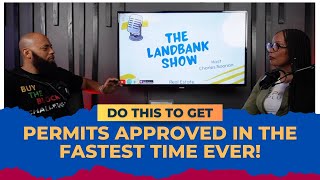
This is a recorded interview (Land Bank Show) in which host Charles Noonan talks with Pauletta Ma (aka the "Philly permit plug") about the role and business of permit expediters in real estate. Key points: Pauletta explains what expediters do (liaison with municipalities, reading codes/plans, pulling permits), describes her background (15 years as a realtor and related roles; began expediting work around 2018 and built municipal relationships before the COVID-19 pandemic), and recounts pandemic challenges when permitting went online. They discuss entrepreneurship realities (cashflow seasonality, staffing, sacrifices), community programs (auctions, "Buy the Block", Wayne County auction on May 17), and Pauletta's training/cohort offering for new developers and permit expediters (including a women-only $1,000 four-week pilot). The interview emphasizes the value of permitting expertise for developers and the hosts' mission to help minority communities acquire and develop property.
Chapters
I wasn't licensed yet. I just went down there and I started building relationships early. By the time the pandemic hit, I was two years in into building those relationships with the city, municipality officials. And during that time I was outside of being terrified. I had no choice. We all kind of learned at the same time and there was no one to go to besides dealing with the people behind the screen, behind the phone. And I had to learn the hard way.
Welcome to the show where we highlight some of the most creative and non traditional ways to make money in real estate. We will showcase some of the world's.
Greatest male and female real estate developers.
And teach you how you can make money by using the same strategies. Now it's time to develop. Here's your host, Charles Noonan. Welcome to another episode of the Land bank show where we highlight dope individuals who run up a bag of money through non traditional methods in real estate. Today we got somebody really special to me, Pauletta Ma, the permit plug, the permit expediter. That's why I think she's special, because I be wanting my stuff done immediately. I got so many projects. Right, Right. I own over 400 properties. I be wanting my stuff done like yester everybody does, not just me.
No, you're not special. I'm sorry.
All right, cool. Well, I'm so happy to have you here, Happy to introduce you, but for my audience out there, I want you to introduce yourself because I know I'm leaving some other, some dope stuff out.
So. Okay. So hello you guys, I am Pauletta Ma, AKA the Philly permit plug. And that's because I started in Philadelphia where I learned how to do the magic, you know, pretty much as a permanent expediter, just to let you guys know exactly what we do. Because not everybody know what a permit plug or an expediter is. We're pretty much those liaisons person profession that plays liaison between the municipality and also the person, the client, the investor, the developer. That is where we are. That when you don't like to go into that city or that municipality to deal with all of that jargon, we're the ones that step in and not only tell you what to do, how to do, but we're also the ones that help you get through that process in the most seamless fashion. Because we not only know the process, we also read codes. We know codes and we do the, we read the plans, all of that kind of great stuff. All the stuff that you guys hate, love, relationship type thing. So that is exactly who we are. We are the ones at the beginning of the process that you will hire, that you need to hire. And after you sign and you. You hold that key up when you buy that property, that's who we are. You call us next. So you can determine what permits or things and licensing and zoning and those type of things you need for the project.
Doing it the right way is important, Very important. That's why you're important, because sometimes we don't know in different cities. So I develop in, like, Macon, Georgia, Birmingham, Alabama. Etowah county in Alabama, Sharp county in Arkansas. Right. Saginaw in Michigan.
Saginaw.
That's what Draymond Green is. Draymond Green is from Saginaw, Michigan. Okay. There's no way I could keep up with all the changes of the codes in every county I'm developing in.
Exactly.
So we need somebody we can call and say, hey, we want to make sure we're doing this right. And can you just look over this stuff and make sure we're pulling the right permits and doing everything the right way by code. So there's no way I could have introduced you like that.
Yeah, no, it's. You know, people are in the dark when they start a project. I mean, it's a scary process to buy the home or to buy the land, you know, from the land bank and through the amazing program that you have, but net alone. Now what am I supposed to do with it? You know, I gotta give everything to my contractor, and now I'm at his mercy, so I gotta give a big.
Shout out to you. All the people I know in Philly, you're helping.
Okay.
I'm not gonna say no names, but word is, if you doing anything in Pennsylvania, in the state of Pennsylvania, it's a good idea to go through you pretty much.
I work hard for my clients, and this is what I feel like. This is my purpose. You are literally looking at a person who love what she does, which is helping people through this process.
So a big part of it is compliance, making sure it's being done right. But then you have a way to expedite that permit process.
Yes.
All right, so I got a question for you right before we. Before you really dig deep into how you got to where you are when Covid hit and everything was online. How did you manage to expedite permits when there was no one to really, like, build a relationship with outside of the computer?
Well, I actually. We kind of have to go back in my background just a little bit, so I worked as a realtor for 15 years prior to getting my expediter's license. Right. During that time, I have. I've worked with a lot of investors. One particular investor was from New York.
Okay.
That New York said, I don't like your policy here. What's going on? I need you to find me an expediter. Paulette. At the time, I'm his agent. Not only am I his agent, but I'm also his construction project manager on all 12 of his projects.
Okay.
At the same time. So I'm superwoman. So I'm like, absolutely, you know, I'm going to go and find out what the heck is an expediter. That. I found out that in New York, this is a customary thing, you know, So I turned around and just jumped into it. And that's pretty much how I started. So I actually started in 2018.
Okay.
But I wasn't licensed yet. I just went down there and I start building relationships early. So by the time the pandemic hit, I guess that was like 2020.
Yep.
By the time the pandemic hit, I was two years in into building those relationships with the city, municipality officials. And during that time, I. By the time we hit and we went to the pandemic, I was outside of being terrified. I was. I had no choice. We all kind of learned at the same time, and there was no one to go to besides dealing with the people behind the screen and behind the phone. And I had to learn the hard way. I had to learn when they was learning because they were also learning in my city.
So you know what? Through the pandemic, it was so hard to get permits pulled.
Yes. A lot of projects got shut.
Does Philly have this elaps system called Elapse Eclipse?
It's called.
Yeah, in Michigan, it's called Elapse get out. That is the clunkiest thing ever. I wish I could have called you to get permits for. Because this stuff, like putting in a parcel number, they leave so much stuff out to where they don't really tell you how to do everything right. It's like some stuff you got to put a certain number. Some stuff you got to put like the street, the address. It's, like, so clunky. I wish I would have known you back then.
Yeah, I learned terrified because I was still learning parts of the actual construction itself from buying materials, doing draw schedules, monitoring the budget, you know, those type of things for the actual physical construction project of it, project manager part. So I had to learn how to switch that off and do nothing but the paperwork and Learning how to do that process, it was scary because I relied on a contractor like everybody else until I realized there wasn't anyone around and half the contractors could barely read plans, let alone, you know, So I learned that way.
There's so much to it, though.
There's so much to it.
Just as a developer, right. We gotta read elevation plans.
Yep.
Electrical plans, roofing plans, foundation plan, foundation footage. Then we got up, then we got to go do. Now. Now we smart outside. Now we got to go and get on the computer and do some stuff.
Yep.
Like, nah, we need. We need y'. All. Without question. We need y'. All.
Yeah. Time. Time is not on your side. From the time that you purchase that property, depending on how you purchase that property.
Yeah.
Your time starts, you know, and you have to start paying that note back. And you have to start, you know, hopefully you've gotten your estimates already. But the first thing, you're trying to put money in right away. So you want to know the process as quick as possible so you can do it the right way. Every day.
Every day is important. So we definitely need expediters. Not even. We need somebody to just do the paperwork the right way as it is. Expediter is like heaven sent. Because it's like, now you're going to help it, help it get through faster.
Yes.
So it's like, nah, we need that.
Yes.
Super important.
Yes.
So look, now that we know how important you are, now that we know who you are and what you do, take us back a little bit before, like the 15 year real estate agent. You were an agent, right?
Yes.
What was it like, like, that got you into real estate itself?
I worked as a. I did quite a few things, you guys. I used to do credit repair back before it was super popular. I used to do credit repair back in early 2000. I have a book that I wrote called credit repair Laws, letters and definitions. It was called my little black book credit repair in 2000, like, yeah, in 2000, like five, 2007. I love it. So. And that was then. I did a little bit of mortgages as a loan officer. And through that I became a real estate assistant. From being a real estate assistant, I became. So let me. Basically, I've been self employed for over 20 years, very easily. It's just I was always in real estate in some kind of way, shape, form or fashion.
Okay.
It wasn't until, honestly I thought I found my calling as a realtor to realize here it is expediting. And I would just, I would just once it Clicked. I felt like the Rain Man. Like, I just kind of knew where everything went and then next, and then now I'm in this city and that city.
So you said a lot. You said a lot of valuable stuff and that and what you just said. Being an entrepreneur for 20 plus years, it means so much. And I'm gonna tell you why. Because I've been an entrepreneur for a very long time. We are no longer scared to do things. So you was a realtor, right? Permits project manager.
Yep.
But none of that. You said, oh, you went and worked for somebody in the middle. Right. I realize a lot of times today people are so scared to leave their job and put those 40 hours in for themselves.
True.
They come to me, charles, what made you leave? What made you take the leap? What made you do this? And I'm like, dude, just imagine if you put in 40 consecutive hours a week. Like every day.
Yeah, every day.
You worked on your own projects. You worked for yourself. Like, if you got up and you raced to your own place of work, like you were racing for the job that you're going to if work wasn't done on your own projects and you stayed two hours late and didn't ask for nothing for it, and you just really put that work in like that for yourself, a lot of people will be so much more ahead of where they are today.
Yeah, I agree. But I do also do believe that there has to be workers that do the work, and there has to be. Not everybody could be an entrepreneur because it's a certain type of discipline that comes with being an entrepreneur and certain sacrifices that we make. You already know this, Charles. You know, we make sacrifices. We have to in order to. I mean, it now is like cookie cutter us now. Like, it's nothing for us now, but we have to make some type of sacrifice.
Why are people so scared? Is what I want to get to. People are just scared.
People are scared because they get used to that guaranteed consistent income that comes in either every week or every two weeks. Me, on the other hand, I'm terrified to get a job, to give someone that power to. Or if my kid is sick or I have to go to a game for watch my kid, or I need to go or I want to go on vacation. It just gives me anxiety to even do that type of thing. So that type of feeling for us is the same thing that it is for them. They get used to that, you know, so it's best for them to work on their job, on the side until their job can replace their Consistent income.
Right. Until that, whatever the projects are doing.
They gotta first know exactly how much they need to make to survive.
I think the math is simple, right. You, if you're surviving on whatever you're making at work, do the real estate math and to back into that or whatever your business is.
Right.
Right. You know how many permits you gotta file or clients you have.
Absolutely.
To make. Let's just say six figures as a baseline. Right. You know what that is? You know how much you have to make to do that for people to leave their jobs. I just never understand. You touched on like taking a day off because your kid is sick or you're sick. I don't understand calling someone and saying, hey, my son is sick and vomiting and has 102 fever. Can I please stay home today? Like that is fear for me. I'm scared to have to. What if the person says no? So what if they say no? What if you're a son, your daughter has a championship game or something that you really want to go to and you, and you have to actually call in and ask someone else that doesn't know your kids or your parents. Right. You gotta. Some people have to take care of their parents and they, and they, they're like, yeah, no, we have X amount of project going on that you have to be at. I just never understand that.
I had a daughter that did that one day and she couldn't call out because they were very strict.
Yeah.
So she bought a child to work with her. They fired her in 24 hours. You know, but it's worth it. So I'm like, I'm your mother. So we just have to strategize, take a step back, strategize. We'll figure it out. You're a licensed professional, already degreed, so you're fine, you're going to jump back. But that's not the end all, be all. Sometimes God pushes us out to do that because we're meant for a different calling. So.
And I don't want to work anywhere anyway. Where if my son is sick or a parent or something and they say, no, you can't go take care of your mother or father or something. That just. I know we went a little bit off track, but I just never understand. And I find like I relate more to long term entrepreneurs and they think we're risk takers, but we're really not.
No, we're not really risk takers. We know, like we know what we know and it's because we know ourselves. That's the first thing we know is ourselves. We know how we get when we want to figure something out or when we see something that actually may make sense to what we're doing. We know the work ethic and we know our own disciplines that we've already built that will see that through. So that's why someone else is like a risk. And it's like, no, I've been here before, or I'm already aware. Well, I'm well more advanced now. So I can see, you know, the end.
I see what you're saying. So they're saying we're risky because we're betting on theirselves. They're not willing to bet on themselves. That part they don't have. Is it the confidence or they know they. They not that good when you, when.
You know you're not really putting the work in. I'm the, I'm the CEO. You're the CEO. We have, we have employees. Right. We still show up to work every day.
Yeah.
We don't make excuses. It's a difference. We don't make excuses no matter how much money we make or how much, you know, how many people are here. We like the beat and the hustle and the bustle of what it is and what we do. So because of that. Yes, it's different.
Okay, got it. So you'd say it's a personality type.
It is definitely. When they say it's mental, it's mental. It's definitely personality type. For sure.
It's all mental for me because I just don't, like, I don't understand the other side. Like, if you're doing. And I say this all the time, right. Outside of our police officers, our school teachers, our nurses and things like that, the jobs that we really, really need people to do, I really think people should focus on their own projects and work for themselves.
Well, you know, it's ironic, you say that one of the things that I actually chose to do this time around with hiring yet another set of employees over the last four months, because we go through often. Right, Right. We say going through employees was. I no longer wanted to hire an employee as an employee. I want that employee to be their own business. So my executive assistant, she's. This is her own company. My virtual assistant, she is her own company. My cffo, she has a company where she owns a company that does work for other people. I rather, because they have a different type of discipline, respects and things to what they do. So it's no longer trading dollars for hours. We already have a set contract. How much I'm paying you. And then we'll just deal with that and there's no harm, no foul.
And. And now you've empowered them to make.
Money and now I empower them. I'm already aware that they're going to have other clients. I'm already aware that they're going to have other things.
Smart.
But when they do it that way, I don't look at my pocket to see that they're not working what I think I'm paying them. And they don't feel like they're overwork or they're overworking what they think I'm paying them. So in terms it's like, okay. But they always want to do at their best because it's their thing, it's their job. So when I realized that's how they didn't care about what I drive. They don't care about how many houses I sold or how many permits I did and how much money I made.
Exactly.
They care about how they look in my company as they're representing my company and how that relates to them in terms of trying to grow their own brand. So that's, that's what I'm saying.
I gotta give it up to you, sis. I gotta give it up to you. You know what I do for my, my team members every quarter I get, I give them a property like whether it's a piece of land or something. Every quarter? Yes. I want them to have their own portfolio as they're working on stuff for me. And it's important that you said, or we just relate from an entrepreneurial standpoint. It's important that you said that you don't want them to care about what you drive. Yeah, right. Sometimes employees. But we put in 20 years of work, right? Yeah. We get to drive what we drive because we put so much work in. They don't see that part. Right. They don't see the work that we've done at 5am, 6am, 7, talk about it. 11pm dreaming about.
How about that? Right. And just writing it down.
Right. They don't see that sometimes employees see the stuff we have. Right. Or the little time that we take every once in a while to go do some. Something fun or lavish or non employee type of stuff.
Yeah.
They have gotten. I'm going to, I'm not going to use the word jealous, but they have made reference to nice things that we have and they don't have it, but they just don't see the other side. So you're really smart and empowering them because now it's like, yeah, I got my portfolio and they see my binder with all the properties in it over there and they don't need to be jealous of that or think that I got lucky or anything like that. It's like, no, I'm showing you the way. By the end of the year, you're going to have four properties, right. By the end of 18 months, you're going to have six. You're developing your own stuff too. You're going to have tenants. So I think again, another commonality in which we empower people that work for us to kind of like be their own boss and make their own money.
I've definitely done it. I've done that. And two of them left. Really?
That's okay though.
Yeah, I've done that too. But I'm okay with it now. My thing is how you leave me. Not that you left me. So it's, it's how you, it's how you leave me. But then I always said you have met me. Right. You know that's not going to slow me down. Right. Like you do know that makes you work harder.
Well, here's two things. I'm gonna tell you the secret that I do. I buy them properties, right? They, so it's important that they have portfolios. But I know where to get land for like three or four hundred dollars. I know where to get a land bank house for a thousand, $2,000. So yes, I got six months of work. They got a house and a piece of land. But I'm okay with it because it really didn't cost me that much.
Right, right, right.
It's the value of it that they, that they appreciate because it could be a piece of land for that's valued at $14,000. But I only paid 400 and I got it at an auction, right. So when they leave, I'm never really that upset. They know or I don't do they know that it's not going to stop us at all?
No. You know, I think they think we okay. They don't realize sometimes how we really do rely on them. Like that's the whole purpose of it. And when they leave us high and dry, we wearing all these multiple hats and it affects our clients, not affect us. And we want to do especially the right type of entrepreneur, owner, CEO, want to do the best job. We're always thinking about different ways to improve ourselves. And when they do that, it really messes us up. Low key. But we just. I know for me, instead of leaving at 5, I leave at 9. Instead of leaving at 5, I leave at 6. Instead of leaving at 5, I leave at 7. And then I come in instead of coming starting at nine, I start at eight. And, and I. And I expand my hours just so. But I don't work weekends. But I do expand my hours so I can catch up behind the scenes because I'm still running the business. So the phones are still ringing and I still had to take on a new business.
You know what's funny though?
What?
Tell me this ever happened to you. Somebody left, left working for you and you had to do their job and you realize how easy it was. Has that ever happened? Cause I got somebody work done. Somebody quit, right?
Yeah.
I get up early so I know they have a certain task. I got their whole job done in like two hours from six to eight. And I was like, damn, I was overpaying for that. I was like, this ain't that hard. Like, why was it so complicated? This ain't that hard. Has that ever happened?
Mine didn't happen like that because you gotta realize as a permanent expediter. I read architectural plans. I deal with permit revisions. I have to deal with. I have to know exactly who the revisions go to, whether they go to architect or the engineer. The I have to CC the owners. Then I have to deal with the developer. So mine is, mine is less complex. Is less complex some. I mean if it was just an office assistant maybe and they were just returning some emails and things of that sort then and putting databases together, like that's something different. But my clients literally, they get a stop work order or a violation on one of their projects or they get shut down and told to leave or, or they building, they show up and they buildings being torn down in front of their face. When they call me this like, yo, I was just told to call you and how much is it? Like half the time they come to me ready to pay. Yeah, almost 100, 110%.
No, we know the value, there's no question.
Yeah, because they're like, I was told you the one that would get me out of this. Like our time is our money.
Our time.
Yeah. And it's always need to be done yesterday. So I have to think of give you the bad news. I know you want to do this, but you need a zoning in the building. Yeah, I know you want to do this. You need a zoning builder in the streets department.
That's okay though because when we come to you, we really be lost.
Yeah.
And when you telling us the answers is a relief because we didn't know what we needed. Right. So now you're saying zoning. You saying A, B, C, D. Now we like, are you. Is that it? Are you sure? Okay, cool. And we can move forward. And in the dark, lost. That's where we struggle as developers. It's like. Yeah, it's like, all right, just tell.
Do you think the contractor has all the answers?
Yeah, they don't be knowing. They don't.
They literally do not know. Dude. I cannot even.
Trust me, I know. And then we have to wear it. We get, like, it's all on us. It's all on the. The developer, the owner. It is, but. All right, cool. So is that the worst that happens to you in your. In your day?
The worst that can happen?
You lose a key. A key employee hurts.
A key employee will hurt. I'm still climbing out of one now. No, I got, like, literally, like, I'm still climbing out of one now. I think I'm. I think I'm pretty much to the end of it, maybe last few clients. But yeah, I'm still climbing out of one right now. But I've been blessed with three. They came behind them. That's just.
Nice.
Nice.
Good.
Couple more weeks. I almost. Almost duplicate myself. So I'm pretty excited about that.
I got one employee for eight years now. Best employee I ever had.
Oh, wow, that's great.
Very. Like, we know each other very well. She knows what I expect. It's a certain level of excellence. But with that expectation, she's been able to meet the bar, not only grow professionally, but personally as well. So her life, her background was. She was just used to certain things, like a certain subpar standard. Then when she worked for me, she just never gave up. And she's like, damn, this guy's demanding. This guy's grueling. Like, this guy is tough to work with.
Yeah.
But after a while, you're like, oh, there's a standard. Oh, there's a level of excellence. Oh, we just want to submit things one time and not have to do things 50. We want to deliver on our promise to our customers. Right. And then once you get it, you start to really. You develop an appetite for getting things right. You develop an appetite for it.
It becomes a natural. You become that. That thing. Yeah, you become that thing. That. That's how you need to do for yourself now.
And that's just for your. And she's noticing her family members. There's some separation between. And then there's some. Where she's pulling up as well. And she's like, all right, look, y', all, we gotta get property. So it's her first time owning property, Right. It's her first time owning a lot of things. And she's, like, watching me grow and excel in my career. And instead of saying, you know, that guy works too hard. Like, he. He. He. He has too many properties. He does too much. He never stops. She's starting to take those characteristics on.
Yeah.
And in her personal life, she's doing really well. Like, really well. Yeah.
That's amazing. I tend to find that people, when they come around me, they go, oh, every time I come around you, I either feel like I got to take notes or I've just get so empowered because it's like, you're just never ending. And I'm like, I get those moments, but mine don't last too long. Like, but by the time I'm thinking of a down moment, I'm already ready to listen. I can't let grass go up under my feet.
Yeah.
Because it just don't exist in my. In my. In my world. I don't know. Because I'm a Capricorn, but. But it exists in my world because nobody's going to be there to help you. I don't. I don't. This door could be open, and this door could be open, and it means nothing to me because I don't plan on touching those doors. That's plan B, plan C, plan D, plan whatever. All it is is plan A. That's it.
Oh, come on. Come on with it. I was gonna say, I don't be having all them plans. I just be having one, and I make it work.
Yeah.
Because I know if I could make up the plan, if I can make up the plan, I'm gonna make it work. So that's just all it is. Our producer is laughing because we just literally did that. He like, yeah, man. There's no plan B. We get this thing right, and that's no plan B.
It's no. It's no plan B.
It's really figure it out. And then when things go wrong, we turn the page.
We turn the page. I sit back, I say some prayer, I put it in God's hands, and I'm gonna make it work. I don't even listen. I don't even think about it. I don't. I believe that what. The universe responds literally. So what you put out in the universe, you get back. So if you don't concentrate on that thing, that thing won't come to pass. You just replace it. But whatever the next thing, what can I do?
It's, it's the, it's a belief that we have.
It is a belief.
It's a different level of belief. It's a characteristic that allows us to bounce back when we get hit on the chin or whatever you want to call it.
Yeah.
And I just say, like, you could only be down for so long. You have to turn the page. And I think some people that lose, some people that quit, even on their real estate projects, it's not that they were bad projects, it's is that they kind of bailed on them too quickly. They bailed too quickly sometimes and they chalk it up and say, ah, when they could have called you.
They could have called you.
When they could have called you. Right. They gave up on some stuff, but had they just turned the page and tried to try to figure it out a little bit more, they could have found you.
They should always have permits in their project. Period. They should always have the permits in their project. Well, some, a lot of the hard money companies don't require permits. So they don't put them in their. Number one.
They don't.
So okay. And, and number two, if they at least had it in there when it happens to come up, they would be at least prepared for that. Everyone wanted to give the municipality and give the permit the least amount of money or nothing, but then give all of the beauty, make the house perfect, go over budget on the project.
Wrong. The wrong.
You see what I'm saying? Yeah, but then, and then you want to backtrack it and you call someone like me after you done turned it into a quad and, and now I got to come try to figure out how to turn that quad and make it legal, you know, or.
It's a fine line. It's a fine line because I've done that. Right?
I've done that.
We, we, we don't, we don't. So look, I'm not going to say we're first generation. We're probably second generation. Well, I'm first generation real estate developer in my family, right?
Yeah, so am I.
There's no, there's nobody to teach us anything on how to do things in my family. So you gotta give us a little bit of break. And I said, I gave you props earlier. I said you'd be saving a lot of my friends. We already talked about some people that was doing things the wrong way. And I'm like, look, we don't have a baseline. We don't know any better. Our kids will know better. I never Knew what a permanent expediter was. And I live in New York and I have properties since 2000.
Wow.
And I didn't know. And I'm going to tell you. You want to know why? I didn't know why.
Because they're the only ones that can go into the municipality outside of the lawyers.
Cause I was never pulling permits. I was getting Julio and them from Home Depot, having them do the work.
Yep.
It's rented already. And my motto used to be. Used to be, it's not this anymore.
Okay.
It used to be it's easier to ask for forgiveness than permission. So I'm going to do it anyway. I'm going to run up the bag. I'm going to make it a three family. I'm going to rent all of them out. I'm going to do the second floor rooms and really go five, five doors on the second.
A family, up top New York thing. They come to Philly and try that.
Yeah, don't blame us. We need the money, dude.
Y' all see right to Philly and do that. But you can't get a rent his license, though, in Philly, in New York.
No, that's what I'm saying. We just do it anyway. Yeah, because you're gonna make so much money. You're doing 7, 8, $900 a room. Like, we don't know better. And now with people like you doing what you do, getting it out there and saying, hey, you could actually legally convert this or if you can get a permit for it. And now New York, it's called an sro. I think it's single room occupancy. There's right ways to do things. So we come up with them in our head and yeah, we could go get it done the right way. We honestly just don't know. At the very first, at the beginning of it, then it takes some fines.
Yeah, some nice New York.
Expensive.
Refined, too. I'm surprised.
Yeah. Yeah.
You guys learn nice, expensive lessons.
We hope. We hope to an inspector, we get a pass. We hope to get like a slap on a wrist and then we clean it up. I'm just being honest with you. This is what happened. This is how we. This is New York.
Yeah.
First gen real estate.
Right.
So, you know, real estate makes the millionaires.
Right.
You know, ownership is where it is. We try our hand at it, but there's no. There's no book, there's no guideline. No, we don't have a guideline to say, look, when you do this, this is. There's so Many scenarios, too. So we don't know. So I'm super happy to have you and really share what you do and how you can help people. So here's what I want to know. What was the darkest point of your journey as an entrepreneur? Where did it get really hard? Where you may have, if ever, thought about turning around.
A week ago.
A week ago? Out of 20 years.
Last week we said out of 20 years. So this is the thing again, as an entrepreneur, we have certain times of the course of a year in any business as an entrepreneur, where you get, like, I guess I would say where we tend to get. Things get really slow.
And.
And this times, I've went from making 16,000amonth, 25,000, 30,000amonth, and barely made 2,000 in a week, barely made $1,000 in four days. So there's certain times a month where I had to keep learning that certain times a month I need to hold reserves in order to get through those next months because business tend to slow down, Right? And last year was tough. I mean, last year was tough because you got to realize also when we're entrepreneurs, you know, we're making over 20,000amonth now, but at the same time, our expenses go up. So you're. I'm sorry, but your fifteen hundred dollars a month is not like my 46. And we're just talking about my rent, and we're not talking about my three electric bills and my three gas bills and all the other things that we got to do. So. And then when you have to. When you're behind now, you have to pay out 15,000, 12,000, 16,000. Someone else will probably, like, you know me, I'm like, that's five deals. That's six deals. That's 20 deals. And I always look at it that way, right? To psych my head out, right? So it really depends. So I would say my hardest time is I never stopped going. So it's a few times still out of the year when I had to catch myself because I had to remember, whoa, those months are starting to come up, and I start to hold back. Once I still do it till this day even, no matter how much I have in the account, because I know that they kind of created anxiety for me. Those. Well, I think, what is it? September, October, November, December. Somewhere around in there, those three months consecutively, I would go from XYZ down to barely.
So those are slow. Why are they slow? Is it like the dead winter where.
Well, you know what?
Building is slow.
There's other things that I Could be doing too. So I always think as well, what kind of marketing are you doing? What kind of. Because people slow down and spending money, and that means that you need to market more or to certain channels, you need to pivot, you need to add more services, other things than just permanent expediting. Which is why I do training. I do the group training. I, I, I have, I do permits in six other different cities.
Nice.
Through the affiliate programs and things like that. So I teach and train people how to become GCs and OSHA 30 certifications. So. But I still never stop. But I still get those anxieties like, okay, those months are coming up. Where are we at? Because I need to clear 25,000 or 16,000amonth to pay my expenses, you know.
Before you start taking home, I can't.
Say it ever goes away. It basically is what I'm saying. There has been times, honestly, I'm going to tell you what. There was a time when I came into the office and electric was off. I had two appointments. They turned electric off. And I'm in my office. It was 2021. I was about a year. I've been in my office four years, been in the business almost seven. And I'm sitting there, I had the door open. It was in the daytime, the lights were off, but there was some daylight. They came in, I sat right at my desk and the client knocked on the door. And I came in and I dealt with the client right then and there. This is no lie. And then out of nowhere, boom, the lights came on. And they was like, they thought, honestly, they actually thought that I had the lights off because serving, whatever, some people work like that. So they thought it was like that. So. And I'm sitting here like, no, the electric was off. The electric was off. And I called my mother to pay something and she paid it on the back end. And then, like the next day, I made the money that day, paid her the money back, you know, and then it's weird because I could be down $2,000 and up 26,000, you know, up 15,000 the next day or to the next hour. And then it was a time where I ran podcasts. Mind you, I started my podcast a year and a half ago where I ran a podcast when electric was completely off. And these lights, yeah, I have a bunch of them. I put every light on, plus the lights that they bring in. You didn't know the electric was off the whole time we was in the podcast space, you know, so. Because I have two different spaces side by side. This is real talk. When you ride to the wheels, I'm a ride to the wheels. This is mine. So I don't believe in not. I'm going to show up regardless of however it is, you know, when we're not in the office today. But, but no, I always show up. Listen, I used to come and look at the electrical box and if the light was on, I knew they ain't cut the electric off. So you had me, give me some time to catch up on it. So don't think because we're entrepreneurs that we don't go through some of these struggles. We just deal with them differently and we just make it work. And it just works every time. And then they get time, you know, but we learn from it. And then now we pivot. And then I said, you know what? I started thinking I need more people to know. I need not to be that gatekeeper. I need not to be the only person to know what I know. You know, what can I do to offer my services more and more to more people? And year after year I'm trying to figure out exactly how can I do that.
Right.
You know, that's why I love your program with the land bank and empowering people to own properties and the tours and things you do and in all the different areas that you do it in. And I'm thinking like, yo, this is so super dope. And it's actually emotional too.
It is like when you did the.
D's in the tree, the D's under trees.
Yeah.
It's even emotional. People are crying and I'm like, yo, I want to be that person that they get emotional too, because I was able to give back to them because this is an unkempt, untapped market. It is literally, you can make a lot of money in this business. And I actually have my first course I teach. I have a course that I'm actually teaching for the first time for women only. That was only $1,000. Look, only a thousand dollars teaching a four week course coming up starting next week. I only did one of his condo because I wanted them to, to be dirt cheap enough for them to jump right on. It ends on the 31st. I don't know what today is.
Tell me this, tell me this. So I appreciate you sharing that. That, that's important to me. That's important to know that we do go through stuff like that.
Yes.
Yeah. I go so hard in real estate and that was a lot of my, my childhood. The lights being cut off, the gas being cut off.
Yeah. Yeah.
Having to choose, because with New York, we have Con Edison, you could choose the light bill or your gas bill to pay.
Yeah.
So I remember those kind of like one being on the other being off using the stove to heat the house, boiling water on the stove to make some heat, stuff like that. Having to actually use that boiled water to take a bath. Yeah.
All right.
That stuff has. And I identified why I go so hard sometimes.
Exactly.
I operate, I'm gonna say, mentally in some sort of space of fear where I never can go, have to go back to that. I never have to have my kids see anything like.
Right.
So sometimes people ask me, like, why I go so hard. Right. I'm in a comfortable space financially. I live comfortably. Right. Work is good, and I have a ton of properties that pay me a lot of money every month. But I still, like, pop up no alarm clock really early in the morning and just accomplish things. And one day I was talking to a good friend of mine, he was like, yo, you're, you're, you're doing that out of fear. I'm like, what you mean? He's like, you're so scared of ever going back there that you're actually getting up and taking precautionary measures to make sure that that never happens again. And I didn't realize it, but it's actually true.
But that's true.
And I'm.
Well, I have to agree.
I'm really far away from that. And it'll probably safely, pray to God, never happen. But I still operate like that. Like, I want to make sure. And that's why I got into land bank houses, to make sure that if my kids need to live in million dollar homes in New York City, they got income coming in. And that's where I really ended up going to Detroit and buying all of those properties and renovating them. And I did it fearlessly, but I was doing it out of fear so that they could have money, so that we could keep the family structure closed. They could all, you know, we could all reside in New York and, you know, as they graduated college and things like that, that they wouldn't have to move far. They have real estate portfolios that pay.
To create, to create options for them.
Yeah, yeah, yeah. So, yeah, I have that fear too. And that, that just, it just keeps me motivated. And then I got it. And then that's why I got four. Like, what do I need with 400 pieces of land? Right? I could never develop 400 pieces. Right. In my lifetime. It's just too many.
Yeah.
I Could potentially do it, but it'll just be consumed my entire life. Right. But it's just more so like just stacking. I'm like hoarding wealth in the sense that it never goes away.
No, but that's right though, when you think about it like that, what can you do in that period of time?
I'm happy you mentioned that because we have so many commonalities in the stuff that we do. So D Day, I'm happy you saw that. I didn't know sometimes people watch from afar. Some people be like, yo, Charles, that was dope, right? Me and sister Shanika came up with the concept. Well, actually that was deeds under trees. That was a five day. That was a five day challenge that we did where we wanted to change the narrative around the holidays. And we wanted parents particularly to buy deeds, buy property and gift them to their loved ones, like husbands, wives, sisters, brothers.
That was amazing.
And everybody who gave or received the receiver just cried. Like, like some of them were nice enough to share their story and they cried. D Day was this wild, crazy idea. Like entrepreneurs, we going to think and create some.
Yeah, we're going to create some stuff.
We got to create some stuff, right? So I came up with this concept, D Day for all the Land bank team members that own property in Birmingham, Alabama. I got a bunch of stuff there, right. And I'm developing there now. I came up with this concept called D Day and I said, let's just all just go to Birmingham. We're going to lay eyes on our property, take some pictures and celebrate. Yeah, that's the new. That's the next hot market Birmingham.
I trust you. I believe you.
It's the next hot market. Just read Google Birmingham Upwardly mobile Google Birmingham investment. Like it's, it is the next hot market. Trust me when I tell you.
Okay?
So I just came up with it and the Land bank team members, they just made it happen. They're like, they, they owned a ton of it, a ton of the properties there. And they're like, yeah, this is great. Let's go. So I did a day where I, I brought in like my architect, I brought in my project manager, a realtor. Because they could pre sell some of their properties. Absolutely. As they're being built.
Absolutely.
Foundation is being laid. If you could put the, the, what is it called, the picture of the property on a for sale sign, they could actually sell that property for an extra like 90, $120,000 before it's even built. So that was an exit strategy that I introduced them. So I don't love selling properties, but I introduced them to that. And then the title work. Title company.
Title company, absolutely.
I should have had a permit expedited there.
That would have been icing on the cake.
Icy.
That have been icy. Like wait a minute.
So look, so look, May 17, I'm doing. So I did another challenge, Buy the block challenge, right? I just finished it. And I'm taking everybody to the auction to buy properties. Because I know a specific auction in Pennsylvania. I'm not going to say the county. May 17, I'm taking. I think we're up to like 200 people and one day I'm taking them to an auction.
Can I take advantage of that?
Yes. I'll give you the info. Right? So I'm taking. I organized an auction by township of a county and it's an auction that I went and dominated and there was nobody really there. So 600 properties. You know what I'm gonna tell the auction? We ain't gonna gatekeep, right?
No, I'm not gonna gatekeep.
We're not gonna gatekeep.
Oh, I got some sign up though.
So should I say it? I'm gonna say it.
All right, let's go, let's go. Let's say it.
I'm gonna say it. We gonna go crazy on this one. Just because you share so much, right?
Let's go.
Wayne county in Pennsylvania. Wayne County, Wayne County, Pocono Mountains. They got lake. Lakefront properties.
Lakefront.
Lakefront properties. Now, out of 600, 200 of them are already accounted for by. By the block participants, right? But they got properties.
When you say accounted for, what do you mean exactly?
So organized, already purchased the parts you wanted. So here's what we did. A big concept of mine, right? For us as minorities, African Americans is for us to, to grow financially and close the wealth gap is to connect, right? Meaning get together and connect. I realized we couldn't really do it or we're not ready to do it in our own family structure because our family structure is pretty way quicker to.
Do it amongst different other.
Right. Amongst people that we like. We all got family members. We all got family members that we speak to in four years, right? We got people that we just don't like, those family members. So what I was thinking is put everybody in a group like minded. That's what my challenges are really about. Get like minded individuals together, locking arms. And we have our relatives, but if we could make them our family and move as a family, we could connect as a family, we could grow through the acquisition of properties. And then at the end, I teach them how to cash flow those properties. So here's what I did. We did a challenge, like four or 500 people, and we offered the opportunity for the Wayne county auction. But I organized it by township so they get to get a chance to see the properties that they want to take that they want to buy. You claim it, right? You put your name on the spreadsheet that we had. So when I say accounted for, like they went through the all 600 properties and they said, oh, I want this one, I want this one, I want this one. And we just did it in unison together. That's part of. And they.
And they didn't. Could they get more than one or they. @ this particular challenge, they can only get one.
So you know, I'm tall, I'm black, I'm bald headed, right?
Yeah.
I ain't wanna cause no problems in that auction. I don't want no problems. So this is what I asked. I said I'm gonna teach all the skillset to go buy as many properties as you want for the rest of your life. Please let me get through this one wild, crazy idea I got, right? Cause you know, I said, please just get one property. This is what we gonna do. Let's say the first township is Drayer Township, right? We got eight people that want those I color coded. Go in, buy your property and get out. Let the next tranche of people for the next township go in right after, Let them buy theirs and get out. I asked them like, could y' all just chill for this one? Like don't, don't have it going crazy in there. And you know who they gonna look at, right? Yeah, they're gonna go look at me, the guy with the, with the shirt and that's organizing this thing. And it could be a problem, like legitimately because we don't, we ain't. 200 deep is a lot.
Yeah.
When they not expecting you. And it's like 12 of them in a room, right? That's all it'd be like 14 and bidding on these properties and they'd be taking stuff next door to where they live. They don't look at it as investors. We're looking at as investors to invest to develop that entire community. So my act, of course you can come. So my ask was like, for one day, let's act as a family. Let's be on the same page. Let's not be running back and forth because we know where to get properties at $800. That's worth 15,000, right? Let's just do this in a respectful collective manner where I don't get arrested. Don't come back on me of doing that crazy, like organizing something like this. And I was just like, let's just get one now once I. I don't think I'll be able to leave because it's like a two hour auction. So we got to actually get like, they do it quickly too, because really only one person bids. It's not that competitive. It's a live auction too, so in person auctions are the best because like developers like me, I could only go to one at a time, right? So if there's 50 auctions going on around the country at that date and time, I can only be at one.
True.
So it's like this non competitive auction. I found it. I gave it up. Please, y' all don't bum rush my auction. Please don't bum rush. Look, just get in contact with me. Get contact, right, With Paulette and we gonna organize it. If y' all want to go to another one, I got plenty of them. But do not bum rush this auction and make me look like wild, man.
I think that's amazing. I think. No, no, here, here's my vision. It may be your vision too. I'm thinking if you have, if they go in there and they purchase blocks, let's just say just like buy the block, right? You go into your book.
That's what it is, baby.
So you buy the blocks and then as you start to develop, could you imagine that? Because everyone worked in unison as a family, that the respect for how the upkeep of the properties, how the properties are built, how the properties are cared for, the people they put in the properties, it becomes this epic. It becomes like, this is for my brother, my sister, I met her at a challenge. But, but you guys know each other, so it's almost like you usually move into a block or buy a property, you hope that they like you, right?
Or speak to you, or, you know, New York, they ain't gonna speak to you, or you're.
Or you're doing development and you're like, oh, I hope I'm not making too much noise. Or I'm hoping. But when you realize that the owner know the other owner and everybody know that they're all a part of the same thing. That's just crazy. That's amazing.
It's crazy.
That's like a, a feeling. I can only imagine what that feeling is like.
I know at this point, right? That's really My gift, my joy. I get joy out of seeing those people cry when they get properties. Yeah, I get joy.
I'll be one of them.
Out of. I get joy. So you connect with Julia Rose. She got the master list and we're going to put you on the list. You'll get a property. It's easy to look it up too, right? So I get joy out of people calling me every day saying, charles, I want my first property. Charles, I got my first. That's really like, I don't have to buy properties anymore. No, I'm just developing the stuff I'm developing. And I could just watch my team members do it. And I get the same. So what I realize is I get the same rush. I get the same. Like I be feeling like I won when they won. Yeah, I love it. Yeah. So. All right. So can I get your commitment? 5:17.
5:17. I would definitely be Wayne county. And I have, I have even something even more that I want to do. If it's okay if you don't bring.
All your cards and give them out to everybody there because they're going to be developing and they need a permit.
That's true. But I'm going to pre do my. I'm going to pre do the homework. So basically what I want to do is I want to any county that they, that they buy in, I want to get them to connect, which is a person like myself to work with them in those counties, to go through those paperwork and zoning and requirement processes to do their construction, from their soil test to the air quality test to the dust test, to whatever test to development. And I want them not to be afraid to walk into those different counties because now they don't even know where that municipality at or what do I need to even ask for. So I want to give them their cheat sheet so they know each county that they go into, they will be prepared.
And I got the county list over there. That's how I organized it. Yeah. So we gonna work. We gonna work.
So imagine handing them a list. This is where such and such with these batch of properties. This is where you go. This is where you go here, this is where you go there. And then you have them. If you choose to do these, this is where you file the paperwork. But then we're gonna icing the cake. Then we're gonna say, and on the last list is a list of expediters and permit runners that if you can afford it, should you choose to hire, these are resources and people that you can call to help you through the process.
I love it. I appreciate it. I appreciate it. It's going to be. It's going to be. I'll be. Just be doing wild, crazy stuff. It happens to work out when I do it too. So that's awesome.
I meant for you to do it.
I think it is. I think by now, and even though sometimes I'll be doubting myself, like quietly, I'm a little nervous and people like, why? Because. And I'd be like, I could possibly be responsible for the right that happens out of it, but then it could go wrong. Like, you know, the people we dealing with, if something could go wrong. Yeah, they're doing. They're doing waivers and everything else. They gonna be paperworked up. Right?
Yeah, right, right.
But still, it's like, I want my name on the good. It's not even so much for my name. I want my name on the good. But I know the risk. Meaning you got to be able to put your name on the bad too and really take the. Take what comes with it if it backfires. But I'm willing to do that for our people.
It has to backfire because I'm willing.
To know what you need.
You need to know what happens in the adversity parts of it too, and how you respond to it. You know what I mean?
How I always respond. I'm gonna just be, no, it's gonna be a lot of prep work. Let's act accordingly. Let's be respectful, let's respect each other. It's a phenomenal feat that we're trying to accomplish. So yeah, let's just. Let's just do it right. We're going to have some fun. I actually did, like, I rented out a hall where we're going to meet at in the morning. We're going to go over strategy, color.
How long is this for?
Nah, we meet at nine. No, no, no, no, no. The office at one.
Okay.
I'm doing a bus trip from New York, by the way, so stop just gets wilder and crazier. Right? So look, imagine that bus. Imagine that ride on the way back where people got properties. It's going to be. You know how happy 40 people on a bus going to be with.
It's going to be bananas. It's going to be bananas.
Yeah, yeah. So. So I'm going to do a lot of prep work and just like, please, y', all, like, let's be chill, let's be organized. Get in group one, go. Group one and two, go. One comes out, group three, go. Cuz I don't they go fast too. I don't want anybody to miss their number of the auction because it's happens fast sometimes. So after that I'm doing something even crazier.
Okay. Get, get crazier now.
I'm gonna try to run it back. So that's Wayne, that's Pa.
Okay.
I got a whole group in Michigan that's doing a. That's doing the same thing that's already. They're land bank team members. So they buying five, six, seven, eight lots and developing together. Arkansas, we got a whole group. We got another whole group in Alabama. The slaves. The official day where slaves were acknowledged to have been released. Juneteenth. I gotta do something for Juneteenth. Right. Like we wasn't able to buy property when we were set free like a little bit after the Civil War. We bought every available and affordable property that we could.
Right.
So Juneteenth, I'm going to do a five day challenge where I'm going to try to get all of us to buy every. If this one goes well on, on the 17th and I know we can move a certain way in hundreds.
Yeah.
I'm going to try to crush them. I'm going to try to crush them in this Juneteenth challenge. It's going to be like sick. Sick. Yeah. I want to close the wealth gap. I want to. I want us to be on a level playing field. Right. I want, I want us to own properties. I want our kids to own properties. I want us to collect rent. I want us to feel like how every other culture feels.
Yes.
Right.
Yeah. Putting it right. But keeping it in the family and doing business with family, you know, having something to pass down so you don't have to do what they call it. GoFundMe pages.
Yeah.
And everybody live with grandma because grandma's the only one that have a house just to find out she'd been renting it for 50 years.
You know, I mean, I'm just the story of my life. But that's why we're here changing it.
Yeah.
That's why we're so mission driven to help other people. And then we need grandma's. We've been selling grandma's house. You know that, right?
Yeah, I know.
Grandma's house has been like the staple of our, our family for years. And it bothers me that, that some family's gonna sell grandma house. Y' all gotta stop selling grandma house.
Stop selling grandma's house.
Stop selling grandma's house.
But wait a minute. But we get lost in the pa, don't forget.
Oh, that's. That's a whole nother podcast. That's a whole nother episode.
That's why I had to come in with the paperwork. Let's do this paperwork. Right. That's right.
Right. From every angle.
That's right.
To who gets company.
Yep.
Selling grandma's house, probate, fighting over grandma house. Doing the renovations on grand. We done? We done. It's time for us to get right. It's time for us to connect. Right. We gotta reconnect because we disconnected.
Absolutely.
Have to connect, grow, and then cash flow. So that's the. That's the mission.
What are we going to do? The mission. Mission is the mission. It's already being done. We're emotion.
We always.
Emotion is the motion.
I'm up. So we're at 11. You already see we're at 1100. No, my goal for the year is 1100 families to buy properties. We are close to 900 already. We close to 900.
You already have motion. You already have motion. Just another mission on top of the motion. That's there. So.
All right. So, you know, I guess you know it now. What I've been up to and what the heck I'm doing.
Yes.
On this side of the bridge. What are you doing to educate and help and empower others?
So basically, like I said before, I was not teaching the game of how to be a permit expediter or how to be a permit runner. I wasn't teaching a secret sauce, nor was I teaching. This is another way where you can make money and you can do it from home. You understand that A lot of places, believe it or not, like Atlanta, you don't need a license to be an expediter.
No.
And not even. Not even in Baltimore.
You just need the contact, you know.
You just need not just the contacts, but you also need to just be a gc.
Okay.
You know, so is. This is an untapped market still, so.
As a gc, you can pull the permit.
Oh, absolutely.
That's how you do it. That's how you've been doing it.
Absolutely. So the difference in what I do is I don't reinvent the wheel. I mean, come on, why would I? So I just have a bunch of affiliates through all these other cities and states, like. Like Texas and Miami and New York and Jersey and Philly and Baltimore. Right. And I just. I rec. I'm really good at recognizing other people who do what I do, but not only that, they've been following me for years.
Of course.
So I just decided to tap into that. Why would I reinvent the wheel and learn to do a disservice and teach myself that that area in New York, when there's people that already does this in New York, already does it in Jersey, already do it in Atlanta. So I decided to build that relationship, buying that gap. So if you told, listen, I'm actually going to put together a cohort. Never did one before.
No.
Can you believe it? Like, I never did the cohort before. I'm actually finally going to start. It's going to be dope, though. I'm telling them everything. I'm giving you guys all my plugs, all my connections, not leaving anything back. So the same plugs I had with the affiliates I'm giving to my cohort.
Can you do it before May 17?
Because I can do it.
I don't want you to get stuck. We sometimes get stuck in putting things together to be so perfect that we don't implement. Could you just don't. Could you just do it?
Yes, I can do it. I can do the. Before May 17th.
Oh, thank you.
Before May 17th, I can do the cohort because you guys need to know you're buying all these properties. Properties. You need to know exactly where to. What to tap into in terms of that municipality, what type of paperwork need to be done for that project. So you can know at least as much as, or at least a quarter of what the contract either supposed to do or what you need to do for their project.
That empowers us. That empowers us. Knowing the contractor.
So it'll come to you. And then after you, it was like, let me call the permit plug because I just got this property in Mississippi and I need to know where I need to go and I need to be connected.
Can you take extra calls throughout your day for new developers? Would it be beneficial for you?
It would have to be on certain days. I would need this on Tuesday and Wednesday, on Thursday and Friday, whatever. Those days off, I would have it set off with just new development.
Maybe. I'm thinking I could add you to my welcome email. So when we get new team members and they buy their property and they're looking to develop, maybe they could get on your calendar, right. And you could educate them on what they need to do to build. Because knowing is everything. Like when you know and you know, right? And you know for sure, you know, like, you can tell somebody like, no, I need you to pull this, this and this. That is such important. Your contractors respect you more.
Oh, they come to Me, all the time. They. They come to me to know what to do for a project. They have their clients pay me directly. But let me tell you guys, the great thing about having a permanent expediter, permit runner, they call them different things, is that if you don't need. If you can't find an architect, guess what? The expediter knows one. If you need a contractor, the expediter knows one. If you need electrical permit, plumbing permit, you need excavation, any of those things. We work with everyone. So we will know someone or have someone to refer you to because we, they're the people that we have to deal with on an everyday daily basis.
That's why they call you the plug?
Pretty much.
Pretty much. All right, so look.
I love it.
When you come to New York, man. It's so much fun. We just connect on so many ways. I appreciate you coming. We got to have you back too. And we'll talk about. Definitely you coming to the auction with us for sure.
100 after that. After that, we'll see how everything. We'll tell them how everything worked out.
Yes. But with the auction, I want to invite you to my community just as a liaison so they could reach out to you, get some education and it's worth a fee. So hopefully you. I don't know if you charge or not for consultation calls and stuff like that, but.
Yeah, we do, we do. But they get way more than I know.
I could tell you're like, you're like whatever.
You pay consultation one time. And then you got me a friend, right?
You gotta call you at 2 o' clock on Saturday, like, hey, yeah.
And I'm like, all right. I'll be like, give me the address. I usually know the address is before the person's name, honestly. Give me the address. Okay, what part of the city? All right. And I'm already searching it and telling.
Them, yeah, we gonna get that together. All right, let's wrap this up.
All right.
Man, that was so powerful. So powerful and such a. Such a roller coaster ride of ups, downs, emotions. Good. Yeah, hopefully nothing bad, right?
Nothing bad. You know what? But I love working with people and just like yourself, I love working with people that are in their business.
Yeah.
It just. That's why things flow so well. Because we are in our business and in it for the right reason. So I love that part right there. That's what I'm doing.
I'm taking them to the auctions I.
Go to, you know. Exactly.
This is just coming with me, right? Just like you, your people, you're just telling them, hey, you're teaching them to do the job you do.
To do the job that I do. If I took them to the municipality themselves, like, I have no problem doing that.
Listen, because it's what we do.
We may do that too one day. Who knows? But they need to know. Yeah, they. They just. They just. They just need to know, you know.
What you're gonna do? A permit day.
A permanent day.
A permit day.
Super.
And your women, like, you got 20 women going to the municipality to pull apartments.
No, seriously, Come on. Seriously.
Give it up. Give it up. Give it up. All right, we gotta wrap this up, man, because this is all right. Oh, I gave you one of my ideas. So we got D day. Permit.
We got D day. Permit day. Yeah, we gotta. We got a lot. We got the cohort. Don't forget about the cohort.
All right, look. That concludes another episode of the Land bank show with Pauletta Mod. Appreciate you coming, guys. Like, subscribe and share this video. We happy to have you until next episode. We will see you soon. Thank you.
Absolutely. Peace.
Peace.
Thank you for listening to the Landing.
Show with Charles Noonan.
Please leave a review for this podcast.
And give it five stars. Also follow on Instagram @charlesj.noonan and share.
With others as we want to share.
These unique strategies with developers across the world.
More from Charles


She Made $65,000 Selling LAND… Not Houses! | Nicole Taliafero’s Real Estate Strategy
How to Scale Your Business with Funnels, Live Events & Paid Ads | Featuring Milly "The Funnel Kween"
The Biggest Real Estate Expo Ever. Learn how to pick, purchase and profit from your 1st property.
CBS News Birmingham Is BOOMING! How Developers Are Turning Vacant Land Into Wealth LIVE Sept 18-19

NYC Realtor Has 6 Streams of Income and will be a Millionaire. Nicole Taliafero and Charles Noonan
This Land Flipping Software changed my Real Estate Business, and you get it free.