The Mobile Home Park, Tiny Home Community Queen. Sis Shaneka Lene Sits down with Charles Noonan.
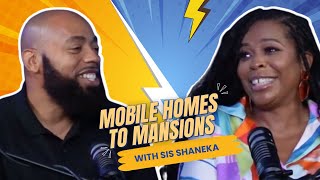
YouTube interview (Land Bank Show) in which host Charles Noonan interviews real estate investor/developer Shanika ("Sis Shanika/Lanae"). She recounts her path from early attempts at real estate (2012–13), MLMs, dropshipping/Amazon sales, to successful wholesaling and then into mobile homes and mobile home park ownership. Core themes: creative finance (seller-carry and non-bank acquisition techniques), converting single mobile-home assets into higher-yield uses (rooming/group-home strategies), scaling to parks (example: a 15-acre waterfront park preapproved for 35 lots; another 7-acre park with 16 homes), community-focused mentorship and events, and candid personal anecdotes (divorce, survival mode, a temporary arrest whose charges were later dropped). The interview includes concrete deal examples, social-media reach, and a proposal to collaborate on a documented mobile-home acquisition and training series.
Questions this video answers
About 255,000 (Instagram followers).
Over 35,000 members (Facebook group).
She estimated about 23 or 24 doors.
A 15-acre waterfront property that had pre-approval for 35 mobile-home lots (mentioned as her largest park).
She said she agreed to pay $400,000 for that property (vision-driven premium).
Chapters
My name's Shanika High heels and sneakers they come to me for motivation I'm a speaker, they call me sis I'm taking risks I hit my target every time I never miss cause I'm a boss Black queen, big cake frosting bout to run a check up Real estate investing I put on for my city Classy and sadiddy miss put that shit on slide drone looking pretty I'm a lady in these streets ain't your business in these sheets I'm repping modesty with a splash of cardi B and I'm first to fight from first and flight from down baduism talk to me nice.
So how. How did you get arrested?
So I posted about what I was going to do with the property, right? Because I'm always, again, I'm always. I'm showing improving to people. Like, I'm showing people the big. Like, yeah, what, what I'm doing. Like, this is the property that I bought y'. All. This is the extra strategy that I'm going to use. I'm always in teaching mode, Right.
I love that you do that too because it shows others. It shows others that they can do it too. Where we highlight some of the most creative and non traditional ways to make money in real estate. We will showcase some of the world's greatest male and female real estate developers and teach you how you can make money by using the same strategies. Now it's time to develop. Here's your host, Charles Noonan. All right, so we got Shabuya in the house. I'm just flawed. That is the best rap I've ever heard coming out of North Carolina. Like, seriously. Welcome to another episode of the Land bank show where we highlight individuals that have done some phenomenal things through making money in real estate through non traditional methods. Today we have. I don't even know how to introduce this individual right here. So I'm gonna start off multi platinum artists, right? Multi platinum artist developer, multi mobile home park owner, which equals multi mobile homes real estate developer, dope individual. I know her personally. Sis. Shanika, how are you?
I am wonderful, Charles. Thank you so much for having me.
You're welcome. Thank you for that rap. That was like serious.
Listen, I told you, like I'm. I'm multifaceted. Okay, okay.
Was that written? That was a freestyle written. What was that?
It was a little bit of both.
Because you just did it out of nowhere. All right, so I said we normally do a little freestyle just to, you know, whatever, a little rap.
And you, you didn't know I had that in me. Did you?
No. I never get surprised when I'm around you. There's never. I'm never not surprised.
There's so many layers. So many layers. Charles, we're going to peel some of them back today.
In such a small package.
Big things come in small packages.
Big things come in small packages. All right, so before we. Man, that was nice. I appreciate that. I was clapping, dancing to do it. I was trying to stay on pace. So I won't ever be a good backup singer.
No, you're not a good hype man at all.
Not a good hype man. I admit, I admit, I admit. That's why I kind of just sit with the mic and like, you know, do the best I can.
That's right.
All right. But a lot of layers, like you said. So I want to make sure I didn't miss anything for my audience. Could you introduce yourself?
So my name is Shanika Lanae, but my friends call me sis. So you guys can call me sis because we're friends now. I am a real estate investor. I am a developer. I. I hope I have multi mobile home parks. As you stated. I have several acres of land I own. I think I'm up to 23 or 24 doors right now. I'm not sure. And I use creative finance in a lot of my strategies, which I guess we're going to talk about a little bit later in the podcast. But essentially, just to sum it up, I use creative finance, which is a non traditional way of acquiring properties that doesn't require a mortgage, it doesn't require your credit, it doesn't require income statements to tax returns or any of those things that you typically have to use when you are obtaining a mortgage from a traditional bank.
Wow. You do. You just leave wrapper out? You just leave that out? You want to leave that out?
Yes, I do that. Part time.
That's part time. All right, cool. So here's what's interesting right off the bat. What you do and what I do are similar. Different, but similar in the sense that land bank homes. To buy a land bank property, you don't need two years of like perfect tax history. You don't need two years of tax returns. You don't need to have like a clean criminal background, you don't need to get bank pre approvals, all those stuff. Things that are barriers of entry to real estate, you don't need. So it sounds like through creative financing, we can both help individuals that want to get into real estate that don't know how or didn't qualify for the traditional method.
Absolutely. You just have to know you know the strategy and the method and essentially have a good exit strategy. Whenever you're acquiring properties using Creative Finance, that's the, the key thing is knowing how, how are you going to exit the deal.
So when you say exit strategy, a lot of our audience are entry level investors. What is, what does exit strategy mean? How many exit strategies are they?
There's so many exit strategies so we just run down some of them. So you can wholesale a property. Right? So you can buy and hold. I know that's one of the strategies that you like to teach your love buying ho. So you can buy and hold. You could do short term rentals, midterm rentals. You can essentially do like a secret seller finance. You can become the bank and sell a finance your deal to a tenant buyer who also necessarily can't qualify for a traditional mortgage. But they, they have the income, but maybe they have some credit challenges because of life situations.
Right.
And they still want to own a home. They make good money, they have some credit challenges. Some things that don't on their credit profile don't qualify them for a traditional mortgage. So you can become the bank and sell a finance them your deals as well.
Interesting.
Wow.
So. So when you say creative, it's not limited to any subset of things. It basically is you can create your own strategy as long as it kind of makes sense for the. The buyer or the seller. Seller.
Really the seller. So when and that's the thing a lot of people get caught up on is like how do you create the deal? Like where do these terms come from? It's literally whatever terms you can think of that you can get the seller to agree to.
Okay.
So whatever they agree to, you guys write it out on the contract. You take that to an attorney. Whatever it is, it doesn't necessarily have to be houses either. It could be cars. You can use creative finance to acquire cars. Mobile homes, single family homes, multifamily properties. Both of my mobile home parks I acquired using creative finance.
That is genius.
It's a brilliant strategy.
It is compliments to you on that. And I gotta say where we met. Right at the versus battle shout out to Sheeta 3 before you say that.
That's one of the titles that I forgot to mention. I knew I am a heavyweight champion.
No.
Yes.
No, no, no. You are the lightweight champion. You are the under 200 pound. No, you're the under 200 pounds under 6ft champion versus battle champion of the world.
Undefeated.
So the Small. The little. Small green belt. That's yours.
Whatever.
The big. The big red one.
The leather.
The leather with the. The gold.
Who has that?
That's mine. Big. Big Chief has that. The Lambent King has that.
I beg to differ, but okay.
All right, so look, we didn't go against you, so technically. Technically, we didn't go against each other. Someone was just swinging at me during that versus battle, which, you know, we'll. We'll. We'll leave that for the versus battle because we let bygones be bygones. And now, you know, through, I think, our good nature as individuals. Right? As individuals that want to help people, that want to see others win, we actually became friends after that. And I just wanted to say our meeting was as rocky and disrespectful as any initial meeting could possibly get.
Do you want to tell your audience, like, how disrespectful you were? You want to. You want to let them in on that, y'?
All.
He was mad disrespectful to me. Mad disrespectful.
What did I say?
I can't remember.
Look, the worst pain you've ever went. Went through. You remember it. Listen, that means I was mildly disrespectful.
You were very disrespectful. The only reason why I don't remember is because I end up annihilating you on the stage. So I got my hit. I got my lick back, so I'm good. We couldn't.
All right, so look, here's the. Here's the reality when someone can't defend themselves, meaning not even on stage. I don't think it count. I don't think those points count because I was in the crowd supporting you, and I feel like, you know, I was. I was. I feel like I was attacked.
Land bank team, Keep it real. Y' all were there. Y' all were heavy in the building. Keep it real. Who won?
Ah, man. All right, look. Type in the comments right here. We're gonna have the official decision. The official judges. You guys are going to be the judges if you guys watch that versus Battle. Put it in the comments. Who won, sis, Shanika or Charles Noonan? Charles Noonan, who battled Joseph? Who battled Charles Noonan? You guys let us know who won in the comments. Thank you. We appreciate that. By the way, this is the Land bank show. Your subscription can be revoked at any time, so we can't be careful how you vote. What? It's my show.
That's not fair. Why you play dirtier?
We're in New York. New York is not a clean state. You win how you win in New York. Right?
Right.
All right, cool. So, so, so that's how we met. However, I always respected what you do, how you do it, how you carry yourself. You, you really do have stage presence of an artist. Really, you do. So me, I was more educational. I made people laugh and it was like this educational forum. You, like, you had people Land bank team members on their, on their feet, like chair and clapping you on and everything else. Where did that come from?
I don't know really, because oddly enough, most people would be surprised. I'm a super introvert.
Really.
I'm so introverted. So what I think, what I do in my mind, like to prepare to go on stage, to speak to hundreds and thousands of people is like I transform into someone else. Like the rap. Like that, that, that was somebody else. That was.
This was it.
No.
Cool. I'm kind of quiet and I. And keep to myself too. But one of the things that motivates me and helps me like get up in front of a crowd and speak and make up jokes and things like that is the fact that it helps people is that after people come up to me and they say, like, they look up Land bank sites, they buy properties, they buy houses in their areas and it just happens every single time. So that's something that kind of like brings me out of my shell personally to say, hey, I got some information that I could share that could change somebody's life.
Right. And I've personally witnessed like your, your team and your community, like they show up and show out for you. So that's a testament to you, like your character and how you actually pour into your community. Because when I say they showed up and show, even though they showed me mad love. So I appreciate that. Land Bank. I appreciate the love. But they showed up and showed out for you. So that was a big testament to, you know, who you are as a person and you know, how you represent, show up for your community.
So, yeah, I take pride. I take pride in my group as well as like showing up on the call. Our mentorship calls are Every Tuesday at 9 o'. Clock. I love to travel. That's like one of my hobbies. But regardless of wherever I am in the world, I'm always on my call at 9:00am I don't care if it's 9:00pm I don't care what day Tuesday falls, on holidays, whatever. I'm going to be on the call because a part of our success and the most successful people I know, they don't recognize like nine to five hours, right? They don't recognize holidays based on, you know, what holiday it is. They just bust through. So I feel like for me to really give back and to help bring people to like the path of where I made it, if that Tuesday falls on my birthday, any holiday, I'm showing up for those that really want it.
Right.
Because at this point, point, their success is my success too.
Right? That's amazing.
Yeah, thank you for that. See, first he was taking shots, now you give compliments. Look, that just goes to show, anybody can change, guys. Anybody can change. Just keep working on it. All right, so you got to tell me this. How did you get started in real estate? How did you get started in mobile homes? Like what, what made you just pick that asset class?
So I initially started real estate investing. Well, my first swing at it was way back in 2012. 13ish, actually. And I took a course and I used my entire refund, tax refund check and bought this program, $8,000 program. I bought this program and I don't know, like, everything makes sense. But the deals wouldn't come. They weren't coming fast enough for me. So I had to, you know, keep working my 9 to 5 and just, I just let it go for a while. So then I progressed to doing other things. Like, I've always had an entrepreneurial spirit. So I've, I've been in every MLM there is. Multi level marketing product. Every MLM there is. I'm sure I was a part of it, had some, you know, mild success with it, but never really, you know what I'm saying, reaching top levels. Right. So I did all of that. And so finally I did find one that actually clicked and it was pertaining to drop shipping. Okay. So I started drop shipping and then I started selling on Amazon. I had an Amazon store, I was doing private label on Amazon. Did very well. I actually, my first year I did like 33, 35,000, something like that. Second year I did over a hundred thousand. Okay, Right. But I was bored to death. Oh, I was freaking bored.
Because you just do everything. Are you. I don't, I'm not familiar with that. So are you taking other people's products, putting your name on it and selling or other people's products and your marketing and selling.
So I would source my own product from China and, and put my label on it, essentially. So, you know, they manufacture products for everybody. They just change labels essentially.
So you made a hundred thousand or six figures from home?
Yeah.
How much work did you have to put in? A lot. Or was it like you automated it?
It wasn't. It wasn't a lot of work. And that's why I was bored. It was. I'm not gonna say it was easy, but it was kind of easy because, you know, Amazon, they fulfill the orders for you. All I had to do was order the stuff from China. They put the label on it, they ship it to me. I print out my labels, ship it to Amazon, they sell it.
Done.
Done.
Okay.
So I was. I did that for two years, and I was bored out of my mind, and something just clicked. I was like, you know what? It's time for me to go back to real estate. Because I missed that human interaction. Like, although I'm an introvert, like, I still needed, like, that human interaction. And the most human interaction I was having with selling on Amazon was the people at the UPS store when I dropped. When I would go drop the boxes off of them to take and ship them to Amazon.
I'm not sure you're an introvert.
I am.
There might be something in the middle.
I'm a. I'm an extroverted introvert.
That's not in the middle. That's two extremes.
No, it's not.
No.
No.
All right, well, we'll call it what it is.
I'm an extroverted introvert. But those who. The people understand. They understand.
They get it.
They get it.
Hopefully they get me, too. I'm an introvert. If I can make 7, 8 figures from home and not leave home. I don't desire a heightened level of human interaction. No.
Okay, well, you're just a straight introvert. I'm an extroverted introvert. So after I have the human interaction, then I have to go back home and recoup, like, by myself, like, for a while.
But you start the human interaction on your own. Because I saw one of your events where you had, like, a million women all dressed in white on a yacht in Miami. It looked wild and crazy.
Yeah.
Fun, educational, exciting. It looked like a. Like. Like a retreat.
Yes.
It was powerful.
Absolutely.
I do events, too. Like Shadow Day, Deep Day, and things like that. It's easy for me because of the people. I would not be going if it weren't for, like, the success of my team.
Right.
But it looked like y' all just had way more fun. Yeah, it looked like y' all had a lot of fun and a lot of education, but more fun. Like, 50. 50.
No. Like, we, like, we get it in, like, we, you know, work hard, play hard. So we did, we did, we turned up, but they got, that they got the game first. Like, the turn up was after the game, you know, saying, like, they got the game for two days and then we did the turn up. But. And it's the same with, like, how you just described, like, the, like the people that you feed off the energy from the people. Like, it's the same way for me. Like, these women show up and like, I'm so against, like this whole. There, there are, unfortunately, I'm not gonna say a lot, but there are some women entrepreneurs or what have you that profess like this woman empowerment type of, type of thing, but really, in reality, they give off mean girl energy. And I'm not speaking, I'm speaking from what the people have come back and told me. Like, you know, when they come to my events, like, we don't do that. My speakers are amazing. They are very approachable. They're very, you know, they're kind to answer your questions. They're, you know, they're partying with the people. You know, no one is up on this pedestal. Like, they're better than anybody. You know what I mean? So the women, like, they really love that aspect of, you know, coming to, you know, Live Wire. So the sisterhood, the bonds, like, we had people closing deals at the event with each other. With each other.
Doing business.
Yeah, doing business. Like, we've had, you know, like real bonds and connections. We have people, like, doing spin off masterminds with each other, like partnerships. Like, it's just amazing. It's an amazing feeling. And to see the. See that, like, on social media, what have you, like seeing their progression and seeing, like, now they're friends and they're com. You know, they're going places from. Yeah, I think that's just amazing. I love it.
That is. That is interesting. Interesting. All right, so you're working this job.
Yes.
You get a side hustle.
Yes.
You making more money at your. More money doing this?
My side hustle did my job.
Your side hustle makes more money than your job?
Absolutely.
You still not happy with that? You get bored?
Bored.
Today you decide you want to go back into real estate.
Yes.
How did you choose that asset class and. And how did you get started?
So I went back to what I originally had, you know, learned from that course where I spent my whole. I'm gonna keep reiterating the fact that I spent my whole tax refund check and I don't regret it because, you know, it was. I was Self education. I was educating myself and, you know, build. That $8,000 that I spent got me to where I am now, essentially.
Okay.
Because it was a wholesaling course. So I went back to that. I said, I'm gonna give myself 30 days, I'm gonna lock in. Because it was like a time frame. It was like a five year span between the time that I originally got that course and when I decided to go back to it.
I always question, right, why do people buy a course or make an investment, not show up for a little while, then show up, then not show up, and finally show up? I have people that are buying their first house that signed up, like, six months ago. You made the investment, you believed in it. It didn't go how you thought or as fast as you thought, and you just reverted back to what you knew.
I mean, life was life. All right. At that time. When I initially purchased the course, I was a single mother of three children, have recently gone through a very tumultuous divorce, to say it mildly. I had to pick up and leave my hometown and go flee to a whole nother state. Left my home, credit ruined, credit destroyed. You know what I'm saying? I'm starting over from scratch. So while I'm building back from scratch, like, from nothing, like, literally getting out of the mud, like, I had to do something that was actually gonna, you know, take care of me and my three girls. So that was the reason why I had to, like, do what, you know. Yeah, just stop it for that moment and do something that was actually paying the bills right now. I was in survival mode at the time.
Got it. That makes sense. And I often attribute a lot of people's success, oftentimes to extenuating circumstances. So when people have these extenuating circumstances, the changes that they make during that time change their lives. It's like pivotal moments in people's lives where they have to make decisions and things happen to them. They make the decision and then they take off.
Yeah.
So oftentimes with the Land bank team, I always ask people, how did you find me? And what made you join? A lot of times it's extenuating circumstances that that moves us. So then sometimes I might tweak my marketing to say, hey, don't wait till you get fired. The fourth quarter is coming. I guarantee thousands of people are going to get fired. If you guys are thinking that you're safe in your jobs, maybe you should think twice. Make a decision. Don't wait until your back is against the wall. But it doesn't really happen. People don't just join and say, oh, yeah, I just thought, you know, it was a good idea. It's like a child is born. They're getting married. They're getting divorced. The big one. They got fired. Now they want me to make up $80,000, like, one year. I'm like, these are making properties, bro. I'm trying to make your kids rich. It ain't about you. You should have joined last year. And that's why I asked them, like, how'd you find me? They said, I followed you for one year. One lady said, three years. I'm like, I wasn't on the Internet that long. And she was like, no, I saw you as a challenge and everything. And it's just like you. You store information, sometimes they pay for it, and then when that extenuating circumstance comes, boom, there's a change, and then they just take off.
Yeah.
All right, so you got into wholesaling. Did you find, like, mobile homes and say, I want to buy 50? What happened?
I didn't start with mobile homes, actually. I started wholesaling houses first. So I gave myself 30 days to lock in. I. In my first 30 days, I hosted my first deal. It wasn't a huge deal. It was $5,000, and it was a JV. And for. For the newbies out there, that's a joint venture. So I had split it 50, 50. So I got $2,500, and my JV partner got $2,500. But it was. It wasn't the most money I had made, obviously, but it was the best money I had made, because now it's like you. You believing that this program works and this whole thing works. But when you actually get that first check now, you really know hurts. You know what I mean? Like, you. You really know it works. And so after that, like, the momentum was just insane. The momentum was crazy. Within the first month, I ended up getting, like, 35 properties under contract from one seller. Like, it was crazy. So in the first six months, I did over six figures.
In six months?
In six months.
All right. You climbing that financial ladder.
It was. It was on and popping. And so, like, with me, though, like, I was so intrigued with this whole real estate investing thing, and, like, there's so many aspects of it, and I was intrigued by it all, so I started learning about different things. So the first thing I learned about was the creative finance, right? That was the first piece.
So you're wholesaling and then using creative finance to say, hey, this can work if you Want this property, we can make it happen. Try these ideas and let's see if it works. And that's how you became successful at home?
Well, I was already wholesaling, but what I was noticing was like, I'm. I'm wholesaling these houses. I'm getting a nice wholesale fee, but I don't own any property.
Okay.
So now I'm like, okay, I'm gonna use creative finance to actually start acquiring some of these houses myself. They're awesome deals. I'm a hell of a negotiator. Right. So. So I'm negotiating these deals and I'm giving them away.
Right.
I don't have any cash flow.
I always wonder why wholesalers don't have the most properties. Because they getting the deals even less their fee.
Yeah.
So if the fee is 5, 10, whatever, what's the average wholesale?
It depends on the market. So in my market, 5 to 10K.
So you're getting a property that has so much equity that, that you can add $10,000 on and still sell it.
Yeah.
And I always say to myself, why don't they just keep all of those houses? Because you, like, have them at the lowest possible point.
I mean, when those wholesale fees come in, like, they're. I'm not gonna say they're. They're kind of. They were easy for me.
Yeah.
And I don't want to, like, I don't want to anybody out there who's tried to wholesale that didn't necessarily close a deal or not closing as many or not, you know, as quickly. It is a, you know, it's a, it's a, it's a hustle and it's like a job because you always chasing the next deal, the next deal, the next deal. Right. So I started learning about creative finance so that I can learn to how to acquire some of these properties. So I started wholesaling. Like, I will wholesale. One or two. I would keep one or two. You know what I mean?
Okay.
So.
So hold on one second. Their audience. I'm going to ask this to teach us. Right. I'm going to ask her to teach us wholesaling. But just talk us through how you got to keep one of the properties. Because that's, that's like a level of intelligence that I don't see wholesalers saying, oh, I own a portfolio and I'm like a killer wholesaler. It's like one or the other.
Right.
But please educate us.
So the way my brain works is when I learn something, like I will take components of various things That I learned. And I can, like, see a situation and create something out of it. So it was one scenario where I, I got a property under contract and essentially the seller actually had four, because I was doing something called driving for dollars. Some of you may know that I don't know. But if you don't know, you're essentially driving through various neighborhoods. You're looking for signs of distress, distressed properties, right? Tall grass, boarded up windows, broken windows. Sometimes you could tell when they're just vacant, right?
Yeah.
So I'm looking for signs of distress. I see this property is, is obviously distressed. I skip trace and call the seller and he tells me, yes, it's. It's vacant and I'm interested in selling it. And I always ask this question, like, this is a key question. I think a lot of people skip, well, do you have any other properties that you're looking to sell? He said, well, matter of fact, I do. I have three more. So he had a total of four, right? So I'm like, okay, so I go look at the properties and I'm. I'm running a comp. So I look at, you know, I'm looking at what I can wholesale these properties for. And I know the market because I only deal, you know, I deal in my market side. I almost know what I'm selling for anyway, right? So I'm asking him, like, okay, how much do you want? So we in negotiations, right? I get them under contract for the price that I want. I know that I can wholesale three of those properties, right? For his price, for his price. And I can keep one for free for myself.
That's where you go. That's where you were going with it?
Yeah. So that was like one of the first properties that I actually acquired. And it already had a tenant in it. This one had a tenant in it already and everything.
So is that common or that's just like the shanika sauce that you put on it?
I ain't gonna say it's common, but I'm not gonna say Nobody has ever done it, but I had never seen anybody do it. It's, you know, so it wasn't something that I necessarily learned or copied from anyone. It was just. Just came to my mind, you know what I'm saying? Like, I, I can get these three under contract for this price, sell those three, and I keep one for free. So I got one of the houses essentially for free. It had a tenant in it, but he was a hoarder. He was paying way below market rent. Like, it was terrible. So I Did give him an opportunity to, you know, to get him a new place. Like, he had, like, three months.
Yeah.
So. So then I got him out. So I collected the cash flow for those three months. He moved out. I hired some folks on the corner. We gonna call them. But they got. But y' all know who they are. All right.
I don't know who they are. Individuals that are struggling with substance abuse and employment at the same time.
That. That part.
Okay.
So I hired a couple of those guys, brought them to the house to, you know, just clean it up a.
Little bit, you know, just to paint the picture. You hired them by yourself? How tall are you, if you don't mind me asking?
5. 2. Ish.
5 2. You like driving around your car by yourself and saying, hey, guys, I need you to help? Or did you have, like, brothers, friends, or crew?
I'm from the street.
Shows you. I see how you dress, right. Never anything. So you run up on. And. And this helps. So here's what people don't understand. And I say this. I think I told you. I told somebody. I told Manny last night. I said, bro, what I really like about her, she has heart. Like, she. She just got heart. She's. She's. She's gonna get it done. Sure. And whatever comes with it, she's ready to take it on for sure.
So.
So you go up to these individuals struggling with homelessness, substance abuse and employment at the current time.
I picked them up, put them in my car.
In your pickup or your car?
In the back of my car. I had a Toyota something at the time. I don't know.
Go, tell me more.
I put them in the back of my car. I'm like, I'm going to pay you. I don't even remember what it was. It wasn't a lot. They didn't require a lot. I'm going to pay you this. I need y' all to come clean out this house for me. It was a mess. He was a hoarder. I just. I didn't need it completely clean. I just needed to clean enough so that I can get buyers, potential buyers to be able to walk through. And while they cleaned it out, we discovered a whole nother bedroom that we didn't even know existed. That's how much he hoarded in his house. It was so much stuff in there. So they got the house cleaned out and everything. I did my. My open house, my showing. Okay. And so the way I do my showings, it's another thing that I just came up with. I'm sure Other people do this too. But I was like, I'm gonna create a demand for this property. So I'm gonna do a quick showing, like 30, 45 minutes max. I don't give out my address to my property until like an hour before the property or a little bit less. And I have everybody come at the same time. Everybody wants what they think everybody else wants.
Creating a competition.
It creates the competition.
Scarcity.
Scarcity. It beats the price up, all that good stuff. So I had buyers there. Listen, I'm. And I tell them, listen, the first one to get me my earnest money deposit and sign this contract, that's against the proper non refundable earnest money deposit. Okay. First one to give me that, sign my contract, gets the property. So I had like mad people show up. I had one like, they're like, everybody's kind of like pulling me to the side, like trying to get it, you know what I'm saying? So I had one guy pull me to the side. He was like, listen, I'll go get the earnest money deposit, like right now. Like I give it to you right now, like, please, like, let me get this property, you know. And he was, he was a new investor. Never had a property before, but he wanted to, but he, he didn't have the full amount of cash. So what did I do? I became the bank for him. I became the bank for him because for me it was more important to help him become a first time real estate investor versus selling it to somebody who had all the cash.
So you have a house you owe no money on in your name.
Yep.
You create this desire for this house right. Through marketing, timing, scarcity.
Yep.
People want it that trying to, everybody's trying to talk to you and put money in your pocket.
Y.
And you went one step further and said, look, Yep. I, I know this is the price I want. However, if you pay me this much over this amount of time, I'll give it to you. You don't have to finance through a bank.
That's correct. So he gave me, I think it was 8,000 or 8,500 or not between 8 and 9,000. So as an EMD, as, as a non refundable earnest money deposit.
So you came. So you collected three months rate came up on 9, 8, 9, $10,000.
Y.
And he has to pay you every month.
Every month. And I forget the terms, y'. All. This was like one of my first creative finance deals and I started in 2018, so. But I forget how much he was paying me a month. It was, it Wasn't a lot. Maybe 600amonth or something like that, you know, it wasn't a whole lot, but for him it was everything, right?
It's his first deal. And this is what people don't understand when you're doing deals. This is what I tell people to don't ever negotiate a deal with your wallet, right. Meaning it's not for you to decide what's going to work for someone else. Just present the deal, present your offer, let the other person on the other end decide if that works for them or not.
Yep.
Right. So you could have said 8 or 9,000 and is too much, right. And you could have said, just give me five. But you made it. Whatever, you made it. It worked for him, right? Then you could have said 50,000, 60, 70, 80, whatever the number is, man, I don't owe anything on this. Let me just take 20. Let me just take 60. But, like, you didn't get in your own way, right? And you probably financed it for, like, market value or close to it.
Yep, I financed it for. For market value for him. I became the bank. And y' all, listen, the best part of this, like, we came up with these terms sitting in McDonald's on a napkin. It's just that, like, people over complicate things, right? Like, we're going back and forth like. Like, this is what he's. Like, this is what I can afford. This is what I want. This is what I can afford. These are over what period of time we wrote it out on a napkin and McDonald's.
Here's a term that people often. Or I'll say this here's a term that people often get confused with real estate. A lot of it is the meeting of the minds. If you guys can have an. A mental agreement or to come to some sort of an agreement, I think you can do a successful real estate transaction. That's all you really need. Like you said, don't over complicate it with anything else aside from this is the purchase price, this is how much I want up front, right? This is how much you're going to pay. Pay me every month. And this is the repercussions if I don't get paid.
Correct. And mind you, y', all, of course, we actually put it in a real contract with an attorney. But the terms were agreed upon, Right. I want to make sure I specify at McDonald's. Yeah. So y' all don't take no napkin thinking y' all got.
Oh, that's not the contract. That's not it.
Those were the Terms. But we did take that to an actual attorney, and he drew up an actual, you know, contract at closing. Yeah.
Cool. Nice to hear. Your first deal, it involved help from the community, right? Creative finance.
Listen, I create jobs, all right? I create. First time, you know, first time real estate investors, first time homeowners. Listen, we creating opportunities out here, all right?
So I don't know you as this wholesaling queen. I know you as the queen of mobile home parks. Right. Am I saying that right?
Yeah.
Okay. How did you get so many acres? What made you decide mobile home parks? And just how did you get there? From wholesaling, which seemed like a very successful wholesaling career, by the way.
All right, so again, now I got in my pocket, I call these tools, right? I got all these tools in my tool belt that I'm collecting along the way. So now I got wholesaling, I got creative finance. All right, So I grew up in a very small, very rural area. Like, I grew up in a mobile home.
All right. Really?
Yes.
Okay.
And where I'm from, mo. The majority of the people live in mobile homes. Like, where I'm from. Like, if you got a double wide mobile home with underpinned like you ballin', like, that's. That's considered ballin'.
What's underpin?
Underpin is like. Well, if it's got to be brick, though, to be balling. Ballin'. All right, so essentially it's because mobile homes are up on these piers. Like, that's. That's the foundation. No, they're like cine block piers.
Yeah. Okay.
All right. And so if you don't put underpin, like you can see under the. Under the trailer and see the piers. The underpin is the covering around the base of the mobile.
Is that often called the skirt?
The skirt.
Okay, cool.
Yes.
In New York, we. In New York City, we don't have mobile homes, so we don't. We don't. We don't ever see them. Yeah, so I don't. I'm. I'm always fascinated when I hear or learn about it. So you grew up in a mobile home?
Yeah. All right. I grew up in a mobile home, and so I'm very familiar with it, obviously, and I know there's a large demand for it because like I said, everybody where I'm from lives in mobile homes. Not everybody. I mean, there are people that have single family homes, but the majority of the people live in mobile homes.
What state did you grow up?
North Carolina.
North.
North Carolina. Yeah.
What do you think about Skyscrapers and, like, buildings. So you growing up where you grew up, and then you hear about New York City or big cities where they have skyscrapers, projects, 100 floor properties. What do you think of that? As you see that?
That's just like. It's just. It's such a, like, opposite of what I'm accustomed to. Like, I don't understand how people live here. I don't understand how people live here. Like, where I grew up, like, we have, like, huge yards and grass and we brought barefoot and we have.
So you walk barefoot?
Yes, yeah, we walk barefoot, like, to my grandmother's house. Like, everybody is right there. My auntie lives over here. My grandma's in a mobile home.
Yeah, everybody.
Grandma's over here, auntie's over here, cousins down here. Like, everybody's right here.
You just walk and go play with your cousins.
We just walk barefoot.
Okay.
Yeah.
So you. When you say you don't understand how we live, luxury buildings with shoes, sandals, sneakers and boots in the wintertime. Right. You know, you don't get that. You don't understand that concept. What do you think we're thinking when we see you guys with, like, a wife beater, no shoes, and a bunch of people running around?
But you know what the difference is?
Like, no judgment, by the way. No judgment.
The difference is most people who grew up in the city, like, y' all had cousins and grandmas and stuff in the country, and y' all get sent to the country for the summertime or something like that. A large majority.
100.
Right. So y' all kind of.
Because we got roots in the south, right? Everybody has roots in the south, right.
So y' all would get that. We never got sent to New York for the summer. You know what I'm saying? We never got sent to the city for the summer. Our cousins came from the city to the country for the summer.
Okay, Little. The air is better. The air is different.
It's.
I'll give you guys the air.
We have crisp, clean, fresh smelling air. Doesn't smell like piss and trash.
All right, so. So you. You live in a mobile home. So now that. That allows me to understand how you're able to understand the market of mobile homes. Because, you know, inside and out, what's a good one? What's a skirt? How they're made, how they're built. Oh, we left something out. So I just remembered you own a septic tank company.
Yes. Okay, we're gonna get there. So we started with the mobile home. So how I got, like, into actually learning about it and like investing in the mobile homes. So as I was, you know, becoming the wholesaling queen and all these other queens of different various real estate.
Did you dominate the wholesale?
I dominated everything. I dominated every industry I've been in so far. So except for that versus Battle, I dominated it too. Okay. So I, so I became, I documented my whole process like online, not Instagram, but Facebook. Right. I was always documenting my process. Like I'm closing deals, I'm showing my process, I'm showing my hus statements, I'm showing my checks, my money, whatever. So I'm documenting my whole process. So I became somewhat of an influencer by, by default, like, you know, circumstantial, Like I wasn't trying to be that. It just kind of happened. Right, of course.
Because you're doing something that people don't know. They're learning, they're watching. And there's a term we use like lunch break warriors. Right? There's people that are watching on their lunch break and commenting and doing all this stuff, but they really are admiring and have a level of appreciation. And it seems like you started to take off from a follower perspective.
Yes. So I grew the fastest growing real estate investing Facebook group on Facebook at the time, over 35,000 members. Right. So I'm becoming somewhat of an influencer. So I have people that, you know in the industry reaching out to me to collab on things. So this one guy reached out to me to collab or he wanted me to co host a mobile home training with him.
Okay, so you're buying a bunch of them, Bunch of mobile homes?
Not yet. So he and I do this collaborative class on mobile homes and I'm listening to him teach, like he's teaching everything about, you know, mobile homes. He's like, you know, I retired from my 9 to 5 with mobile homes in like a few months. A few months time. It doesn't take a lot. So for those of you who are in the audience, I want you guys to think about how much you make on your 9 to 5 job right now. Right. Whatever that number is. All right. And then think about how many properties you would need to acquire. Cash flowing, depending on your market, let's say between 500 to $800 a month. How many of those would you need to acquire just to replace your 9 to 5 income? If you do that math, I promise you it's not a lot of properties for most people. What's the, what's the median income in the U.S. like, 35, 40, like less than 40,000 a year.
Somewhere around there.
Maybe it's somewhere around there. So most people in America aren't making between three, four thousand dollars a month.
Right?
Right. So you don't need that many properties.
10. Mobile.
8.
8 mobile homes. 6, 400.
In my market, you can get mobile homes for less than $10,000.
So 80. So I spend, I go to your market. You teach me where the mobile homes are, how to buy them. With $80,000, I can get eight of them.
You can be, you can be free.
And how much do they rent out for?
It depends on the market. Again, it's, you know, market specific. But then we go into another strategy. Like, because I, like I said, I'm a forever student. No matter how much I know, I'm always learning. I'm learning from you now about land banks, but I'm always learning. So then I learned, I went and took a mastermind about unlicensed group homes. Right?
Yeah.
So I see these ladies, they are getting these houses and they are renting out the rooms of these houses and 3,4x in their cash flow.
Really?
So I'm like, wait a minute, if they're doing that with houses, surely I can do that with a mobile home. Right?
Right.
So now I'm turning my mobile homes into unlicensed group homes. And I'm 3x and 4x and my cash flow on one property. So now where it would take you 10 properties to. To replace your income if you do this strategy now, you only need three or four.
Wow.
Yeah.
Awesome, awesome, awesome. All right, so before we get into how you scale, I have to take a time out for to recognize our sponsors. The Land bank show has sponsors, and I like that you dominated so many industries. That, that is amazing to me. All right, so one of Our first sponsors, unsoldland.org unsoldland.org is your one stop shop, shop for everything land. Typically, there's a lot of land in the south that is unclaimed and unsold. Sishanique has given us some ideas for mobile homes Land bank team. I hope you guys are watching because you guys could really take advantage of some of this information. Information that she's sharing with us today. The second Star homes in Coleman, Alabama. Speak to my guy Adam. He's a really good friend of mine, a friend of the Land bank team, and he will get you straight on everything. Tiny manufactured modular and mobile homes. All right, so Star Homes, Coleman, Alabama. There's a number on the screen. Speak to Adam. Tell him Charles and sis Shanika sent you for the mobile homes. But I'm sure she's got creative financing and some creative ways to acquire mobile homes on her own. All right, so now you, you're at a conference, someone's teaching.
Yep.
You're starting to think and recognize and identify an opportunity.
Yes.
For you. Did you have any yet or no?
So when I, when I went to. When I went to this conference, I didn't have any mobile homes yet because I started investing in them. But I started wholesaling those first, too.
You are wholesaling mobile.
I was wholesaling mobile homes first. That was my first strategy that I used with mobile homes.
So if I. I assume you still have all your contacts. If I get a huge piece of land and I come to you and I say, sis, can you help me? Can you help me source mobile homes? You have the contacts still and the ways to find.
Absolutely, absolutely, yes. So I could definitely help with that. So I started wholesaling the mobile homes first. And the reason why I loved wholesaling the mobile homes versus wholesaling the houses is because with houses, you have to go through a whole title search, a closing process with an attorney, etc.
Etc.
With mobile homes, they're literally personal properties. So all you need is you have a title, right. You signing the title over. We close them the same day.
Really?
On the back of my trunk in the parking lot. Walmart.
You're very resourceful. McDonald's, the truck.
Walmart, Walmart, McDonald's.
So there's a title to them.
They have a title. It's just like a car. Like you have a title to your car.
Yeah.
So it's the same thing. So sign over the title in the parking lot, bill the sale, done, close. And like, these are quick little, you know, and again, it's market specific, but for me, I would get between 3, $5,000. Like, but they're quick, you know what I mean? Like, they're easy.
Same day, meeting of the minds, you're selling one, you need to get rid of it or you want to let it go. You need one. Connect those two, sign they pay you.
Damn, it's that. That easy? So I started wholesaling those first. And then the same concept that I was thinking about with the houses, the same way I was wholesaling the houses first, and I was like, let me start acquiring some of these. Same thing. So then I went from wholesaling these mobile homes and I started f. Doing fix and flip. All right.
With mobile homes, with mobile homes.
Started doing fix and flip with those all Right. So I started doing fix and flip. So then I attended this conference about these unlicensed group homes. And I'm like, my mind, you know, my mind is, like going. It's churning now. Like, my brain is just turning. I'm like, hold up. Why. Why would I just acquire one mobile home when I could just buy a whole park and turn the whole park into an unlicensed group home?
Right.
Like, mind blown, right. I can. I own it. I can do what I want.
This is just hard for me as a New York City person to understand because I probably seen two mobile home parks in my life. One was, like, two, three months ago.
Yeah.
And it was like Daisy's mobile home park.
Yeah.
It had a nice sign on it. It was in Alabama. But it was. It was just, again, mind blowing to me to see how they're structured. They are community, like, and community. So I could see people growing up in that community. Community as it is. And it was just interesting to me.
Yeah. You have people that. That's. That they prefer a mobile home. They don't want to live in a house. They like that. That style of living. They like the community, you know, the community feel of it. And mind you, once they, like, own the mobile home, now they're just paying lot rent. So you got to think, keep in mind, when you talk about affordable housing now, you're talking about somebody paying three to $400, up to, you know, $500 a month for lot rent and their light bill, water bill, whatever. So they're paying less than, you know, $1,000 a month, in some cases even less, you know, depending on the mobile home park that they're in. And that's it. That's their living expenses.
Interesting. Interesting.
Yeah.
Okay. How do you get to owning not only one mobile home park, but two? And what are the sizes?
Yeah, so the first mobile home park that I bought was my largest one that was 15 acres. It has its back on the water. It's on water. It's waterfront property. And essentially it already had mobile homes on there, but the whole park wasn't developed. So my first thought was, well, I'm just gonna go in there and finish developing the mobile home park. It was already Pre approved for 35 mobile homes. All right. And so again, I'm always investing in myself. Y' all invest in a mentor. I invested in a mentor. And in this mentorship, somebody started talking about RV parks. And they. And I'm. I'm. I'm learning. So they said for every mobile home lot, you could Put four RV lots. I'm like, what the what? So now, yeah, my mind is like, like, what? And the mine was already underbelling. Like, I can do what? So now I go from having 35 lots to over 100 lots. That I can do.
Yeah.
That I can rent out. So I start calling around the different RV parks in the area, just doing some market research, pretending like I. I got an art. I ain't never been no rv, but I'm pretending like I got an RV and I want to come to the RV park. And so I. Because I want to know the price.
Right. You're understanding how. How it gets rented out.
I want to know what the amenities are. I want to know what they're charging with. Like, what's the daily rate? What's the monthly rate? You know, I mean, that's my market research. So I'm figuring this out, and in this market, where. Where this. Where my property is, they're charging upwards of $1,000 a month for lot rent for RV lots.
When you say lot rent, that means they just come park there every. So some people live in RVs, some.
People live in RVs, and they need.
A place to park them.
Yes. Some people just come for recreational purposes. For. For vacation.
Yeah.
They may stay for the summer. They may stay for a month. They may stay for whatever. So you got to have, like, a daily rate and a, you know, monthly rate, you know?
Okay.
All right. So I'm like, well, surely if they're getting a thousand dollars a month, I can get 800 easily. Right? Surely. Right. So I'm doing the math. I'm like, oh, shoot. Y' all do the math. Eight hundred. Eight hundred a month times a hundred dollars. I mean, 100 lots. Yeah, shoot. So that was the first property. And can I. Can I just keep it real with your audience? Always.
That's all we do.
All right.
There's no. It's like a judgment free zone. So you can be vulnerable, funny, corny, whatever. Like, whatever it is, just be it.
So, y'.
All.
Long story short, because I had a lot of people asking me, I bought this one two years ago. I bought that part two years. No, a year ago. A year ago. So long story short, I end up getting arrested over this property.
I saw that.
I got arrested over this property, y'. All. So a lot of people was asking me, like, what's up with the development? I know you say you was going to develop this RV park, and I couldn't do the development because I was in litigation behind this property. So they. That's what happened. Y' all sis ain't out here capping and all. That was a lot of y' all be thinking, like, I literally. All of my. My project was halted for over a year.
Okay.
Because I had pending charges.
Okay, so the second we got. All right, the second one, you got arrested for buying the second one.
No. So what? The first one.
The first one. The first you got arrested for buying that one.
So what happened was. So I bought the property, we had a closing. Everything's good, I thought, right? So. And maybe it's because, like, I posted what I was gonna end up doing with the deal and how I was going to turn it from what it was, which was nothing, because what you guys may not know when you're talking about multifamily, you don't value those based. There's no comps per se. Right?
Yeah.
Multi family properties are valued off the cap rate or with the income, if that's producing. That's how it's kind of gauged. This property wasn't producing a lot of income. It has seven mobile homes on it. Only three of them were occupied, and they were only paying 500amonth. So it's producing 1500amonth. So the valuation of the property is less than $200,000, right?
Yeah.
All right, so I agreed to pay this seller $400,000 for the property, right? Because he gave me the terms that I wanted. And a lot of people are like, what the. Y'. All. Y' all confused because y' all thinking, why in the heck would she pay $200,000 over market value for a property? Because, y', all, it's. It's not about what the property was valued at at the time. You got to have vision. I saw the vision of what I could do with the property and what I could turn it into, right? So with that vision, I saw that I could turn this property into a $80,000 a month cash flow on property that had a valuation and now between 6 and 8 million dollars. So now when you talk about paying over $200,000 market value for a property, hell yeah, I'm gonna pay $200,000 over.
So how. How did you get arrested?
So I posted about what I was gonna do with the property, right? Because I'm always. Again, I'm always. I'm showing improving to people. Like, I'm showing people, like, yeah, what. What I'm doing. Like, this is the property that I bought, y'. All. This is the extra strategy that I'm going to use. I'm always in teaching mode. Right.
I love that you do that too, because it shows others. It shows others that they can do it too.
Absolutely.
Not that it's easy, but it's doable.
It's doable.
And I do that all the time, too. Like, I have doable shadow day and even d day.
Yeah.
I'm bringing my entire crew of developers, title p, everybody that I need to develop these duplexes I'm bringing so people can actually see it. I'm going to do a ribbon cutting, a groundbreaking ceremony, and it's just showing the process. And it's more like it's doable. It's never going to be perfect.
Right.
We going to go through some stuff. So I'm a yell at some contractors. I always do. I'm a yell at my project manager title attorney guy is going to take too long. But I like showing it to people as I'm doing it, so I love that you do that too.
I always document my process. So. So I. I said with the property, what I'm going to do with the property. Oddly enough, a couple months later, I get a phone call from a sheriff. Right? Sheriff says the seller made a complaint against you, saying that you illegally took his property. I'm like, how did I illegally took the property? Like, I gave him a down payment. He cashed my check.
Wait one second. I don't want you to say anything that could incri you.
Oh, the charges are dropped.
It's over.
It's over.
Go ahead, Go ahead.
Charges have been dropped. I have been vindicated. I am free.
We usually have a studio audience.
I am free. So, yeah, so I'm like, how, how. How did I, you know, illegally take the property? We had a closing with an attorney and I gave him a down payment and he cashed my check. And you know what I'm saying? These are the terms. Like what? And so he's like, listen, like this, this. This is what has been, you know, stated. If we decide to pursue it further, a detective will contact you. We just had to get your side of it.
Okay.
Okay. Bet I ain't think nothing else of it. All right? About three months later, I get a call from a u. S. Marshal.
Wow.
A u. S. Marsh, I thought it was a prank. You know, some of them people be pranking somebody with the irs and all that stuff. I thought it was a prank. This dude says, I'm looking for, you know, shanika, and you have three felony charges. Three. I'm like, what the what? Like, I am like, he's like, ma', am, you know, I'm like, for what? He's like, he don't even know what the charges are for. He's like, listen, all I'm giving is the instructions to come pick your ass up and take you to jail.
What?
Yes. I'm like. So I'm like. I'm like. I'm like, in disbelief. Like, I can't believe this. He's like, but, you know, I'm giving you a courtesy call. I looked up your record. You don't have a record. So I'm not coming to your house to pick you up. Like, can you just turn yourself in?
Yeah.
And I'm like, listen, let me call my attorney. Like, let me find out what's going on. I will turn myself in, but let me find out what's going on.
Right.
This is on a Thursday. Next day, I called my attorney. Like, we're trying to figure out what's going on. Blah, blah, blah. So he's like, it'll be best because my attorney is local to me. He's like, it'll be best if you get an attorney that's local to the area that. That the charges are from.
Okay?
So I called this attorney. He has. We. He has a. We have an appointment for Monday. We talk on. We talk on Monday. I'm keeping. I'm still. I'm texting the u. S. Marshal back and forth, let him know what's going on.
Yeah.
He's like, all right, no problem. As long as you keep me abreast, you know what's going on. Blah, blah, blah. Like, you're good. So I have this appointment with the attorney. Like, he's like, look, I know. I know the deputies down there. I know. And, you know, I know everybody. I know the d. A. I know these people. You know, I know the magistrate. Like, this is what we're going to do. We're going to arrange to turn yourself in. I'm going to have a bondsman there for you. This is some bullion. You know, it's going to be dismissed, Right? But, you know, we got to go through the process anyway. I'm like, I bet. Managed four hours away. So he want me to come four hours away to go turn myself in. All right, so this is Monday. We arrange for me to turn myself in on Tuesday morning, okay? Tuesday morning, the police show up at my door to come and get me, right? So. So I'm totally like, I'm not prepared because I was prepared to go turn myself in because that was the agreement.
Was it a Time that you were supposed to turn yourself. Were you late?
No, no, I was not late. We had a set time that was supposed to be there. Everything, like, you know, we had a set time, actually. I was supposed to be there in the afternoon in the place because it was a four hour drive. So they gave me. They come get me early in the morning from my house. I'm in my nightgown. I'm in my nightgown. I got my house shoes on.
Yes.
No underclothes, because I'm in my house, chilling, minding my business. Comfortable.
You went to jail naked?
I went to jail. I had my nightgown. Is that funny, Char? Oh, my God.
No underclothes on.
No underclothes on. House shoes, a nightgown.
All right, so let me ask you this question. I've never been arrested.
Oh, my God. That's my first time ever being in my last. But that's my first time being.
Could you have asked? Could I at least put on, like, you. They already know you're turning yourself in your schedule to turn yourself in. Could you have asked. I saw the video you posted. That's part of documenting your process. Right. Could you have asked the police officer, could you please have a moment to put on your underclothes?
I asked him. He told me no.
No.
He said no. And I was like, damn. So I think. I think the police officers, like, their first response is always like, the person's gonna be hostile or, like, try to do some shys. I don't know what the fuck they would say. I don't know. But it was like, no. He was like, no, they just want.
You to come out. You at the door.
They want you out. Like, actually, he stepped into my house. All right? He stepped into my house to handcuff me. And I'm like, you got to put handcuffs on me. I was like, I'm supposed to be turning my. Like, you put a handcuff, like, what, in the back, no less. And I was told, like, women, normally, they can be handcuffed in the front. N this n got me locked up in the back. Yo, I'm locked.
Were you. Were you afraid? Were you scared? Nervous?
I wasn't. I wasn't scared. I wasn't scared. I just didn't want my children to see it. Like, Right. You know what I'm saying? Like, that was the main thing for me. It was just like, the whole process, it was just like, happening so fast. It was just like. It was almost like a sour relief, too. I was like, it like, let's Just do it.
I gotta go in.
I gotta do it anyway, so let's just do it. So I had already had my attorney on standby. I had my. Y' all remember earlier I mentioned my JV partner, my first JV partner that I split the deal with?
Yep.
He's a bondsman, so I already had him on lock. Like, we had a great. Because we went on to close several deals together.
You go in, you come, I call him.
Like. Like, he had already been on standby anyway, so I'm being, like, I'm being respectful. Like, I'm just talking to the officer. So now they, like, warming up to me a little bit. They like, you know, this little 5,245pound girl, she's not gonna do, like, I'm being respectful, you know what I'm saying? You know, I'm not giving them no problems. So now they're accommodating me because they're like. Like, I live in a fluent neighborhood, right. So I don't know why the police do this. I guess they don't want you to see, but, like, they always park their cars, like, around, like, the area. Like, not in a driveway, but, like around the cul de sac or whatever.
Again, I've never been arrested. I don't know. I've never been arrested. I don't know how it goes, but apparently during some of your arrest, you know where they park. You found out where they park, where they park and everything.
So they parked like, you know, around.
So they had to walk you.
So they would have. But he was like, he. It was two of them. So he told the other guy, like, pull the car into her driveway so we don't have to walk her out in front of her neighbors. Yeah.
Did you get dressed?
They still didn't let me get dressed.
So you still. The way you slept?
Yes, yes, still. I didn't brush my teeth, nothing. So.
Oh, my goodness.
So. So they. They. They walked me out the car and then I'm talking to him. Oh. And then on top of it, I had. Just had surgery. Right. So I'm telling him I'm. I'm not limping, but I'm slumped over. Like, I can't even stand up straight. So he's seeing me, like, I'm in distress, like, so I'm like, I'm like, sir, like, I just had surgery. Like, he's like, all right, I'mma be like, he's. Now he's escorting me down my steps, helping me into the car, like, being gentle with me and everything. Like, and he lets me keep my cell phone. Right? So that's how I got the picture. I can have my cell phone, but I can't have my underwear, right? I can't have my underwear, but I can have my cell phone.
Did the kids know what's going on? Are they still kind of like my old.
They don't know what's going on, but they're. They're like, they're crying and everything. The older ones, okay. Because I told them to take the younger ones, you know, to the.
But they knew, hey, I gotta go turn myself in for something stupid. I didn't do anything. I'll be home.
I don't think I had got to the process of telling them that you.
Supposed to be going in that day anyway. You gonna wake them up. I'll be back. Back. I'm going to go to jail real quick. Yeah.
They wouldn't understand that, right?
Yeah.
So. So, yeah, they take me to the car. They let me keep my cell phone. So now, like. And he's. Okay, now he's been. Again, you've never been arrested, so let me educate you. All right, so now I got street credit, right? Do I got street credit for going to jail after.
Go. All right, here, look. Going to jail after surgery, no underclothes and a cell phone.
Yeah.
Yes. You got street cred.
I got street credit.
All right, you had street cred from dealing with. You had street cred from dealing with the individuals that are struggling with substance abuse, homelessness, and in between employment at the same time, and putting them in your car. You definitely had street credit. Your street cred was up in the first five minutes.
All right? So now I'm. I'm telling him, like, oh, in the back of the police car, there's no air. This. This arrest is happening in July, the middle of July. It's hot as hell, right? Okay. There's no air in the back of the police cars. But again, he's being accommodating. Nice to me. So he's like, I know it's hot back there. Like, he opens his little window.
Yeah.
So I can stick my face in the little window so I can get some air. I can only feel it on my face. But I'm sticking my head through the window so that I can get some air.
Right?
All right. It's the middle of July.
All right?
So now I'm like. So now I'm talking to him. I'm like, hey, I got my cell phone. Like, can I actually call people? Can I call. Can I use It.
You might as well order some food too.
He was like, make your calls before we get to the jail. Like, whoever you can call. I was like, I bet. So now I'm handcuffed. I'll try to demonstrate this. I'm handcuffed like this, right? My phone is over there. So I got my phone. Can y' all see this? I got my phone like this. Like, I'm using my fingers. I'm unlocking my phone and I'm dialing numbers. Like this handcuff. My wrists are killing me.
Yeah.
But I got to call my bail bondsman and my attorney, okay. So they can come get my ass out. So I'm making calls. This dude is literally taking the long route the jail. Like, he's just driving slowly.
It's a four hour ride.
No, no, no. He took me to the local jail. See, I was supposed to go turn myself in there, but they sent the local police to come get me. All right? So I'm going to.
Oh, it saved you four hours.
It did. You know, silver lining. Okay, so. So now he's taking me to jail. Like, he's just driving slowly, but making sure I get all my phone calls in. I'm calling everybody. My bail bondsman was in another freaking city bonding somebody else out. But, yo, like, he's so solid. You know what I'm saying? Our relationship is so solid. He was like, I'm sending somebody to come get you. I'm sending somebody else.
You want to give him a shout out?
Yep. Marlon. I already shouted him out on Instagram. Marlon Wilkins. That's my dog.
Okay, so that's your dog?
That's my dog. So he sends. He sends somebody else to come get me. I don't gotta pay. Pay for my bail or nothing. Like, he just sent somebody. The bail bondsman was there to get me before I could get there to get processed out. Nice, right? So I'd go through the process, but, like, I don't have to go to a jail cell. Like, I thought I was gonna get, like, you know what I mean? Like, I didn't know either. I never been locked up either, so. So they just had me, like, in this little holding area or whatever, like in a chair still handcuffed, and then I had to get, you know, fingerprinted and all that stuff? Yeah, so you wasn't.
You wasn't, like, nervous and scared and I feel like if you would have known some people in there, you would have dominated the jail.
Right?
You would have been the queen of the jail.
I would have taught all the girls, real investing. So when they came out of jail, like, knowing how to invest in real estate and changing their lives.
Snacks.
Yeah.
Doritos, everything. Everything.
Commissary, everything.
They would have paid you get my.
Hair braided like, yo, everything all right?
I don't know if that's funny or not. I don't know, but it could be true. Yeah, I feel like. I feel like with your rapping skills, your personality, your negotiating skills, right, you'd have been fine. Yeah, I might. If. If I heard you went to jail today, I'd be like, I should be. I should be cool.
I want to find out, though. But I'm pretty sure you have the skill.
You got.
Yeah, I got the skill set to make. To navigate through jail if I need to.
Cool.
Yeah.
So you got one, you got arrested. Yeah. So you buy one, you get arrested, and then you go buy another one.
Yeah, I bought another one. Me and my. One. Me and my business bestie went in together on that. We bought another mobile home park, again using creative finance. Okay, so just. I know you don't know much about mobile homes, but just indulge me, right? This mobile home park, seven acres. It has six, 16 mobile homes on it. 16 mobile homes on it. There were, I think, three or four tenants in it. The rest of them were vacant. Right. So just off the top of your head, like, how much do you think, or how much would you pay for a mobile home park? 7 acres with 16 mobile homes already on it.
I would do the math and calculate. Me personally, I would calculate what. How many could I put on there, Right. I do the math on that. And I would pay a percentage, right. Based on how many. How much money I could generate.
Right.
And work backwards from there.
Right.
So if it would cost me round numbers, right? Let's just say I can make $100,000. And I'm trying to get this thing at a deal, but I know I could cash flow at $100,000. I'll just make offers wherever I want to get in. That's 30, 40, 50. I'll start there. They all work, and I'll just negotiate there, I bet.
So just to give the audience kind of an idea, right? Let's say a mobile home park bringing in $25,000 a month cash flow, roughly. I'm just giving a number off the top of my head. I can actually do the math. But they'll cost you around a million. 1.2, $1.5 million.
Bringing in 25,000amonth.
Yeah.
Okay.
Because again, it's the valuation is based off of the cash flow income.
Right.
So, and you guys can go and look up the, the formula for cap rate and figure out, you know, what that looks like. Right. So we got this more and it wasn't cash flow on that. That's just the potential. But you know, they don't. But you can't base the, the price off the potential. But we know the potential of what it, what it can do based off what it's actually, what it's actually doing. Right. So we end up getting this property using Creative Finance again for a hundred and $50,000. All right. We put down $20,000 down payment. All right, 10 a piece. And we, the seller carried the remaining $130,000 balance at 0% interest. I'm gonna say that again at 0% interest. Okay. For 30. Amortized over 30 years.
Really?
Really.
Man, that's an awesome deal.
That's an amazing deal.
Like now how many can it hold?
It can. And that's another thing on seven acres. So we caught like doing your due diligence, which you're going to have to do when you start investing in, well, in any property, but in multifamily or mobile home park. So I called the county to find out if we could expand it and we couldn't. All right, so we can't put any more than 16. Right, right. All right. So now again, I'm somebody who thinks of creative ways to get stuff done. Right. So now we, we close on the deal, what have you. So we already have a strategy in mind that we're going to turn each individual mobile home into a unlicensed group home and rent out the rooms versus renting out the whole mobile home itself.
Okay.
So now we're, we're increasing our cash flow.
Help. Help me with the language. Group home in New York is like group home for kids that, that don't have a place to stay. They go in group homes. Right. What is it is that. And in New York, where we rent out rooms, that would be called a rooming house or sro.
Okay.
When you say group homes, what are group homes?
Yeah, it's the same thing, but you.
Know, strangers that live. It's not kids.
Yeah. It's strangers that live that live together in one property. All right. You can call it communal living. That's another name.
Yeah.
That people call it.
So group home.
Yeah.
Okay. Single resident occupancy.
Yep.
All right, cool. So yeah, that's smart. You chopping them up, so to speak.
So now not only are we increasing Our cash flow. But again, I'm gonna keep reiterating this because I want to drive this point home. So now not only are we increasing our cash flow per month, but now we're also raising the valuation of the other property. Of course, we're forcing the appreciation and we're raising the property value. All right, okay, so we. We're doing this. So now we. But all the mobile homes need to be rehabbed.
Okay.
All right, so of course we can go in and use different strategies for, you know, for financing that. But again, we trying to do this with coming out of our pocket as least as possible. Like, that's the goal if you can use other people's money, if you can. Right. So we have this double wide mobile home. All right, so double wide is like two single wide mobile homes put together. So now it's. It's bigger, right? It's double in size. We got this double wide, and it's sitting off the other properties, like off the road, like on its own kind of. So I called the county again, and I'm like, hey, with this property, will you guys allow us to subdivide this out and sell it on its own? Because once you have a mobile home attached to land, now it's no longer personal property, it's real estate. Okay. All right, now it's real estate. And now it's worth way more than just being a mobile home.
Right?
All right, so the county says, absolutely, you can. So now I'm like, so, yo, we can just rehab this double wide, subdivide it, and sell it on its own for like175,000. That'll finance the rest of the mope, the rehabs for the rest of the whole park.
Yep. Did you know it?
So this is what happened, y'.
All.
Y', all, we're gonna keep it real. Like, we're gonna tell y' all the good, bad, ugly what happened. So this mobile home is double wide, was occupied by a tenant. All right, so they. They weren't paying rent. They hadn't paid rent in like three, four months. Okay, so we give them a 10 day notice to vacate the property.
Do they own it?
No, they're written. They're in. They're just paying lot rent. All right, so we give them this notice. All right? So they're like, all right, cool. Well, first they was like, we're gonna make up the rent. We're gonna pay the back rent and make it up. Like, all right, if you do that, fine. But if you can't you guys are gonna have to vacate the premises. All right, all right. So we giving them time. That's what you get for being nice. We're giving them time to get the money up, to pay the back rent, to make it up. Whatever. Whatever. In the meantime, right? Go back out to the property. Matter of fact, my partner gets a call from the fire marshal. Oddly enough, the damn property caught on fire and burned down to the freaking ground.
Are you serious?
So serious. So serious.
So that's a. That was a huge loss.
It was. It was a. It was a loss. But, you know, that's. That's the name of the game. You know, Sometimes you're gonna take a little l. But just because that one property was lost, like, it wasn't.
You still got the whole.
We still got the mobile home part and that could be replaced, like, all right, so we're gonna, of course, tear that down, move it out the way, and just put another property there.
All right. So you heavy in the game?
Yeah.
Big in the game.
Yeah. Big sis. Not the little.
Big sis.
Not the little one.
Tell me about a time, right? Because you have like this. Or. Or it can be pursuing. I know you personally, I know how hard you work. You know, how hard I work and what it looks like on the outside. Sometimes it looks like there's something special, there's something magical, there's something not repeatable that people can do. But what I've realized, the more I talk to you, it's like hard work. It's dedication. It's being relentless. It's being, like fearless.
Yes.
It's doing it when you're scared. It's all these other things that compose of who you are today. But tell me a little bit about a time where it wasn't like that for you, where life wasn't where you didn't have all those skills or on your tool belt.
Yeah. So again, I go back to when I went through my divorce. That was a really. It was a scary time. It was, you know, new terrain. I have these three children that I have to care for. I was a stay at home wife and mother at the time, homeschooling, all these things. So I was totally dependent on my spouse at the time. So to go from that. And it became abusive at some point. So to go from that where now I have to start over from scratch. Have to get, you know, get another job. I have to relocate. I have to, you know, figure all these things out, relocate my children. And in fact, like, what I ended up doing, I had to this gonna. I had to leave my oldest two children with my mother and my sister while I went to look for a job. I had to put them in a, you know, I put them in school, in traditional school because again, I was homeschooling and I didn't have a place to live, you know what I'm saying? So I couldn't just string them along with me while I'm trying to find a job, you know, get back on my feet. So I left them with my mother and my sister and that's the first time I ever had to leave my children.
Did you, did you have any work experience at the time?
I had a college degree. No, I had a college degree, so I had a background in finance. I come from corporate America.
Okay.
But I left that, that life to live the life of a stay at home wife and mother. All right, so. So I did that for some years and then like, I just had to get re. Acclimated back to this, you know, this corporate world. But this thing happens whenever you leave corporate America. They don't look at your experience, what you had those years ago. Like, you got to start back from entry level.
Yeah. You know, they don't look at the gap. They look at the gap and say, you haven't worked.
Yeah. So that gap, you know, I had to start back over entry level. So at this entry level position, like now I'm, I'm just over. I'm making enough just to like barely scrape by and make it. Yeah, but I'm making too much to qualify for benefits, you know what I mean? Like, it's that little threshold, like, okay, now I can't. You know what I mean? So now I can't, I don't. I no longer qualify for Section 8 and the daycare voucher. You know what I'm saying?
So, so you were at a point in your life where you were, you were welcoming or looking for a section 8 where you were looking for daycare vouchers, food.
Food stamps.
Food stamps?
Yeah.
All the way to big sis.
Not the little big sis. Not a little one.
What, what did you do? Is that where you started working? Your. The job that you had?
So I had the job at that time and that's when I started doing my stuff. Side hustle. I started, I started doing these various mlms and stuff like that. I started doing those and that's when I attempted the real estate, but it didn't work, you know what I mean? And then that's when I transitioned into finally getting something that, that worked and I quit my nine to five.
Wow. So would you say like the divorce or separation or being on your own was that extenuating circumstance that lit that fire in you?
Absolutely. Like, when you're in survival mode, like, I don't want to go too much into it and I've documented it for those who follow me. Like, years ago, I knew a lot of you guys are going to be new to me, but at that time, like, it was, it was a scary time for me because, you know, my life was being threatened. You know, my life was being threatened. I was being stalked. And you know, so, you know, you know, trying to live, you know, having a. Having to look over your freaking shoulder every time you go outside, like, not knowing this person is going to show up and actually make good on what they're saying they're going to do to you, on top of trying to damn live, you know, work, live, parent, you know, and then you got this food, you know, in the background, threatening your life. So all those things coupled together, like, at some point I got to the point where I was like, you know what? No longer gonna live in fear, right? I'm not living in fear anymore. Like, I was so, like, I wouldn't even post stuff on social media, like, because I didn't want nobody to know where. Where I was. You know what I'm saying? Like, I was very careful about everything. And so I said, that's when I started documenting my process. I said, you know what? F this, I'm not gonna sit here and live in fear no more.
Right?
This is what I'm doing. Like, you know what I'm saying? Like, I started just documenting everything, not living in fear no more. And that's when things started to change. Changed for me.
Wow, congratulations to you on that.
Thank you.
That story resonates with me a lot. Just because you made the decision to just eliminate the fear in your life. And once you did that, it looks like things started to just open up.
Yeah.
And so that, that, that, that kind of helps me understand how you can go pick up three strangers and be like, get in. How you can go to jail and be like, all right, you gonna let me get my drawers or not?
Right?
I don't need them, but I would like, I don't need them. I would like them. Can I go get my drawers before I go to jail? Right? And how you just able to maneuver, it's. You eliminate. You found a way. And sometimes this is, this is what happens. You fear things, right, that are about to happen, that may happen. That could potentially happen. And then when you just. When that time happens, let's just say you fear jail. When you go to jail, you go in and out. And the fear wasn't being in jail. The fear was like the build up.
Of going to jail or not knowing, like the unknown.
The unknown. But if you could find a way to master. Master that in your mind and say. And even. And we use this in entrepreneurship, right? If we could find ways to master and say, I don't know if this mobile home park is going to make it or not, but I'm gonna buy it anyway. I'm gonna make it work. It happens. And I see people have success, right? People sometimes get scared of projects with land, bank properties. They do them anyway. They get the release of interest. They start to show pictures, they renovate. And it's like, you get over it. And now that's where I think I see mostly where people take off and skyrocket. It's like, if you could just get one. If you could just get over it. And I think you got to a point where you were like, I'm not going to be scared today. I'm a document today. Nothing happens. Nothing happened. I'm going to do it again tomorrow. And then you get used to it and saying, look, I'm not even saying scared. I' ma show everything.
Yeah.
And it is what it is.
Yeah.
And then.
But keep in mind, like, there's still, like, some level of fear still there. So for people that are listening, for those of you who may have some fear or something, like, you're still gonna have some reservation and some level of fear there, but you have to do it anyway. I tell my people always, like you mentioned it earlier, like, do it scared. Nobody says you don't. You. You're not going to be fearful. You're not gonna be scared, y'.
All.
When I bought my first mobile home park, I didn't know anybody, that. Nobody my family owns a mobile home park. Like, you know what I'm saying? Like, I didn't learn it from, like, watching my family. I didn't grow up in. I grew up in a mobile home, but no one owning a whole mobile home park. I didn't know, but I knew, you know what I'm saying? I knew the potential of what it could be, and I had faith, and I stepped out on that faith. And I just. You know what I'm saying? I stepped out on that faith and I did it anyway. Even though there were some reservation, like you said, like, will it work? You know this, that or what have you. But once you see other people that have done it, the, the impossible is, is no longer exists.
Right.
It's possible, it's possible at this point.
So I'm happy you shared that too because like I said, sometimes people could see you, your portfolio, me, and think that it's not attainable and they think they can, can't do it. They think there's some, some gift that we may have. But it sounds like we all had to face some extenuating circumstance. I was at a point where I'm caring for my kids, I'm raising two sons and I didn't know how they were going to be able to sustain or live in New York and sustain like a healthy living situation and lifestyle without having a real estate portfolio. So I knew the money that I made, I could do it. Right. I was fine. And I was fine raising kids, college, private school, whatever. But then I started to think about them.
Right.
And then I said I, I have to do something different. Yeah. Detroit at the time where I started to invest was the murder capital of the country. Right. The D was just, it was on fire.
Right. Is that. No, that was Baltimore.
My real estate experience was in New York only. But the prices were skyrocketing, like for three families, seven, eight, a million dollars, three families now. Market changed and I really didn't know what to do. So it was fair that that pushed me a little bit. And then I bought my first house in Detroit. Yeah. So my first land, bank house. Right. So I really just flipped the map. I was going to cash them out and buy properties. I wish I knew about mobile homes.
Right.
I didn't.
Right.
I've never really, I've never been in one outside of like going to just look at them when I go to the South. But it seems that it was, that it was, it was two things that I was in fear of. One bearing, of not really providing or setting them up for success because if they had to graduate college as 23, 4 to 22, 34 year old, they wouldn't be able to live in New York City off of like a starter salary. It just wouldn't work. So that was a fear and I've always been motive motivated by fear of being poor. Right. So I grew up humble beginnings. And one of the things that motivates me and pushes me like beyond any financial amount that I could have today, I'm still going to push because it's just instilled in me this level of fear of being poor, poor again.
And I Never want to go back, right?
Yeah. Yeah. So, man, that was cool. Awesome story.
You trying to make me cry, Charles?
No, I, I, I, I wanted to learn the story because what you show is like this giant in a five Listen.
And it's crazy that most people, like, when they meet me in person, it was like, oh, my God, Like, I thought you were, like, super tall. Like, exactly.
So here's something funny. Whenever people meet me, they say, oh, you're much taller than I thought. And they're like, does anybody ever tell you that? I'm like, yeah, everybody does. All right, so you teach?
I teach. Time to time.
Time to time. You mentor?
Yes.
Tell me about. Tell me about that. Tell me, like, your biggest win in mentorship and why you decided to mentor.
I decided to mentor because so many people, like, like I said, I was documenting the whole process. Process. They will see my journey. They resonated with my story. They saw that I was actually out here closing deals, you know, overcoming obstacles. They saw me doing it with children. They saw me doing it pregnant. Like, they're like, damn, this girl's out here pregnant. Like, stomach out here. Like, still out here closing deals. At the closing table, I'm taking my children to closing with me. Like, they sit in this whole process, and they resonated. And again, like, I've documented my whole, like, almost my adult life almost on social media. So they're seeing this whole process, and they're reaching out to me, like, and I didn't want to mentor, not because I didn't want to, because I'm always, like, most times I just answer people questions, like, you know, as much as I could, you know, at the time, I would just answer people. People's questions. But that got very time consuming. I couldn't get to everybody, you know, everybody wanted me to teach them what I knew, and I just didn't necessarily have the time because I'm out in the trenches. Like, you know what I'm saying? Like, I'm really out here in the trenches. So it got to a point where I was like, you know what? I'm gonna carve out some time. And that's why I said time to time, because I literally have to carve out that time in order to mentor. And I decided to do that. And, like, my students, like, they're so phenomenal. They out here, you know, making six figures, fixing, flipping, owning mobile home parks. I'm doing. I'm actually doing a shadow day as well at one of my mobile home home parks, and we're actually going to tour one of my mobile home parks and one of my mentees. Mobile home park. She has a mobile home park down the street from mine, so we're gonna go to hers too.
Is this gonna be your first Shadow Day?
Yeah, it's gonna be my first Shadow Day.
Did you see? I did Shadow Day.
I did.
All right, good. So look, y' all know where she got it from? Charles, she's still it. She's still in my shadow day. But that's fine. That's fine. We're at the point now where I allow you to borrow from my Shadow Day Swag. All right, so you talk a lot about Facebook and I'm not, I don't use Facebook a lot. I don't. I'm not big on social media. I never really posted a lot or posted any of my personal private life because it's just like personal to me in private. I just never thought, felt the need to share it with everybody else because it's. I don't know why. It's just how an introvert, right? That's just how wired. Like, why do you need to see this stuff?
For me, it was almost like writing a diary, kind of. Even though it was. It was public, but for everybody, but for everybody to see. Because you know what happens? People get on social media and they look at influencers, celebrities or what have you. And because people only show the good side, like the luxury, the, you know, the money, the cars, the fame, that is the, that other people, normal, regular, hard working folks think that there's something wrong with them or their life is screwed up or it has to be. You know, they go into depression because they're trying to attain this lifestyle that really doesn't exist. No one has a perfect life. But when, when people only document and show that side of it, it leaves other people believing that there's something wrong with them.
Okay?
So I, that's why I chose to show. Like, listen, like, this is what, this is the real. Like, yes, I have these things happening in my life, in real life. Like, yes, I've gone through a divorce. I've been a single parent. I've done all these things. Like, all these different things. I'm documenting that so somebody can say, hey, you know what? I am too. Like, I, I'm going through that and I'm seeing that her going through this and making it over to the other side and it gives. You would be. You wouldn't believe how many messages I get to say, like, yo, sis, like, I'm going through. I'm Currently going through a divorce. I'm going through this. Like, I'm. I lost my job. I'm this and that. Like, you don't know how much you inspire me and motivate me to keep going. Because I've seen that you went through it too, and you got over that hump.
You're human. I'm human.
I'm human Humanizes you.
That's awesome. I love that. So you talk about how many followers do you have on YouTube, Facebook, or. No, you have friends on Facebook?
I have. Well, kind of both. So I have a Facebook group with over 35,000 members in it, and then I have 14,000 Facebook followers.
Wow.
And then on Instagram, mostly women. I would say so mostly women. And yeah, I teach men too, but it's just the women, they. The women resonate with me more and more. They. They. I don't know, they show up more. So. So I kind of cater to the women more because they. They're the ones who actually show up. But. But yeah, I teach both. But I do have a soft spot for women. And on Instagram, Instagram, I'm up to 255, 000.
Jeez.
Yeah.
Now, now, with that many followers, do you feel like a responsibility at all?
I do. Again, my responsibility is to show them the real. And I do that. The human side, like the. The good side, the bad side. Like, I showed my property. I actually went to the property and showed the burnt down property.
I saw that.
You know what I'm saying? I showed them like, some clips of me in handcuffs, going to jail. Like I'm showing y'. All. I showed them the real, you know, so I'm not as personable on Instagram just because of the platform, the way it's set up, it doesn't really allow for that as much as Facebook. Like, my Facebook people, like, they know my children, like, they know, you know, like, they, you know, they know me, know me. But on Instagram, it's more the business side of it. Like, these people, the people on Instagram, like, girl, we don't care nothing about your outfit. Like, show us how to get these deals. Like, you know what I'm saying?
That's one thing that I learned too, with me sharing and the information that I share. And like I said, my. My world is. Is what's most important to me. Right? Like, my friends, family, and things like that are extremely important. Showing up on. On social media, how I showed up wasn't ever extremely important to me. So I think I've learned that People pay more attention. I learned this very early, too. People pay more attention on Instagram to the information as opposed to the presentation.
I agree.
Yeah. So it's what you're talking about and what you're doing. I think just my opinion that matters more than, like, what you have on, what you drive or whatever those other things are.
I agree. Because I don't do lifestyle marketing. I don't rent. I actually live in a mini mansion, but I don't show that. I don't have a luxury car. I don't rent them to pose in front of them like it's mine. I don't rent fake mansions. I don't rent private jets to go sit in it like I'm about to. I'm flying private everywhere. I don't do that. Like, I. My, My. My most viral reels are the ones where I'm actually out in the field, in the trenches with my steel toe boots on, working in the trenches.
Well said. All right, so we. We have so much in common, right? You impact people. You teach people. You have a lot of people that, like, admire your story, admire your journey. There's people that relate to you, and it's at a magnitude that's a lot higher from a numbers perspective than what I do. However, I think the relatability and what we do and our programs are. Are very similar and that we both care about people. We care about, like, a subset of people. Like, it's not for the whole world. It's like individuals that have children, individuals that want to leave a legacy behind, individuals that want to create generational wealth. Nothing that you talked about was, like, creating a ton of debt.
Right?
Like, go overspend and just grab, grab, grab, buy now and.
Right.
Work everything out later.
Right.
I think I would like to propose an idea to you right on the show, live. I'm gonna ask. All right, wait. Go to my camera, please. Go to my camera. Go. Go to my camera, please.
You literally gonna put me on the spot like that?
Okay, I'm gonna put. You can handle it. It's nothing. Wait, is that. Is that little. A little uncomfortableness right there? Somebody got you. Somebody got you off your square a little bit. Look at that face. All right, I'm gonna ask you right now, live on the Land bank show, do you think. And it's. It's just a think question. And just tell me if I'm way off. If I'm way off or if I.
If I.
If I. If I got something here.
Okay.
All right. Do you think we should do Something together that could impact people on a much broader scale.
I think that would be a phenomenal idea, actually.
Really?
I think so.
All right. I was nervous because you took your shots at me before in public in front of 100, so I didn't know. All right, so we gotta come full circle.
Yeah. We started off as enemies.
We started off as enemies for sure. Like, we. We were. And here's what I gotta say, too, sis. Shanika and I were enemies for no reason. We were enemies for all the wrong reasons. It was my fault. I had some stuff in my head, and I thought, like, I gotta. Like, I gotta. I gotta go hard. I gotta do all this stuff. But realistically, I didn't have to. And she never took it personal. She took it on the chin and was like, look, you. You're like this awesome guy. I love what you do. And she actually invited me to this huge event that she was doing, and then I was like, wait, man, she's not bad at all. She's pretty cool. And then we started talking. But it was you being, like, this big person in this small package to be like, dude, whatever.
Yeah.
So that's awesome. But I. So we gonna work behind the scenes. We're gonna figure it out and do something like that could impact. Now let me ask you this from an impact perspective.
We're gonna do it, though. We gotta do it big. Whatever it is, we gotta do it big.
This. That was more my question, because friends of mine, right, we kind of think, do we want to impact a large amount of people across a broad scope and have, like, this one particular effect on people, or do we want to impact a small subset of people and have them have, like, this huge impact? And I'll give you an example when we talk about mentorship, because I'm friends with individuals that mentor and teach and have teams, right? We talk about, do we want to make 10 people millionaires? Do we want to implicate, like, do we want to duplicate the same process to get to, let's just say, seven figures a year? Do you want to do like, that with 10 people? Because now you've impacted $10 million, right? Or do you want to, like, get everybody, like, one property, one mobile home kind of deal? Like, we got to figure that out.
We got to figure it out. But my. My initial thought is always gonna be.
That is $10 million is big. 10 people that are millionaires. Is that not bigger than 10,000 people to have one mobile home and one land bank property?
I don't know. I think, personally, I Think that helping the everyday person, that single mother out there, that person that's know, on the grind, working at 9 to 5 or what have you. Like, I think those people because I am, I am one of those people. At least I, you know, I started there. I no longer have, I'm no longer there, but I started there. If I had somebody to show me at that point like how I could acquire a property, like my first piece of property back then.
Yeah.
Like I think that impact would have been way more than, than on, than earning a million dollars. Because you got to think about it also like the mindset that I had then, I couldn't handle being a millionaire. I could handle a property though.
So here's a quick, here's a quick thought for you as we go over this. Right when you cast a net to, let's just say a hundred thousand people, how many people are really going to take action? How many people really want it?
Well, that's up to the people, like people we talking to y', all, like how many of y' all want it? Like how many of you that are in the audience right now that don't own any property at all, you don't own any land, you don't own your, you don't own your personal residential property, you don't own any investment properties. How many of you in the audience right now that don't own any property would love to acquire your first investment property? Let's ask the question be.
Have you ever made a millionaire?
No.
What do you think? Oh, so we impact people every day.
Yeah.
Right. Mobile home first. Mobile home, mobile home park, whatever the case may be, creative financing, whatever you tell and teach and I see you do it all the time. You're changing somebody, somebody's life.
Yeah.
I get people homes, debt free portfolios. They're going to have forever land. We're doing D day deeds debt free, gonna last forever. What do you think if someone like comes up to you and say, hey, they're introducing their kids and say hey, this is Shanika, she's the one that made us millionaires. Would that have a bigger impact?
I don't know. I can't.
That's generation too. That, that's wealth that could magnify and multiply the impact as well.
Yeah.
For generations to come it could.
I think they're both very impactful but in different ways. I do.
There's people that want it and then there's people that don't want it.
Yeah.
There's people that's gonna take the information and go crazy with it. And then there's people that may not. May not be at that point in their life where they're gonna do anything with it. It's very valuable information. It's important. It's life changing. So we got to decide, like, if we want to do something, we going to go big. You want to go crazy, you want to just impact, like on a country level.
Yeah.
Well, let me ask you this. Do you have any international students?
I do not have any international students.
All right, I got some international folks. Right. Bermuda, Jamaica, because you can buy land, bank properties in a corporation name.
Oh, yeah, yeah.
So.
So I've had some reach out to me, but I didn't have the information to give them. So I'm just gonna send those folks to you, like, go to Charles either way.
All right, so we're gonna do. So we gotta figure it out. I say, I don't know. I don't know. I. This is, this is something that keeps me up. And these are the challenges that I Right. Go back and forth with in my head. Like, what would it be like to make somebody who's like a 9 to 5 worker. Yeah. Average person to be a millionaire. Right. To have like a portfolio, a net worth of over seven figures that they could pass down or continue the mission that we're on, Blessing people every single day, all day long, and just do it on a. Like a global scale.
Yeah, it's definitely something to think about.
All right, we're gonna put that together so wicked people follow you. So let me say this, let me say this. You document the process, right?
Yes.
I want you to document me, a guy born and raised in New York, humble beginnings. Never step foot in a mobile home outside of star homes. And he asked me to come to look at what I'm promoting. So he's a sponsor. He's like, well, don't you want to come see?
Right.
I'm like, I guess. Right. That's my only. And I put that on social media. That's my only experience. Experience with mobile. Yeah. I want you to document you helping me buy and rent out my first mobile home.
Okay.
By the. By December.
Okay, we can do that.
All right. All right, so what's that? Three months, 90 days?
Can you.
Can you get me there? Yeah, got it. All right. Tell the people how to reach you. If anybody else. Look, guys, if anybody else wants to come on this journey with me. I don't know nothing about mobile home. She called it something else. I called it a skirt, stilts, cinder blocks. I Know nothing. If anybody wants to come with me along this journey, contact Charles. Contact Sisanisha. Sis Shanika, Just comment the word in our dm. What's the word going to be? Mobile home. Mobile home. No, it's going to be fearless.
Fearless.
Comment the word fearless in my DM and sis Shanika's dm, she's going to put something together, but we are going to document the process. We're going to go live. She's going to say, charles, I got this mobile home. This is where it is. This is how much it costs. This is the cash flow or whatever it is. We're going to document it. We might actually hold a series of Zoom calls.
Maybe.
How you think that'll work?
Talk about it.
All right, cool. Well, we gonna do it on Zoom anyway, because you gotta show us if you want to open it up. You've been opening up everything else, you know, already got arrested on camera. Hey, look, we're gonna do it on Zoom. We're gonna do Instagram live or Zoom. I'm gonna get a mobile home. I don't. And I'm. I'm fearless. I don't know. Comment the word fearless. Me or sis Shanika, and she gonna show everybody how to get a mobile home. How do they find you, Sishanika?
S I S S H A N E K A Facebook.
You got any more room on Facebook or you.
Your friend they can follow, but I can't accept any more friends follow on Facebook.
What? What is it?
Same thing. Sishanika.
Sisha, man. All right. One of my favorite people that I've had the privilege to meet and do business with and mastermind and think tank and everything. She is super smart, super talented, proud to know her. Sis Shanika, I appreciate you coming. Thank you for sharing your story.
Thank you for having me.
Being transparent, teaching, educating. Of course. You're always educating me. You kind of like, beat me up, then. Then pick me up, then beat me up, then pick me up. So, yeah, this has been an awesome journey, an awesome show. All right, guys, that wraps up another episode of the Land bank show. Show. Like subscribe and go watch or Listen. Where? Everywhere. YouTube, Spotify, Apple Music, and everywhere else that has podcasts. IHeartRadio, Pandora. Did you know? Podcast on Pandora.
No podcast.
Land bank shows on Pandora.
Wow.
All right, guys, that concludes our episode. Until next week, thank you. Thank you for listening to the Lightning show with with Charles Noonan. Please leave a review for this podcast and give it five stars. Also follow on Instagram @charlesj.noonan and share with others as we want to share these unique strategies with developers across the world.
More from Charles


She Made $65,000 Selling LAND… Not Houses! | Nicole Taliafero’s Real Estate Strategy
How to Scale Your Business with Funnels, Live Events & Paid Ads | Featuring Milly "The Funnel Kween"
The Biggest Real Estate Expo Ever. Learn how to pick, purchase and profit from your 1st property.
CBS News Birmingham Is BOOMING! How Developers Are Turning Vacant Land Into Wealth LIVE Sept 18-19
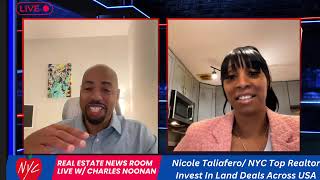
NYC Realtor Has 6 Streams of Income and will be a Millionaire. Nicole Taliafero and Charles Noonan
This Land Flipping Software changed my Real Estate Business, and you get it free.