The Renaissance of Innovation in Affiliate Marketing | Affiliate Program Management
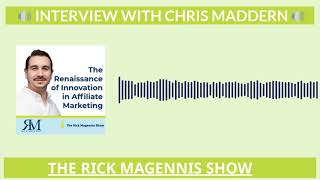
Podcast interview (host Rick McGinnis with guest Chris Maddern of Button) about modernizing affiliate marketing. Maddern explains Button's origin (mobile-first commerce), the need to bring data, personalization, and incrementality testing to affiliate, and how Button programs work (app onboarding, programmatic rate changes, personalized offers). He says Button has pursued this approach for about six years and primarily serves larger retailers and rewarded-shopping publishers.
Questions this video answers
March 22, 2021.
Button.
button@usebutton.com
HrismAddern M A D D E R (verbatim from transcript).
About six years.
Chapters
Foreign.
You are listening to the Rick McGinnis show podcast where Rick and his guests talk all things affiliate program management. No topics are off limits. Want to learn proven tips and strategies to grow an affiliate program? Look no further. Now here's your host, Rick McGinnis.
Welcome back to the Rick McGinnis Show. My name is Rick and today my guest is is Chris Maderne. He is from Button. Chris, welcome to the Rick McGinnis Show.
Thanks for having me, Rick. Excited to be here.
Oh, it's my pleasure. And I appreciate you coming on. It's always good to talk with industry entrepreneurs and to see what's going on in the industry and what the future holds. So I look forward to this conversation.
Me too.
All right, so give the audience just a little background of who Chris is, where he started, and how we ended up coming. Co founding Button.
Yeah, for sure. So I am not or have not historically been kind of from an affiliate background and so spent the beginning of my career in mostly consumer and fintech. I was at Venmo before founding Button and kind of accidentally found my way into affiliate. So Button was really founded on the belief that mobile was going to be a really, really important movement and direction in commerce, and that in doing so, it would be commerce and not ads that would be kind of the prevailing business model for that platform. And as we dug into it, what I realized is that the language of commerce, as opposed to ads, is affiliate. And it's kind of the oldest concept that exists. Like, I send you a sale, you give me some commission on that. And so got to go and kind of explore and learn and understand this industry from kind of an outsider's perspective and then think about the things that we think could be better about it and work with some of the new emerging sector of companies. Like our pretty much first customer was Uber, who's a pretty different type of affiliate customer than maybe typical retail brands. And so working with kind of anchor customers like that to try and make make affiliate do two things. One, work great on mobile and two, make it smarter. Make it an active marketing channel where you can think about it as marketing against lifetime value and not just kind of against a transaction. And we've been on this journey now for about six years. We've been fortunate to get a chance to work with some of the larger brands and many of the biggest kind of rewarded, incentivized shopping portals. So I think really start to make a difference in terms of making commerce a prevailing business model.
Yeah, absolutely. When people think of affiliate marketing, they think of like just your standard coupon sites or a piece of blog content. But more and more there's all these new technologies coming out that are making it so easy for brands to implement affiliate into their strategy that a lot of it's just no brainers and it's just only going to increase in the in the coming years. And affiliate today probably won't look the same in another five to 10 years. It's going to be probably majority is going to be tech driven. I would think.
Yeah, 100%. It was actually someone at the network. I won't credit them because I don't know if they would want to be credited. Said something to me that really resonated which is affiliate is the land that data forgot. And as most other forms of marketing became highly programmatic, highly measurable, affiliate somewhat lagged. And there definitely are tools and I think there are companies that are dedicated to this and do it reasonably well. But in terms of the general level of sophistication of a program, affiliate got left way behind. And I think over the next five years what we're going to see is not only it catch up but it overtake in terms of being able to truly understand the incrementality of programs, be able to understand the elasticity of scaling up those programs and being able to really market one to one in a personalized way and use it as a active acquisition and re engagement channel and not just kind of a cost on transactions. I think affiliate is going to be 5 to 10x the size it is in 5 years, 10 years than it is now.
We can only hope so. That would mean a lot of opportunities for everyone, more jobs.
More revenue for just growth in terms of these other capabilities. So brands can invest more into affiliate and less into the ones where they got to dump a ton of money up front and maybe they get a return, maybe they don't. So it's definitely going to be interesting to see, but I only see positive things coming of this in the future.
Yeah. Isn't it crazy that people prefer channels where you have to gamble on your return on ad spend? Where in affiliate return on ad spend is literally the input. You can decide up front how much you want on your return on ad spend and then the question is how do you scale that up elastically?
You're right though. Even since the pandemic started, I've seen brands that have taken budget and people away from affiliate and it's just mind boggling them why they would do that. You think that they would take away from other channels and invest more into affiliate just of the model and how it's set up. It's crazy.
It is. And I really see it as people take affiliate somewhat for granted. It's been around for a long time. It's been roughly the same proportion of most e comm businesses incoming users for a long time. It's run on largely the same cost basis for quite a long time. And my guess is companies think that they can pool the resources and still rely on the outcomes. But the truth is that it's a channel that now with the tools and technology that are becoming available, we should be over investing in increasing the investment. And I think taking budgets from places where frankly returns are questionable in a lot of search and a lot of the Google and Facebook stuff, you're looking at getting a cost to acquire a customer that's like 80%, 90% of lifetime value and you're having to wait months to years even to actually get upside on that customer. It is, as you said, crazy.
No, and it comes back to this is my opinion. I'm not saying it's fact, but affiliate is the first one that's scaled down or shut down because the education is not there and they don't know enough about affiliate to want to invest more in it. It's kind of like you don't know what you don't know. And that's how it's typically been in my opinion. I've seen if an affiliate program is not doing well, the first thing they do is shut it down instead of trying to figure out what they can do to fix it. Maybe hiring a consultant to come in and teach them or hiring someone that has affiliate experience. But it just. It's sad that it's usually the first one to go 100%.
I think a big part of that can also be down to the data and visibility that you have into the program. I think often the affiliate marketers lack the tools and the access to data to be able to say here's what's working, here's how it's working and here's how we can scale it up. One of the things that we work with many customers to do is to understand kind of both by doing in market and theoretically what would the program look like if you do certain things. So helping them to test huge numbers of different kind of commission rates across all of their customers to understand what the elasticity is on user behavior. Helping them understand true incrementality by performing actual scientific holdout tests where some users are exposed and some users aren't allowing them to do that on an audience basis. I think getting the data in the hands of the affiliate managers to go and support the growth of their channel, or in this case the continued existence of their channel is really, really important.
Yeah, No, I agree 100% with that. And you mentioned it previously and I've had this conversation on almost every single podcast. I've recorded the personalization aspect of it and bringing and not just having it be just an acquisition channel, making it personal to the customers and showing that they're actually cared about. And just explain a little bit about what you guys do have button to make that personalized approach and how it's worked so far.
Yeah, absolutely. So there are two types of personalization that I see in the industry and then I'll talk about the one that we're doing. One is personalization as a way of managing cost. And that's largely about understanding when a transaction happens who that customer is and being able to. What people typically like to do is say, okay, this is an existing customer. I'm going to pay a lower commission on this customer than if it were a new customer. And that can be good for managing cost, but it doesn't actually give you any ability to increase the scale of the channel. It just changes what you pay for a customer who is going to come either way. The other is display time personalization, which is when a user's on a publisher of some sort changing what they see or in the case of incentivize shopping the actual offer that they see in real time in order to influence their behavior. And that's where we focus our time and attention and help people to personalize those offers based on their understanding of the customer and our understanding of the customer, both on an interest basis, what they're more likely to want to engage with as well as a kind of customer value customer retargeting basis to be able to say, okay, Rick used to shop with us, hasn't bought in 90 days. It's worth increasing the rate to 8% to get Rick to kind of come back and re engage with us. And so using it as kind of a very active channel to re engage or engage the customers that you're most interested in. And that's where we play and then helping you understand how to do that more effectively. So I mentioned before helping you understand what your optimal rates are for different publishers and different customer segments by running very large numbers of these tests. And the kind of key that we bring to this is being able to do that programmatically and working with the publishers to be able to change those rates automatically. So one of the things that I think is both a strength and a weakness in affiliate is there's a lot of phone calls, there's a lot of emails, there's a lot of kind of like one on one coordination. And parts of that are important, the relationships are important. Other parts of it are just needless inefficiencies. So setting up the kinds of tests that we do where maybe you're running 25 different rates across 100 publishers or whatever it is, that's a whole lot of phone calls that no one wants to make. So making sure that we can run those things automatically across all of the places where the brand touches the customer without having to kind of send lists of users around and kind of all of that craziness that sometimes you see happening.
Yeah, it's funny you mentioned the phone calls every week. I'm just like, I'm like, oh my God, I have this many phone calls every day. I'm like, this is ridiculous. I'm like, there's gotta be a better way to this in Zoom. I've been on so many Zoom meetings and you know what the sad thing is? A lot of them are useless.
That would imply that some of them aren't.
Yeah, well, it's, it's because you know what, you know, the problem is what I found out, and I'm going off on a little tangent here about, about calls. People want to schedule like 30 minute phone calls or 45 minute phone calls. What they want to talk about can be done in 10 minutes and then you can move on to your day and get more done and everyone just caught up in the actual time frame of the phone calls versus actually being productive.
Yeah, it's, it's definitely a trap. I think, I think all of us are guilty of falling into sometimes. Like our goal is to take the parts that don't need humans to be doing them away and let humans focus on the growing and the scaling of the program, the launching of new partnerships, the strategic kind of aspect of it.
Say you partner up with a brand. Just walk me through the process of. We'll just take Walmart for example, because I saw you work with them. Walk me through the process of when you onboard them. Like how it works and what the customers may see and then how it all ends up in the final piece of it.
Yeah, absolutely. So we work with customers in a few different ways for a new brand. The first question is, are you coming to button for kind of full service. And there are some customers that we kind of do everything for. But increasingly a lot of customers already have an affiliate program set up. They have an affiliate network that they work with. And so Button really kind of sits alongside that and partners with their network and kind of bolts in as and gives them kind of a couple superpowers. The first is we switch their app on for affiliate. So we get their app set up, get kind of post install attribution working. One of the things that many of our customers have loved is by adding the app to their program, not only do they increase conversion, they also drive installs much more effectively, much more contextually that perform better and stick around than they can through typically their Facebook channel or wherever else they're driving installs. The other piece is starting to use Button's Evolution suite of products, actionable intelligence and personalized campaigns to start to change the rates that they're showing to customers. Inside of all of these incentivized shopping portals is typically the first thing that we see customers doing. They'll test out rates, get a readout of, hey, here's what your program would look like if you changed your rates to this level for this set of customers on this publisher. Here's what it would look like if you made this your default rate, but targeted this other set of customers with these other offers. And then from there, what typically happens is people start making some changes to the program so they'll set up some audiences, start targeting some groups of users with offers, and just start acting on some of those actionable intelligence outcomes.
Got it. Now, in terms of brands that you can work with, do you work with only larger companies or do you work with small brands? How does that work and what's the process look like for that?
Yeah, great question. We have historically really focused on larger companies for a number of reasons ranging from obviously, like in any industry, there's definitely a very big head and a very long tail. The other is simply with onboarding a customer and integrating into their app. We try and make it simple, but it is something that we work with customers to do. And so we're not at the stage yet where we can say, open to everybody, come sign up, you have 100 users, no problem. Cool, let's optimize this. A hundred users, we're not there yet. It's definitely my dream to be able to say it's completely self serve because I think one of the powerful things that personalization can do in affiliate is really level the playing field in terms of getting smaller brands access to the right customers. And so where, you know, maybe they don't want to do go do big ad buys or big takeover campaigns with their affiliate partners. They can target the right 10,000 users with rewards and kind of democratize access to customers. And so it's something that we're really excited about but not ready for today. So right now we're really focused on kind of mostly the largest thousand retailers.
In the US Understood. Because what I see a lot is with technology like yours, and there's another one that you're familiar with, Rev Lifter.
They work and she learns about it on your podcast.
Oh, there you go. So it's getting out there. Yeah, they're a good company. They do something slightly different than what you do. But in general the smaller brands are not yet able to work with companies like you, yours in Rev Lifter, just because there's a lot more cost associated with onboarding a smaller shop and then the traffic's not there and things like that. So eventually one day I'm sure that there's going to be something for everybody. But yeah, it's for the small clients that I like to try and bring them into the new technology, but it doesn't work out a lot of times because of their budget and their size. And it's fine. There's other ways you can work around it, but that's on my end to set expectations. But one day, right? I'm assuming one day we'll be there.
That's the dream. Like any good technology, I think once you figure out what kind of the secret sauce is and how it should all work, then you can start going down the process of, okay, how do we make this super accessible for everybody and build the self serve onboarding tools and things like that?
Yeah, no, absolutely. It's only a matter of time. It's baby steps. The industry for its age is relatively young and it's growing every single year. And I wanted to talk to you about, go back to when you first, you said you accidentally stumbled into affiliate. Were you not interested in affiliate or you just didn't know about affiliate and did it have a bad reputation in your, in your mind? Just take me back there because I want to understand a little bit more about your background with affiliate. And like you said, you fell into it. And that's what I hear. A lot of times people when I talk to them, they just accidentally found it and it seems like that was your position too.
Yeah, I think it was mostly a case of not really knowing about it. I think I'd Definitely been exposed to the Amazon affiliate program and knew that there was some way of maybe getting paid for driving sales. And I think we'd all seen some of the less savory side of the industry. Like I wonder why I'm seeing all of these apps for acai berries, Are they making money on these things? So had kind of some anecdotal knowledge of kind of the less appealing sides of the industry. But honestly, it's one of those stupid moments where early on in Button I was like, well, what if when they send a user who shops, we give the person who referred the customer some kind of reward for that? What an interesting idea. And then, you know, everyone's like, Chris, you're talking about affiliate. What are you doing, buddy? And so then, you know, opened my eyes to this whole industry out there and started learning what was going well and what was going less well. And then really, this was six years ago, there really was nothing in mobile. It was the fastest growing channel. Increasingly the main focus for brands or a big focus for brands was growing their mobile footprint, their mobile performance, ecommerce. And there just simply wasn't anything that was really solving that problem or at least solving it well. And so we dug in pretty deep there and started looking at like, what would it mean to try and make this problem go away. And that was when we started learning about kind of some of the other problems like the lack of personalization, the lack of the ability to run holdout tests and incrementality, understanding and elasticity. And you know, where it was happening, just how much manual work was going into doing that, phone calls or list sharing and campaign setup and all of that stuff, that was really where we planted our flag in. And then looking at the publisher side, it's a big industry, but it's a big industry that's dominated by a relatively small number of publishers that have a lot of traffic and send a lot of the affiliate traffic to brands. And so we're interested in how we kind of widen that top of funnel as well to create more, to create essentially a better business for many of the smaller folks on the publisher side. Again, we work mostly with large ish companies, but the truth is once you get past the top five or six affiliate portals, they're definitely a lot smaller, but I think can build really awesome businesses when you get to be able to personalize.
I couldn't agree more. I saw the post. You guys have integrated with Rakuten. Can you explain a little bit what's going on there?
Yeah, actually I'm not necessarily fully up to date on exactly what's going on with Rakuten but we're various stages with most of the major folks on the rewarded shopping side, on the publisher side and ultimately we just want to make it a lot easier to do the types of campaigns that they run. So whether that's just rate increase campaigns, segmented audience campaigns, testing on rates and the other funny thing is something that we've gone through probably a thousand times now and you've probably gone through it too and most people listening have trying to prove the incrementality of these channels. I think I've run or been involved in running a thousand of them now. We've actually basically never had one that didn't come back with the same results. Yes, this is very incremental and ultimately it comes down to at what price and it's just pricing the traffic. So a lot of the work that we do is around helping them to help their brand customers choose the right rates, helping them to prove the incrementality of their own traffic and then just running more successful campaigns.
Yeah, incrementality has been one of the hot issues in the past few years. It's crazy because I have worked with some brands where they don't pay at all for an existing customer and they only want new customers that are and affiliates, they only want affiliates that are going to be driving incremental value. And so it's really kind of short sighted in a way, but it's one of those things where as the industry evolves and the technology evolves, we're going to be seeing different ways that it can be done in a lot easier and in five years we'll be talking about a different issue.
Yeah, this is one of my favorite topics actually. It's a little bit of a pet peeve, but I understand it. So that same company that doesn't want to pay an existing user rate is running a retargeting ad for that customer that left the site and then went back to search or is on social or whatever it is. The only reason I can come up with and we suddenly see this behavior change is by lacking that sophistication and lacking the data and visibility to be able to understand the user journey and the impact on overall lifetime value and engagement of that customer. That's what's shaping that behavior. And so by giving the tools to let them do that, that can change because it's the rules are just very different in kind of two teams within the same department. The retargeting and the affiliate folks.
Yeah. No, you're absolutely right. And.
That'S one of the reasons why affiliate gets a bad reputation once in a while is just for things like that, where publishers don't want to deal with brands that aren't going to pay them for certain things. And people think it's like snake oil. And that's one of the things that I'm trying to preach to brands when I'm. When I'm consulting with them and helping them grow their affiliate program is that you don't want to aggravate the affiliates or publishers because they're, they're the lifeblood of the program. And you may have to get creative with them and it may be different than what you're used to, but you're gonna have to start doing it and you're gonna have to start just evolving with how it's going. Because a lot of affiliates nowadays are turning into like little micro influencers. They want a fee up front, then they'll promote the product and still get commission. So there's an evolution there as well. And I don't know how that's going to play into your space. Are you looking into getting into the influencer space at all with this?
We work with some folks who work with influencers kind of to our serving hundreds to thousands of customers, not serving millions of customers. You get to a very large number of customers as soon as you start talking directly to influencers. Really excited by what reward style are doing. We work a lot with those guys on the technology side and so we typically work through partners in the influencer space.
Got it. Okay, perfect. And then I'm assuming that that's going to be a growth point. Right? You're going to be hitting on that to try and grow that in the future.
Yeah, we're definitely seeing growth in those customers and in that segment. For us, it's about working with the right people to unlock those opportunities and helping them to grow their businesses and just kind of seeing the growth on our side. The interesting thing is, at least from our side, what they've been looking for hasn't been terribly different than what other folks in the industry are looking for, which is better measurement, better understanding of incrementality for brands, and then a better understanding of the actual products themselves. So at the core of affiliate is the products that are being sold and promoted and so giving those publishers a better understanding of the products that are available, how to link to them, that kind of stuff.
Got it. So, no, this was phenomenal. I appreciate you dropping your knowledge about just affiliate in general, where you see it going and how your technology is going to be shaping the future of it. Before we get going, this is the first time I'm doing this with the guests. No, no, it's not bad. I wanted to know if you're a book reader, what, what are your favorite books? And because I'm big into reading and learning more. So if you have any books that you that have helped shape who you are today, I'd love to hear about them.
Oh wow. The stakes just went up. Helped shape who I am today. So I don't know about shaped who I am today, but I do have a couple. So I can't read fiction, so pretty much everything I read is nonfiction. And recently I got kind of bitten with interest in behavioral economics and so started with Misbehaving by Richard Thaler. Really, really interesting book about kind of how the original form of economics was not a very good way of modeling real humans. And then got kind of pulled down that rabbit hole into choice architecture and how the way that we present people with choices really makes a really big impact on the choices they end up making and how that rolls into product design. And so that's been something that's been playing on my head in every decision that we make at Button, kind of in the product and in our interactions with customers. And then most recently reading Talking with Strangers by Malcolm Gladwell. I've enjoyed pretty much everything Malcolm Gladwell's done. A really interesting take on just why we are the way we are and some of the trade offs like evolutionarily speaking in terms of why we're so good at some things and so bad at others. I definitely strongly recommend it.
It's interesting. I never even thought of something about choice architecture and how we make choices. I never even thought about that. But it seems like a really interesting topic.
It truly, truly is fascinating. It's one of few books that I found hard to put down and some of the examples, it's a field that's been evolving over the last 20 or 30 years and many of the examples play out at the nation state level. So like how do you get a population to do a better job at saving for retirement? How do you help people invest in their own education? Things like that that have like really big consequences. But then you know how you get users to opt into individual features, you kind of, it's the whole gamut.
No, I'm gonna definitely have to pick that book up because that just a topic just intrigued me and I'm gonna have to dig into it a little more and maybe one day we can. We can have a discussion when I'm a little more educated about it.
Your book club, I like it.
Yeah.
What's. What's on the list right now?
No, it's funny. I'm in. It's a Richard Branson little book club I'm doing. It's like reading with Richard Branson. And I'm reading Mandela's Way right now about Nelson Mandela.
Oh, awesome. Interesting. That's cool.
So, yeah, he's a fascinating guy. It's really interesting how he was so cool, calm and collected and hell is breaking loose around him. But he would always stay so calm and was such a great leader. It's a good book. I'm not fully done with it yet, but it's definitely intrigued me. And then I'm reading a book by Grant Cardone, the 10x rule.
Say I'm not familiar.
Yeah, so it's just. Basically, you want to just increase your. Make your life better and make your business better, and you got to just 10x everything, 10x your. Your goals, 10x your. Your effort, 10x everything. Just because your competition is out there. And you're not gonna beat him unless you really put the pedal to the metal. And it's. He pushes a lot of, like, financial and money pieces of it. And I'm not big into, like, being a billionaire and things like that, but the points are there and it's the ways that you gotta really put the effort in and you'll be rewarded with whatever you want, whether it be money or cars or whatever it is you want.
That's awesome. Yeah, it's interesting concept and it's definitely true. You gotta set big goals to get there. We definitely tried to do that. We looked at where the industry was and we're like, we're going to try and make this whole thing dynamic and personalized. And a lot of people along the way have been like, we're not ready for that. We don't want that. And, you know, gradually are getting there with folks.
Well, and that's the thing. There's resistance and people don't like change. And the way it's going now works fine. Why do we have to change it? But change is good. Change will make things better. And you just got to be. You got to be able to just adapt and move forward, because if you can't, you're unfortunately going to be left behind and it's not going to be good.
Yeah. And I think there's a real early mover advantage here in being able to quickly expand into the new volume that's available by taking advantage.
Yeah, no, I couldn't agree more. Chris, it was an absolute pleasure having you on today. Is there a way that the audience, if they want to learn more about you, where they can do that?
Yeah. So you can learn more about button@usebutton.com and if you want to connect with me, best way is probably Twitter. HrismAddern M A D D E R.
N thanks Chris so much. I appreciate it. And maybe one day we'll start out with a book club and talk about a few books we've read.
I look forward to it. Thanks for having me. Rick, this is great.
How you been?
We want to hear what you thought about this episode. You can email rick directly@rickarkatmedia.com or leave a review where you listen to podcasts. Don't forget to subscribe because new episodes will be released every Wednesday. Thank you for listening to the Rick McGinnis show podcast. Never miss an episode by subscribing to the podcast in itunes, Google Play, and wherever podcasts are available. To learn more about rick, go to bearcatmedia.com.
More from Chris
Ship or Die Accelerate 2025: Why Everyone Should Refocus on Mobile (Chris Maddern, Johann Kerbrat)
Breakpoint 2024: Product Keynote: Rally: Your Social Wallet (Chris Maddern, Christine Hall)
Digitized | Spotlight Ep. 1: Floor - The NFT Everything App w/ Chris Maddern and Christine Hall
How We Can Build Products that are Designed for the Next Billion Users - Talk at NFT.NYC 2022