Colin Brown shows how to narrow 38,134 associations down to a workable target. Filter by geography, membership size, and scope: California has 2,800 associations, those with 5,000-10,000 members drop to 528, national ones to 413. Skip the mass email blast. Pick a small niche, build relationships, then expand.
Chapters
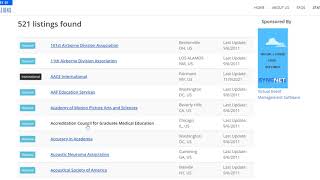
In this short video, we're going to go over market segmentation and how do you segment a market. And one of the best ways to demonstrate this is by going to this particular site, Directory of Associations. So let's assume that your target market is associations. Now that is a large target audience. As you can see, there's over 35,000. To get specifics, there are actually 38,134 in this particular database. So with that information, we can go ahead and we can— there's a bunch of ways we could segment this, because if you were to just send out an email blast to 38,000 associations, you're probably not going to find a lot of success. But by drilling down a little deeper, you can find little segments of the target audience in this population that will definitely get you some success. So you can segment it by, for example, by state. So you could say, so in other words, you, you would change your target market. It might, your entire target market might be all associations. However, you need to segment that first because, for example, in California alone, there are 2,800 associations. Now, these are varying sizes, so the best way to, to actually look at this is to probably— and that the way I would probably recommend it in this particular case would be do it by size. There's a bunch of things you can assume simply by the size of the association's audience. If they have less than 500, they're probably a little less stable, don't have a lot of revenue. That's not necessarily the case in every case, but as a general rule, you can assume that. Those that are slightly larger— these that are super large are going to be tough to get into. They're going to be well established, they're going to be, you know, 100 years old. And so maybe the target market would— probably the best growth, even these are large organizations, these large associations, would probably be in these ranges right here. These are the ones that are growing, and they have enough of a membership base that they're going to be stable enough, and they have revenue, so they also have a budget. So that is one way to segment. Now let's just take a look. You can see that if we just do a search on between 500, there's 521. So we have a much smaller segment, but now we can also be much more focused because doing just an email blast is probably not going to be necessarily successful simply because they don't know who we are. This is a cold email to a cold audience, and the likelihood of you being successful in, you know, using cold email is just not there unless you just have some amazing offer. But I You have to develop a relationship with these people. And so, you know, this getting this market segment down to 528, now you could put somebody actually on the phone to call each of these associations and start to develop a relationship with them. So that's an example of segmenting the population so that you actually are— now you can say that at least at this particular time, you might be targeting the entire population of associations, but right now you're focusing specifically on associations associations with a membership base of 5,000 to 10,000. And that is going to be helpful. You can also segment it down further by, let's say you only want to go after national associations that have this membership size. That's going to narrow it down a little bit further. So now there's only 413. And of course, if they serve a national market, base, their membership base is national, then you're going to have, obviously they're going to be a little more stable as well. Those that, let's say you target state associations in this range, there's probably not going to be a lot of them because state associations, that's usually a state chapter or a subchapter of the national association. They, there's only 87, but they're typically smaller. So there's that, the The fact that there's even 87, I'm actually surprised. [LAUGHTER] But in any case, that is how you can segment a market and drill down to a specific, very niche section or segmentation of that market. Once again, once you hit all of those, that smaller segment, and you find success in that segment of the market, then you can expand your reach and go to, you know, basically the entire population. But it's always good to start out by segmenting the population so that you can really target your marketing specifically to that audience. You'll find much more success doing that.