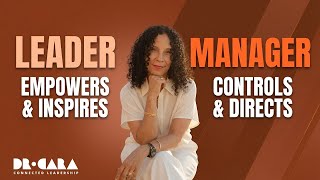
Dr. Cara explains why you're unhappy at work: you're probably wired for one path but pursuing the other. Managers solve problems through systems and processes; leaders through people and purpose. She walks through a 4-step exercise to figure out which one fits you, then build a career around it instead of against it.
Chapters
In my years working with numerous leaders across diverse organizations, I've witnessed a pattern that derails promising careers. People pursue leadership roles when they actually want management positions or seek management opportunities when they're wired for leadership. The confusion between these two distinct paths has caused more professional frustration and organizational dysfunction than perhaps any other factor that I've observed over the past two episodes. We've explored the mindset shift to impact focused thinking and the five behaviors that signal leadership potential. But before you continue developing these capabilities, there is a crucial question that you need to answer. Are you really pursuing the right path for your strengths and interests? Here's an example of what typically happens. Maya excels as a financial analyst and dreams of moving into a leadership role. She envisions having more influence, making bigger decisions decisions, and advancing her career. When a team supervisor role opens up, she applies immediately, thinking this is her path to leadership. Six months later, Maya is drowning in schedules, budget tracking, performance reviews, and process documentation. She spends her days ensuring compliance, managing workflows, and solving operational problems. Yet the worst part wasn't the work itself. It was the growing sense of dread that she felt each morning knowing she was in expertly climbing a ladder that was leaned against the wrong wall. Maya got exactly what she asked for, but it wasn't what she actually wanted. I'm Dr. Cara. Today we're going to clarify the fundamental differences between leading and managing, help you identify which path aligns with your natural strengths and career aspirations, and show you how to pursue the right opportunities for your unique wiring. Foreign. The core distinction becomes crystal clear when we examine how two different approaches address the same organizational challenge. Here's the situation. A department is consistently missing project deadlines, team morale is declining, and the quality issues are increasing. The Manager's Approach David steps in and immediately begins analyzing processes. He creates detailed project timelines, implements daily check in meetings, and establishes quality control checkpoints. He then develops performance metrics for each team member. His focus centers on workflow optimization, resource allocation, and ensuring everyone follows established procedures. Within three months, deadlines are being met, quality has improved, and processes are running smoothly. The Leader's Approach Lisa applies what I call the connected leadership approach. First, she knows her worth, understanding that her value lies not in having all the answers but in her ability to unlock potential in others. She embodies grace by approaching the team's struggle with curiosity rather than judgment. Most importantly, Lisa conquers control by using the Receive, Perceive, Respond framework. She receives the full picture by having genuine conversations with team members. She perceives that people feel disconnected from purpose and frustrated by the lack of growth opportunities. She then responds by working with the team to reconnect their daily tasks to meaningful outcomes, creating development pathways and establishing shared vision. Within three months, not only are deadlines being met, but the team is proactively identifying improvements and taking ownership of the outcome. Both approaches succeed, yet the fundamental difference is profound. David managed the situation. He focused on systems, processes and compliance to achieve desired outcomes. Lisa led the people. She focused on purpose, development and engagement to unlock human potential. This reveals the fundamental difference in their wiring. David is a brilliant architect. His genius is in designing the blueprint, ensuring the structure is sound, and building the system to perfection. Lisa is a masterful gardener. Her genius isn't in building the plant, but it is in cultivating the environment, the soil, the light, the water, so the team can grow and flourish on its own. Organizations need both. But you must know which one you are. This distinction transcends mere techniques. It reveals what energizes you and where you naturally excel. The management wired individual thrives on creating systems that function with precision. They derive satisfaction from seeing processes run smoothly and get problem solved systematically. The leadership wired individual flourishes when inspiring people towards shared goals. They find fulfillment in witnessing people grow and overcome challenges. Your own work experiences reveal your natural inclination self. Ask yourself this When a system breaks, where is your first thrill? Is it in fixing the machine or in calming the people? What sounds more deeply satisfying? A perfectly executed project plan with zero deviations or a messy, innovative breakthrough achieved by passionate growing team members? What drains your energy more? Dealing with unpredictable human emotions or dealing with inefficient, broken processes? Connected leadership applies regardless of your wiring. Knowing your worth means recognizing your unique value. Embodying grace means accepting your natural inclinations. Conquering control means using the Receive, perceive, respond method to make intentional choices about your career path. Understanding your natural wiring has profound implications. The management track requires strong analytical and organizational capabilities with a focus on efficiency and quality control. The leadership track requires strong interpersonal and visionary capabilities with a focus on strategic direction and innovation. Neither path is superior, but pursuing the wrong one leads to burnout at senior levels. Most effective executives integrate both. An executive must know their worth by recognizing their primary strengths. They embody grace by accepting their natural wiring while committing to growth. They conquer control by using receive, Perceive respond to build competency or to build a complementary team. Self awareness is the key to pursuing roles that energize you and building teams that address your growth areas. To gain clarity, use this intentional self assessment. Step 1 Energy assessment. For one week, receive your energy levels without any judgment. Perceive the patterns of what energizes you versus drains you and respond by documenting these observations. Step 2 Strength Inventory Know your worth by honestly assessing where you excel. Do people seek your help with operational problems or interpersonal challenges? Step 3 Future Vision Alignment Embody grace and connect your wiring to your career aspirations. When you envision a senior role, what activities fill your ideal day? Step 4 Development planning conquer control by focusing your energy. If you're management wired, focus on operational excellence. If you're leadership wired, focus on vision and influence skills. The turning point in your career is understanding that management and leadership are both valuable but distinct paths. Success comes from excelling in your natural wiring while developing competency in complementary areas. Here's your challenge for the week. Complete the Path Clarity Exercise Pay particular attention to what energizes you and what drains you in your current role. This awareness will guide every career decision you make moving forward. Now that you know which path you're on, the next question is how do you start walking it, especially when you have no formal authority? In our next episode, we're going to uncover the most overlooked strategy for gaining genuine influence, regardless of your job title, and it has nothing to do with asking for permission. Which path resonates more with your natural wiring, management or leadership? Share in the comments what you've discovered about yourself through today's examples, and if you know someone who might be on the wrong path, share this episode with them. It could save them years of frustration.