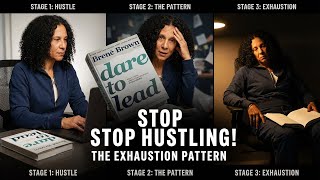
A first-person talk by Dr. Kara describing her realization—prompted by reading Brené Brown—of ‘hustling for worthiness’: a pattern where leaders over-explain, overwork, and seek excessive validation to prove they belong. She contrasts proving worth (exhausting, undermining authority) with recognizing inherent worth, explains how she now uses the ‘eerie, exhausted’ sensation as an early warning signal, and frames worth-knowing as a pillar of her connected leadership approach. The piece is reflective, prescriptive, and invites audience discussion.
Chapters
I was sitting in my favorite reading chair, going through Brene Brown's dare to leave, when three words hit me like a physical blow to my forehead. Hustling for worthiness. I actually had to put the book down because I felt something shift in my body. This eerie, exhausted feeling I had been carrying for years suddenly had a name. And in that moment, I realized I'd been missing something fundamental about my own work throughout my entire leadership career. Today, I'm sharing the internal shift that changed everything about how I show up as a leader and why recognizing this pattern might be the most important leadership skill you never learned. I'm Dr. Kara, and if you watched the last episode, you know that I'm someone who transformed from a control obsessed leader to what I call a connected leader. What I didn't tell you is the internal battle that made the transformation necessary. You see, I've always believed in personal growth, spiritual grounding, individual development. The whole journey, I have been working hard to dismantle this belief that other people's opinions validate who I am and determine my worth. Somehow, in my leadership, I was doing exactly that. I was hustling for worthiness in ways I didn't even realize until Brene Brown gave me the language for it. Here's why this matters. You can have all the leadership techniques in the world, but if you're secretly trying to prove your worth through your leadership, you'll exhaust yourself and alienate the people you're trying to serve. Let me paint you a picture of what hustling for worthiness looked like in my leadership and see if you recognize yourself in this story. I'm in a leadership meeting, presenting a decision I know is right. I have the expertise, I have the knowledge. I have done the analysis. But instead of presenting my recommendation, I start over, explaining. Well, I thought about this approach and then I considered that option. And then I talked to five different people, and here's what person A said and what person B suggested. And I know some of you might think this, but actually. Sound familiar? I was seeking so many opinions that I was diluting my own expertise. I was explaining myself to death because somewhere deep down, I was trying to prove that I. I deserve to be in that room. And here's the one thing I learned to recognize. There's a feeling that comes with this. For me, it's an eerie, exhausted sensation, like I'm working twice as hard to justify decisions I already know are correct. This showed up everywhere, taking on too much work to prove my value, staying late to perfect presentations that were Already good enough. Asking for input I didn't need because I was afraid of looking like I couldn't handle it alone. The crazy part, the more I did, the less confident I appear to others. I was working hard to prove my worth, but I was actually undermining my own authority. What I didn't realize was happening every time I hustled for worthiness, I wasn't just exhausting myself, I was sending a message to my team. When you over explain your decisions, you're actually telling people you don't trust your own judgment. When you seek excessive input, you're modeling that your expertise isn't enough. When you work twice as hard to prove that you belong, you're creating a culture where everyone has to prove that they belong. I was modeling the very behavior I didn't want to see in my team. I was teaching them that their worth was tied to their performance, that they needed to justify their presence. That being good at your job wasn't enough. You had to be perfect at proving you were good at your job. The most devastating part, I was doing this while teaching connected leadership. I was helping other leaders recognize their inherent worth while I was learning to recognize my own. That's what made Brene Brown's words hit so hard. I realized I'd been so focused on proving I belonged that I had forgotten to simply trust that I did. So there I was, booking my lap, feeling that phrase hustling for worthiness verbatim through my entire nervous system. And I made a decision that changed everything. I decided to pay attention to that feeling, that eerie exhausted sensation I get when I start over explaining myself instead of pushing through it, I would recognize it as data. Now when I feel that familiar exhaustion creeping in during a conversation, I literally pause and ask myself, am I explaining because they need to understand or am I explaining because I need to prove something? There's a huge difference between breaking things down to help people learn, which I love doing, and over explaining to prove I deserve to be heard. One comes from service and the other comes from insecurity. I started carrying my decisions with quiet confidence. When I know something is right, I present clearly once and trust my expertise. When I need input, I ask specific people questions rather than seeking validation from everyone. And you know what? That eerie feeling became my early warning system. The moment I feel it, I know I'm starting to hustle for worthiness and I can course correct real time. I know some of you are thinking, but Dr. Cara, don't we need to explain our decisions. Isn't it good leadership to seek input? Absolutely. But there's a world of difference between explaining to serve others and explaining to serve your ego. There's a difference between seeking input to make better decisions and seeking opinions to validate your worth. Here's what I've learned. The leaders who feel the most need to prove their worth are often the ones who deserve to be there the most. We hustle for worthiness precisely because we care so deeply about doing good work. But here's my question for you. How much of your leadership energy goes into proving you belong instead of simply belonging? How much time do you spend justifying your decisions instead of confidently proving making them? I want you to start noticing your own version of that eerie feeling. Maybe it's tension in your shoulders when you're over preparing. Maybe it's that anxious energy when you ask for the fifth opinion on something you already know. Because here's the truth that might make you uncomfortable. Your worth as a leader isn't something that you earn through perfect performance. It's something that you recognize and then live from. This is why recognizing your inherent value is the first pillar of my framework for connected leadership. You can't authentically connect with others while you're secretly trying to prove yourself to them. When I stopped hustling for my worthiness, my entire leadership presence changed. Receive. I could actually hear input without filtering it through. What does it say about me? Perceive. I could assess situations based on what was needed, not what would make me look good. Respond. I could make decisions from wisdom rather than insecurity. Here's something important. This is still a work in progress for me. I catch myself slipping into old patterns, and I probably will for the rest of my life. I don't think leadership is something you figure out once and then you're done. I think it's something you continue to grow into day by day, decision by decision. The difference is now I have that early warning system. Now I can recognize when I'm hustling for worthiness and choose to leading from worth knowing instead. This internal shift from worth proving to worth knowing changed everything about how I show up as a leader. And it's probably most important work any of us can do. Next week, I'm sharing the moment. I discovered my real job as a leader isn't to have all the answers. It's to help people do their jobs better. We're diving into how I refined my leadership itself and why. I believe your job is to make everyone else's job easier. Right now I want to hear from you. What is your version of hustling for worthiness look like? Maybe it's overworking, over preparing, over explaining like I was. Or perhaps it's pleasing people. Or perfectionism. Drop a comment and describe that feeling you get when you're trying to prove rather than simply be. I promise you're not alone in this, and recognizing it is the first step to freedom. Here's what I want you to know about who I am. I'm someone who's learned that your worth as a leader isn't earned through performance. It's recognized through presence. And that changes everything.