When Your Strengths Become Your Blind Spot: The Cost of Leading Behind a Facade
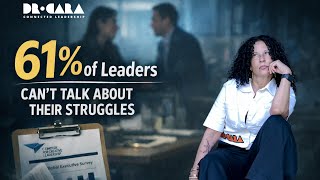
Dr. Cara explains how leadership strengths like resilience and decisiveness can become a facade that isolates you and exhausts you. The fix: strategic vulnerability and letting your team see the real version of you.
Questions this video answers
61% of executives reported feeling unable to discuss their leadership challenges openly with colleagues; 43% said they had no one to confide in about work-related stress.
Leaders who engage in surface acting experience significantly higher rates of emotional exhaustion and burnout compared to non-leadership employees.
Leaders with high isolation showed measurable declines in decision making quality and team performance, termed 'leadership impairment.'
Leaders spend an average of 2.3 hours per week managing their online professional presence; 68% reported anxiety about how their posts might be perceived.
73% of executives admitted their LinkedIn presence bore little resemblance to their actual day-to-day leadership experience (termed 'identity dissonance').
Chapters
What if I told you that the very qualities that made you an exceptional leader are the same ones destroying your ability to actually lead? It's not a flaw in your character. It's not a gap in your skill set. It's something far more insidious. The traits that elevated you to leadership, your resilience, your decisiveness, your ability to project confidence under pressure, these same traits are creating an invisible cage, one that's keeping you isolated, exhausted, and ironically, less effective than you've ever been. Today we're unpacking what I call the leader's burden. The immense psychological weight that leaders carry in silence, and why the very act of carrying it is undermining everything you're trying to build. And here's the uncomfortable truth that we need to start with. If you're in a leadership position and you feel like you can't talk about your struggles, your doubts, your moments of uncertainty, you're not alone, but you are trapped. By the end of this video, you'll understand why opening up isn't a weakness. It's a strategic necessity. And more importantly, you'll see how the burden of invincibility is costing you. The very thing leadership requires, authentic connection. This one's going to challenge everything you think you know about strong leadership. So stay with me. Let me take you to a moment that still makes my stomach tighten when I think about was 11:13pm on a Tuesday. And I remember the exact time because I just got off the phone with my sister. She's on the west coast and I'm on the east coast. This was one of those rare conversations, but we actually caught up beyond surface level updates. I was feeling good, connected and ready to wind down. And then my phone lit up with an email notification. It was from a senior stakeholder subject line. New deliverable need by 10am tomorrow. My heart immediately started racing. I opened it needed. And it was a complex request that would require at least four hours of focused work. Work I hadn't planned for. Work that would mean no sleep if I wanted it done well. But here's what made this worse. The email tone was casual. Like this was a reasonable ask, like, of course a leader should be able to turn this around overnight. Like my time, my rest, my boundaries were just flexible resources to be deployed whenever needed. My first instinct, to call my sister back, to tell her what had just happened, to process the frustration, the unfairness, the sheer exhaustion of it all. But I didn't. I thought, she already worries about how hard I work. She's told me a dozen times I need better boundaries. If I tell her about this, she'll just worry more. Or even worse, she'll think I can't handle this role. I couldn't tell my leadership team the next morning. They needed to see me as someone who handled anything that was thrown at them. I couldn't tell my mentor I'd disappoint them by showing them that I was struggling with something that they could probably handle effortlessly. And I couldn't even admit to myself that in that moment this was not normal, it wasn't sustainable, and it wasn't okay. So instead I sat there at 11:13pm staring at my laptop screen and did what most leaders do in these moments. I carried it alone. I opened my computer, I made coffee and I worked until 3:30am in the morning. I delivered the work by 10am with a professional email that made it seem effortless. And I never mentioned to anyone how I felt that night. Not the anxiety that kept me wired even after I'd finished the work. Not the resentment I felt toward a system that normalized this kind of demand. Not the deep exhaustion, not just the physical but emotional, of maintaining the image that I had it all under control. And here's what I didn't understand then, but I understand viscerally now. That moment, that choice to carry the burden alone, to protect everyone else from my struggle, to prove that I could handle it. It wasn't a strength. It was the beginning of the most dangerous pattern in leadership, the facade of fortitude. The facade of fortitude is the toxic belief that true leaders don't struggle, don't have limits, don't need support. That opening up about the cost of leadership is weakness. That vulnerability is incompatible with authority and it's killing us. Not metaphorically, literally. Let's talk about what this burden actually costs. A 2017 meta analysis published in the Journal of Occupational Health Psychology examined the impact of what they call surface acting. That's the technical team for maintaining an emotional facade that's inconsistent with your actual feelings. What they found was striking leaders who engage in this type of emotional performance experience significantly higher rates of emotional exhaustion and burnout compared to employees in non leadership roles. The burden of performance itself becomes a unique stressor. But it gets worse. The center for Creative Leadership's 2022 survey of over 1500 senior leaders globally found that 61% of executives report feeling unable to discuss their leadership challenges openly with colleagues and 43% said they had no one that they could confide in about work related stress. Think about that. Nearly half of senior Leaders are carrying their burden in complete isolation. Another study from 2024 was published in the Leadership Quarterly and it tracked executive leaders over multiple years. Researchers found that leaders experiencing what they termed high isolation, the inability to share struggles, showed measurable declines in decision making, quality and team performance. The research term for this is leadership impairment. That's not burnout that we're talking about. That's your actual effectiveness as a leader deteriorating because you're carrying the weight alone. Here's what the research doesn't fully capture. What I've seen working with leaders across healthcare, global organizations, corporate and technology sectors. The real cost isn't just to you, it's to everyone. You lead. When you can't be vulnerable, your team can't either. When you maintain the facade, they like learn to perform rather than to connect. When you carry burdens in isolation, you teach them that psychological safety is a myth. So the very thing that you're doing to be a strong leader, hiding your struggles, projecting your invincibility, carrying everything alone, is creating the exact culture that undermines everything that you're trying to build. So how do we end up here? How do high performing, intelligent, capable leaders get trapped in this pattern? It starts with what I call the internal narratives, the stories we tell ourselves about what leadership requires. These narratives usually develop long before we step into formal leadership roles. They're shaped by early experiences, cultural messaging, and often by the very journey that made us successful. The first narrative. If I show a weakness, I'll lose their respect. I cannot tell you how many leaders have seen sat across from me and said some version of this. Dr. Cara, if I admit I'm struggling, my team will lose confidence in me. They need to believe that I have it all together. But here's what's actually happening. Your team already knows you're struggling. They can feel it. What they don't know is whether it's safe to acknowledge struggle exists. They know they're waiting for your permission. When you pretend everything's fine, while they can sense it, you don't preserve respect. You create distrust. The second narrative. My worth is tied to my ability to solve everything. This one nearly destroyed me because here's the truth. I became a leader partly because I was good at solving problems. That skill got rewarded, I got promoted. It became my identity. So what happens when I face a problem I can't solve? Or uncertainty that I can't eliminate? Or a challenge that requires collective wisdom rather than individual brilliance? If my worth is tied to solving everything, then admitting I can't becomes an existential threat not just to my position, but to my sense of self. The third narrative, and this is the one that keeps most leaders up at night. If I open up, they'll see I'm not qualified for this role. Imposter syndrome in leadership is real and is amplified by the burden of fortitude. Because you can never test whether your fears are true. You can't say, I'm terrified, I'm in over my head, and see that people respond with support rather than judgment. You can't share your doubts and discover that vulnerability actually builds rather than destroys credibility. So you stay trapped in the cycle. The facade protects you from a rejection that you've never actually experienced, while simultaneously guaranteeing the isolation you're desperately trying to avoid. But it's not just internal. The facade of fortitude is reinforced by massive external pressures. Our cultural narrative about leadership is toxic. We celebrate leaders who never break, who stay strong under pressure, who make tough calls without flinching. Think about it. The language we use. We don't talk about leaders who are vulnerable. We talk about leaders who are strong. We don't value emotional honesty. We value grace under pressure. We don't reward connection. We reward results. Driven performance. Stoic, decisive, unshakable, invincible. These aren't just words. They're values. And they create an impossible standard. Let me give you a concrete example. When a CEO has a mental health struggle and takes time off, what's the immediate market response? Stock price drops? Bored questions arise. Whispers about leadership stability circulate. The message is clear. Your humanity is a liability. Your struggles are stakeholder risk. Your mental health is a weakness to be hidden, not a reality to be addressed. And this isn't just a C suite level issue. This pressure exists at every leadership tier. Mid level managers feel they can't show struggle because they're competing for promotions. Team leaders feel they can't be vulnerable because they're still proving themselves. Even senior executives feel trapped because they're expected to model invincibility for everyone below them. It's a system that punishes honesty and rewards performance. And social media has made it exponentially worse. Let's talk about the elephant in the room. Social media and constant connectivity have turned leadership into a 24. 7 performance. A study from the American Psychological association surveyed professionals in leadership positions, and they found they spend an average of 2.3 hours a week managing their online professional presence. Here's the revealing part. 68% reported anxiety about how their posts might be perceived by colleagues, supervisors or competitors. We're not just managing our leadership. We're managing the performance of our leadership 30 years ago, a leader's struggle will remain relatively private. Today. Everything is documented, screenshotted and potentially viral. Research published in Harvard business review in 2022 examined what they called curated authenticity on professional platforms. It was found that 73% of executives admitted their LinkedIn presence bore little resemblance to their actual day to day leadership experience. They termed this as identity dissonance, a measurable gap between public personal Persona and private reality. I've worked with leaders who are terrified to post Anything authentic on LinkedIn because it might be seen as unprofessional, who won't share challenges because competitors might perceive weakness, who maintain perfectly curated personal brands that have nothing to do with their actual experience. Here's the insidious part. This performance becomes so habitual that eventually you lose touch with your own reality. You perform confidence so consistently that you can't access your actual feelings. You project certainty so automatically that you lose your ability to acknowledge your genuine doubts. You maintain the facade so thoroughly that you forget there's a person underneath it. I remember a moment about six months into maintaining my own facade where someone asked me in a casual conversation, how are you really doing? And I couldn't answer it. Not because I didn't want to, but because I genuinely didn't know I had been performing as fine for so long that I had lost access to my actual internal emotional state. That's what the burden of constant visibility does. It doesn't just hide your struggles from others, it hides them from yourself. So let's bring this full circle and why this even matters for your actual effectiveness as a leader. It matters because transformative leadership, the kind that creates lasting change, that builds innovative cultures, develops other leaders, requires three things that the facade fortitude makes impossible. First, authentic connection. You cannot build genuine trust while maintaining performance. Your team knows when you're being real and when you're projecting. And without authentic connection, you get completely clients at best, but never commitment. Second, adaptive capacity. Transformative leadership requires the ability to acknowledge what's not working, to pivot when it's needed, and to admit uncertainty and navigate it with your team. The facade of fortitude locks you into a rigid posture where you can't show doubt, you can't ask for help, and you can't learn publicly. Third, sustainable resilience. Real resilience isn't about never struggling. It's about having the support systems to move through the struggle without breaking. The facade of fortitude ensures that you never build those systems because you can never admit you need them. So the very burden that you're carrying to be a strong leader is undermining your capacity for the leadership that actually transforms organizations and people. You're choosing short term image management over long term term relationship impact. And that's costing you and everyone you lead more than you realize. Here's the good news, and I want you to really hear this. Breaking through the facade of fortitude doesn't mean becoming weak, oversharing, or losing your authority. It means reclaiming your humanity as your authority. Opening up strategically, not indiscriminately, is very important to building trust. Rather than creating concern, it helps maintain authority while acknowledging uncertainty. It is my hope that you see the need to carry that burden that you're carrying is not protecting you, it's isolating you. And that isolation is a real threat to your leadership. Know that if you're currently carrying this burden, what I've shared today might feel overwhelming. You might be thinking, Dr. Cara, I understand the problem, but I'm in the middle of it right, right now. I can't just suddenly start being vulnerable. And you're right, this isn't something that you flip a switch on for. And that's why I want to offer you a resource. I've created a virtual mind on Delphi. It's essentially a 247 conversation with me where you can process these concepts. You can ask questions about your specific leadership challenges and work through what strategic vulnerability might look like in your context. You can ask it things like, how do I acknowledge struggle without losing credibility? What's the difference between vulnerability and oversharing? Or how do I start dismantling the facade when I've built my entire leadership identity on it? The link is in the description. Think of it as a safe space to explore these ideas before you're ready to implement them in your actual leadership. Because here's what I want you to know. You. You don't have to carry this burden alone. That's the whole point. Let me leave you with this. The qualities that made you a leader, your strength, your resilience, your ability to project confidence, those are real. They're valuable. You don't need to abandon them. But they were never meant to become a cage. They were meant to be tools, not identities. The facade of fortitude tells you that opening up is a weakness. But the truth. The most transformative leaders I've ever worked with are the ones who had the courage to put down the burden of invincibility and pick up the practice of authentic connection. So here's my question for you, and I really want you to reflect on this. What burden are you carrying right now that you think makes you strong but is actually making you isolated? Drop it in the comments. You don't have to share the details if you're not ready, but even naming that there's a burden is the first step. Remember, the burden you're carrying was never yours to carry alone. You were never meant to lead in isolation, and the moment that you're willing to put down that burden, that's when real leadership begins. I.










