Why Emotional Intelligence Will Beat AI in Leadership
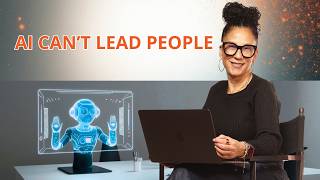
Dr. Cara argues that emotional intelligence beats AI for leadership because AI handles speed and accuracy but can't drive employee retention or engagement. She shares research showing how over-relying on AI erodes the emotional skills that matter most, and offers a three-pillar framework: recognizing value, embodying grace, and conquering control.
Chapters
This might be the most important leadership message of the next decade. In a world full of artificial intelligence, be emotionally intelligent. Here's why this 47% of jobs are predicted to be automated by 2033. That's not a distant future. That's this leadership era. And if you think this conversation doesn't apply to you because you're experienced or established, I want you to pause. Some of the most important leadership shifts happen not when something's broken, but when something's quietly shaping culture. AI can write your meeting summary in seconds. It can analyze performance data faster than any human. Yet it cannot walk into a room and feel the tension when everyone says I'm fine and when no one makes eye contact. I'm Dr. Cara, international psychologist, leadership consultant and executive Leader. For over 25 years, I've worked with leaders across healthcare systems and global organizations. And what I've come to learn is this. The leaders who will thrive in the next decade are not the ones competing with AI. They're the ones doubling down on what AI will never be able to do. Connect. In this video I'm going to show you. Research back, real world, no fluff. Information on why emotional intelligence is your leadership advantage in the age of AI. But first, let me tell you about the moment I realized I had started started leading like a very efficient machine. Picture this first day in a high stakes leadership role whiteboard full of priorities. Each one a potential crisis. Outside my door, a team of seasoned professionals who weren't waiting to welcome me, they were waiting to see if I'd mess up. And in that moment, I felt what so many leaders feel today. I felt like I was walking a tightrope. Organizational demands on one side, human impact on the other. My instinct to control. More tracking, more oversight, more precision. I created a spreadsheet to track other spreadsheets. You've never done that. Congratulations, you're healthier than I was. What I didn't realize at that time was this. I was leading. Exactly like the thing that now threatens to replace us. Optimizing, correcting, processing, people like inputs. And the research confirms how dangerous that is. A study published in the Journal of Management Education examined examine how emotional intelligence, EI and artificial intelligence, AI affect leadership outcomes. Here's what they found. AI significantly improves performance metrics. Speed, accuracy, consistency. But AI has zero direct impact on employee retention. Zero emotional intelligence, on the other hand, it has a strong significant effect on both retention and performance. Let that sink in because you can optimize everything and still lose your people. Here's the part that Most leaders miss. The more leaders over rely on AI, the more they dilute the positive effects of emotional intelligence. Meaning the very tools meant to help you perform can quietly undermine your ability to lead. This is the leadership tightrope of our time. I didn't fully understand the cost until I saw it on my team. I want to share a scenario that you'll likely recognize. You lead a meeting. AI takes the notes. Action items are clean. Summary goes out in five minutes. Meeting outcomes positive. Engagement high. Perfect on paper. But you know what actually happened. Marca hasn't spoken in three meetings. Sarah said, I'm fine with that. Her tone said this will fail. And no one challenged the timeline because no one felt safe. Safe enough to AI captured the meeting, but it missed the room. And that's the difference. AI measures output. Emotional intelligence understands the outcome. According to Gallup, managers account for up to 70% of the variance in employee engagement. Not policy, not perks. Leadership. Which means if engagement is low, burnout is high, or turnover is creeping in, the issue is rarely effortless. Is connection. This is where emotional intelligence becomes non negotiable. Because emotional intelligence is not being nice and it's definitely not something AI can replicate. Emotional intelligence is a set of capabilities. Four of them. Each one highlights something AI fundamentally cannot do. Emotional perception. This is the ability to accurately read emotions in yourself and others. AI can analyze sentiment. You can read context. You notice the email sent at 11:47pm that says everything is fine. You know it's not. AI reads words. You read the meaning. Emotional assimilation. Knowing what emotional information deserves attention. Now AI treats all data equally. You know which signal matters most? That reliable team member who canceled three one on ones. That's not a scheduling issue. That's an early warning sign. Emotional understanding. Knowing why emotions are showing up. AI flags declining performance. You understand the story behind it. Burnout, caregiving, fear, silence masquerading as compliance. Emotion management. This is where leadership becomes irreplaceable. AI can suggest responses. It cannot absorb anxiety, regulate the room and redirect fear into focus. But you can. Research shows that individuals with high emotional intelligence experience greater career success, stronger relationships and better overall health outcomes. EI also significantly improves collaboration, especially in roles with high emotional labor. This is not soft, this is strategic. Here's the warning. Research also gives us. When leaders over optimize with AI, they stop practicing these skills. That's when teams start disengaging quietly. Which brings me to my framework that changed everything for me. My framework for connected leadership rests on three pillars. Each one answers A leadership challenge AI cannot solve. Pillar one Recognizing value. Know your worth. AI evaluates worth based on output. Humans have intrinsic value. Your value doesn't decrease because AI can do something faster. You bring judgment, discernment, and wisdom. AI can't recognize human worth. You can. Pillar two Embodying grace. Know your truth. AI optimizes for perfection. Humans grow through grace. When leaders lead without grace, teams stop taking risks. Grace does not lower standards. It creates the safety required to reach them. AI cannot practice grace, but you can. Pillar 3 Conquering control. Know when to pivot. AI knows how to optimize. It does not know when to pivot. Leadership is knowing when to keep one foot planted on the goal and move the others to find a new path. Control feels safe. Connection creates movement. AI doesn't know when to pivot, but you do. And here's where everything comes together through how you receive, perceive and respond. AI is your tool, but you are the leader. Let me show you what that looks like in real practice. You see, I don't fear artificial intelligence, and I don't outsource my leadership to it either. Instead, I decided to make a very intentional decision to lead it. That's why I created what I call my virtual mind. Now, this is important because it's not an AI bot. It doesn't replace me, and it doesn't give answers the way that ChatGPT or most custom GPT do. A typical AI system responds. My virtual mind reflects and helps others. It's trained on how I think, not just what I say. It holds my framework for connected leadership, my values and my discernment, especially how I receive, perceive, and respond. And in other words, it doesn't just generate information, it preserves intent. I built it for one reason, to extend access without sacrificing humanity. Because leadership at scale isn't about volume, it's about integrity. And here's the distinction that matters. I don't let AI decide what matters. I decide. And AI helps me extend that reach. That's what emotional, intelligent leadership looks like in the age of AI. It's not a replacement, not control. It's its discernment. Let me tell you about a Friday afternoon. I was just tying up my work. It was about 5pm and then an email shows up. You know, the one that comes from someone higher than you sit, asking for you to give a deliverable first thing Monday morning. The old me would have reacted. The new me paused. You see, I value balance. And receiving that email at the last hour of my workday on a Friday, it threw me out of alignment? Receive what is actually happening internally and externally perceive what meaning am I assigning? What is really happening? Am I missing something in my rearview mirror? What's happening underneath the surface? What fear is driving my urge to control respond? What does this moment need from me as a human? Let me leader. That pause changed everything. Because I didn't need more direction. I needed containment, clarity and trust. And here's what research and experience agree on. AI can receive data. It can't receive the emotional nuance. AI can process patterns, it cannot perceive meaning. AI can generate options, but it can't respond with wisdom. Because that's your job. So let's return where I started in a world full of artificial intelligence. Be emotionally intelligent, because AI will keep getting faster, more capable, more embedded. But it will never make us more human. That's your role. Your team doesn't need another algorithm. They need a leader who can connect. If this resonated and you're committed to being the kind of leader that people don't recover from, but grow from, please subscribe and leave a comment below. Where has emotional intelligence changed the outcome of your leadership? Or where do you wish that you had more emotional intelligence? Remember, the only control that you truly have is how you receive, perceive and respond. Lead wisely and lead from humanity.










