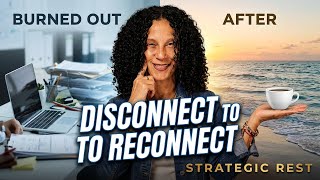
Dr. Cara argues that self-care is a core leadership skill, not a luxury, and uses personal anecdotes (a transformative trip to the Dominican Republic, becoming a grandmother, and a recent abnormal-heart diagnosis) to show why leaders must intentionally unplug and rebuild capacity in others. She presents a short framework—receive, perceive, respond—warns against myths like "I'm the only one," and urges leaders to give themselves permission to rest so they can lead sustainably and model healthy cultures.
Chapters
As we close out this year and step into a new one, I want to talk about something that challenges many of us as leaders, something I've been learning deeply these past several months. It's the practice of truly disconnecting so we can reconnect to ourselves, our purpose, and ultimately show up our best for those we lead. I just returned from the Dominican Republic, and I have to tell you, standing by that ocean, feeling the warmth on my skin, hearing nothing but waves, it was transformative. But getting there, that required me to confront some of the deepest barriers we face as leaders. The belief that we're the only ones who can do what we do, the guilt of stepping away, and the fear of being forgotten or replaced. Today, I want to share what I've learned about balance, self care, and why unplugging isn't just nice, it's necessary. Here's the truth. We have to lead ourselves before we can lead others. Connected leadership isn't about how we show up for our teams. It's fundamentally about how we show up for ourselves. My framework centers on the method of receive, perceive, and respond. Yet here's what I've learned. If we can't receive our own need for rest, if we can't perceive that we're running on any, empty will never respond in ways that sustain us for the long haul. Let me be real with you. These past several months have been intense. My life transformed from an empty nester to a grandmother when my daughter had her baby. Oh, my gosh, I still can't believe I'm a grandma. I've been navigating the beautiful chaos of supporting her and my precious grandson while also facing a health challenge that I never expected. You see, I found out I have an abnormal heart. And you know what? Prioritizing my health has been very difficult. It's created internal conflicts because there's a voice that says, but people need you. Your team needs you. Your family needs you. And so here's where many leaders get stuck in the trap of believing that we are the only ones who can do what we do. But that's not truth. That's ego wrapped in responsibility. And it's dangerous. The I'm the only one myth. When we believe we're the only ones who can handle our responsibilities, we're actually diminishing our teams. We're saying implicitly, I don't trust you to step up. Connected leadership requires us to build capacity in others to delegate not just tasks, but trust. When I took medical leave, when I stepped away to be with my daughter, my Team did not fall apart. They rose to the occasion. They demonstrated what I had been cultivating in them all along. Know your worth, know your value. And understand this. Your worth isn't measured by your constant presence. It's measured by the impact you create and the leaders that you develop. Second, the guilt complex. Let's talk about grace, both giving it and receiving it. So many leaders feel guilty taking time for themselves. We call it self care, but then treat it like it's selfish. I struggle with this. At first, I was scared to even tell my team what I was dealing with regarding my health. But then I realized something powerful. Just as I support them, they want to support me. This isn't weakness. This is the reciprocity that makes leadership sustainable. The support I received when I was transparent, it was overwhelming and heartwarming. It reminded me that vulnerability isn't a liability in leadership. It's a connector. It's what makes us human and relatable and real. Third, the fear of being replaceable. Here's something beautiful and terrifying. When you step away. Life continues, work continues. And that's exactly as it should be. If you're gone, people aren't going to stop needing you, but they also won't collapse without you for a period of time. This is a sign of strong leadership, not weak leadership. You've built something that can sustain itself now. Balance looks different for everyone. For me, it's the ocean. It's the warmth of the sun. It's the moment when my feet touch the sand and I can hear nothing but waves crashing. In the Dominican Republic, I found tranquility and peace that I'd been missing. I grounded myself. I centered myself. Now when I feel stress mounting, when anxiety creeps in, when the pressure of leadership feels heavy, I can tap into that internal source. I close my eyes and I'm back there, feeling the sun, hearing the waves, smelling the salt from the ocean. I remember what brings me calm and peace. Your balance may look completely different. Maybe it's hiking in the mountains. Maybe it's cooking a beautiful meal. Maybe it's silence in your own home with a good book. The point isn't what it is. The point is that you're intentional about creating it. Intentionality. That's the key word. We're so intentional about strategy, about deliverables, about team development. But how intentional are we about our restoration? As we move into this new year, I'm calling all leaders to the table with this question. What are you doing to create space for yourself? These past several months have given me an opportunity to walk it like I talk it, to practice what I preach. See, self care isn't just something I teach my clients or encourage my team to do. It has to be something I embody. Supporting my daughter through new motherhood while advocating for my own health has taught me that we can hold multiple truths at once. I can be present as a grandmother and prioritize my medical needs. I can lead my team effectively and take time to recharge. These aren't competing priorities when we approach them from connected leadership principles. Here's what happened when I unplugged and took a beat. I came back more creative, more ready to lean into content, more prepared to show up as my best version of myself. That trip to the Dominican Republic, it wasn't an escape from my life. It was a return to myself. And that's made all the difference. So as we step into this new year, I want to invite you to something radical. Permission. Permission to unplug, permission to recharge, Permission to acknowledge that you are human, that you need rest and balance isn't a luxury, it is a necessity. Remember, we lead ourselves before we lead others. If we can't model sustainable practices, how can we expect our teams to embrace them? If we can't honor our own needs, how can we create cultures where others feel safe to honor theirs? Find your ocean. Find your mountain. Find your quiet space. Find whatever brings you back to yourself and then protect it fiercely. Be as intentional about your restoration as you are about your responsibilities. Because the world needs leaders who are whole, not burned out, who are grounded, not depleted. Who lead from overflow, not from empty. Here's to a new year of connected leadership, starting with the most important person you will ever lead yourself.