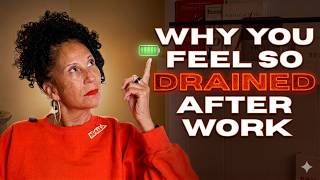
Dr. Cara, a psychotherapist with 25 years of experience, explains why managers feel drained after work. It's not the hours but constant internal negotiations and unclear self-worth. She offers a two-minute post-work check: ask yourself what today actually demanded of you.
Chapters
You got home from work, dropped your bag, and sat there. Too tired to make dinner, too depleted to talk to anybody, just enough left in you to scroll. Empty. And the wild part? You didn't even have a bad day. You showed up, you handled it, you kept it together. So why do you feel this empty the second you walk in the door? That question is exactly what this video is about. I'm Dr. Cara, licensed clinical psychotherapist, 25 years working with leaders, and what I'm about to tell you won't focus on working harder or sleeping more. This is about something actually happening inside of you that most people never stop to look at. Real quick, if you ever hit a wall like this and you think that you need a partner— not next week, not when you find a therapist— right now, I have a tool called My Virtual Mind, trained in my framework for connected leadership, available 24/7. The link is in the bio. Okay, let's get into it. You're not tired from doing too much. Here's the first thing I need you to understand. You're not exhausted because you worked too many hours. You are exhausted because of how you worked. Think about it. Think about a day where everything flowed, where you were in it, where you felt good. You probably weren't any less busy, but you came home different. That's not an accident. Research tells us that managers account for at least 70% of the variance in how engaged their people feel at work, which means you're not just managing tasks, you're carrying the emotional weight of an entire team. And if you don't know that's what you're doing, you're doing it unconsciously, which is the most expensive way to lead. The real drain is internal. Picture this. You walk into a meeting, your manager says something that feels like a dig, not a full attack, just a comment. And for the rest of that meeting, you are half present, part Part of you is answering questions. Part of you is replaying what they said, running through what you should have said and how you should have said it. Part of you is answering questions. Part of you is replaying what they said, running through what you should have said back, wondering what they really meant, wondering if you're reading too much into it. That internal negotiation, that's what's draining you. Not the meeting, not the work. The negotiation inside you that never stops. And here's the part that most people miss. The negotiation gets louder when you don't know your own value. Not knowing your worth costs you energy. When you don't know your worth, you hustle to prove it. Every day, you say yes when you should say no or not right now. You over-explain decisions you already know are right. You smooth things over that should be addressed. And you absorb things that were never meant for you to carry. That's not dedication. That's depletion, and it catches up with you not in the meeting, not in the hallway, at home on the couch when there's nobody left to perform for. That's when it hits. The part nobody talks about? There's something I teach in my framework called grace, and I don't mean being soft. I don't mean letting things slide. Grace is the ability to tell yourself the truth about what you actually have to give today. Not what you think that you should be able to give, what you actually have. Because here's what happens without it: you push past the limit every single day, not because you have more to give, but because you feel like you're supposed to. And that gap between what you have and what you're giving is costing everything— your clarity, your presence, your energy when you get home. So what do you actually do with this? I want to give you one thing to try tonight. Before you walk in the door after work, give yourself 2 minutes. Not to decompress, not to answer one more email. Just ask yourself this question: What did today actually ask of me? Not what you planned for, what it actually asked of you. Because when you can name it, you can stop carrying it unconsciously. You stop taking the whole day home inside of you without even realizing it. That's the beginning of leading differently. Not harder, differently. If this is hitting home and you're nodding along but thinking, okay, how do I actually do this in the middle of my work week when I'm already in this and I'm drained? That's exactly what My Virtual Mind is for. It's my AI coaching tool trained in my framework for connected leadership, a real-time thinking partner that walks with you through exactly this at any time of the day. When you're in your car before you walk in the door, when you're staring at the ceiling at 11 PM when you need to hear yourself think before you say yes to one more thing. It's in the description. Go try it. You lead well. Now lead as yourself. I'm Dr. Cara. Connect to yourself first and then elevate and expand for those you lead.