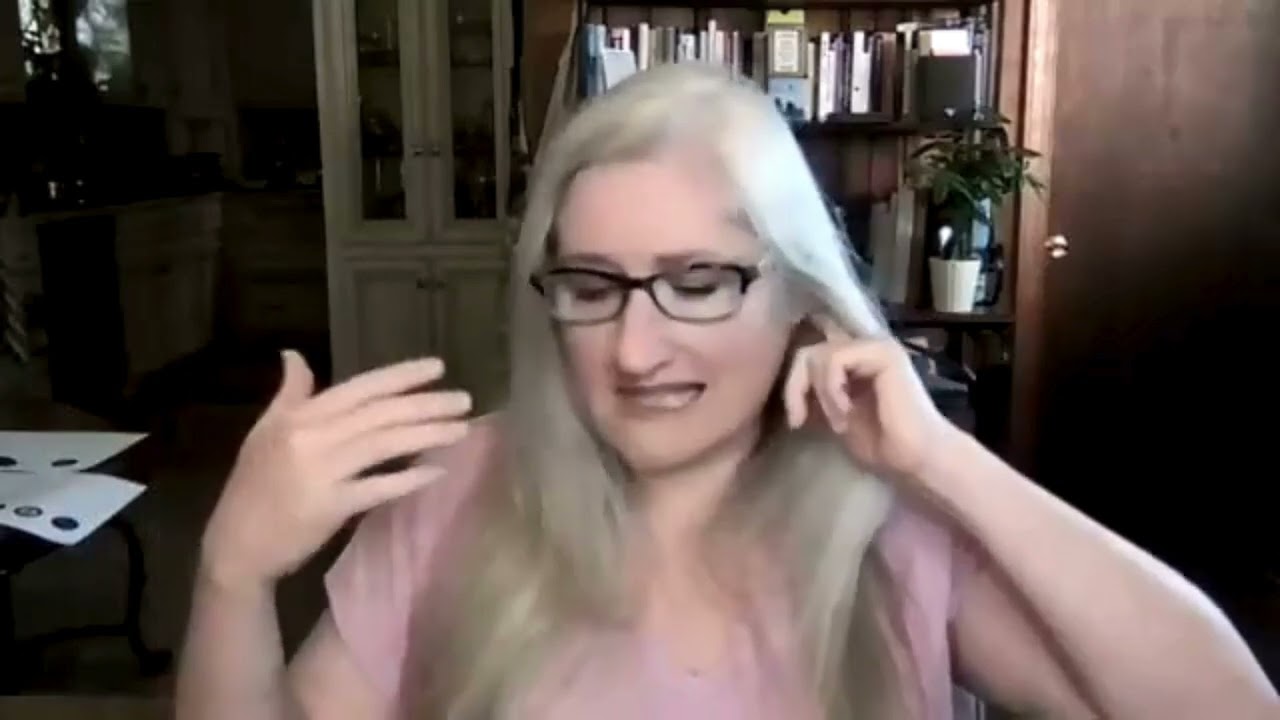
In this episode of Weekly Wellness, holistic menopause coach Eliza Riley explains why many mid‑life women experience sudden joint soreness, stiffness, and aches. She first outlines how estrogen and progesterone naturally fluctuate throughout the menstrual cycle, influencing ligaments, fascia, and collagen, and how the loss of these cyclical hormonal cues during perimenopause and menopause leaves tissues in a persistently tight, inflamed state. Riley then introduces a second, less‑discussed factor: gut inflammation and leaky gut. When the intestinal lining becomes permeable, microbial particles and food antigens enter the bloodstream, triggering low‑grade systemic inflammation that often settles in joints and connective tissue, especially when hormonal support is waning. She argues that focusing solely on diet misses the broader picture; effective gut healing requires adequate nutrition, mineral support, castor‑oil packs, nervous‑system calming, and rebuilding trust with the body. Riley invites listeners to join a free gut‑healing challenge and offers complimentary strategy sessions to personalize the approach, emphasizing that joint pain is a signal, not an inevitable part of aging. The episode blends education, practical recommendations, and promotional calls to action, aiming to empower women to address the root causes of their discomfort.
Chapters
Hello everyone, welcome to this week's episode of Weekly Wellness. Thank you so much for being here. I am Eliza Riley, holistic menopause coach and founder of Menopause and Chill, and this is where we unpack what's really going on in your body so you can stop chasing symptoms and start feeling like yourself again. Today we're talking about something— well, before I get into that, I just want to preface by sharing with you guys, um, that last week If you're on my mailing list, you saw that I sent out a question. I was asking you guys to choose what of the 3 options given for a challenge that I'm going to run next month, or this month. It's May this month. So a challenge that I'll be running in the next couple of weeks. We'll be getting into that pretty soon. And I said in the email, if this isn't— if If you're not interested in any of these three options, tell me what you are open to. And I got—I was surprised by the number of people who who did share something else. I mean, I wasn't surprised by that, but I was. But it was that like there was three different things. There was there was like the number one thing was weight loss, of course, which is interesting to me that you know because the options I gave were gut health. adrenal health, and mindset. And interestingly, any of those can help with weight loss. But the other one, the second most popular answer was joint health. And so I thought, well, that's interesting. And so I'd like to talk about that today. I'd like to talk about joint health, sore joints, stiff muscles, general aches and pains that seem to show up out of nowhere or get worse seemingly overnight. Oh my goodness. This mosquito. Sorry. I have a mosquito bugging me. Okay. Yeah. So these, these joint issues that seem to show up overnight or, or get worse, like, like, oh, it feels like that it's happening like literally overnight. And maybe you even caught yourself saying something like one of the women said to me, I feel like I need to be oiled, or I wake up and I feel like I've aged 10 years. I get it. I really do. And if you've ever caught yourself saying something like that, if that sounds familiar, I want to know— I want you to know that you're not alone. And while the most common explanation we hear is that it's just aging, I want to offer a more complex picture. Because that stiffness and soreness may not be just a side effect of getting older. It can actually be a sign that something deeper is going on and that your body is asking for support. In a, in a new way. And so let's— I'm gonna rewind that just a bit. Most women, most of us, I would say, I would say probably 100% of the women who are, who are listening in or, or watching the, this recording has had a period, has had a menstrual cycle once or twice, maybe, you know, in our lifetimes. And the, the Reality is we even, you know, as a teenager in our 20s and our 30s, in our 40s and 50s and so on, like, we are not truly educated about the process of shedding that organ, you know, the bleed, the period, Aunt Flow. Like, we're not truly educated about what's happening in our bodies. And so we don't, we don't even recognize or realize that the hormonal changes that affect our muscles and joints in at midlife have always affected our muscles and joints. Even when we were in our 20s and 30s, our estrogen and progesterone levels, they fluctuate throughout our cycle. So those shifts, the, you know, that's why during your cycle, one week you could be at the gym and you could lift all the weights, and you're like, you're, you, you can't, you couldn't hurt yourself if you tried. And then the next week, everything hurts your— hurts your body. Like everything. You, you stress your joints, you, you overwork, like everything causes more pain. And it's because the estrogen and progesterone levels fluctuated throughout our cycle, and those shifts make our tissues either looser or tighter. And sometimes our joints felt great. Other times they felt stuck or a little off. But most of us were not told that your hormones affecting your ligaments and your fascia and your collagen. We were just told that we were sore or we or tense or we slept wrong or we're stressed out or like there was always some other reason why we we could do the same workout in different weeks and have it feel really good in our bodies one week and have it feel really bad in our bodies the next. So now in perimenopause or postmenopause or menopause. When estrogen and progesterone are flatlining or disappearing, they're not just fluctuating anymore. We're no longer getting those cyclical signs that helped our joints to move and recover. We, we actually get stuck in the tightness. So we feel heavy, we feel inflamed. And over time, that starts to feel like our new normal. And then there's another layer to this that is also not talked about nearly enough. And that's really where— what I want to focus on today. Gut health. We're going to come back to gut health. What if your gut health actually influenced how your joints feel right now? Right? Well, let me explain. When your gut is inflamed, whether that's due to food sensitivities, stress, hormonal changes, medications, or a combination of all of the above, it can start to break down at the lining. And that lining is supposed to protect your bloodstream from things that don't belong there. But when the gut becomes more permeable, this is what we call leaky gut, particles that don't belong in your bloodstream sneak through and the immune system sees them, panics, and goes on high alert. When your immune system is constantly on like this, it creates low-grade body-wide inflammation. And that inflammation does not just stay in our gut. It travels throughout the body, and for many women it settles in our joints, in our connective tissues, in the muscles, especially the, the areas where we are already under stress from hormonal depletion. So the stiffness that you feel, that, that soreness, even after resting, the aching hips, the knees, achy arms and back, it might not be coming from age or wear and tear or even what you're doing with your body. It might be coming from your stomach, from your gut, from the inside out. And the reason why this happens more in midlife— well, we talked about— I talked about that a little bit. But in midlife, everything is shifting. Your hormones are changing. Your nervous system is often more activated than you realize. We just can't handle stress the way that we could When we were younger, and if your gut has been under a lot of stress, well, it doesn't even have to be a lot. If your gut's under stress, whether you notice digestive symptoms or not, it can absolutely start showing up in your joints, especially if you are the kind of person who is doing everything right. You know, you're eating well, you're avoiding inflammatory foods. Maybe you've maybe you've done some some healing protocols or even detox protocols. You tried supplementation, and you still wake up sore. Stiff or inflamed, it's not because you're doing it wrong. It's really not. You're not doing the wrong things. It's because most of us are only looking at the symptoms and not the systems that are behind them. So what helps? What's going to help you in this situation? So first of all, gut healing is not just about food. And I hope that— Excuse me, my nose is itchy now. I hope that you guys, whether you are on my mailing list or not, I hope that you will join us for that free gut healing challenge because we're gonna really get into what helps to heal the gut. And it's not just about what you're eating. It's about structure. It's about safety. It's about support. It's about reducing inflammation at the root. Which means that you you need to make sure that you're eating enough food, and not just clean food, but not just clean eating. But you need to be eating enough food. It's it's supporting the gut lining with things like castor oil packs, which I love. The the right minerals and slow consistent meals, eating eating in the right way. It's also about calming the nervous system so that your body knows that it's safe to digest and repair. If your body is constantly constantly in fight or flight, it shuts down digestion. So you can keep eating food and you're And your stomach really— your body really doesn't know what to do with it because it's, it's only thinking about keeping you safe and, and protecting you from that tiger or, or whatever, you know, the traffic. So, um, and also, and the final piece of that is rebuilding trust with your body so that you can understand what it actually needs. When you shift your focus from cutting, cutting things out to creating more support, your body can finally begin to relax. And if you've been trying to figure this out on your own, and it still feels like something's missing, I would love to invite you to have a conversation with me. I offer free strategy sessions where we'll— we will look at what's actually going on in your body, not just what's hurting. We explore what's underneath the symptoms and what's— what next steps might actually bring you relief. It's a private personal space where we can stop guessing and start connecting the dots in a way that makes sense for you. And if that sounds like something you're ready for, please, you— Chris has dropped the link in this, in the chat, so you can grab that for, for, for yourself, or you can also write, put ready in the, in the comments, and I'll make sure that we reach out to you with that. Because you do not have to accept this pain. as your new normal. You don't. You do not have to settle for it's just aging, and you don't have to do it alone. And the, the biggest piece that I want you guys to, to walk away with is remembering that everything that is happening in our body, everything that we label as a symptom, is really just our wise inner self telling us, hey, Right here is where I need some attention. Right here is where I need you to listen to me. And I'm here to help you guys start listening differently. Thank you guys so much for spending this time with me today. Also, if you are— if you're not— if you're interested in that free challenge, please be sure to sign up for that, and we'll be starting with that hopefully next week, maybe not until the following week. I, I, I think that, uh, uh, I may need a little more time just because I'm also working on this, the summit. I'm very excited. I've been do— started doing, uh, summit interviews this week. I'm very excited to share those with you guys, and you'll be hearing more about that soon as well. Again, thank you so much for being here with me today for this episode of Weekly Wellness. Have a great week, and I will, um, see you guys next time. Bye, everyone.