
Why “Trust the Science” Has Left So Many Women Confused About Their Health (and what to do instead)
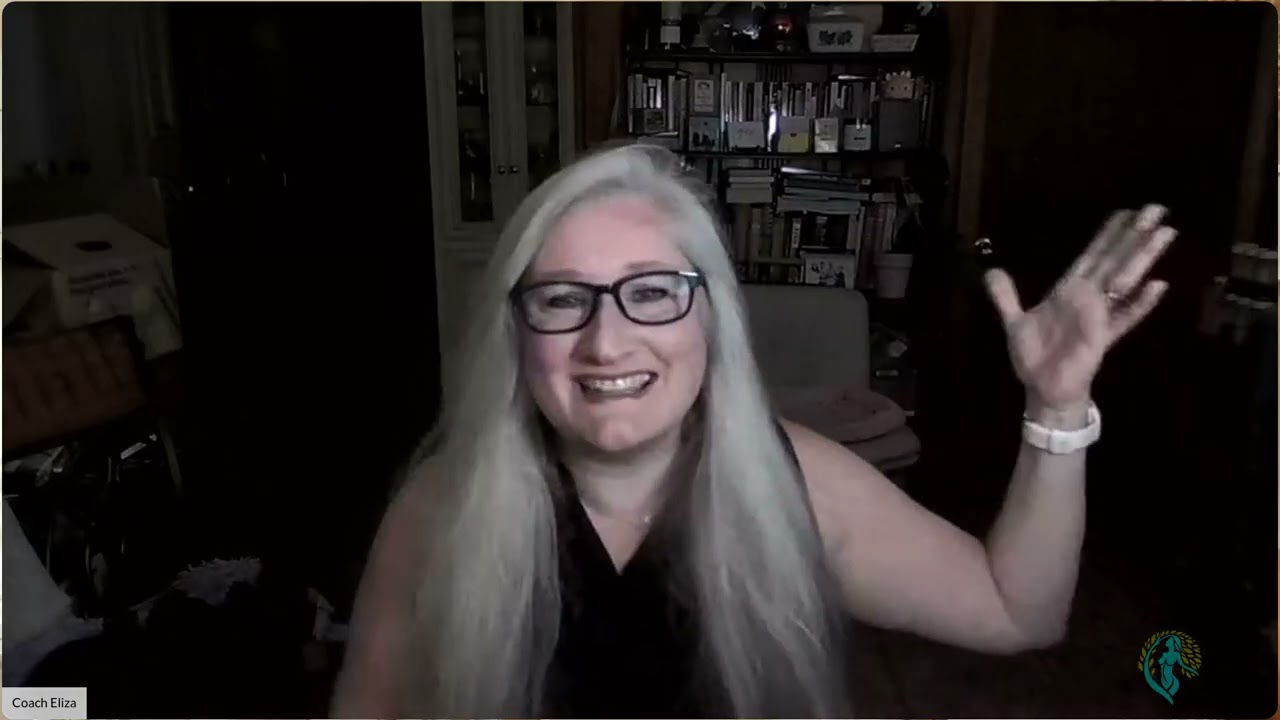
In this weekly wellness talk, Coach Eliza critiques how scientific findings are routinely oversimplified in media headlines and health advice, creating confusion and disconnection for women. She explains that while she values data and uses testing in her practice, the translation of research into one‑size‑fits‑all recommendations—especially from observational nutrition studies—leads to contradictory messages about foods, supplements, and lifestyle factors. Eliza highlights the pitfalls of observational research, healthy‑user bias, and the lasting misinterpretation of the Women’s Health Initiative (WHI) hormone‑replacement‑therapy (HRT) study, showing how flawed narratives persist decades later. She contrasts “outside‑in” healing (relying on pills, supplements, and doctors) with “inside‑out” healing, emphasizing that the body can repair itself when given optimal conditions: adequate sleep, stress regulation, movement, community, purpose, and metabolic/hormonal balance. Drawing on the Blue Zones model, she advocates for lifestyle foundations that support longevity beyond merely surviving into old age. To help women reconnect with their bodies, she offers a free 7‑day sleep pattern tracker that reveals hidden patterns in energy, stress, cravings, and recovery, encouraging listeners to listen to their own physiological signals rather than defaulting to external authority.
Chapters
Welcome everyone to this week's Weekly Wellness with Coach Eliza. And I just wanted to— I'm gonna tell you guys the name of today's topic is Why Trust the Science Has Left So Many Women Confused About Their Health. One moment, let me just figure out how to let people into the room. There we go. Okay, so why trust the science has left so many women confused about their health. And I know that the phrase trust the science has become so politicized and, and, um, controversial. People argue about what it means or what it means for you specifically or what it means for a particular study or what it means for a particular ideology. But before anyone makes any assumptions based on the title, I want to just be very clear that I am not in any way anti-science. I use testing in my practice. I've interviewed— if you guys are here and you've seen any of my summits, you know that I've interviewed brilliant doctors through the Holistic Menopause Solution Summit. And I truly believe that data can be incredibly helpful. But what I would like to challenge today is how science gets translated into headlines, into fear, into oversimplified health advice and this one-size-fits-all recommendations that leave women truly disconnected, confused, confused first of all, and secondly disconnected from their own bodies. And I actually, I truly believe it's making women sicker. And I've been thinking a lot lately about how disconnected women have become from their own bodies Um, just this, this last— well, last week. I know it's Thursday, but last week I was listening to Dr. Mindy Pelz. You guys probably know her, of her, or have heard of her. She's the, the fasting doctor. Um, in one, in one of her courses, she was talking about outside-in healing versus inside-out healing. And I'm not going to go into that a whole lot because if— but if you're interested in learning more about that, check out her YouTube channel. She, she really I think explains this really well, but it brought up for me this this thought. It perfectly explains what I've been seeing with the women I work with, women I talk to. Outside in healing sounds like tell me what pill to take, tell me what supplement to try, tell me what doctor to see, tell me what tests I should be using, tell me what I need to feel better. It's this belief that healing comes from something outside of us, right? And sometimes we may use— I, I mean, I, I won't, I won't pretend that we don't, but sometimes we may use a medication or a supplement to create space for the body to heal. But that's very different than believing that those things, the medications, the supplements, the doctors, the tests, the, you know, the whatever is what is healing your body because the reality is your body heals itself when given the right conditions, right? And if you know, if you're here, I'm certain that you know that. Already, but you may need to hear it again. Your body heals when given the right conditions. And let's be honest, women are more confused about their health now than ever before. You've probably heard that coffee causes cancer, right? But then, no, wait, it actually prevents disease. You've heard that eggs are dangerous, but no, wait, They're a superfood. You've heard that red meat is killing us, but no, wait, it's actually one of the most nutrient-dense foods available, and humans survived on meat for 2,000 years and we didn't go extinct. Well, that's all good, well and good, but salt, we know salt is bad for you, right? No, it's not. We need the electrolytes, and especially if you're using something like a Himalayan or a A gray salt, a pink salt. Those are those are good for you, right? Well, fat is bad though. No, sugar is bad. No, seed oils are bad. No, carbs are bad, right? Like we we get different stories coming at us, different studies, different interpretations of studies coming at us every day. And women are standing in grocery aisles. Maybe this was you standing in grocery aisles wondering, what is it that I'm even supposed to be eating right now? Because I, I just don't know anymore. And truly, one of the biggest problems is that a lot of the nutrition research is observational. And what that means is that when they, when these study, um, these researchers, when they study, um, authors do a study, they often start out with, with reaching out to a group of people who sort of fit a demographic, and then they have them fill out questionnaires about what they ate. Now, for most of us, we can't remember what we had for lunch yesterday, but they will go back literally weeks, months, and longer and, and ask them to fill it out. Now, they may sometimes go starting now, write down everything they chew, eat, but even then it's subjective, right? Because we Do we write down that we had that cookie? Maybe not. You know, do we write down? Do we write down that we ate the whole box of cookies? Maybe not. Like maybe we we we're the study. The results are often interpret or not interpreted, but they're subjected to subject to the how the people participating what they feel that they're comfortable with sharing. So. And then what happens is that the, the, um, the researchers take the study and they treat it like— they treat it first off as though it's, it's fact and that it, it is fact for everyone. And the, um, journalists take these— take this, this, um, theory and write headlines that say this study proves that this causes that, when really it didn't. And one, um, one, one of the examples that I, I read recently was, uh, it was about actually about the red meat thing and, and that we're not supposed to be eating red meat because what they did is they, they, they took someone who was eating processed meat and they didn't also consider that that person or that group of people were also sleep deprived, highly stressed, sedentary. They just not are not moving their bodies as much as they should be, drinking alcohol regularly, that they're completely disconnected from community and feeling very alone, and they eat highly processed foods overall. And On top of that, they're struggling with illness. You know whether whether that illness is heart disease or cancer or or high blood pressure or high cholesterol or anything like any of the things that we're struggling with today. But the the what happens is that the headline then becomes meat causes disease, and that's not nuanced science. That's actually lazy interpretation. And one of the things that that I get so frustrated with is that you know we've seen we saw this happen. You know if you are a woman in midlife, you saw this happen in women's health and with the the WHI study, which linked HRT to cancer and created massive fear. And many women and doctors are still making decisions on that flawed interpretation. Decades later, even after the the researchers, the authors of that study have come out and said that they were wrong. We still have doctors who who who won't prescribe HRT. We have women who refuse to take it, and we have doctors who refuse to work with women who have who are using it and feeling better on it. Now I'm not someone who's telling you go go out and get your HRT and don't don't believe the study and go get your HRT. I'm not saying that. I'm saying that it's individual, but it's, again, it's just, it's an example of how a flawed interpretation, even decades later, is still influencing women's health. That's what happens when bad science communication becomes a public health message. And then there's something called healthy user bias. And this is huge. But people who follow conventional health advice often also tend to exercise more, smoke less, get regular checkups, have higher incomes, eat more vegetables. They have better access to healthcare. So when studies show that they have better outcomes, was it one because of one food that they're eating? Or is it because their entire lifestyle which supports a better outcome? The unfortunate reality is that question rarely gets asked when these studies are being done. The media takes one tiny study and turns it into, this food causes cancer, this food is toxic, this supplement is dangerous, and suddenly women are terrified to eat eggs or red meat or butter, or it's a study Step outside and get in some get the sunlight, or here's one of the the ones that drives me crazy. But salt we are afraid of salt because because of these studies, and we're ignoring things like chronic stress, poor sleep, processed foods, lack of moving our bodies, social isolation, which is a big one, constant nervous system dysregulation, all of the things that are actually destroying your health. Because it's, it's really not the butter. I see this again so much with women in midlife. They'll come to me saying, you know, I can't lose weight, or I'm tired all the time, or I'm not sleeping, or my hormones just feel all over the place, or I'm moody. I yell at my children and my, my husband when, when they've done nothing to deserve it. I hear that one a lot. Um, they'll say things like, my, my brain is foggy. I can't think clearly. I can't remember things that I used to know. My digestion feels off, and they've tried all the things, you know, they've tried diets, they've tried supplements, they've tried working out more or less, sometimes it takes less, they tried going to their doctor, taking medications, and yet they still feel terrible. Why? I think that the biggest reason why is because we have been taught to override our own body's wisdom. And now you're never going to hear that in these, in the way that people share stuff, but ultimately we are being taught to override what our body is saying to us when they say things like, see your doctor for whatever. When they say, This study says, or when they say research shows, you know, things like that. It's it's it's a message. It's a um it's a subconscious message that says don't listen to you because you don't know what's going on in your body. Someone else does. Go find out what they think. And it's heartbreaking. Because we believe it. And so then when you go to your doctor and you're told your labs are normal, which I hate that phrase because seriously, normal compared to what? A population that's chronically sick and overmedicated and metabolically unhealthy? I mean, unfortunately, and you may not even know this, but where you live in the country determines what is Normal labs. So like you can, like if I'm in Louisiana, this is a quite unhealthy population. If you go someplace like, oh no, I've heard like parts of California have have have have a healthier population, parts of like Colorado. If you go to an area where they have a healthier population and you take the same labs, you will actually find out that. what was normal here is not normal, or outside of the what's normal there, because what happens is that they take this, this, um, they take the, you know, the every— so as, you know, 100 people go in and get their labs done, they take, they look at them and go, okay, so this is what everyone's labs are coming out as, and it doesn't matter that we have 100 people who are metabolically unhealthy, who have done the testing, and now you go in and you're trying to be healthier than that, and you do the testing and they go, oh, your labs are normal. Your labs are normal for the population, which is also unhealthy. So, so we, we go in, we do the testing, we, we maybe even get the medications, and we're told that at midlife, weight gain is normal, poor sleep is normal, low libido is normal, brain fog is normal, fatigue is normal, feeling invisible And gaslit is normal, but it's not normal. Is it common? Yeah, for sure, but not normal, and definitely not something that you should simply accept as the way things are or the way that they're going to continue to be. Now don't get me wrong; modern medicine is incredible at diagnosing emergencies, trauma care. Amazing. Emergency surgery, life-saving. Acute interventions, totally necessary. But long-term vibrant health, that comes from food, sleep, movement, stress regulation, community, purpose. You know, waking up in the morning and going, okay, I know what my life is about and I know what I'm going to do today. The right environment, your hormonal health, your metabolic health—these are the foundational building blocks for actual longevity. And I will tell you, I am not interested in helping women survive until they retire and then spend their final decades overmedicated, isolated, disconnected from their bodies, and probably living in a nursing home. But that is what we have come to accept. As normal. I want women vibrant way beyond what we've been told to accept as normal, to live beyond 100. And I truly believe that we have the capacity, the capability to live to 120 or longer, and not in this vegetative state that we so often see in our older generations, but truly thriving. And I hope that if you're here and you're listening, that that's what you want for you too. Have you have you heard of blue zones? So if not, these are you probably have. But if not, these are communities where people regularly live well past the hundred, and they don't spend those extra decades heavily medicated and disconnected from life. They're cooking their own meals. They're walking daily. They live in their community. They have purpose. That's what I want for the women that are listening to me right now who are. who are interested in also building that for themselves, because I tell you, I help build Blue Zones and I do it one woman at a time. And if this conversation is making you realize that your body has probably been sending you signals that you've been ignoring, I have a resource for you. It's completely free. It's a sleep pattern tracker and it helps you to identify patterns around How you sleep, how much energy you have or don't have, how much stress you're dealing with and how well you deal with it, your cravings, your recovery. Because, and you may be sitting there thinking, I don't need that, I sleep great. And that's great, I hope you do. But poor sleep is often one of the earliest signs that your body is struggling. And most women are trying to fix the symptoms that are happening because of the poor sleep before understanding the patterns that are actually causing them. If you're thinking that sleep isn't really your issue, I'd encourage you to still check out the, the sleep pattern tracker because sleep patterns often reveal far more than just sleep and issues. Your energy, your cravings, your stress resilience, your recovery— your body leaves clues throughout all of these things. And it— and the, the tracker itself takes just a few minutes a day. It's 7 days of tracking, and then you have a clear, like, path, a clear, um, um, roadmap to say, oh, here's what's happening, here's how I'm feeling, and here's what's causing that. Now, if you're here with me live, when the live ends, you'll automatically be redirected to where you can grab it for free. You can start tracking, start noticing, start listening. And if you're looking— if you're here, um, listening to the recording Then hopefully wherever you found this, the, the link to the sleep tracker is, is there as well. Oh, also, if you're, if you're here watching the recording, it still will take you to the sleep pattern tracker. So check it out, download it, use it, because if you don't use it, it doesn't do anything for you. Sorry, one more. Here we go. And so as we, as we close out, I would like to just say You know, start listening to your body. Um, you can do it with that sleep pattern tracker, and in one week you can have the data that you need to start feeling better. It's really, um, it's such— it sounds like it's such a simple thing, but it's really big when you can see your patterns laid out in front of you. So much easier than trying to figure them out and trying to remember what happened the night before, the night before that. And even with all the message— the messages that are coming at you from every direction telling you not to trust your body. Know that your body is communicating with you. The question really becomes, are you ready to listen? Thank you so much for being here with me. Be sure to join me next week when we continue the conversation. I will see you then. And if you're here with me live and you have a question, please feel free to go ahead and drop it in the chat. I will stick around and answer those for you. I'm going to go ahead and turn off the recording though. Thank you for being here. Have a great week.
More from Eliza


Small Shifts, Big Relief: What’s Actually Helping in Menopause (According to Real Women)
What No One Told Us About Menopause: Real Symptoms, Real Stories, and Small Changes That Matter

Menopause Symptoms No One Warned Us About: Brain Fog, Itchy Ears, Sleep Struggles & More


Menopause Support Live | HRT Withdrawal, Brain Fog, Hair Changes & the Truth About Hormone Therapy

Menopause Support LIVE with Eliza & Jennifer | Night Sweats, Hormone Therapy After 60 & More

The Gut-Weight Connection: Why Your Belly Won’t Budge (Even When You’re Doing Everything Right)
Tired, Sore, and Achy? Your Gut Might Be the Reason | Gut Health & Joint Pain in Menopause
Will I Feel Better After Menopause? | Post-Menopause Symptoms, Hormone Truths & What to Expect