What No One Told Us About Menopause: Real Symptoms, Real Stories, and Small Changes That Matter
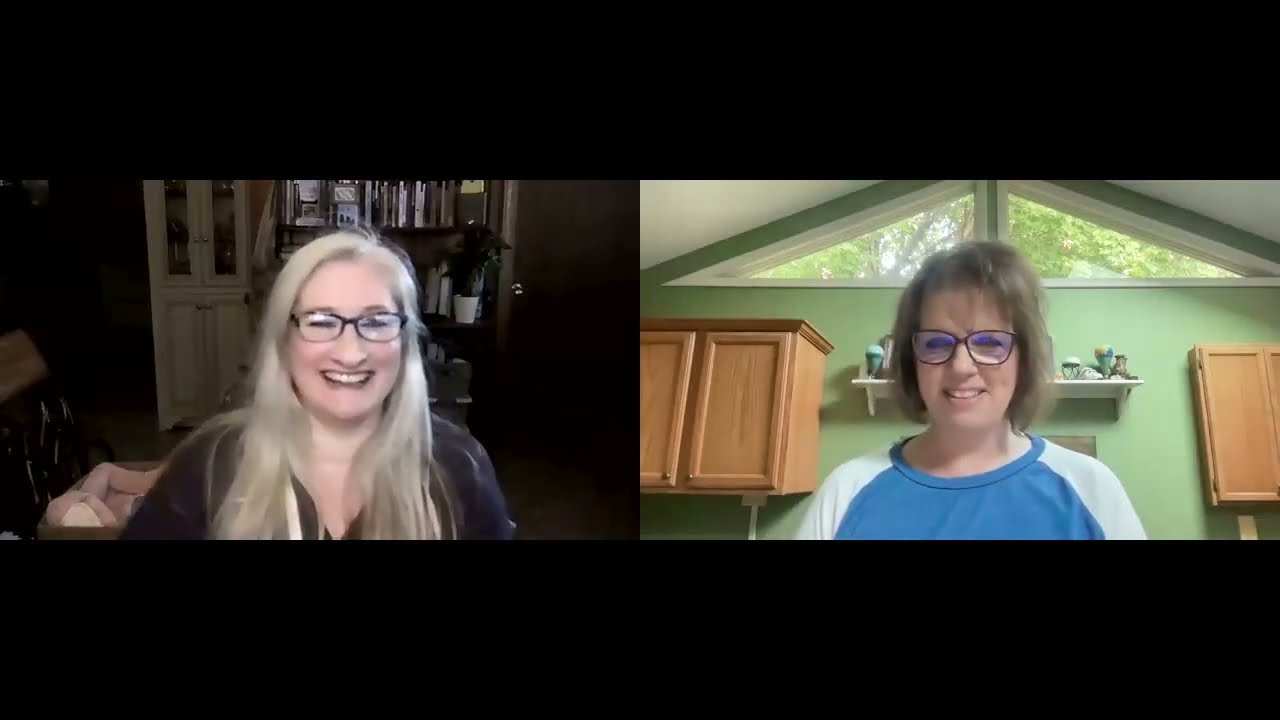
In this live episode of Menopause Support Live, holistic health coach Eliza Riley and post‑menopausal dietitian‑therapist Jennifer Gilliland host an open, conversational discussion about the often‑unspoken aspects of peri‑ and post‑menopause. They begin by emphasizing that the session is educational, not medical advice, and invite listeners to participate in their Facebook support group. The hosts share personal anecdotes and highlight a recent group post that asked participants to name a symptom they hadn’t expected, revealing a flood of over 300 comments that surface many “weird” or overlooked symptoms. They stress the power of community validation – hearing that others experience the same odd symptom can reduce fear and provide practical tips. A central theme is the value of small, sustainable habit changes rather than drastic overhauls. Eliza introduces the “crowding‑out” method: instead of eliminating a habit (e.g., drinking twelve sodas a day), gradually reduce the amount and replace it with a healthier alternative (water), making the change feel achievable. Jennifer reinforces this by discussing how food is tied to identity, tradition, and emotion, and how moderation and mindful substitution can respect those connections. Both hosts advocate for simple tracking—light journaling of food intake and how the body feels—to create “breadcrumbs” that reveal patterns and help women make informed decisions about what works for their bodies. They also address seasonal and social challenges (holidays, memorial gatherings, colder months) and encourage listeners to treat each day as a mini‑celebration, adopting a mindset of self‑compassion rather than perfection. Throughout, they underline that menopause is one layer of a complex life, and that taking small, intentional steps, supported by community feedback, can lead to greater wellbeing. The episode concludes with a call to action: participants are invited to answer upcoming questions in the Facebook group, ensuring ongoing dialogue and shared learning.
Chapters
Hello, everyone, and welcome to Menopause Support Live with Eliza and Jennifer.
It is a menopause chat, so it's okay.
I forgot where I was for a moment. Just keeping it real. Yeah. So I'm Eliza Riley. I am a holistic health coach who supports women through the ups, downs, and unexpected turns of peri- to post-menopause. And I am so glad that you guys are here with us tonight, but I'll let Jen tell us about herself first.
And I am Jennifer Gilliland, and I am, um, postmenopausal myself, so it is quite the journey. I'm a dietitian as well as a therapist, and I love supporting women in this space because I feel like it's a conversation we need to have more and more and more, and it's becoming more of a conversation, but we have a— we have kind of a ways to go. So I'm grateful to be here with Eliza and Talk through some really great topics.
Absolutely. I completely agree with you. I, I, I am still peri-menopausal at 51. I have not— I've not missed a bleed yet. So I'm not quite where Jennifer is yet, but I'm sure I'll get there soon enough.
Yeah.
So I am so glad that you guys are here with us tonight, whether you're joining us live or catching the replay. This space is all about honest conversations. Supporting— I'm sorry, supportive community and real strategies to help you feel like yourself again. Before we dive in, just a quick note. While Jennifer and I both have experience supporting women through perimenopause and beyond, we are not your personal practitioners. What we share tonight is for educational purposes only and not meant to replace medical advice. Always consult with your own healthcare provider before making changes to your routine. And if you have any questions about that, please ask. That's what we're here for. Absolutely.
Absolutely. So I was— is it okay if I just dive in?
Absolutely. Please do.
So I'm really excited about talking about something tonight. So I was just out of town and I had some time to kind of reflect and think about, you know, kind of my own personal journey with menopause and, um, just kind of the ups and downs, right? So there's so many things that can come into our day-to-day, whether it's special celebrations or holidays or vacation or anything that sort of interrupts the norm.
Mm-hmm.
And I have a lot of clients for one reason or another that have been talking about this too, where they feel like it's vacation or it's a special celebration. So like the rules don't really apply, right? And I don't really, I don't like food rules. I don't like, you know, rules about our body and that kind of thing. But when we talk about just sort of general guidelines or general ideas of how we wanna live our lives, how we're choosing to show up for our bodies and ourselves emotionally, mentally, physically, all the things. It just got me thinking about, like, I would love personally to be in a place where every day is a vacation, you know, that I'm treating my body so great and in such a healthy and positive way that every day feels like I'm celebrating life, right? And that may sound a little like rainbows and unicorns, and I don't mean it to, but it's, I think it's really important that we look at, like, like what we're doing on a day-to-day basis, whether we feel like it's being done to us versus it's something that we get to decide about. And menopause is such a multifaceted, multilayered diagnosis and issue, if you wanna call it an issue, that it's a— I think it's a really great way to think about treating our bodies with more respect and more kindness.
Yeah.
and then being able to celebrate every single day. So that's just kind of what my random thoughts were like in the car when I was driving to Wyoming for 17 hours. But, you know.
Absolutely. And I think you're so right. And I, you know, it made— what you were just sharing made me think about, you know, last week, um, while you were away on your wonderful vacation, um, I asked a question in the, uh, menopause support group and in my own group. Um, and, and I don't remember exactly what the— how the question was worded. I think it was something like, what is one symptom that you weren't expecting or that no one, no one told you about. And I was truly blown away. I mean, we still have, we have, I think, over 300 comments on that post at this point, because people are still chiming in with, with these symptoms. And I mean, don't get me wrong, we don't have over 300 different symptoms. You know, there's a lot of repetition in there. But there, there is a lot of stuff that doesn't get spoken about, that just doesn't get talked about nearly enough. And so I think, I think that it's, you know, groups like these, it's so important to have, to have the opportunity to say, Here's that one weird thing I did not expect or didn't even realize was, uh, connected to my hormones.
Yeah, yeah, for sure. And those weird symptoms and those weird things that are happening are always happening in the midst of life, right? So we're always kind of waiting for— I'm gonna wait until this particular time when I'm less busy, I'm less stressed, I can get more sleep, I have more time, whatever, and then I'll take care of myself. And it's like That's—
there's, there's—
when are we going to get there? Because we don't ever get there, you know. So it's, it's— I think it's really key to think about, um, making that decision and making that choice to the best of our ability. And I, I— that's what I love. One of the things I love about the menopause support group is if you feel stuck, if you feel like, I don't know what to do with this, does anybody else have this symptom? It's, it's amazing to me when somebody posts like a random weird symptom, and then 150 people chime in like, oh yeah, you have that too, type of a thing, you know. Um, because it's so common amongst us that we have— we have a lot of generalities that we talk about, but I think we have a lot of similarities too. So, you know, just knowing that we're not the only ones that are experiencing that, that can be so huge.
It can— it can really— I mean, I think so, so often we have these weird symptoms, and, um, and they can be frightening, you know. When you, you have a weird symptom and you're just like, I have no idea what's going on, I have no idea why I'm experiencing this. And when you go into a group like that and you say, hey, does anyone else— is anyone on us experiencing this weird thing? And then you have 150 people who are like, yeah, me too.
Yeah.
You can get some calm from that. You can get some reassurance. You can get some distance from the thoughts that are like, oh, my gosh, oh, my gosh, oh, my gosh. You can let go of some of that because then you realize, okay, it's not that crazy and it's not that weird and it's not that out there. And Often you have people who are like, I did this, I did that thing for it. You know, like, I did. You can get some suggestions. Another thing that you mentioned, another thing came up for me from what you mentioned is we so often when it comes to healing our bodies, we put it off and put it off and put it off because we think that it has to be some big overhaul. Like, you have to completely change how you're eating. Like, you have to completely, you know, like, you have to fast for 10 days or like you have to do something really crazy And, and out there, and, and it my, my opinion is that it really is not that drastic. Like you can if you just make one switch today. Like if you, if you typically I will tell you this is, this is from a woman I worked with many years ago. She used to drink a twelve pack of soda every day. Twelve of the, the cans of soda. She would drink a twelve pack every single day. And so when I, when I worked with her, it wasn't. stop drinking soda. It was, can we cut it back to 10? Like, can we just— like, like, still 10 is too many, but can we just cut it back? And we're going to replace those 10 with, with 2 cups of water. Like, just replacing a soda with a glass of water, if you have that many—
Yeah.
Is a step in the right direction. Like, it doesn't have to be these giant, um, life-changing overhauls. It can be just a simple Um, tweak, just a simple difference. It's a simple choice. And, and sometimes just making up your mind to do the thing, to do something different, is the change. Already sends you in, sends you in the right direction. Like, it already gets you moving. It's, it's such a, it's such a, our mindset is such an amazing, uh, thing.
Yeah, it really is. It really is. And I was talking, I actually had the opportunity to do a talk this week for 160 physical therapists. and talking about nutrition and just kind of a different way of sort of motivating people to make the change. Because as human beings, we don't like change. None of us like change. We like what we like. We get in our own habits. We get in our own kind of, in our own way sometimes and that kind of thing. And, you know, one of the things that I was really trying to stress to them is that in the midst of whatever else people are dealing with, so if there is a diagnosis of something, if there's some symptom that people are experiencing, We're still living life in the midst of that. So, you know, like for myself, my youngest just moved out of our house. So we are empty nesters. Even the grand puppy is gone. Like, he's so like, it's so quiet in my house. It's crazy. So in the midst of all of that, I'm still in the midst of postmenopause. Right. And I'm sure that there's— what are there, 185,000 women in the group? I think there's 185,000 different situations that people are in. Right. And so it's, it's important that we recognize that Menopause is a piece. It's not the whole puzzle by any means, but it's definitely— it's kind of layered on top of everything else that's going on, whether from that, you know, physical and emotional piece. So giving ourselves that, that ability to kind of take a step back every once in a while and be like, I'm doing a pretty darn good job, you know, given everything that's going on, because there are so many layers to life. And menopause is— I feel like once people are in menopause, it's like that's— it's all-consuming for a lot of, a lot of ladies. And I can see why. I mean, it's we've never been here before, right? It's like it's like having kids. You've never had kids before. You don't know how to be a parent until you become it. You know, you have a kid. So we don't know how to be a menopausal woman until we're in menopause, and then we're learning as we're going, and we're feeling you know we're feeling the hot flashes, and we're feeling the night sweats, and we're feeling the anxiety, and all of those kinds of things. So I just I just would love to for everyone to just kind of take a pause and you know give themselves a little celebratory clap. Like it's. You're doing really good.
Yeah, I love that. That's such a good point. I think there's so many things in life— there are, there are so many things in life, like having children, going through menopause, that you can't— you can read about it and, like, you can read all the books, but it's theory.
Yeah.
Until you're actually doing it. Like, it's— you don't really know until you're actually doing it, until you're actually going through it.
Yeah, yeah, yeah, for sure. Um, I also think that, that food in particular is a really vulnerable space for people because it represents so much about who we are, how we grew up, what our traditions were. You know, did, did we learn how to cook when we were younger? Did we not learn how to cook? Was there a lot of fast food? And all those kinds of things. So when we're asking people to make changes— I don't know if you find this with people that you're working with, Eliza, but I'm sure, I'm sure in one way, in some ways you probably do— um, we're asking them to change something that's so near and dear to their heart. You know, it's just so known to people. And so I, I really encourage women to think about You know, we're not just changing the physical, eating more chicken or eating more salmon or whatever. Like, we're definitely changing that inside too, and having to give up some things or think about, consider giving up some things or changing some things that we don't really want to. But it's also tied to an emotional piece, right? If you— if we were given a cookie when we skinned our knee, like, we equate that with somebody making us feel better. So to say, like, we need to decrease the sweets And it's so funny because a lot of the clients that I work with are, you know, they're like, I'm just going to give up sweets. I just, I just don't want to eat them anymore. And I'm like, but you're, but you like them.
Like, right.
Why take all of them away? You know, so finding that moderation and that kind of balance to, to what we're doing, I think is, is so, so very important.
So absolutely. Yeah. I like to call, I call it crowding out. I don't do elimination anything. Yeah. Like the 12 sodas. It's not about like, okay, we're not, we're not getting rid of sodas. We're simply replacing We're gonna, we're gonna have more water and then we end up being less thirsty for the, for the sodas or, or something else. And we find some, find something to replace the, a healthier replacement. Yeah.
Yeah. I think I had, I think I had somebody once that was drinking 3, is it 3 2 liters of Mountain Dew a day?
Oh my gosh.
I was like, wow, that's a lot of, and then eating like Twinkies or something.
Sure. You dip 'em in the Mountain Dew. You have no idea. Right. Super tasty. So, oh, the butt's crinkly if you dipped it in Mountain Dew.
That's probably true. Although they will survive the apocalypse, I've heard. So, you know, yeah, yeah, they are, they are very hardy. Um, but I think too, like, just as we're, you know, we're approaching kind of— I'm in Ohio, so, you know, it's getting colder, it's getting darker. I can already feel like my energy level decreasing as the night goes on because it's like when the, when the sun sets, it's like, oh, I could be in bed right now. 7:30 is not necessarily the time I need to go to bed though. But knowing that like the holidays are here and, you know, are coming and all of the fall festivities and things like that, just, I know that can be very challenging for people, you know, to really feel like I have to give up all of the things that make me happy type of a thing. And it's like, you don't, we just have to figure out how to make that a part of kind of that routine. So.
Yeah.
So yeah, it's a challenge. It's an absolute challenge. But I would love to see in the, you know, here in the group more of like what people are struggling with as we do the seasonal transition, um, and kind of what, you know, what they're finding, what's working, um, because I think that's really empowering to be able to share some, some of those things that are actually working to kind of keep people on, on track and that kind of thing too.
Absolutely. I, you know, I mentioned you before, but Saturday was my, my mom's memorial service, and everyone brought a food dish, you know, like you do. And we all met at my mom's house and, and hung out, you know, family all hung out. And I brought food that, like, I knew that when I got there, it was going to be a lot of stuff that I don't want to put in my body right now. So stuff that wasn't gonna make me feel good.
Sure.
So I brought food that I could eat. You know, I brought, I brought, you know, meats and, and, and sides and stuff that were conducive to how I feel. And it's interesting because not that long ago, well, it doesn't feel like that long ago, but several years ago, I probably would have been much more self-conscious about bringing you know, bringing salad, bringing— I actually brought, like, gluten-free bread. You know, like, they don't eat that, but I do.
Yeah.
That's what works for me. Dairy-free stuff is, you know, I don't do cheeses and stuff because dairy doesn't sit in my stomach very well. So I brought things that made me happy and settled my stomach, especially on such a stressful day. But it can be really difficult to to show up like that. It's so important to show up for yourself. And I will tell you that not one person said anything. Like, no one gave me any flack about it. No one made me feel bad about the choices that I made and the food that I brought. In fact, a lot of people were like, oh my gosh, this is like gluten-free. Wow, that's really good.
Mm-hmm.
I was like, yeah, like, it's so important. And it's not to say that you can't go to a party and, and enjoy whatever, whatever is there, you know. But maybe you don't have— maybe you choose not to have a whole plate of, of something that's— that you know is going to not feel good in your body later. So maybe that's where you, like, you lean more heavily on the things that, that do feel good and just have a bite or two of the things that you just really enjoy and, and know, know that it's not going to feel so good.
Yeah, I think it's, it's Recognizing that it's a choice, right? That we don't have to— I was talking to a client years ago and she said that her granddaughter asked for sweet potatoes in February and she was like, huh, we never make the Thanksgiving sweet potatoes in February. She's like, sure. So she made them, you know, because we have this thought process of like, we get this, this whatever it is once a year or every once in a while. And it's like, if you want whatever it is tomorrow or the next week or the next month, you can make it. You know, there's no, there's no boundaries to like, it's only good in, in November or December. But I think that's part of it, right, is it's that it's vacation food or it's special occasion food or it's birthday food or it's Thanksgiving food or whatever, Christmas food. So like really making sure that, that we're approaching any celebration or any kind of variation from our day-to-day with that understanding of we get to, we get to decide if we eat a couple of bites of it or if we eat the whole thing. I mean, there's certainly been things that I'm like, no, this is really good, and I'm gonna, I'm gonna eat this and, and probably not eat, you know, something else, but I'm gonna focus on the things that, that I really enjoy. Um, and, you know, that, that whole balance— I think balance is a really hard thing for all of us, um, depending on how we're feeling that day, how much energy we have, kind of what's going on, you know, externally. I was just talking to somebody earlier about we get to— we have to have, like, find it within ourselves a little bit too, or actually a lot. Um, because we can— other people can tell us certain things, like even you and I are like sharing information and giving guidance and that kind of thing. But it's the people that are going to benefit the most are the ones that are kind of taking that to heart and seeing how does that play out in my life and what does that look like for me. Um, and that's not selfish. That's absolutely amazingly wonderful, taking care of yourself. And if we all learn to take care of ourselves just a little bit better, I think we'd feel better. You know, we'd have less anxiety and hot flashes and all that kind of stuff too. So it all kind of flows together. Yeah.
And that's, and that's where it comes back to one of the first, the first thing that I tell, that I suggest women do when you're trying to figure out what feels good in your body. It can be so difficult when we're just kind of like, well, this was my day and you look at the whole thing and you go like, well, at some— now today I don't feel good. Yes. Here's what I did yesterday. And you don't, you can't pinpoint where The not the the feel bad came from. So it's so important to start writing down things like just and not a big it doesn't have to be this big journaling thing, but write down what you eat and how you feel. You know, so you so that you can so that they're because they're breadcrumbs. You know, it's not you're not just writing it down for the heck of it. You're writing it down because then you can look back and go, oh, I I had I did this and and that happened. Then I did it again and that and it happened again. So clearly, like there's a correlation there. Like there's a causation there. So um so. So it— when you do that, you can get very clear on what works for your body so that you can decide with, you know, you have an education, you now have an educated way to decide, to look at something and go, okay, I know that if I eat that or drink that, I'm going to have that reaction. Is it worth it? Right.
Right. Right. And some days it will be worth it and some days it won't. You know, and and and it's always that that's what I think is so awesome about about the menopause support group and you know conversations like this. Like it's it is all up to you. Like you get to decide and there's no wrong to it. I always tell people like awareness is just the data that we use to make the next next best decision. You know, it's it's not we don't need to judge it or be like oh my gosh I'm so horrible because I did this. It's like you did the best you could. You did what felt good to you at the moment and as long as it's you know. Good for you, and good, then do it. You know, so yeah, it's a it's a definitely a work in progress for a lot of the ladies I know because we've we've lived so long for other people and taking care of other people and doing all that kind of stuff. But really starting to recognize, and I would challenge every single person watching this video, like use this time as we're moving into the fall and the winter as a as a new kind of way to look at it, right? And and whatever happened the last forty fifty years, like it matters, but it doesn't in this particular. Like, you get to rewrite the script if you choose to, um, or modify the script, whatever your particular case might be, um, to get different results, you know. And there's no, there's no one way to do it, um, but it's definitely that awareness and moving forward.
Absolutely. I so agree.
Yeah. Well, this has been a really great conversation. Um, I don't know if there's any other questions that we had that you're— you wanted to talk about, or if we want to No, I'm good.
Now, I will, I will be sure this week we did— I didn't ask a question in the group to cover for the live, but I will be sure to ask one on Monday, or one of us will be sure to ask one on Monday, and maybe we'll ask a couple. We'll see. So if you would like your voice heard, please be sure to respond on those emails— not emails— on those posts in the Facebook group, and we will be back here next week, a week from today, and we will discuss your answers to the questions, whatever that question is. We don't know yet.
We'll see. Whatever the questions are. Yeah, yeah, yeah. Always great to see you, Eliza.
Same to you. She's ready to be held. Yes, thank you guys so much for being here with us today, and we will see you next week. Have a great week. Bye, everyone.
Bye. She's awesome.
More from Eliza
Why “Trust the Science” Has Left So Many Women Confused About Their Health (and what to do instead)


Small Shifts, Big Relief: What’s Actually Helping in Menopause (According to Real Women)

Menopause Symptoms No One Warned Us About: Brain Fog, Itchy Ears, Sleep Struggles & More


Menopause Support Live | HRT Withdrawal, Brain Fog, Hair Changes & the Truth About Hormone Therapy

Menopause Support LIVE with Eliza & Jennifer | Night Sweats, Hormone Therapy After 60 & More

The Gut-Weight Connection: Why Your Belly Won’t Budge (Even When You’re Doing Everything Right)
Tired, Sore, and Achy? Your Gut Might Be the Reason | Gut Health & Joint Pain in Menopause
Will I Feel Better After Menopause? | Post-Menopause Symptoms, Hormone Truths & What to Expect