The Power of Breath: Gobind Vashdev & Stig Severinsen on Mastering the Art of Breathing
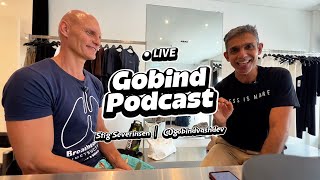
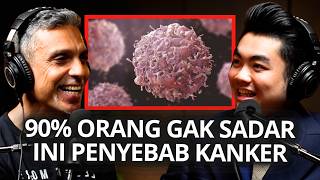
In this interview Gobind Vashdev hosts Stig Severinsen, the creator of "breathology," a comprehensive framework that unites cutting‑edge physiology, peak‑performance training, and ancient breathing wisdom. Severinsen recounts his personal journey from childhood diving and competitive swimming to a PhD in medicine, explaining how these experiences shaped breathology’s three pillars: (1) rigorous science (neurophysiology, blood‑gas dynamics, Bohr effect, dive response, EPO production), (2) performance optimisation (athletes, Navy SEALs, surgeons, CEOs), and (3) timeless practices (yoga, Buteyko, Wim Hof, etc.). He argues modern life—constant information overload, mouth‑breathing, sedentary habits—creates chronic stress, cardiovascular disease, and mental illness, which breath work can counteract by rewiring the autonomic nervous system, improving vagal tone, and enhancing oxygen delivery. The conversation covers physiological mechanisms of breath‑holding (CO₂‑induced vasodilation, increased hemoglobin release, mitochondrial efficiency), safety guidelines (dry‑land practice, avoid hyperventilation, never hold breath alone in water), and common myths (brain‑cell loss, breath‑holding only for elite athletes). Severinsen introduces a free 7‑day breath‑hold challenge delivered via an app (breathholdchallenge.com) that teaches nasal breathing, relaxation, visualization, and progressive hold times, positioning breath‑holding as a simple, daily bio‑hack for anyone—from children with ADHD to elderly individuals. The interview ends with a philosophical reflection on breath as the bridge between body, mind, and spirit, and a call to share these practices widely, especially in Indonesia.
Chapters
Moi, c'est Nafas Keta. Snake, how are you?
Very good. Thank you for invitation. Thank you so much.
Thank you for making time for us and sharing here. Can you tell me about what is breathology?
Breathology is a method, you can say, a framework, a structure I created many, many years ago from the experience I had in my life. So I started out loving water. I was very curious as a child. I investigated nature, diving. And the more I could dive down and see animals, you know, the more fun it was, the more I could hold my breath, the more animals I could see. Yeah. So it was a natural play, a child's play. Then I was lucky we had a boat. So I sailed with my family. They wanted me to be a good swimmer if I fell in the water in Denmark, very cold. So I started very early with baby swimming. And then at 5, I got selected for something called the talent team. So the trainers or the coaches selected me. They saw I was good in the water. And I always liked moving. I always liked using the body. So I swam competitively all my childhood years, all my teenage years. Then I did also judo, martial arts.
Yes.
I was the Danish champion a few times. Also for the swimming, I won 4 national championships as a child. So I was always very competitive. So the sport and nature and competition and travel. And my life has stayed the same. So breathology was actually my life experience because also at a young age I was introduced to the ancient wisdom of yoga, breathing, the calmness, how you use breathing to affect your mind because the mind is difficult to regulate with the mind.
Yes.
If it was easy with the mind, there would be no depression, no negative thoughts, no—
Right.
Dark place in your mind, everybody would be happy and run around. They would tell themselves, I'm happy, which helps, but it's not always the best way if you're really, really sad. We all in life have ups and downs. So I found that this method also for veterans, we help people with trauma, anxiety, fear, PTSD, so a post-traumatic stress disorder, stress after some big events, some big trauma, illness, seeing your best friend die, being a soldier, losing a loved one. It can be many traumas, can be childhood trauma. And I just realized that with the breathwork, we had a magnificent key to open and to go into people's minds, into the emotions. So we could go into the emotions and feelings of people with breathwork, and either they could release the stress or the trauma, or they could learn to manage the stress and view the stress in a different way. So Basically, Breathology is a platform that teaches you how to rewire your nervous system. And there are so many good schools in the breathwork. Buteyko, Wim Hof, Patrick McEwen, Oxygen Advantage, Dan Burleigh, Holotropic Breathwork. There are so many styles. And they all offer something specific for different times and different students. And I just thought, why Why not try to create something that is more holistic in the sense that takes everything in? So in brief, breathology is based on 3 pillars. Cutting-edge science because of my background in biology and neurophysiology and my PhD in medicine. So you have to be able to measure it and find out what is the effect on the brain, on the heart, on the lungs. You need to see the blood increasing, the red blood cells, oxygen delivery, Bohr efficiency, delivering oxygen, all these things you need to understand. And learn what is it. That is peak performance. So you need to be able to see, can I hold my breath longer? Do I feel more relaxed? Is there a benefit from doing all this training? In my everyday life, can I manage stress better and the way I react to stressful situations? And the third component is the respect of timeless wisdom. It's the respect of ancient knowledge from not just yoga, but in particular yoga from Asia, but also China, Chi, Ki, Japan, but also South America. One of my gurus, my teachers, is from South America. So I also found teachers of yoga in India. They became my masters. Like acharya, like a teacher, a master. So I've learned from incredible people, the best scientists, the best athletes, the best researchers, and the best yoga gurus in the world that I've been lucky and fortunate to meet. So I took all the knowledge and condensed it condensed it into something you can say the essence. You know, like when you make a soup, you boil it, you boil it, in the end you have the essence. You have the good strong stuff. And that I thought, if I put it in a nice online universe where people can access it and use it every day in their busy life, whether they're a banker or CEO in a Fortune 500 company or struggling with two kids alone being a single mom or having illness in your family, whatever the issue is, it's teaching you some way to regulate your stress. It teaches you about the vagus nerve, how to actually deregulate and go down in a more calm state. I also train Navy SEALs, Royal Air Force, Olympian athletes, gold-winning athletes. I just trained Victor Axelsen, who won the double gold in badminton. I know it's a big sport in Indonesia. And also I trained Madison Keys, who just 2 weeks ago won the Australian Open. So I train a lot of these people and they are top of the game, but they need to regulate the mind through breathing. So breathology is, you can say, the science of breathing, the learning, the application. The way you use breathing is breathology. So I made it a brand. I have it registered, trademark, all this. So it sounds like biology, right? Right? The learning of your life.
Bios is life.
Bios is Greek, it's life. And breathology is the science, the application and knowledge, understanding of breathing.
Of breathing.
That's breathology. But the three key factors is cutting-edge science, peak performance and ancient timeless wisdom.
I see.
I think we have a solid foundation and then it needs to bridge into the modern world.
Okay.
You cannot do pranayama 6 hours a day if you're a banker. If you have 3 kids at home, you don't have this time. You don't have this luxury of time. So I try to make a system that's modernized, and efficient.
So everybody can do this.
Everybody can do it. You don't need to be more than 2, 3, 4 years old. A lot of kids with deficiency of concentration, ADHD, they can use it with great benefit to be better at school, focus on the homework, learn to focus on the task at hand. I train the Navy SEALs, the top elite military in the world, to be more sharp in very dangerous situations, life and death. For themselves and for the hostages or people they're rescuing. I teach doctors that are doing surgery, eye doctors. My brother is an eye surgeon. And it can also be people, because in this world we have a lot of people dealing with stress and fears and anxieties. It can be anyone, but also older people. Because when you become older, not always do you get so much help from society. You don't get so much help from the nursing home or from the hospital. You have a more quiet life. But we should take very good care of the elderly population because they have created everything we see. So in respect, we should pay it backwards. So breathing is also something anyone can do because you don't need to be very strong, like have a high fitness level. You don't need to run. You don't need to do all this, but you can sit at home and do the breathing and learn to calm yourself and to actually use breathing to train your heart and your vascular system. So it's like a walking, you know, like walking every day. You cannot do it if you don't have the legs, if you have diabetes, if you have amputated the legs, if you're in a wheelchair. We have to look at the reality of life. What is the real life for people, normal people? And then we need to adapt training methods that can fit their lifestyle.
Okay.
That's the idea.
Anywhere.
It's a very simple idea.
Everyone.
Anywhere.
Everyone. Everywhere.
Anyone. Anytime, because breathing is right under your nose. Maybe tell your people, because you also took our certification or you're becoming a qualified instructor, people maybe don't know that they're breathing 25,000 to 30,000 times each day. I see it as a little gift every day, an opportunity to do better. And many people are mouth breathers. You were a mouth breather, you told me yourself, when you don't know about it. People don't know the nose is for breathing, the mouth is for eating. You have a lot of benefits from the nose. I'm sure you explain from nitrogen oxide, it's antiviral, antibacterial, antifungal, it creates a better universe inside of your lungs, it brings more oxygen to your blood vessels, it gives you more energy, it gives you more peace if you want to fall asleep faster, and then breathing is the bridge that goes from the mind to the body. And this is where we have been disconnected in the modern world because we're on social media, emails. We're not built as human beings to get so much information.
Right.
We are not supercomputers.
Right.
Our brain is incredibly smart, but the brain also reacts to our emotions. So the emotions will be overburdened, that's when you're stressed, and then the stress signal goes to the brain and then it wreaks havoc on your body, it really makes problems. So most people in this world, not to be so negative, most people die from cardiovascular disease.
Yes.
Then second, I think, is cancer and then depression, suicide and all the side effects are coming. And then also actually a lot from improper medication or wrong medication or overdosage of medication. So actually modern medicine that's created to help you become more strong will kill you. A lot of preventable death, it's called preventable because it didn't need to happen. But if you have a wrong dose or the nurse doesn't give you the right dose or maybe Maybe you have a bit of dementia, you don't remember how many pills to eat. It can, you know, destroy your kidney, your organs, and so forth. So people die for many different reasons, and there are many ways to, with breathing, reconnect with your body and understand what is the body saying? What is it telling you? Why do you feel tired? Why do you feel depressed? Why do you have dark, like gray filter? Why do you have a gray, like light around you? Why are you not happy as you were when you were young or in love? And with breathwork, you can start to connect to the body and understand what's going on, and then start a new story to your brain. Because the way you breathe is the way you feel. You cannot fake it.
The way you breathe is the way you feel.
So an example, if you breathe like this, I'm sure everybody listening and watching the video, and even if you have podcasts, they will start to feel uneasy. They will feel the stress. Even if they don't think they do, the pulse is rising now. Because I'm at a higher speed with my voice, I'm more like this, and it evokes a stress response. You say in biology or medicine, you say it's a fight and flight. So you have to fight something or you have to flight. You have to run. Get away, get safe, get away from the danger. So even speaking like this, also for a boss in a big company, if you don't understand the dynamics of social skills and how people are emotionally, the emotional intelligence, so not just the IQ, the intelligence, but also the emotional EQ. If you don't understand this, you can never be a great leader. You can be a good leader, but never great, because you don't have people following you or trusting you. Same with sales. If you become very trustworthy and people see you as a nice guy, nice person, they trust you, then they sign anything. Products, documents, lease agreements. So it's about using breathing as it was meant from nature and God and the universe to reconnect with the deepest soul. And behind that is biology and psychology. We can explain not everything, but we can explain many aspects of why it's wrong. So now we did the wrong breathing, but then if people listening do the right breathing, they use the nose. They can imagine now all the people that they're listening and closing their eyes, and they kind of imagine a beautiful flower. It can be this beautiful yellow flower, the white and yellow flower here in Bali, the frangipani, or it can be any flower. And they imagine they're smelling it high up in the nose, almost up to the skull. Tall. And when you do that, you have a better flow of air. So the airflow control comes into your advantage and you get all the signals from the surroundings. You smell the soft, like sugary smell. You imagine it up in your brain and it goes to your inner nose. And your inner nose is also very overlooked, just like people have bad habits doing mouth breathing and maybe breathing high in the chest. It's called a shallow breather. It's actually hyperventilation, which we know for all your training and Buteyko, we know it's very bad for your for your pH value, for the Bohr effect. We know this scientifically as a fact. We don't have to discuss it or maybe you like the style or not. We know it's bad. And also it's bad because it raises the heart rate. So it gives you hypertension, meaning high blood pressure. Then you go to the doctor. What does the doctor tell you? Do some breathing exercises. No, they don't.
No.
They tell you take, take statins, take pills, take something to reduce the blood pressure. They don't talk about yoga. They don't talk about shoulder stand, headstand, try to reverse the blood flow, try to use movement to get the lymphatic system moving. They don't tell you any of this. So my mission in life is also to get a more holistic approach to treatment. So we need the breathwork, the styles, all these schools come together and help the modern medicine. There are many good pills and many vaccines and many different things that are an incredible invention, but a lot of it is not necessary. And if you have a trauma, you can never heal it from antidepressant medicine because it doesn't go to the root cause. So modern medicine is not so modern because it looks only on putting out the fire. Like, take asthma. That is a very good thing to do, butyrico and high CO2 and stuff like that to rebalance the CO2 balance in the bloodstream and the acidity and the alkaline state. It's not like an inhaler will help you not have asthma. It will dilate and you get cortisol and you get hormones that are not good in the long run. And just like drugs and alcohol, anything you put in your body, The body gets used to. So what does this mean? You need more and more and more to have the same effect. Whether it's cocaine or alcohol or any drug, you need more. So of course, for the medical world, it's great. You have lifetime subscribers that need more and more. This is smart and is very smart because you don't solve the problem. You don't get to the root cause of the asthma where breath holding and Buteyko and these methods are wonderful things to do. So this is an example of how bad breathing habits can be very dangerous. Very harmful. And good breathing, like the nose breathing we just did, and the slow exhale can be with the mouth. It makes you relax the muscles, the shoulders, the jaw, the mind. And then in that way, the breathing becomes the bridge from the mind to the body. And you use breathing to travel across that bridge.
And it's easy.
It's very easy.
Very easy.
Very easy, yeah. But you need to know. How to do it. If you were never told you must breathe with the nose, you go 70 years breathing with the mouth.
But people think about that, why we need to learn about breathing since we're born, we breathe.
It's a good question.
Why we need to learn?
It's a relevant question. It's very simple, the answer, in my opinion. I am a biologist, specialized in neurophysiology, marine biology, zoophysiology. So how's the body created? How does it work? How did evolution make the brain, different areas of the brain, and our emotions and behaviors and reflexes. And also I studied human physiology when I started in Spain. So my simple explanation is that the world evolved too quickly. Human evolution is slow. Any evolution for any animal, it's incredible. The Darwinistic approach of changing, it's cold and you get more fur. Then you need to find some insect inside the tree, you make a long beak. Over thousands of years, you adapt because if you didn't have a long beak, you couldn't find the insect and you died. So the ones with the long beak would have the genes that get more long beak and they could find the insect. Survival of the fittest from Darwin, right? Charles Darwin. But we evolved so quickly in the last, after the Industrial Revolution and after now with the superpowers of computers 20, 30, 40, 50 years ago and now with AI. So like I said in the beginning of this interview, we get overwhelmed with sensory information. So we all live in our intellectual mind, and we are very smart and quite educated now with ChatGPT, everything you can get, any knowledge, any king, any person who lived, anything you can know all about the history in one second. But that's information. That's not intelligence or knowledge. It's not applied knowledge. It's just info. It's just data. You can know anything about the gods of Indonesia. All of them. Like, what are the names that will come in 5 seconds in ChatGPT? But it doesn't mean you know why it was here, what did it mean for the spirituality, how did people live in peace with nature, how was the connection? You just can recite some names. So what happened is that we live mostly in our mind, and that's why we're detached from our body. So children breathe in the right way. Little babies that breathe with the belly. If you look at your, you know, I wrote this book, Breathology, and I start describing, if you look at your cat or your dog, It's always belly breathing. And by the way, for everybody listening or seeing this, it's not the belly, it's diaphragmatic breathing. But it's diaphragmatic breathing, it's the diaphragm, the breathing muscle, but because it pushes down, the stomach goes out. So it's called belly breathing in common terms, but the belly is not breathing. The air doesn't go in the belly, it goes in the bottom of the lung that then pushes out the belly. So when you're a child and you don't have all this information because you don't understand it, you don't need it, You just breathe in a natural way, natural, that biological way. But then imagine the child being maybe 4 or 5, they need to go to school, they need to perform, they need to tell their grandparents, are you going to become a fireman or a lawyer? Right? The stress starts. You can almost imagine this child of 5. I don't know, what should I do? But his best grandfather was a doctor, maybe I should make him happy and proud. Oh no, but I like design.
I like art.
I want to be a painter. Oh, you can make no money in painting. Forget about those stupid thoughts. So the stress already starts at 4 or 5 years old. And then with the clothing also, you need to dress in a specific way. And I don't want to mention like any platforms that are worse than others, but of course Snapchat and TikTok and these where you see like idols and it's blasted out to children without regulation. And it's not a discussion about regulation or not. That's not what I'm talking about. I'm just talking about they have access to millions videos with a click of a finger. And nobody knows what they're seeing, whether it's good or bad. But the point is they see all these role models with big lips and fillers and big breasts and especially women, right? Also men, but especially women. And it's impossible to live up to those ideals or iconic. They think it's iconic, right? And then also because we're losing the traditional way of living of learning skills. So we're not developing skills for our body, except if you're an athlete, right? You're not developing skills to become very dedicated to something, making jewelry or becoming good in some area. Because when we were younger and our parents and grandparents were younger, they stayed more or less in the same place all life. So if they were carpenters, they built houses. If they were hairdressers, they cut people's hair. If they were doctors, they helped people in the hospital. They didn't change job every 3 years like LinkedIn and this and that. So there's a lot of confusion and a lot of of, I would say, dissolvement of skill building. So how do you breathe naturally? How do you use your body? There are probably many, many studies out, but I would argue that kids today don't have the same level of coordination that we had standing on one leg, standing on the arms, just doing stuff, because they sit 12 hours or 6 hours, at least many babies, with the iPads and the phone from baby stage from 3 months, 6 months. So there's a big change and of course that affects the brain development. Exactly. And it affects also the nervous system in your body. So in the brain you have CNS, central nervous system. In the body you have PNS, peripheral nervous system. They need to speak together. But if you are not moving, first of all, you're not producing muscles, you're not really becoming strong and you're also not moving the blood, so your blood vessels and your heart is not strong. So You're really not in a natural state. What happens? You feel stressed. What do you do when you're stressed? You try to take more air, a shortcut. So now we get to the core of why people are stressed from an early age, because they compensate. You always compensate if you have to do something, but you don't have the skill or the knowledge. You compensate. Because it's natural for you now to take more air because you're tired. You don't have the force, you don't have the energy, so you try to take more air. And the first thing you, the first technique is take more air.
Yes.
And then that evokes the stress response, which then raises the heart rate. Then you produce more adrenaline. It's called biofeedback. You don't need to be a biologist to understand this, but it's called positive or negative biofeedback. So in this case, it's a negative biofeedback. It tells the brain and the body, because you have receptors in your lungs, and they're telling the brain, oh, your lungs are moving very quickly. And then the brain tells, oh, we need to produce more adrenaline because there's a dangerous situation here. Even though you're 5 years old or 8. Oh, I have a test at school. We never had in my class, I'm 52, right? We never had anyone not coming to exams or needing to go to a psychologist or have pills to sleep at night when they were 8 years old. This is a sick world we're living in. Sick, sick, sick, sick. Psycho sick. Even that doctors prescribe it or even allow kids is more sick. But that's a whole different discussion. Especially when you have breathing right under your nose, you can use. So that was a long explanation. I think it's important. We can put on YouTube anywhere, but the world is moving too fast for the body to follow and especially the mind. But we live in the mind because we create companies and online media and social media from our mind. It's not from our body.
Yes.
It's from our mind. We make a post, we put some text on it. We have AI to do the translation. We don't need to know English. Bahasa, whatever. We don't need to know anything. We can just put it and the computers can help us. So you don't need to develop skills to be a good communicator, to be a good educator and teach interesting stuff. So there are many, many, many reasons. And like I said, politicians, doctors, schools have not been shown a grown-up leadership role where they actually dedicate money or allocate resources to have people kids in school learn breathing and meditation, to have the workstation for employees use more breathing to stay calm. Mindfulness and meditation has come on the rise because Google and Facebook started using it. And now I also teach B2B. I sell products to big companies with breathwork. We call it business breathing. But 5, 10 years ago, people would laugh at you in the business world like, oh, My wife is doing yoga. I don't need to do it and sit in the pose. Now it's fashionable.
Yeah, yeah, yeah, yeah.
So we need to also be leaders and like you're doing in Indonesia, we need to be strong and bold and take responsibility of explaining what we see as the truth or what we see as a better way. An alternative way to what's going on right now. So I'm not saying stop all social media. I'm not saying steal the phone from your child. I'm not saying, you know, don't continue your life, but you need some intervention and some elevated intelligence and knowledge to take the bad habits and create them into good habits. So that's one of the key points of breathology, why I created it, is to analyze and pinpoint the bad habits, mouth breathing, breathing when you're at work, collapsing the chest and the heart when you're sitting 12 hours every day for 40 years. Of course it has a bad impact. You don't You don't need to be a sports physician to realize that it's better to get a little bit more expensive chair, open the chest, let the heart open, and then sit and work. And then every hour you have the alarm, beep, beep, beep, beep, beep. You do 1 minute of breathing or relaxation. I don't care what you do. You call your mother. Hi, I'm at work. How are you doing? Oh, I'm so happy that I could take this minute to call you. And boom. And then you focus again. And there are numerous studies showing you're more productive and creative in this way. So we need to break the pattern of just thinking more is better. Less is more.
Less is more. Right? Yeah. About less is more. Because when I talk about breathing and people say, well, how come less breathing and get more oxygen? If you're less breathing, you get less oxygen.
How? How? But it is because it's counterproductive, right? Or counterintuitive.
Yeah, counterintuitive.
You're like, oh, but how can breath holding be healthy? So maybe I can take your answer a step further. So people would say for sure, breath holding is not good for you. If you ask a doctor, no, you can have brain damage, it's not good for your heart. And you know, or people don't know, but I hope they will know soon, especially in Indonesia. I'm the one in the world who's pushing this, holding your breath is very healthy. I say breath holding is the new black. I don't know if you put a TED Talk, but now your manager knew the TED Talk, but we could put a link or something. But I made a TED Talk, which if people don't know, it's like you're invited to some stage, it's called TED. X, like red letters. And you're invited to the stage if you have something in your heart you want to share and some good information. And I have done it a few times. And I called this TED Talk, Breath Holding is the New Black.
Breath Holding is the New Black.
It means in English, it's the new fashion.
Yes.
So to answer your question, it's taking it a bit further than you're saying less breathing is good for you. But if you hold your breath, And that's for next podcast when we meet next time or do the instructor program or something. But just briefly explain, when you hold your breath for a little bit, you start to increase the pressure of oxygen in your lungs, partial pressure. Then because you build up CO2 because you're not breathing out, you keep the CO2 just like in Buteyko or Bolt's score or Patrick McEwen, Oxygen Advantage training style. So the CO2 is a good friend because it's expands any blood vessel. So in medicine, you call it a vasodilator. It's a fancy word, but it just means it opens. And the reason why it does this is it has an effect on the smooth muscles, the muscles around the blood vessels. So if you have a blood vessel, it's lined with these smooth muscles and they relax. So the vessel becomes bigger instead of this. So adrenaline will go the other way and oxygen is a vasoconstrictor. So that would be your next, like, go-to answer anytime you're asked in the future. Well, oxygen is a vasoconstrictor. So it closes off for the brain to deliver more blood. And in the blood is, of course, the oxygen. So when you do breath holding, CO2 cannot escape. But there are many positive side effects. And then also after a while, you awaken the inner dolphin. And that is my big mission in life, you know, to explain how you can awaken this inner dolphin that we share with all mammals in the ocean and on land. A mammal is a cat, a dog, a rat, any animal that has tits, mammary glands, and give milk to the babies. Like whales, people don't think about it. You know, whale is giving milk in the water, but you think, how can this fish give milk? It's not a fish, it's a mammal. Dolphins, blue whales, orcas, they're all whales. Like seals, like dolphins, they need to give milk. And you know, they need to come to the surface to breathe. With a hole, you know, because they have lungs. Yeah. So they are not fish and a shark is a fish and they don't need to breathe because they have the gills. They have these things here with the pumps and the oxygen is extracted. So we can awaken this inner dolphin and then all these reflexes work in your favor. So it lowers the heart rate, it lowers the oxygen consumption. So you become superhuman in a way and you utilize oxygen better. And then because CO2 rises, you also open the blood vessels also in the brain. So you can also have like and more areas of your brain start to work together. And for the people I teach in creative workplaces or to solve problems, to be more composed, you open more areas of the brain that connect in a deeper way, deeper level. And you can train to go into flow states. So when you're listening in this intelligent world we talked about before with computers, you're analyzing everything. You have a small computer. Should I do this? Should I do this? TikTok. Should I put a pink or a green text on this video? What is best? What can people see? What do they click? It's intelligence, it's like intellectual, but it's not always emotional. When you go into the reflexes, you use the best of nature. And when you do the breath hold and learn to become relaxed in that situation, you can learn to stay relaxed in any situation. So that's the beauty of this inner dolphin. You can take this skill that you're becoming comfortable when it feels uncomfortable. And not only is your heart rate going down, but in the brain, you also go into the flow state, which is alpha. So if you're working or want to solve a problem, alpha is the dream state. Alpha is also in some meditation, you know, it's flow state because time dissolves and you dissolve your ego. It is actually one of the highest states in yoga. So when people are analyzing and intellectual, they're in beta, B-E-T-A. So when you're listening, you're criticizing yourself, you're a friend, you're like having this inner dialogue, you're in beta. That is, of course, not when you're super creative and flowing, because the brain doesn't, it has a monkey mind, you know, it's just like this bad person telling you stuff.
Judgment.
So judgment, judgment all the time. You're failing, this is not right, how do you know, how do you deserve this, you didn't do this as a child, you cannot do it in the future, all this judgment, right? So you cannot become a world champion or create an incredible company because you're limiting yourself in the mind. So with the breath holding, you open the brain, you get more blood around, you get more intellectual and creative. And when you then have more CO2, then the oxygen from the hemoglobin, from the red blood cells, it jumps easier to every single cell. So you super boost your cells and it's something inside the mitochondria, but it's too long a discussion. There's a power station in every cell, many, many small power cells. And it's like a battery for the phone. They need to be working and charged. And then You create energy from oxygen and you produce CO2 as a waste product, as a byproduct, and some water you sweat out or breathe out, right? But so you need sugar and oxygen to have this aerobic process. That's how we create energy. So when people can learn about these reflexes and how to use them, it's very healthy because you do it from a conscious mindset, right? And it actually releases more oxygen in blood the first minute or two And when you have the dive response really kicking in, the spleen empties all the red blood cells, the spleen constricts, it's part of the mammalian dive response. And if you keep doing it and do breath-hold training like I do for the world record trainings, you produce EPO, erythropoietin. It's a hormone that's naturally produced. Some people use it for doping, for skiing, for biking. EPO, EPO doping. It's a naturally occurring hormone. You produce it from the core of your bones. So the structure of the bones. The bone marrow, and then they are like stem cells. They're changed with the EPO is changing them into red blood cells. And every 120 days you have this rhythm and new blood cells are produced. So when you then hold your breath, because the body thinks, ooh, we need to optimize the utilization of oxygen, you can increase the hemoglobin. I call it natural doping. It's a phenomenal process and it's 100% healthy and safe compared to the cheating, the doping, because you do it too fast and the body cannot adapt so quickly, your blood becomes too thick. Too thick.
This is endodoping, like endorphin or endocannabinoid or something like that.
No, the EPO is directly regulating the red blood cells. It's a stimulator for red blood cell production. It's called erythropoietin. It's an EPO. It's a hormone.
It's for blood cells.
To make more blood cells. It's a stimulus signal.
Oh, yeah.
And that you can get from holding your breath, or you can do altitude training. You know, people run in the mountains, or they do hyperbaric hypoxic medicine, they go in the chamber and they put the oxygen, they change the value of oxygen, they put less oxygen. So hypoxic training or hypoxic intermittent training, or you go deep diving, you have the same effect. This you can simulate, simulate on land safely when you hold your breath. It's a very smart way to increase your performance and your health.
But we have to do like step by step, right?
Step by step. Always in breathology, I tell people baby steps, you know.
Baby steps, right?
Baby steps, baby steps, respect the process. It takes time, you need patience, and then you need to have this ability to use visualization imagery to see what is the ultimate goal. Where do you want to go? You have to create your reality in the future, but you need to start creating it with small steps so you don't exert yourself. You don't want to harm yourself. So holding your breath too much in the beginning creates tension. This is not what you want. You want like, okay, I cannot more today. Remember the smile, I tell people, and then this is how you should train in pranayama. Never too much. And then by weeks, by months, by years, you recondition your nervous system and you become like the best version, the healthiest version of yourself. Never sick. Your immune system is strong. Okay.
Yeah.
It's very, very scientific, but it's also very logic, you know, for people to understand. Yeah. When you push the body, whether it's cold water, low oxygen, healthy food, fasting, it It makes your body more resilient and it wakes up the body's production capability.
So we have to make a stress little by little.
A deliberate stress, a deliberate stress, but our mind should be relaxed. The body can be stressed, the physiology, the neurophysiology can be stressed. That's how you grow. If you want the muscle to become stronger, you cannot sit like this for 3 weeks and something happens. You need to train it. And you need to make it break a little bit and heavyweight and explosive. And then it will start growing, but you cannot just sit and look and then, oh, it's up here. No. So you need micro lesions, you need micro stress in different areas, and then together it will grow stronger.
Yeah. So maybe for the people who never try breath holding, maybe they can join your free program of 7 days.
7-day breath hold challenge.
Can you explain more about that?
It's very simple. We have had so many people around the world becoming curious about breath holding. What is this? Maybe I can try it. Maybe 1 minute is not going to do any danger or any damage to my lungs. So if you learn to use the nose, you learn to relax, you learn to exhale slowly, then we have created the 7-day breath hold challenge. It's just called the breathholdchallenge.com. Anyone can find it. Breathholdchallenge.com. Yeah.
Okay.
Okay. And we run it in the app called School. So it's a little app that you download. Many people have it. And it just, every day you receive a video. And it's actually a breath course. It's a mini breath course. But you need to understand breathing and relaxation before you can hold your breath in an intellectual, smart, intelligent way. From the body, from the real natural way. So we explain about the inner dolphin. We explain about relaxation techniques, imagery, visualization. And every day you just train 5, 10 minutes. So the whole point of this is to give you a life skill. So let's say you do the first day, 30 seconds. It's very common. Or 1 minute. Imagine after 6, 7 days, if you can hold your breath 2 minutes. You doubled your capacity. And you cannot bench press double the weight in 1 week. You cannot run double the speed. Impossible. Right? You cannot take double the push-ups in 1 week. If you can take 50, you can't take 100. It takes many, many months or years to train. So breath holding is unlocking a key, like a master key in your mind. So that is why I'm so passionate about breath holding to everyday people, not just athletes or super bankers or military. It's really for everyday people that want to have a little life hack. And I used to tell people that they're really just beginners, beginners. Everybody likes to hold their breath as children, right? You always see them in the pool and happy kids, it's fun, but never hold your breath alone underwater. That's the first rule. So the breath hold challenge is on dry land. It's just in your bed or on your yoga mat or your couch in the morning. Before you eat. And then it teaches you how you can become comfortable in an uncomfortable situation. And that's a life skill you can take in any situation in life. So if you look at breath holding as a pause, that's what I hope people can understand. Yeah. Don't think of 4 minutes, 5 minutes, 10 minutes, diving under ice, diving with whales, sharks. No, no, no, no, no, no. Breath holding can be your super tool. It can be your go-to ninja tool that nobody knows you're holding your breath before you do a presentation, before you speak at an important wedding for your best friend, before you have to sign a contract, negotiate.
Yeah.
You can have the superpower of just being still.
Calm.
Because like I said before, the way you breathe is the way you feel. So if you're nervous and you're going to sign this contract or talk with your boss about this project and about the raise that you might get and this and that, you vibrate a negative emotion to him and in a stress emotion.
Yeah, yeah.
Also if you're selling something, right? Or with your kids even. But if you just have the intellectual way, the biological way of, boss is here, you're here, and you don't do like this. You just, before you go in the door, just smile, positive, air, oxygen, brain awaking. Now you have your emotions in check because hyperventilation makes you lose control. What's going on? What can I do? I don't even know how I'm breathing. I'm using my mouth. I'm stressing my heart. You don't have control. With this one, you're in 100% control. And the trick is that with the breathing or the breath hold, you control the mind. But we cannot control the mind with the mind because if it worked, we had no depression, no sick people in this world. We have never had more sick people in the mind, depression, dark thoughts, suicidal thoughts, very, very dark places. If we were just fixing that by saying, I'm happy, then everything was okay. But with the breathing, you can. Hack it.
Because the breathing is the bridge between—
It's the bridge because you don't move your brain now. Every time you breathe, your brain goes back and forth. Because the blood goes up and down. So your brain is moving. It's like in a boxing match. Oh, oh, oh, oh. When you hold your breath, people can try on this podcast video. Just try, breathe with your nose. Smile, hold your breath. Now. You hear the sounds around you. You actually feel the body and you can relax the shoulder, you can smile. Very easy, you're just holding your breath out for 15 seconds, no urge to breathe, it's easy. But what happens now is the brain calms down. Right now in these 15 seconds, nobody thought about paying your phone bill or paying for the TV, satellite TV next month. They'll think about it now when I say it and they'll get stressed. So it's a way to use the breath and the direction of breath breathing to get control of the mind.
So this is—
It is like a meditation, you can say.
It's like a biohack.
Huh?
It is biohack? Biohack.
It's a biohack. Yeah, you can say it's a biohack. It's just a way to pause your mind. And it's free. And it's 100% safe. You're not going to get a heart attack or lose oxygen.
Yeah, because most of people think that when I hold my breath, then I will lose oxygen and it's very—
Yeah, but if you hold your breath and focus on relaxation, you win everything.
Breathing.
You get more oxygen, you stop the rambling mind, and you also get proud of yourself. Ooh, I took charge of my breathing, my life source, my life energy, my oxygen supply. I took charge. First time in my life. You know, wow. And in this way, it can be a revelation, you know, opening the mind for other things you can do in your life with breath control. Yeah. Don't overcomplicate it. Just look at the beautiful victories you have every day, maybe write it down and see where it can take you.
Maybe all the person who watch this video just start do it and let's see after 7 days what will happen.
Exactly. And you can measure it by minutes and seconds. So they don't need to go to the psychologist or put all the biofeedback measuring the Fitbit or the blood pressure or the brainwave like the radio. Stopwatch. Stopwatch. If you go from 30 seconds to 1 minute, you double. Some capacity. You decide what it is. Are you better at relaxing now? Are you better at controlling your mind? Are you better at not giving in to the urge to breathe? Like, what is it you think changed in you? And of course, it's a multifactorial equation. It's many things you're changing. But then you can ask yourself the question, so what is the most important thing I changed? What's the most important lesson? Ooh, I could relax now when I want to, so I can use it for my sleep. Because I'm always stressed when I have to sleep, right? Okay, or when you wake up at night, it can get you back to sleep faster and you can do yawning techniques and tapping and hold on.
Yeah, yeah, yeah.
Slow exhale. All these things we can talk about another time, but then people can decide what was the most valuable lesson for themselves. They can feel it.
Okay, okay. So, to my friends, if you like this, please subscribe to my channel and join the 7 breath hole challenge. Okay. A few questions. This is fun question. What breath holding myth? What the funniest myth or misconception you have heard about breath holding?
I think we have to start with the medical world again. You know, the classic thing you hear is you lose brain cells. It's dangerous. You lose brain cells. You don't have enough oxygen and you will lose brain cells.
Ah, okay.
So that's the most common misconception. Now, to answer that quickly, when you hold your breath and you turn on the endorphin and you learn to be relaxed in this stressful situation, because you are, you know, holding your breath, you're going against the strongest reflex of life, which is breathing. So you are stressing yourself on purpose, but you have all the benefits of the CO2 rising, The muscles relaxing, you're doing the imagery exercises that I teach you on the Breathhold Challenge, you're learning to control your mind and to slow motion talk to yourself and see beautiful landscapes. And you still have blood flow. And especially because the CO2 opens the blood vessels in the brain, you are not lacking oxygen, which doctors normally would say or think, right? Like that's what you think about. Actually, now you get more blood delivered, maybe even more than if you're breathing for the first 30 seconds or 1 minute. For the different things that are changing and also for the Bohr effect. Randomly, I am Danish. I know you're a big fan. You've been to Copenhagen and you know all about the 1904 discovery and the Nobel Prize and Christian Bohr and Niels Bohr, these brilliant scientists. So in very brief explanations, the Bohr effect or the Bohr-Haldane to be very correct, but let's just call it Bohr effect. The Bohr effect people can Google, but the Bohr effect describes how oxygen is released in an easier way when you have more CO2 because you have more H+, so hydrogen ions. So you're more acidic. You're not alkaline, you're more acidic. You have more H+. That's the measurement for pH, for the pH.
Power of hydrogen.
H, hydrogen plus. And then because this happens, you actually unload to different areas and tissue in a better way. So you're inundating or you're kind of flooding your tissue super healthy. Also the lungs. So the lung, the brain, right? So imagine if you could not move or run. This is a fantastic training for people that are bedridden, that are sick, that cannot go and run because they're old or they don't have their limbs. It's a fantastic cardiovascular workout. You get your brain system trained and you get your heart and your lungs trained and all your muscles get more nutrients and blood. So Of course, you should not hold your breath too long and you should never hold it alone in water. That can be dangerous. You can black out. So if you do it on dry land, the misconception is you'll get brain damage. No. Why? Because even though you become very trained, maybe like your level, right? High-level breath worker. And you're stubborn and you have a good mind, like a strong psychology, you can hold your breath so long that you black out. Especially if you do hyperventilation, which of course we don't recommend. That's a very dangerous way of doing it. Because you trick your brain. The CO2 is a signal for breathing. It is not low oxygen. This is what people think. So when you get the urge to breathe, you're like, oh, I need to breathe. I'm losing oxygen. No. You can put a pulse oximeter. You're still at 95. 100 is the top. Normal is 97, 98. But you're at 95 or 90. You have all the oxygen in the world. CO2 is rising. So if you hyperventilate, you blow it out and you can come to a point where the oxygen level is so low you cannot maintain consciousness. This is when you drown. You black out, you lose consciousness, and if you're alone in the water, you can drown and then you die. There is no way you're going to wake up, which is sad. I lost my best friend like that, 6th of August, 2012. I've lost many other beautiful friends. Tragic, tragic, tragic. So never hold your breath in the water, not even in the pool at home or the bathtub. But when you do it on dry land, even if you are, you may be stubborn and you want to experience what's going on, how far can I push it? The moment your mind gives in, like you cannot do it anymore, then the body wakes up. So if you black out, it's called a blackout, right? Eyes can roll up sometimes. And it's like a computer. You just take the connector out and it goes black screen. But the computer is not dead. It has the memory. It has the storage. It has actually sometimes 5, 10% storage of electricity in a reserve. So the second you plug it in again, the second you plug it in, it's like, bing, It doesn't take 10 minutes to bling, right? Same with the phone. The same happens for you the moment that you take the first breath because the body tells you. The brain shut down, you're blackout. You breathe and then you're back to normal. It always happens like this. So don't do in water.
Water.
Alone.
Alone.
Only a professional freediving coach.
Yes.
So that's the biggest misconception. And it doesn't talk about all the benefits of the mammalian dive response of training hypoxic intimate training sessions about hypercapnic training, which is also good. A lot of CO2 in your system and all the things you teach in Buteyko and all these other styles of breathwork. So that's the biggest misconception. And then I think the second biggest one is that it's like stupid or like Superman stuff. Only special people can do it. Only if you have a world record. That's the other misconception. I can tell a story that's absolutely true. And it's also like one of the brightest brains in the world, Walter Monk. He was called the Einstein of the ocean. One of the greatest researchers of oceanography ever to live. He was involved in so many projects. I had the great privilege and honor to train him when he was 100 years old because he had lung cancer and some damaged lungs. I helped him for a few years. He had a much better life at the old age. His brain was completely like 10 of our brains. He was a genius. So he was working every day 5, 6 hours, but he needed to breathe well and I helped him. And his wife told me also, oh, it helps so much when he has breathing problems. And you come and help him the techniques, nose breathing, breath holding. And now comes the point. He had a beautiful swimming pool at home in La Jolla, one of the most beautiful areas of Southern California, very wealthy area. He lived right next to Scripps Institute of Oceanography. And this guy was 100 years old, this man. He held his breath more than 1 minute in the pool first time I taught him. And he loved it. He came out. He was actually from the Second World War. His family fled from Austria. He was from a very wealthy banking family, but because they were Jews, they fled and then US and he became this incredible researcher. But she said, you know, Steve, I remembered so vividly one of my favorite passages of Mozart, of music in my mind when I was floating. I forgot time, I forgot my age, I forgot where I was. He entered flow state and he remembered this beautiful Mozart classical music. And he was in a dream state. And he held his breath for more than 1 minute and came out with the biggest smile. Like a child, you know, 100 years old. So you can train at any age, you know, and get benefits from it.
Wow, that's amazing. So, yeah. Okay, so professional. So, okay, so Antara sablu, mlahukan densu, ya mlahukan, lagi lagi, ini bukan bisa toti ga, masalahnya mahu ato tida. Not can you, but will you, right? Because everyone can do it.
Everybody can.
Everywhere.
Yeah.
Except in water.
Yeah, yeah, yeah, yeah. It's important.
And yeah, anytime you can do. Okay.
And you know what? Maybe the last thing I should say to everyone. It's such a fun discovery. You asked me what is breathology. Okay, I explained to you it's the three pillars, cutting-edge science, timeless wisdom, peak performance. You need to measure it, see it, and have respect for the timeless wisdom of knowledge, right? Experiential, doing it. That's breathology. But, and it's rewiring your nervous system. I talked about how it's taking people from bad habits, identifying them, and create good habits of breathing from the mouth to the nose, belly breathing, you know, all the good things that happen. So that's what breathology is. It's rewiring your nervous system. But on top of all of that, because of my background, being very childish, being adventurous, being wild as a child, diving in the ocean, finding animals, loving everything about animals, teaching at university when I was a biology student and later when I did my PhD in medicine. The main reason of everything in breathology is for people to discover their super amazing abilities in the body. Also the mind, also the mind. But you know, remember I studied mostly animals. So Your body is phenomenal. It is the only one in the world. It is the only one you have. It's the only one you will get. We can talk about karma and coming back in other lives. That's a different story. God, divine, everything. But right here now, what is certain, I don't say there's no karma or God or other animals. Might be. But right now we think at least we are here.
We have a human experience and we have the spirit inside.
Some people say we're just a spirit living a human experience. So not a human, we're a spirit. But whatever we do, We have this body that carries us around, this holster. It changes the cells every now and then, red blood cells, skin cells. You lose the cells on the top of the hair and things happen. The body is amazing. So if you ask me what is breathology, I explained it. But on top of everything, the cherry on the cake is if I can have just one student, 5 years old or 105, realizing my body is amazing. Is my temple.
Wow.
I should take a little bit more care of it. Maybe I should eat a little bit more healthy. I'm not a moral preacher. Eat your McDonald's, drink a Coke if you need it. It's fine. It's fine. But then when you get more in touch with your body and what it can do, then you also want to be a little bit more healthy. That's why we have a lot of people doing weight loss. They lose weight because they become more balanced and they can react like, oh, I don't need the chips right now. No, the chocolate I want because I was sad as a child. I can do breathing or breathwork or call my parents or call my best friend and we can go for a walk. I can walk in the jungle and I don't need the chocolate. I can make happiness in other ways. So you start to make better decisions. So my main goal on top of everything is for people to realize how amazing they are. And of course, it starts with the body. And then when you learn to manage the body, you get your driver's license for the body. You can use the body. You can breathe as nature wanted to breathe. You can be flexible. You can walk barefoot. You can connect with the ground, the magnetic field. You can get the positive ions. You understand how big the world is, the universe, and you're one little piece, then you can start to affect your mind and not have stress and say, okay, I'm just here, it's a small show, you know, the movie is ending soon, I'm gonna die, let's get the best of it, why so serious, right? And then on top of that comes the last step, which is the spiritual. Whether it's an awakening or wanting to give more like you do to kids who need it. I give to kids in schools in Cambodia to have better education, to learn to grow vegetables, to learn to have zero plastic tolerance, you know, No plastic in the schoolyard and things like this. So it becomes a more spiritual practice in the end, which I guess is this human experience, right? What do you want in your life? But you need to manage your body and your emotions and your feelings and then the spiritual aspect and then you can become maybe more free in some sense. So it starts with the body and it starts with the regulation of breath because that speaks directly to your body. It is your body. Your breath is your body.
Because when we change our food, we change only 3 times a day. But when we change our breath, we change like 25,000 times per day. 24 hours, right?
Also at night you create good habits, so you breathe more strongly. At night you go from being mouth breather, you put the tape, and suddenly your body remembers. Not your brain, you're sleeping. Your body remembers nose breathing.
Yes.
Gobind, nose breathing. Gobind, nose breathing. And the body tells you.
Yeah, yeah.
And you wake up more fresh and you're like, I'm going to continue to do this. And I want to share to my children and my family and my coworkers. They need to do this. Not because you're religious or holy or some angel, but you experience in yourself the benefits and then you want to share it. Like you now want to share the wonders of breathwork with Indonesian people.
Because I remember all my family say that when I was a child, I got sick easily. You know, then in 19 years old, I tried to change my diet and nothing much happened. Then I changed, I tried to do exercise, but you know, after 1 hour, you know, become very weak. Then I changed, I tried to go to like a motivation, like Anthony Robbins, something like that. So after 1 month, then going low again, you know. Like, yeah, wave, you know. Then I say maybe I need to, to go to the spiritual part. Then I, I went to a retreat, like 10 days retreat, like more than 10 times to 10 days retreat meditation. But every time I meditation, I feel like, oh my God, what happened? And my mind goes there, there. Then suddenly everything changed. When I change my breath. Yeah, but I learned this is the missing link. So after I change this, this, this, this, it doesn't have much change in my, my, my body and mind. Then when I change my breathing, then, you know, my body stronger, my mind more sharp, I can sleep well. And before I eat a lot of food, food, then I still feel hungry. Now I only one or two times.
Yeah. And that's when your body and your nervous system is calibrated.
Yes.
That's also why you can have weight loss and you don't need so much food. You don't crave it.
Yeah.
You're optimizing the way you use oxygen and food. That's why. That's simple.
So the first door or first step I think is breathing. It's something like when we, the first thing that we do when we are born, When we die. When we die, breathing.
Last breath hold.
Yeah. We learn mathematics, integral, everything, you know? And we forgot.
Yeah. But we're bringing it back.
One thing, breathing. Every time we breathe every day, 25,000, and we don't learn about breathing. That's really funny.
Yeah.
Sad and funny. Sad and funny. Thank you very much.
Thank you so much.
Thank you so much.
Thank you everyone in Indonesia. Thank you.
Yeah, hopefully I can bring you come again to Indonesia.
Yes, hopefully.
To all people Indonesia so they can directly get the information, knowledge, and experience learning from you, the master.
Thank you so much.
Thank you.
Thank you everyone.
Thank you.