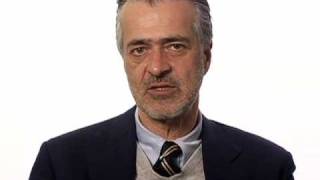
Hooman Majd argues Iran is nowhere near a functional nuclear weapon. Moving from 3-4% enriched uranium to weapons-grade would be immediately detectable by the IAEA and require years of technical steps. The answer is diplomacy and incentives, not military action, since countries like Japan and Brazil have enrichment capability but choose not to weaponize.
Chapters
Stop worrying. And don't learn to love the bomb, but stop worrying. First of all, Iran is so far away from having a nuclear weapon. I know there's all these reports, these alarmist reports, Iran has enough enriched uranium to build a bomb tomorrow. Well, building a bomb is not as simple as it sounds. Yes, the designs are on the internet and you can— but to actually create a nuclear weapon is going to be so difficult for Iran to do quietly, secretly. Yes, they have enriched uranium to 3% or 4%, whatever the number is that is useful as fuel. To then enrich it to 90-whatever percent, they would have to— I mean, it would have to be done under the watchful eyes of the IAEA, so we would know about it the minute they do it. It's not like they have this other secret facility or at least even the IAEA doesn't think they have the secret facility where they're doing exactly what they're doing in front of the IAEA and they can then secretly go on and enrich to a higher level. So, even once you've enriched it to a higher level, surely you'd want to test a nuclear weapon before you just fired it off. I mean, Iran is so far away from testing a nuclear weapon. So, we would even know— you know, the North Koreans tested weapons and we don't— we're not even sure that they worked. We do know that Israel has nuclear weapons. We do know they have a delivery system for those nuclear weapons. They have the kinds of missiles that could deliver, accurate missiles that could deliver a nuclear weapon to Iran. Iran is so far away from having that ability. I mean, some would say, oh, you're being, you know, naïve. They could do it in a year. They could do it in 2 years. But there would be so many signals before that happened that we could get, we could become really alarmed. If Iran suddenly shuts down the IAEA cameras 24 hours a day on their facility where it's using enriching uranium. They shut down those cameras. You can say, okay, that's the beginning of a cause of alarm. What are they doing that they want to get rid of the IAEA inspectors? So, I mean, we're so far away from that. I think that we should let the IAEA do their job. We should at least talk to the Iranians. I mean, the thing is that they have the technology to enrich uranium. You're not going to bomb that technology out of them. There's plenty of people in Iran who can start up a centrifuge program even if this program was completely eliminated. So the question now becomes, how do we incentivize the Iranians to never take that step? We know that they have the knowledge to build centrifuges to enrich uranium. And a lot of people, analysts will tell you, nuclear scientists will say it's not a big step to then go to a bomb. It is actually a bigger step than we think because you have to test it, you have to create that perfect sphere, you have to have the mechanism, you have to have the delivery system to deliver it. Presumably you want a second-strike capability, not just a first-strike capability, because a first-strike capability and somebody has a second strike on you, you're done. So you want to have this— that to be unequal in terms of nuclear power with Israel, for example. So how do we incentivize them to not take that step? And that's where negotiations come in, because there are plenty of countries that do have that ability. Japan is one. They're never incentivized to go and build a bomb. Brazil, South Africa— these are countries that have the ability to enrich uranium, have the ability to even probably build a bomb if they wanted to. But what stops them from doing it? Well, there's— they have no incentive, none whatsoever. They have all the disincentives to build a bomb. So what we have to do is figure out what— how to disincentivize Iran from ever taking that step.