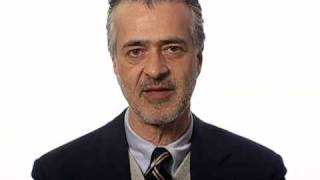
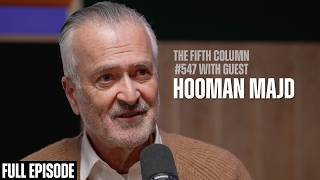
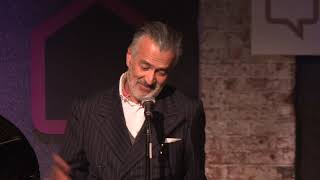
In a June 2009 monologue, Hooman Majd examines the dynamics of Iran's presidential election, emphasizing the unusually short campaign period compared to the United States and the resulting lack of reliable polling insight. He notes Ahmadinejad's deep unpopularity, with unofficial approval around 25‑30%, driven primarily by poor economic performance. Majd outlines the rapid campaign timeline from the post‑Nowruz holiday to the May election, and discusses how external factors—U.S. diplomatic engagement or intimidation, and Israeli political moves—could sway the vote. He argues that, contrary to some Western perceptions, Iranian presidential elections are relatively free, though subject to minor irregularities. Ultimately, he identifies the economy as the decisive issue for voters, linking sanctions, nuclear rhetoric, and international isolation to everyday economic hardship, and asserts that both the elite and ordinary Iranians are keenly aware of these stakes.
Chapters
Nobody has insight at this stage because the Iranian campaign is a much shorter campaign than the U.S. campaign. You know, we now— now our campaigns are 2 years long. And you start getting a feel for the candidates, you start getting an understanding of where it's going to go, you have polls, you have all kinds of things. Iran has polls too, and President Ahmadinejad is particularly unpopular right now. His popularity ratings, according to unofficial polls, sit somewhere around where George Bush's was at the end of his presidency, in the 25 to 30% range. So he is deeply unpopular, mainly because of his economic performance and because of the economy in Iran. And there are other factors too. Now, that doesn't mean he can't win. The campaign season itself is a very short season. The Iranian New Year is in March. Coming out of New Year, there's a 2-week holiday. It's kind of like Christmas for us. By the beginning of April, the candidates will start setting out their agendas. They've already started a little bit in terms of giving speeches and going to universities and kind of setting out their— a little bit of their agenda. But there'll be this fury of activity, flurry of activity, and a furious activity for the last 2 weeks, 3 weeks of the campaign. And so many things can happen with Iran between now and then, between now and May, which is when that's going to happen, that it's really hard to say. Something You know, there could be an outside force that makes— that turns the election one way or another. If the United States, for example, opens up a dialogue with Iran, that could affect the election one way or another. If the United States does something else, you know, intimidating to Iran, that could help Ahmadinejad, for example. If the Israelis— and there'll be a new prime minister in Israel within weeks, presumably Benjamin Netanyahu— if they— the Israeli government does something that could potentially help Ahmadinejad. We don't know. There's so many unknown factors right now. The reality is I think that most people in Iran would like to see some sort of change. The thing that would surprise many Americans is that the elections are actually quite free. And, you know, in Iran, some American journalists describe them as, you know, free relative to Middle Eastern elections, but that's really not true. In Egypt, you know, if Hosni Mubarak wants to be reelected, he gets a 99% positive vote. That doesn't happen in Iran. The election for president is actually quite free. When I say quite free, there's always going to be some sort of shenanigans on some level, even in the United— as there are even in the United States, you know, whether it's completely illegal activity, stuffing ballot boxes, which can happen, but not to a large degree, or whether it's intimidation of voters and things like that, which happen even in the United States. But by and large, they're very free. So when— unless an election is is decided by a very, very small margin, less than 200,000 votes, in a country where there's 70 million people and, you know, 40 million can vote, 50 million can vote, then it's really a truly free election for the president. I think it's the pocketbook. You know, it's like everybody, every country in the world, Iranians are not that different from Americans. Yes, I think the economy is going to be the number one issue. I think to the degree that international relations and the nuclear issue affect the economy, it becomes more of a factor. It's not so much that, oh, are we deciding whether we want to go ahead and have nuclear energy the way that Ahmadinejad proposes it, or do we want to back down in front of America? It's not that. It's more about, well, how is this affecting our economy? How is this affecting the sanctions? How is this affecting unemployment? And Iranians are, you know, quite smart about that. They understand that when For example, and certainly the elite understand that when President Ahmadinejad, you know, goes on television or at a speech somewhere, says something, you know, very inflammatory about Israel or about America and gives America the opportunity to go to the Security Council and gives America a better excuse to impose sanctions, other countries will go along with it. They understand that that kind of rhetoric is not necessarily helpful, whether or not the intention of the government of Iran is to pursue nuclear energy or not. So those issues are going to be debated by certainly amongst the educated elite and I think even, you know, trickling down all the way to the poor who understand that the isolation of Iran, not from the rest of the world so much, but certainly from America has affected the economy.