4 Things to Know When Building a Channel Incentive Program
Husseni Rasiwala-Yali and Tim Harmon outline four pillars for B2B channel incentive programs: aligned goal-setting using frameworks like SMART and OKRs, competitive research on rival incentive structures, deep channel segmentation across geography and certifications, and behavior design with flexible reward catalogs. A global manufacturer achieved 250% increase in contractor engagement using these principles.
Questions this video answers
Channel sales and marketing teams, as well as finance (for budgeting and ROI tracking), should be part of the goal‑setting process.
Volume refers to fixed performance targets (e.g., dollars, units, deals) while time refers to urgency‑based models such as races (first‑to‑achieve) or countdowns (points decreasing each day), both of which can be parameterized to drive faster results.
Fielo’s Business Rewards Cloud already includes dozens of vendor‑provided business solutions; additional rewards can be integrated by working with Fielo or by packaging proprietary IP into the catalog.
Chapters
Hi everybody, welcome to today's webinar, 4 Things to Know When Building a Channel Incentive Program, presented by Fielo. Kicking it off to Husseni.
Thanks, Carlos. Hi everyone, so my name is Husseni Rasiwala-Yali and I'm joined by Tim Harmon. How's it going, Tim?
Good, how are you, Husseni?
Pretty good, thanks. So this is the first in a series of webinars focused on B2B channel partner incentive programs. You know, today we're going to start with the fundamentals of a program. Building a channel center program can be an overwhelming proposition, especially at the beginning stages. There are multiple components to juggle, processes to set up, and the right strategy to determine. But there are some initial steps you can take to help you facilitate the process, and we're going to cover 4 things today. Number 1, know your goals. Number 2, outperform your competitors' programs. Number 3, know your channel. And lastly, number 4, build a 24-month plan. Let's start with know your goals. So setting goals is huge. In many cases, a huge problem. And too often companies start to build an incentive program not clearly articulating or communicating their goals. In order for your program to succeed, You need to think about goals beyond just, we want to increase our revenue, we want more partners to join our program. Those are just too broad and too vague. You know, precision goal setting will help you establish what your program should look like, what steps you need to take to execute it, and lastly, provide indicators that help you track performance. So we here at Fielo, you know, with customers, Our goal is to set and align their KPIs and goals and know that upfront program design execution bears more fruit. It is important to drill down to the actual objectives that will make a difference for your business. Questions such as how much growth, in what markets, what products, or do you want to focus on net new goals— oh, sorry, net new logos versus customer footprint expansion.
Now, most, if not all of you, use a goal-setting framework, I'm sure, for corporate strategy planning. Whether it's SMART, OKRs, WIG, which is Widely Important Goals, or Think Big, Act Small, Move Quick, or some other type of framework, it can and should be applied to your incentive program thinking. Take OKRs as an example. OKR is a type of hierarchical planning framework where you start by defining objectives, then the key results that prove those objectives, and finally the activities you will do to achieve those key results. One way to think about OKRs is objectives as qualitative and key results as quantitative. Say you want to be a leader in the burgeoning IoT market, Internet of Things. That would be your objective. Indeed, for purposes of your channel incentive program, you can and should pull from your corporate objectives. As for key results, these are the goals that you set in your incentive program. For example, you may incentivize your channel partners to sell particular IoT solution enabling products in terms of volume or time. Or to establish an IoT consulting service. And incentivizable activities, the behaviors behind the results, and we'll talk more on that later, could include training and certification, social media posting, and topic-specific MDF-funded events.
Good.
Now, there are different types of goals that you need to account for. Goals can be either responsive or aspirational. Some use the terms reactive and proactive. Responsive goals are, quote, in response to problems. Is your channel growth stagnating? Are you experiencing inventory oversupply? Is your channel marketing engine not producing according to expectations? Is customer satisfaction waning? Aspirational goals can mirror responsive goals but are identified proactively. Do you want to implement a channel marketing engine where none exists today? Do you want to gain market share in or enter a specific market? Do you want to protect or boost your lead in your customer experience score? Husseni, you mentioned working with our customers. Can you give us an example of what you have seen?
Yeah, absolutely, Tim. So we've been working with one company for a few years. It's a global manufacturer who specializes in building products, and they use Fielo to incentivize those independent contractors who buy from retailers. And so they made the switch to Fielo, and through the right program design and goal setting, along with the automation that comes from the Fielo platform, they were able to increase customer engagement— sorry, contractor engagement by up to 250%, which is a key KPI they set out at the start of the program.
So let's move on to our second key point in what you have to have ready in terms of your thought process of putting an incentive program into place. That's competition. Competitive research is key. Oftentimes companies do competitive research on products, but they stop there. What do your competitors' incentive programs look like? And what can you learn from them that other companies are doing? After all, a competitor with a program that provides a superior partner experience and a thoughtful approach to incentives can be the cause of losing mindshare, wallet share, and ultimately loyalty. Familiarizing yourself with other programs can help you not only to understand how your competitors are connecting with partners, what's working and what's not, but it can also equip you with the knowledge to help you select the features and functionality you want to implement in your own program. The bottom line: a well-designed and well-targeted incentive program can be one of your most effective competitive weapons. Now I mentioned partner experiences being one of the key factors in terms of outperforming your competitors. Husseni, can you talk to the partner experience factor a little more?
Sure. Let's take a look at an example here from the Fialo platform. So the partner experience using Fialo. Fialo uses modular drag-and-drop components to easily set up the partner experience portal with all the content to track his or her business goals along with the incentives and corresponding rewards. So you can see here on the right what a partner sees as he logs in, his tier, what actions have been rewarded in the activity feed, business dashboards of his progress, and even badges earned and achievable. On the right side, you see— I see as a partner what incentive campaigns or promotions are available to me and how I track through those behaviors for sales, marketing, and training actions. It's all about relevant and immediate experience for the partner. You know, one great example I can give here is a global electrical manufacturer that we work with. They use Fielo for their global 1 million channel partners. In that program, the partner experience is highly targeted, targeted depending on what kind of partners they are, where he or she is located, and what brand of products that partner is working with. This means that PLO is powering hundreds of program experiences for this one customer. Okay, so let's go to our next topic, know your channel. And this is all about going deeper than simple bronze, silver, gold level status. You probably already know that your channel partners from a gross perspective, you know, their revenue contribution, the geographical scope, and perhaps the certifications. But the devil's in the details. What verticals do they cover? What skill sets and resources do they have? What other products do they carry in their portfolio? What is their wallet share? What are their strengths and more importantly their weaknesses? The more nuanced your knowledge of your channel is, the more you'll be able to create programs that target specific partner segments, specific partner behaviors, the more effective and successful your program will be.
And let me walk you through an example. Pick an attribute of your channel partners, i.e., a dimension. How about geo? Most channel partners tend to operate in specific geographical regions. And yes, you can target specific incentive programs for North American, European, and APAC partners, but you could be even more relevant and get more engagement by going to the region or country level. It's easy to see how a Central European partner may have hot buttons different from those in Southeast Asia. And think multidimensionally. It's not just about Central European proclivities. It's about Central European partners with a focus on the public sector, market with your master security certification operating as a managed service provider. See how their needs and what they would respond to would differ from, say, a large volume reseller with no specific vertical focus. Husseni, how about an example here?
Sure. So let's take a look at the admin view of Fila's real-time segmentation engine. You know, this can be configured using static and dynamic data of the partners. This means that we can target partners based on where they're located, the level of certification, but also dynamic data like their revenue and sales that keeps changing on an ongoing basis. You can see in this example on the right, we've configured a targeted segment around Northwest US partners with advanced cloud infrastructure certifications. Who are doing over $50,000 in quarterly revenue. Okay, let's go to our last point: plan how to incentivize your partners. Incentivization has multiple dimensions: A, the things you want your channel partners to do, behaviors; B, how you're going to measure their performance in doing those things; and C, reward mechanisms for those partners that do the things you want. Let's dip into behaviors, you know, getting to the root of outcomes. So we at Vialo and our product have 5 buckets of behaviors: marketing, engagement, sales, customer service, and learning. You know, are you interested in incentivizing just the results, like leads or opportunities or revenue, or the root behaviors such as training, MDF utilization, partner portal logins and downloads, and social sharing. You know, oftentimes incentivizing the behaviors behind the desired outcomes, in addition to or instead of the outcomes themselves, results in a superior outcome and helps cement the driving behaviors for continued performance improvement. Tim, do you have anything you want to add to this?
I was talking with a customer a couple of months ago about this behavior outcome incentivization theory, if you will, right? That, like you said, Husseni Rasiwala-Yaliwala-Yali, incentivizing the root cause behaviors can oftentimes drive the outcomes or the results that you want, sometimes even better than incentivizing the outcomes themselves.
Absolutely.
I, I was, uh, I was talking with him about this and I saw a light bulb go off in his head. And he said, "Oh, I get it. Tell me if this is right." And he said, "What I do is today, or what I did in the past in terms of my child's report card, is I would give them, I would promise to give them a reward, a pretty substantial financial reward for getting A's." MBs on the report card. They got more if they got an A than if they got a B. That didn't seem to have much effect, uh, that regardless of how much the reward was, they were still bringing home mostly Cs. And so I switched up and said, I'm going to actually get more granular. I'm going to start giving some micro-monetary rewards for completing homework. For having good study habits, for getting good grades on interim quizzes as opposed to final grade. And, you know, once I started doing that, the A's and the B's started popping all over, right? So I get it. I understand. I said, yes, that's absolutely right. The other advantage of targeting behaviors in your incentive programs is that it not only can lead to a better outcome, it can lead to an improved or changed behavior that gets cemented for the future, right? You want your channel partners to be better marketers. Do a marketing incentive program. After just a couple quarters of, you know, of, uh, of working to achieve the rewards, they will understand the value of marketing and they will become rocket star marketers themselves.
Great point.
So once you have identified those driving behaviors and set them into your program, and you need to start thinking about reward mechanisms, a good way to start is by allocating points. Now points can be translated into tangibles. For example, you can use points as currency that translates into, say, recognition. In the form of certification or badging. It can be used as currency that translates into a catalog of individual-oriented rewards: gift cards, debit cards, trips, merchandise, etc. It can be used for business-oriented rewards: software subscription discounts, insurance deals, hosting, educational credits, freelance project work, to be used for cash or SPFs, rebates, or MDF, market development funds. But the reward mechanism is only one part of the equation. The other half of the equation is who you're going to allocate those points and rewards to. Now, historically, most challenge center programs targeted the individual, the salespeople that worked for their channel partner companies. More recently, manufacturers, tech vendors, and consumer goods companies are targeting their channel partner companies in terms of those incentive programs. So it's not necessarily what the individual achieves, it's what the company achieves and delivers. And an even newer one to be able to target teams of people. And think about the potential you have with that with respect to gamification and, and how different sports analogies apply. The fact that you can now pit one team against another in terms of how you gamify your incentive programs. Now, I talked about business rewards or business-oriented rewards, and let me walk you through this notion of a business rewards catalog. So you might have, uh, rewards in there that are reflective of the types of things that are going to spur a business's growth, and your channel partners are businesses. Right, and so if you want to appeal to the CEO, you would offer rewards that, that CEO can employ at the company level to grow his or her business. Accounting software, CRM software discounts, digital advertising, hotel stays or hotel conference rooms, internet services, say 5G or hosting. Laptops, and on and on. But it doesn't have to end there. You can package your own intellectual property. Now, I'm not talking about your product IP. I'm really talking about your subject matter expertise. You have expertise in, you know, marketing and service and support and events. And other things, and you can bring these things into the, your catalog as well. Let's say that you offer two levels of support, standard and premium. Well, you may offer as a reward premium support for 6 months, and for those partners that are on standard support, that might be a very enticing reward for them to make them really work hard towards achieving and outperforming the goals that you set for them. Moreover, if they— once they experience premium support and that 6-month reward period ends, they're likely to stay on premium support because they realize the value that it brings to their business. Conference passes, here's another example. It's already budgeted for. You know, you can offer free or discounted conference passes. So look within your own four walls as well about those things that you have a value that you can package and bundle for your partners in terms of a business rewards catalog, which we are building, by the way, in the Fielo Business Rewards Cloud.
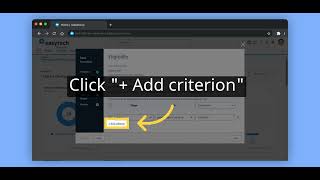
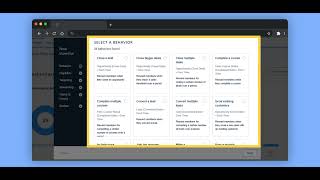
Thanks, Tim. So let's jump into another example. Um, here I'm going to dive into the Fielo Configurator so we can show how we can configure those important behaviors and corresponding rewards. So in Fielo, we've actually set up a number of different templates or incentivization playbooks. So we have these ready-to-go solutions here. And so you can see here, for example, we have all these set playbooks like partner engagement, driving the partners engagement, cracking a new market, expanding the top of the funnel of the leads and opportunity management of your partners. Or for example, a specific product-based promotion. I'm going to click on this one, Energizing Your Small Partners to Sell. Okay, and so I click on this template, you see we have a whole sequence of different behaviors with corresponding rewards incentivizing them to log into the port— the partner portal, and different incentivizations around the opportunity closing process. Okay, and here on the left, I can pull from all these out-of-the-box behaviors we have in Fielo, and I can incentivize the partners for those. So let me go ahead and pull from, let's say, courses. I'm going to go ahead and incentivize a very key contributing behavior that we find in the market, incentivizing training, right? So I'm going to incentivize completion of a course, okay? And I can give different performance models in Fielo. So I'm going to go ahead and incentivize this in a very simple way. If you do the course, you earn it, okay? And based on completing this course, the partner's going to receive, let's say, 100 points. We're going to make this a point expiration on that, and we're going to give them a badge as well for being a top learner in their community. Okay, great. So now we have courses as part of this behavior sequence. Let me go ahead and add another one real quick. Products. Sorry, I can only do orders. So great, I can incentivize the orders of our partners, quantity or quality, but also even activation rates. Let me go ahead and do that. I'm not going to incentivize this not just for whoever does it earns it, but I want to make this a bit more gamified. I'm going to incentivize only the top performers, the top people who make orders.
Okay, great.
Now I'm going to incentivize this based on a 2x activation rate. We're going to give them 5,000 points and we'll also give them an instant reward to keep this compelling. And there we have it, configuring within Fielo key behaviors with key, key rewards. Okay, Tim, let's talk about summary.
Yeah, let me review for you what, uh, what we walked through. So 4 things. First of all, we talked about goals, setting goals. Now some of you may know that I was an industry analyst at Forrester Research for 10 years where I ran Forrester's global channels research. And it was so saddening to me to learn how many companies jumped into the pool without realizing how deep the water was. In other words, they got a notion for incentive program, say a product promotion, and would launch. And once that product promotion started losing steam, started losing its relevance, they didn't know what to do next, right? They had no overarching goals that were driving their incentive program thinking, right? So do that. Know what your corporate goals are, bring those over, use those as your incentive program goals. And moreover, and then add to that, think about what you want your channel partners to be, right? What you want your channel to look like in 2 years from now. Because those will also inform your goals. Secondly, we talked about competitors, and that's a key notion, right? These— there are a lot of companies that are offering incentive programs. The good news is that most companies offering incentive programs today are offering the, I'll say, the 1990s version of incentive programs, right? They're targeted individual salespeople. They're very spiff-oriented or merchandise, they've gotten stale, their product promotions, though there's no innovation going into this program thinking, but knowing where your competitors are coming from and in particular providing a superior partner experience, which Husseni talked to, is absolutely key in outperforming your competitors. And that partner experience is specific to a partner portal where you are making the incentive program transparent to the channel partner. And so they essentially feel like they own their own program. They can track their progress, progress every day. They can get communications anytime they want regarding the program and see how their points are being banked. And their rewards are being redeemed on a real-time basis.
Mm-hmm.
Thirdly, we talk about segmentation. Segmentation to the point where if you get really granular, you could even think of it as personalization, right? And I gave some examples of using geography, uh, business models, certification level, business skills, things of that nature to identify at a very granular level the types of segments that you could target specific incentive programs to. And last but certainly not least is your plan, a 24-month operating plan where you think about the behaviors that you want to address, you know, whether are better marketing, better customer service, say For example, you want— your goal is to provide a superior customer experience. You may want to target customer service types of behaviors.
The—
your deals are taking too long. You may want to target opportunity stage behaviors and making them shorter in time. But regardless, that along with how you're going to measure the performance of your partners, whether it be time or volume or some other metric, and the types of reward mechanisms that you're going to give for not only individuals, but teams and companies all need to be part of that 24-month operating plan. And once you have that in place, it's time to execute.
Thanks, Tim. So that's it, guys. 4 things: your goals, your competitors, your channel, your program strategy and plan. Know them, articulate them, and communicate them in advance. You'll have taken a huge step forward in having a successful channel incentive program. When building a channel incentive program, knowledge is power. The more you know about the factors that make for a successful program at the start of the process, the more powerful your program will be. Okay, let's take some questions from the audience.
Thank you, Husseni, and thank you, Tim. Let's see what you guys have entered into the Q&A platform. Here's one from Paul about goal setting: Who in my company do I bring into this process?
This is very important. I'll take this one, Carlos. So it's really important to have the right people at the beginning of this process, right? You know, your goal setting is all about revenue-generating KPIs driving partner engagement. So clearly channel sales channel marketing teams have to be part of this goal setting process. But also finance, you know, budget has to be accounted for and planned, and also tracking the ROI of the program. So definitely finance should also be there too.
Great, thank you Husseni. And here's one for Tim from Aditi: Tim mentioned in his OKR example that channel partners could be incentivized to sell particular products 'in terms of volume of time.' What does he mean by that?
Oh, yes, volume or time metrics. So historically, again, I think most incentive programs have been modeled using a performance metric of volume, specifically a fixed goal. Achieve a certain number of dollars in sales. Take a certain number of courses. Generate a certain number of leads, right? So those are all examples of volume performance metrics. You can do things too like not just total dollars in sales, but total number of deals, uh, that involved a particular product, or total number of, of, um, units of a product over a particular time period. So volume can, can manifest in several ways. Likewise, time, right? So think about, think about a corporate objective that's come down the pike that has a sense of urgency to it, something that has to be achieved in the next quarter or two. Now you want to apply a performance metric where, for example, using our race model. So you can set it up as a race where the first 1 or 2 or 3 or 10 or the first 20 or the first 50, depending on how many where you want to cut it off, achieve a specific target, are going to be those that reap the rewards. Or you could use a countdown method in terms of time where you set the number of points on day 1 of the program at 100 points. And if it's completed day 1, they get 100 points. On day 2, you decrement it by 1. So if they complete it day 2, it's 99 points. Day 3, 98 points. Day 4, 97 points, etc. So you can see how that also can, um, you know, communicate a sense of urgency, you know, to your channel partners. And so both of those are valid, um, frequency, recency. But if you think of in terms of volume or time and how those different models can be parameterized, and we can help you with that, for example, then you're going to be well on your way to having a successful incentive program.
Great, thank you, Tim. Let's see, we have time for one more. Here's one from Edmund P. Business rewards sound great, but how do I source those rewards for my program?
Oh, well, we have, uh, we've sourced, uh, dozens of, of, uh, business solutions for the Fielo Business Rewards Cloud already. Uh, if there are additional, uh, rewards that from various vendors that you would like, we can, uh, you know, you can just set us to work with them and we can bring them into the Fielo Business Rewards Cloud. Likewise, we work directly with our customers to, like I said earlier, anything of proprietary IP nature that they can package and bundle themselves does their own rewards. We can populate in the catalog as well.
Great, thank you, Tim, and thank you everybody for your questions. Unfortunately, we are out of time, so if we didn't get to your question, we will answer directly through email. Um, for everybody, thank you, Tim and Husseni, for your presentation. Thank you already for joining us. For more information on Fielo, uh, please feel free to go to fielo.com. And have a great rest of your day.
Bye, everyone.