Driving Channel Productivity to New Heights 4 Incentive Program Planning Best Practices

In this webinar, Tim, Carlos Carmona, and guest speaker Husseni Rasiwala‑Yali discuss how to boost the productivity of channel incentive programs. They begin by presenting research that shows channel professionals prioritize three outcomes: spurring partner productivity, proving profitability, and driving engagement. The presenters outline four best‑practice factors for designing effective incentive programs: (1) Target the right partners by building comprehensive partner profiles and enriching them with CRM/PRM data to create smart segments; (2) "Juice the middle" of the program by applying the goal‑gradient effect, rewarding partners for progress in intermediate sales stages to sustain energy; (3) Align a rigorous, automated communications plan with the incentive lifecycle (pre‑launch, in‑program, and post‑program) to keep partners informed and motivated; (4) Let partners define their own objectives (e.g., via OKRs) and use those self‑set goals to tailor incentive rules. The session demonstrates how the Fielo incentive automation platform supports each factor with out‑of‑the‑box configuration, segmentation, mission‑style mini‑incentives, dashboards, and a B2B rewards cloud. A financial model is presented showing how increases in participation and productivity, minus reward costs, drive profitability, with a case study illustrating participation rising from 15 % to >60 % and revenue uplift from 0.5 % to >2 %, boosting net revenue from $70 k to over $1 M. The webinar ends with a brief Q&A covering behavioral‑economics principles and the out‑of‑box nature of the Fielo demo.
Chapters
¡Hola a todos! Welcome to today's webinar, The 4 Productivity Factors for Effective Incentive Programs. And with that, kicking it off to Tim.
Thank you, Carlos. That was Carlos Carmona, and he'll be back at the end to facilitate some questions or some follow-ups. But Let me welcome you all. I thank you for attending this webinar. This is another in the series of what we are doing to discuss what our research has shown and what our customers have done to spur or energize or re-energize their channel incentive programs. All right. So joining me today is Husseni Rasiwala-Yali. Hi, Husseni.
Hey Tim, good to be here.
So we recently conducted a research study, a survey of channel professionals, right? We asked them, one of the questions we ask is, what are your goals with respect to your incentive programs? And as most channel partners, I'm sorry, as most channel and marketing professionals are chartered with incentivizing their channel partners, they characterized their desired program results as number one, number one, the first response was to spur productivity. Number two was to be able to prove profitable. And number three was to be engaging. So with respect to productivity, the raison d'être of incentive programs, of course, is to get somebody or somebody, some entity to do something. Or to do more of something. Now this something can take the form of a desired result, for example, higher revenue production, or the contributing behaviors that drive the result, for example, more marketing activities. And oftentimes that something should be aligned with corporate objectives, for example, the desire to develop a new market. The second highest response, to generate profit, to prove profitable, shouldn't be surprising, right? Because to be effective, incentive programs warrant a significant investment, and channel marketing professionals are going to be asked to prove that return on investment. And the third highest response, engagement, to be engaging. Well, incentive programs don't even get out of the gate if they fail to garner channel partners' interest and participation. And woefully, less than half of channel partners participate in their manufacturers' incentive programs today. Now, incentive programs that do succeed in engaging channel partners not only drive up participation, but they carry a hangover loyalty effect as well, because channel partners tend to skew their strategic investments and their business towards those manufacturers with which they are more highly engaged. And we have provided a formula for you. You know, the increase or the uplift in engagement times the increase or uplift in productivity minus your reward cost is going to be your bottom line, your profitability. So today we're going to talk about productivity, and this webinar series has been about how to get more out of your channel incentive program. Last month we discussed what you can do to get higher engagement and participation from your channel partners, and today we'll cover what you can do to spur not just their participation but their avid participation. In other words, their productivity. And there are 4 things that you can do. First, when you want your channel partners to do something or to do more of something, and you're willing to reward them for it via an incentive program, be it lead generation, customer support, customer training, customer case study development, more product knowledge, or simply engaging with you more via your partner portal and your events, you need to identify which partners are most in need of your direction and your guidance. Secondly, when We'll talk about the big problem associated with long-running incentive programs and what you can do to mitigate it. Third, we'll touch on the importance of crafting a communications plan in parallel with your incentive program plan. And here's a hint: the right communications at the right time can boost incentive program ROI by several points. And last but not least, We'll read you in on what some of our most innovative customers are doing to empower their partners to self-define their own incentive program. So considering the notion of the right programs for the right partners, let's start with an example using channel marketing. Some partners are already strong in marketing. They don't need an incentive to get it. Others aren't and do. Let's say that you want your channel to play a bigger role in your marketing outreach. In essence, you want to use your channel partner's voice to extend your own and to personalize that voice to your customers. Seems like a laudable goal, and indeed many manufacturers and tech companies are feeling and feeding the power of extended channel marketing. More than a third of tech companies and almost a quarter of manufacturers are fielding incentive programs today directly targeting channel partners' marketing activities. But some channel partners may be well-versed in marketing. Should you include them? Likewise, some channel partners may be well-steeped in knowledge about your products. They don't need an incentive to get it going. Others aren't and do. So how do you identify the needfuls, i.e., those that are most in need of guidance and direction for where you want them to go and what you want them to do? Well, of course, pro— one way, of course, is to capture comprehensive profiles on your channel partners. You can ask them Indeed, you can incentivize them to submit a profile at registration and update it annually. You ask them to specify their skills, their resources in terms of employees, their experience, their certifications, and the number of marketing campaigns they've executed in the past, the number of type of, uh, number and type of training classes they've taken, etc. Of course, profiling isn't perfect. Profiles are often submitted incomplete or inaccurate, and they're typically not maintained and therefore can get quickly out of date. But you can buttress your profile database with data garnered from your PRM or CRM system about your partners' past activities. Let's look at channel marketing again using a Salesforce shop as an example. In the Salesforce CRM database, you have database objects that capture information about marketing campaigns, and those can include those campaigns that are executed by your channel partners. So using analytics tools, you can make an assessment as to channel partners' maturity— marketing maturity and effectiveness. You can also tap the Salesforce Partner Fund Request object. This is where your data about partners' MDF requests and allocations is stored. Again, digging into total funds used, the number of fund requests, and marketing activity types will give you some keen insights into who those partners are that need the most uplift. With an intelligent segmentation engine, as you get with Fielo, You can use these two inputs, profiling and past performance, cold from your CRM database, to define smart segments, in this case based on market maturity. And with Fielo, you have a canvas, so to speak, for which you can choose over 30 behaviors to incentivize. The count is actually up now to 37 behaviors and growing. So not just marketing or activities or product knowledge, but sales process, engagement activities, social advocacy, and customer support. And the key to getting the most bang from your incentive program buck is to match your what you need to happen or change goals to your channel partners' capabilities and maturity. Over to you, Husseni.
Great, Tim. Very important stuff there. Let's move to our second factor for driving productivity. We are calling this juice in the middle. It's about how we sustain that partner productivity during the partner program journey. So recall when you've been in a competition or race. Did you find yourself pushing harder towards the finish line or deadline as it approaches? If so, then you have inadvertently demonstrated the goal gradient effect. The goal gradient effect is an important behavioral economics principle that suggests that as a goal gets closer to being achieved, people will naturally work harder to achieve it. Various research has demonstrated that people will increase their efforts towards a goal as they approach reaching that goal. Rats will speed up as they approach a food reward, and humans will apply more effort as they approach the threshold for rewards, such as free products, gift certificates, or goals, such as visual cues like a finish line. But it's not only as we approach our goal that energy is at its highest. Behavioral economics teaches us that in the course of any endeavor, for example, a buying cycle or selling cycle, our energy, stamina, interest wanes after an initial excitement period as well. Take the example of a 1500-meter race in the Olympics. The first 400 meters and the last 400 meters are the fastest. So the goal gradient effect is especially applicable for sales teams that have longer deal closing periods. Let's say your sales team takes an average of 4 months to close an opportunity. There will be a gradual decrease in stamina, i.e., diligence and focus, as the opportunity progresses through stages, as we're seeing here on the slide. However, as the illustration here shows, your team will regain momentum as they see signs of the opportunity closing and stamina and energy will increase. It's the middle of that sales cycle there that needs juicing. Understanding behavioral economics and behavioral incentivization is key to the success of your incentive program. So let's take a look at a goal-driven example here. Imagine you would like to decrease your average deal close time from 4 months to 3 months, and this is huge. That is the first question, right? What do I want to achieve? Second, what is needed to accomplish this goal? You need to keep the pace of the deal the opportunity at a high level as it progresses through various opportunity development stages. Lastly, what behavioral principles could apply to the situation? The goal grading effect, effect applies directly in this case, incentivizing and rewarding channel partners for their performance on the opportunity development stages, opposed to or in addition to incentivizing and rewarding them for the outcome of that development effort, that is closing the deal. So this will result in more focus being applied at the middle stages. Moreover, this type of incentive has the additional effect of getting channel partners to use your prescribed sales methodology and best practices. Let's say you've done the analysis and the opportunity stages at which a deal bogs down the most are discovery, demos, and quotes. It's these stages, these activities that we're going to incentivize for the time it takes to get from one stage to the next. And look what you get: a more shorter, shorter sales cycle that results in giving your channel partners the capacity to close more deals in a given year. So that's Juicing in the Middle. Over to you, Tim.
Let's talk about the third thing that you can do to increase your partners' productivity in in an incentive program. Communications. You know, it's really amazing the number of companies that I've had the opportunity to work with over the years that don't have a rigorous communication plan that aligns with their incentive plan. And it's, it's key, right? You want to be able to communicate. The results have shown that if you have a communications plan that's tied to your incentive plan, going to increase your program ROI by several points. So as innovative as they might be, incentive programs are not a field of dreams, right? You have to do more than just build it. You need to communicate to your channel partners ahead of time. So for example, one month where you give them a chance to digest the programs, to answer questions, ask questions, and to prepare. You want to communicate them at program kickoff time, so, and you're off. You want to communicate to them while the program is in the field, while it's active, you with reminders and joiners, no, you're almost there, uh, messages, achievement congratulations. And then you also want to communicate them after the program has ended. Here's how you fared, performance timeline map. But there's also A couple of other communications that are key to the success and the excitement and the energy in your incentive program. That's post-program performance analysis where you're, you know, providing analytics to your channel partners that they can use to inform them how they did and to bake into their future program participation. And even more importantly, Right up front, the why. You know, what is your reason for this incentive program? What is the strategy? The more you share with your channel partners your strategy and why you're doing these types of incentive programs, the more you're going to align with them in a co-go-to-market type of model. And the more participation and energy you're gonna get as a result thereof.
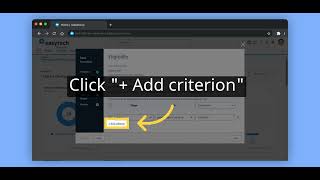
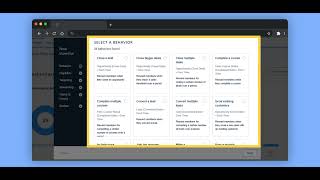
Great, Tim. So let's look at our last factor today: let partners define their goals. And this is very innovative. So let's say you ask your channel partners to submit their business plans for the year, and indeed you may even want to have an incentive that rewards them for doing so. Those business plans get uploaded to your PRM system and ultimately stored ultimately stored in your CRM database. Once that plan is, uh, planned data is in your CRM, you can leverage it for customizing incentive programs for that particular channel partner. Let me explain. So I'll use OKRs as an example here, you know, Object Key Results planning framework, but we could use any other methodology like gap planning, Blue Ocean Strategy, Porter's Five Forces. Potion planning. It just needs to emphasize the articulation, documentation, and communication of goals or objectives and the paths for reaching them. So Objectives and Key Results, OKRs, is a framework for defining and tracking objectives and their outcomes. The development of OKRs is generally attributed to Andy Grove, the father of OKRs, who introduced the approach to Intel during his tenure there. Grove's simple but effective concept is that key results has to be measurable, so at the end you can say, did I do that or not, yes or no. It's simple, but there is no judgment call. OKRs compromise an objective, a clearly defined goal, and one or more key results, specific measures used to track achievement of that goal. The goal of OKRs is to define how to achieve objectives through concrete, specific, and measurable actions. Key Results can be measured on a 0-100% scale or any numerical unit like dollar amount, percentage, and so on. Objectives should be also supported by Activities, which help to achieve the Objective and move forward the Key Results. The Objectives documented in your channel's partner business plan become those goals, the goals you define in your incentive program for them. Let me show you in the context of an incentive program model how this would look. So there are 6 dimensions to designing an incentive program: what you want your channel partners to achieve, what you want them to do to achieve it, how you're going to measure their performance and progress, who you want to do it, who you want to reward, and when you want them to do it. The first 3 map exactly to objectives and key results and activities that make up the OKR framework. Assuming your channel partners document and submit their business plan in an OKR type of model, you can use their plan to construct an incentive program that is customized for them according to their self-defined goals and paths. It becomes very clear from a slide like this how OKRs, or whatever method you use for company success, can and should map to design of your incentive program. So let's take this program design and see it in action with the Fielo product. We have designed Fielo and the config of our product around reaching those company objectives in your partner strategy. So here, let's take a look at the admin view in Fielo for managing the partner incentive program. Let me walk you through these screenshots here from left to right. We talked earlier about setting the objective for your program. Here in our incentive gamification engines, we click our way to setting up which partner behaviors we incentivize to drive our objectives. We can incentivize any partner data that we are capturing in the program to define those incentive rules. Next, we have the segmentation in our rules engine where we define which partners get what incentives, and we heard from Tim how important that is because not all partners are the same, so you need to be incentivizing them and targeting them per their strengths and weaknesses. Lastly, we have the reports and dashboards to track our measured key results, but— and how they allow us to reach the objectives we set out for this partner program. So now let's flip to the partner experience. And so here we see in Fiala partner view. Let's scan these screenshots here. So in the first one, I see as a partner all my targeted incentives using Fiala's front-end components. I see my incentive history and badges and some targeted incentives for deal registration as an example. Next screenshot, I can drill down as a partner into my progress on a particular partner incentive and how I'm tracking toward, in this case, my MDF growth challenge. You'll notice I have a leaderboard which really helps to gamify the experience, especially if you're incentivizing based on competition, like a placement in the, in the incentive. Like where first place gets me a particular kind of prize. Again, as discussed with GoKRs, this is equally critical to communicate to the partner. And with Fielo, you have that partner cockpit where I can track my incentives and see the effectiveness of this program toward my objectives as a partner. Lastly, another key aspect of Fielo is the B2B Rewards Cloud, which houses relevant and segmented rewards for that particular partner. This is not just rebates and funds, but also business rewards and services to help grow the partner's business.
And let me turn back to the, uh, what I talked about at the beginning. So we provided a formula to you that said that the uplift in participation times the uplift in productivity is minus your rewards cost is going to be the primary indicator of your bottom line, your profitability. Let me show you this in terms of financial model that we build out with the, the contribution of some of our customers who've shared their experiences with us. So this is— there are many variables that go into this model, and you can request after the webinar the model if you want to use it for your own purposes. But the many variables, so what is your rewards budget, you know, what is the average transaction size, this is for a revenue-based incentive program, the number of transactions, the number of channel partners that you have, so some variables, you know, at the top. But the meat of the model is, you know, the bottom two-thirds, right, where we have both a before and after picture. So, you know, what was, what our customers who contributed in their data in helping us develop this model were doing currently, and then what they were doing, that what they wound up doing post-FILO, if you will, after they'd implemented FILO. And you can see again, a number of factors. So, you know, the number one being the participation and participation increase was a key factor for them, that they went, you know, on average from 15% participation to more than 60%, right? And then the second point was the revenue uplift. And, you know, whereas their programs had grown stale, by, you know, providing incentive programs that were innovative and challenging and had a participation element to it using Salesforce Community Cloud and Lightning components that really engage the partners. They got revenue increase from going from, which had been 0.5%, to over 2%. And you can see the impact of those two variables, very important variables, on the bottom line. The net revenue uplift for this incentive program period went from a little over $70,000 to well over $1 million. Right? So, you know, the ROI they got was, you know, astounding using this type of, you know, approach and best practice methodologies to energize their incentive programs. So let me summarize then. We talked about targeting, right, about how you target Specific incentive programs to specific partners according to their needs. You know, it's not a matter of one size fits all. You have big partners, you have small partners, you have some partners that are certified or knowledgeable about some products or not others. You have those that tend to be more skewed in terms of the resources of the front end of the customer lifecycle in terms of marketing and selling and others that are well-versed in the back end of the customer life cycle, customer support and customer service. And you need to design your programs according to their particular needs, right? The more that the programs mirror what their needs are, the higher participation productivity they're going to get. Secondly, we talked about a big problem with long-running incentive programs. The fact that energy is high in the beginning and energy is high at the end, but in the middle of the period of the program, the energy goes down. Energy lags. We, you know, Husseni pointed out the, you know, the Olympics, you know, whether it's the 1500 meters or the 5000 meters or the marathon, it's always the the first part and the last that are the fastest. So it's true in almost everything. You can mitigate this effect, which is called the goal gradient effect, by juicing the middle. In FIELA parlance, we have a capability called missions, and missions support incentives. So you can— and a mission is almost a mini incentive that you can attach and apply to an incentive program that asks the channel partner to do some interim goal in the middle of the incentive program. So it's almost like you're applying an incentive with an incentive to be able to juice that middle period where performance and interest and energy are lagging. Thirdly, we talked about the importance of a communications plan and having a comprehensive communications plan. I mean, before program, during program, and after program. And in particular, two things I want you to remember. One is that communications plan obviously has to be automated, right? And it has to be automated in conjunction with your incentive program, right? Because you need to know who you're communicating with and what the performance of those that are— you're communicating with is, so you know exactly what to communicate. You want to know which partners are close to a goal, Right. So you can tell them what they need in order to push over the finish line. You want to know which partners are lagging so that you can apply some mission objectives to get them, spur them forward faster. And every bit is important. We talked about pre- and post-communications, post-communications being analytics, pre-communications being the sharing of that strategy and why. With your channel partners. And last but not least, we talked about how to use partners' own business plans, their business plans, to define what their incentive programs and their incentive goals should be. So you design an incentive program for a select few partners who are submitting their annual business plans to you where their goals become the numbers and the goals that you use to design a specific customized incentive program for them. Gonna be really relevant, going to be high participation. You'll get big bang for the buck if you take that approach. So with that, um, let's go to questions. There's a couple questions in the chat stream, uh, I see. So the first one is Are there behavioral economics principles that are relevant to incentive programs? Well, the short answer is yes. We talked about the goal gradient effect. Well, I'm sorry, it said, are there other behavioral economics principles? So we did talk about the goal gradient effect. If you want to delve into behavioral economics and how behavioral economics applies to incentive program strategy, we do a workshop on that. Very specific topic, and I invite you to contact us after the fact if you're interested in learning more. But in a short answer, the short answer is yes. We talked about the Gold Grading Effect. There are over 100 different behavioural economics principles. Now, not all of those really apply well or apply directly to a channel incentive program strategy, but some of them do. Hyperbolic discounting, anchoring, loss aversion, framing, intention-action gap, the IKEA effect, just to name a few. And we cover those in this workshop that I described. But it is a— it is a— particularly if you're going to incentivize the behaviors, the underlying behaviors that drive the results that you want to get, behavioral economics is something that you'll want to, to get more versed in. And here's another question, well, comment and a question. So Husseni Rasiwala-Yaliwala, that was cool what you showed of one of your customers. Is what you showed out of the box, and what is the process for getting that capability to production?
Great. Oh, thanks for the compliment there. So the quick answer is yes. What we showed you in that demo of the screenshots is entirely out of the box for Fielo with clicks, not code, and just simple configuration. So the second part of that question, you know, what is the process for getting that capability to production? You know, we live and breathe incentives here at Fielo, and that, that's baked into the design of our product. So as you saw in those screenshots, setting up Fielo is taking through the steps of defining your program, as we talked about today. Who are the members? How do we target them? How do we communicate to them? What's the particular incentives for those, those partners based on who they are? And so the idea is with Fielo, in configuring the simple steps of our engines, you are defining that program. So it's built into the setup of the product, it goes into the documentation you receive with the product, and of course our team is here to help you set it up in a really speedy way.
Okay, thanks, Husseni, and I'll turn it back to Carlos now. Uh, we'll tell you how you can get more information.
Great, thank you everybody for joining us today. Hope you enjoyed the presentation. Um, if we didn't answer your questions, we'll be replying to them via email. If you want to learn more about Fialo and the Fialo Incentive Automation Platform, please visit us at fialo.com. And with that, thanks again and have a great day.