Get the Right Business Outcomes with your Channel Partners
In this 30‑40 minute webinar, host Lauren Dietz introduces Tim, who explains how companies can achieve specific business outcomes by designing data‑driven, smart incentive programs for their B2B channel ecosystem. Tim walks through a series of real‑world customer case studies that illustrate how aligning incentives with desired outcomes—such as partner‑customer alignment, sales‑cycle efficiency, product‑solution competency, e‑claims automation, order‑size optimization, e‑commerce utilization, and marketing‑yield—can dramatically improve revenue, cost, and partner engagement. He describes the methodology of starting with a business goal, reverse‑engineering the incentive structure, and using the Fielo/Fialo analytics platform (including its countdown rules engine and behavior‑element library) to operationalize the program. The session also covers the concept of “playbooks” that bundle behavior metrics (training, portal usage, event attendance, etc.) into targeted incentive schemes, and shows measurable results like reduced sales‑cycle time, higher partner productivity, lower support costs, and increased pipeline health. The webinar ends with a brief Q&A on defining a “perfect order” incentive and on using marketing‑yield incentives to fatten the sales pipeline, followed by a call‑to‑action to explore Fialo’s solutions.
Chapters
Alright, hello everyone. My name is Lauren Dietz and I welcome you to today's webinar, Get the Right Business Outcomes Now: Smart Incentive Programs. Over the next 30 to 40 minutes, we'll cover some of the things our customers are doing and the business outcomes they're achieving by taking an innovation approach to what and how they incentivize their partners and customers to engage and perform. And with that, I'll go ahead and pass it over to Tim.
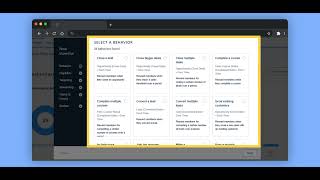
Thank you, Lauren, and hello everybody. Thanks for joining us today to, to listen and then to talk about what you can do in terms of applying your incentivization strategy more strategically. And, you know, the operative word in the webinar title was now, right? Because Now is a different time, and instead of taking an approach of, you know, being a general practitioner, perhaps it's more appropriate to take the approach of being a laser surgeon. The, you know, and again, sticking with the medical metaphor, which, you know, may be appropriate this time, a lot of companies, I think, take the— have taken the general practitioner's approach or the approach to incentivize revenue generation and maybe to incentivize reduction in warehouse inventory of particular product stock, right? So maybe we'll consider that to be the head and the heart. But our customers have shown a lot of innovation about how they are addressing other parts of the body. And here are some examples, right? They, they really started with, you know, a business outcome that they wanted to achieve and then, you know, worked backwards from that goal to determine the type of incentive or incentive program that they should employ that would best result in that business outcome, right? So here's a list of achieving alignment, right? That seems fairly straightforward and simple, but I think it's amazing, particularly in the— if you're in the B2B channel universe, of how difficult it is to achieve alignment with your channel partners, right? Whether they be resellers, distributors, dealers, retailers, what have you. Gaining sales efficiencies. So this is different than sales effectiveness, right? Sales effectiveness, you would characterize that perhaps as revenue generation. We had a customer who really wanted to make their sales process much more efficient. I'll go walk through that example. Product solution competency, right? They wanted not just their employees again, but their channel partners as well to really understand their product portfolio so, so deeply that they could do a number of things, right? Outcompete competitors, you know, shorten the sales cycle, things of that nature. And you see some others here that I'll go through in some detail as well. So, you know, we had a customer that wanted to have a faster reaction time. To any customers that had some sort of issue that they needed to address. Expanding the customer footprint, right? I think that's very telling now for right now. I imagine that a lot of, you know, revenue potential is in the existing customer base. And so we had a customer that really, you know, took this goal head on and implemented a very successful incentive program to achieve that. So I'll divide them into two categories, what I call sell-side outcomes. So if you, you know, have a channel or you consider your own sales team as an outbound channel, then I'll talk about some examples here on the, on that sell side. And on the buy side, I'm going to talk about customers, your buyers, right? What you can do or what, again, some of our customers have done in this time of innovation to actually continue to grow their businesses and their customer experience. So number 1, and I'm going to reverse engineer these in a sense. You know, what this particular customer wound up doing was, or realizing they, they needed to do or wanted to do, was they wanted to know their customers, they wanted to know their partners better, right? So I'll start with this and then I'll end with what the, the business outcome of, of this initiative was. So you would think that profiling is a fairly simple, straightforward exercise and perhaps one that's not of enough value to, you know, invest in, you know, particularly from an incentive program perspective. And what you might know about your channel partner, again, be it reseller, distributor, dealer, retailer, company name, company size, the locations in which they operate, the products or solutions of yours that they carry, the certifications that they have achieved, their business models, right, that they may operate under. So you can imagine, for example, if you're in the tech industry, you might have channel partners that operate under multiple business models— reseller, managed service provider, systems integrator— and a few contacts and roles. But maybe what you don't have is Information which could really extend the value to you of how you engage with that partner, right? So more contacts, right? Not just a few. How many contacts? In fact, I think it's important to gauge how many contacts on a percentage basis that you have for any of your channel partners, right? Their org structure, other products and solutions that they carry in their solutions portfolio. Besides yours, right? Other certifications that they may have. The percentage or number of employees by function, right? Percentage number of revenue by business model. So how much revenue are they generating by resale? How much are they generating by consulting and systems integration? Their vertical industry focus, their geographical focus, any skills they might have. And I'm not talking about skills here in the form of certifications. I'm talking about skills in the form of, for example, Multi-language capability. If you're operating perhaps in the, in the US, you might want channel partners that are adept in both English and Spanish. And of course, in Europe or Asia, it's pretty important, of course, that your channel partners or your salespeople have multi-language capability. Their plans, right? What are their plan investments? Where are they going to go? What sort of business models are they going to adopt in the future? Or their future plans for verticals and geos. You know, obviously that would be very valuable because if you know their plans, you can align your own plans, your own programs and plans to best meet what they feel like they need from you. And their history, right? When was the company founded? Was there a change of ownership? You know, what business models did they operate under, under the past? What has been their, their growth pattern? So If you look at the first set, you mean, I'll give you an example. You can, you can determine the percentage of employees registered, right, because you know how many contacts you have, you know, registered in your PRM system. And you know, you know, what the company size is in terms of employees. Using the, the second set, the expanded set, you can determine number of employees registered by function, right, which is going to give you even, you know, greater insight. So what they started with was alignment, right? They sat down and said, we need better alignment with our market, with our customers and our channel partners. The more alignment we have, the less friction that we have. Less friction we have, the more our costs are reduced. And so they have found, in fact, that they've achieved this and some of the benefits they've been able to get out of it is to be able to fine-tune their enablement and incentive program investments according to the needs of their partners and where their partners are heading in the future, and to personalize that engagement with their channel partners, right? So know your customers, know your channel partners. This was the big issue for them. They know that the better they know their constituency, the better they're going to be received, and ultimately, it's going to wind up in a better experience for their customer, the ultimate customer. Number 2, so where they landed was they felt they needed to shorten the sales cycle, right? And I'll get to the business outcome goal here in a second, but let's look at the sales cycle. This was a company that had a sales cycle. The average sales cycle was 5, 5 months, almost 5 months in length, and that was just unacceptable to them. And this is both their internal salespeople and their external channel partners. They averaged together about 5 months. That was just a very long sales cycle for the types of products and solutions that they were offering. So they said You know, we're going to look at energy that's applied during the sales cycle. So they could do that by the number of activities, by analyzing their CRM database. And they found that energy was highest at the beginning of the sales cycle and then again at the end of the sales cycle when the salesperson kind of sees the end of the tunnel, um, come in sight. And so what they decided to do was, I mean, they could have just created a simple incentive that said the, you know, the faster you close a deal, the more reward points that you will get. But they actually got more granular than that, right? They actually broke their sales cycle down into stages, right? So here, you know, determining the fit, doing demos, developing a quote, and they incentivized the stages of the opportunity lifecycle, right, and by— and they used Fiolo's countdown model, incentive model, to— for this. So if they were, for example, from the fit stage to the demo stage, if they were to do the demo in one day later, it'd be 150 points, two days later it'd be 140 points, and three days later 130 points, so on and so forth, right. right? And they found by incentivizing kind of the middle of the sales cycle, middle portion where they found that energy lags, that they could really shorten the sales cycle tremendously. And they got it down from almost 5 months now to less than 3 months and, and are continuing to see improvement. So, you know, what did they start with? Well, they started with they came to the table saying, "We want sales efficiencies," right? And you know why? And what did they realize? Because they wanted to reduce the cost of sales, right? Their profitability was being impacted by how long it took deals to close. And they wanted to increase salesperson capacity, and they've certainly been able to realize that. So instead of 10 deals, per year, that a sales rep was chartered with, it increased now to about 13 on the average. So they've been able to increase their salesperson capacity as well. Third example, we— a customer that was really concerned about disseminating the knowledge about their products and solutions, again, to their employees and their channel partners. And, you know, wanted to— their concern was that they found that, you know, in doing analysis, that a lot of their customer complaints were about product defects, or we'll— maybe we'll say solution defects. But solution defects because the product wasn't being installed correctly. And so while the product may be working, you know, the other product components that it was working with were failing because the way the product was installed was incorrect in the beginning. And so they were a lot of issues around customer dissatisfaction and support costs. And just the, the time to bring a customer, you know, to production with their, with their product. And, and their original goal was we need product and solution competency throughout our ecosystem, right? All of our, all of our resellers, all of our systems integrators, all of our manufacturers' reps, all of our agents, all of our internal salespeople really need to have product competency. If we have that, we're gonna get a vastly improved customer experience, which in fact they certainly have, uh, in terms of measurement. I'll show you some of the measurements from some of our customers at the end as well. Uh, reduced cost of support and more new logo deal wins, because going into a new deal, uh, against competitors, they found that their channel partners, just by knowing the product better inside and out were actually able to outpace competitors in terms of passing that knowledge on to the customer, and the customer made the decision, you know, based on that, on their product knowledge. Number 4, eClaims. So we have a customer in Asia that is— this is a tire manufacturer, by the way. And a lot of times customers, when they have problems with the product, with the tires, will bring the product back to the point of sale, right? So whether that be a retailer or dealer, you know, some other entity, and expect the dealer to fix the problem. And the, the dealer would have to send the customer away and say, well, you have to, you have to file a claim, which goes to the manufacturer, and then the manufacturer will provide us with a claim approval, and then you can bring your product back in and we will address the issue. So you could imagine it was a very, very inefficient process, business process. And You can also imagine that customers were not very happy with this type of customer support, customer service. So they initiated an eClaim capability where a customer, when they brought the product back into the dealer for to be addressed, to be fixed, could file an eClaim on the spot, right, through their mobile phone. And it was immediate. That the dealer got the eClaim approval from the manufacturer. So obviously an improved customer experience and reduced remediation costs because the issue is resolved on the spot. Right? There is no back and forth between the manufacturer and the dealer to be able to do that. Right? So they've gotten some really, really good benefits, you know, in terms of what their— how their customers are responding as a result of of this program. Number 5, quantity of items invoiced. This may seem strange, you know, but again, this was a company, a manufacturer that has a broad line of products, industrial and commercial products that they sell. And what they were— what they we're finding is that a lot of the orders that were being made by facilitated by their salespeople or their channel partners didn't have a lot of items on it. Right? So here's an example. You know, a couple of different SKUs, and it had 87. The quantity totaled out to be 87. But they did— they really wanted— really wanted more cross-sell and upsell. Right? So that in this case, they, you know, the, the example was 359 total, total units, or total items in their, in their invoices. Right? Why did they want this? Well, because it expanded their customer footprint. The more either, either more of, of a whatever product they were selling, if they could upsell more of a quantity, or if they could cross-sell into other parts of the company. Either way, they felt that that expanded their customer footprint. And why did they want it? Well, because of account protection. The bigger foot— your footprint in a customer account, the more protected that account becomes. And they also wanted more utilization proof points that they could use, right? You know, instead of, you know, 500 users, they had 2,000 users, right? Instead of just the marketing department as the customer, both the marketing and the sales department of their customer. And so it really helped them build their story as well that they could leverage, you know, going forward with other customers. Let's look at a buy-side outcome. So again, this is looking at a business customer you know, not a channel partner or employee who's selling for you, but a business customer who's buying from you, right? Your buyers. So e-commerce utilization— this is where they started. And they had invested in an e-commerce platform, a B2B e-commerce platform, which wasn't getting a lot of traction. And so, you know, the first reaction of that was that we need more traction. We've made this We made a big investment in a new platform, a new capability, and we're just not getting the type of utilization that we were hoping to get from this investment, right? So one, one obvious reason was to prove out the ROI on that e-commerce platform investment, but they went beyond that, right? And to tell you what they do, I need to give you a little context around customer loyalty, RFM. Recency, frequency, and monetary. So RFM is an acronym that's often used in the customer loyalty space to define what makes a customer loyalty and to identify what you want that customer to do in order to make them more loyal, right? So recency— how recently have they purchased? How frequent How many items have they purchased in the last quarter or last year? And monetary, what is the amount of money that they have, you know, spent with us? Those are the 3 primary. Now, there are other, certainly there are a lot of other customer loyalty metrics that go beyond, but this is historically the core. Now, if you're talking about a consumer customer, these all make sense, right? right? Whether it's a fast food restaurant, you know, or a retail store, or, um, you know, a, uh, a hotel, or, or anything having to do with consumer, recency, frequency, and monetary all apply. In the B2B world with business customers, recency certainly applies, right? You would be wanting to know, have your customers, have your business customers purchased from you recently, or has it been a year ago or more? And you're certainly interested in how much they're purchasing from you, right? How much they're investing in your product, if you will. Frequency is the one that doesn't translate so cleanly to the business customer, business buyer world, right? Because Here's the thing. If you have a customer that anticipates that over the course of the next 3 months that they are going to need, let's say, let's say, 300 pallets of your product. You don't necessarily want them to place an order per week for one pallet every week, right? Because you have order processing costs and order fulfillment costs that go along with their orders, and those are not insignificant costs. If they are breaking down their, their inventory needs, anticipated, anticipated inventory needs that granularly, they are driving up your inventory costs. And so we had a customer— again, this is a manufacturer— who determined what the perfect order was for them, the perfect order size in terms of the order size and the frequency. They didn't want them to order too frequently. They did not want them to order too infrequently, right? And so they actually developed an incentive program that would reward their business customers for optimizing, optimizing what the order size and order frequency should be. And they used VLO analytics to help determine what that perfect order would be. So what did they start out with? They said we wanted order efficiency. That was their desired business outcome. What did they get as a result? So significant reduction in the cost of order processing, significant reduction in the cost of order fulfillment, and a greater customer experience. Because once customers were incentivized to actually use the e-commerce platform, they actually found that their experience was better. They felt more in control of the process, and as a result, the, the customer, the overall customer engagement through their e-commerce platform has gone up significantly. So let me give you some ideas of the things that you can do, you know, perhaps in addition to these examples that I've just laid out, right? And we don't have time today to go through all of these, but again, if you want to talk about these or other business outcomes, we're more than happy to do so, right? So, but look at some of these others. That, you know, our customers have done and been very successful with. Fattening the sales pipeline, right? Getting more opportunities into the sales pipeline. They actually designed an incentive program around marketing yield. So not the number of leads that a channel partner or their internal marketers generated, but the— we were compensated on the number of leads that were converted into opportunities and how fast they were converted in opportunities has really enabled them to actually increase the size of their sales pipeline. Growing the leads and referrals engine, right? Re-engineering a business process. When you think about it, incentivization is your agent for change. And if you need to re-engineer a business process, for example, what the tire company did in its claims process. You can and should look to your incentive program capability to do that. Leveraging the power of crowdsourcing, achieving retailer compliance and audit management. A lot of consumer goods companies and manufacturers are really key on their retailers' compliance in terms of planogram space, how they're using trade promotion funds, They want to make sure that their products, once they hit the store, how they're represented in the store, are up to their expectations. Activating inactive members— I'll show you something about this in a, in a short time. So a lot of companies have channel partners or business customers that haven't transacted in a while, right? And again, we've, so we've had, you know, customers that want to reactivate that sleeping part of their channel or that sleeping part of their customer base, right? Bring them back and deepening partner engagement. That's a very common business outcome that we hear a lot of our customers are wanting to achieve. So how do you do this? Well, with PLO, you have over 40 what we call behavior elements. These are objects in the Salesforce database which represent behaviors of your sellers and your buyers, right? Now, I'm going to ask you to squint to the screen. Let me just bring up, you know, from a category perspective what these behaviors entail. So there's a number of marketing behaviors. So how much content is distributed, the number of campaigns that are being executed, the number of leads that are being generated, the number of referrals that are being made. In the commerce category, we have the number of quote requests or quotes that are being requested, uh, shopping cart abandonment, of course, the total size of the order. The frequency or the order and the recency of the order, obviously. Under engagement, partner portal utilization, training, event attendance, and other types of engagement behaviors that you can use to, to get to the right— incentivize to get to the about business outcome that you want. Sales retention, and customer service. So, and this, this list is growing all the time, right? So we're up at 40, I think the count is now 45, but we're, we're adding new, uh, and additional behaviors on a constant basis based on what our customers are wanting to do with respect to their, their business outcomes. And let me give you an example of the way that we facilitate that. So we call them playbooks. You know, so you remember one of the business outcomes that I just referred to was deeper partner engagement. We are worried that our partners are just not engaged with us, and because they're not engaged with us, we don't know what they're doing with respect to other vendors or manufacturers which they might also be representing, right? Perhaps they're more engaged with them. The more they're engaged with us, the more confident we are that we have a greater wallet share, right? And so here is a playbook for how you would incentivize partner engagement that has 5 elements to it: training, event attendance, communications, you know, so how often are they communicating with you and in what form, incentive program participation, right? So what have they done in the past? Have they been participating and incentive programs and which types and partner portal activity, right? So we walk through, you know, the whys, we, you know, the business outcomes with customers, you know, increase partner knowledge, you get a better sales process, you're going to boost partner loyalty, right? And you know, the scenario, right? So this is scenarios from, again, one of our real-world customer examples. The company was receiving low-quality leads from partners. Observed that their sales reps were not accessing their partner portal platform and therefore not completing the training or engaging in forms or answering surveys, right? So to boost loyalty and productivity, they implemented an incentive program according to this playbook template, right? The business case was, you know, Monica first started by, by asking the financial team for reports. Of revenue results, ran it through Biella Analytics, found out a number of things, right? Partners only brought 45% of the company revenue from last year, well short of what their, their goal was, the company's goal. 30% of the total leads created by— only 30% of the total leads created by partner sales reps were converted. So they, they wanted a management dashboard with partner actions in the community portal And it showed low platform adherence and low training completion. Only 14% of the sales rep accessed the PRM platform. So obviously a correlation between productivity and engagement, right? And, and so they wanted to take this engagement factor head on. In fact, when they, when they developed this incentive program that targeted engagement, they found that their partners' productivity went up by 3 times as much as if they were just incentivizing the business outcome only itself. So they were doing— going down that route, you know, we're going to incentivize revenue generation. They were getting incremental, uh, positive results from that, positive growth from that. Once they started going deeper and incentivizing the engagement behaviors, they found out their, their revenue growth from the partners that were in the program was tripling that of partners that were not participating in the program. So obviously their next step was, how could we get more partners to participate? So they identified their priorities, right? Increase overall partner engagement in the Salesforce Community Cloud platform, reduce the knowledge gap of partner sales reps, right? So then they define their incentives, right? Use again using Fielo, you know, giving points each time a sales rep logs in to the partner portal. And for e-learning, giving points and badges for each course and module completed. The first 10 reps that completed the course received extra points, right? They have a lot of power at their fingertips that they can apply innovation to really drive participation up in these types of programs. Right? And, you know, what they got, what we were expecting was a 40% increase in partner sales, right? Predictive impact of $2 million, a 65% increase in training course completion with a predictive impact of $650,000. Again, using Fialo analytics to make those determinations. They exceeded both of those goals, those desired business outcomes, by a significant measure. So we do something called a quarterly business review with our customers where we sit down and use Fielo Analytics to understand where they are with their programs. This is a particular program I mentioned about activating the inactive members, right? The, the the channel partners, in this case, they were dealers that had not been transacted with them for a number of quarters. And you can see, you know, a big jump, a big spike in the most recent quarter when they put this program in place. They all of a sudden brought a lot of what sometimes is thought of as the long tail of your channel partner ecosystem into the more active, productive part of their ecosystem, right? And so, you know, their numbers here are much, much improved, right? 7%, only 7% of the member base has not transacted in the last quarter compared with, you know, that was typically more like 70% a year ago. Here's another example of analytics as used in our quarterly business reviews with our customers, right? This is the eClaim example that I gave. And again, you can, you can see the, the percentage increases they've had in eClaims, you know, year over year by quarter, right? A, a 52% increase, an 87% increase, and a 25% increase You know, again, which has resulted in significantly reduced costs and significantly increased customer satisfaction. So with that, that's just a few of our customer examples. I will tell you that we are going to be launching a new website in about a month's time with these and a lot more customer success stories and customer case studies. That you can utilize to, you know, to as an input to your own thinking, and you can more than happy to talk about these and any others with you certainly on a one-on-one basis, but for now let me see if there's any questions from the audience that I can take. Lauren, did any come in on the chat session while I was talking?
Yeah, thanks, Tim. Yeah, they did. We have one here from Will. You talked about the perfect order. Can you be more specific on how you would define an incentive to drive that behavior?
Yeah. Oh, yes. The perfect order. So this was— by the way, this particular company, through the use of some of our analytic tools, were able to determine that the perfect order was one order per month of 15 pallets of product. Now, so they used Fielo to create an incentive, to design an incentive that identified, you know, both the frequency. So if it was over 1 month or less than 1 month. So if it was 1 month exactly, they got the maximum number of points or the maximum rebate. And so, you know, let's just say that for 1 month, it was 1,000 and the order quantity, you know, 15 pallets. So they created an and condition in our, in the Fiala rules engine. And, you know, what they did is they, decremented the points allocation or the rebate allocation accordingly, whether the order, the order amount was less or more than 15 pallets and the order frequency was more or less than 1 month. So they used the analytics initially to define what the perfect order was for them and then used our intelligent rules engine to create an incentive that would give the maximum amount of points for that perfect order and then use that countdown decrement capability of decrementing points the further off from the definition of a perfect order that a particular order might be. Is there anything else, Lauren?
Yeah, thank you. We have time for one more, and this one is from Charlotte. How would you incentivize channel partners in order to fatten the sales pipeline?
Uh, yeah, so I mentioned marketing yield, right? So the— let me explain what I— let me explain about, about marketing yield and lead and lead quality, because this customer used a number of metrics to, uh, increase the health of their sales opportunity pipeline. So They used, um, so they again using Fiala Analytics, they were, they analyzed, um, what types of deals were most likely going to result in a closed deal, right? So they could determine, um, you know, when an opportunity came in, in the, into the pipeline, what its prospects were, and immediately there was a probability score associated with it, determine what that would be. So you could imagine that the higher qual— the higher the quality of the lead that comes in the sales pipeline, the more value it has in the sales pipeline, right? So that was one thing that they were doing, and they were using the field analytics to determine not only score but also determine what a the nurture point was. For example, you know, a lead comes in with a lower score, lower chance of converting into a closed deal, uh, it didn't enter into the pipeline, it went into a nurture, uh, a nurture cycle. The, uh, the other thing that they did was to, um, identify yield. So they started incentivizing the marketers not just for generating leads but for generating leads that actually converted into closed deals. And so there's a term, there's a term for that called attributional incentivization. Let me explain what it means. You're a marketer, I'm incentivizing you for marketing activities, you know, a certain number of rebate dollars that you will get once that lead closes. Right, so you're— you're— I'm incentivizing a marketer. I'm not incentivizing salesperson in this particular case. I'm incentivizing a marketer, and I'm incentivizing that marketer for any leads, any and all leads that actually turn in closed opportunities. And I'm using my countdown mechanism to give them more points or more rebates, higher rebate dollars, the faster that that lead converts into a closed opportunity. So that's marketing yield. And so they were, they were employing both of those techniques in their incentive program to really expand their sales pipeline and have actually more than doubled their sales pipeline just in the last 3 quarters.
All right, awesome. Thank you, Tim, so much. And thank you to everyone for joining us today. And if we did not get to your question, we'll make sure to do so via email. If you would like to learn more about Fialo or Fialo's products, please visit us at fialo.com. Thank you.
Thanks everybody.