Getting started with the right channel incentives program with Fielo

Fielo's QuickStart is a Salesforce-native channel incentive platform that launches in hours to days. Gary Hanna and Tim Harmon walk through six building blocks of incentive design: targeting, behaviors, rules, rewards, communications, and analytics. The demo shows how to configure promotions, set reward types like rebates and points, and choose from over 40 Salesforce behaviors.
Questions this video answers
For a single‑action promotion, the 3% is applied to the value of the closed opportunity (e.g., 3% of a $50,000 deal). For a multi‑action challenge, it is applied to the incremental revenue generated (e.g., 3% of the $20,000 increase when sales grow from $100,000 to $120,000).
Chapters
Hello everyone and welcome to our webinar. Let's just give everybody one minute to join and we'll start very, very soon. Okay, so let's get started. Hello everybody and welcome to today's webinar, Getting Started with the Right Channel Incentive Program. That will talk about our Fialo QuickStart. Just as a quick reminder, we will be posting the recording of the webinar in 2 days on our website, so feel free to check it out later if you want. So without further ado, I'll turn it over to Gary. Gary, take it away.
Thanks, Avantia. Hi everyone, I'm Gary Hanna, the Chief Revenue Officer for Fialo. Over the past 30+ years in the tech industry, primarily in sales management and channel management roles, I've had the privilege and opportunity to get to know very deeply customer needs in terms of product, in terms of implementation, knowledge, customer success, and overall ROI. And we're here today to talk exactly about those things, and primarily specifically how to get an incentive— an innovative, successful incentive program solution up and running very quickly. I'm joined today by my colleague Tim Harmon. Tim, please introduce yourself.
Hi, excuse me, hi everybody. I'm Tim Harmon. I head up BLO's marketing initiatives. I've also been chartered to develop an incentive and loyalty program learning academy, which we will launch in the first part of next year that will cover topics like programs, strategy, innovation, tips, tactics, and best practices that are being utilized now more and more aggressively by folks like yourself to, to stand out from the crowd and to be able to a channel incentive program that is successful in every way you can count success. Before I joined P&L, I was the principal analyst with Forrester Research, where I led Forrester's research on global channels. And so I had the opportunity over the course of almost a decade there to really get to understand the, the, the channel relationship dynamic, if you will, between tech companies and their channel partners and what both parties were expecting and wanting of each other. And, you know, what Fielo has brought to bear and is continuing to bring to bear in terms of product and the new product that we'll be talking about today, the Fjällräven QuickStart, I think speaks very much to that, those expectations and those needs and those wants by both parties. Gary, back to you.
Okay, thanks, Tim. So over the course of my career, when I've talked to customers, who are putting in place a channel incentive program. Generally speaking, if you're doing this, you probably are thinking in terms of putting a program in place that first of all is compelling. It's a program that attracts channel partners to participate, kind of like bees are attracted to honey. Actually, I guess bears are attracted to honey, but bees are attracted to the nectar. You want it to be simple, right? A program that, that is simple so that incentives are easy for partners to understand and apply to their business. You want a program that is energizing, a program that holds your partner's interest and fuels their growth. And last but not least, you want a program that is relevant with incentives that map to both their strengths and weaknesses appropriately for the partners, but also that is mapped to your own strategic corporate goals. Now the business outcome, of course, is that your incentive program is successful in spurring productivity and is proving to be profitable. So what do you need to fuel these goals? You need innovation. The ability to craft programs that make you stand out from your competitors, that resonate individually with thousands of channel partners having diverse needs and capabilities, and that take into account constantly shifting goals and market dynamics. Now, innovation is about having choices, lots of choices, and how you apply them to build meaningful incentives for your partners. With Fielo, you get a multitude of choices across what we call the 6 building blocks of incentive program design and management. Those 6 building blocks are targeting, behaviors, rules, rewards, communications, and analytics. It's how you combine these choices across those building blocks that gives you the power to outcompete and outperform. Hey, Tim, why don't you take a little bit of time and explain those for us?
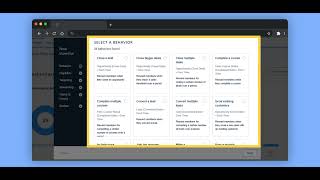
I'd love to. So, you know, Gary talked about— mentioned the 6 building blocks. Let me walk through them individually, right? Because these are the things you need to think through in terms of crafting your incentive program. First question you need to ask and answer is, who do you want to participate? What I mean by that is that you may want to launch an incentive to your entire channel partner ecosystem, but maybe you want to start segmenting your channel partner ecosystem, right, into smaller groups of channel partners that share a common set of attributes. For example, you may want to have segments by region, so North American channel partners, European European channel partners, uh, Asia-Pac channel partners. Uh, you may want to segment your channel partners in terms of size, you know, large, medium, and small. You may want to segment them according to their skill set or their certifications, right? Some are going to have skills and certifications in some areas that others are not, right? So there's different ways to do, you know, to, to do this. And I think the, the thing to remember about targeting is that you do want to target. In the consumer world, I think marketers have used personalization as a goal for a long, long time. Try to, try to affect a one-on-one or one-to-one, you know, messaging relationship with the consumer. And this is what segmentation is all about in terms of channel partner incentive program management as well, is that you can talk to a small select group of partners again that share a certain set of attributes. You can, you can, you can launch a program if you wanted for just one channel partner, uh, if you know if that was appropriate. Second question you want to ask and answer is, what is it that you want them to do? Now historically, it's all been about generating revenue. I'm going to reward you for generating more revenue. And, and that's fine, except for the fact that if that's the only thing that's been done for the last 10 or 15 years, uh, you're incentive program is probably getting a little bit stale. In fact, I would go so far as to say that it's not really an incentive anymore, right? That it's kind of— if you run the same incentive, you know, we're going to give you more reward for generating more revenue, you're quarter after quarter, year after year, it's just kind of baked into their normal, um, normal business operations. I'll tell you what too, that if you run the same incentive program quarter over quarter, year after year, what you'll find in most cases is that you have to increase the reward to keep that same level of growth going. It's, um, it's almost like a drug addiction, if you will, that, um, you know, that you'll need to feed them more and more, which will cut into your, of course, your incentive program profitability. But we call this the behaviors building block, right? So you can certainly, if with Fielo, reward channel partners for their revenue generation performance, right? But you can go well beyond that as well. You can incentivize and reward them for marketing behaviors, for customer experience behaviors in terms of how good of a customer experience they are providing, uh, for engagement behaviors, for how much they are interacting with and engaging with you, for commerce behaviors, right, how often they are ordering product from you, those sorts of examples. So you have a, a whole canvas of different behaviors now with Velo that you can choose to incentivize and reward your channel partners. The third question, how do you want to goal them for what you want them to do? Right, because this is where the Velo incentive rules engine comes into play, right? So I can pick a behavior, um, again, let's say— let's not say generating revenue. Let's pick another sales-related behavior though, right? The, the close rate or the win-loss rate, if you will, that a channel partner is able to affect, right. And so you could say that, you know, you're going to get rewarded for a 10% improvement in your win-loss rate, right. So now you're setting the rules that, you know, govern what it is that you want them to do. How we, we value what they do, the, the fourth building block of the six that Gary mentioned, right? Rewarding. And with PLO, you have again a multitude of choices, right? Because you can choose as reward types rebates, points, SPIFs, cash, instant rewards, virtual currency, or we have the ability, um, you have the ability actually to create your own reward currency beyond those standard 6 out-of-the-box currencies that you get, get with Fielo. Moreover, you can decide when you are determining your rewarding scheme or defining your rewarding scheme that whether you want to reward the company, the channel partner company, or the individual, the channel partner company's employees, right? Or perhaps both, right? So you have, again, that is another choice set in P&L. Fifth building block, how will you work with them throughout the program, right? This is, this is instrumental. It's not just— you can build a great, innovative, compelling incentive program that gets a lot of participants. It raises your participation rate in terms of the number of channel partners that subscribe to, to being in it to probably, you know, 100%, but you need to be able to communicate with them Throughout the course of the incentives, right, to— so pre-incentive to tell them what's coming up, to describe the program, to give them directions of how to enroll. While the incentive is live and in the field, right, that show, you know, communications that tells them, you know, what their progress is, you know, when they are close to making a goal. If they did just one other thing that they would earn some sort of additional reward. So you have these communications mechanisms at your beck and call as well with Fielo. And certainly last not but not least, analytics, right? How do you monitor their progress and measure their performance, you know, through the program? So Fielo has a rich set of analytic tools and dashboards again at your, at your beck and call to use to, to, to track how your incentive programs are doing it overall, but also how individual channel partners or groups of channel partners are doing as well. Now Gary talked about choices, right, and a multitude of choices. So With targeting, I'm going to go back to targeting. With the Ellis targeting model, you have an unlimited number of segments that you can define. I just mentioned a few as examples. I mentioned regions, 4 or 5, you know, geographical regions. I talked about company size. I did 3 company sizes. Now I talked about certifications and skills. You think maybe there's, you know, 10 different certifications, skill sets that, that are representative of your, of your product knowledge. Um, but you can go beyond that as well. You're really unlimited in terms of the number of segments that you can, that you can define. In terms of behaviors, over 40 Salesforce objects that represent behaviors are supported out of the box with PLO.
Right.
Um, I mentioned revenue generation. Obviously that's going to be there. Uh, I mentioned close rate. That's obviously going to be there. Deal close time. Um, quotes, uh, orders. Um, and you know, then you get into the marketing behavior. So leads, marketing activities, MDF utilization, right? Um, customer experience, the time it takes to implement a project. If you were on time and under budget, um, your customer support response time and satisfaction, those sorts of things. So again, over 40 behaviors out of the box represented by sales— Salesforce objects are again at your, your beck and call. Rules. So in Fielo, we have two incentive types. One is called promotions and the other is called challenges. And you'll see this in the demo that I'm going to do in a couple of minutes, right? Now promotions are what we— are single action incentives, right? Every time the channel partner does something, they get rewarded for doing that thing, right? A challenge is a multi-action incentive. And so What happens is that over a period of time that you define, all of the things that a channel partner does during that time period get aggregated, they get added up, or they get averaged, uh, and then they are rewarded based on that, right, or based on the what the average is at the end of the period. So two different incentive plans. Five different performance goal models. I won't go into all of them here. We've covered this in past webinars that you can reference at our website, filo.com. Um, but the, uh, there's different ways to set a performance goal. I'll just give you a couple of examples. One is called fixed goal. So you need to achieve $10,000 in incremental sales this quarter. I've set a goal, it's a fixed goal, it's $10,000. Let me give you another goal model that again is out of the box with Fielo— performance improvement. So I'm not going to set a goal, I'm not going to say you have to do $10,000 in incremental sales. I'm saying in order to earn the reward, you have to do 10% improvement over what you've done in the past, right? So in the first case, I've set the benchmark for you. In the second case, the benchmark is the channel partner's own past performance. But you have 5 performance goal models. You have 3, what we call 3 performance goal aggregators, right? So you have total, you know, so over a period of time you can sum up all of the all of the, the opportunities, uh, that they've closed, the opportunity sizes, and sum them up. You have average, so you can reward based on what the average opportunity close was over a period, time period, right? Or you have count or frequency, right? How many opportunities or deals did they close in the time period, right? So 3 performance goal aggregators and an unlimited number of criteria, right? So you can have multiple rules, you know, so combined with and/or conditions. So, you know, greater than $10,000 but, you know, less than $20,000 and training for a particular course has been completed, right? And the, the opportunity close time, you know, was less than 90 days, right? So really an unlimited number of criteria supported in our rules engine. Rewarding. So I mentioned the 6 reward types, right? Rebates, rebates, points, SPFs, cash, virtual currency, And then, you know, as many or your type of own definition of a currency or instant reward, and then your own type of currency that you may want to define yourself. And 3 reward recipients, right? I mentioned that you can decide to reward the company, the channel partner company, or the individual, the channel partner company's employees. You also have a third option That is to reward a team, right? So you might want to reward the channel partner's marketing team or the channel partner's customer support team. So that's a third option as well, right? Communications. So I mentioned three communication stages, right? Pre-fielding of the incentive. So before this incentive is actually fielded. Are rolled out to the field, right, where you want to communicate and message ahead of time to get your channel partners prepared and instructed for what the— their incentive opportunities are going to be next quarter, right, or next year. Certainly during, you know, while the incentive is live in the field, right, I mentioned the things like being able to message them automatically about when they are close to achieving a goal, or if they did just this one other thing that they would, you know, increase their reward by a certain amount. Three different— oh, and then the third stage, uh, certainly post-communications. One of the things I think a best practice is to take some of those analytics that you've done and share them with your partners, right? Tell them what their performance has been, uh, post, uh, post-participation. Um, you know, how many employees were involved, what was the relative performance employees, how did you stack rank against other channel partners, you know, to give them that feedback is, is critical as well. And then analytics, you know, 19 Lightning dashboard components that you can utilize, net numbers growing constantly with each new release of PLO. So that's it, 6 building blocks, a lot of different choices. This should give you the power to innovate. Back to you, Gary.
Wow, thanks, Kim. And the beautiful thing of a live webinar, my dog agrees with you. So, you know, there's a lot of power. We put a lot of power in your hands. And sometimes with all that power, we see situations where a customer just doesn't know where to start. You have all that flexibility and all that power, but customers ask us where to start. Well, we've answered that. We've crafted a compelling out-of-the-box starting point for you, one that you can evolve from and grow. By tapping our knowledge, our resources that map to your goals and your channel model. And I am very, very excited about this, this out-of-the-box starting point solution that we have is Fielo's newest offering, Fielo QuickStart for tech companies. As I noted, we, we've, we've had so many conversations with so many companies who just love all the power and capability represented by our behavior libraries and our rules and segmentation engines, all that stuff that Tim just went over. But many just get overwhelmed and they just don't know where to start. But they do know that they want a compelling program in place and they want it as fast as possible. So what we've done from the research and our years of being in this business We've identified the most acute channel pain points for the tech industry. Things like deal close time, new logo acquisition, cross-sell, upsell, and so forth. And we bake them along with specific training goals into the Quick Start. We've also included the most popular incentive reward, which is rebate. And we've included a front-end portal experience that's easy for channel partners to use and assimilate. The most important and compelling thing is that we can take— with our Quick Start solution, you can have a relevant, compelling, energizing loyalty or incentive program that is based on industry best practices and standards and have it up and running in a matter of days, in some cases, hours. I'm very excited about this and very excited to have Tim give you a, a peek at our quick start. Tim?
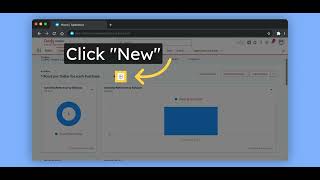
Yeah. So let me do that. So before I, I get into the actual demo, let me just set the stage. Normally, I would show two views. Right? I would show the backend In other words, the experience that the incentive program administrator, that person who is responsible for designing and managing the incentive program, out to the channel partners. So I would give that view. The second view I would give would be the front-end view, right? What is the partner's experience, right? What do they see in terms of these incentive programs? That are being offered to them and their participation in these programs. I'm actually going to show a third component today, and that's going to be what we call the— our Backend Wizard. So this is a new, a new product capability. It's, it's very appropriate for our QuickStart solution because it gives a, a quick, easy, and simple interface for inputting the values and variables that you want into these pre-populated incentives that come with the QuickStart, right? So if you want to change the, the rebate from 2% to 3%, easy to do with this wizard, right? If you want to roll this out for the first quarter of next year or the second quarter of next year, very easy to do with this wizard, right. So with that, let me roll over to the demo. Now, here— so I'm going to start with the incentive program administrator view. And you might note that this— hey, this looks somewhat familiar, looks a lot like the Salesforce CRM user interface. In fact, you know, Velo is a Salesforce native application, so we have access to all the Salesforce, uh, force.com database objects. We benefit from, uh, from operating under the same security umbrella that your Salesforce applications do, uh, and it's a common user interface, uh, from your CRM or PRM or Marketing Cloud or Service Cloud applications to what you have here— the ability to again design and manage your incentive program. Okay, now You'll see that I've started here on incentives, and if you look over to the left, there's promotions and there's challenges. So under the promotions, we can see here over the right, there's actually 6 promotions, starting with enrolling in the program, uh, all the way through increasing your skills and earning badges, right? So 6 different promotions. And then if I click on challenges, 4 different challenges. So you get a total of 10 incentives that have been, you know, built into the Quick Start that you can pick and choose from, uh, any that you want to employ to get started for your own channel partners. So again, promotions are single-action incentives. They're going to get rewarded for every time they do that thing. Challenges are multi-action incentives. They're going to get rewarded for all the things they do over a time period that you define. Let's— let me, let me look at a couple of, of promotions. So we'll start with, you know, the ability to earn a certain percentage rebate for each opportunity closed. We'll go into, we'll go into this one. Okay, so here, here it is. It's made up of two rules. And I'm gonna— I'll actually show you both rules. If you look at the lower right, one is close an opportunity and earn a 10% rebate, right? The second rule is to earn an additional 5% rebate for each opportunity closed greater than or equal to $50,000, right? Now again, you can change these rebate values in the wizard that I spoke to earlier, and that I'll be showing in, in just a second. But let me, let me just, um, let me just click on one of these rules. Let's do the, the additional kicker, right? So it's not just closing a deal that you earn a rebate for, it's if you close a large deal. In this case, the company considers a deal greater than $50,000 to be a large deal. They're going to get an additional 5% rebate for that, right? So you can see, you know, the action that you want to incentivize. And I can actually go in look at and edit the rule. I'll show you, I'll show you the rule. So again, the name of the rule, Earn an Additional 5%, the description of it, right? Let's go ahead and click on the next button and actually see how this rule is set up. Well, look, it's for Opportunity Closed 1, and so, you know, with this dropdown you have the, you know, all of the Salesforce objects that you can pick from that represent behaviors that you want your channel partners to do, right? And you know, here's the rule: amount greater than or equal to, you know, $50,000. So that gives you the rules. And here you can specify the reward types, right? Badge, rebate, instant reward, additional rewarding. Additional rewarding would get you for things like virtual currencies. You set your rebate. Here it is. It's, it's a 5% rebate. You could also say it's a fixed amount, so it's not 5%. You could say the rebate is $500, for example, if you wanted to. And you can set your payout date, right? So we're going to pay out rebates on a monthly basis on the first of the month. So That's an example, example of, um, of one of the incentives that, um, that are again that the FIALA QuickStart comes, comes with. Um, and you can see the others here. I won't go into each of them. They're, you know, very similar in their construct. You know, you can earn a certain rebate for each new customer closed, right? So that's new logos. You can earn a certain rebate percentage for a— decreasing the amount of time it takes you to close deals, a faster sales cycle, if you will. You can, you can launch an incentive that rewards your channel partners for upsell and cross-sell. That's the Grow Your Opportunity. And then as Gary mentioned, we also provide a number of training and product knowledge incentives, again, pre-built incentives in the product as well. So this is to increase your knowledge and your training. Let me go over to the challenges. There were 4 challenges, right? Remember, challenges are multi-action incentives, you know, multiple actions done over a period of time. And you can see the Quick Start comes with 4 different challenges. Now, I want to be clear here. You're not limited to these 4. The way that we define these 4 and— 4 challenges and 6 promotions, so 10 incentives in total, is by conducting a research study to channel professionals earlier this year where they identified what the biggest problems were with their channels, with their channel partners. And they came back and said, you know, deal close time is, you know, a big problem for us, right? Upsell is a big problem for us. You know, new logos, big problem for us. And so that's you know, why we crafted the Quick Start with these pre-populated incentives. They reflect, to Gary's point, the industry terms and trends for the tech industry that are most acute with respect to channel partner performance. So challenges are multi-action incentives, right? One over for year-over-year sales growth challenge. Again, that's going to call upon that performance improvement goal model, right? So I'm, again, I'm not setting a goal for you. I'm just saying that you need to improve your, your sales growth year over year. We have a top 5 challenge that's included in the Quick Start. So over the time period that you specify, the top 5 channel partners or top 5 resellers that perform in that particular quarter or that particular time period are going to be rewarded. Annual goal attainment. Let me look, let's look at this Triple Play Challenge. I'll give you a peek at that. So this Triple Play Challenge, look at this, it consists of 3 different missions, if you will. So you're going to earn this reward if you close 3 add-on opportunities, that's upsell. Or cross-sell, right, if you complete the training that's, you know, required for this incentive, and if you in the time period acquire 2 new logos, right. So again, we'll just look at one of these things, acquiring 2 new logos. Again, the number 2 is not fixed with the wizard. You can go in and change the values according to what you want. So it may be 2 new logos, 1 new logo, 3, 4, 5, you know, whatever. The wizard will get you the opportunity to provide the variable inputs into these pre-packaged incentives, if you will. So here we have 2 new logos, and let's look at the rule for this. So it is 2 new logos, it's based on a fixed metric, right? You want to include a leaderboard. I'll show you an example of a leaderboard here in a little bit. Um, you know, it is opportunity closed one, and look at the rule: opportunity type equals new customer. So this is again data that would be captured in your Salesforce, force.com database, right? That the customer type that was for which the opportunity closed would be a new customer, and you get rewarded for that appropriately. So that's the, that's the, uh, that's the That's the Triple Challenge. So 10 incentives overall: 6 promotions, 4 challenges. Again, you can employ all of them or just a subset of them, and/or you can choose to employ some incentives for one segment of channel partners, for example, North America, and a different incentive for maybe your European partners or some incentives for your large partners and other incentives for your small. Because you also have, again, the power of specifying the segments that you want to launch a particular incentive for. So part 2, I talked about this, you know, the backend wizard. This is brand new for Fielo. Right, for Fielo's customers. Um, this is, this is a means to provide, configure, specify those input values to all the variables that go into defining your program. So you would use the backend to actually define the program. If all you wanted to do then was to go in and provide what those input values were Right? Which segments is it targeted at? What is the rebate percentage that I want to offer for this incentive? Right? What are the start and end dates of the challenge? You can— you do this in this Quick Start Wizard. Right? And so we start off with program creation, which just captures some basic information that is universal across all of your incentives. Right? So is there a budgeting amount? If you have a budget that you want to track, on an annual basis of how much has been allocated and how much has been consumed. From a rewards budget, you can specify that budget amount here. Again, you, you specify what your rebate types, your rewards types are here. Again, you have a choice of 6 reward types, right? The— getting into the, the building blocks areas then, again, remember the first building block I talked about was targeting. So here again, the— we've pre-populated the QuickStart with regions, right? So either kind of the macro region level, uh, North America, Asia Pacific, EMEA, Latin America, or, you know, sub-regions as choices as well. So by country, for example, US, Canada, or, you know, Western Europe, Central Europe, Eastern Europe, all comes pre-populated with these segments. And again, you have the ability to define your own additional segments as well. Of course, you can see in this particular configuration, what they did is they said that, you know, from the 3 U.S. regions defined, East, Central, and West, we're going to target this— these incentives to the Western region. Okay, and here's the, here's the single action promotions that you saw in the back end, right? Enroll in the program, opportunities closed, new customers, new logos, a faster sales cycle, you know, growing your opportunities. So that's upselling, cross-selling, uh, and then increasing your skills, that's your training. And then below You see the multi-action challenges, year-over-year sales growth, the top 5 challenge, and annual goal attainment, right? So you have the ability to, you know, to choose any of these. Let me choose one. So I'll go up here to the new logos. So new, you know, you earn a percentage for each new customer closed. Look, here's the, here's the detail on it. You know, earn 3% for each new customer close. You can put in a description, but you are able to enter, you know, 3% here. You can change it to 2 or 5 or, you know, whatever is conducive to your, your budgetary requirements, right? Um, let me choose a, um, Let's look at a— the, the year-over-year growth challenge. This would be the multi-action. So again, year-over-year growth challenge, you're going to earn a certain percent by increasing your year-over-year sales. And here, you know, is the description: grow your sales by at least 10% over last year and earn a certain percentage in terms of rebates. So Here, and you can set tiers, right? So it's not just 10% growth. If you have 10%— between 10% and 20% growth, you're going— you can specify the rebate reward. If you earn— if you grow by between 20 and 30%, you can specify a different rebate value. And anything more than 30% growth, you can do that as well, right? So again, a very simple guided method to, you know, walk you through each of these, again, pre-packaged incentives to set them up for what's most appropriate for your particular program.
Hey, Tim?
Yeah?
We have a question from the audience. The question was, when you're rewarding 3% rebate, what— the 3% is applied to what?
It's— for single action, it's applied to the the, the, the opportunity deal value that just closed, right? So if you closed a $50,000 deal, it would be 3% of $50,000. For multi-action challenges, it's, it's awarded for, again, the aggregate. So if you, uh, are, are doing a, a growth, 10% growth, um, it's applied to that incremental 10% of revenue that you've generated. So if you did, if you did $100,000 last year but you do $120,000 this year, then the increment is $20,000, and the 3% is applied to that $20,000. Yeah, but you do have the— that's the way it's set up in the Quick Start. Again, you can go in and change the backend rule if you want to apply it to the full $120,000. But the way we've defined it here is for what the increment is.
And to be clear too, just the rebate does not necessarily have to be a percentage amount. It could be a fixed amount.
Right, it could be a fixed amount. Now, you may recall that was— I'm gonna— in the backend and we had defined all of these. Awarding schemes, I picked rebate and I had picked percentage. So they will show up in the wizard as a percentage. But if you were in the back end and said, no, I want a fixed value, right, then it would ask you here in the wizard for what that value is. Absolutely. Um, so that's an example of, you know, of how the, the wizard looks. I mean Again, you have specify what you want in terms of communications as well. So you can decide, determine whether to make certain communications templates that again are predefined in the Quick Start active or inactive and be able to schedule them accordingly. And analytics, again, your analytics dashboard that you have that can show you, you know, at a moment in time how your— in this case, your rebate programs are doing, but also how your training incentives are doing as well. So that's the wizard. Let me show you the third. This is the partner experience. This is what, you know, the channel partner would see in terms of them subscribing to and participating in these incentives that you do, right? So We have, you know, the home page. There's, you know, about the program. Again, you can change the, you know, the text, uh, and any of the graphics, of course, that you want very easily. Um, and then let's go into, um, you know, let's go into, um, my incentives. So again, I'm the channel partner, and look here, you can see here are the incentives that are being predefined for the Quick Start. Enroll in the program, You earn a certain number of points just for enrolling in the program. There's 2% for each opportunity closed, 2% for each new customer logo closed, 2% for a faster sales cycle. You know, grow your opportunity, upsell and cross-sell, and then, you know, training. And then you have your challenges below: year-over-year sales growth, top 5 challenge, annual goal attainment. So you can Click on any one of these, get, you know, a more detailed description. Again, you can configure this description according to, you know, what you want it to say, you know, with the wizard. And there you go. And then they can, of course, always monitor their, you know, their rewards, how they're doing, right? So to date, you know, $178 in rebates. The number of badges they've earned. And I mentioned a leaderboard earlier, right? So how they're— how this particular channel partner company ranks according to their, you know, their, uh, the other channel partner companies as well, right? So in this case, they're in the 8th position. And then they can see, you know, transactions that they've done that have earned them, uh, a rebate reward. You can go in and drill down on a transaction and get the detail, you know, for that amount. These are pretty low amounts in terms of the demo. Not sure you would ever give a $5, you know, rebate. But, you know, be that as it may, it gives the channel partner a good idea of their participation and how they're doing in terms of the program. So with that, let me turn it back to Gary to wrap things up.
Great. Thanks, Tim. That was a great, great comprehensive demo. So let me just sum up our message today. With Fielo's new QuickStart for the tech solution, you get an out-of-the-box incentive program that is pre-populated with incentives that address tech companies' biggest channel pain points. That's number one. Number two, our Quick Start includes all the front-end portal componentry that delivers a great partner experience, a key factor in that attraction, uh, and keeping channel partners engaged in your program. And then thirdly, because the QuickStart comes with everything built in that you need to get started, you can have a channel incentive program up and running in just a couple of days. In fact, if you— depending on what you want to change in the wizard, it might be in a few hours.
Alright. So thanks, guys, for, You know, for, you know, participating, attending our webinar today, you know, we certainly hope that the quick start is applicable to you, and I hope we've proven, you know, just how fast, you know, given the 6 building block approach, along with the wizardry, if you will, that is designed into the quick start, along with the 10 pre-populated incentives and rules and rewards, that you can in fact get up and running very, very quickly. So, you know, thank you for that. I think Ivantia has indicated that we had a couple of questions come in over the chat while Gary and I were talking. Ivantia, any questions?
Yeah, we do actually have a couple. So I think this one's more oriented to you, Tim. Maria's asking, can you give an example of how you can combine your building blocks to design a new incentive?
Yeah, so I, I gave the 6 building blocks and I gave some pretty interesting numbers, um, you know, 5 performance goal models, um, 3 different communications, uh, stages, 3 different communications, uh, media types, uh, by the way, SMS, um, SMS, uh, email, and portal. Along with 40, over 40 behaviors. When you combine those, you start getting a huge number, right? And so example of how you might combine them, I mean, you have really an unending palette of incentive programs that you could, you know, design and field over the course of the next 10 years. Changing every quarter and still have plenty more to, to do that you can do. The, um, but let me give you an example how you combine these expelling blocks. So let's say that I wanted to do something in terms of marketing. You know, I want my channel partners to be better marketers, right? So I'm going to, uh, for a target, I'm going to pick segments, a segment of partners that registered less than 10 deals last year, right? So I'm not worried about those partners that are registering deals on a regular basis. I'm really interested in uplifting those channel partners that aren't registering so many deals. So for a segment, I say, you know, I define a segment that says partners that have registered less than 10 deals last year. So that's targeting. Uh, behaviors is marketing. Now for marketing I have a dropdown so I can pick, you know, number of leads generated. I can pick quality of leads, so that would be the amount of time it takes for a lead to convert to an opportunity, or from time that takes a lead to convert from an opportunity to a closed, uh, opportunity. Uh, or I could pick marketing activities, you know, the number and type of marketing activities. Or I could pick MDF utilization, how much market development funds they're actually requesting and utilizing on an annual basis. So now I'm going to, I'm going to combine the, the partners with less than 10 deals closed last year. And I'm going to say I'm going to reward you for marketing activities of a certain type. Right. And so that's your marketing activities will be, you know, lunch and learns, local events, if you will. And so for every Lunch and Learn that you do, you're going to earn, you know, 500 points that can be, you know, redeemed. And I'll give 200 points to the company, which can be redeemed for, you know, trips or merchandise or events or business benefits, right? So maybe a discount on premium support. So, you know, now I've defined my behaviors, my rules. I'm going to say that it is, you know, I'm going to pick fixed goals. So I'm going to say you need to do at least 2 of these lunch and learns per quarter. So over the course of the year, 8, 8 total lunch and learns, that's your fixed goal. That's when you'll get reward. Reward type. I've already done that. It's done points. I could pick any of the others as well. But again, this is— gives you an idea how you can start to combine these things to create very powerful, very innovative incentives that are targeted to a specific group to uplift that group and make them, them better, to help them grow and to help you grow as a result. Is there anything else, Ivanti?
Yeah, um, a question from John. I think this is for Gary. How can we determine if Fialo's QuickStart is right for what we want to do?
Hey, great. So we'd love to talk to you, uh, John. And so the, the two best ways to connect with us is to go on fialo.com and you can click on Contact Me, or you can request a demo. It's very easy, straightforward. Or send us an email at marketing@fialo.com. And we'd love to understand your requirements, what you're looking to accomplish, and how we can help.
All right. Well, with that, again, thank you, Gary. Thank you, Ivantia. And thank you to— Pleasure. —all you guys out there who have given us your ear for the last 54 minutes. And I'm going to release you 6 minutes early, give you a little time before your next meeting and wish you the best in terms of, you know, anything, everything that you or we are going through right now. And I'm also going to wish you kind of an early happy holiday season as well. Like Gary said, please let us know at, you know, by going to fiolo.com or emailing us at marketing@fiolo.com. How we can help you, because that's what we're here to do. We are here to help you and make you successful. Thank you, everyone. Thank you.
Thank you, everyone. Have a great day.