Is Your Incentive Program Not Moving the Needle?

Tim Harmon examines why tech companies' channel incentive programs aren't working. Rebates alone are stale and one-dimensional; top performers use behavior-focused models instead. An A/B/C test showed behavior-focused programs outperformed pure revenue rebates by up to 10 percentage points.
Chapters
Hi everyone, thanks for joining us. Just give us a few minutes so that everyone can, can join, and we'll start in about a couple of minutes. Okay, thank you so much for joining us today. We are, we are very happy to be giving this webinar and to be able to talk about an important topic that is surely on all of your minds, whether your incentive program is effectively moving the needle So without further ado, I'll turn you over to Tim Harmon. Tim, take it away.
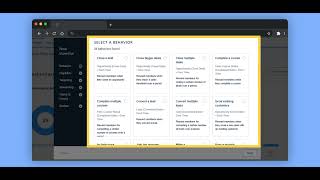
Thank you, Ivatia, and hello everybody. Hope you're doing well today. The, um, so the topic is your channel incentive program not moving the needle. Of course, the assumption is that it's not, or at least it's not moving the needle as much as it did perhaps in the beginning. So when you think back to when you first launched a your Channel Incentive Program to your channel partners, it probably enjoyed a modicum of success. Or if you haven't launched a Channel Incentive Program and are planning to do so in the near future, you'll probably in the initial, you know, few months or quarters see a likewise certain level of success. But here's the issue. And it's ironic because we are in the technology industry, and as we all know, being in the technology industry, technology is constantly changing, right? And, you know, we have to continuously adapt to that rate of technology change. And even as tech professionals, If you're in marketing or ever had experience with marketing, the way we market and engage with customers today has changed from what it was 10, 5, even a couple years ago, right? I mean, there's much more use of social media today, much more utilization of videos and YouTube channels, and even by some, you know, leading-edge thinkers, virtual reality. But the way that we engage with our channel partners hasn't really changed for nearly 20 years. And I'll, and I'll go through that and explain that to you, uh, and why it is creating a drag, a downward drag on how successful you may be engaging and motivating your channel partners and getting out of your channel partners what you're hoping to get. So let me ask first, you know, are you satisfied with your channel partners in terms of how long it takes them to close deals? Are you happy with their, their forecasting ability? Right? They— are they providing you with the sort of visibility that you need to have a forward-looking view of what your business is? How about the number of new logos that they bring in, right? Are you happy there, satisfied? Or their ability to cross-sell? And cross-selling is, you know, very important today. I mean, with competition at a fever pitch, the more products or line items that you're able to sell into a customer, the more embedded you're going to be with that customer. And so a lot of companies are really concerned about their channel partners' ability to cross-sell. How about their ability to, to generate leads and the results they're getting from that lead generation effort? So are they generating leads? Are they getting the right, you know, conversion rates that you want them to be hitting? Are they getting the marketing yield that you want it to be? Are they utilizing your market development funds in the way that you want them to be? Or providing a great customer experience. We all know that CX is paramount today, a paramount issue, that customers make their decisions largely based on the holistic experience that they have with a tech company or any company, really. And by the way, these are the top concerns that we found when we did a research study just a few months ago. We call it the Hair on Fire research study. Where we asked channel professionals and marketing professionals, those people that were responsible for engaging their channel partners, what, what were the issues that with respect to your channel partners that, you know, was lighting your hair on fire, right? And so these are, are the top issues from that study. You know, the time to take closed deals was number one, it's taking too long. Right? Channel partners are forecasting. But if you are, if you are happy and satisfied with all of these things that your channel partners, I'm going to invite you to disconnect right now because I don't want to waste your time. And the rest of this webinar is going to be devoted to what you can do to actually address these if they are problems. If they're not problems of yours, Congratulations, and I'd love to know, you know, what you're doing because you are in a pretty unique position. Let me talk about what you may be missing or you may not be doing. This is from a study done by the Incentive Research Foundation of technology firms where they looked at the attributes of top-performing technology companies, so the top 10%, and, and they, and they then they looked at the other 90% and were able to, on various attributes, determine what the top performers were doing, the top 10% were doing different than the other 90%, right. So one example here, the top performers had a different view of an incentive program, right? It wasn't a SPIFF program to try to, you know, make the quarter, so to speak, or a card giveaway, a debit card or Amazon card, Starbucks card giveaway to try to get their channel to promote a new product. They looked at their channel incentive programs as a strategic weapon, right? They realize that the channel is very competitive. What I mean by that is that there are only a limited number of channel partner companies in the world and a lot of tech companies that are vying for their attention and are vying for their wallet share. And they know that if they wield their incentive program strategically, that they're going to win that channel share, which ultimately winds up in them winning more market share. Here's another data point that this IRF study uncovered, right? That the top performers are more likely to structure their incentive programs to reach each participant versus only the top performers. Now you see top performers in this data point twice, but it's really about top performing tech companies that are really doing more than targeting their top performing channel partners, right? They're taking a more universal approach, um, to their incentive programs strategy And in fact, I'll get into the, the segmentation aspect of in a minute, but they are, are adapting various incentive program dials and levers to meet the needs of channel partners, whether they be top-performing or top-tier channel partners, or again, perhaps you know, lower performance channel partners, they're still using that same incentive program strategy to get the most productivity and the highest performance out of each one. Another point: top performers are more likely to look to outside partners for expertise. And, you know, I've found this to be true in my now 30-plus years in the tech industry myself, particularly when it comes to channels, it's a very— or channel management, channel strategy, channel thinking— it's a very cloistered type of community that doesn't reach out very much for expertise. Where if you go into other functions, you know, whether it be sales, you know, marketing, operations, I think there's plenty of reach out to bring in new ideas and fresh ideas and fresh thinking into the mix. Not so much in the channel management world for some reason, but again, this study found that the top performers in fact are doing that. And last but certainly not least, so incentive programs, that are successful are really using predefined metrics as program qualifiers. Let me tell you what, what is meant by this. The top performers know from a metrics perspective they can put a number on the relative strength or weakness of their channel partners on many dimensions. Hey, really, he's got— this channel partner is really good in terms of implementation and customer experience, but not so much in terms of marketing. Oh, this channel partner is really good at selling to enterprises, but not so much in terms of the mid-market. Uh, this channel partner is really good in terms as a farmer of growing, um, the account in existing customers, but not so good at hunting out new logos. And they, they know these things, right? Because— and they're using these metrics, this metric approach to gauging your channel partners' capabilities in forms of a strength or weakness to target their incentive programs You guessed it, at their weaknesses, right? Let's try to spot their weaknesses and see if we, you know, can do something to lift them up in those areas to spur their overall growth. So talk about where we are today, I just want to bring in a very short historical perspective. I think it's good to understand how we got to where we are today. And incentivization and loyalty programs have been around for a long time, right? Longer than probably many most people recognize. It really started in the late 1800s where retailers, or, you know, shopkeepers as they were known back then, used coins as a way to engender loyalty with their customers. I'm not talking about US coins or British pence or, you know, what have you. They were actually minting their own coins. It's almost a precursor to today's virtual currency. So a lot of innovation even back then, even though it took a— manifested itself in a different physical form. 1929, and don't quote me on this, but I think it was General Mills was the very first cereal manufacturer to use the box top incentive voucher approach, right? So I actually remember, and I know I'm aging myself here, but I remember cereal box tops where you would, you know, cut off the top of the cereal box and save them, and it would be a coupon, and you could either send it in or you could save up a number of box tops and send it in, and you would get some prize. That little boys and little girls found valuable. And so that was really quite successful in that the cereal box top programs went on for decades, for decades. So, no, I was not around in 1929, but the fact that went on decades was that I experienced kind of the end of that era, if you will. 1959, I just want to point this out because Again, I think a lot of companies think about incentive programs in terms of SPIFF or SPIFFing a channel partner's salespeople. Well, SPIFF really was first used as a term formally in 1959. It was actually published in a newspaper in the UK about the percentage allowed by drapers to their young men, their employees, when they were able to sell old-fashioned or undesirable stock, right? So That was kind of the beginning of spiffing, a bonus for a particular task. And then the 1980s, which really ushered in channel incentive programs and channel incentivization strategy from the tech industry by the PC manufacturers, right, the early PC manufacturers. So, you know, IBM, Compaq, Gateway, uh, Asus, um, and it was again fever-pitch competition, and they began to leverage, you know, this incentive program thinking and incentive programs, employing incentive programs to really gain channel share and market share in that, you know, that highly contested market. Now what they did was to essentially, you know, steal or copy from other types of incentive programs. So I mentioned that the, the consumer loyalty programs had been around for a long time, whether you consider the 1800s in terms of, of coins, or, you know, the 1929 and on with respect to cereal box tops. But they were really reproducing a lot of that sort of ideas in their programs, and with some B2E elements thrown in too, because You know, they were already commissioning our salespeople that worked internally to the companies. These PC manufacturers were of course getting sales commissions. And so what they did was they said, okay, well, we'll target the salespeople of our channel partners and we will either spiff them, which is kind of like getting a commission in a way, or, and/or we will provide them with, you know, a merchandise catalog. For, you know, give them points for which they can redeem merchandise. So again, this was kind of taken from the B2C world, if you will. Uh, and, and that was kind of the, the initial, uh, thing. And then they, they— there, it wasn't too long, uh, before they started moving to rebates, right? And really focusing on incentivizing one behavior, or in this case actually one result, and that is how much revenue are you generating for me, you know, and we will reward you accordingly for how much revenue you're generating. Now the thing with channel partners and really what makes channel management such a difficult job really is the fact that channel partners are not your employees. You can't direct them, right? Uh, you have to find other ways to herd those channel partners in the direction to the markets with the capabilities that you want them to have in order to provide that great customer experience, right? And so it's been so interesting to me over the years, both in my current role and my previous role as an industry analyst with Forrester Research, where I ran Forrester's global channels research, was that there's all these kind of soft ways, you know, let's put out a new, you know, a new enhanced PRM system, or we'll have a new you know, a new application for online support or things like this. But the fact is, is that— or maybe we'll try to universalize the user experience of all the things that we are providing them in terms of online mechanisms. But the issue is that they're not your employees, you know, and you can't direct them in you know, all these other, you know, attempts of, you know, pleading with them, begging with them. I remember, you know, Steve Ballmer when he was the CEO of Microsoft at WPC would scream at their channel partners. He would scream in a good way, right? He would scream out of excitement, but try to get them. But really at the end of the day, it's about using incentivization strategically to get them to do what you want them to do and get them to go where you want them to go. So a couple of other things were happening. One is that, um, and again, this was the, the late '90s, if you will. So the government, at least the federal and state governments in the U.S., started defining and forcing some of these incentive programs that were giving away trips or, you know, giving away merchandise or giving away concert tickets or I think there were some incentive programs that were giving away season tickets to, you know, football or baseball teams. They said, you know what, this is income that these these people, these individuals, these channel partner employees are getting, and they have to report that as income. And so started requiring, you know, generation of 1099 forms. In parallel with that, the channel partner company CEOs started raising a ruckus about tech vendors essentially going around them and comping their salespeople, oftentimes without their knowledge. And even if they had the knowledge, a lot of tech companies would still do it. And the channel partner CEOs would say, look, you know, make the, the rewards available to me and let me comp my employees, right? Because what you're doing is really changing the strategic direction of what I have set for my company, right? I have made a commitment to certain investments and how I'm going to allocate my investments, and you're upending my apple cart by going around me and incentivizing my employees. So then comes rebates, right? The solution the nirvana to all the problems, right? Because they killed two birds with one stone, right? Rebates are not taxable, right? Not considered a form of income, if you will. And they are paid to the company, you know, not the, not the employee of the channel partner, right? So all was well and good, you know, for a long time. But the fact is rebate programs have been you know, proficient in the tech industry for 20 years. You know, here's the question to you: do channel partners still see rebates as incentives? I would venture that the answer is no, that now they are kind of baked into the kind of normal, um, process or the normal state of how a channel partner comes to think about its relationship with you. Moreover, they are just one-dimensional, right? You are again incentivizing— still incentivizing just the result, end result, sales, i.e., revenue. Pretty good thing to incentivize. That's really what you want, but rewarded with just one type of reward, and that's cash, right? That's what a rebate is, is cash paid for the sale of a product. Other things to do with rebates, right, is that they are not personalized in most cases, right? They are offered to— it's the same rebate formula offered to all partners, or at least all the channel partners that you're going to offer it to, right? No, no personalization, no application of, of a segmentation strategy and how you're going to parcel those rebates out. Secondly, they don't take into account KPIs or measurement plans, right? So that again, this is kind of getting to that segmentation issue that different channel partners, you know, operate at different levels on different dimensions. And most rebate programs are, you know, universal in nature and don't take those kind of individual channel partner characteristics or dynamics into account. And they don't certainly— they certainly don't address what we call cause and effect performance. So they're incentivizing the effect, i.e., the end result of generating more revenue, but they do not do anything by themselves to address those things that can drive more revenue, right? Better marketing, better customer service, better technology support, you know, better training. They don't— rebates don't really address any of those things in and of themselves. The fact that they lack a preference-driven multiple ways to participate, and I'm going to myself still hear from the B2C world because there's— in consumer loyalty programs, there are leading-edge thinkers in that segment of the industry that are starting to say, hey, we are going to provide you rewards or benefits for doing what we would like you to do. We're going to let you define what those rewards and benefits are and how they're to be allocated and used. And again, last but not least, rebates don't support PRM enablement. And I've seen again so much money invested in, you know, PRM and partner portals, and the truth is that the utilization of those quote "enablement technologies" hovers in the low teens. So channel partners, only about, you know, 10, 12, 13% of channel partners in any given month are actually using a tech company's, you know, PRM online PRM portal and applications. And so, and rebates don't do anything to address this problem. They don't address the engagement problem, right? Because this is an engagement problem. I'll talk more in a bit about how the factors that engagement has in terms of that end result of revenue, higher revenue, higher performance. So here's the warning signs you should look out for, you know, to, you know, to, to make an evaluation of your channel incentive program and see if in fact it may be growing stale. All right, so one is declining participation, or at least participation is not increasing, right? You have the same number of channel partners that are participating now in your incentive programs or the same percentage that are participating now that participated last year and the year before and the year before that. Declining ROI, obvious warning sign, right? You're having to pump more and more money into your rewards budget for your incentive program, but the results that you're getting out the other end are stagnant. Rising costs. You know, is the cost side going up? Is it costing you more to build new incentive programs, to design them, to launch them, to manage them? You know, that can be a key issue. The fact that you can't scale, right, it should be a warning sign. It goes to participation. You want participation to grow, but maybe your systems aren't able to to handle that sort of growth, right? That could be a serious problem. It takes too long to design or field an incentive program. I know that— I know personally a lot of companies that use agencies, they'll outsource their incentive program strategy to an agency. And, you know, some of the agencies can take 3 or 4 weeks or longer to come back with, you know, the ability to start executing on a new incentive program. 3 or 4 weeks or longer, 6 weeks, is a long time in the tech industry, right? You want to be able to start implementing your innovation in a day. And that's actually doable today. And I'll address that in a second too. So that was 6 warning signs. The 7th is just, you know, look internally. If you're using a spreadsheet to manage your incentive program to thousands or tens of thousands of channel partners, you know, I don't know why you would be doing that. It's not really what what a spreadsheet was intended to do, and a spreadsheet certainly can't scale to that level to be able to be effective and to be able to employ the sort of innovation that you want to put into your program today. The other issue about spreadsheets, and again, I know a lot of companies that do employ spreadsheets to manage their incentive programs, there's no front end. Right, the channel partner's experience is an email or an email with an attached report. You know, you need to think about your incentive program not only in terms of, of, you know, what you're going to get out of your channel partners, but as a means to engage your channel partners. Right, to bring them more closely into your fold, to give them a better partner experience, right? And the way that you do that is by providing that same sort of insights into how they're doing that you have to them. Let them monitor, give them the ability to monitor their own performance. Give them the ability to decide which of your programs to, to participate in, and give them the ability to apply the different types of incentives that you do in the way that they believe is most important for them strategically. Give them choice and give them partner experience. So if the 2000s ushered in the rebate era, I would say that the 2020s will be looked back as having ushered in the innovation area in terms of incentive programs and incentivization strategy. Because now there's many more means from a technology solutions capability that you can employ, right, that's going to enable you to break the mold, to think outside of the box. So again, let's think back at rebates. Rebates being one dimension, right, you are essentially rewarding one type of behavior, and that is revenue generation, and you are providing one type of reward, that is cash. And typically there's only one way to measure that revenue generation, is total revenue generation, right? So again, pretty limited. But today, again, like with Fielo, you can start employing a multi-dimensional approach, right? So in terms of behaviors, what you want them to do, you may not only want them— sure, you want them to be more productive in terms of revenue generation, but you also would like them to have higher performance and to help them grow in terms of their performance of everything that's ultimately going to lead to and drive that higher productivity and higher revenue, right? So can you and should you incentivize, you know, behaviors beyond just the result, i.e., revenue? The answer should be an obvious yes. Incentive rules. How do you want them to do it? So I want you to— I do want you to generate more revenue, right? So I am going to incentivize closed opportunities, right? But there may be different ways to reward closed opportunities. What was the average deal size? What Were the number of deals that you did? Were they new logo deals? Right? All of the rules, a sophisticated rules engine that you can apply today, now, to actually innovate. And by innovating, you're going to raise the engagement factor that you have with your channel partners. And again, rewarding is the third one. So going beyond cash, thinking about virtual currencies, Thinking about business benefits, right? What do you have of value to your channel partners? You, you do. And I've seen some of our leading customers think about this, about packaging their own capabilities as rewards for their channel partners, you know, whether it be discounts to, uh, user conferences, um, to packaging some marketing consulting services to putting together a, a, a leads program where they would package, you know, the highest quality leads to the highest performing channel partners, right? Lots of things that you can do there today and should. The science behind it is based on behavioral economics, and behavioral economics has actually been around for a long time too. Essentially what behavioral economics says is that, look, people and entities, i.e., channel partner companies in this case, make their economic decisions— that being a decision about what tech companies they actually invest in, in terms of their skills, their knowledge, and their marketing and their selling capabilities— um, that there is more than just a utility factor going on in terms of, you know, 'How much I can make.' Yes, that's important, but there are other factors when it particularly— when it comes to that point of decision time. And I'm talking about the decision that the channel partner has when they are representing their portfolio of solutions to customers, saying, 'Customers, here, here's what you can do, and here's what we can do to you— for you— using our, our tech company partners, uh, technology solutions. That's a point of decision, right? And that point of decision is oftentimes influenced by psychological factors, by cultural factors, right? In other words, you can and should incentivize the behaviors that drive the results in addition to incentivizing the results themselves. And with VLO you get a lot of behaviors out of the box that you can incentivize. So this is a bit of an eye chart. Let me expand it, right? There's over 40 behaviors now that we ship with out of the box that we can incentivize. And they, you know, they, they kind of break out into functions. So you can incentivize sales behaviors, yes. You know, are you, are you building quotes? Are you, you know, shortening the amount of time it takes to close a deal? But you can also incentivize marketing behaviors. Hey, how much MDF are you actually utilizing? Are you utilizing the right way? How many leads are you generating? What sort of marketing activities are you doing? What sort of marketing are you doing? Oh, we're going to actually give you some reward for amping up those capabilities. Learning, you know, are your people, are your employees getting trained and certified, you know, on our products, right? How long is it taking them to do it? What percentage of your people are getting certified, right? Those sorts of things. And customer service and engagement, right? And again, I'll talk a little bit more about engagement in a concrete example. In a minute. Let me expand this eye chart more. So these are the, the sales behaviors out of the box that you get. These are actually Salesforce, um, Lightning Platform objects. And, um, we take advantage in our native capabilities of how we are built on Salesforce of being able to bring these Salesforce objects to the fore in your incentive program design. Right, so you want to, uh, you want— you see that problem where your channel partners are not providing that forecasting view of what's coming in the pipeline. You actually have that right as you're in your design palette to actually bring that behavior and build it right into your, your incentive, right? Opportunities, quotes, solutions, right? Maybe, maybe you want to incentivize them In the terms of solutions, solutions may encompass more than one of your products, right? So you're actually incentivizing them for providing a solution representing multiple of your products or for implementing that solution. You know, and then we talked about the criteria and the goals and different ways that you can do that today with VLO, right? One is the, the single action, and I think historically single action has been what has been most commonly used. Single action is you as a channel partner do something, I'm going to reward you for it. You do it again, I'm going to reward you again. Rebate programs are often built on this type of single action model. Every time you make a sale, I'm going to give you a rebate. Now you could have some qualifiers in there, right? Every time you make a sale of more than $50,000 I'm going to give you a rebate. Or you can tier the rebate reward, right? So, you know, if you make a sale between $30,000 and $50,000, you get this much in rebate. $50,000 to $70,000, you get a little bit more. $70,000 and higher, maybe you get more than that. You could also gauge performance over time, right? Uh, and there's two ways with Fialo that you have to do that. One is called fixed goal. So you set, you know, how much you want them to do, or you set the target for what you want them to achieve, whether it be sales or whether it be number of leads, um, or whether it be number of, you know, training classes or certifications they've got. You could also utilize what we call our performance improvement model. So you're not setting the bar Right, the bar has been set by their channel partner's own history, right, what they've done in the past. And all we want you to do is to improve, is to grow in that area, right? And you will be rewarded for that growth. So different ways of actually— now you can see the types of innovation you can bring into your incentive, incentive program design. So I've talked a couple, mentioned a couple times about the fact that, you know, yes, incentivizing, rewarding the results is great, but incentivizing, rewarding the behaviors that drive the results are every bit as important. And I'm going to give you a real-world example. So I had the opportunity a couple of years ago to work with a large tech tech company. And what we did is we built an ABC test where they, you know, Group A was, you know, what they were doing was they were incentivizing Group A how they had always incentivized their channel partners that was being rewarded for the outcome, how much revenue they produced. The reason they came to me originally was that, look, the same thing as the topic of today's webinar is that, look, our incentive program is growing stale, right? We're just not getting as much bang for the buck as we used to with this, you know, rebate reward, you know, program based on revenue or closed opportunities. And our concern is that our channel partners aren't really engaged with us. You know, they that PRM portal utilization is down in the low teens and, you know, they're not really attending our partner conferences or user conferences. We're really concerned about engagement. We have this hypothesis that the more engaged a channel partner is, that they are with us, that the more productive they will be. And so they identified a second group of their channel partners that they did this test with By the way, this was over the course of 3 quarters where they rewarded just for the behaviors that drive— that they thought drove the outcome. So training and engagement, how often they were using the partner portal and how they were utilizing it, were they attending conferences, how much training and how many certifications were they getting. The result is that Group B outperformed Group A by 4%. 4% higher revenue production. And they weren't even rewarding revenue production directly. They were rewarding it indirectly, if you will. And then they had Group C where they were rewarding both for the result and the behaviors that drove the result—revenue. That group outperformed Group A by more than 10 percentage points. That You know, with, with, with tens of thousands of channel partners that this company had, that was a significant, significant boost to their, to their top-line revenue. And so they started— they carried that, that test forward. Obviously, I'm not suggesting that you abandon your rebate programs, right? They work. They work for certain reasons. We've talked about those before, right? But what you can do is you can combine behaviors with those outcomes. So don't incentivize just sales. Incentivize sales in conjunction with training, or sales in conjunction with marketing. Make them dependent or condition-based incentives. Let me give you, you know, a model for how to think about this. These are models again that are out of the box with Fielo. One is we call the qualifier model, right? That means that if you think of it in terms of a sports analogy, oftentimes there's a regular season and then there's a championship series season that follows the regular season. And sports teams have to do so to achieve a certain level of performance and success in the regular season in order to qualify for that championship. Series, right? And you have the ability with Fjell to do this same sort of thing, right? That you can, you know, so let's— this example incorporates both a training incentive and a sales incentive. In order to participate in the sales incentive, you have to first complete and achieve the targets that were set in the training incentive, right? So now you've combined sales and training in a way. Second model that you get with Fialo, it's called the attribution model. All right, so hey, we are going to reward you for sales, for generating revenue, right? But we are going to reward you only, or we are going to reward you more, for closed opportunities for which you built quotes, right? So you're now, you're incentivizing the quoting behavior and now— and you're tying those quotes to the deals that were ultimately closed. So you're improving the sales methodology, you're improving the sales process, you're improving the customer experience. At the same time, you're getting that revenue, that higher revenue production performance out of your channel partners. It's called attribution. A third model that you get with Fialo is called an accelerator. Oftentimes our customers use our accelerator model if the behavior is that they want to incentivize is what we call a soft behavior. So it's not directly associated with an opportunity. Let's go back to training, for example. You can't— there's no way to attribute training with an opportunity. Now there, there is indirect correlation between how much knowledge, how knowledgeable how knowledgeable a channel partner is about your products and your solutions and how effective they are in selling their solutions. But it's, it's an indirect, quote, soft behavior. So what you can do, again, you can associate these two together and say for every deal that you closed, if you've reached a certain certification level, you get an accelerator in the, in the reward. So again, different types of things, different ways to innovate. And that's the important thing today, I think, is to innovate, to change. Like the technology industry changes, like the way we engage with our customers has changed, the way that you innovate and engage with your channel partners needs to change. And that's what we give you. So some summary points. I didn't, you know, provide you this quote in the beginning, but this comes from a study done by Capgemini. 77% of programs today are considered broken, considered failed, from a research study that they did. 77, more than three-quarters, vast majority failures, right? Doesn't have to be that way. Secondly, I want to make the point that partner experience today is as critical as the customer experience. The way that you engage your partners, you know, the way that you enable them, either via an incentive program that they love to participate in, that they're excited about, that is innovative, or the fact that you are incentivizing other things that you want them to do, is as critical as the customer experience factor is today. Right, maybe even more so because you have that, you know, that exponential rule that goes on. You enable, equip, engage, and excite a channel partner today, that could have a downstream effect of 100 customers. So absolutely critical to think about in terms of your incentive program strategy and design. Last but not least, hey, it's time to move from our rebates only to what I call a rebates plus program, right? You need to think more deeply, you need to go more deeply into what you want your channel partners to do and use innovation today and the innovation capabilities that are available to you today to go beyond incentivizing just that end result, the behaviors that drive the result, and provide excitement in the form of the different ways that channel partners can participate according to their needs and according to their capabilities to take advantage of what you're offering them. Okay, so thanks for your time today. Um, with that, uh, Ivantia, were there any questions that came up in the, uh, in the chat while I was talking?
Yeah, we have a couple of questions. So the first one is, how can I get more detail on your Hair on Fire research study? That you referenced? Ah, okay.
Um, we actually did a webinar on, on that, just on the results of that study, uh, itself a couple of months ago. Uh, it's available on our YouTube channel. Um, it's called the, uh, What Keeps Channel Chiefs Up at Night. Uh, and if you send us an email at marketing@fialo.com, uh, we'll reply back to you with that link or I'll ask Ivantia to put that link in the chat window right now as well.
Excellent. Yeah, the second one is, you talked about leveraging many options for what we want our partners to do and how to guide and measure what they do. You also mentioned rewards, flexibility, and options. Can you speak a little bit more to that?
Oh yeah, I— with respect to rewards, so it is— it's this, and we're going to do another a webinar in, in October about your rewarding strategy or reward strategy, because I think it feeds so well into that time of year, which a lot of you are thinking about the, you know, the budgeting, the budgets for 2021 and, and a way to manage those budgets and, and I'll offer you ways to even bring that rewards budget down by quite a bit. But so there'll be more detail in a couple of months on that. But the, you know, we mentioned rebates or cash. I mentioned redeemable points for merchandise. It kind of came over from the B2C customer loyalty world, if you will. There are other things that you can and should employ too. One is Obviously funds, whether they be market development funds or funds, you know, POC funds that are provided for successful implementation projects of very early products. But I see more and more of our customers begin to start using funds as an approach. And virtual currency. So I talked about business benefits, and again, some of our customers are actually starting to package some of their capabilities and offer them as rewards to their, to their channel partners to really help their channel partners in their own growth. The nice thing about funds, whether it be market development funds or, you know, specifically for some other type of activity, or in virtual currency, is that it keeps that rewards payment or rewards output, if you will, in your own ecosystem, right? They are, they are either using in the form of virtual currency, they're actually spending that reward back with you directly, or in the term of funds, they're using that reward to actually become more effective in, you know, spreading your word, of in becoming a brand advocate, you know, in extending, or, you know, extending the value and the breadth of your brand. So again, there's some innovative things. We'll go into more detail in a couple months about that, but that's a little teaser for now. Okay, so almost out of time. If there's any more questions, please email marketing@fiolo.com, and we'll get back to you within, within 24 hours. And we have a couple of other new announcements. We have a new website for the new website experience for, for you coming up in just within, by the end of the month. And again, we have a whole webinar series planned out specifically for the tech industry through the end of the year. So we'll be covering issues, like I said, not only reward budgeting, but also the relationship of your incentive programs, your incentive program strategy with PRM. That's already got a lot of registrations for that. And then we'll also cover about how you do all of this that I've implied, but the ability to do it simply, you know, because that is our mantra. We make loyalty and incentive programs simple. And, uh, and that's, you know, one of the things that, uh, I'd like to get across to all of you so that as you're considering your incentive program strategy going forward that hopefully that you'll think of Fielo and how we can help you, not only in terms of our technology, but in our forthcoming incentive and loyalty academy, where we provide a lot of workshops and online resources for you as well. So thanks for your time and consideration and attention today, and hope to be engaging with you in the near future.
Thanks everyone. Thank you everyone, have a great day.