In this webinar hosted by Ivantia and presented by Tim Harman (former Forrester analyst) and Gary Hanna (Chief Revenue Officer at Fielo), the speakers diagnose why traditional Partner Relationship Management (PRM) systems fail to drive partner engagement and revenue. They explain that most PRM portals, originally built in the late 1990s‑early 2000s to automate content delivery and reduce costs, now suffer from low utilization (typically 12‑15% of partners log in each month) because they offer little value to partners and function as a one‑way enablement tool. The discussion highlights the core problem: partners do not regularly use deal registration, profile maintenance, or other PRM apps, leading to missed opportunities. The solution proposed is to map incentives to specific partner behaviors—what Fielo calls “desired behaviors”—using a robust behavior library (over 40 incentivizable actions across sales, marketing, and customer experience). By aligning incentives with corporate objectives (e.g., new‑logo acquisition, faster deal closure, market expansion) and communicating the investment, companies can boost portal engagement 4‑5× and drive 10‑15% revenue growth. The webinar also introduces Fielo’s new “Quick Start” offering for the technology industry, an out‑of‑the‑box package that pre‑populates common incentive programs (including rebates) and integrates with existing PRM systems—whether on Salesforce or other platforms—within days. The presenters conclude with a call to action for an upcoming demo of the Quick Start solution.
Chapters
Jeez.
Hi everyone and good afternoon. Just give us one minute to allow everyone to join us and we'll start shortly. Okay, so welcome everyone, and thanks so much for joining us today for our Turn Your Costly and Ineffective PRM into a Revenue Machine webinar. And without further ado, I'll hand you over to Tim. So Tim, please take it away.
Thanks, Ivantia, and hello everybody. Thanks for joining us today. I'm Tim Harman, head of marketing with Fielo, and previously some of you may have known me as an industry analyst with Forrester Research for several years where I ran Forrester's global channels practice. Hey, I invited today to be with me Gary Hanna, who's Fielo's chief revenue officer, although That's certainly not the role that he's playing today. I've asked Gary to join me because he has a wealth of experience, uh, heading up sales and channel organizations, uh, at companies like Siebel and Salesforce. And I wanted to draw upon his experience, um, with respect to channel partner engagement and, uh, and PRM solutions. And, uh, you know, see what, uh, what his, uh, experience has, uh, shown him. Hi, Gary.
Hey, Tim, good to be here with you.
Yeah, okay, so let me start out by asking, you know, are you satisfied? You know, are you satisfied with the amount of time that your channel partners spend in your partner portal, right? Or the number of times they log into your partner portal? Are you happy with that. How about how they maintain their profile? If you have a channel partner of 25 employees, do they have just one employee that's registered in your portal, your PRM system, or do they have 10 or 15 or all 25, right? And how good of a job do they do in terms of keeping their various profiles, both the company profiles and the individual profiles up to date? You happy with that? How about their usage of and adherence to your deal registration process and application? Do all of your channel partners 100% use your Deal Reg app? And if they do, do they always fill it out correctly? Is it fully filled out? Are they missing any information? Are they, you know, adhering to the rules that you set for deal registration, right? Are they doing it on time? Are they doing it, you know, a couple months later? I've actually seen channel partners that will register a deal and close the deal 2 days later because they wanted the credit whatever the credit or the reward might be for registering the deal, but they didn't do it or they forgot to do it. They just, you know, you know, they not to do it until they actually got to the point where they almost ready to close the deal. Or their training or their diligence in building quotes for customers and keeping you apprised of these things. You know, and if you're happy with all these things, I'm just gonna urge you right now, hang up. Gary and I can't bring you any value, right? But if that's not the case, I wanna start out and ask Gary a question that these types of things that I just went through, this litany of not logging into the partner portal, at least doing it very often, and not doing deal registration, or not doing it on a timely basis, et cetera. This happens a lot. I know, Gary, you've seen this yourself as a channel chief. What's going on?
Well, thanks, Tim. For, for those of you that are still here on the webinar with us, uh, you're— probably means your partner relationship management system isn't working or isn't working as well as you'd like it to. And we'll get into what you can do to fix that in a little bit. But the essential issue is that most PRMs are built as a field of dreams, right? If you build it, they will come. But they're not coming. And that's because there's not really anything or not enough in it for them to come and spend time on your, on your partner portal. Because really, partner relationship management is about partner enablement. But this enablement, so to speak, is generally one way. I mean, by definition, the word partner implies that both partners have skin in the game. And when it comes to PRM, that's simply not the case. It's just there's not enough in it for the partner. And that's why PRM engagement is so low. In fact, it's like it's been hovering down in the low teens for years and years. That utility value is reflected in the relatively small size of the PRM market. It's a $679 million market versus CRM, which clocks in at $45 billion. And it really shouldn't be that way, should it? Because there are a lot more channel partner users in the world than direct employee users. So that in and of itself speaks to the lack of PRM value due to the lack of partner engagement.
And so let's provide some context here. I'd like to make sure everyone understands just what PRM, partner relationship management, is and how it came to be, right? Because, you know, what— What happened was that, and this was in the late, actually the late '90s, early 2000s, you know, companies were realizing that their channel partners were actually pretty strategic to them and they were having a difficult time getting all of those, all of the information to their channel partners that they needed to get to them. So information about their products, information about their, their price lists and their discount policies, information about their support programs, etc., to channel partners, you know, manually. So PRM really started out as a content portal, right? How do we get, how do we get content to our channel partners? And what companies find is found is that in particular, once they reach, oh, 50 or 100 channel partners, that getting all this information manually, you know, I'm talking about via either email or, you know, hand-delivered to them by a partner account manager or some other, you know, manual or semi-manual means, that it, it just was— their costs were skyrocketing. They had to automate it in some way. And so the original premise around PRM was decreased cost, that through automation that you could deliver all of this content, all of this information, and all of this various types of enablement functions or applications in the form of deal registration or training, market development funds management, you know, configure price quote, and everything else that a channel partner needed to successfully represent your solution and your value to the market that that it had to be automated. It was automated really with the, the, the goal of reducing costs. It's in, you know, and it works well. I mean, it scales well in terms of being able to effectively support a large number of partners. But the reality is, like Gary said, that PRM portal utilization still hovers in the low teens. That means in any given month that the number of channel partners that log into a tech company's PRM portal is, you know, 12 to 15%. So Gary, tell us about how companies rationalize and grow their PRM investment.
Sure, let me paint a picture here, Tim, for the audience. You know, it doesn't take long for you to— if you've attracted channel partners and you're going to market through channel partners, particularly in the tech industry and generally in manufacturing, companies realize that, man, I need more than just my company's public website and some spreadsheets to manage what's going on in my partner ecosystem. And so the first thought was— and I'm a CRM guy from a long time— is, well, why don't we extend our CRM licenses out to our channel partners? The problem is that's fraught with security. It's super expensive to enable additional CRM licenses. So it's just not manageable and not practical. So let's launch a partner portal. And then we can put partner, you know, select content that is super relevant and we'll do that. And so we launched a partner portal and then we figure out there should be some kind of mechanism in the partner portal. The first app that is, it typically, rolled out is deal registration. And then a PRM system evolves into encompassing things like training and certification and market development funds management, price quote configurators, a help desk, you know, partner locator, and on and on and on. So the idea is that becomes this big thing that purportedly would add tons of value. The problem is, is that I launched the content, and after a partner ingests that initial content, it's kind of a little value after that. So, uh, it's a big job to continually refresh the content and to drive partners to, to view it. You know, deal registration becomes kind of a submit approval form. As Tim mentioned, you know, the deal gets registered the day it closes or the day before it closes or the day after it closes. And communications mechanisms really don't happen in the portal very well. So the companies turn around and say, well, let's use email, or maybe some advanced companies will use SMS or or, you know, Twitter or something. And so these communication mechanisms are just lacking. So if you start adding all of this up, you can see from an early stage, it's kind of hard to justify the price-value of a PRM.
You know, which begs the very important question: why implement all those PRM enablement applications if no one is going to use them or if relatively few channel partners are going to use them to their full potential. Is there anything that can be done about that, Gary?
Absolutely, Tim. You know, and I would agree, why waste all, you know, millions and millions of dollars launching a portal that no one's going to use? And the reason that people do it is because it's kind of seen as you've got to do something. Right? And, and so you check the box, but it's just sad to see, you know, the PRM utilization so low, but you can do something about it. And that's where incentivization comes in. Because when you start mapping incentives to the partner activities you enable via the various PRM apps that you have, we call those desired behaviors. That things start to change. And they start to change dramatically and for the better. Because now, with incentivization, partners have a reason to engage in the portal. And your investment in them tells them that you're partners, that you and your partners are in this together. Not just to drive revenue, although, you know, as a Chief Revenue Officer, that's the natural place to start an incentive program. To focus, you know, on the desired outcome of increasing revenue. And at the end of the day, that's what we want, right? We want more revenue. But when you start getting all of the behavioral revenue driving gears turning, well, we've seen engagement jump by an order of magnitude, and the resulting engagement jump drives an increase in revenue that can be in the double digits.
So is it all about show me the money, Gary?
Well, no, Tim, it's not just about money, but certainly the monetary value of the reward has a lot to do with it. After all, we're all in business to make money. Channel partners are in business to make a profit too. But it's also about the signal you send with your incentive programs. You're signaling that you are investing in your channel partners, that you want them to grow, you want them to be better, you want them— and, and that you have a stake in that growth and that stake in that improvement. Moreover, your incentive investments should reflect your corporate objectives. Do you want to enter new markets? Do you want to grow your customer footprint? Are you trying to amplify your brand? Do you want to be known and recognized as an exemplary customer experience provider? Well, your incentive strategy should reflect these goals. And by doing so, you are making your channel partners stakeholders in your company's strategic objectives. Does that make sense? You're making your channel partners not just partners, but strategic partners.
So let me paraphrase that back to you. Make sure, make sure I understand. As you're laying out your incentive program for the year, all right, and you really should do this, you know, on an annual basis. There should be an annual plan about what you're going to incentivize, how you're— who you're going to incentivize. And how you're going to incentivize them, right? I think the average number of incentives that a tech company fields over the course of one year for its channel partners is in the mid-teens, right? So, you know, a lot of the— a lot of savvy tech companies are doing this, right? They're laying out their, their plans and designing their incentives on a full-year basis. And so as they do this, they need to do this with two intentions in mind, right? One is that, you know, that you need to, uh, need to show them and communicate to them You know, by your incentive program where you're investing, right? And that investment reflects your corporate strategy, right? So think about the annual strategy meeting. We need to grow our customer market footprint, right? Market share. We are going to expand into Asia Pacific. Think back a few years ago, we are going to enter the cloud computing market, or more recently, you know, the IoT market. So all of these things can and should be reflected and communicated in your incentive program so that it's— so your channel partners not only know what you want them to do, but why you want them to do it. right? And then you're going to be really engaged with them because then they know, you know, what the reasoning is behind your investment, what the strategy is behind your investment, and that you are investing to be in the game, you know, with them. And the other takeaway that I got from what you said, Gary, was that really great incentive programs help channel partners grow in the areas where they need to grow, right? So, um, we talked about some of the PRM enablement applications, um, CPQ, Configure Price Quote, uh, deal registration, MDF, Market Development Funds. Let me, let me pick on Market Development Funds. So you would like your channel partners to be better in marketing, be more effective in marketing, be more productive in marketing, produce more leads, uh, produce higher, uh, marketing yield, right? Um, perform more marketing activities, right? There's, there's different ways that you can incentivize them. Like Gary said, either for the results, uh, in terms of the number or percentage of leads that actually turned into closed opportunities, or for the behaviors that drive those results, right? The number and type of marketing activities that they might run. Now, the reality is, is that you— not every single partner may need a lot of help or investment in marketing. So you have to be selective and use a smart segmentation strategy to target the right incentive programs at the right channel partners. But when you do pair an incentive program with a PRM enablement app, you know, Gary said it, it lights up, right? And, and utilization goes from the low teens to 50, 60, 70, 80%. I've seen those numbers across the board in all the various PRM applications. And that engagement has benefits of— implied benefits of generating certainly more revenue. So Gary, you— You mentioned that PRM apps represent the actions that you want your channel partners to take, that is the behaviors you want them to adopt and to grow in. Can you talk a little bit about the incentivizable behaviors that Fielo supports?
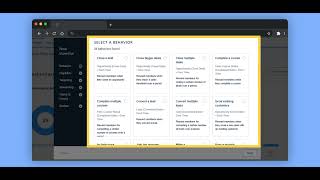
Sure, Tim. We, you know, Fielo supports over 40 behaviors out of the box in categories ranging from sales and marketing department engagement, and customer experience. Let me give you some examples. Some of these we talked about here in the context of PRM enablement apps. So opportunities, MDF utilization, quotes, training, portal activity, and other app behaviors that you might have in your PRM system in include leads, business plans, cases, tickets, certifications, and orders, all incentivizable to foster the type of well-rounded business partners that represent your biggest growth channel of the future. And those sales behaviors I mentioned, well, we support not just revenue, i.e., meaning the opportunities closed won, which is Again, a great starting point for a channel incentive program. But what about forecasts and quotes and contracts and solutions or SOWs, orders, and then opportunity development? See, with Fialo, you can track opportunities from inception to close and reward partners for time-based goals or simply following your sales methodology. So it's a very broad range of capabilities and behaviors that we can drive.
And I know that, that broad range, while a lot of companies see that as being very powerful and kind of opening up their ability to innovate, um, Yellow is coming out with a new product offering shortly that you're pretty excited about. Can you tell us about it?
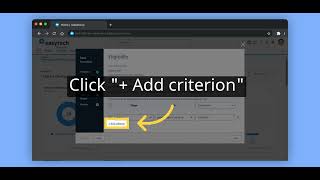
Yes, absolutely, Tim. I am very excited about this. You know, it's, it's one of the things that I've seen. We have so many conversations with so many companies who, who get it, right? They see the power, the capability of Fielo, like the behaviors library and our rules engines and our segmentation engines and all these— this capability and power that we have. And, you know, frankly, it can become overwhelming at times. And many companies, they don't know where to start. So what we've done is give them— given them a point of view with what we're calling a Quick Start. So this is an out-of-the-box capability, and our first industry that we're going for is the technology industry. And so what we've done is we've identified through our research the most acute channel pain points in the technology industry. These include the time it takes to close the deal, incentivizing new logo velocity, upselling and cross-selling opportunities, and so forth, right? We've baked these behavior management functions into the product along with training goals and, uh, to combine a complete solution in the Quick Start. Now, not just the most common behaviors, but we've also then, uh, loaded the most common incentive in a tech company, and that's a rebate. And, and we have many flavors of how to apply that rebate in our rules. And then we've created an out-of-the-box portal experience so that a company can stand up both the Fielo engines and the front-end partner experience, uh, that makes it easy for channel partners to onboard, to use the, uh, the portal, and to assimilate to it. So with our quick start package, you can literally snap in incentivization and a partner experience into your existing PRM solution in just a couple of days. It's that simple. Now, our Quick Start offering is just one of the many things we do to make incentives simple. You know, historically, and sadly for me, it hasn't been simple. Right? And that's why so many companies go out to outsource their channel incentive program management to an agency. With Fialo, you don't have to do that. You don't have to be a rocket science— sciences. You don't have to have a big staff. You don't have to go out to a big expensive management. Because in addition to the QuickStart, which is the starting point, We provide a point-and-click experience that any business user can manage. We've, uh, we've allowed for on the front-end portal drag-and-drop placement of our, of over 20 pre-built Salesforce Lightning components. These components range from program registration to dashboards, leaderboards, analytics, and a wealth of best practice knowledge that we provide our customers on an ongoing basis. We do this in the form of workshops, webinars, monthly tips and techniques, and our Loyalty and Incentive Online Academy. So not only do you get the greatest product, the number one product for managing incentives in a channel, but you also get company know-how, best practices, and guidance every step along the way.
Thanks, Gary. So let me, let me sum it up. The— so Gary pointed out that PRM is not a field of dreams, even though PRM, or partner relationship management, is sometimes treated like a field of dreams. Hey, we're going to launch a new PRM portal or new PRM system or new PRM application, and by default all of our channel partners will rush to take advantage of it. It's not the case, doesn't happen, right? Need some sort of incentive to do it. But, you know, to Gary's point, it's not just the monetary incentive that they find of value. It's the fact that they know that you are investing in them and the fact that they know why you are investing in the things that you are investing in, right? Now, it's incentive program management does right is all about, hey, we are in this together, right? It is, it is true engagement, it is true collaboration. It'll bring together a tech company and its channel partners like, like nothing else ever has before. And then, you know, Gary talked about Fielo's new Quick Start product offering which is pre-populated with a number of incentives that incentivize not just, uh, revenue attainment goals but deal close time goals, new logo acquisition goals, and, uh, and others already pre-populated but comes, like Gary said, with an out-of-the-box, uh, great front-end partner experience capability as well. And I wanted to, you know, just take this opportunity and say we are going to be, for our next webinar, which will be the first week of October, we are going to be demoing the Quick Start offering. So you may want to, you know, stay tuned for that. Certainly we'll let you know as we get closer to the date, the time, but it is going to be dedicated to actually giving, giving everyone a view, a full view of what the QuickStart product offering is. So with that, I want to thank everyone for, you know, their time and their consideration. Hopefully we provided some insights and perspectives for you that you perhaps hadn't been— hadn't considered before. We're always here, you know, for your outreach to answer your questions, to do any follow-up. And speaking of which, Ivantia, did any questions come in the chat while Gary and I were talking?
Yeah, so I think we have a couple of questions. I think this first one's actually for you, Tim. So Therese is asking the following: we consider CIPM to be one of our PRM apps. Why don't you?
Oh, so yeah, so I actually have seen that where CIPM sits as a kind of an application pillar alongside of Deal Reg and MDF and Partner Locator and Partner Training and some of the others. Typically, I think when companies think of channel incentive program management that way, they're probably only incentivizing one thing, and that is revenue production, right? So they have goals for revenue production. You know, you meet those goals, you get a reward. And I think of a lot of companies that, that are incentivizing only that, um, only that kind of end result, a very desirable end result, um, think of that as an application that sits beside all of their other applications. But to Gary's point, you can not only incentivize, you know, that end result of higher performance, higher productivity, and that's certainly where you want to start. But with VLO, you can incentivize a lot of the, you know, underlying behaviors that drive that end result. right, that drive the end result even higher. And so I think for those companies that think of channel incentive program management in those broader terms or in that broader context, thinks of it as an underlying foundation to their PRM applications as opposed to, you know, a pillar that sits beside them. Anything else, Ivantia?
Yeah, actually we have two more questions. So one, um, the, uh, actually is the following. So my PRM is not on Salesforce, can Fialo still help me?
Gary, you want to take that?
Sure. Uh, the, the, the answer is yes. So we, uh, we do not— while we, uh, we're native application to Salesforce, we can work with your PRM systems that are non-Salesforce through our integration capabilities. So that's not an issue at all. We'd be happy to explore how to help you.
Awesome. And one more. I think this one's also for you, Gary. So Allison wants to know, what did you say again about how much we could expect PRM engagement to grow with CIPM?
That's a great question. And so I'll just give you the aggregate, what we found across our customers. So you can expect that if you plug in the CIPM capability into your PRM, you can expect engagement to grow 4 to 5 times on average. And more important, as, as important as that engagement is, the engagement becomes a force multiplier on revenue and you should see revenue growth that could be as much as 10 to 15%. So the stakes and the benefits are really high for plugging CIPM into the PRM. That's a great question.
Yeah, and that reflects a number of, you know, quote, experiments that I actually did as an industry analyst for some of my clients when I was with Forrester that by boosting engagement, that led to also a very direct correlation of boost in revenue production as well. We ran that experiment with a number of our clients and every single time it turned out to be proven true. So thank you everyone again for your time and consideration. We're here for you. A reminder that our next webinar will be on the Quick Start, the new VLO Quick Start for Tech product offering that Gary alluded to. We'll be going into depth in some details on the product offering and give you a full demo. So keep tuned for that. Stay safe and let us know if you have any questions about anything that Gary and I talked about. Or if we can help you in any way in terms of your channel strategy. Thank you, everyone.
Thank you. Have a great day, everybody.