Putting the Power of Your Customer Loyalty Program into Customers' Hands
The webinar, hosted by Tim Harmon (marketing fellow and former Forrester analyst) and co‑presented by Husseni Rasiwala‑Yali (Head of North America & EMEA at Fielo), examines why most B2C loyalty programs fail to deepen true customer loyalty. It argues that traditional programs are one‑dimensional—typically rewarding only purchase volume—and therefore ignore the many other ways customers add value. The presenters propose three strategic shifts: (1) give customers choice by allowing multiple earning paths (spend, frequency, average transaction size, etc.) and letting a rules engine combine them; (2) embed gamification—challenges, competitions, tiered levels, and instant rewards—to keep programs fresh and energised; (3) expand “behavioral loyalty” to reward pre‑ and post‑purchase actions such as content consumption, profile updates, referrals, social advocacy, and even shopping‑cart abandonment. Throughout, they demonstrate how Fielo’s configurable incentive engine can implement these ideas, showing a live configuration and a real‑world case study of Country Road, an Australian retailer with a multi‑tiered loyalty program. The session ends with a short Q&A where audience members ask for concrete consumer‑behavior incentives, ways to create competition, and key performance measures. The overall message is that empowering customers to define their own value and continuously gamifying the experience drives higher engagement, richer data, and stronger long‑term loyalty.
Chapters
joining us today.
Uh, we are about to get started, so welcome, Ken Harbin.
Hello and thanks for joining today's webinar, Uplift Your Customer Engagement. You know, customer loyalty programs are prolific today, right? I mean, customers carry around more than a dozen loyalty program cards in their wallets, or of course if they're more modern, they're carrying them on their smartphones today, right? But the reality is that, is that too many customer loyalty programs are limited in how customers can— how should I say this— in how customers can express their loyalty. You see, most customers are one-dimensional. Customers are typically recognized or rewarded for how much they purchased, their total purchase volume, if you will. This webinar will explore the potential for growing your customer loyalty program, indeed your customers' loyalty itself, by giving customers a voice in how they value their business with you. So I'm Tim Harmon. In addition to, you know, my role as marketing fellow, I was also an industry analyst with Forrester Research for 10 years, where I headed up Forrester's global channel research practice, and, and also with Nuvoce, where I carried on my research into buyer and seller dynamics. And I'm joined today by my colleague Husseni Rasiwala-Yali, whose experience is not only broad— you can see he's the Head of North America and EMEA for Europe, but his experience runs deep as well. So Husseni knows the ins and outs of customer experience, and I don't mean just Fielo's customers. He understands the customer experience dynamics of our customers' customers. So thanks for joining me and helping me out today, Husseni.
Thank you, Tim. Good to be here.
So today Husseni and I are going to talk about essentially 3 things. We'll cover today the notion of putting the power of your customer loyalty program into customers' hands, like I said. Specifically, we're going to talk about customer choice, giving customers multiple ways to prove their value to you. For example, how often they purchase, how lately they purchase, their average purchase transaction size, et cetera. Second, we are going to talk about the notion of gamification, that is how to build game mechanics into your customer loyalty program for higher participation and higher energy. Thirdly, I'll talk about a concept called behavioral loyalty, which has to do with rewarding customers for behaviors above and beyond their purchases. So think about all the ways that customers engage with you besides just buying from you, and we'll, uh, we'll hone in on that topic, uh, towards the end. So more than half of B2C companies, business-to-consumer, consumer-oriented companies today employ a customer loyalty program, presumably to effect customer loyalty. Somewhat ironic because industry research shows that in fact the vast majority of these customer loyalty programs do very little to engender or enhance customer loyalty. And the reality is, is that the overwhelming majority of these companies define what loyalty means to them. Virtually no company offers customers a voice in what defines or determines their loyalty. As a customer myself, I oftentimes find myself thinking, wow, I do all these things. I not only buy stuff, but I buy extra warranties or add-ons. I choose that company's business or to do business with that company when it's time for me to buy. In fact, I don't go to competitors. I advocate for that business. I offer input and feedback for improving some aspect of that business, etc. Yet the only thing that I'm typically recognized for is how much I buy. It seems like these companies don't care about me as a customer. They really only care about me as a dollar sign. So let's walk through some of the typical customer loyalty program models out there today. First, we'll take a look at what we call the volume business model or total transaction volume. That volume can be measured in either the total number of units purchased or the total number of dollars spent. And most companies favor the latter, dollars spent, because it speaks directly to their top line. These types of programs reward customers more for spending more or if it's couched in terms of units, for buying more things. Here's a customer loyalty program model that is not oft used today but is garnering a lot of interest, what we call the big spender model, right? In this model, it's not the amount spent in a time period, it's that the customer, when they do make a purchase, makes a big purchase. The higher their average spend, the more the reward. It's important because customers— because companies would of course like to have more of these big spenders thinking about them when they get ready to pull out their wallets. And who can forget the ubiquitous punch card program model, right? It's essentially a number of transactions model. After a certain number of transactions, the customer is rewarded with a free or discounted product or something else. In this case, I have my heart on the 10th punch, so at the 10th visit or the 10th transaction is when they receive some sort of reward. Its popularity stems from the fact that it's relatively easy to implement and administer, so it's popular with small retailers and small restaurants. Now let's look at a derivative of that number of transactions model, the frequency model, or if you want to think about it, the number of transactions over time. Unlike the number of transactions model, this model is time-bound. With the plain vanilla number of transactions model, a customer could take years to reach that reward, to reach that 10th transaction before they get that free or discounted meal or hotel stay. In the frequency model, the customer is rewarded for how often they do business with you in a given time period. Say, in the case of a hotel, the number of nights per quarter. This is another model that is gaining fast in terms of interest and popularity because it is perhaps the best proxy for loyalty. The more often a customer visits your establishment or your website or places an order, the more likely it is that that customer is transacting the majority and perhaps all of their business with you. An interesting and popular, or at least growing in popularity, As fun as these models might be, the fact remains that they are each one-dimensional models. The company defines its customer loyalty program terms, and customers try, or at least some customers try, to adhere to those terms in order to get some reward. Of course, one of the problems is that there is no universal standard for customer loyalty performance measurement. You know, some companies employ volume, so the amount of things that you buy, others frequency, So how often you transact, and yet others may use some other metric entirely. And customers have to remember all of the different ways across all of their stores, restaurants, hotels, airlines, gas stations, etc., that they should be conducting their business. And a universal standard, even if it could be effected, might not be a good thing anyway. After all, customers need the ability to differentiate to stand out. But there is another, there is another way. Give customers choice, i.e., give them options in how they do business with you for earning points or rewards for that business. After all, this is the day and age of customer experience, right? Companies need to put their money, or in this case, their customer loyalty programs, where their mouths are. Here's a simple example. You give customers 3 paths to earning points: total spend, average purchase transaction size, and frequency. Put the power in their hands. Let them decide and determine how they want to demonstrate what they perceive to be the value of their relationship with you. For some, it may be any one of these 3 business engagement factors. For others, it might be 2, and yet for others, they may want to push the relationship on, on envelope with you on all 3. Let's take a look at how this might look as a program model. So via an intelligent rules engine, which Husseni Rasiwala-Yaliwala-Yali demo here shortly. We set up a customer loyalty program incentive based on two factors: how much the customer spends and how frequently they transact business with us. But those two factors are connected with a very important operator, or— that is, the customer can earn their way to higher rewards by either spending high amounts or by the frequency with which they transact business with us. In the case of the former, we'll set up a rule: 1 point for every dollar in purchase. And for the latter, the rule is 50 points for each visit or each transaction. Let's look at Customer A. We'll call him Bob. So in a given time period, Bob spends $1,000 with us and as a result, as a result receives 1,000 points. He actually does this over 2 transactions for which he receives, uh, 100 points additional. So that's a total of 1,100 points. Now let's look at Customer B. Uh, we'll call her Mary. So in that same time period, Mary spends, uh, only $600, uh, but it's spread over 10 transactions. So she earns 600 points for spend and 500 points for frequency for a total of 1,100 points. Ironically, that's the same number of points that Bob earned, but the two customers took two very different paths in achieving the same level of reward, recognition, and relationship with us. They essentially chose two different ways to express how they wanted to— wanted their, their business valued by us to them. So with that, let me turn it over to Husseni, who's going to give you some interesting issues to think about with respect to gamification.
Thanks, Tim. So, you know, some companies employ a customer loyalty program strategy which can be deemed one and done. Now some of you may have heard the term one-and-done in terms of sports, like a championship playoff series. If a team loses one game, they're eliminated from the series. One and done. You know, we're using the term in a different context here for customer loyalty programs. What we're referring to here is the fact that many companies spend all their strategy capital upfront in designing their customer loyalty program, and then they never change it. Or at most they make slight changes to it over a few years. Folks, this is not a good thing. It doesn't take long for this one-and-done approach to customer loyalty program strategy to grow stale with customers. Do the analytics yourself. You know, we here at Fidelo have proven it through our ROI analysis that one-and-done program approach is high at the beginning, flattens out, then tails off over time. So what's the answer? So, well, one very good answer is turning— to turning a program's staleness into renewed energy and participation is gamification. Gamification is defined in many different ways. One definition, for example, characterizes gamification as a set of activities and processes to solve problems or achieving goals by using or applying the characteristics of game elements. You know, many of those game characteristics are included in baseline incentive loyalty programs and are indeed readily available in Fielo: goal setting, learning, achievement monitoring and communications, rewards, and user engagement. But we want to talk today about two aspects of gamification which really stand out and which can add new fuel to your customer loyalty program fire: the concepts of challenge and competition. So first, let's take a look at the notion of challenge and how you can use challenges to gamify your customer loyalty program. Challenges are more— are about more than some immediate or near-term reward. They involve getting something better or higher, where you can do a lot more, make a lot more, and be seen a lot more. So let's think about sports franchises. Whether it's football, baseball, basketball, soccer, track and field, or some other sport, teams or individuals initially participate and compete in some type of regular season or qualifying round. But they do so in order to get into that playoff series or that final round. That's where the big money and the big recognition is. And these big sports franchises didn't adopt this model just for building excitement. They have proven that this type of move-up-the-ladder approach of gamification not only charges up interest and optimizes performance output, but that it also maximizes revenue. Keep that in mind as you walk through some gamification technique examples here. So the first one is you might be running your loyalty program as a standard fixed goal incentive. Customers earn some rewards based on how much they do in a given time period. What they do may involve many things or different ways of doing things, as Tim talked about earlier and as we'll talk about more in a few minutes. According to how well a customer does relative to that goal determines the reward or amount of reward they get. But you can use a standard fixed goal incentive mechanism as a qualifier challenge. Do this much, you'll get to participate in a much bigger program. Sure, customers can still earn the standard reward for their performance in the initial program, but they can also strive to meet your goal so that they can participate in the championship series, i.e., the bigger program. Note that customers that don't qualify don't necessarily have to be left feeling disappointed or missing out. You know, with PLO, you can set up a series of qualifier challenges that are cumulative. I.e., it's not the number of points that you make in one challenge, but the number of points that you make over a number of challenges that earns them a spot in the finals, so to speak. If they fall short in the first challenge, they can make, make it up in the second or third challenge. See how this type of gamification engenders new levels of energy and performance by your customers? We've seen this in the market. So you could also use that standard program as a challenge program to earn points, not towards a reward, or perhaps in addition to a reward, but to a level, say silver or gold. We find that level programs are increasingly more popular because they can provide business benefits as rewards. And these business benefits often represent low cost or even no cost to the company, significantly reducing their loyalty program rewards budget. So let me give you an example of a business benefit. You know, let's think of a brand like a hotel. They might give gold-level customers free access to their business center, which doesn't have a direct additional cost to the business. And these business benefits are a two-edged sword, and that's in a good way. It's not just that they enable you to rein in your rewards budget, it's also because customers, in utilizing those business benefits, get more deeply engaged with you. And so it feeds into that ever-increasing lifetime value cycle. Customers do more to earn more, and what they earn compels them to do even more with you. Okay, so let's talk about that other outstanding aspect of gamification, competition. Competition can be a great motivator for higher participation and performance in your customer loyalty program if implemented properly. What you don't want to do is set up one universal competition, that is unless you have a handful of customers, because while competition can be a good thing, you know, competition among thousands or millions can have the opposite effect. It can dishearten All but a few. So you want to apply what we call segments and benchmarks for your competition incentives. Let me explain this. So with Pialo, you can define segments of your customer population. So you don't have customers competing against every other customer, but against other customers that have a similar profile. Segments can be based on any combination of geographical location, demographics, household income level, engagement history, or dozens of other customer attributes and characteristics. So you're in essence pitting each customer against a small group of their peers. You can also set up competitions using time as a benchmark, in essence a stopwatch race where customers get more rewards the faster or sooner they achieve a target or goal. And you can even set up a competition for a customer against themselves You can use past performance or achievement as a benchmark for them to surpass. Options are a good thing, of course. You can roll out different forms of competition over time. Doing so will drive interest levels and participation even higher. Over to you, Tim.
Thanks, Husseni. So we've talked a lot about how customers' loyalty can be measured in terms of their purchases. But of course, purchases are not the only way that customers engage with you. In fact, customers' purchase is at the very tail end of what can be a long, involved decision lifecycle, or what some refer to today as the customer journey. And customer journeys are involved and oftentimes get ignored or go ignored in terms of customer loyalty programs. Like I said, the vast majority of customer loyalty programs reward customers for their purchases, but not in all the ways that customers engage with you. Just think about some examples in terms of the pre-purchase relationship, where in terms of awareness, the customer is actually giving them permission for you to send them marketing information about your products, that they are perhaps learning making active effort to learn more about your products by consuming your videos or other learning materials that you might have on your website or in your brochures or, or other media. And even participating in past incentive programs or promotions is an indicator of customers' engagement with you, right? All those are positive indicators that all fold into this thing called CX, customer experience. Of course, that's not the only way that customers have in terms of making their decisions about who they decide to do business with when it comes transaction time. They also depend on referrals and word of mouth, right? So a lot is involved in the, like I said, in the customer, uh, the customer decision lifecycle or the customer journey. Ahead of the purchase that oftentimes gets ignored. And now consider post-purchase, right? Because there's a customer experience factor there as well. How well did they like your product? How easy was it to set up or install, uh, or to learn or understand? Um, did they utilize customer support? And if they did, how often? What was their satisfaction level in resolving their issues or answering their questions? Because that customer experience factor post-purchase feeds into brand advocates, right? The fact that those customers that have a great customer experience throughout the entire decision lifecycle are really primed to become great brand advocates for you. Moreover, that customer experience that they have post-purchase feeds back into another customer journey, right? Be it upsell, cross-sell, or new product, um, or referral to another customer. Those things are all very, very important, vitally important, and that, like I said, oftentimes ignored in terms of customer loyalty program mechanics. So I talked at the beginning about a number of shopping behaviors: total purchase value, or TPV, what we call total transaction volume. I talked about average transaction size, that big spender persona, right? And I talked about frequency, the fact that over a period of time it matters how often a customer visits your store or your restaurant or stays at your hotel or, you know, orders product or anything that you want to deem as important in terms of that relationship, in terms of the number of times they do it. And I mentioned that frequency is really, really important because it's a great proxy for customer loyalty. So, but it doesn't end there. There's lots of other examples that we can bring to bear that our customers implement in Fielo, right? Let me give you just some examples of those. Largest transaction. So interesting that, you know, we have you know, one customer that, uh, that allocates the amount of points or the value of reward based on the first largest transaction in the time period, the second largest transaction or purchase, the third largest purchase, fourth, and so on and so forth, right? So they will, you know, value the larger transaction that way. It's another way of kind of valuing that big spender persona. But using a different, um, incentive model to do so, which in FIALO you have the flexibility to do. Recency, that's oftentimes important. I sometimes hear from businesses that they say, you know, we think we have really good customers, but we are concerned that some of our most loyal customers, or who we consider to be our most loyal customers, or at least our most important customers, haven't done any business with us in the last quarter, or maybe in the last year, or in the last 2 years, whatever their time frame. And so you can implement, you know, recency into your, uh, your incentive program that falls under your loyalty program model. Shopping cart abandonment. So we know this often happens, you know, goodness knows I, uh, I abandon shopping carts on a regular basis myself. And you know, with Fielo, you have the ability to apply negative points. So you could apply negative points for abandoning a shopping cart. Now, in reality, no one would probably want to take away points from a customer, but you could use non-abandonment as a points booster for other programs. So if zero abandonments— zero abandons in a time period might get— earn them 1.5 times the number of points in your loyalty program. If they abandon only once or twice in a particular time period, that still might get them a multiplier of 1.2x. And if they have 3+ abandons, you know, then they're participating in your program at a at a normal 1x rate. And quote requests, because, you know, while customer loyalty programs are very popular amongst B2C or consumer-oriented companies, they are increasingly garnering a lot of interest from B2B companies, those who have businesses as their customers. And so I listed this example as one of our customers that are using quote requests. If a B2B customer through their e-commerce site is requesting a quote, they're actually incentivizing and rewarding the, the size and the number, number of quotes that they actually request. Let's talk about some of the customer experience behaviors. I alluded to customer experience a minute ago, and like I said, most customer loyalty programs are focused on shopping behaviors or transaction behaviors. I even gave you some ideas on the last slide of how you can go well beyond the notion of just total spend, right? But customer experience behaviors are every bit as important to consider and include in your customer loyalty program. So you can start with something as simple as initial adoption or usage, right? Hey, I'm a customer, I want to register to participate in your loyalty program. Oh, you get welcome reward points right up front just for wanting to sign up. Content consumption, for example, watching videos. I, I know a lot of automobile manufacturers, um, take this approach where they developed a cache of videos on the values of their particular cars, and they will reward their customers for actually consuming these videos. Uh, referrals, like I said before, are you making referrals to other customers? Those, that's worth a lot of, that holds a lot of value for us, and we're going to reward that accordingly. Social advocacy. So I noted the importance of turning your customers into brand advocates, and if you apply incentive programs smartly, you will turn your customers into brand advocates. Right? You can do that. And even past participation in your incentive or promotion programs. So how does this look? Well, let's just add one, right? We started out, we looked at the OR model where they earn points for either how much they spent or the frequency with which they visited or transacted with us. So we can just add an additional rule that says for every piece of content that they consume, every video that they download and view or perhaps share with others, we're going to award them 10 additional points, right? And again, you have this type of flexibility and power. So with that, let me turn it over to, to Husseni. Like I said, Husseni is an expert in everything customer experience and He works closely with our customers to understand the dynamics of them with their customers, and he's going to show you a few things now of what we've been able to affect with our customers.
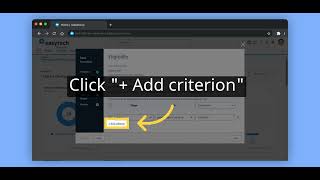
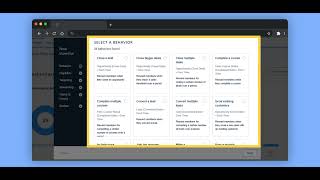
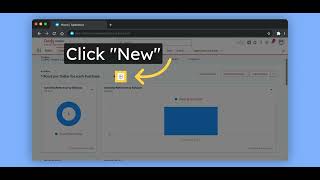
Thank you, Tim. So let's see how this looks set up in Fielo. So here we have our incentive engines configured against the use cases we discussed today. You know, a time-sensitive promotion for the winter season segmented, as you can see in the top left-hand corner, corner to our US Northeast customers. We're leveraging our segmentation engine, Fjellow, against the winter months for the winter season here. And we have those different paths that we discussed today around customer engagement as rules in the engine. Total transaction volume, purchase frequency, and as Tim added just a moment ago, a baseline behavior incentive around content consumption or share. And in Fielo, you're able to set up each of these rules, the criteria. So you see here in the top right, we have the criteria rule configuration around that purchase and how we're going to incentivize only the purchases over $100. And next, we see the next configuration window around the reward output. We're incentivizing it with points, with the $1 to 1 point earning model. So each rules criteria is configured in this point-and-click interface, and now we're able to have this program up and ready quite simply. Now let's take a look at the customer experience that Tim highlighted. You know, Fiel includes out of the box a number of portal widgets to engage the customer on where they are and what they're doing in their incentive journey. So we see here the two incentives we've been highlighting today. Remember Bob, who excelled at spend or total purchase value, and on the right, remember Mary, who's excelling at frequency of visits. So let's see how this looks, these principles look when they're applied to an actual business and brand. So here's one of our customers. Oh, here we go. So here's one of our customers, Country Road, a leading retailer in Asia Pacific based in Australia. They have hundreds of stores and online e-commerce with an award-winning loyalty program of several million members. So let me go ahead and click on how this program looks on their e-commerce. So what we see here is that they have a spend-and-earn approach to vouchers, and they provide different vouchers at different levels of spend. But they also provide other benefits to the customer, like a welcome reward. A birthday voucher, and depending on doing certain actions in the program, longer expiry or extended expiry of their vouchers. We talked about how important levels are, and Country Road has done a great job of leveling their program with an assortment of different benefits that unlock as you progress. They offer benefits like free shipping online, free tailoring in the store, and so on. All different ways of unlocking benefits to engage the customer as they go through this incentivized journey. So Tim, why don't we summarize?
Yeah, thanks Husseni Rasiwala-Yaliwala. So, you know, we talked about 3 things, right? We talked about first, Giving customers multiple paths or giving customers choice in how they want to characterize their relationship with you, right? So you're not dictating to them what you consider to be their value. They're— you're giving them a voice, the voice of the customer, in letting them determine what their value is to you. And by doing that, by giving them voice, they will actually increase what they do with you, right, in terms of that value. So it's got a secondary effect which is very, very positive for you. Second, we talked about gamification and the fact that gamifying your program increases engagement. It's been re-proven in, uh, in market research study after market research study after market research study that you can't take this one-and-done approach that Husseni Rasiwala-Yaliwala-Yali talked about, where you create maybe perhaps an interesting customer loyalty program, but then just let it sit on the shelf for 2 years. That's not going to work. It will work in the first 6 months, but you will see interest and participation tail off. You have to keep it going and alive and energized by introducing some of the gamification techniques that Husseni talked about. So for example, in terms of sports franchise where you use incentive programs in your loyalty program as a qualifier to participate in yet an even bigger or better program opportunity. And thirdly, we talked about the fact that customer loyalty is more than just transactions, it's more than just purchases. Or the amount of money that a customer spends with you, right? It's about all of those things that customers do in the course of their decision-making, that decision-making lifecycle or customer journey, if you will, that is key to understand and value and reward in addition, right, to how much business they transact with you. Okay, so with that, let's move to a few questions, see if we have any questions. Carlos, did any questions come in while Husseni and I were talking?
Yes, Tim, so we have a few. If we don't get to all your questions, we'll be answering them through email, but let's go to the first one that we have here from Jonas. What are some examples of consumer behaviors that I could use to increase a B2C engagement?
That's a good question, Carlos, I'll take that one. So what we've seen with our customers is a great assortment of different behaviors that you can incentivize to improve engagement. You know, things like update your customer profile, share your opinion, respond to a quiz, watch videos, post comments online, refer friends and family, buy a specific product in a period of time, you know, how you buy the products through a specific channel. Think about when a brand has an online e-commerce like Country Road, driving them to buy online as opposed to in the store to reduce cost to serve. Those are some great examples that we've seen in the market.
Great, thank you, Husseni Rasiwala-Yaliwala. Let's see, next question's from Miguel. How can I create competition within my customer base?
Good, I'll take that one as well, Carlos. You know, what's really important is obviously segment your customer base. You know, you can create leaderboards to publish the top 3 customers, recognize them by using badges, or additionally, you know, reward them by using instant rewards. Those are some good ways.
Great, thank you, Husseni. Let's see, I think we have time for one more at least. Here's one from Jackie. What are the key measures in the case?
Yeah, so I'll take that. Thanks, Carlos. You know, a lot of companies, you know, traditionally measure things based on their end goals, things like customer lifetime value or total revenue or average revenue per customer. You know, that can be by tier or level or segment, Right, so you, you can apply this segment analytics to understand how these customers are performing, not against a million other companies, but against their, you know, their peers, as you developed in your persona profile. But you can also have metrics that are linked to the path that customers take to achieve those end goals too, right, the engagement process, so to speak, which we think is so, so vastly important, right? Such as their frequency of play, timeliness, right? Sometimes you're going to be focused on, you know, wanting customers to achieve some target fast. The average number of actions or transactions per player, per customer, the median number of actions across the player base. You see the number of players performing those actions, the number of repeat or returning players, right, talking about frequency earlier, the progress of each player. You know, the notion of these types of analytics, which we call in-program analytics, are measuring the progress of a partner up your loyalty ladder, so to speak. And by measuring in-field or in-promotion or in-program what customers are doing, you're better able to fine-tune and tweak those programs to better take advantage of and capture those customers according to how they express their interest and how they express their value.
Great, thank you, Tim. And with that, we We are at the end of our time. I want to thank everybody for joining us today. Special thanks to Tim and Husseni Rasiwala-Yaliwala-Yaliwala for the great presentation. For more information about Fielo and Fielo services, please feel free to go to fielo.com. And with that, have a good rest of your day, and thanks again.