Winning the Hyper Competitive Channel Partner Market
Tim Harmon and Husseni Rasiwala-Yali argue that winning in channel partnerships means focusing on partner loyalty, not just end-customer competition. They introduce RFML, a framework measuring recency, frequency, monetary value, and longevity, and show how rewarding salespeople, marketers, architects, and support staff across multiple currencies drives wallet share and channel share.
Questions this video answers
Rebates provide direct monetary upside, which partners value most, and they are often tied to joint market‑entry strategies, making partners feel they are collaborating on revenue‑share opportunities rather than just receiving a passive reward.
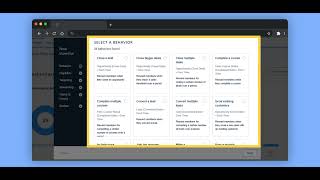
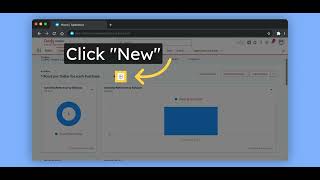
Fielo uses three point‑and‑click engines: (1) Program configuration to define reward currencies and budgets; (2) Segmentation engine to select target personas (company, salesperson, marketer, etc.); (3) Incentive engine to map specific partner behaviors to the chosen reward currency for the selected segment.
Chapters
Hello everyone, thank you for joining us today. We'll begin in just a moment. Alright, well, thank you everyone for joining us for Fiola's webinar, Winning the Hypercompetitive Channel Partner Market. If you have any questions, you know, put them in and we'll try to answer them all at the end. And with that, I will pass it over to Tim.
Thanks. Hello, this is Tim Harmon. And thanks for joining the webinar today. Before we get started, I just wanted to make— say a quick note. First, I just hope that— you know, our hope is that, you know, you're not being impacted by the coronavirus other than working from home or perhaps being on lockdown. You know, but if any of you or your loved ones are directly affected, you know, our hopes and prayers go out to you or your loved ones. So And thanks for, with all the madness that's going on, for dialing into the webinar today. So winning the hyper-competitive channel partner market. You know, I have over the course of my career been involved in many, many competitive analysis projects. And I can tell you that 90, 99% of those projects have been around competing with others, with your competitors for customers. And very little attention has been paid for the most part, I think, you know, by companies in competing for channel partners. But I'm going to make a case today, Husseni and I are going to make a case today of why a competitive strategy and a competitive plan for winning the hearts and the minds and the wallets of channel partners is every bit as critical, if not more so, than, you know, competing for customers. So as I mentioned, I'm Tim Harman, and I'm joined by Husseni Rasiwala-Yali, who's my ever colorful analyst. Hello, Husseni.
Hey, Tim. Good to be here.
So, as I mentioned, we'll talk about not just the competitive nature of the channel partner market, but the hypercompetitive nature of the channel partner market. And of course, you know, there are some companies that are wired into this hypercompetitiveness, if you will. The fact that it's, it's just not your normal, you know, competition or competitive analysis project, if you, if you think about it. So we'll talk about channel partner loyalty, you know, what it is and how to measure it, because really what you're competing for is their loyalty. We'll talk about persona incentivization targeting and how persona incentivization targeting can help engender and build loyalty in your channel partners. And we'll talk about the application of incentive programs for both the short-term and the long-term and what the impact of each of those time frames is on your channel partners' loyalty. So let's try to define channel partner loyalty. First, what's the definition of just loyalty in and of itself? Well, check out Merriam-Webster dictionary.com, the Cambridge University— the Cambridge Dictionary, and others, and you'll find that they define loyalty as the act of being loyal. So then you look up loyal and find that they define loyal as faithful. And then on to faithful, look that up, and you guessed it, they define faithful as loyal. But beyond using a word to define itself— loyalty being the act of being loyal— and the circular references of loyal, and faithful, there are some addition— additional definitions, but being steadfast in affection or allegiance, being firm in adherence to promises, being strict or thorough in the performance of a duty. And the one that we like the most, which came— comes from the Cambridge Dictionary: being firm and not changing in support for a person or an organization. All right, so this The, uh, let's apply and extend this last definition to the context of channel partner loyalty. We define channel partner loyalty as being when faced with two or more options as a channel partner, having the proclivity to choose the original option or the one that mirrors their investments. What do I mean by channel partners' investments? Well, channel partners have portfolios, portfolios of the manufacturing and tech companies whose products they represent and deliver to the market. And they, they, they make investments in those portfolio companies in the form of hiring, training, marketing, technology, and infrastructure. And in this example, a small portfolio of 2 or 2 cloud platform tech companies and 1 security tech company. Note that the norm is for a channel partner to actually represent 6 or more companies' products per their portfolio. So this is a pretty small example compared to what the norm is today. Now, one of the reasons that channel partner loyalty is in channel partner competition is so much more keen than customers. And customer competition, I don't want to, you know, belittle it, right? It's a big, big issue, right? It's market share. But the, you know, the cost to acquire a new customer as opposed to retaining an existing customer, and this is well researched, uh, you can do search, you can find many different sources, but the cost to, to get a new customer versus retaining an existing customer is 5 to 7 times. So 5 to 7 times more to get new versus retain existing. But the cost to get a new channel partner versus retaining an existing channel partner is 15 to 30 times. So 15 to 30 times the cost to get, uh, to, uh, the cost of retaining to get a net new partner. Why is that? Well, first of all, partners have a long decision process, right? I mean, you may go out and try to recruit new channel partners. It's very different than marketing to consumers. Marketing consumers, you hope for some sort of decision to take place depending on what sort of products or services that you're selling to consumers in, you know, a day, a week, a month, maybe at most a few months. And I'm talking now about high-end consumer products. Think about a house, you know, people will usually make a decision if they're out to buy a house in a matter of months, 3 months or less. Channel partners don't make that decision, right? Their portfolios they consider to be fairly locked and loaded. And so you oftentimes have to market not in terms of days or weeks or months and recruit to a channel partner. You have to, uh, you have to market and recruit for quarters or years in order to, you know, get channel partners or to get more of channel partners' wallet share, right? Secondly, the cost is much higher to develop a channel partner, right? You get a new customer, not really developing a new customer. You get a new channel partner, they need to understand your products, they need to understand your sales methodology, they need to understand your support systems, they need to understand how they engage with you via a PRM, partner relationship management system. They need to understand your pricing models. There is a lot of development goes on in terms of a cost. You know, one of the other factors why, you know, acquiring new channel partners is so much higher than new customers. And there's the support cost. And all the time while they are not, you know, being fully productive, so they're not ramped up to full productivity, for maybe a matter of months, maybe up to a year, you are still supporting them, right? So, you know, the, the cost to get a new channel partner is really high. And then there's a fifth factor, the, the, uh, the law of economics, the law of supply and demand, if you're familiar with that. I'll talk about that a little bit more. So I'm sure that, you know, you guys remember this from your Economics 101 class. I'm assuming that this is the classic demand and supply curve, that where, you know, demand meets supply is the point that price is determined, so the optimal price. So if you have an overabundance of supply, then price goes down on the y-axis, and if you have oversupply oversupply, price goes down. If you're undersupplied, if you don't have enough inventory, price will go up, right? Same thing with the demand curve. If demand, you know, goes up but supply remains constant, then the price will go up. And if demand goes lower, then the price will go lower. So what's happening in the channel partner ecosystem market? Well, I can tell you for a fact the supply is going down of the number of channel partners on a worldwide basis and has been going down for about a decade now each year and will continue to do so, right? At least in the, in the next few years. That's because there's two reasons. There's a lot of consolidation that's been going on. In the channel partner market. So companies, you know, merging or acquiring. In some cases, there just have been channel partner companies that have shuttered their doors. So if you think about it from a demographic perspective, the channel really got its start in the, in the '80s and then grew a lot in the '90s. And so a lot of CEOs of channel partner companies and founders you know, in the last few years have reached retirement age, and if they haven't, you know, can't find a buyer, they just wind up, you know, shutting down their company. So supply is dwindling, right? And as I noted before, when supply is dwindling, that causes the price to go up. Now this is the price to acquire a new channel partner. But what else is happening on the flip side? Demand is going up, right? So I've never seen a time where there's been so much interest in building a healthy, robust channel partner ecosystem, right? It just is because I think people, you know, people have realized it's just such an effective and efficient way of reaching customers, particularly if you're going into new markets. right, where your direct sales team may not have a lot of experience, right. So demand going up, that drives the price up even higher. So my point is you have supply going down, demand going up, you know, it means your price to acquire, your cost to acquire channel partners is probably more along the lines of that 30x, you know, of that 15 to 30x range. It's probably now closer to the 30x range as a result. 3 times. So, you know, you can't measure loyalty, at least not directly. Now, in personal terms, I suppose you could, because loyalty is considered to be a binary thing. You're either loyal or you're not. But loyalty in the context of channel partner loyalty can't be directly measured. So think of the definition: When faced with two or more options, having the proclivity to choose the original option or the one that mirrors their investments. Having the proclivity. So whether you use the term proclivity or any of its synonyms, uh, tendency, inclination, predisposition, they're all squishy terms, and squishy can't be measured. That's the bad news. The good news is that there are plenty of channel partner behaviors that are really good proxies for loyalty and that can be measured. Let me talk about some of these. So I don't know if you've heard the acronym RFM. RFM is very popular in the customer loyalty program world. And if, if, if you haven't done any research, you're not familiar with customer loyalty programs other than perhaps being a member of a customer loyalty program yourself, I would encourage you to do a little research there, or you can give us a call and we can give you some interesting insights of what's going on the, the B2C side. But RFM stands for Recency, Frequency, Monetary. Now I've extended the classic customer loyalty RFM model to include longevity, right? So I refer to it as RFML. So recency, you're measuring a partner's loyalty, right, by how recently they transacted. I was, in my days as an industry analyst, I always asked channel chiefs whenever I had the opportunity to sit down and chat with them, one of the questions I would ask was, you know, what is it that keeps you up at night? And in multiple cases, it was recency. It was, we're okay with the number of channel partners that we have, uh, we're okay with the amount of business we're doing. What we're not okay with is that there's a lot of our channel partners have not transacted with us for 2 or 3 quarters or more. Right. And so that's, that's, that's when you need to start worrying if that recency factor is there. Frequency, it will, we'll walk you through an example model here in a little bit of how frequency translates into a loyalty proxy, but you can imagine, you know, you can infer that some, you know, a channel partner that is transacting business on your behalf more frequently is probably more loyal. Monetary, that's, you know, that's the volume of business, right? How much revenue are they generating for you? And of course, longevity. Now I'm using here what a lot of the credit card numbers, you know, been a member since 1982 or 1987 or whenever. So longevity can also— is also another good proxy for loyalty. So under investment, I list a couple things: training and event attendance. And when, um, a few years ago there was a turn in the tech industry anyway that channel partners were going to be rewarded for not for the amount of business they did, but for the amount of investment they made in, you know, in the tech company, and that investment being captured in the form of training investment, any event, event tickets, and that's also, you know, so deemed to be a good proxy for loyalty. Here's another category, what I call enablement exploitation, So you probably have many enablement programs that you offer your channel partners. We'll just use MDF, Market Development Funds, as an example. The, um, if you offer your channel partner $20,000 in Market Development Funds but they only use $1,000 of it, Compare that to another partner that you offer $20,000 in market-developed funds and they use $19,000 of it, that's a good indicator of which one is, is more loyal, right? So which, you know, of what you offer them, how, uh, how much advantage they're taking of it can be a key indicator of loyalty. And then over on the right, all the engagement factors, right? So engagement, of course, is a great proxy for loyalty, you know, in the form of how often they log into your partner portal and what they're doing on your partner portal, uh, event attendance that I've already made reference to. Are they, you know, are they posting, um, you know, on Chatter, on social media, uh, about, about the company and about your products? Uh, are they working on, you know, business plans or, you know, collaboratively developing joint business plans with you, or supplying timing forecasts. You get the idea. Now, the one thing that I would caution you is when I first surfaced this notion that there's many, many different things that you can measure a channel partner's performance and a channel partner's loyalty on, you know, some of my audience at that point in time took it to heart and put every single one of these and more into their partner program measurement model. And, you know, once the partners realized to participate, they were being measured on, you know, 20 different things all at one point in time. It wasn't really successful. So you need to be selective here and pick and choose which ones are best for your particular situation. So engagement, I talked about engagement on the last slide, engagement being a great proxy for loyalty. So it's not just the, the programs, it's also the applications that are supporting the, the programs that are a good indication of engagement, which again is a really good proxy for loyalty. And you know, during my, my tenure as an industry analyst, I had the opportunity to do a lot of research of course. And one of the things that I learned was that different partner enabling applications, partner enablement program applications, uh, had different usage factors by channel partners. So we did, did a lot of, you know, ad hoc interviews and more formal surveys to determine that, you know, at the bottom of the list was content, which is kind of ironic because a lot of companies when they start a channel program start by doing nothing more than publishing a lot of content, which is the least engaging, or the, the least engaging way to, to interact with your channel partners. Now, one step up that were events and MDF and deal registration. Again, you can imagine they're not highly engaging because they're more transactional. You're not going to You're going to register a deal every time you have a deal. You have a lot of, if it gets, if you're generating a lot of deals, you, that would be highly engaging, but it's dependent upon, you know, the transaction. Events may not be highly engaging. If you only attend one event a year, then, you know, engaging with a tech company or a manufacturer via their PRM event application, you're gonna do once a year. Up from that is support. So partner support, partner support helpline, or partner support knowledge base, or ticketing system, you know, a step up from there. And then business planning, a step. And at the top, at the top, was through-channel marketing automation and incentive and rebate management as the most engaging applications that channel partners find to be the most engaging. So Incentive Automation, per the last slide, not only is a way to measure and reward engagement and loyalty, but the incentive programs themselves that are powered by the Incentive Automation Platform, that application itself is engaging. So you kind of get the, the, the two, uh, two buck for your bang factor, uh, with respect to incentive management. So I want to talk about wallet share. And going back to the channel partners portfolios, you know, when it comes to partners revenue, uh, that portfolio gets carved up and not accidentally. So, you know, in this case, we'll take our two cloud platform tech companies or security company, we'll add a productivity software company and an application software company. It's just a sample portfolio. Now, the amount of revenue that the channel partner generates for each of these is known as their supplier's wallet share. So suppliers will refer to their— the channel's wallet share is dependent on what percentage of that channel partner's revenue generation is being generated for them, right? So that is, you know, wallet share. And wallet share, you know, again falls under RFM—recency, frequency, and monetary. It is the monetary aspect of the RFM model which I talked about earlier. So wallet share is important, absolutely. And we're going to combine that with mindshare, right? Because it's— mindshare is— will, will lead to wallet share. It's just a natural— the more mindshare you're able to capture of your channel partners, it's inherent that's going to translate to wallet share. When you combine the two together, it equals what we refer to as channel share. Right? So your wallet share is, is really what you're doing in terms of the percentage of revenue of that channel partner's portfolio. And mind share is more reflective of your potential, your future of what you're going to do, right? So wallet share can be a a good number in and of itself, but if you don't combine it with mindshare, I mean, think about what happens if wallet share is, uh, 80% but mindshare is declining, or if wallet share is 80% and mindshare is improving. So you need to, you know, fold in that mindshare aspect to get a forward-looking projection of where you're going in terms of your channel partner ecosystem. And the reason that channel share is so important should be obvious, right? It's the virus effect. And I'm sorry, I hate to use that term right now. We'll call it the viral effect, a little bit softer. But the, you know, just capturing a small percentage more in terms of channel share translates down through the market So they're potentially capturing multiple points of market share away from your competitors. So there's a cascading effect. So let me, let's turn to Husseni and hear what he has to say about personas.
Thanks, Tim. Yeah, so let's take a look at the second topic for this webinar, persona incentivization targeting. So long gone, very long gone, are the days when spiffing salespeople was your one and only means of incentivization strategy. Nowadays, savvy companies now employ persona targeting to hone with surgical precision how they structure their incentive programs. So like I said, you know, the days of spiffing salespeople as, you know, quote-unquote strategy have come and gone, and many manufacturers and tech companies in the market that we work with here at Fielo have moved, rightfully so, to a partner incentive program that targets the company. And this is driven largely by the current popularity of rebate programs. But that doesn't mean you should ignore the individuals anymore. So salespeople should still be rewarded for sales, and as importantly so, for subscribing to your sales methodology, for submitting timely forecasts, and for managing their pipelines properly, And all those steps should be incentivized with those sales guys, but it should go further. You probably want channel partner marketers to utilize more marketing development funds and their process through MDF to be incentivized, more email campaigns, to host and participate in more local events. And don't forget the invaluable sales engineer or solution architect, extremely invaluable, right? Because like the number one influencer alongside the salesperson who decide on what products to position to the end customer. So you want to have an effective loyalty through your incentive program where you get a 360-degree perspective, right, across all personas of your partner's organization. So to answer the question of the slide, who do you want to be loyal? The answer should be everyone. So next, let's talk about multiple reward currencies. So with Fielo as a product, you can do exactly that and, and a lot more. Whether it's rebates, funds, or points, Fiala gives you the ability to have multiple output reward streams, what we call reward currencies, each of which can be allocated to or split across multiple program participants. It's not only the channel partner company entity and channel partner individuals by role, but collection of individuals as a team. For example, you may want to put together a marketing campaign conversion incentive. That rewards both the marketing and sales teams for opportunities that convert to close from the top of the funnel in a certain amount of time based on a marketing campaign. Or maybe as, as another cross-sectional team, you want to have a customer success campaign that involves professional services, training, and support peoples as one team who are responsible collectively for customer success. So essentially, you have total flexibility in the way you design your rewarding scheme multiple reward currencies going to multiple program participant personas. So let's take a closer look at those multiple currency types. So for rewarding at the partner company level, points are popular because of the flexibility, right? You can translate points into virtually anything, but in particular, you can assemble a points-based rewards catalog that can house a changing collection of business benefits. Like business credits on your, on your partner's products and services, business tools, information to help grow the customer's business, or gift cards and merchandise. Second, rebates. Rebates are very popular too, not insignificantly because of their top-line directness and they're non-taxable. Key factors to a successful rebate program are rebate eligibility qualifications, presentation and application at the moment of deal registration, for the instant gratification, payout schedule, invoice matching, and auditing. Third is funds, which are a variety of funds that you use. You know, these are gaining a lot of steam as a rewarding lever. Funds are usually rewarded upon completion of a sales or marketing activity or goal. Another currency type that's popular with, with our customers is LevelUp credits, and this is something new that we're going to talk about more later. But Level Up credits I spoke to earlier, these are a great way to tell channel partners that whatever they do, you're with them for the long run as they get recognized with a higher level that unlocks more benefits over time. So here's another example of how you could use the, the multiple currency reward type capability here for individuals and teams. So again, points can be used to redeem against the rewards catalog. Recognition in the form of certification badges, SPIFs for cash payouts to individuals, right, instead of rebates to the company level, but also you can have instant rewards for instant gratification that makes more sense at the individual or team level. Now let's talk about multiple recipients, you know, and with regard to multiple recipients, consider this example: for reaching performance targets set by a particular incentive, you could allocate 100 redeemable points to a salesperson 80 points to the sales engineer, and 1,000 Level Up points to the company. You know, Level Up referring to points that could count towards moving up from Silver to Gold partner status, for example. Or you could allocate $100 gift card for each member of a designated team, and $1,000 in virtual currency to the company itself, which could be used towards business benefits, say credits for training classes, free premium support for 6 months, or discount on your annual conference tickets. So this is where it gets exciting, as you start to incentivize and reward effectively the entire ecosystem of your partner's organization.
All right, so thanks. Let's shift into our last topic about how to think about your incentive programs from both a short-term perspective and a long-term perspective. So The fact is, is that most companies run a lot of short-term incentive programs, sometimes referred to as promotions, right? The, um, which are fine if you have immediate fast goals that you have to reach, but they don't have much effect in terms of the long term. What I'm talking about loyalty is loyalty is a, is a, is a long-term investment. It's represented as a long-term investment that the channel partner makes in you. All right, so the, uh, pretty, pretty limited. Um, on the other hand, then I've seen companies go the other way where they'll just put out one incentive program which lasts a long time, and so they have to they're rewarded for the amount of sales of a particular product they do over the course of a year. The problem is that's starting to tax your channel partners' patience. That just seems like a long time to participate in an incentive before getting any sort of reward. So you can take a hybrid approach. All right, and for this example, I'm going to use one of Fielo's performance goal models called race. Race being obviously what it says, that the channel partners that come in, that complete an activity first, whether it's to achieve $10,000 of sales in a particular product or the first to get a new certification, you know, Cloud Architect certification, or the first to bring in 5 new logos in the healthcare market, or what have you, gets the most reward. And then the one that comes in second place gets the second most amount of reward, and so on and so forth. So you can, you could implement a program that rewards both that short-term accomplishment, say in the form of rebates or another currency type that Fielo supports. And at the same time, from that same incentive program spigot, if you will, you're not only pumping out, you know, rebates on a quarterly basis for all the, all the business or the, that they've done in that particular quarter, but you're also allocating Level Up Points or Level Up Credits to the partner company for the long term. All right. And I want to use NASCAR as an example. Whether or not you're a NASCAR fan, their point system is fascinating. And essentially every professional sports franchise in the world and collegiate franchises, college sports as well, has a system whereby you compete in the, quote, regular season, and with the goal of doing so well in the regular season that you qualify for the championship series, right? And the championship series is where the big money is, where the big rewards are, right? And so NASCAR has developed very much a point system, innovative point system, which incorporates a lot of different, you know, behaviors. So yes, it is what place you come in in each race in the regular season, so to speak. So, you know, 40, 43 cars in each race, and the winner gets 43 points, and the second place gets 42, on and so forth, you know. But they also give extra points for if you actually, you know, are the race winner. They give extra points if you lead any lap. They give you points if you led the most laps in a particular race. So there's a maximum number of points in a race, and you get us 48, right? And then after the 26th race— so the 26th race is, in quote, the regular season— you know, the top 10 point earners go into that championship series, if you will, right? And they let a couple of wild cards in as well. But see what they've done They've— they're rewarding for each race because as a race car team, you're— you get, you know, you get reward money for each, you know, for your performance in that particular race. But they're also banking— they're also banking points that you earn in each race to get into that championship series. So that's— wanted to use that as a real-world example that you can take to your incentive program model, right? Where you would do a similar sort of thing. You know, say you have an incentive program and the channel partner earned 300 points in Q1. Well, they got— now they got 300 points towards qualifying for that fourth quarter championship series. You know, in Q2, right, they can earn 400. So now they're totaling 700 points. Need 1,000 points to get into that that championship series. And sure enough, Q3, they bet, they get 350 points. That's a total 1,050, which qualifies them for that, you know, that fourth quarter, you know, championship series, so to speak. Let me turn back to Husseni Rasiwala-Yaliwala to walk you through a more detailed example of what, uh, you can do in Fielo along these lines.
Thanks, Tim. Before I get to the example, let me also draw another parallel. You heard Tim talk about NASCAR. Let me talk about banking. So with respect to a hybrid long-term short-term approach to incentives, we see this in the banking industry done really well. You know, banks offer you multiple accounts and multiple investment funds to account for both your short-term and long-term financial goals. Your bank, uh, you bank some of the assets as cash in a readily accessible checking or savings account, and then you have other, uh, financials in a long-term CD or money market or mutual fund. You can and should think of and run your incentive program the same way because banks are a good example of engendering loyalty. Using Tim's example of short-term and long-term incentive rewarding, you can offer your channel partners multiple reward currencies with different redemption and receipt rules, some of which are geared more towards short-term liquidity, for example, rebates and funds, others which are designed for more long-term utilization, like LevelUp credits and virtual bucks. Virtual currencies are particularly well suited for long-term loyalty building if modeled as a principal plus interest rewarding scheme. In other words, the channel partner includes virtual interest on their virtual bucks earning over time. So now let me get back to this example on the slide here, which is being used by some of our customers very effectively. So I have two channel partners, P1 and P2. So Partner 1 earns 200 in credit towards rebates and funds in Q1, which you bank for them an equivalent 200 in long-term currency credits, a 1-to-1 ratio. And then they could— they earn 40, uh, in short term in each of the Quarters 2, 3, and 4, for which they get a combined 120 and more long-term credits. So now they have 320 in long-term credits for the year. Partner 2 earns 100 incentive reward credits in Q1, but they're following up very consistently in their, in their quarterly progress. So in Q2, Q3, and Q4, they've also done the same. So they have 400 earned long-term credits across the year. If you were to value your partner's loyalty based on a single quarter's performance, you would say P1, Partner 1, is more loyal, more loyal, based on their performance in Q1. But it's over the long term that loyalty becomes more apparent, a key reason for implementing some aspect of long-term instruments in your incentive program's rewarding scheme.
All right, so let's summarize this for you. We talked about the fact that you can't buy partner short-term loyalty, right? There's a lot of short-term incentive programs, promotions, I understand, That is not getting your partners' loyalty. But you can bank for them their long-term investments, which will ultimately translate into their loyalty in the example that Husseni just showed. Second, we talked about the fact that the more that you engage partners, the more mindshare you'll get. And the more mindshare you'll get, the more wallet share you will get. The more wallet share you have, the more channel share you have. Which is going to translate into more market share ultimately downstream is what you, what you ultimately want. So think about engagement and all the engagement factors I gave you as loyalty proxies, as the things, the behaviors that you want to measure and reward to grow your channel partners' loyalty and to win that competitive market. And third, and I say this now because this is, you know, important, I think, now because competition over a shrinking channel partner supply is at a fever pitch. The price for winning in the channel is going to become more expensive over the course of the next few years, and that's why you need to strike now while it's still, you know, within range. So you want a, you want a channel not only to reach new markets or to reach expanded markets or to reach markets more efficiently or cheaper than what you are currently doing. You want to do it because the price to do so is on the rise, and so the price to buy is now. It's almost like real estate. If you know the real estate market is going up over the course of the next few years, you might want to buy real estate now instead of you know, buying at the top. And the same thing is happening in the channel partner ecosystem market, and why there is so much competition for it right now. But if you employ and enact the type of, you know, incentive program models for measuring and rewarding your channel partners, you will not only grow your wallet share and channel share of partners, of your existing partners, but you will attract, you can, you will be able to use that as a strong attractant to recruiting new partners as well. So with that, let me ask Lauren. Lauren, were there any questions that came in the chat?
Hey Tim, yeah, yes there were. So I have one here from Michael. Why are rebate incentive programs the highest engagement partner application?
Yeah, I'll take that. I mean, you could easily say that it's because the monetary remuneration aspect of incentive programs, that all those other applications, whether they be content or deal registration or support, you know, they may be necessary, but there's not a monetary upside to the channel partners for taking advantage of that particular program and engaging with their suppliers per that application. But it's not just, it's not just that. What I've learned from a lot of incentive and marketing, channel incentive and channel marketing professionals, is that they use their incentive programs as a means to jointly attack a new market opportunity. And so they don't use them passively, they communicate their strategy and their goals and then engage only those channel partners, or ask only those channel partners that are aligned with, you know, those goals and those, you know, new market opportunities, you know, to participate with them. So they look at it more as a share model, a revenue share model, with some of that revenue being shared, or more of that revenue being shared, in the form of of rebates or other monetary rewards. So it's more than just the monetary nature. It's the fact that philosophically that channel partners feel like they are really truly working with and collaborating with their, the tech companies and manufacturers that represent their portfolios.
Okay, great. Thank you. We also have one from Amanda, if someone wants to take it. I like the idea of multiple reward currencies for multiple personas. How do you set all this up in Fielo? What little we do today is highly customized. Could you also give me some more real-life examples?
Okay, I'll take this one. Well, that's a great question from Amanda, very loaded, I like it. So how does this work in Fielo? So we solve— so the first question, we solve for this using 3 configurable point-and-click engines in our product. So first, you know, in the program config of Fielo, you decide how many reward currencies you have, like outputs that we described before—points, badges, funds, and rebates. And so you configure how many reward currency outputs you have, and then you can even define the budget and capping for each. Second, you define in your segmentation engine in Fielo who you want to target. As we talked today, the company, salesperson, marketer, PS team, and so on. Third, our incentive engine. With a few clicks, you can figure which behavior you will incentivize, select which segment will be applied to that rule, and then of course what output reward currency will be given when the behavior is done by the partner participant. It's really quite straightforward. It's literally those 3 steps in 3 different areas of the product because by design in Fialo, you know, we did— we understand the basic building blocks to designing an incentive program And so the product configures in the same manner. In terms of the second part of the question, some more real-life examples, let me think. So one is one of our global consumer goods companies we work with. They incentivize, like so many CG companies, they're retailers, and they're using Fielo for that. So they give multiple reward currencies in this fashion. They give cash-based discounts for sales, so rebates to the company and spiff to the sales guys for the sales. And that currency of— that's cash-based rebates and spiffs— is costing the business money, but they're happy to give it because it's driving more sales from the partner. But when it comes to the salespersons, for example, doing training, logging into the PRM partner portal, these are non-revenue-generating behaviors. So they give points that are redeemable redeemable for swag, which by the way, they're probably giving to the partners anyway, and they give them badges for recognition of their performance in doing the trainings and logging into the partner portal. So this doesn't cost the business money, because naturally this is more of a non-revenue-based behavior. So that's a very effective approach to do your different incentive outputs.
All righty, thank you both of you, Tim and Husseni Rasiwala-Yaliwala. Unfortunately, we are out of time for today's webinar. If we did not answer your question, we will make sure to do so over email. If you also need any more information or want to learn more about Fielo or Fielo's products, please visit us at fielo.com. Thank you again, everyone.