Bitcoin, Crypto, and Startup Scaling w/ Jason Yanowitz (MI063)
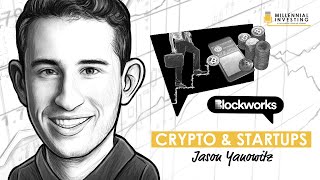
Jason Yanowitz, co-founder of Blockworks Group, bootstrapped his crypto media firm starting in 2018 by obsessing over customer outreach and hiring people smarter than himself. He explains Bitcoin as a decentralized payment network with a fixed 21 million supply, recommends retail platforms like Coinbase and Gemini, and argues Bitcoin is the only long-term crypto bet.
Chapters
You're listening to TIP.
On today's show, I sit down with Jason Yanowitz to talk about his entrepreneurial journey and his views on Bitcoin and other cryptocurrencies. Jason is the co-founder of Blockworks Group, an events and media company that sits at the intersection of digital assets and traditional finance. I've actually worked with Jason on a few different projects in the past, and he's a good friend of us here at TIP. I'm very happy to have him on the show today to talk about how he started his business, as well as to have a discussion about Bitcoin and cryptocurrencies. So let's get right into this week's episode with Jason Yanowitz.
You're listening to Millennial Investing by The Investor's Podcast Network, where your host Robert Leonard interviews successful entrepreneurs, business leaders, and investors to help educate and inspire the millennial generation.
Hey everyone. Welcome to this week's episode of Millennial Investing. With me today, I have Jason Yanowitz. Welcome to the show, Jason.
Thanks for having me. Appreciate it.
You and I have worked together on a few projects in the past, but for those listening to the show today who may not know who you are, give us a brief overview of your background and how you got to where you are today.
I'm the co-founder of Blockworks Group. We're an events and media company that helps institutional investors understand the crypto and blockchain space. Grew up in the Bay Area, went to school down in Atlanta at a school called Emory, moved up to New York, worked in venture for a bit, investing in late-stage tech and life science businesses. So some of your listeners might know some of the investments like Dollar Shave Club, some other Hail Mary shots on Alzheimer's and some fun things like that. And then I went and joined Sisense, which was an Israeli data analytics company that has raised about $300 million. I built out the outbound sales team there, grew that team from 2 folks to about 24 people in a year. Then let's see, it was May of 2018 that I launched Blockworks Group full-time. I'm co-founder with Michael Ippolito, who went to Emory with me. We just had our 2-year anniversary about last week, so we're excited, 2-year birthday.
You mentioned that the venture firm was focused on technology and life sciences, so I have to ask, where does Dollar Shave Club fit into there? Are they a technology company?
Dollar Shave Club was a co-investment with Sequoia Capital. You probably see it now, and a lot of the listeners probably see it with Peloton and WeWork. I think WeWork's the prime example. A lot of these tech companies or a lot of non-tech companies, when they filed for their IPOs and their S-1s, people got access to the company and started to see how they were describing themselves. With WeWork, they're a real estate company. They're a property management company, and they're calling themselves a tech platform to change people's lives. I think Dollar Shave Club was one of the early adopters of this kind of mentality and really marketing. I love their CEO. I was a history major at Emory and he was a fellow history major from Emory. I mean, I think he's a brilliant marketer. Not fully a tech company, but I think it was a nice little investment.
Yeah, they're definitely doing a little bit better than I would say WeWork is. So I think it's worked out for them. Jason Yanowitz. Throughout today's episode, I want to talk a bit about entrepreneurship, how you're building your company, your experience in venture capital, and also Bitcoin. Let's start with entrepreneurship. How did you know you were meant to be an entrepreneur? Why specifically did you want to start Blockworks Group?
Let's see. I think those are two different questions. I think Blockworks Group starts in the end of 2017. I think entrepreneurship starts when I was 3 years old. Both my grandparents on my mom and dad's side were entrepreneurs. My dad was an entrepreneur. My mom was an entrepreneur. They still are. And so I think oftentimes entrepreneurship is in someone's DNA. And I think what it translates to is just a lack of conformity, right? A lack of conformity to the rules. I think you can trace a lot of entrepreneurs back to non-work-related, non-business-related things, and you can start to see some trends emerging. For example, at the VC firm, we would ask founders and entrepreneurs questions like, "What was your major?" Their answer was, "I created my own major." That's one data point along a trend of not conforming to the rules. So little things like that. While my friends were getting jobs after high school flipping burgers, I was launching a network marketing company or working with a network marketing company instead of going to business school like all of my friends did at Emory. I studied history. So I think from a young age, I knew I wanted to be an entrepreneur, but I really think just entrepreneurship is a risk-reward game. Financially, I mean, most entrepreneurs fail. So it doesn't really make sense to be an entrepreneur unless you love the risk. I think for myself, I need the risk, but I think it's important to understand that most entrepreneurs fail. But yeah, I think from a young age, I was bound for the entrepreneurship path.
Trey Lockerbie Yeah. It's interesting you mentioned the major because that was exactly one of the things I was going to ask is how did you go from being a history major to being an entrepreneur? I mean, that's not really a common study or a common major for a lot of people that go into business.
I think every entrepreneur has some of the same traits, and I think the biggest one is passion, right? Passion and curiosity would probably be the second one. There are some other ones like grit and hustle and wanting to make an impact and wanting to have ownership, but I think curiosity and passion are the two biggest traits of successful entrepreneurs. Passion for their business, and just a genuine curiosity about life and learning. And I think wanting to major in history, I think it was just a genuine passion for it, thinking that I'd be doing business for the rest of my life, and so I wanted to study something that I was actually passionate about, paying a boatload of money to go to school. And then I was just genuinely curious about it. And I think if you have passion and you have curiosity, it really doesn't matter what you majored in. Most of my friends are working in investment banking or consulting or private equity. It's not like I knew how to build a website out of school, but nobody really does. I think a lot of things that you learn in school, whether you're a business major, unless you study a hard skill like accounting, it's not too applicable to launching a business, to be honest.
So why specifically Blockworks Group? Why an event and media company?
Good question. I think any good company starts with a problem. More often than not, it's a problem in a founder's personal life, and it was no different for me. I got into the Bitcoin and crypto space when I was living actually in Budapest, Hungary. Someone I knew out there introduced me to Bitcoin. That was 2015. I moved to New York in 2016, went deep down the Bitcoin rabbit hole, and really realized over the course of 2 to 3 years that there was no real source of information and education to help Whether it's a newbie, a 22-year-old interested in Bitcoin, or a 60-year-old gray-haired family office investor who's allocating from their $300 million portfolio, there's no good place for them to go learn about crypto and Bitcoin. If you're a 70-year-old, you're sure as hell not going to learn from Crypto Bobby on Twitter and Crypto Panda on Reddit. That's all the sources for information that existed. So I started looking around, didn't see anything in the market, and so I actually launched Blockworks Group originally just as a side hustle. I went to a meetup on a Sunday, I came home, I was living with 4 friends actually. I said, "I'm launching a consulting firm for the Bitcoin space. Does anyone want to get involved?" 2 friends said no, 2 friends shot their hands up and said, "Let's do it." One friend ended up dropping out and the other friend was Mike, who's the co-founder, and the consulting firm quickly transitioned into an events company, which since has grown into an events and media company. So it took about 6 months of working with Blockworks Group as a side hustle, and then eventually launched it full-time in May of 2018.
That leads exactly into my next question because I wanted to talk about why you decided to have a co-founder. A lot of people who are starting side hustles or startups or just a small business in general, they're trying to decide, "Do I want a co-founder? Do I want to go it alone?" Why did you decide to get a co-founder rather than doing it yourself?
I don't even think the— The idea crossed my mind to try to do this myself. I think for any first-time entrepreneur, you should have a co-founder. I feel really, really strongly about that. I think there are a few things that you need to look for, but just hands down, I could not have done this alone. I feel really strongly about that. I don't think it was an active decision, should I have a co-founder or should I not? I think it was just, how can I link up with somebody who has different traits than I do? That's what I found in Mike. So I manage all the sales and marketing at the company. Mike does a lot of the strategy, operations, content creation. He came from a consulting background. I came from a sales and VC background. I think you just want someone who has very complementary skills. When you think about finding a co-founder, you want to think about one thing, which is how do you two combined have an unfair advantage? So I think there's this narrative, actually, I would love to talk about this for a second. There's a narrative that founders have to be college friends or work together, as was the case for us, but for any of your listeners thinking about launching something, I think this is less true than we think actually. Let's think about dating. People used to be embarrassed to say they met their spouse via an app, and instead prefer like, "Oh yeah, we met at college or we met at a bar," but I think that's going to be a lot less true moving forward. I think that there will start to be networks created and apps created to find your co-founder. They'll help you find people who agree with you on first principles of company building, find people with complementary skills, find people who are aligned on your values and on your mission alignment. What does success look like? And then find people who are aligned on company basis, who makes the decisions, what trade-offs you will and won't accept. So those are company alignment, value mission alignment, complementary skills, and someone who agrees with you on first principles of company building. I think those are the four things Everybody really needs to look for a co-founder, and I was lucky enough to find that.
Robert Leonard Another big decision that you made early on was to bootstrap the company rather than take on capital from outside investors. And it's interesting because you worked in venture capital, so you almost had a sneak peek as to what you had to do to raise money if you wanted to, but you decided to bootstrap it. So I think that's interesting. For those who aren't familiar with what bootstrapping is, Please explain what it means to bootstrap a company and then why you decided to use this strategy.
So I think first let's talk about bootstrapping, what it is, maybe pros and cons, and then we can talk about why I actually really strongly believe that most companies should not raise venture money right out of the gate. Not to say that they shouldn't ever, but I think right out of the gate they shouldn't. So maybe just to touch on the first part. So bootstrapping, basically it's a term that has its origin in the early 19th century, actually, with the expression pulling up by one's own bootstraps. That meant I'm going to do it myself. Bootstrapping a startup just means starting lean and without the help of outside capital. It means continuing to fuel growth internally from cash flow produced by the business. So there are a couple reasons that we decided to do this. The first one was just control. This is our first business that we've built, and it was really important to us not to quit our jobs, go full-time with the business, and then immediately start working for somebody else. If you're a founder and you raise capital, you're not your own boss, you're working for the venture firm that invested in your company, or really for the board actually. You can get fired at any time. So I think that's something that a lot of first-time entrepreneurs don't realize is that as soon as you take outside capital, the second that term sheet is signed, the money hits your bank account, you have a boss, and we really didn't want that. So the pros, there's ownership, literally our equity stake is bigger now than if we had taken outside capital. There's control. If we want to promote someone to our executive team, we want to make a big hire, if we want to fire, those are all decisions that we want to have the control over instead of having VCs who are going to meddle in the business. There's decision-making, ties into what I just said. There's longevity. VC firms, their incentive structures have big exits after 5, 6, 7, 8, 9, 10 years. We didn't want that incentive structure looming over us. We wanted the option if we wanted to sell in 2 years to have that option, or if we wanted to make this a family business that runs for 200 years, we want that option. The other thing that bootstrapping forces you to do is it forces you to build a business model that actually works. We're recording this, what, May 5th, 2020. We're starting to see some of these VC-backed companies completely blow up. The reason is they never built a profitable business model. You have companies that are Uber, right? We were Airbnb starting to IPO, right, that aren't profitable, and they never built a business model that actually works long-term and is sustainable. So I think all of those reasons, when you look at it, it's kind of a no-brainer not to take venture money right out of the gate.
Yeah. I really like two things you said there. The first thing is about having a boss. I've never raised venture capital, but I've read a lot about that. And that's an idea that's really stood out to me and that I talk about a lot is when you raised that capital, you took on a boss. And that's almost exactly the opposite of why you became an entrepreneur. A lot of people become entrepreneurs because they don't want a boss. And so when you go out and raise money, you're kind of defeating that purpose. And I have some friends that have started startups. And as they were trying to decide, do I bootstrap or raise money? This is one of the big things that I explained to them was, "Well, this is what's going to happen. You're going to have a boss, X, Y, and Z." So I think that was a really good point you made. And then yeah, we're also seeing a lot of companies, like you said, blow up right now because they're not profitable. And it seems in the startup space and in the venture space, a lot of companies think that a business model that isn't profitable, as long as you keep throwing money at it, it'll eventually become profitable somehow, one way or the other. I mean, you just can't do that with bootstrap. I mean, you have to get to profitability and grow the business organically that way. So I think those are two really good points you made.
Jason Yanowitz Yeah, I think there's a myth. No entrepreneur starts out and they're like, "I want to—" Unless you're one of the digital nomads who goes to Southeast Asia and does their web agency or something like that I see all over Instagram. But there's this big myth that if you want to build a billion-dollar business, you have to go raise hundreds of millions of dollars, and it's just not true. All your listeners should look at Qualtrics. It's an awesome business. It was started by a couple of brothers and their dad. They bootstrapped for a decade. They bootstrapped for 10 years, then over 10 years after refining their business model over and over and over again, then they raised hundreds of millions. They've got an awesome lifestyle, they've got an awesome business. A lot of great companies, Apple, Facebook, they didn't go raise money right out of the gate. They bootstrapped, they created a profitable business, and then they raised money. What that allows you to do is that you raise on your terms. Imagine if you go to a VC and just picture it, You go to a VC and you say, "I've got this idea. It's going to be big," and you walk into their doors and you share the pretty PowerPoint that you put together for a month. Well, you might raise money, but it's on their terms. They've got the liquidation preferences. They take 30% of the company, right? They get a board seat. Now, what happens if you run a company for 5 years, you go into that same VC firm, you go, "Look, we've grown 100% year over year. Revenue is $20 million a year now. We're profitable." "We'd like to take some money so that we can grow, but we don't really need your money." You're going to get much more favorable terms.
Trey Lockerbie Do you think having worked at the venture firms helped or hurt you wanting to raise capital?
Ian Formigle Severely skewed my idea of raising capital. I would say it just showed me that raising capital doesn't solve any problems. There's a really well-known VC, Fred Wilson. He's at Union Square Ventures. They've invested in a "unicorn" every year for the last decade or something. They've invested in hundreds of companies over the last 30 years or whatever. A lot of your listeners might know him. If you don't, just type in Fred Wilson. He wrote something which was, "No matter how much money you take, you still spend money at the same burn rate," is what he's seen. Say we raised $1 million, we're going to make sure that $1 million lasts us for the next 12 to 18 months. Say we raise $100 million, we're going to make sure that money lasts us for the next 12 to 18 months. And on top of that, it doesn't solve any of our problems. I think that was the biggest thing I saw at the VC firm is these companies would think that once they've raised the money, that they're done. And that's just— the game has just begun. And then the other thing that was important that I noticed is once entrepreneurs raise money, they didn't get as stingy. They felt like they had the money. And one of the things that's so fun about being an entrepreneur is like, You're negotiating all day long, and you're taking in inputs and you're negotiating all day long. I think you lose that once you take in money. It's just psychology. You just can't keep that mindset unless you're someone like a Jeff Bezos building their desks out of doors. That frugality, I think you lose it.
Yeah. That reminds me of a book I read not too long ago by Daymond John, The Power of Broke, where he talks about how you just don't have that grit or that hunger in you when you you just have all this money being thrown at you. I mean, you don't have to be resourceful. You could just throw money at problems rather than trying to be creative and actually come up with a solution for the problem. So yeah, definitely a good point. And I think it's really interesting because I would've thought that working at a VC firm would've made you want to raise capital and give you the inside scoop as to how to do it, how to be successful with it. But it sounds like it actually turned you off from it, which is really interesting. Yeah.
I mean, look, we've talked about raising. We've spoken to folks before. We're a profitable business. So So why go take outside capital? You really don't need it. And then there's the other thing that's really important, which is VCs are incentivized to get their portfolio companies to billions of dollars, right? There are many companies out there that shouldn't be a billion dollars, but they're amazing businesses. Like let's take The Investor's Podcast Network, for example, The Investor's Podcast Network, probably never going to do a billion dollars in revenue. But it's an amazing, amazing, amazing business that Preston and Stig have built, and they've got amazing partners like yourself on board who are making a decent chunk of change and living a really great life. But if they had taken VC money, the VCs would be unhappy with how The Investor's Podcast Network is being run right now because it's not growing quickly enough. The incentives are messed up. I think that's one of the biggest failures fatal flaws of a lot of companies is VCs step on their neck and say, "Grow, grow, grow," even though the founder knows that they shouldn't grow any faster.
Yeah, that's a concept that I'm actually really passionate about because everybody, when they start a business, they want to become a billion-dollar company, and that's mostly because of societal pressures and things like that, not necessarily because that's what they need to reach their goals. I think that puts startup founders at a huge disadvantage because if you go into this business saying, "I need it to be a billion-dollar company, otherwise I'm not successful," I mean, that's a lot steeper mountain to climb. Whereas if you say, "If I can get this to a $1 to $5 to $10 million business, then that's a massive success." I think that's so different. I think it really impacts your psychology. I think if you looked at companies that had from the beginning a goal of $1 to $10 million, I bet they're a lot more successful than companies that go in trying to go right for a billion. I think that that's a really important thing for founders to get their mind wrapped around, just like you said. There's nothing wrong with having a $5 million company. You can live a very good life with a $5, $10, $15 million company, even a million-dollar company. So it's still a very successful business, even if it doesn't get anywhere near a billion dollars.
Look, we live in a world of instant gratification, but in the entrepreneurial community, I open up my emails and every morning I've got TechCrunch saying this other founder just raised $100 million. It's natural It's just psychology to be like, "Are they doing something better than I am?" But I think we live in this world of instant gratification. As an entrepreneur, you need to remember to hold out. You need to take the time to build the business into something actually worth funding. And then when the funding comes, you can actually use the investment to scale, to scale your profitable business, not to figure out what you're trying to do. I think too many folks raise capital to figure out what to do. Saying, "Oh, if only I had this money, then I could create a business." I think that's the reverse of how they should be thinking.
So although you haven't raised capital and you're doing it bootstrapped, you mentioned you started just in 2018, you guys have grown pretty quickly. So just 2 years later, you have a team of 10 people. How have you scaled your company already so successfully? What have really been the different makers when building out your business?
Gotten luckier more than most. I wish I had something revolutionary to say, but it boils down to 2 things. First one is talking to our customers. You read it in the blog posts and then the articles, and you hear it on the podcast, you read it in the books, talk to your customers, talk to your customers, talk to your customers. And then you get into this founder world and you learn how many people aren't actually doing that. And it's fascinating to me. It's really, really fascinating. And so from day one, we've always prioritized, if we host an event, we need to be on the phone with the event attendees the next day. If we host an event, we need to be on the phone with the event sponsors the next day. We need to be talking to our podcast listeners, our podcast advertisers, our podcast hosts to make sure that we're providing the best network for them. Talking to your end users and your customers has just been crucial. It's allowed us to launch new businesses, honestly, or excuse me, new product lines that we never would have known that our customers wanted if we didn't talk to them. So that's one thing. And then the second thing was just I'm an average guy, and so is Mike. We just hired people who are better than us and put a lot of trust and faith in them and let them run with it. That's been one of the hardest things to do as a founder is give up control of the business. But we've hired folks who are much smarter than us and who have much more experience than us and said, "Look, you've done this before, run with it." That's paid unbelievable dividends. So we've hired experienced people. We've also hired people who are younger than us and hungrier, and just having faith in them that they would grow into top talent, even though it might be a few months, maybe even a year or something, that they had grown to top talent, and that's really proven true. So for anyone just starting a business, I would— two things, just talk to your customers more than you think you need to, and hire people who are smarter than you and give up control faster than you think you have to.
What have been some of the big struggles that you faced while building your business? Both for yourself personally and for the company? That's a tough question.
There's so many. For the company, I would say early on is the decision-making. I think when you're an employee somewhere, whether you're at a VC firm or work in finance or work in tech or work in sales or marketing, whatever it is, there aren't a tremendous amount of decisions. No one can prepare you for the amount of decisions that you have to make as a founder all day long, hundreds of decisions with incomplete data. I think you're trained in school and in your life to make decisions based on data and make a decision once you have the whole picture. Once you talk to both parties, that's not how the world works. As a founder, you just have to make so many damn decisions every single day, whether or not it's, "Should the font size be a tiny bit bigger on the website?" or all the way up to, "Should we launch this new product yet? Is it ready?" All the way up to, "Should we pivot the business?" There are just so many decisions. That was a real struggle at first, definitely gotten better at that. And then the second thing is that I still struggle with is not going after shiny objects. I think not going after shiny objects is the toughest thing for entrepreneurs and especially first-time bootstrapped entrepreneurs. And what I mean by shiny objects is ways that you can get paid and make a lot of money, but that go away from your mission and your values of the company. For us, We're an events and media company that helps institutional investors understand the emerging digital asset space. There have been so many times where, say, we might do podcasts and a dentist company would come to us. We would run an amazing marketing campaign for that dentistry company, but does that align with our mission and our values? If not, we probably shouldn't do it. That's what's been tough as a company from a company level. Then from a personal level, I've struggled with this my whole life and still do struggle, just saying no, saying no to more people, saying no to opportunities, and just really trying to understand the opportunity cost of saying yes. Yeah.
As I'm building my podcast business with The Investor's Podcast team, that's one of the big things that I'm struggling with myself is that shiny object. I mean, there's just so many different things that we can do, so many different products or services we can offer, so many different things you can build. It's just one of those things that you got to really decide what's going to be best. It's hard to make that decision and it's hard to say no.
No, I was just going to say it really is. Especially with limited resources, I think it's easier to turn down shiny objects if you've raised capital actually. But if you're bootstrapped and you see something, you've got revenue of $5 million a year and you see something that could make you an extra $500K that year, well, it's easy to want to go after it, but long-term, it's not a smart decision.
Now, I want to transition and talk a bit about Bitcoin. For someone who may not be familiar with Bitcoin or cryptocurrency, explain to us what Bitcoin is and what cryptocurrencies are.
It's a big question. I think there are 100 different ways that you can describe Bitcoin. Its importance and its relevance kind of lies in the eyes of who's looking at it and who's buying it and who's holding it. I'm going to maybe take 3 minutes here and go through the whole shebang. I think a simple definition of Bitcoin would be it's first and foremost a new form of money. It's a new form of thinking about money. It's a new form of storing money, transferring money, and just dealing, organizing, and understanding money. Then all kinds of second-order financial effects that come out of that. But just to— What is Bitcoin in one line? It's the world's first cryptocurrency, and it works because of the world's first public blockchain network. What does Bitcoin do? It lets you send and receive value to and from anyone in the world using nothing more than a computer and an internet connection. Why is that revolutionary? Because unlike every other tool for sending money over the internet, it works without the need to trust a middleman. Right? And so the lack of any corporation sitting in the middle in between means that Bitcoin is the world's first public digital payments infrastructure. And by public, I just mean available to all and not owned by a single entity. When you think about it, we have public infrastructure for information, we have public infrastructure for websites, for email, and that's called the internet. But the only public payments infrastructure that we have for money and for cash is paper money, and it only works in face-to-face transactions. It's pretty damn outdated. Before Bitcoin, if you wanted to pay someone remotely over the phone or the internet, you couldn't use public infrastructure. You had to rely on a private bank to open their books, enter the debit, enter the credits, the person that you're paying. If you both don't use the same bank, you know, then there'll be multiple banks, multiple ledger entries in between. And with Bitcoin, the ledger is the public blockchain, and anyone can add an entry to that ledger, transferring their Bitcoin to someone else. Anyone, regardless of their nationality, their race, their religion, their gender, their sex, their creditworthiness, and for absolutely no cost, create a Bitcoin address, and receive payments digitally. For those reasons, I think it's pretty damn cool.
We've had the US dollar for a while and other fiat currencies, and they've treated us well. Why do we need cryptocurrencies?
It's a good question. I will respond to that question with another question, which is, how long have we really had the US dollar? The real answer is we haven't had it for that long. The US dollar was backed by gold for a long time, and it was really valuable then. You could exchange your dollars for gold, and it's backed by something. But in 1971, Richard Nixon took us off of the gold standard, and for any history nerds out there, if you remember the speech, he took us off the gold standard and said, "Yeah, but it's just temporary, guys." It was on that public conference that he did for all of America, where he said, "Look, we're going off the gold standard. It's just temporary." Well, it wasn't temporary. It's been since 1971. So the US dollar, this fiat system that we've created, it's really an experiment. It hasn't actually been going for that long. It's been less than 50 years that we've been doing this. But actually, let me double up on that because the second part of your question was, why do we need it? I think the "we" is the most important part of that because the "we" is very different for different people. A lot of your listeners, are in the United States. America's the hardest place for folks to understand Bitcoin. Why? Because money works in the US and the government works in the US. That's not true for the entire world. Actually, for the majority of the world, that's not true. So some people might like Bitcoin because it's not manipulatable. Some people might like Bitcoin because it's not seizable. It's not censorable. It's not debasable. I think when you say, "Why do we need it?" Well, are you a citizen in Venezuela? Are you a US investor looking to allocate 1% to your portfolio? Who's the we? Then you can start to understand why it's valuable.
If someone is ready to buy a cryptocurrency, whether it's Bitcoin or a different one, and this is a question I actually got a lot after our last episode on Bitcoin, so I want to walk through it. With you. How does someone, from the very beginning to the end, go about actually acquiring a crypto asset?
Great question. It's cool, right? Because when I got into the space, there wasn't really any way. There were some websites, right? Like Coinbase. But now there are mobile apps, and it's even integrated with Robinhood. A lot of brokerages like TD Ameritrade, Fidelity are allowing their customers to, or soon will be allowing their customers to buy Bitcoin, which is pretty damn cool. But for all of your listeners, I would recommend first think about what's the amount that you're going to be buying? Are you someone who should be allocating $100 a week to Bitcoin, $1,000 a week? Are you a big investor who's allocating $100,000, $1 million to Bitcoin? Because that will determine what platform is best. But I think for most of your listeners, there are a few things that should be important. Low fees is really important. The ability to dollar-cost average into Bitcoin is really important. Dollar-cost average is just buying a set amount every single week, buying it passively on an automated regime rather than just buying a whole bunch at once. So dollar-cost averaging, low fees, and then the ability to send from your wallet to another person's wallet instead of selling and then having to buy again. To get more concrete with the answer, I would look at Voyager, Voyager is a phenomenal app with really low fees. I would look at Gemini, which folks might know because it's the Winklevoss twins started that company. I would look at Coinbase. I would look at Cash App. So those are the 4 I'd look at if you're more of a smaller investor, buyer, Voyager, Gemini, Coinbase, and Cash App. And then I would look at, if you're a bigger investor, I would look at a River Financial. And if you're a much larger institutional investor, I would talk to the folks at Pantera, Morgan Creek Capital, Galaxy Digital. But for your listeners, I would go with Voyager, Gemini, Coinbase, or Cash App.
There's a lot of different cryptocurrencies out there. What do you think is the best long-term investment?
Bitcoin's the only one I would recommend someone buy. Let's zoom out. Let's think about why Bitcoin is so revolutionary. One of the biggest reasons is the founder's anonymous. Ethereum is the second biggest cryptocurrency. Ethereum. It's the one that most of your listeners, if they don't take my advice, would probably buy after they bought Bitcoin and they wanted to buy one more. They'd probably buy Ethereum. Well, a few years ago, some folks who've been in the space for a while might remember there was a rumor that Vitalik Buterin, who's the founder of Ethereum, got killed. Ethereum's price tanked 20% to 30%. Okay. So that tells you a lot about that public blockchain and about Ether and about Ethereum, which is that it's pretty damn centralized. If people are so worried that the founder of Ethereum is going to get killed and then the price of Ethereum goes down, then it's pretty centralized. Bitcoin, its founder Satoshi Nakamoto could be a man, could be a woman, could be a group of people. We still don't know. He, she, them, they're anonymous. That's one of the most important things about Bitcoin that no one can ever replicate. Then the second thing is there's a capped supply. That's what makes Bitcoin more than— it's not debasable, it's not seizable, it's not censorable. There's a hard cap supply, 21 million Bitcoins. There will only be 21 million Bitcoins. In a world where we're so damn worried about inflation and the Fed's pumping trillions and trillions and trillions into the economy, aka leading to inflation, inflation-hedged assets like Bitcoin are really, really exciting. We know because it's built into the algorithm, into the computer, and we trust it because there's no team or founder running this thing, that it can't be changed. Bitcoin's the only one I would recommend. There are thousands of cryptocurrencies. There are probably going to be tens of thousands of them pretty soon, but Bitcoin's the only one that's survived the test of time.
When we talk about there being a fixed supply of Bitcoin at 21 million, like you said, how is that still so important when a Bitcoin is almost infinitely divisible? It can be divided into— I mean, it's almost like an infinite supply. How is that still a valid reason for Bitcoin?
Yeah, good question. That's important to understand. It's divisible. To buy Bitcoin, Bitcoin's trading at $9,000 or $8,000 today. You don't need $8,000 or $9,000 to buy one Bitcoin. It can be divided and you can buy $2 worth of Bitcoin, $1 worth of Bitcoin. It's divisible into little things called Satoshis, but The amount that will be released into the system is hard capped at 21 million. So let's compare it to the US dollar, right? The US dollar is divisible. It's divisible into quarters, nickels, dimes, and pennies. Same thing as Bitcoin. It's divisible into smaller units called satoshis. The difference is if the Fed, you know, we need more money as a country, we just go to the printing press, flam the red button, start printing out more US dollars. With Bitcoin, every 10 minutes, there are more blocks that are basically created. Every 10 minutes, every block, there are more Bitcoin that are added to the circulating supply, but that 21 million fixed supply never changes. Okay.
So that makes more sense. That's the biggest thing I get from people that know that Bitcoin is capped and people that use it as an argument. They always ask me, well, Why does that matter if it could be divided into a ton more coins, if you will, or fractions? I've never really had a great answer for it. I'm a beginner when it comes to Bitcoin, so I'm still learning myself. So that's why I wanted to ask that question. But Jason, I've really enjoyed our conversation today about your background, your company, and Bitcoin and cryptocurrencies. For those listening that want to connect with you further after the show, where can they go?
I would love for folks to DM me on Twitter. My DMs are open. It's just @JasonYanowitz. Jason Yanowitz, so @jasonyanowicz. Our website is Blockworks Group. If you're listening to this podcast, you probably like podcasts and we have 20 podcasts, right? And so go check out some of our shows on our website, Blockworks Group, and just type in Blockworks Group and podcasts on Google, subscribe to our newsletter. And yeah, DM me on Twitter. I'm pretty active there and LinkedIn as well. So yeah, hopefully some of your listeners Take me up on that and I would love to have a conversation with some of them.
Awesome. I'll be sure to put links to all those different resources in the show notes so everybody listening today can go reach out to you and ask some questions if they have any. Jason, thanks so much.
Thank you. Appreciate it. All right, guys.
That's all I had for this week's episode of Millennial Investing. I'll see you again next week.
Thank you for listening to TIP. To access our show notes, courses, or forums, go to theinvestorspodcast.com. This show is for entertainment purposes only. Before making any decisions, consult a professional. This show is copyrighted by The Investor's Podcast Network. Written permissions must be granted before syndication or rebroadcasting.
More from Jason
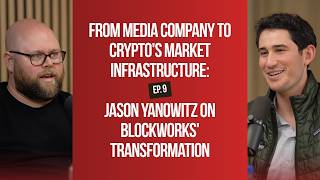
From Media Company to Crypto's Market Infrastructure: Jason Yanowitz on Blockworks' Transformation
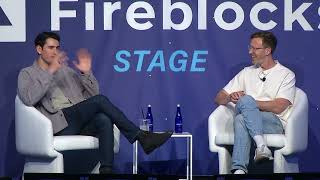
Stablecon 2025 - Fireblocks Stage: A Fireside Chat with Jason Yanowitz & Simon Taylor