How Jason Bootstrapped Blockworks to a $150M Business
Jason Yanowitz built Blockworks from a crypto media outlet to a $150M company by publishing hyper-specialized reports (one read by 47 people) that earned deep trust, then layered in events and a data platform. He raised $12M at $135M valuation from just three investors to keep editorial independence, and now sells multi-million-dollar bundles of data, sponsorships, and advisory services to strategic accounts.
Chapters
It's a game of resilience. How long can you survive? There's a fallacy that founders have this grand vision at the beginning. They write up the master plan and then they go execute the master plan. And in reality, there's never a master plan. Building a business is basically just putting one foot in front of the other for decades at a time and basically not running out of money. The riches are in the niches.
Yeah.
And so we didn't have the biggest audience. We had the hedge fund manager allocating to Bitcoin. Having 10 of those people for our sponsors and advertisers was more valuable than having 10,000 22-year-olds who had just graduated.
Your advice for a first-time founder would be to to start like a very niche B2B business and just curate the top 50 people in a very specific industry.
If I was 23 and starting over, I'd—
So Jason, I appreciate you taking the time. From flipping eBay cards as a kid to, you know, $1,000 side hustles in college, you're here. You've welcomed me into the studio.
Yeah.
At your $130+ million company today running it. It's insane. So I appreciate you letting me interview you.
Yeah, man. This is the first recording in the new studio, actually. You're breaking it in. No one we'd rather have in the studio. Oh, dude, you're putting a lot of pressure on me.
Me to, uh, to make it go right. But, um, sweet. No, yeah, I love it.
Let's—
I think let's just dive into it. Let's start from the very top. Yeah, you've got a very entrepreneurial family. I think it's super interesting. I think you said no one in your family, like your parents, haven't had a 9-to-5. Your mom and your dad, I think, are still entrepreneurs. Yeah, like tell me about growing up as, you know, a kid in this family of entrepreneurs.
Yeah, I didn't realize— so I grew up in California. I was born in Boston, grew up in California. I didn't realize at the time that I think my family, it was kind of a counterculture family, right? Very into like, you know, the health trends before they were, you know, before Bryan Johnson was talking about them, very into like, you know, not really working a 9 to 5. My dad started a company when he in his, in his late 20s. And, you know, since then has I've only, you know, seen him run his own businesses. My mom started a company and I think in her late 20s or early 30s and sold that. And so that's really, that's really the only thing I've known. So myself, my, you know, my sister doesn't work a 9 to 5. My brother doesn't work a 9 to 5. I think it was always just programmed in us that not even consciously, it's not like they were telling us like, don't get a 9 to 5, but it was very much programmed in us to be, I would say, counterculture, anti-system, anti, you know, kind of the man, the system, uh, and just, yeah, that the path could be what you wanted it to be and that you could kind of just go do things in life, and as long as you put in a ridiculous amount of hard work, uh, those things hopefully would work out.
Yeah, I mean, that explains your curiosity, like, you know, flipping eBay cards as a kid. Um, no, no, like, no normal kid does that, like, just because it's possible. And you thought like, hey, I can make better photos. Like, I think you've told the story where your, your mom was like, yeah, he just picked up these eBay cards and started making better photos, started writing better copy, and started flipping them online. Like, that's not a regular thing kids do.
Yeah, I think, you know, I did, I did all these things before Blockworks that were what people would consider very irregular, you know, abnormal for a kid to do. But I think looking back, I was, I was just chasing the ability to go build something and to go build it online and to not work the traditional, in the traditional system. Right. So yeah, you mentioned eBay cards, right? I would buy these eBay cards. I'd buy these, I think it was MLB Showdown cards on eBay. I would buy them. I would find the MLB showed on cards that had bad marketing, bad copy, bad pictures. I'd buy the cards, I'd get them, you know, bring them home. I'd take better pictures of them, rewrite the copy, and upload the exact same card onto eBay for twice the price, for double the price. You know, there was— I was trading FX currencies in college. I was, you know, I did this thing called Verve, which ended up— we're going to get into that in hindsight. Big, you know, probably a pyramid scheme. But, you know, when I was 18, I didn't really know that. So I've always been chasing the kind of the high of building, building something and making an impact.
Yeah, I love that. Let's talk about college a bit. I know, first of all, I think something really interesting and I love history as well. And you went to go study history. I think that's not the traditional like entrepreneurial path, right? Like it's usually something very high technical, like, hey, very alpha, like, yeah, let's, let's go, go, go. But I think it's super interesting you studied history. I want to touch about, talk about that a little bit and then we can talk about Verve, which I think is super fascinating as well.
Yeah, I mean, I would actually probably counter your take of that most entrepreneurs are like very high powered or study finance or something. In my experience, Yeah, so I studied history. My co-founder Mike studied classics, actually. So do not get him started on Roman and Greek culture and mythology and stuff like that, or you'll be— go down a rabbit hole. But I think if you— entrepreneurs are trying to find their own path in life and do something that is different, right? And the most traditional thing that you can do— all right, I went to Emory, which was very pre- I'd call it pre-career. It was pre-law, pre-medical, pre-med, pre-law, and very like pre-business, I would call it. So probably 95% of my friends in school, they were either studying finance. Yeah, they wanted to go into banking and then eventually go into private equity. They had that path lined up. They wanted to go be a consultant or they wanted to go be a lawyer. They wanted to be a doctor. And I remember sitting down, you had to pick, select a major. I think it was by at some point sophomore year. And the thought was basically, if, if I choose finance right now, I'm choosing the, the path, right? I'm choosing the path. If I choose history, which was my love, it is basically signaling to my brain that I'm going to pursue my curiosity for the rest of my life and not chase short-term profits.
That's awesome. That's awesome. So not being tied to that path where it's like if you did go and study finance, like, all right, this is then the next 3 years, then this is where I'm going to get a job. This is what my life's probably going to look like in 10, 15 years. And that's not necessarily the curiosity, different path you want to go down.
Exactly. And I figured I'd be doing, you know, big quotes around this because I didn't even know what this meant when I was 18. I figured I'd be doing business, you know, for the rest of my life. And, you know, if I was paying all this money to go to, to go to this nice college, I might as well actually study what I wanted to study.
Yeah. So I think that's awesome. I think, you know, probably because of the way you were growing up, like I feel like a lot of people I've talked to and I've obviously not talked to super many people, but, you know, feel the pressure from parents potentially to not do that or like not follow that curiosity. So that was probably helpful, I'm guessing, in actually being able to choose for yourself in that scenario.
Yeah, I think I had proven to my parents by my, you know, I call them online ventures, right?
Yeah.
By the side hustles that I, that I was, I was very self-motivated and that I could do something online. I tried to drop out of college my sophomore year. I was making, you know, roughly $1,000 a week.
Insane.
When I was 19 from this online venture thing that we can talk about if you want to go there. But I think I'd proven my worth, if that's even a thing when you're 19, but proven that I could hustle and proven that I was motivated and knew how to build businesses online, which in hindsight end up being very impactful for Blockworks.
Yeah, 100%. Yeah. Let's, let's talk about that. So you You didn't want to work at Taco Bell and you wanted to earn some extra money when you're at college. So that's sort of where Verve comes in, which I think, um, you mentioned something which we'll talk about later is like you've learned so much from Verve, although you wouldn't let your kids do it. Like, I want to talk a little bit about that. I think that's super interesting. But, um, talk to me about the aspect of just being in college and making $1,000 a week. Or like, talk to me a little bit about what, what is Verve? How did you get into it? Like, I think the kid above you, a year above you, talked about like, let's talk about Verve a little bit first.
Yeah. Um, I have a love-hate relationship even with talking about this because, you know, in hindsight it was a pyramid scheme, right? Can I just be very blunt and upfront and candid about it? Like in hindsight. But, you know, I only learned that as I got older and got more experienced and a little, little wiser about what this was. The backstory was my— when I graduated high school, you know, I was 18. I wanted to make some money. Summer, my friends were all hanging out at the park and stuff like that. I wanted to make some money. And my mom said, go get a job. She said, your friends are working at Taco Bell, go get a job at Taco Bell. And that for me, I don't know if it was a pride thing. I don't know if it was a Taco Bell thing. That was the last thing I was going to go do. I wasn't— I think it was probably realistically the 9 to 5 thing. I wasn't just going to go start working. Yeah, exactly. Get kind of compressed into this 9 to 5 system of going to work for the man and making 10 hours of, you know, $10 an hour and stuff like that. And so I refused to do that. Around that time, my— I had an older friend who was a couple of years older than me. He had just come back from college and he said, look, I've got this thing called Verve where it's an energy drink business. It's just, it's, it's just like Red Bull. But, you know, you see these ads on TV about Red Bull gives you wings and, you know, Red Bull actually spends billions of dollars on marketing and advertising. This company takes that budget, the billions of dollars that they spend on marketing and advertising, and they actually funnel it into the people promoting the products. So instead of buying billboards and TV ads, they actually funnel that money back into people promoting the products. I said, great, what do I got to do? He said, you got to go get 2 people to sign up for the product. You can kind of see where this goes. Yeah, I was too prideful, I think, to bring it to my friends. And I've always been conscious of like, I think just— I don't know, I've always liked like probably having people like me or being social. Like, doesn't— yeah, just like normal. I was going to college. I didn't want to get a bad rap in college, right? New school guy. Yeah, you don't want to be that guy. So I ended up learning how to do digital marketing and online marketing, and I learned about ClickFunnels, and I learned about landing pages, and I learned how to build a website, and, uh, I learned how to run Facebook ads. There's no TikTok at the time, and Instagram you weren't really running ads on Instagram at the time, but I really just started to master like online marketing. How do you, how do you post on social? How do you do, how do you write ad copy? And this ended up leading to, so I started building that when I was 18. By the time I was, you know, end of sophomore, by end of sophomore year, so I built it all freshman year, end of sophomore year, I was making, yeah, about, you know, $1,200 a week. It was $1,100, $1,200, $1,300 a week. The company had given me a BMW. For being one of the highest performers. And I had 4— I had, you know, a little embarrassing to talk about this at this point, but I had 4,600 people in my quote unquote downline. And that, you know, that was, that was, that was the story of Verve. And that was the story of like basically learning how to sell. It gave me— it taught me how to sell and it taught me how to do digital marketing in a really really young age.
Yeah, I mean, you know, a lot of things during that time were also still like being discovered. So the fact that you're able to master it that early, that's, that's super sick. Yeah, I, when I read about that 4,000 people down your funnel, like people in France, people—
I, you know, I was jumping on, I would get a call from this guy, I think his name is Aurélien, who's French guy, he was kind of the leader of my French team. And I think he was like 30 or 35 years old at the time. And he would text me, he's like, hey, like I've got a packed room. We, I forget what we call them, there's a name there, we had like code names and stuff, or if it was 50 people or 100 people or 300. He'd text me and be like, can you jump on Skype and pitch these people? I would, you know, skipping class every day, staying up till 4:00 AM, you know, to talk to people at all these like odd hours and, you know, people in the Philippines and, you know, in Singapore and stuff like that. And I'd get on Skype and I was like little, you know, 19-year-old in the dorm room. And I'd be like, you know, it's all, yeah, I mean, tell them, tell them about the vision of this energy drink, healthy energy drink.
And Dr. Oz says it's great, guys.
Dr. Oz. Yeah. You had all these like lines that we said. And again, in hindsight, not the best way to do something. But, you know, you mentioned this thing about would I have my kids do it? I, I'm very torn on if I would let my— if my kid was doing Verve.
Yeah.
Would I let them do it? Because on one hand, on one hand, it's a pyramid scheme. And I think there's a large group of people who would say, you— I mean, I would never even consider letting my kid do this. It's, it's, it's legal. It's like illegal. Yeah, exactly. On the other hand, You know, I've got many founder friends and friends who have built companies, and I think you've got some awesome interviews lined up for the rest of your trip. And I know some of the people that you're interviewing quite well, and all of them, not 90%, all of them have done something that to the general public seems like a scheme, right? Some weird thing. They've made money in a weird way. Maybe it's playing poker online. Maybe it was mining Bitcoin in their dorm room, maybe, and, you know, kind of milking the energy from the college. Maybe it was this Verve. Maybe it was, you know, trading crypto when they were 19 or something like all of them have done this kind of counterculture thing that to society seems like a scheme. Right. And, you know, it is a scheme in a sense. It was not a, you know, long-term sustainable thing, but it's like the lessons that it taught me, I don't think Blockworks would be here today if it weren't for some of those lessons. I'm very torn on it. Yeah, yeah, yeah.
That's super interesting. I mean, I guess, you know, as long as your intention— I think the intentionality is probably the most important thing. Like, are you doing this because it's the most curious thing and you're like, hey, I've got this way to make a dollar here and like this funnel thing I'm just learning about? Like, I think as long as you don't get carried away with it, like you obviously stopped, right? And sort of saw the light, I guess. And you weren't there to, you know, be malintentional. I think that's super important. But yeah, I can see your point of like, not everyone— like, you didn't want to be known as the Verve guy on campus for a reason, right? Like, you didn't want to go around promoting.
Yeah. Yeah. And it's like there's only— there's two very cheesy quotes that come to mind when I— when we talk about this. It's like there's the— I don't know if you've seen the Steve Jobs— I think it was the like 2005 Stanford commencement speech or 2010 or something. He says, you know, everything makes sense in hindsight. All the stars end up aligning.
Yeah.
All the dots end up connecting in hindsight. And for me, I mean, I remember junior year, my— I must have been probably 21 at the time. My roommate said, we like, basically, you got to grow up. You know, we're getting a job, we're getting internships in investment banking, we're going into finance, and you got to join us and you got to grow up and stop doing this thing. And I actually, I, you know, took his advice at the time and stopped doing it. But at the time, I was like, why did I just spend 2 years doing this? That was so schemey. And I started to realize what it really was. And But now in hindsight, it's like all the stars start to line up. And then the other thing that comes to mind is like, I don't know, I don't know who to attribute this quote to, but it's like, there's no such thing as failure as long as you're learning from each thing. And that is what something like Verve, I think, is for me, was just one, one massive learning, right? And, you know, it ended up being in 2017 when we were getting Blockworks off the ground, we had to post on social a lot. And why did I know how to do that? Well, it was from the, you know, 2012, like digital marketing learnings. Yeah, exactly.
That's fascinating. I'm going to skip over you going to Hungary. We can touch on that a little bit later when we get to Blockworks. But I think it's really interesting. You talked about, you know, you've just quit Verve, right? You're like, okay, what did I spend the last few years doing? My friends are all getting jobs. You end up getting a job straight after college. I want to talk about that phase just because it's something I was recently in. It's like, you know, you're done with college, your friends are all moving to a place, like you're moving to New York. Like, Talk me through that phase of not knowing necessarily like what the exact next step is. Yeah. Like, what was that like moving to New York and what decisions did you have to make?
I moved to New York with 5 of my best friends. All of them except for me worked out, worked in investment banking. Right. So I was, you know, I was the outlier and I was very— I was— it was one of the only times I think in my life I've ever felt embarrassed because they all got this job paying, I mean, the ridiculous salaries right out of school, like $100K.
That's insane.
You know, when you're 22, which was like, you know, more money than God basically. And I think, you know, my first job was I was making $1,500 a month. I'd get a, the boss would give me a check. It wasn't even, you know, online. It was literally a physical check, $1,500 a month. And then I made money from commission for the rest of it. And yeah, that was a period in life where I really, I knew I wanted to build something online, but I didn't understand how the game worked. I didn't understand Twitter. Like, I love that you're on Twitter and you're posting. You, you understand the game. I didn't know the game. I didn't know you could go raise— how to raise money. I didn't know. I didn't know how to break into that world.
Right.
So I remember I took the GMAT to try to get my MBA, you know, got a high score and I was like, should I go get my MBA? Should I? What should I do? And that was a— yeah, that was— that first year in New York was very much a like never— my mentality that year was like, don't say no to anything. Do not say no to a single thing. Actually, the first 2 years in New York, it was like, just don't say no to a single thing, right? I have no idea what I want to do. And yeah, just basically keep every, every, every door open. And eventually I think it's really important in life to completely 180 that and to go all in and to, to not hedge at all. But at that point in time, I was— yeah, that was, that was, that was really the first year in New York was just go to every event I could attend. Anytime someone invited me to something, say yes to that and just work my ass off.
Yeah.
Yeah.
Just keep getting skills. And I think that's, I think one thing I would struggle with and I think I'm even still struggling with is like, how do you not, like, how do you really focus on saying yes to everything? And then when do you know it's time to double down? Right? Like, when do you know it's time to say, okay, this really is the opportunity I'm most interested in? Like, does it just slap you in the face or?
I don't, I don't know if it slaps you in the face. It's basically, I think at the beginning, I, and I think you're, you're just out of school. It's like for me when I was 22 and 23, it was kind of a journey of jumping from one thing to the next where I knew, I knew my first job was wrong.
Right.
I was making 100 cold calls a day, which again, really great in the moment. Horrible.
Yeah.
You know, tried to take time off for Christmas. Boss said, no, that's the best time to make cold calls. Right. That was a, so definitely a big, uh, and at the time was, was really a tough experience. In hindsight, taught me everything I know about sales and cold calling and realize you can cold email anyone in the world and they'll maybe will respond. Uh, but for me, those first like 1 or 2 years in New York was basically jumping from thing to thing, trying to find something that felt a little more right. So let's say the first job I was working at this, um, kind of merchant bank venture firm calling, trying to get LPs to invest in the fund and in, in our companies. That was, I'd call it, 20% right. I actually knew that venture was really interesting, and it gave me an eye into tech companies and finance and how, how that kind of worked. But I knew I didn't want to be on the investing side. I really realized very quickly I didn't like investing. So that was 20%. But I was like, oh, tech is interesting. That's what led me to go join a tech company called Sisense. Israeli tech firm had raised like $100 million. They were going to market in the US. And that— I joined that, that felt like 40% right, 50% right. So I was like, oh, tech is the thing I want to be doing. Started to find my footing, but realized, okay, now I'm getting put into that 9-to-5 mold. I need to break— this is— if I don't go start a company now, I'll never start one. Yeah.
So you're at SciSense, right? Like, I think you grew the sales team where you were part of that, like, from 2 to 24 or something insane like that. That's insane, by the way. Like, that's crazy.
Yeah, we were having fun. I had the best mentors. Like, definitely the best mentor in my career at the time was this guy Cooper. And he, yeah, he brought brought me on to be the first sales rep, basically, um, with no qualification. I mean, my qualifications were I knew how to make cold calls. Yeah. And, uh, and yeah, we hired like 22 or 23 or 24 people in the span of a year in the New York office, started an Arizona office. And yeah, it was amazing. It was like, I— that's, that's where I learned sales. That's where I learned like you can go talk to 50-year-old, 60-year-old, 70-year-old executives and they'll listen to you if you have a really valuable product that solves their pain point.
Yeah, 100%. So during this time though, you're still like you mentioned, right? Like you're still okay, this is 40% correct. Like what, you know, you really do know you want to start a company. You go into these meetups. There is one meetup specifically you go to where there's two talks, one by Sam Alvins and one on crypto. Like talk to me about that meetup that you went to.
Yeah. You've done a lot of research. Very impressed. Yeah. So I, again, I was going to all of these things. So I would get, there was something called Brunchworks and New York. New York is the greatest city in the world for this, right? San Francisco is maybe a close second. And something like maybe London or Miami would be a distant third, but there's nowhere better in the world to find what you actually wanna do than New York. And so I was going to events every night, and I was going to events on Saturdays, I was going to events on Sundays, and at like 11 or 12 every Sunday, there was this thing called Brunchworks, and they'd feed you, they'd give you brunch. And by the way, you can, Brunchworks, Blockworks, you can actually see where the, you know. You can see that. Yeah, and so they'd give you brunch, they'd talk. Yeah. And they— there was a talk on Ethereum and I was pretty into Bitcoin at the time. Didn't really know about the whole industry, didn't know about crypto, just was into Bitcoin and went to this talk to hear from the CMO of a company called ConsenSys, which was kind of like the BD arm of Ethereum at the time. And this woman, Amanda Guterman, was speaking and I got there an hour early and heard from this guy, like you mentioned, Sam, Sam Owens or Ovens, I forget his last name. And he talked about how to build a consulting firm.
Yeah.
So I went, listened to his talk about how to build a consulting firm, then went to hear about Ethereum for an hour. Mind was immediately blown. That was like the— actually, you mentioned like, does it smack you in the face like this? That was the first— that was really actually the first like slap in the face moment I had, which was Ethereum. I want to dedicate my life to this for the next, you know, at least 10 years. I mean, I didn't know really at the time, but I was like, this is what I need to be working on.
Yeah.
Consulting was the way to work on it. There was zero passion for consulting, right? The passion was Ethereum and crypto and Bitcoin. So I came back, I was living with a couple of friends at the time. I said, let's, let's go launch a consulting firm. You're crazy. Yeah, let's go launch a consulting firm for Ethereum. And again, most of them were bankers. So 4 of the folks I was living with at the time were in investment banking and they said, absolutely not. Yeah, we're making all this money doing banking and we got these fancy models and discounted cash flows and all this kind of stuff. Ethereum doesn't have any of that. Yeah, it's a scam.
Yeah.
And one friend was crazy enough to say, all right, let's, let's go do this. And his name is Mike and he's now the co-founder of Blockworks. He said, let's go, I'm in. And we— the original idea was, yeah, consulting for like help, you know, Walmart and Disney move on to the blockchain. And we woke up the next day and Mike said, hey, Jason, look, unfortunately, I You know, I think this is a horrible idea. Basically, we are 23 years old. Yeah, I forget if it was 23 or 24. We're 20, 23 or 24 years old. Nobody's going to trust us, right? We first, before selling consulting, we need to build trust.
Yeah.
And we said, okay, well, we're, you know, I was like, I'm going to all these crypto events. They're really scammy. Bunch of 22-year-olds yelling Bitcoin's going to bring down the banks. We got to bring eventually, you know, one thesis that we got right was eventually this space will become this big institutional asset class. And it'll be a bunch of gray-haired folks coming in. They need a more trusted source of information. What if we went and started hosting events to talk to that— the Goldman Sachs, the family office, the, you know, sovereign wealth fund crowd instead of talking to the, you know, 22-year-old Reddit and Twitter crowd?
Yeah.
And so that was, that was the start of Blockworks.
Yeah, that's amazing. I mean, looking back, like connecting the dots, right, to your point of the Steve Jobs quotes, it's like, it's hilarious how obviously, like, no one's going to trust information from just Reddit and Twitter if you've never even been on those sites. Right. So definitely the thesis was right. Um, I find it super interesting. You've talked a little bit— you guys started out hosting like dinners and, and things like that, right? Before I want to talk about your first big event as well. Um, but talk to me a little bit about those dinners. Like, how did you go about that? Was it just cold emails, cold LinkedIn? And then what was the thesis behind setting up those like dinners? Like, you know, yeah, educate those people.
Yeah. So actually, what's the date today?
So is it 26th, 25th?
Okay, so our first event was Our first event was February 27th.
Yes.
Of 2018. So we're, you know, I guess, I guess this is the end of either today or yesterday or tomorrow. One anniversary. Yeah.
This weekend.
Today. Yeah. Today. That makes the story better. Yeah, exactly. Today is the anniversary. No, we— so we, when we were talking through this idea, it was December of 2017 and the market was— had just gone parabolic, right? Bitcoin had run from $1,000 to $20,000 that year. It was just you know, pandemonium. And, uh, we realized that some of the events we were going to were starting to make money. We, again, we didn't know that you could go raise money. We didn't. And so we had basically, we just said we need to build a profitable business. We got to make, we got to make more money than you spend. Obviously that's how you build a business. And so we said, look, let's give ourselves 90 days or maybe it was, I think actually it was 60 days. Let's give ourselves 60 days. Sprint at this. We both had full-time jobs at the time. We— but it was, let's call it December 27th. We booked a venue for February 27th and we said, let's go build this like institutional crypto event. Yeah. And kind of fake it till we make it. And so, you know, we both had full-time jobs. We would, we would both wake up at 4 a.m., pour a pot of coffee, walk out to the couch, sit on our laptops, and boom, fire into actually LinkedIn. Yeah, we'd pull up LinkedIn. We created an Eventbrite page and we'd say, look, You know, we're hosting this institutional crypto event. Got these people from Goldman Sachs speaking. Tickets are $50. But, you know, for you, my dear friend on LinkedIn that I haven't met— haven't met— I'll give them to you for $20. Yeah. And we probably cold messaged, I don't know, 10,000 people.
I think more. I think probably more.
Yeah, probably more if you do the math. And we got 210 or 220 people to come.
Yeah.
Made $11,000 top line, spent $6,000. $5,000 to the bottom line. We thought we were rich.
We're in business.
Yeah, we're in business.
Yeah.
And, you know, I remember at the time we each had about the same amount of money in our bank account. I think he had $4,500 in his bank account. I had $4,000. We put it all into the, into the company, into the event, and boom, we were off to the races. So we did that. Next event was May of 2018.
May 10th.
Yeah, exactly. May 10th of 2018. And Yeah, we thought we, you know, we thought we were unstoppable. We— and we actually lost money on that event. And to this day, it's still the only event that we've really lost money on. And we were panicked, right? Because just a few days before, we had just quit our jobs. May 1st, 2018, we had just quit our jobs and we were panicked and terrified. And yeah, we basically just said, look, let's host a few more events. This is— this is it.
Hope it figures.
Yeah. Yeah. I hope it works out. And if it doesn't, we can just go get jobs again.
Yeah. So, yeah, I mean, also, like, to your point earlier when we were talking about Verve, like, you just told everyone you're quitting your jobs, you're going doing this crypto thing, and then you lose money. Like, that must have been insanely scary.
There was a lot of— I mean, people thought— yeah, people thought that we had no clue what we were doing because we didn't. We didn't have any clue. They were right. They were right. But there was actually a lot of, like, much more judgment than I think we ever thought that people would have. Around this. It was from friends and family and, you know, ex-colleagues. A lot of judgment around like, you guys are doing— you're hosting events in like cryptocurrencies. And if you remember, the market had just, you know, topped the third week of December in 2017. So we were riding that straight into a bear market. Yeah, people thought we were crazy. And, you know, it's actually something I think about a lot because Uh, if you— there's actually a lot of— I think people when they start companies end up getting a lot more support from strangers than they do from their close friends. And it's something I— right, you might get, you know, I remember we'd post on LinkedIn and Twitter and, uh, actually we didn't even know about Twitter then. We would post on LinkedIn and people would say congrats and this looks awesome. And then our friends were saying this is the stupidest idea I've ever heard of. And so it's something I really try to do now is anytime a friend launches a product, a business, I'm the first buyer, right? The first person to text them saying congrats. And it's just a good, good life lesson, I think.
Yeah, that's awesome.
Yeah.
I mean, I want to talk about this later, like philosophies and stuff, but you've mentioned before, like, you know, unless you're a founder or an entrepreneur, unless you've built something like, you know, it's very— it's a very unique experience and it's not very comparable to a lot of other things. And yeah, yeah, like that, that journey, it is quite lonely.
It's— it wasn't lonely because I had Mike as a co-founder. It was extremely Every day that the— it, you know, you are on this path of building company is you've— the further you get from like the traditional 9 to 5, I would say. And yeah, I mean, the amount of stuff that would happen to— in one day as a founder, I think is the equivalent of maybe a week or two of working in a traditional finance job or traditional media job or something like that. And so, and it's a game of resilience is like building a company ends up just being a game of resilience and how long can you survive.
And so hopefully, I mean, yeah, if you're working in a bear market, that's resilience at its peak.
Yeah, yeah, yeah, exactly.
That's awesome. So, um, your third event, you, you, you message Pomp. I want to, I want to, I want to say this quote. I think it was hilarious when I read it. He said, um, so I want to talk to you about how you got Pomp first of all, like that, that was awesome. And then convincing him to come. So he says, um, this is about the event. He says it was in a little, you know, sketchy part of town. There was a second there I was like, I may be walking into a complete scam. These guys might try to kill me. And then he noticed there was food and he's like, okay, they must know what they're doing.
I forgot Pom said that. Yeah. So Pom, you know, we realized nobody knew us and nobody trusted us. And like Pom said, he thought, you know, are these guys going to kill me? No, we were hosting these events, but we had no business hosting these events. And so we said, how can we basically bring credibility to our brand and get people to trust us? Ah, I see. Okay. We are, we are now in the business of bringing bigger names than us and bringing experts to the table. And that is how we will basically, we basically use other people's credibility to bring credibility to Blockworks. Right. Right. I guess at the time we're called Blockworks Group. And that we just went after the biggest names possible. And at the time, this guy, yeah, Pomp had, I think, 70,000 or 80,000 followers on Twitter, which to us was this massive— he's the biggest finance celebrity out there in our minds. And so we emailed him like 8 or 9 or I think probably 10 times. And on the last I think the 10th time he said something like, I'm in Japan, I'll be back in New York. If you stop emailing me, I'll speak at your damn event. Something along those lines. And I said, also, can I get a ticket for my, for my girlfriend, who is now his wife? And I said, I said, you said, yes, you can get a ticket for Paulina. And, and amazing. I'll stop emailing you. But here's the event. It's— I think it was June 26th or July 26th. And yeah, it was— we rented a— we realized at the time we had to really decrease our costs. Because we had just lost money on the, on the May event. So we got the sketchiest loft in Chinatown, actually, right across, right, right when you get off the bridge from, from Brooklyn. Really shady, sketchy loft in Chinatown. And we didn't get sushi. We got, you know, like we did the first event, we got really crappy food, some chips and stuff like that, and some dips. And yeah, we just brought— I remember it was Martin Garcia, Mike Buscella, Pomp, and, uh, and, and, and one other person to the table. And there were all these credible trustworthy folks, right? And, you know, ex-Goldman and ex-Barclays and things like this. And yeah, that event was— that's when we, we called that event like the Institutional Crypto or something like that. That's when we realized, ah, the niche here, the way that we can break into this industry is going institutional crypto, right? There's a, there's a gap in the market. If we try to take on CoinDesk or Cointelegraph or any of these big players, we won't make it. We have to capture a niche and own the niche.
What made you think that? Is it because of the people that were speaking at the event, the types of profiles and like—
We— you can, you know, when you have product market fit with something, it doesn't just have to be a product like event market fit or whatever it is. It will slap you in the face. It will pull the demand. The demand will get pulled out of you.
Right.
And the demand was not— we pushed the supply onto the— onto people for the first two events. This event, because it was just focused on finance and capital markets, the demand got pulled out of us. And, you know, we started instead of giving discounts, we didn't have to give discounts. We ended up doubling the prices for the next event, which caused even, even more demand. And that's when we realized like, okay, all these big businesses, right? Facebook started with, you know, just the dorm rooms at Harvard. Craigslist started with just meetups, you know, in San Francisco, actually. EBay started with just, I think, Beanie Babies or collectibles or something like that. All of these big businesses, they started by owning a small niche, right? And for us, we said, what is our niche? Our niche is institutional events.
Yeah.
And every year of Blockworks is basically just a story of layering on more and more and more, going after another niche, capturing that niche and adding it to the basically the portfolio of Blockworks.
I love that. We can talk about that in a bit. Like, you know, the house of brands idea and, you know, sort of going niche and not just wider each time. I think that's super smart and something I don't think a lot of people do, especially as they grow, right? Like trying to grow a company like, okay, we just go wider is like, I think the default. Yeah, but, but going niche is really interesting.
Well, we were— it was also a force. Not having money is a forcing mechanism, right? So if you go raise— if we had went and raised $40 million, we probably would have tried to do that. Yeah. It's one of the reasons why raising, raising money And for media, historically doesn't work, right?
You have to go big.
In that case, you have to go big. The problem with that is media is one thing, right? It is trust with an audience and you can't throw money at— you can't use money to buy trust. So you have to do it for years, years and years and years and years. And that's why— that's why media companies get acquired. And oftentimes you can't buy, you know, build them in-house because you can't build— like if Bloomberg went and tried to build a crypto arm, I've tried many times. They're not going to be able to do it. Promise you they're not going to be able to do it because the industry doesn't trust them. Right. So you can't use money to buy trust. And so that's, that's actually what I think for anyone listening to this who's thinking about building a media business, as I, as I know you are, even if the money's on your doorstep, I wouldn't go raise that money.
Yeah.
Until you start maybe building out the product at the bottom.
Right.
But we get to that.
Yeah. You guys are doing that now, right?
Yeah, yeah, yeah.
We could talk about that. I love all these takes. It's so fun. Let's talk about podcasting. So, you know, Pomp comes to this event. He's basically like, hey, I want to run this podcast. Jason Yanowitz, can you help me run it? And you say yes, even though you have no idea what to do. Yeah.
So we had a newsletter that I wrote on Sundays. It went out every Sunday and it was like the weekly crypto update or something. It was just an aggregator, no unique takes. And we would auto-add, you know, I guess at the time, you know, maybe not GDPR compliant looking back, but we would auto-add anyone who attended our events, including the speakers. To, to this newsletter. And, you know, 2 weeks after auto-adding Pom to this newsletter, he emailed us. I remember this so specifically. I was sitting at my desk in our apartment and, you know, Mike was in the room over in his office, in his bedroom. I was in my bedroom and he was in his bedroom. And I was like, oh my God. I was like, Pom just emailed us. He said, the email was like, what do you guys do? Would be great to meet and learn more. And we were freaking out, right? We were running in the living room like, oh my God, Pomp wants to meet us. We had, you know, one, uh, either no employees or one employee at the time. And the employee was like Mike's friend from high school who would come to our living room and stuff and we would pay him on Venmo. And, uh, yeah, we go into his office. He's like, look, I want to build basically— I want to become the Joe Rogan of business. Uh, first step of that is building a podcast. Do you guys know how to build a podcast? Do you want to do it together? I looked at Mike, Mike looked at me, we said, Absolutely. We do. I knew nothing about podcasting, obviously. Went home, Googled how to create a podcast. Turned out you could use 99designs to create a cover image. We had a friend from college who was a DJ. He created the intro outro music. I learned— I like spent, I don't know, 20 hours and 3 days learning how to edit using GarageBand and boom, we, you know, we Googled like the mics, you know, buy some Shure mics and stuff like that and off to the races. And so, yeah, we told Yes. And that was a smashing success.
Yeah. So you're getting into podcasts. I mean, I think you've said you didn't even consider Blockworks like a media company at the time until like 2021.
Yeah.
Which is hilarious, you know, considering we didn't know.
Yeah. There's this one, maybe one thing I'd love to talk about is, yeah, I think founders and I, you know, I know you're interviewing all these founders who are 10 times more impressive than me and they've got these multi-billion dollar businesses or IPO or whatever.
Right.
I think there's a fallacy that founders have this grand vision at the beginning, right? That they've got— they sit down, they write up the master plan, and then they go execute the master plan. And in reality, when you talk to these people, I think what you'll find, and what I found, is that there's no master plan. There's never a master plan. And building a business is basically just putting one foot in front of the other, right, for years and actually then decades at a time. And not failing and not basically not running out of money and yeah, like just being resilient. And so for us, we— today it's really easy. There's a really nice story we could tell, which is we wanted to build the Bloomberg for crypto from day one and build a media business. And in reality, what it more looked like is we wanted to stay alive and we wanted to keep building good products that the industry wanted. And we loved the industry. And we love creating content and we love bringing people together. And so we launched with events, then we launched with podcasts, or then we launched a newsletter, then we launched a podcast, right? And then we woke up one day and 80% of our revenue was coming from events. We said, what are we doing here? And then COVID happened, 80% of the revenue went away. And that's when we realized we had to build this media business. But I just want to touch on that because I think it's a— I see these tweet threads about like the grand vision of all these companies. There's no grand vision. It's just putting one foot in front of the other.
Yeah, I love that. I think this is why this is so cool. And I've got a lot of value out of just researching how Blockworks was started, right? And I think hopefully that's what the podcast can achieve too. It's like, you know, you started with events, but you didn't even necessarily do institutional events until that third or fourth one, right? And so it's just a path of getting there incrementally until you sort of figure it out. And I mean, I guess you guys are probably still doing that to this day, right?
Still doing it.
Yeah.
Still doing it. Can do it, you know, for decades long. Today, tomorrow. Yeah, exactly.
That's awesome. Yeah, I think that's super important because, you know, it is 2020, like, you know, 80% of the revenue does drop. And you, I think Julie and Mike, you know, you're going into the city every day like, what are we going to do? Yeah, you know, how are we going to get more money? We've got this podcast kind of going. So I think that's really interesting. I want to talk a little bit about during this era, like, you know, you're sort of running these podcasts, you're becoming a media company at this point, right? When did you guys figure out you actually needed to own the IP? Because a lot of the, like You cut off an arm basically that was giving you pretty good money and that was generating a lot of money. Like, how did you go about that? That seems like a tough choice.
So every year at Blockworks, there's like 1 or 2, like big thorny, like big meaty problems of the business that just suck up all of our time and attention. And in 2019 it was that. So, okay, so the Pomp podcast, maybe to give a little background, Pomp podcast ends up being really, really successful, right? And, you know, we went from in 2018, we made $200,000 top line. 2018. Let's see if I get this math right. 2018, $200K. Then in 2019, we 10x that to $2 million. We're like, oh my God. And that was because of the podcast. $2 million. 2020, $3.5 million. We're like, oh my God. So it was coming from the podcast and the podcast. The reason for it was we started partnering. We basically copied this. Playbook that we had done with Pomp, which was we'd go to these big influencers, the big names, we'd launch podcasts with them, slash for them, right? Ryan Selkis, who was running a company at Messari at the time, is no longer there. Meltam Demirz and Jill Carlson, Charlie Shrem, Scott Melker, these huge influencers in the industry. And we'd go to them and say, hey, you've got this big following, why don't we launch a podcast with you? And we would do a very simple revenue split. 50/50 rev share. Yeah, we would edit all the shows, edit the video, sell the ads. You're the talent, you get 50%, we get 50%.
Show up.
What ended up happening, because we knew nothing about media, is we never structured the— we didn't structure the deals correctly. We didn't know. We never actually sent a contract to someone. We didn't.
It was just handshakes.
Handshakes. All these were handshakes. And so what ended up happening is they would say over time, hey, this show is starting to make real money. I've got more leverage than you guys. I think I should get 60% and you guys should get 40%, right? 6 months later, I think I should be 70 and you guys should be 30. I think I should be 80 and you guys should be 20. And, uh, that was really tricky for us because we didn't, we didn't understand how IP and how leverage between a company and talent really worked. We didn't understand how Barstool worked. We didn't understand how someone like Axios structured their contracts with journalists. Like, we didn't understand how any of that worked. And so what we ended up doing is at the end of— in 2020, when COVID hit, we actually were making— 80% of our revenue was coming from events. But, you know, that obviously got wiped away because of COVID The rest of the revenue, the thing that was keeping us afloat was podcasts, podcasts with these Charlie Shrem and Pomp and these folks, we actually went to all of them in a 1-month period and fired all of them. We said, I mean, not— and we did it a very nice way. We said, take your show, right? Scott Melker, Wolf of Wall Street. He's still got the show that we created, Pomp, the Pomp Podcast. He's still got the show that we created. Charlie Shrem, he's still got the show that we created. We said, this IP is yours. Take it. We're done with this. We're done with this agreement. We need to launch shows in-house. We need to own the IP. The hosts need to work at Blockworks. And, and that was the start of— I mean, at the time it was one of the scariest, maybe the scariest things we've ever done because we basically reset our revenue again. The events revenue had like millions had gone to zero and the podcast revenue, we were saying we're bringing it to zero. And that, yeah, that was, that was scary.
Yeah.
But that was a, that was a necessity for what we needed to do, which was in 2020, we realized we needed to become a media business. January 12th, 2021, we launched the actual media business.
Yeah.
With in-house newsletters, in-house podcasts. We rebranded from Blockworks Group to Blockworks. We launched the editorial site. We'd hired the journalists.
Yeah.
Everything needed to be in-house. We needed to own the IP.
Yeah. How soon after you made that pivot, like, you know, you're working on the rebrand, you pay a lot of money for it. You're like launching all these things. You're trying to hire new people. How long after that did you really start to feel comfortable? Like, okay, like the revenue's coming in now. Like, you, you, were you generating revenue from day one that you did the relaunch? Like from, those newsletters and podcasts, or—
We were because— so events started to come back in 2021, but also we had hit a nerve with the industry in a good way, which was there was still no good— you know, The Block existed and Decrypt and Bankless was just getting started and CoinDesk and Cointelegraph. But they were all— no one was doing a 10 out of 10 job at covering the industry from an institutional lens.
Right.
And that was our bread and butter. We said, look, there's all these capital markets players, family offices, hedge funds, macro funds, liquid funds, venture funds, sovereigns, endowments, allocators, big allocators, single-family offices, multifamily offices, RAs, financial advisors who need to learn about crypto. They don't want to go listen. They don't want to go read Cointelegraph. They want to read something that feels buttoned up. So we hired people like, you know, Casey, who's— who you met earlier today, you know, from Bloomberg and these great journalists and reporters and and we covered the institute, the industry from an institutional lens. So if you were— so you asked about— to tie this back to your question, you asked if we were making money. If you were Coinbase or Gemini, you had to— you had to spend money with us because let's say you're— let's say you're BitGo and a big custodian. You want to reach the hedge funds. There's no Facebook ad that you can run to go reach, you know, liquid hedge fund allocating $100 million to Bitcoin. There's no way to reach them. You can't go spend that money with Bloomberg, CNBC. There's no events that had that. There's no Facebook ad you can run. And so we're the only shop in town where you could do that.
Yeah, that's awesome. Yeah. Again, to your point earlier of like when, when this product market fit, like, you'll know niches, the riches are in the niches. Yeah.
And so for us, like, we didn't have the biggest audience. Our audience was probably 1/100th of what, you know, something like CoinDesk was at the time. Right. But we had the, we had the powerful audience. Yeah. We had the hedge fund manager allocating to Bitcoin. Yeah. And that was having 10 of those people for our sponsors and advertisers was more valuable than having 10,000, you know, 22-year-olds who had just graduated college.
That's amazing. I think you either said in 2021 or in 2022, you said, you know, the strategy for Blockworks at the time, you said this was always going to be more niche, to go more niche for each customer. I think you probably kept doing that, you know, with the house of brands going niche and serving them. Do you think that's— you guys have still kept doing that to this day or?
Yeah, we will always keep going more niche. So there was a really pivotal moment in time for us in 2023 Mm-hmm. Like trenches of the bear market. And I know I'm kind of jumping around chronologically here, but trenches of the bear market, everything was down. Page views were down across the whole industry, right? Prices were down 50%.
Ads were down.
Ad dollars were down 50%. Page views were down 90%. Nobody's listening to the pods. Nobody's reading the newsletters. So if you're a media business, what do you do? There's a leadership meeting. Everyone's having the same meeting. What do we do? What do we do? What all the other media brands did is they said, we need more views, we need more eyeballs. Let's go basically dumb down the content instead of— we were all doing like 201-level content at the time. All of our competitors went to 101-level content, right? They started writing pieces like, what is Bitcoin, right? What is it? What is Ethereum?
Like, those people don't care anymore.
And they were going after, you know, Google search traffic, things like that. We took a different approach, which again, actually at the time it doesn't feel scary right now, but at the time was a really scary decision, which is we said, we said the most powerful group of people are the crypto natives who have stuck around and are building businesses on-chain in the industry and, and the investors who stuck around too. And so we said there's all this interesting, interesting stuff, liquid staking, restaking, right? DEX volumes were, you know, growing, that kind of stuff. We said, look, let's talk to the audience. Let's write for that audience instead of trying to dumb down the content. Let's make even more niche content. I remember we wrote a liquid staking report. We were the first research team to publish a liquid staking report. It got 47 views. 47 views, right? Yeah. You know, like, you know, if you were another media company, you saw 47 views. I mean, it's panic. But the 47 people who are reading about liquid staking, they said these are the smartest people in the room. Yeah, this is— I've got extreme trust in this brand now. And when the bull market came back, those people had deep loyalty and trust and valued Blockworks as a brand. And that's what ended up leading to our house of brand strategy, which we could talk about.
Yeah, interesting. That's so cool. Yeah, I love that. Yeah, it's— you're providing value as opposed to just like, hey, can we just get more views? It's like, no. Let's actually figure out who's— I mean, it sounds very basic in retrospect. Like, you're a media company, let's figure out who's reading this. Let's just try and be as valuable as possible. And obviously the further down funnel you can get, like the more value you can capture and deliver on.
Yeah.
Talking about, you know, let's talk a little bit about you guys raising money.
Yeah.
I think it's really cool. You only raised from 3 people.
Yeah.
Which I think is very unique. Why did you decide to raise money? I think you raised in 2023. What was that process like? And, you know, why did you— like, because most media companies, to your point, like, you don't want to start off by raising money.
Yeah.
And I think the fact that you guys did it sequentially is really important. So what was that decision like to actually go, go and raise that money at that time?
So 2020, we realized we needed to build the media business. 2021, we launched the media business and revenue really started booming, right? We had gone from $200K of revenue to $2 million to $3.5 million to $12.5 million to $25 million. Right. Things were starting to really get big on the media side. We realized that media, long-term media is a horrible business model. Actually, it's a, it's a, it's a horrible business model. We said, let's go. What should we do? Let's— should we— I mean, should we do a SaaS business or something like that? We said, actually, no, SaaS is also a horrible business model. We looked around at all of, all the SaaS businesses, both in crypto and outside of crypto. We said SaaS is a horrible business model too, right? You go raise, you know, $10 million, $100 million. Let's say you go raise $100 million. $50 million goes into Product and engineering, $50 million goes into marketing and sales. Customer acquisition cost is too high to sustain the business. You get stuck on the VC hamster wheel. So we said, well, what, what is a good business, right? If media sucks and SaaS sucks, what's the good business? And we said, we look, we, I mean, we spent a lot of time thinking about this and looking at this. We said, ah, there's a model that looks basically media by itself, tough. SaaS by itself, tough. Combine the two, you've got a business where you have a product at the bottom that drives really sticky, high multiple, really valuable revenue and ARR. And at the top of the funnel, you've got the thing that all SaaS companies want, which is the distribution and the audience. And you're not only is your customer acquisition cost for the SaaS business not— no, nothing. It's profitable. It's negative because the media business is actually making money from sponsorships and ads. So the media business is getting paid to build an audience. Then you can drive that audience into the, the AR, the software product. Um, and we call that a negative, we call it, you know, we have right now negative customer acquisition costs. If you built out a CAC model, we have negative customer acquisition costs. So we get, we get paid to acquire customers. So, so at the time we said, okay, let's go, you know, we now, now thankfully it worked, but At the time we said, this is the, this is the vision, right? We need to go build a research and data platform. We had just launched the research platform, just a research platform in May of 2022. We said, we think the value is going to be in the data. To build a data platform, you need money.
Yeah.
And the media business was spitting off nice cash flow. I think in 2022 we did like maybe $6 or $7 million of EBITDA. So it's spitting off nice cash flow, but we needed a little bit more. So we went and raised Yeah, $12 million at the $135 million valuation from, from these investors. And there's a, there's a really conscious decision that we made, which was instead of media is about trust, right? In one word, media is about trust. The, our biggest fear with raising the money was that people would stop trusting us, right? Because so that's like a different— now, now you're owned by, you're owned by the VC. What, you know, I don't know the narrative, but like maybe you're owned by the VCs or like you're not independent. So we said, let's go talk to some of the most— the people that— there are 3 people who we trust the most in the industry, who we've known for years, who we trust the most. It was Mike and Michael and Vance at Bell Curve, or excuse me, at Framework Ventures. Why do we trust them? We had hosted a podcast with them called Bell Curve. They were co-hosts of one of our podcasts. It was Santiago, who's just an angel investor. Why did we trust him? I had hosted a podcast with him for 3 years. So these weren't new investors. These were people I had known for years. And then we got Dan Tapiero, a fund called 10T, to lead the round. Why? Because we had known Dan for years. Dan had been really, really supportive of Blockworks. He'd been speaking at our events and he believed in this connection of you got to bridge the old world with the new world. Right. And Blockworks in his mind was— and in our mind too— was the bridge that could do that.
Yeah. So I think you've proven that to be true. That's—
that's right. I'm trying.
That's awesome.
Yeah.
Yeah. No, it's fascinating. I think let's take a little bit of a step back. You mentioned the research and development arm. There's basically 4 arms to Blockworks, then we can talk about you guys sort of becoming a data company. But I think it's really interesting. You mentioned the negative CAC model, right? Like, so you've got the conference arm that spins up the media arm, you know, kind of in sequential order. And then you release this sort of research and development arm. And that's where that negative CAC sort of comes into play already when you launched that in 2022, right? Is that correct? Like, is that sort of—
Yeah, basically. So historically, historically, we're just a media business, right? And just sponsorship, right? Media and events. Excuse me. So we had media which drove into, which drove into this, I guess at the bottom of the funnel was a product which was our events. Right. And that actually worked really well. Right. Went from like $200K in revenue to $2M to $3.5M to $12.5M to $25M. Like, you know, I can share other numbers too, but that, uh, that was working really well. And we're spitting off a lot of cash flow, but we realized, look, if we want to, you know, one day take this thing public or, you know, you know, whatever we end up doing with Blockworks, we need to build, we need to build a research and data platform at the bottom of the funnel. The other reason for this was this is what the industry needed, right? So, um, if you look at what the industry needed from like, let's call it 2017, 2018, 2019, 2020, it was like we call it kind of soft information. It was like news and podcasts and newsletters and things that helped an investor stay up to date, right? As the institutional capital actually flooded into the industry, that institutional capital needed a platform. They needed what we call hard information, right? Like data and research. And they needed— it's like this part of the block works, keeps you informed. This part helps you make investment decisions. So, you know, on the top of the funnel, like media, we have an audience of like, you know, roughly 20 million people who are deeply crypto native, institutional capital, basically have a lot of money either on-chain or invested in crypto. Middle of the funnel, we bring those people together in communities, right? We have communities for all of our brands and we bring them together in person at our— we own two of the biggest conferences in the industry, Digital Asset Summit and Permissionless. Those conferences. The media does one, does basically owns the distribution layer, builds trust in the industry. The events make a bunch of money and kick off a lot of the cash flow. Cash flow gets reinvested to hiring, you know, product, product people and engineers, which is the bottom of the funnel, this research and data platform.
Yeah. So yeah, I mean, I think you've said you guys sold when you launched it like more than $1 million worth of, of research and like, you know, consulting when you launched the advisory arm. I'm jumping ahead a little bit.
Yeah. Yeah. So then we have a, for another bucket which we only launched last year, which is advisory. So advisor— and this is very separate from research and data, I'd say, which is that research and data is this beautiful, like, recurring revenue. People like, you know, I don't know which customers, like a lot of the big hedge funds and financial institutions.
Yeah.
Use our— buy our data basically and subscribe to the platform. What ended up happening is a lot of the protocols, the, you know, Uniswaps and Athena Labs and Arbitrums of the world, the biggest protocols in the world, started looking at our research and data team saying, hey, these guys know more about my company than my employees do. Yeah. Can we hire them?
Yeah.
And can we get their take on how do I run an incentive program? What should I— how do I— how should I spend my treasury? What should my budget be this year?
Right.
How do I do a go-to-market plan? And that's what led to us. We launched— we have a fourth bucket called Blockworks Advisory. We launched it, I don't know, maybe 6 months ago. It'll do several million bucks in its first year of business.
It's awesome.
And we go to the protocols. We basically help the protocols make better decisions. Yeah, data-driven decisions to build better businesses.
You can think of it as more of an on-chain BCG, McKinsey, Bain company like that, which again, only you guys can do this really because you are going so niche. And the only way you're able to do this without, you know, spending or raising a ton of money specifically for this is because you already had that trust, right?
Exactly.
That's so cool. Yeah, that's awesome. Let's talk a little bit about just like media in general and like just businesses in general. I think, by the way, I think this thing is so underrated, like the way you guys built Blockworks. I think you've said something like your advice for a first-time founder would be to start like a very niche B2B business and just curate the top 50 people in a very specific industry. Is that true? Like, would you still?
I would do, yeah. If I was 23 and starting over, I would basically, pick an audience that was a topic I was really, really interested in.
Yeah.
Try to build something at the distribution layer. And distribution doesn't have to be big, right? Distribution can be 20 people.
47 page views.
Right, exactly. 47 page views. And it would be like dinners. It'd be something in person. It would be dinners or events or something like that. I'd bring those people together and I would figure out their pain point. Right. And maybe their pain point is, you know, for us it was at the first couple of years, it was top of funnel information. It was like, we just need a way to stay up to date with the industry. And we, we skipped over this one part about in 2019, we were hosting these— in 2018, these family office dinners with some of the wealthiest families allocating to crypto. And they gave us a really clear understanding of what the industry was missing because we had— we do 50 dinners with 15 family offices who are all allocating hundreds of millions to the industry. And they would tell us, Hey, I want to— I want a podcast. I've got a tech podcast and finance podcast. Why don't I have a crypto podcast? So that kind of informs. So that's what I would do if I was a new, a new entrepreneur. I would starting off, I would, I would probably try to get the most influential people in the room together.
Yeah.
Via cold emails, cold DMs, whatever it takes to basically get these people in the room and start building community and then build products off of that. Yeah. Yeah.
That's awesome. I mean, that is literally what you guys ended up basically did, right? Like, so yeah, that's—
yeah, I also think like, you know, I see a lot of people using these AI tools. Not so— for now is the best time to build a company in the history of the world, right? You can build a company for, uh, barely any money. Yeah, 99% cheaper than you used to be able to build it. Uh, the first wave of this was like, was probably, you know, moving from on-prem to the cloud and, you know, SaaS businesses and Salesforce of the world. The next wave was like empowering people who don't really know how to code with like no-code, like Squarespace and things like that. Our first website was Webflow and then Squarespace. The third wave that we're on right now is, is this AI wave, which is— I mean, you can go on Replit or Cursor, Instantly, v0, build, build a full— not even just used to be able to build a functioning website with something like Squarespace. You can build a full functioning product and app, right, without knowing any code. You don't have no JavaScript, HTML, CSS. You can go build a full functioning app in a day. Now is the best time to build a product. The problem that these entrepreneurs are going to run into is really good products will get commoditized. The really amazing products were, were the value, I think, in the last 10 years. Now it's going to be so easy to go fork a good product or just build a good product that the two most valuable things end up becoming proprietary data.
Right.
And proprietary distribution. Yeah. So that's why I think it's really important. So proprietary data, very tough thing to start with. Proprietary distribution, much easier thing to start with.
Right. I mean, that data is what you guys are doing, right? Like right now. So that's super interesting. How, so basically just to sum it up, it's like just follow your curiosity, find the most influential people in the field or topic you're most interested in, like whatever random thing that is, and then just start curating dinners and just a community for them to sort of see what do they need. Let's sort of build up this distribution of trust with them and build a media business sort of that way and then launch something that's more, you know, proprietary with, with data.
Exactly. Exactly. So I see all these— there's all these, um, like big newsletters that have started, right? So they've got, you know, maybe hundreds of thousands of followers, millions of followers. The next thing for them to do— so they've got the proprietary distribution. That's amazing that they've been able to do that. But eventually that business runs out of steam, right? Or, you know, maybe— but I think it does. It runs out of steam.
It's a plateau.
At least I would be thinking— yeah, exactly. I would be thinking if I were them, You've got proprietary distribution. How do I build proprietary data on top of that? Yeah, well, you've got a million followers or subscribers.
Ask them.
Go ask them. Go ask them. Excuse me. There's a million businesses you can build off, a million different proprietary datasets, right? You can build off of them. So I'd start by building these proprietary databases and datasets off of those people. It could be first-party data about your, your users. It could be their personal preferences. You could go— there's like, there's so, so, so, so much that you could go build off.
I think the interesting thing is like one, when you start off with data first, like you don't have that information of actually what to build. How did you guys like at Blockworks, was it again like getting pulled out of you where like, okay, this is the data these people really need to start making better decisions or?
No, definitely not. This was actually a thesis. So in crypto there are 3 different types of data, 3 different really important types of data. There's market data, social sentiment data, and on-chain data. Market data would be, I don't know if you are into crypto or not, but like would be like if Coinbase, OKX, Bybit, Binance, like the exchanges own the data. Very similar to tradfi data where Nasdaq and New York Stock Exchange own the data. This is like tick data, volumes, open interest, derivatives data, things like that. That's market data. Then there's social sentiment data. How are people on Twitter feeling? Right. Are people feeling greedy?
Fear and greed.
The fear and greed index. That's social sentiment data. We thought that there was a bucket of data that the whole industry was missing.
Right.
Which was which was on-chain data. And the thesis behind this was that if you look at the industry from the first 5 years of the industry, there were no companies, right? 2009 to, let's call it 2015, there were no industries. It's just Bitcoin. Then you get 2015, Ethereum launches. And now what happens is you can basically launch tokens. So all these tokens start launching. So with the launch of tokens, you get the centralized what people call them, CeFi, centralized financial companies, the custodians, the exchanges, the lending borrowing platforms, Coinbase, BitGo, Anchorage, Fireblocks, those kind of companies. Yeah. The net— and they built great businesses. They raised a lot of money. Coinbase is a public company now. There are a bunch of them raised to billion-dollar valuations. The next wave of these companies. So that was from, let's say, 2015 to 2018. 2020. Okay. In 2020, DeFi Summer happened, which was all these DeFi protocols actually started getting users led by this one called Uniswap. And if you're a traditional investor and you look at this thing called Uniswap, it's this weird esoteric smart contract, right?
What does that mean?
It doesn't make— doesn't make sense. It's like just pie in the sky. It's like trying to explain what the cloud was, right? You know, in the, you know, like 20 years ago, it's like, I don't see anything up there. How's my data up there? And that's how That's how traditional investors treat these protocols today. Right. But when we look at the protocols, you can actually, because they're all on blockchains, right, they're built on things like Ethereum and Solana and Base. You can actually— all the data of these companies is public and that's the on-chain data. Yeah, right. So we, when we look at the on-chain data, I can actually see, hey, these things are getting more and more users every day. And they actually are spitting off a bunch of cash flow. Right. So now I can start to build what looks like a P&L for Uniswap and I can start to build, you know, the real economic value, which is a metric that we created here of something like Solana and Ethereum. And so I can start to— so anyways, that's what we're very excited about, this thing called on-chain data, because we think that's the most important data set in the industry.
Yeah. And that doesn't really exist right now. Or if it does exist, it's in many different places and not very well aggregated.
Exactly. Exactly.
And you guys bring the trust element that like, you know, people have trusted you. You've been doing this, you know, nearly a decade now. So that helps a lot. I feel like that's super dangerous though. Like how long did that thesis take to cultivate? Or like, you know, what signals did you see that sort of gave you conviction to actually like say, okay, this is the data? Because I feel like, you know, the data is already out there. Like that's super hard decision to make because a lot of the time when I see like, you know, data businesses, you know, that start from a data perspective, it's like nobody actually gives a shit about this. It's like no one cares. Like, how did you— is it because you cared and you guys are so, you know, within the industry?
We were so deep into the— it's, um, it's like solving a problem you guys had. We had— that was the problem we had. Yeah, exactly. It was a personal problem. So we would see on-chain data that other people were posting from other, you know, I'll put quotes around this, like, data companies. And they— it was wrong. It was, it was, it was just wrong. So now again, if our, if our audience is the investor, allocating to crypto assets. Those investors need data. They're now receiving wrong data, which then drives— it actually has all these secondary impacts, which is it's driving the wrong valuations of these companies, is driving the wrong prices. The price discovery is off. So these investors needed the right data.
And you guys bring that like—
and so we— I mean, now we are, but it took— it took 2 and, you know, coming up on 3, been building this for basically 3 years. Yeah, the data side of the business. And so taken a very long time. It was the first— we got very convicted early on that on-chain data was right. The scary thing was everything that we've ever done at Blockworks has been profitable, right? This was the first time that we ever said, look, let's start to eat into some of these margins. Let's start to eat into— basically pull up the costs, hire engineers who are, you know, expensive and hire data analysts and research analysts.
Especially New York.
Yeah, exactly. And let's take a bet on the future.
Yeah. So how's that playing out so far? It's February 2025. Like, yeah, it's— I mean, it's good. Yeah.
Yeah.
Is there anything you can share, like, signal-wise, or—
Um, yeah, I mean, we just had the best— Q4 was the best quarter in history. Um, Q1 will be bigger than Q4, so Q1 will be the best quarter in history.
That's awesome.
Um, you know, the path to $100 million in revenue is, like, pretty, pretty clear at this point.
Yeah.
Um, we went from, you know, 3 years ago, all of the revenue was events and digital advertising. Uh, 2 years ago, it was probably 90/10. Last year was probably, I don't know, 85/15. And this year we're getting to like a third, a third, a third probably. That's when they're going to, you know, ARR, like data research and data business, digital advertising and events. And, you know, pretty soon I think, I think next year will be a 50/50 in the data business. Yeah. So the data business is just easily the fastest growing area of the business.
That's fascinating.
And it's the thing that the tradition— so if you look at what's happening, I mean, you have nation states buying Bitcoin, you have BlackRock launching you have financial institutions launching crypto products. Bank of America CEO this week said that they're going to launch a stablecoin. Stripe just acquired a stablecoin company for $1 billion. Yeah, they all need data. Yeah, they all need data. They all need to see what's actually happening on-chain. And they're all coming to Blockworks, right? Yeah. Who—
what sort of similar data businesses have you looked at as comparisons? Just, just at the data perspective, right? Like ignore the media side for a second because I feel like this from an outsider's perspective, I feel like that type of data, it's so integrated into a company, like into a decision. Like you're not going to pull that out.
You don't pull it out. Yeah, exactly. So I look at—
weak, very weak.
Yeah, yeah, exactly. So we've hired a lot of people on our team who are ex-hedge fund folks and they all used to use the Bloomberg terminal. So Bloomberg terminal is the, is the example of like just a data— yeah, I mean, it's, it's kind of like saying we're going to go build Google or Apple because I think Bloomberg's one of the 5 best businesses in the world today.
Yeah.
$9 billion in recurring revenue. Another billion. One guy owns it. Yeah, yeah, exactly. What Bloomberg probably owns still 70% of the business or something. But we do look at the stickiness of a data product, of a finance— I mean, there's also Refinitiv got bought for several billion dollars, maybe more than that by— I think actually much more than that by Thomson Reuters. There is— we kind of separate it into two buckets. So there's the platform, right? The platform is like where you log in and you access a lot of data on the platform. The two best comparables for that are probably FactSet and CapIQ. Okay. Probably FactSet the most would be the most. And that's— they didn't supply their own data. They have their own data, but they're all— they also aggregate data. But you log into the platform, just like for us, like you log into our research and data platform. Yeah, we're gonna give you research reports. We give you data, we give you charts, you can build your own charts, all that kind of stuff. Then some people just want the data in raw form. Maybe it's CSV, maybe it's JSON, maybe it's, um, maybe it's an API. Those are the data players. And so we look at, we look at the raw data providers in traditional capital markets world. I mean, to buy data from Nasdaq, $20 million a year, just, just buy data from Nasdaq alone, right? For one customer. Yeah. So we look at the data providers. We also look at the like research and data platforms. Right, right. Which is what it's one. It's really one product.
It's just this segment.
Do you want to go to the platform to log in? Do you want to receive the data in your own environment? Right. Yeah.
That's so cool. How—
what does—
what does a pitch look like when you're trying to sell a $20 million contract on data? It has to be inbound, surely, right? Or do you have a sales team for—
Yeah, we have 11 people on the sales team at Blockworks with 2 account managers and we have 9 sellers.
But for mainly for media or for—
So we don't think of it like that actually. We take an account, we take an account view at Blockworks. So we have each seller has 100. I mean, if you want, I don't know how tactical you want to get.
Yeah, let's do it. Yeah, yeah.
So each seller has 125 accounts. Okay. They are judged. They are supposed to be best friends with those 125 accounts, right? So we used to have it so that it's kind of a free-for-all. You could have hundreds of accounts. Now you're capped at 125. You can, you can swap in accounts if you see a new account, you know, company just raised $50 million, you can grab it, but you have to drop one account. So that then goes into the Satoshi. It's in our CRM. It's owned by the owner of Satoshi, and you can grab any account from, from Satoshi.
Yeah.
You're capped at 125 accounts, you need to know the needs and pain points of that account, right? Better than anybody in the world. Right.
You—
so if you're— let's say your account is— let's say your account is KPMG. Okay. Or Coinbase. Yeah.
Right.
Let's say— let's say it's Coinbase. Let me show you the different examples of things that Coinbase could spend money on with us. Their institutional team might want to meet hedge funds that own Bitcoin and are currently interested in Ethereum staking. Yeah, right. No way to reach them except for talking to Blockworks. They're going to buy sponsorships at our Digital Asset Summit and they're going to buy webinars. Their retail team might want to reach new college graduates to have people sign up for Coinbase. They're going to sponsor ads on the podcast, ads in the newsletter. Their developer, Coinbase CDP, Coinbase Developer Platform, wants to get in front of developers. they're going to get involved at our technical developer event called Permissionless. Um, uh, Base, their on-chain, their, their, um, their, their own blockchain that they created. They want to meet app builders, people building applications to go build on Base. They're going to get involved at also Permissionless probably to meet the app builders. Then all across the business, they need research and data. Maybe, maybe their product, their product team. Needs to understand like what areas of the business are growing quickly so they can make product decisions. Their listings team for the exchange needs to figure out which assets and tokens to list. So they need to access our research. There are a bunch of other teams need to access on-chain data. So I could bore you to death giving examples, but this is, this is how you get a $70K deal combines with $150K sponsorship, right? Combines with, you know, $100K of recurring revenue for the data, combines with, of, you know, 10 different seats that they want to access and boom, you've got a million-dollar, a million-dollar deal. So but it's all driven by the pain points of the organization, which one seller owns the Coinbase account.
Yeah.
And then we've got product and team leads across the company. So we've got someone who runs advisory, someone who runs the data business, someone who runs research, someone who runs events.
They come in, then they come in, they come in to join the sale. Yeah, that's awesome. I think that actually, you know, I don't know many companies that do it like that, but it actually makes a lot of sense. Like you should know the pain points of your customer extremely well. And so actually having like 10 different people work at, on Coinbase, for example, like that, that's just gonna, you know, you're not gonna be able to get to that level of depth with.
Yeah. I was at, it actually came from, I was at a, there's a very traditional SaaS model, which is different than this, which would say all your sellers need to be experts in their own products.
Right.
And they need to basically bring those products to different accounts. So like Salesforce, for example, right? You might have a seller for Marketo, for Salesforce, for Pardot, for all their different products, and they're taking it to the account. I sat next to a guy who runs one of the divisions at Accenture. It's got 100,000 direct— not direct reports— 100,000 employees work under him. He's one of the 5 P&L owners at Accenture. And this is how Accenture does it. And they've got a very account-based view. And so we've kind of— yeah, we've kind of copied that model. And when someone— that those people, basically the people at Accenture, live inside of the organizations that they're selling to, their accounts. They almost spend more time with their accounts than they do internally at the company. Yeah. And then they're bringing it to different people. They're just trying to spot opportunities inside of the company.
That's an amazing job. So get really deep into a company, get paid to just say, hey, they've got a problem here. We could probably fix that.
That's, that's what Blockworks does.
That feels like a really tough job to hire for. I want to talk about your, your airport, your airport test for hiring because I thought it was hilarious. That kind of ties into this like this seems like a very hard role to hire for. And in general hiring, I think it's probably very, very tough. How do you go about finding someone for a role like this? Like you need to probably have someone incredibly enthusiastic. They need to be able to understand like all the services you guys offer, which is, you know, it's getting quite complex. Yeah. How do you filter and hire for someone in a role like that for the sales role or the account management role?
The most important trait that we look for at Blockworks is curiosity. The industry moves far too quickly. To hire people who are not deeply curious, I would say. So we find— I mean, I ask people in interviews like, what's a recent Wikipedia rabbit hole they've gone down? Right. They're trying to pull out the natural curiosity of people. We question— we hire deeply crypto-native people. Yeah. You need— crypto is a weird industry because it's, you know, you go to healthcare and you go to finance and like it's not someone's identity. It's not like someone who works in, I don't know, Big Pharma or someone who works at like Salesforce. Like Salesforce is not their identity, right?
No.
Crypto is still a small enough industry with this really hardcore, like kind of unique ethos to it where crypto is someone's identity. It is part of them that like it is their personality that they work for better, for better and for worse, by the way. But Right. You know, you can get the rap like crypto bros and things like that, but for better or for worse, that is the identity. And we hire people who are deeply crypto native and who love the industry and who want to basically throw themselves into the industry. And we hire— yeah. And so that's— we've got other values at Blockworks. Low, low. No, leave your ego at the door. Write the rules. There's no playbook, things like that. But yeah, deeply curious, deeply crypto native and just— yeah, we've got this airport test that you mentioned, which is— I mean, if like—
very logical.
Yeah, it's very logical. If you— I mean, if you get stuck, it's the airport test, which is if you get stuck with someone at the airport, let's say you're at the airport, you're traveling on a work trip with them, your plane gets delayed 6 hours. Are you excited to go to the airport bar and drink some beers with them, or are you not excited? And I want everyone at Blockworks, dude, I want to be— everyone at Blockworks passes the airport test right now. If I was at the airport with anyone at Blockworks, our flight got canceled, I'd be like, let's go. I get to go spend a couple hours at the, at the airport bar and have some beers. Sounds great.
Let's just hang out.
Let's just hang out. Yeah, exactly.
So delay the flight a little longer. Exactly.
Keep it— push it to tomorrow. Yeah, we don't want to go. Yeah, exactly. So everyone passes the airport test.
That's, that's so cool. Yeah, I love that one. I, um, I was working with a couple of people just on freelance. I was like, they'd this does not pass the test. Like, I got—
we're going to figure this out. You can feel it in your gut a little bit. Yeah, yeah, you know. Yeah, you know.
One last thing. I think I've taken up a lot of your time already, but one last thing. Bring back the hiring thing because I think it's so essential to building a company. Today, people leave Bloomberg and all these types of companies to join Blockworks, right? A couple of years ago, like, what was that like, right? Like, you're— it's just you and Mike, you know, you maybe just graduated from the dorm room. What's, what's that pitch look like? Because I imagine that, I mean, you didn't fundraise, right? So you can't just say, hey, here's like $30K a month, like, you know, like just throw money at it.
Well, people bought. We had, I think we both had some imposter syndrome at the beginning because we were hiring, you know, we were 23 and 24 and 25 and we were hiring 30 and 40 and 50-year-olds. And it was really tough to hire at the beginning because we were these basically children who were, you know, trying to hire people who are like our parents' ages. And the thing that flipped everything, I think, was people justify— people use logic to justify decisions. They make emotion to make— they use emotion to make the decision. So, so maybe differently put, if you are selling something to someone, the thing that you should always lead with is the emotional, the emotional driver. Get someone excited, get someone bought in, and then the thing that you will use to justify your excitement ends up being logic and data and things like that. We didn't understand this for the first couple of years, so we would lead with logic, right? We just went from $200K to $2 million in revenue. That does nothing. When you flip the script of talking about Blockworks, And because we, we deeply believe in the vision and the mission of the company. When you lead with the mission and the vision of the company and then use logic like, oh, our revenue is growing to back it up, that's how we were able to get the talent that we're able to get.
Yeah, get the belief to tell the story really like, hey, this is just the vehicle to sort of pursue that belief.
Exactly, exactly.
That's awesome. Sweet. I mean, is there anything we, we should still talk about? I mean, I know we only touched on a little bit on the data side of things, but Do you want to touch on still? I, I could sit here for hours.
Yeah. No, I would just, um, no, I mean, the thing I think about a lot is just like, what is the role of a founder as a company grows? And I know you're interviewing founders on this journey of a podcast. And I think like we've— this is year 8 of doing this. And I think it kind of— I picture like a— I always think of like a rowboat as being, you know, being a founder is like, you know, kind of leading this rowboat. There's— you got to set the set the strategy, right? So it's like, I don't know, let's say you're— there's a bunch of islands out there. It's like, which island are you rowing to? Which landmass are you going to? That's set the vision, set the strategy. Then you got to get everyone in your rowboat rowing together.
Yep.
Right. So someone's rowing over here and someone's rowing over here. So you got to get them rowing together. So set the— set the vision, set the strategy, set the— basically get everyone rowing in the same direction, moving together, which usually comes from very clearly aligned incentives and goals, right? And then once everyone's running together, set the speed and set the pace. Right. Right.
People.
Yeah, exactly. Get the company to move faster. So, yeah, that's just something I was thinking about.
Yeah.
Right before this is just like, what is the role of a founder? And I think that's—
and that's true in any stage of the company.
I think so. Yeah, I think so. But I would also just say this is the reason I did this is because you created this book and man, it just like reminds me a lot of Early days of Blockworks, doing things that don't scale.
Yeah.
Is I'm sure you're going to have a bunch of founders probably not listening to this boring episode, but other future episodes and other great advice is like, it's very cheesy at this point, but like do things that don't scale. And so, you know, we, I get probably 1 or 2 emails a week to go join podcasts and usually don't just say no to all of them. And yeah, this book is the reason I did it. So just hats off to you and congrats on everything.
I appreciate it. Well, I mean, you know, Blockworks, I've, you know, I've been in the office a little bit now. Fucking awesome. And this started with, you know, 4 AM LinkedIn cold messages, right? And that's not even that long ago.
Yeah.
So, uh, yeah, man, I really appreciate the time.
Yeah. Thanks for everything.
Sweet. No, thank you.
More from Jason
From Media Company to Crypto's Market Infrastructure: Jason Yanowitz on Blockworks' Transformation
Stablecon 2025 - Fireblocks Stage: A Fireside Chat with Jason Yanowitz & Simon Taylor

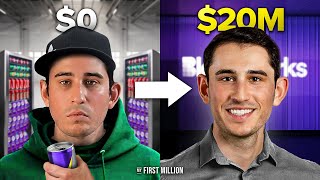
Lessons From Building A Crypto Media Company — Jason Yanowitz | The Danny Miranda Podcast 179