How Jason Yanowitz Launched Blockworks
Jason Yanowitz built Blockworks from a failed consulting idea into an eight-figure crypto media company without taking venture capital. He started with events for institutional investors, added a podcast network with Anthony Pompliano, survived an 80% revenue drop during COVID by rebuilding a news site, and grew to 40 people by staying niche and aligning incentives with talent.
Chapters
Crypto is now big enough that there is something for everyone, right? If you're an artist or a creator, go launch your own NFT. Go launch. If you're a musician, go create a music NFT. If you are a trader, jump into one of the trading firms. If you are a builder or an engineer, come build something.
Hey, you're going to love this interview with Jason Yanowitz, the co-founder of Blockworks. In this interview, we talk about bootstrapping your way to an 8-figure annual revenue media business, the challenge of recruiting podcasting talent, and we wrap up with Jason's perspective on the 2022 crypto market. Enjoy. All righty, Jason Yanowitz, welcome to the podcast, man. I'm excited to be talking with you.
Thanks, Aaron. Excited to be here.
Sometimes I try to grab the reins and explain the guest's business on their behalf as a kind of jumping off point But I know that there's kind of been some redefinition of the business over the last couple of years, as is kind of par for the course for bootstrapped media businesses. So I actually thought it'd make more sense to start with kind of in chapters how you and your business partner Mike have had to redefine the business as you were getting it off the ground.
Yeah, I think that's a good place. I mean, I think it might be helpful. We can start right now. So right now, Blockworks is the go-to financial media brand for investors to understand digital assets and crypto, right? So we have the largest network of investors traditionally from the, like, the kind of traditional capital markets world who are under— trying to kind of either dip their toes into crypto or they've already started allocating to crypto and they're looking to stay up to date with, with the industry, right? So we have a large news team. We have the largest podcast network in the entire industry with 15 different shows. We have one of the largest newsletters. We have a big webinar business. We own and operate some of the largest conferences in crypto. So that's today, right? Today, we have nearly 40 employees. We've, you know, 8 figures in revenue, really kind of booming crypto media business. But yeah, I mean, kind of like you mentioned, it was not always that way. So I'm happy to get into the early days, the early story, stories, the several pivots, the revenue falling during COVID But you guide me here.
Yeah, so I just think it's helpful to kind of visualize what the stair step is, because one of the toughest things for outsiders to really comprehend with any business, whether it's, you know, a wholesaler or a technology company or whatever it is. You know, there's the concept of the minimum viable product and there's the concept of, wow, this established, like you're saying, 8-figure business here and what its kind of full formation is. So my comprehension is that this started as the idea of potentially a consultancy, but in reality, an events business. That was your initial on-ramp of revenue, then the podcast, and then this kind of like fully fledged news platform with video and some of these other elements. And I don't know if we need to necessarily like go overly deep on each of those kind of lily pads, but really, is that the optimal way to bootstrap a media company in this day and age as one of the few people that's actually done it?
Yeah, I mean, I think so. The early story is, I I, you know, it was 2017, I was following, I'd kind of gone down the crypto rabbit hole. And I was living with a couple of guys at that time in New York City, I became convinced that the business that we needed, that we needed to start was a consultancy to help enterprises understand crypto. By the way, wildly wrong, horrible business for a, like, wrong on both fronts, a enterprise blockchain, not A, consulting businesses are really, really tough businesses. It's just a grind. But we got one thing right, which was the industry. And so linked up with my now co-founder, Mike. And we said, you know, let's go start this consulting firm. Mike said, great, I'm a consultant. Now, here's the one problem. Nobody's going to trust us. Why would anyone ever hire us? I said, okay, valid point. What should we do then? He said, let's go host an event. And so that's what we did. We went to, I think it was like Walmart or something. Or so we bought the whiteboard for $11. And basically, we had one goal, which was to just bring the institutional crowd to an event, right? At that time, all of the information in crypto was very retail-focused. You had like Crypto Bobby on Twitter, you had like Crypto Panda on Reddit. And like, I don't know, I was at the time working at this venture capital firm, or right before that, I was working at a venture capital firm. And like, you try to get these old older gray-haired fund managers to talk about crypto, and you kind of got laughed off, honestly, because you'd send them Twitter threads and Reddit links. And so our goal was basically to just build the best place for the institutional crowd to understand crypto. We did that in one way, which is the only way we knew how to do it, which was just by hosting events. So yeah, I mean, Blockwork started as an events business. Once we got that off the ground, we launched the podcast network with this guy Anthony Pompliano in August 2018. That really took off. For those who probably know Pomp on Twitter, that was a big success. And since then we've launched probably 25 different shows. About 15 of the 25 have worked, and we did that for like 2 years. Honestly, it was good business. We had a big podcast network and big events business, and it wasn't until COVID when things really took a turn. So flashback to March of 2020. Business was booming. We had just had our biggest 2 months ever, revenue skyrocketing, team growing, COVID hits. And to summarize a long story, revenue fell 80% month over month, right? Things were tough, right? It was like really, really a grind. A lot of our revenue came from events at that point. But we kind of did what anyone does during a tough time is we just went back to our customers and to our audience. I think we set up, I want to say dozens, but I think it was really over 100 calls with our customers to figure out what they needed. So we spoke with, you know, financial advisors, family offices, family offices, high net worth individuals, hedge funds, RAs, venture firms, professional traders, and kind of just learned one thing, which is there still wasn't a great source of information for investors looking at digital assets. Right. And so we looked at, we looked at every piece of content in the industry. We looked at, you know, podcasts, Twitter, Reddit, YouTube, research firms, other crypto media sites, mainstream media. And yeah, we really just couldn't find one single source of information that spoke directly to the investment community about crypto. And so took us about, I don't know, maybe 8 months to figure this out. We designed a completely new website, we built a completely new website. And on January 12th, 2021, last year, we launched it to the world and it's been a big success since.
And so as you think about like just on a per unit cost, I'm sure that website build was, you were going as kind of down to the bone as possible, but it was still a consequential cost for the business to get that built out. As you kind of look at something like an event, there's maybe an event, there's a rental fee potentially, or if you can shake the right hands and make the right deal, you can get people in there at relatively low cost, someone who is trying to get it off the ground outside of the concept of you were dead right, you decided to make this investment in the real winter for crypto post-2017 kind of spike. You planted the seed in the right field. But in terms of a strategy for bootstrapping that thing off the ground, is, is in hindsight you say, well, I guess it worked, so it was, was valid, or there really is, you know, on a kind of per-cost basis or a minimum viable viable product basis, the right entrée versus potentially starting with the website first and then eventually getting to events?
I mean, I think there's two conversations there, right? And we can, we can get into both of them. One is bootstrapping, right? Should I bootstrap or should I not bootstrap? Um, and we can talk about that. And then the second one is what is the right way to build a media company in 2022, right? And even though we launched this a couple of years ago, we can talk about today. I think there's still a massive opportunity to go build a bunch of media businesses, specifically niche media businesses, B2B media businesses that will be quite successful. So just touching on the first one first, I think the VC versus bootstrapping argument has gotten way too caught up in like good versus evil, right? Good versus bad to bootstrap. It really just comes down to two things, right? Like what are the business goals and what am I optimizing for? Uh, and what should we optimizing, uh, what should we optimize for? Right. And once you answer those, you can determine what you should do. So like, let's, let's take media, for example, when you look at media companies that have raised venture capital, more often than not, they fail because media is just a collection of communities who are interested in one specific topic and like to engage with your, with that topic in a variety of ways. And the media company is the, the, the thing, the brand that provides the, uh, uh, the, the places for the community to engage. So when you take media, when you take venture as a media company, if you just think about the way that a venture capital firm works, where they have, let's say, 10 portfolio companies, 8 of the 10 are going to fail, 1 might break even, and 1 is going to return the fund. That's a shit business model for the media company that takes venture, because now the venture firm is pushing you to, uh, to get bigger and bigger and bigger and bigger beyond what you probably should do. And the most successful media companies stay niche for as long as possible. But when you raise venture money, you get pushed to again, go bigger and bigger, which means you have to— you're forced to expand outside of your niche pretty early on. So with Blockworks, if we had ever raised venture money, we would have, you know, I'm sure our VCs would have pushed us to go into fintech. Right? And then they would have pushed us to go into traditional equities. And then when like GameStop and Robinhood stuff was happening, they would have pushed us to go cover that and get, get into meme stocks. That's not— and that would have, that would have destroyed the business, right? Because then we're competing against CNBC and Wall Street Journal and things like that. So when, if we were building a software company, go raise $100 million right out of the gate, right? But that's a software business. For us, we as a media company, like our goal was to get to profitability within 90 days. And so that's what we did, right? We started selling ads and sponsorships and tickets to our events. So that, that was kind of the media conversation. I don't know if you want to pause there and talk about that, but—
Well, to kind of build off of that, one of my favorite books is called Hitmakers by Derek Thompson, and he has this really good framework of what makes for a hit. And you could say, you know, late 2017, early 2018 to now, the success to get all the way to an 8-figure business bootstrapped would qualify you guys as a hit amongst another number of reasons. And my interpretation of that is he says that, you know, you— to be a hit, you have to have this blending of the novel and the conventional. And you even hear that with like pop music where they'll sample some past hit that's familiar. So there's this element of familiarity blended with the new face, the new voice, the new take, whatever, the new— the The new beat is tied to that. And so with you guys, I don't know if this is intentional, but the branding isn't drastically different from Bloomberg, just in, you know, seeing the ticker, the aesthetic, the big B. Not to say that you guys are exactly the same, but there's an element of familiarity there to a financial audience. But then it's so locked in on the crypto niche in a way that, you know, maybe some CNBC or some of these characters at most could dip a toe in, at most could kind of partial off a little corner of their enterprise. You get to sit in that community, sit in that very specific arena and craft this very kind of effective counter-positioning to the other forces out there while being easy to digest for people that come from the outside world. That's my interpretation. Let me, let me see what you think of that.
I think it's a good— yeah, I think that's a good interpretation. I mean, you mentioned that You mentioned the book, right? Hitmakers. I think there's this concept in there called Maya, right? It's like the most, the most advanced yet acceptable. And like, basically what that means is you have to kind of hit the bullseye between familiarity and futuristic where— and so for us, it was like we're talking about these. For us, design was a way to feel comfortable. So you mentioned our website, like our website, we got a lot of inspiration from The Wall Street Journal and from Bloomberg. And the reason is like when you think about our target audience, we are talking about some, some weird stuff, right? Like SushiSwap versus Uniswap and liquidity provider, like automated market makers. And now we're talking about NFTs and metaverse stuff and like goes over most people's head. Right. And that's our job to break that down and make sure it doesn't— the easiest way to make it feel comfortable for folks is not pushing the boundaries on everything. Right. So we push the boundaries on content. With the industry that we cover. So that means we need to make sure that the design language and like how things feel is very, very comfortable, right? If we were covering traditional equities, it would be the— it would be flipped, right? Because we'd be covering something that's very, very comfortable for folks. Uh, there's a lot of people who cover equities. We would really have to push the boundaries on what Blockworks was and what it looked like, and we'd go launch a DAO and all this futuristic stuff so that it could differentiate itself. So I think you have to pick, pick one or the other when it comes to, yeah, to what you do there.
Yeah, you exactly hit the nail on the head because I was thinking, you know, there's plenty of people that would want to cover crypto, but then they'd also want to structure the company as a DAO and have, you know, a community token and all these other things. And it just becomes inaccessible with not enough familiarity for people to latch on to.
Yeah. I mean, I think one thing for us that helped us be successful is like we picked one target. And we, and we picked really one thing to focus on, kind of one thing to focus on every, like, I'd call it 6 to 12 months, right? So whereas a lot of people, there are a lot of media companies that were launched in 2017, I think we're only, we're one of the only ones that's still left from, from our industry at least. And everybody tried to do a lot of things, right? They launched a daily newsletter. They launched a media site with a, you know, with, with a news team. They launched an events business. They launched two different podcasts. And they ended up failing because they stretched themselves too thin. For us, it was like, right out of the gate, build the best events. And, you know, I've never really publicly shared this, but like, we had one target, right? It was, it was CoinDesk's Consensus event. When we launched the business, we launched— officially launched May of 2018. May 10th, we hosted our event. It was like a 150-person happy hour. A day later, CoinDesk hosted their 7,000-person Consensus event. So we said, target on their back, let's build a better event than Consensus. It's taken us a couple of years. But now it's— I mean, I don't— I'm not even sure anyone attends Consensus anymore. Right. And we— it's taken a couple of years. Now we have the best events in crypto. And then we did that again with podcasts. Right. There's a bunch of different crypto podcasts out there. Now we have the biggest crypto podcast network. And I think for us, it was like, how do you just stay as focused as humanly possible while you're in an industry that's moving so, so, so quickly. And so for us, it's like, focus on events, focus on podcasts, don't try to cover too much, just don't try to talk to too many people. Don't talk to the developers at the start, don't talk to the retail audience, just talk to capital markets. And so that, yeah, I think that was a big key for us.
So let's talk about bootstrapping a podcast network. Obviously, Pomp was a really big early get for you guys, and he's just had an explosive amount of success. As a podcaster. But really, you know, you, you fall in this similar category or genre, at least in my mind, of these modern digital brands that really lean into the individual voices that make up their ecosystem. So if I think about shows like, you know, The Journal, which is the podcast that Wall Street Journal puts out, I would struggle despite listening regularly to tell you who the host's name is. And yet every single Barstool show, every single, you know, character from The Morning Brew, every single one of of these kind of digitally native brands has the, you know, muscle built to put a ton of trust into the voice that there is that they're highlighting and attaching the kind of macro banner brand to that. Um, and that allows for all sorts of things, whether you're launching new characters or signing new talent. Uh, but just take me through how you've thought about that and, and what your recruit— how that recruitment has happened in order to bring all that talent under the Blockworks banner?
Yeah. I mean, so I think first off, everyone's really excited about the creator side of things and everyone's really excited about the creator economy and things like that. Uh, and I think people oftentimes in media, I always hear people point to the Barstool model, right? Everyone always points to the Barstool model. It's like Barstool was the first to do this. Barstool was not the first to do this, right? There, this goes back since the beginning of media, since there were 3 different channels on, on your television, right? And like, if you look at, So we just look at how media works and you look at— I don't know if your audience is like a CNN or a Fox crowd, like CNN, it's like Wolf Blitzer and like Jake Tapper. And then on the Fox side, you've got like Gretchen Carlson and all these big Sean Hannity, right? These are, these are creators, right?
I mean, going back, Bill O'Reilly was like the guy.
Bill O'Reilly. Yeah, exactly. Exactly. And so I think what we just said is like, how can we give them a platform? If you are— so we've done this, you know, we did— we worked with Pomp for a couple of years. We're not working with Pomp anymore on the podcast, but we're working— you know, there's a bunch of different big podcast hosts out there. They want to create content. They're really good at marketing and creating content. What they don't want to do, they don't want to send invoices. They don't want to get on sponsorship and advertising sales calls. They don't want to go create a media kit. They don't want to go transcribe their podcast. They don't want to go find guests. So we take care of all of that. At the beginning of Blockworks, you know, we kind of called it a podcast in a box, right? And we worked with folks like Ryan Selkis, Meltam Demirz, Joel Carlson, Scott Melker, Charlie Shrem, and built podcasts with and around all of these people. And for them, it was amazing because they could sit in front of a mic and make $500,000 a year. For us, it was also amazing because it allowed us to never take venture capital money. The podcast business spit off this cash flow that allowed us to bootstrap the business. The counter to everything I'm saying is it's not an amazing business model. It's not an amazing business model because sometimes you don't own the IP and you don't actually own the content. So the biggest focus for us moving forward, uh, we launched 3 shows last year, in-house podcasts, our first in-house podcasts that are owned 100% by Blockworks. They're operated by Blockworks employees, uh, and they are And that's the big focus over the next couple of years is bringing talent in-house, continuing to provide a platform for these creators and influencers, but kind of aligning incentives better for Blockworks and the creators.
And really, you know, that brings me to two examples to mind. The first is more abstract, which is Danny Meyer and the Union Square Group and all the way down to owning Shake Shack. And there's this beautiful blog post about how he's created this massive vertical ladder for someone that wants to be in food, but maybe starts off as a fry cook in Shake Shack and can literally work their way up, not quickly, but all the way up to working in a Michelin-star restaurant as an executive chef if they're willing to kind of put in the hours, because he's stratified from, you know, the kind of broadest low-end solution all the way up to the kind of high-end crème de la crème and giving real legibility into your ability to climb through that ladder. And then in the media space, you've got The Ringer, where they have the Ringer NFL show, the Ringer NBA show. But if a talent, an individual talent builds enough kind of credibility within that ecosystem, then they get to spin out something where they probably have more economic upside. And because the Ringer as a platform is what was involved in the launch, there's still that kind of upwards trajectory. Whereas in the early days, you guys need to kind of draft off of these other brands to get some momentum, but now you have the platform to be able to deliver that.
Exactly. I mean, you hit the nail on the head. Like, we leveraged other people's platforms to build our brand when nobody knew Blockworks, right? When we got into crypto, it was like, there were two media companies, there was CoinDesk and CoinTelegraph. You had like two scrappy young 20s people who are like telling other people that there's this third media brand, Blockworks, that they should care about. Who are they to listen, right? But now that we leverage— when you leverage other influencers, it really helps. I think one of the keys though, with working with outside like creators and influencers, if you're a media company kind of doing this is, um, what we've learned is that there's not one model, right? And so you have to, it's, it's kind of tough to scale, but I think you, when you hear on Twitter, it's like you have to give the creator 100% of the power. You give the influencer 100% of the power. And oftentimes what we've learned is they don't actually want that, right? They don't want to. Sometimes run their own business. They don't want to run their finances and their operations. And so as a media company, there's a lot of room to run if you actually just give them a platform and you're quite flexible there. And so we have— we've had shows that have been running for 2, 3 years because of just our flexibility there. Right on.
So I want to switch it up here. Um, one of my favorite recent threads that you've posted, um, was how to find a job crypto. And as many as there's, you know, we have listeners who are entrepreneurial and thinking of the next thing that they're going to start, there's a whole lot of people that want to be in startups, they want to be in the kind of macro upward trend, um, and maybe don't necessarily know how to do that. I actually have a couple people close to me that are literally in the middle. I've sent them the thread because they're in the middle of, you know, some sort of career change trying to, uh, strategize that. So what are some of the big themes that you're seeing as someone who has connections to all sorts of companies across the crypto ecosystem that would make someone, you know, more appealing or just help them get their foot in the door?
Yeah, I think I'd preface this by saying the big thing to understand is every, every crypto company is doing phenomenally well right now, right? The amount of capital that's been raised in this industry over the last 12 months is completely bonkers. It's like upwards of $20-30 billion, I think is the number. And because of this, every single company is hiring. So if you ask any founder, like, what is your main challenge? Go ask 10 founders in crypto, what's your main challenge? Including Blockworks, 10 out of 10, again, including myself, will tell you that it's finding talented people to join us. I think one of the problems with crypto is there are a lot of people who care about it because they might have like $1,000 in Bitcoin. That doesn't necessarily mean they're talented. So one of our problems, we get We get literally hundreds of inbounds every single day. The problem for us becomes how do you filter the noise from the signal? And so I think if you aren't getting a job when everyone is hiring, like, here, here are a couple of like kind of tangible reasons. One is like sloppy outreach. I'm honestly surprised, Aaron, how many people just like spell our name wrong or have typos in their emails. And that I think we can discredit like 50% of the people just from that. So you have to make your first impression sharp. The second one is kind of like rambling outreach, right? Again, we receive hundreds of inbounds for every role. Write 5 sentences total on your background, why you'd be perfect for the role, experience with crypto. That's it. Like, we get so many 7-paragraph emails. Nobody's reading that. The third is lack of crypto experience. And I think people kind of misunderstand what this means. You don't need to have worked in crypto. You do need to demonstrate your crypto knowledge, right? You don't need to have worked in crypto. But if you don't, if you haven't worked in crypto, you probably should have used Uniswap, or like, I don't know, staked on Lido or deposited assets on Aave or Compound, right, just to demonstrate your crypto knowledge. And then I think the fourth is just like a lack of tactical experience. I think there are a lot of people who want to work in crypto, maybe they're coming from like a non SaaS or software or tech job. Maybe they're a college grad or they're a chef or a sports coach or a teacher. And for that, I'd really recommend two things. Like, one is just get involved in a DAO, like any DAO, just start contributing and building a brand. And the second is like, get on Twitter. There's this great post, I don't know if— and by another podcast host, Patrick O'Shaughnessy, said there's still a need for more great writing and podcasts, right? He said, I never run out of TV to watch because we've reached saturation there, but I always run out of great detailed writing and worthwhile podcasts. If you're early in your career, it's smart to outlearn and then outteach everyone in a niche. And right now, hands down, the number one way to get a job in crypto is by learning and teaching people in public. So that's— I don't know, that's— take it for what it is. But like, I think that's a little bit of feedback for folks who are looking to get a job in the space.
So literally last episode, we interviewed Wes Kao of Maven and of the top 10 cohort-based courses that they ran on their platform last year, I think 3 of them were like crypto or Web3 adjacent. So I think that that's also like, there's plenty of people listening who right now, even when you said joining a DAO or some of those other like strategies, like that just seemed daunting. And I know that there's Googling and Reddit threads to go down, but some people kind of want the kind of more curated tour. I think that being willing to make an investment like that, and I know that's not possible for 100% of people, is one of the gateways to do that. What do you think of that? What do you think about those online courses?
I mean, I like them. I just think I'm trying to think of the least prohibitive methods. And so here's the number one way that I would get— if I was 22, or maybe later in my career, but like doing a big career transition, I wanted to work in crypto. Here's the— here's what I do. I would go, I'd pick a hyper niche thing within crypto. Like I would pick gaming guilds. I'd pick gaming guilds, for example, within gaming guilds, I would find the top 50 people who write about gaming guilds, right? I'd go look at like Yield Guild Games and YGG, and I'd go look at Axie Infinity. And there's all these different gaming guilds out there. There's no— the content is really, really all over the place. So it's on Medium, it's on Twitter. It's in like, in like newsletters and things like that. Become an aggregator of that information. So every single day, post one tweet that highlights the best, or a thread that highlights the best information about gaming guilds. Do this for 30 days in a row, right? As you're doing this, start reaching out to people who run or work in gaming guilds. Start meeting them, start getting acquainted with them, use their info and then, you know, use their info in your, in your threads or on your Twitter posts. And again, I think Twitter is the best way because the entire industry lives on Twitter. Then start writing your own, right? You've now worked on gaming guilds for 30 days in a row aggregating all this information. Write your own Medium post, go write it on Mirror, write like a crypto-native Medium. And honestly, I think that's the best way. So we— I mean, there are dozens of people like that who we've hired and our competitors have hired. They have no resume, they're not on LinkedIn, they just have some, a couple of solid Twitter threads and that's their in for an interview. And then they interview well.
So yeah, check out, uh, Nat Eliason and Crypto Raiders if you're trying to source that first initial 50 list too. He's the man.
Um, that is great.
So, uh, let's kind of transition here towards the back half, your view. So, uh, You, you sit at a really interesting intersection of information, being able to digest lots of news about the industry generally, access to a whole lot of thinkers. And I would actually— actually, before we get into that, just a fun one. How do you manage listening to podcasts if you have that big of a podcast network that you're responsible for? How do you actually manage your attention and not offend the people in the network that you haven't listened to their show recently?
You know, I actually did really offend someone about 6 months ago because I believe I had to listen to their show in a couple of months and they weren't too happy about it. But I actually don't listen to as many podcasts as I should. I got kind of burned out from listening to some podcasts. I used to listen to like 3 podcasts a day on like 1.8x speed and like, you know, I'd go on these walks and I'd do it. Listen to podcasts while I was doing other things while cooking dinner. I got really burned out from podcasts. I've actually been listening to a lot of audiobooks. I will say though that there are just podcasts. I've been, instead of doing like subscribing to specific shows, I've been subscribing to different guests. So what I mean by this is like there are a couple of different guests who I just, I wanna listen to every single piece of content that they ever put out. Right. So like one, so like, I don't know, if you're trying to like launch a fund or something, you're trying to launch a fund and like build a billion-dollar fund. Like instead of going and listening to a show about building funds, you should go listen to all 10 podcasts that, like, I don't know, Henry Kravis from, from KKR has been on, right? Or that like a fund manager that you love has been on. So I'm, I'm trying to right now to subscribe to different guests. Instead of subscribing to podcasts. That being said, Aaron, can I give a shout out to, uh, The Empire Podcast and tell people to go subscribe?
110%. It is a good show. I was just listening to, uh, the recent episode that you had with Multicoin about the kind of prediction for the year, which leads into really how I kind of wanted to wrap this, uh, interview, which is just you sitting at the intersection of so much information, these podcast hosts, and it's still You know, I think that there's a couple things out there that you can maybe pick up or kind of disagree with. One of them is that, you know, it's just a 4-year cycle. Every Bitcoin halving that happens every 4 years, it's going to just kind of follow more or less the same arc and don't overthink it. You've got all these characters saying, you know, this L1— I guess listeners might not necessarily know what an L1 is— Ethereum's dead, go to Solana. You know, Bitcoin's dead, go to Ethereum. These type of very tribal arguments. What are some of the things that you're seeing from your vantage point?
I think there are a couple of like narratives and trends to look at first. Like one is just a multi-chain future. There's a lot of talk about. So actually, I think to kind of zoom out a little bit, like what happened last year is, or what happened in 2020 is DeFi took off, right? DeFi took off with Compound and Uniswap and DeFi summer. And there were some days that this decentralized exchange called Uniswap with 20 employees had more volume than Coinbase with 2,000 employees. And so 2020 was the year of DeFi. 2020, 2021, a lot of the attention shifted and the narrative shifted from DeFi to NFTs and metaverse and gaming, right? You had things like Facebook rebranding to Meta. You had things like You know, an NFT artist, Beeple, sold his art for $69 million, excuse me. And just all these, you know, NFT art and OpenSea just raised at a $13.3 billion valuation. And it just went completely crazy. I think behind the scenes, what was actually happening in crypto is a lot of the builders and kind of investors are understanding that we're moving to a multichain world, thanks to kind of innovations in UI, UX, and bridging technology. And so there are a lot of L1s, these like, you can, for folks not in crypto, you can think of them like Ethereum competitors that are now starting to have entire ecosystems pop up around them. So for those who are around in 2017, you had Ethereum competitors, you had like Cardano and other competitors, not even worth mentioning. What never happened is they never built ecosystems. So there's never like games built on top of the ecosystems. There was never DeFi built on top of the ecosystems. And now you have all these other ecosystems like Solana and Terra and Avalanche and Near and Cosmos and Fantom that have big DeFi ecosystems around them. Once you get a DeFi ecosystem, it opens up a lot of the NFTs and gaming and things like that. So that's one big thing I'm looking at is like L1 staying hot. DAO infrastructure is a really interesting thing. Like DAO tool— DAOs had a really massive year last year, but there are still a lot of core problems that need to be addressed before they go mainstream. So I think DAO infrastructure, DAO infrastructure is a big area for investment. I think the financialization of NFTs will be interesting. I think gaming is going to get quite big this year as well. And then I think the last thing is just that a lot of like the smart money investors are talking about that hasn't reached the public narrative yet is just how important composability is. So let's take, let's take like gambling, for example. If you want to, if you're, if you're in Slack or something, or let's say you're in Discord or Telegram or like a text message with a bunch of your friends, and you're talking about betting on the Patriots game, you can't do it within the app because they kind of run on different rails. Like the app might run on— it's just like they're very siloed applications, right? So like you're texting with your friends about betting on the Patriots game, you want to bet on it, you then have to leave and go to— I don't know, I'm not a big bettor, but like DraftKings or something, you go to a different app. With when everything's built on crypto rails, the composability becomes seamless. So now you have the ability to— let's, let's say you had like a Discord channel and you want to bet on the Patriots game with your friends. You can— that betting application can be completely embedded inside of the, inside of the Discord channel. Or like I use Notion a lot to take notes and keep things organized. Let's say I want to vote on on-chain governance for a DAO instead of leaving Notion to, or the Slack channel to go vote on Snapshot, which is how people vote in the on, like on on-chain stuff, uh, on, on governance, you could actually vote inside of the Slack channel for an on-chain thing because Slack and Notion are getting rebuilt on, on, uh, on-chain. So I don't know, I could blabber on for a while about what I think is coming this year, but that's kind of a highlight.
So what about the effects of centralization? Because if you are one of the crypto OGs, the whole argument, particularly with Bitcoin, is the notion of decentralization. We don't have some central authority that's going to, for political reasons or what have you, make monetary policy decisions that are not behooving the general public and the users of that money. And what I see, whether it be something like Solana that just doesn't have the same kind of fundamental decentralized nature is making that trade-off for speed, or just the fact that most users are interfacing with this technology via OpenSea, via Coinbase, via some of these centralizing forces. Um, what is your perception of that?
There's a long conversation to be had around that, or there's a really, there's a two-sentence thing and I'll give you the two-sentence thing. Right now we're at a middle ground, right? Where there's a lot of decentralized things that are getting almost traded on centralized things. And this is like, this is called like CeFi, right? There's like DeFi and then there's CeFi. And then there's, we, these are like terminology in the, in the industry. It's like TradFi is like all the JP Morgans of the world. There's DeFi, which is these like completely decentralized applications. And what's ended up happening is that CeFi, centralized finance, is getting built out and booming, right? Like OpenSea and Coinbase and these kinds of things. There's one reason for it, and it's block space. So in— and you can kind of think of— you can make the comparison to Netflix because I feel like this is a story that a lot of people know. In order to make everything decentralized and have all of these things run on decentralized protocols, you need to open up the block space. A lot. You can think of it like bandwidth. The comparison to Netflix is in 2000, Netflix was a DVD business. Their CEO Reed Hastings knew that streaming was the future. There's a really well-known story here. He knew that streaming was the future in the late '90s, but he also just knew that bandwidth was limited. So every year, he would wait, wait, wait, and then finally, he pulled the trigger and said, "Okay, bandwidth is here. Let's move to streaming and get rid of the DVD business." In, you know, 20 years later, a lot of these Web3 entities are like partially centralized, I'd call it. They're partially decentralized and partially centralized. Everybody knows in crypto knows that decentralization is the future. Everybody's working towards that goal. But the block space is limited in the same way that in 1998, the bandwidth was limited. So, I mean, I think it's the goal of a lot of these founders, but at a certain point, you need the technology to improve in the same way that you needed bandwidth to improve.
Got it. Yeah, it was just an interesting, interesting theme. And I think it makes sense that you can't jump all the way across the cavern in one go. You got to build a bridge to be able to get to the other side. Jason Yanowitz, this has been fantastic. I want to aim towards asking my standard last questions. But before I do that, anything you were hoping to share today that I didn't give you a chance to?
I think the main thing is just like tying it back to that, that hiring thread. Like, there is something in crypto. Crypto is now big enough that there is something for everyone, right? If you're an artist or a creator, go launch your own NFT. Go launch. If you're a musician, go create a music NFT. If you are a trader, jump into one of the trading firms. If you are a builder or an engineer, come build something. The space is really big enough that everyone can find a passion. Whether it's NFTs or metaverse or gaming or trading or finance or entrepreneurship or building companies. And then B, there's a job for everyone. So whether you're a sales guy or a marketer or an engineer or a designer or a video producer, right, there's really something for everyone. So I think that's, that's my last take.
Recruiters too, it sounds like.
And recruiters. We definitely need some good recruiters to come in. Yeah.
Yeah. Awesome. So if folks want to learn more about Blockworks and everything that you're up to, Jason, where can we point people in the digital world to learn more?
If I mean, if people want to get in touch with me, I'm pretty open. My DMs are open on Twitter @JasonYanowitz. Our website is blockworks.co. We have a newsletter. If you subscribe to the newsletter and reply to it, I will see it and I will respond to you as well. So subscribe to the newsletter, blockworks.co, and I'm on Twitter too. So hit me up there.
Beautiful. We're going to link that.
I also have a podcast that I want to plug, which is Empire Podcast. Sorry for coming on and plugging.
No, you're all good. That is literally the whole point of that question is to plug away and, uh, allow people to find other cool stuff. Empire is a good one. I am subscribed. Uh, we're gonna link all that in the show notes. It's available in the app where you're probably listening to this right now, or at goingdeepwithern.com/podcast for every single episode of the show. But before I let you go, Jason, I would like to give you the mic one final time to issue an actionable personal challenge to the audience.
My thought here is the world moves too quickly to learn by reading. The world moves far too quickly to learn by reading. The key is to play the game. So go trade on Uniswap, take a loan out on Aave, buy an NFT. Hell, it doesn't even have to be crypto. Go play a game on Roblox, go attend a Fortnite concert, make a video on TikTok. I think just for the pessimists out there, the trend is your friend. Stop fighting it.
Get in the game. I love it. This was awesome, man. Thank you so much for coming on the show.
Thank you, Aaron. Enjoyed it.
We just went deep with Jason Yanowitz. Hope everyone out there has a fantastic day. Hey, thanks for watching to the end of my conversation with Jason. If you enjoyed it and are looking for more crypto blockchain-centric content, check out our interview with the co-founder of Odyssey/Library, Jeremy Kaufman. We talked about about the future of decentralized media, his business model, and a whole lot more.
More from Jason
From Media Company to Crypto's Market Infrastructure: Jason Yanowitz on Blockworks' Transformation
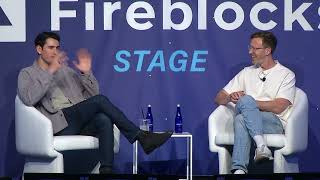
Stablecon 2025 - Fireblocks Stage: A Fireside Chat with Jason Yanowitz & Simon Taylor

Lessons From Building A Crypto Media Company — Jason Yanowitz | The Danny Miranda Podcast 179