Lessons From Building A Crypto Media Company — Jason Yanowitz | The Danny Miranda Podcast 179
Jason Yanowitz, co-founder of Blockworks, built a crypto media company by waking at 4 am to send LinkedIn messages and selling 220 tickets to a New York event. He credits a partnership with Anthony Pompliano and lessons about betting on yourself, direct communication, and valuing creators as key to scaling while staying niche.
Chapters
Jason, welcome to the podcast. It's such a pleasure to have you here after you sent me a message saying that you listened to the episode with Cooper Turley, you enjoyed it. And so I had to take this opportunity to invite you on. So thank you for being here.
It's an honor and I appreciate it, Danny. I also really respect anyone who uses a, uh, a handheld mic for like an entire hour-long podcast.
So I'm not in my normal recording studio right now, so this is in a way Mike, and this is the first ever episode I've done holding this microphone, so we'll see how that lasts and how that works.
But yeah, sounds to you.
Yeah, to you. Let's get to you here because that's why you're here. So we could look at you and look at your story and bring that front and center. So I'd like to start with you waking up at 4:00 AM to send out messages on LinkedIn. Take us back to where you were at that time and what compelled you to start sending messages at 4 AM and why you're so willing to do that. Yeah.
So December 10th, 2017, my co-founder Mike and I, we didn't really have a business at this point. It was just kind of an idea floating around in our heads. We wanted to host a crypto event in New York City for kind of the institutional crowd. Mike and I being I don't know, 23 at the time, had zero institutional community that we'd built up. We were not creators. We had no followers on Twitter. We had no followers on LinkedIn. And so, we went and rented out a venue. I think it was like $10,000, $5,000. Pulled together some money with some friends and got this venue. And then basically, Mike was working in consulting. I was working at a SaaS company called SciSense. And yeah, we would get to work at like 8:00 AM every day. And before we left, we were roommates at the time. So, before we left for work in the morning, I don't know, left the apartment at 7:00 AM, we would wake up at like 4:00 or 5:00 AM every single morning and basically just jump on LinkedIn Sales Nav, blast out 100, 200 cold emails or cold messages every single morning on LinkedIn, uh, praying that, you know, 10% of people would respond. And of those 10% of people, 10% of those people would actually buy a ticket. So, uh, I mean, we did that for a month or two and ended up getting 220 people to buy tickets for like $25 a pop. And, uh, That was the start of, yeah, that was the start of Blockworks.
What was the message?
Something along the lines of like, you know, hey, hey, Danny, you know, I'm running this company called Blockworks. You've probably— this was in the height. Remember, this was in the height of the 2017 crypto run-up. So there's a lot of interest and a lot of hype around crypto. The thing that we were originally trying to solve for is that there was basically institutional interest coming into the space. But there was a huge information asymmetry between the people who wanted to learn about this space versus the information that existed. And so that was basically our pain point that we were trying to solve, is bridging the gap between traditional capital markets and crypto. And so the message was something along the lines of like, you know, you've probably heard about crypto, you've probably seen all of these like retail things going out on Twitter and Reddit. We're hosting an institutionally focused event. It's $50. But for you, Danny, my friend, you can have a ticket for $25.
So I love it. That's a good, good message and good pitch. And I'm curious what got you interested in crypto in the first place?
Uh, the very first time I heard about Bitcoin, I mean, like, crypto has become, you know, this word that's synonymous with like the future of innovation and, and like Web3 and things like Aave and Uniswap and Ethereum. But, you know, back in, uh Several years ago, like there was no crypto, right? It was just Bitcoin. And when I heard about, when I heard about Bitcoin for the first time, I was actually living in Budapest, Hungary. I was a senior and I was going to Emory at the time. I was a senior studying abroad and I heard about Bitcoin and these Hungarian students were really, really into— these Hungarian students had lived under like basically Soviet regime, or at least their parents did. And so they grew up, you know, when you go to Hungary, like, and you take the trolley you like, no one talks on the trolley because they're used to a time and they remember a time in the '70s and '80s when like there were video cameras and audio put in by the government on the trolleys. And so the reason I say that story is like the concept of self-sovereign money really hit home for a lot of the Hungarian students that I was studying with. And so, you know, the first time I got— I heard about Bitcoin, I think was I got pretty into it just because of like the sheer passion that these Hungarians, you know, in the way that they talked about it, you know, pretty addicting. I will say I quickly forgot about it, unfortunately for my financial well-being. I quickly forgot about it and then moved to New York and then got pretty into it about 2 years later. But yeah, 2015 was the first time.
Yeah, I want to ask about that because I feel like many Americans have that same reaction to Bitcoin or Ethereum when first hearing about it. Like, yeah, so what? Why do you think that is the default response? And what do you think we could do to make it more like Hungary, or the people in Hungary who instantly felt compelled because they knew that this was a revolutionary technology.
There's a podcast, um, there's a podcast that, uh, Laura Shin put out and, uh, the episode went live, I think in 2017 or 2018 with a guy named Wences Casares. Uh, he started a, um, a custodial company called Zappo that got acquired by Coinbase and that's what eventually became Coinbase custody. And, uh, Wences put it really well, better than I ever could, which is, um, you know, he said that Bitcoin is— the United States is the hardest place to explain Bitcoin. The reason being the money works and the government works right in the US. Bitcoin is basically just an investable asset, at least right now. Why? Because our money works and the government works. And I mean, again, we can, we can get into it because like that probably changed during COVID in March of 2020 when the Fed balance sheet, we printed 25% of all dollars ever created were printed in the last 12 months and they're crazy stats like that. But like up until now, the government has worked and the money system, the monetary system has worked in America. And so it becomes really hard to explain basically this thing that's revolutionizing governance and like store value and money when everything works right. There's no you're presenting a solution to something that doesn't have a problem. I think the reason that it's so easy for folks in the, you know, somewhere like Hungary to understand is because Hungary didn't have a money problem, but they had a governance problem. Right. They lived under pretty totalitarian, like communist regime from basically like 1945 to 1989. And it's really just a brutal place to grow up. And so, and I mean, the obvious, you examples like Venezuela and Zimbabwe. And but there's a lot of other places around the world that aren't as drastic as that, or maybe that there's like a slight bit of inflation. But again, like slight bit of inflation can wreak pretty detrimental, like, havoc on citizens. So super long-winded way of saying, like, I don't know, I don't think there's a better way to explain Bitcoin to folks in the US. I just think it's where we grew up, things work. So yeah.
And you mentioned March of 2020 being a point when it stopped working and that's to be seen. But I remember I was listening to you on, on Ben Askren's podcast and he's talking about you, the, he, you started off by saying, I'm upset. Uh, what's going on right now is really upsetting me at a deep, deep level. And this was, I think, in August 2020. And I'm curious, you could talk about any time from the past year or year and a half rather, what has upset you the most about what the US government has done? What do you think they could have done better? And what is your opinion today in terms of being upset at the money situation?
Yeah, I think I'd preface everything by saying, like, I'm just a bystander. And like, I— it's easy to, you know, it's easy to throw rocks when, like, you're not living in the house. But like, I don't know, as a bystander, it— I think what— here, I think what upsets me is like, if you look at the Fed's— the Fed's response to COVID, I think has been there's basically a monetary response and a health response. I think it's quite important to separate, separate those because I don't want to get into like the health response to COVID. But I do think on the monetary front, you know, unlike a lot of like Bitcoiners and crypto folks, I do think it was really important that we pumped money into the system because we did, we did shut down the economy. And I think you would have a lot of people who are out of— you had a lot of people who are out of work and therefore maybe out of food and out of shelter, which I think, you know, you know, as a government, we have to take care of people's basic needs. I think where it got pretty dangerous and where it continues to get dangerous is when we continued pumping money. And like, if you look at the Fed's balance sheet, basically, like, you look back the last 15 years, 2004 is at like $1 trillion, 2008, 2009, 2010, it doubles to $2 trillion, 2014, 2015, it goes up to like $4 trillion, $4.5 trillion. And then there's literally, if you look at the chart, like, it just spikes straight upwards during COVID And I think the first to— I think we're at like $7 trillion. So from 2004 to 2021, we've gone from $1 trillion to $7 trillion, 7x the balance sheet. And I think the dangerous part is that during COVID we pumped money into the system, I think naturally, and I think that was fair. It's the part that happened after that where things were coming back to normal and we continued pumping money into the system. The why I think that's wrong is because it was the wrong response is because, A, you completely kill free markets when that happens. There's a lot of companies like recessions are not bad. Recessions wash away the bad companies. It's like when the, when the water goes out, you see who's left swimming with their pants down. And that's what recessions do is they see, you know, they, they kind of show who's left swimming with their, their pants down. And then I think there's like a more— on a more consumer level, when inflation happens, which we're seeing inflation starting to happen right now, when inflation happens, the people who own assets benefit, right? You own Bitcoin, you own stocks, you own real estate, you own rare commodities, or honestly, like collectibles, like sneakers, whatever, anything that is an asset, your assets are going to inflate. So you're going to be really happy, right? So inflation is only bad if you don't own assets. But what it does, it increases the wealth gap. Between people who own assets and the people who don't own assets. And so, I don't know, we can— there's a lot of tangents to go on and I'm already rambling, but like, I think that's like at a high level why I thought it was kind of like an unfair response to COVID, just because it increased— it's going to drastically increase the wealth inequality gap in the States.
Yeah. And you speak to institutions and institutional investors yourself right now with what you're doing. So how do you think about helping those, like your, your target demographic is the people who it's helped the most, right? So how does that inform the way you are operating today? It's like the people you're talking to are, are happy of what's going on, right?
Thrilled. Completely thrilled. I mean, their assets have gone up 5, 10x in the last 2 years. Yeah, everyone's thrilled.
So it's like, how do you think about— how do rich people feel compassion? Or what can rich people do, I guess, in this type of scenario?
I think, I think it's just important to understand like the bias and understand the bubble that we live in. I don't know. I live in, I live in New York, right? And like folks in New York right now in like my little bubble are doing quite well, but there's a lot of folks who are not doing very well. And I just think it's important to understand like that. I, it's important to understand the little bubbles that you live in. And it's important to understand, like, what is your role in it, right? Like, I think a lot of people when they make money, you know, they want to donate or something or they want to give back to charity or they want to make an impact. And I think that it's just an important reminder to say, like, you should probably start by making an impact on your— on, on the people around you first. Right. And, you know, instead of going out and trying to change the world, you know, $10 or $100 or $1 million at a time. I think a lot of people can have a lot bigger impact by just making a change on their local community, right? If you live in Brooklyn, make a change on Brooklyn before you go try to make a change on the world. So, but I don't know, it's a, it's a tough question. Like, I definitely don't have the answer. I think it's just important to remember that there's, even though there's a lot of people making a lot of money right now, there's a whole lot more people who are really struggling. So.
Yeah, I talked to Mike Maples and he said the people closest to the money printer are the ones who get rich when the— when inflation happens. And I thought that was really interesting. And, and I, I don't know, I don't know what, what it says, but it's interesting. And you're right, I don't know what the answers are from a rich person's perspective, but I think it's important to keep in mind.
I mean, someone asked, or maybe someone didn't ask it. Maybe I saw it on— I forget where I saw this, but like, you know, if I ever had the opportunity to sit down with Jerome Powell, like the question I would ask him is like, do you genuinely believe that? Like, A, do you genuinely believe that all of this money printing is not going to lead to inflation? And B, Do you genuinely believe that inflation is not bad for the folks who don't own assets? Like, are you not concerned in the slightest for the 51% of Americans who don't own any assets? And I just think, like, going back to your other question, like, and like Mike Maples' response— by the way, Mike is amazing, really brilliant guy— like, the people, you know, everyone who's making these policy decisions, the bankers, the central bankers, the folks in government, they all own assets. 100% of them own assets. They all went to Ivy League schools, they all— a lot of them come from wealthy backgrounds. They all own stocks, they all own bonds, they all own real estate. Some of them now own Bitcoin. And so like when they do this and they make these decisions, like it has consequences and the consequences are usually good for them. So, you know, I just think that's— I don't know. I don't know how to talk to them about that. But yeah, I think that's an important question for them. for them to remember.
So I want to go back to you and your story and how exactly it unfolds. So you, you start creating these conferences or events, it seems like, and what happens next in your story?
So our, like, basically what happened with Block— I mean, I, I think probably a lot of entrepreneurs come on the show and they have, you know, they wrote up this grand vision and they've got the, they've got the 10-year vision and they're going to build the billion-dollar company and they've got the, they're building the, the Layer 1 ETH protocol that's going to completely change the world. That was not Mike and me. I will say Mike, Mike and I basically walked ass backwards into this with, but we, you know, I would say we didn't have the business model right at the beginning, but we had the thesis right. And our thesis was that The entire— this entire thing, Blockworks' entire thesis is built— is basically that crypto will become an institutional asset class. That's, that's what we believed. Right. And when we looked at like the industry and when we looked at the information, there was a huge gap between the funds, the family offices, the financial advisors, the RIAs, the hedge funds, those kind of folks wanting to get access to this industry and then the information that existed for them. And so, you know, Blockworks We started as an events business. We started by hosting events primarily in New York City. We then linked up with a big guy in the crypto space, launched a podcast. Within about a year and a half, we had the largest podcast network in crypto and some of the largest events. We built out other media properties like newsletters, webinars, things like that. And then earlier this year, we launched our editorial site, which tied everything together.
Yeah, you just skipped over a part, or you briefly mentioned a part that I really want to dive into, which is one, getting Anthony Pompliano to speak at your event. So first, how did that occur? I know 11 emails or something like, something crazy. What did those emails entail?
And yeah, yeah.
What was that story?
Yeah. I mean, uh, yeah, Mike and I were basically just a pain in the ass to Pomp for like, uh, I say 2 months, but really like 2 years. But, um, Mike and I were hosting an event. We were hosting, I think, our second or third— it was our third event in July 26th, 2018, called like Capital Raising and Investing in the Age of Blockchain. Weird, weird fucking title. So I don't know if I can swear on this thing. Weird title, but we needed a speaker. We needed a— we needed like a big speaker to like sell some tickets. Like we were like, we were on a roll and we were— things were, things were going quite well. We had just quit our jobs 2 months ago, so we really needed a win. And we, you know, there's this guy, Anthony Pompliano. I think he was at Full Tilt Capital at the time. Maybe he had just joined Morgan Creek Capital with Mark Yusko. And we got his email. We emailed the guy 9 times, no response. You know, him 10 times, no response. Email him an 11th time, no response. I think it was on the 12th email, maybe it was on the 11th email or 10th email. Pomp finally responds and says, I'll speak at your damn event if you stop emailing me. I'm in Japan. Please stop emailing me. I will come speak at your event. So yeah, Pom shows up. I showed up with his then girlfriend at the time, Paulina, who runs The Profile. Shout out to The Profile. And yeah, he spoke. We added him to our newsletter. 2 weeks later, Pom basically messaged us saying, hey guys, what do you do? Like, I like the event and I like the newsletter. Mike and I went into his office. He basically says, do you guys— I want to create a podcast. Do you know how to create a podcast? Mike and I obviously say yes. Knowing completely nothing about podcasts, go home, Google how to create a podcast, text some of our friends who like knew how to create jingles and things like that, and use like a Fiverr or like a 99designs to create a podcast cover. And we, you know, worked with Pom to launch a podcast called Off the Chain, which is now the Pom Podcast.
Yeah. And from listening to your episode with him, I, from how I understood it was he actually didn't want to start a podcast and you guys sold him on that. Is that true?
Um, I think the big thing with, I think Pump wanted to, I'm trying to remember the exact story, but I think Pump wanted to create a podcast. Pump, I mean, Pump had this vision of like Barstool Sports for business, I think. Yeah. And I mean, gotta give the guy credit. Like it's worked incredibly well. So I don't know, I, we were, we were really fortunate. We don't work with Pomp anymore. But we were like so lucky to have spent about 2, 2.5 years learning from the guy. I mean, there are probably a dozen lessons that I learned from him working kind of next to him on a pretty much daily basis.
So yeah. What are some of those lessons, particularly for somebody who's a solo creator? And wants to bring their message to the mainstream, what can someone learn from Pomp? What were some of those lessons you learned from working so closely with him?
Always bet on yourself. That's what Pomp would always say. Say always bet on yourself. Um, I think like if I had to list out some of them, like always bet on yourself is one of the big lessons I learned from Pomp. Know the value of yourself, right? Don't sell yourself short and really believe in yourself. I would say if something is going wrong, just pick up the phone, right? A lot of people want to email today or text or like, just pick up the damn phone. One of the things that, I mean, I don't want to put words in his mouth, but, you know, he would tell us, like, you know, you let one person fuck you, everyone will fuck you. And I think when it comes to negotiations, it's kind of like, you know, you let— you give one person a 30% discount, everyone's gonna want a 30% discount. And so he just like— I mean, when Mike and I met him, we were like 23, 24. And so it was just helpful for us to like, I don't know, young guys in New York City just like started trying to learn the ropes and some of those things, like always betting on yourself and Knowing the value of yourself. You really stress like not stressing about the little things too, which I think people who are earlier on in their career can get really focused on the little things. And he taught us not to stress those things. And then I think the other thing is just like give smart people huge upside. And that's what he's done with a bunch of his different businesses. And I think it's a, you know, it's just another way to create leverage with yourself.
So how much of seeing his journey inspired your own and to start putting yourself out there?
It inspired a lot. I mean, when, when, when we met Pomp, I had zero followers on Twitter and Mike had like 10, I think. I didn't even really have a Twitter. And I remember Mike, I remember Pomp basically saying, look, guys, what are you doing? Go, go, go build a brand. Go build your personal brand. It'll have amazing. There's no better leverage than having a personal brand. And like, I think when we met Pompi, he had probably like 100,000 followers. I think he's at like a million followers today. And yeah, so Mike and I actually had a competition who could get to 2,000 followers first. And I think Mike actually beat me to 2,000 followers first. And now, like, I don't know, 2 years later, we're like I don't know, really lucky to have over 60,000 people follow me on Twitter, which is like a really weird thing to say and really weird to think about. And like, I don't feel like 60,000 people should follow me, but, you know, here we are. And like, I will credit Pomp for really pushing on us to go bet on ourselves and do that and put ourselves out there.
What's the most unexpected advantage of having 60,000 people follow you on Twitter?
Uh, access to talent and people, I'd say. I think, um, I think it's really important for people today, like anyone listening to this, you're consuming content and I consume content all the time. I read newsletters. I, I, you know, I'm equally as addicted to social media like everyone else and I scroll on Twitter, but I think it's like we live in such a content-driven world that you have to create content as well. And I think creators have access to one thing ever when you consume content, everyone has, has access to the same thing. If you're on Twitter, you have access to all the ideas. That's why it's such an amazing platform. But when you create content, you get access to the people behind those ideas. And so, you know, I— yeah, we've hired— Blockworks is up to 30 people now. We've hired probably 10 of those people from Twitter, me DMing people on Twitter. You know, there are folks who have co-invested alongside who I literally have never met in person. I've met them on Twitter. I've invested in companies just from Twitter. So yeah, it acts as deal flow. It's really helpful for the company, I think, as well. Thankfully, like the Blockworks brand has so far outgrown any personal brands that it's so much bigger than any one person. But like, I do think hopefully it's helpful having this big microphone that we can shout into sometimes. And so, yeah, I like honestly to anyone listening to this, I would just like start putting content out. You don't even need followers, right? We had someone the other day, he has about 70 followers. He DM'd me. I scrolled through his Twitter. He puts out these tweet threads. Nobody likes them. Nobody reads them. But the guy's really brilliant. And I hopped on a call with him. He's like 19. He's in college. And yeah.
So, what'd you guys talk about?
He wants to be an intern at Blockworks. And so, We'll see if that happens.
How do you go about figuring out people to hire at Blockworks? The most important part of a company, obviously, or one of the most important parts, is the people who make it up. How do you guys go about determining whether or not someone should work or intern at Blockworks?
I think, you know, we— I think I like— this is kind of like an overused thing, is like the company's values, but we are— we don't really have like that official values right now, I would say. But like there's, there's kind of these core underlying values in everyone at Blockworks. And I think it comes down to 4 different things for us. The first one is remaining curious. The biggest thing that I care about whenever I talk to someone is like, are they a curious person specifically? Because in crypto, I don't— it moves too quickly if you're not inherently curious. You're going to get your, you're going to get kind of smacked around, I would say, and you'll get left in the dust. So like, number 1, remain curious and just always try to disrupt yourself. Number 2 is, you know, come with, you know, be a problem solver, right? Don't just come with, don't just come with issues all the time and don't just come with problems. Try to come with solutions and like be comfortable bringing your ideas to the table. I would say mutual trust and respect. For everyone else, right? Like a deep empathy for both our customers and for your colleagues with the understanding that without those folks, you're pretty much nothing. Um, so what do we have? Be a problem solver, uh, remain curious, uh, just mutual trust and respect. And then the last thing would just be leave your ego at the door. Uh, you know, we operate in an industry where so many young people have made and and older people too, have made so much money. You know, there are friends who have made 9 figures off just getting in early. And like, I think it's really important to understand that, like, yes, you might have made oodles and oodles and oodles of money, but nothing one person at Blockworks does could happen without the entire work of the team. And so I think it's just like, you know, leave your ego at the door. And I think a combination of leaving your ego at the door, mutual trust and respect for everyone, uh, remaining curious and then, uh, just being a problem solver tends to create a good, good culture and good people.
I love all those. And I wanna talk to you about the idea of young people making— you, you mentioned 9 figures, but just in general, young people making a lot of money and being at the top of society and how rare that is. And what do you think that does to society as a whole? When in the past, if you think about it, the people who made the most money were the people who had the most experience and the people who were leading society were typically the ones with the most experience. Now it's almost like you could be 20 years old, 25 years old and be a billionaire. And that's pretty crazy. What do you think that does to society at large? And do you have any thoughts? Have you thought about this at all? Hmm.
I think I'd kind of like reframe how to think about that. And maybe just because I don't have an answer yet, but I think one of the really interesting things about crypto I mean, it's basically the Renaissance 2.0. And when you look at the Renaissance, it was an amazing period of music and artwork. And really it was like the first time culture was created. Like, I'm trying to think of when culture existed before the Renaissance. Like, the Renaissance is when people started to do things just because they were fun and because because they were artistic and because they added value to culture, not just because they added value to their family. And so if you look at like why that happened, the Renaissance took place because, uh, well, first off, it followed this really, you know, it was like a, it followed this really dark period of the Middle Ages. Right. And it was kind of this rebirth after the Middle Ages. And there were a lot of people who made a decent bit of money and they basically would fund all of these artists and creators without any expectation of any sort of return. And so they— that's why the Renaissance— that's one of the many reasons why the Renaissance happened. And so, what you got from giving capital to artists and creators and builders without any expectation of return is you got things like these beautiful works of art, amazing inventions, amazing pieces of music. And amazing buildings all over Italy. And I think that's what we're seeing now, which, you know, 300 to 500 years later, I think we're seeing like the rebirth of the Renaissance and Renaissance 2.0. So I think it's less important to focus on like what happens when the young people have all the money. I don't know, the old people are going to have the money too. Like the institutions are going to make a shit ton of money from crypto. So I think that's less important. But what's more important is like, oh my God, it is so exciting what's happening with things like DAOs. And just the ability to give capital to people who are not just investors and, and like founders, like in sales and marketing people, but giving money to engineers and tech people and artists and musicians and everything happening with NFTs is amazing. So that, I think that's what I'm most excited for.
I love that answer. And on the same topic, I love how you brought up the Renaissance because it leads me to ask about being a history major, I believe, in college, and how that has helped you navigate in the 2020 environment or 2021 environment of crypto in general?
Um, I think, I think the most— I think the, I think the first thing is that You know, when you look at like, so Mike, Mike and I, my co-founder, went to school together. We both went to Emory. And when you look at our entire friend group, every single person went and worked in finance except like every single person went and worked in like investment banking except for Mike and me. And so I think that like, and Mike was a classics major, by the way, and like a psych major. And I was a history major. And I think there's just an open-mindedness that comes from studying liberal arts. If you look at a lot of the founders in crypto, a lot of them are history majors actually. And I think there's just an openness that comes from studying liberal arts and just being open-minded and understanding that nothing stays forever. Right? When you study history, you realize that pretty much nothing lasts forever. And so, I think it was easier for me or maybe easier for Mike to see that things like legacy finance could be disrupted, whereas a lot of our friends who are living inside of legacy finance and still do live inside of legacy finance, it's becomes quite hard to understand that systems can go away and fall apart faster than ever. So, I mean, there's that quote like, Rome wasn't built in a day. Yeah. Well, it basically ended in a day. So, you know.
Yeah. And how do you think about— you mentioned NFTs before and I've been spending a lot of my time focused on that, how has watching what NFTs is doing, how has that excited you in the past year?
I think it's, I mean, it's amazing. It's incredibly exciting. I think there's basically what's happening is there's a lot of trends that happen in crypto that take about 4 years to play out. So NFTs, I remember writing like our first article on NFTs in 2018, January 2018, February of 2018, when crypto CryptoPunks clogged up the Ethereum blockchain. Excuse me, when CryptoKitties clogged up the Ethereum blockchain and like you literally couldn't send a transaction because CryptoKitties were taking up the entire Ethereum blockchain. And so, you know, but it took like 3 years to play out. And so I think, I don't know, I'm excited for NFTs for so many reasons. I think they're so far— like we're so far away from like NFTs hitting even mainstream right now. Like we have 100x to go with NFTs. They'll go through massive cycles and they'll, they'll continue to run up this market. The price of NFTs will probably fall like 80 or 90% in the bear market. I'm probably going to get roasted on crypto Twitter for saying that. But, you know, at the end of the day, like it, it gives artists and creators a new way to monetize their following. If you look at the last decade, like a lot of the big companies have been D2C companies. In e-commerce at least. And so, like, I think you can think about NFTs as like D2C for creators and artists, right? Instead of having to go through Sotheby's, Christie's, an art gallery, anything like that, for the first time in history, a record label, for the first time in history, you can sell your art, your music, your creations directly to your true fans.
So how is How are institutions going to get involved in NFTs?
Try to buy up all the NFTs, of course. No, I think, I mean, like there's basically like 3 buckets of institutions, I would call it. Like there's the institutional investors. Those are like the capital allocators. There are the financial institutions like JPMorgan, Bank of America, Wells Fargo, things like that. And then there's the like institutional, like firms that are not financial, like Christie's, Sotheby's, things like that, Fortune 500, stuff like that. And so specific to NFTs, I think that they'll just try to do whatever— what everyone will try to do with crypto in general, which is to try to get a piece of the pie, you know. And what will happen is it'll work. They'll get a piece of the pie until they get phased out. So I mean, institutional investors will make a boatload of money and a lot of them will, I think, treat CryptoPunks and Fidenzas and Chromie Squiggles like the new Van Goghs and Picassos and Mona Lisas of our generation, which sounds ludicrous to say, but that's what they're going to be. And so they're going to buy them just like they— because just like they're art collectors, there's going to be digital art collectors and there already are. So the investors will buy it. The financial institutions will try to get a hand in it. Sotheby's and Christie's already have their hand in it. It, but eventually they'll, they'll be wiped away.
So what about Visa? When Visa bought that CryptoPunk, were you just like, oh, it's happening this soon? Were you surprised?
Were you—
what was your reaction when that happened?
Uh, the Visa buying CryptoPunks was not that big of a deal in my mind, actually. I know obviously got a lot of love, love on crypto. No, I mean, it was more of a— that was a, that was a marketing play, I would say. And I, I think every company right now needs a crypto strategy. And some companies have a crypto strategy within their product team. Some companies have a crypto strategy within their investment team. Some companies have a crypto strategy within their marketing team. And I think Visa has done a really amazing job of both basically trying to become as crypto native as possible. Even though they're more of a legacy financial institution. So yeah, it was just there. But the crypto NFT was like just basically a showing the community that they're here to stay. And I think it was an amazing job. Hats off to their marketing team for doing that.
So, so you mentioned that every company should have a crypto strategy. And I'm curious, let's say, let's say you have like a, a medium-sized law firm, like what, what is the crypto strategy for like a normal medium-sized law firm?
I mean, law firms are making a— making an absolute killing right now because the SEC is coming down pretty strongly on, on things like DeFi and things like crypto in general and stablecoins. So I think just— I don't think a law firm should be going out and buying NFTs, but I think the law firm should understand that crypto is here to stay. And most law firms are already realizing how much money is in crypto. And so they should have a crypto practice and have a crypto arm. So it's less about not everyone needs to be crypto native, right? It's not like a law firm. What did law firms do with the internet? I don't know. They went and created websites. They're not like internet native companies. They're just law firms still. But understanding, you know, if a law firm was early in working with companies like SaaS companies or like social media companies, they made a killing, right? And that's like law firms like Cooley who, you know, popped out in Silicon Valley and made an absolute killing. It's because they were early. Early on the internet trend. And so there's a lot of law firms popping up that are early on crypto and they're making an absolute killing.
So now let's take it to a college student who is just graduating and they want to get involved in crypto in some respect. What are you telling that person to do? How are they attacking it and how are they getting involved in the ecosystem after studying something not crypto related for the last 4 years? But they know that they see this is the way they want to go and this is their future. What are you telling them to do? Yeah. Yeah.
First, first off, really important to understand that you don't need to be technical to work in crypto. I have no idea how to go code a smart contract. I have no frickin clue, but I understand them quite well, I would say. But you don't need to be technical to come into the space. You had Cooper on last week. He's not an engineer, but he's about as deep into DAOs as you can possibly get. So I think my suggestion to— and I tell college kids who reach out on— or students who reach out on Twitter all the time, like, what should I do? I would suggest honestly that they go join a DAO and start contributing, right? Like, if you— the model for college students previously has been to apply to be an intern, right? Like, okay, you want to go work at Blockworks, you want to go work at JPMorgan, you want to go work at Facebook, you want to work at Google, Bloomberg, whatever. You apply to be an intern and the, and the, and the company basically has to accept you. Now, uh, with DAOs, you don't have to apply to anything. You can literally start doing work and they work that is needed to be done and they will reward you with DAO tokens. The more DAO tokens that you get, the more of a voting say and more power you have in the governance of that thing, more credibility and reputation that you build up. So if you look at a lot of the people, who started in the space, like someone like Cooper. Cooper literally started by just getting paid to write articles. Right. And so my recommendation is just to start creating content and start contributing to DAOs and get on crypto Twitter and don't be afraid to cold reach out to people. So that's, I don't know, that's kind of my feedback.
That's great action steps. And when I went to Blockworks, I saw a website that looked to me— I, the first thing I thought of was Bloomberg. And I know that you've studied a bunch of different media companies before you created your own. What did you learn from studying some of the biggest media companies in the world, and how did that inform some of the decisions you made creating Blockworks into the, the website and the company that it is today?
I think what's happening right now in, in media is that there's a barbell where you have, uh, on one end of the spectrum, you have niche companies. Uh, you have companies that really, really get hyper-focused. And then you have companies that are so big, like the New York Times and any company in the middle is going to get eaten basically and will fail. Um, because social media will captures all the attention and those companies in the middle won't capture the attention. And so like, if you look at a company like the New York Times, the New York Times, or like Fox or or whatever they can, they can, they can cover everything. And they like are, when someone fought, like when someone reads the New York Times, like that is usually like their primary or their only source of information. They read the newspaper every morning. They read the 6 different newsletters from the New York Times. And so those, like the New York Times will get 10 times bigger than they are now. I don't think that's healthy. I don't think that's good, but they will. The companies in the middle will fail. Uh, which part?
Sorry to cut you off.
Uh, they just like, if you look at what's happened over the last 5 years, they've basically, um, created an amazing, amazing subscription business where a subscription now drives more than 50% of their revenue. About, I think it's like 30% of the revenue now comes from non-editorial content as well. So like their food, like their cooking product. Um, uh, the cooking product, uh, the, the, the crosswords, things like that. And so I think they've just gotten so big that they can start gobbling up all of the top talent. So you're either, I mean, if you're a journalist today, you're either, uh, you're either joining Blockworks, uh, joining the New York Times or launching your own Substack. So, yeah.
Yeah. And so sorry to cut you off. You were talking about how one end of the spectrum is New York Times and the other end of the spectrum I think niche media companies will do phenomenally well.
The challenge, just so like Blockworks, for example, if you want to consume, if you want to get the best crypto content in the world, you would go to Blockworks. The New York Times, Bloomberg, those kind of folks, they'll cover crypto, but they won't do it in a pretty good, in a good way just because they're not that deep. And there's a lot of niche media businesses that do really, really well. It's the companies in the middle that kind of try to be everything to everyone, but aren't actually that big that really end up getting killed. I think the tricky thing becomes when you're one of those niche media companies and you start to get bigger and bigger and you want to continue growing, what basically, how do you continue to scale without falling in the middle of that spectrum?
So, so how does Blockworks go about doing that?
That's the million-dollar question, Danny. No, I think— I think— I think—
question, actually.
Yeah, exactly. Exactly. I think our strategy will be to stay pretty niche forever. And by niche, I mean, like, completely focused on crypto and kind of global macro and the intersection of capital markets and crypto. We're never going to be the platform that covers politics. We're not going to try to say, oh, we've maxed out our revenue, let's go try to like launch a sports arm or, or a, or a political arm. I think our strategy will just be to go deeper for our audience. So like if you look at investors, for example, like what does a fund manager need in crypto to really understand crypto? They need podcasts, they need newsletters, they need news. Maybe they need research. Maybe we go build a research team. Maybe they need a data, better data products that exist on the market, we'll go build a data team, right? If you look at like the New York Times or like DoorDash, who's killing it right now, like they monetize with e-commerce, right? And like they are literally— you're seeing media companies acquiring different brands, right? So that you can— different, like different products so that you can— or build— building their own products as well so that you can push your own products through your distribution instead of selling other people's products, a.k.a. selling ads. So I think there's a lot of different ways that Blockwork scales in 2022, but definitely in 2023.
So you mentioned the podcast part of it, and I believe it starts with Pomp being the first one that you guys tackled. And now, you know, you don't work with Pomp, but you, you have a list of what, 20+ podcasts that you work with? And yeah, what have you learned from producing or helping create or working with all these podcasts that the person running their own shop, their own, their own podcast could learn from and take?
Yeah, myself, I would say, yeah, the— so yeah, Blockworks right now owns the and has the largest podcast network in crypto. I think it's one of the top 5 financial podcast networks in the world. Behind probably like the Wall Street Journal and Bloomberg. The big— one of the biggest things that we've learned is that if you don't treat the creator right, they'll leave. Right. And you want to just understand that the creator— things have completely flipped, right? Where the media company used to have all the power. You have to understand that as a media company, the creator is the one who's providing the value, the valuable IP and the valuable content. And so if you don't cater to them, they'll, they'll pack up their bags and go. And so Blockworks works really, really hard to make sure that we just help the hosts of the podcast as much as possible, whether it's with revenue, whether it's creating new revenue opportunities for them, whether it's with production behind the scenes, whether it's helping them market their shows, whatever they need, we, we will take care of it. Um, and you've seen this go really, really well, right? You've seen Barstool, get acquired by Penn National for $450 million. You've seen Wondery got acquired for like $300 or $400 million by Amazon. You saw Gimlet got acquired for, uh, $200 million by Spotify. Podcast businesses, um, are really, really hard businesses, but when you nail them, they create really nice network effects.
So as you talk just now, I'm thinking about, oh my God, there's always something you could do as the entrepreneur, as the person at the helm, right? And I'm curious how you navigate stepping away from it, or there's something you could be doing right now instead of this podcast. There's something you could always be doing more as an entrepreneur. So how do you think about that? Giving yourself guardrails or making sure you have a level head that you can never get to everything you'd want to get to?
I think it kind of depends on like what stage of the business that you're at. Um, when you're at the beginning, like the first stage of the business, you kind of just have to do everything and suck it up. The next stage of the business is trying to delegate things that might be, uh, kind of slightly like below your pay grade, essentially. Like, and it really helps like in stage 2 of the business to have like an operations person who can kind of do everything. Stage 3 of the business is probably where you want to like hire 1 or 2 really skilled people who can like take a big chunk of your business and make it much better than you ever could. And then kind of stage 4, like where we're at right now, is you want to hire people who are better than you at every single thing that the business does, right? Like Mike and I are not the best salespeople, so we'll go hire the best salespeople who are literally better than us and can teach us. Like we're not the best writers, so we'll go hire the best reporters in the world who can do it way better than we could, right? Like we're not the best people at marketing. So like, we'll go hire the world's best marketers. So I think that's the stage that we're at right now. And so then it just becomes like, okay, well, if I'm not building the actual product and I'm not actually selling and I'm not doing the marketing, like, what in the world am I doing? Most of, most of my time right now goes into hiring, right? Because we— Blockworks is going to double the size of the company again. We— this year we went from 9 people to start the year to 30 people by the end of We'll have probably 35 people by the end of this year and we're going to double again next year. And so like probably 80% of my time goes into hiring another, you know, probably I was going to try to say 20%, but it's probably like another 70%. So I'm thinking that I have more than 24 hours in a day, but the rest of that time kind of goes into like longer-term strategic planning, thinking about, okay, like not what does the business look like in 1 or 2 months out, but what does the business look like like 1 or 2 years out? From now.
So you mentioned before about how you're, you need to hire the people who are the best in the world at these various components of your business, but I'm curious, what do you think you're the best in the world at or near the top 1%?
Um, I think probably generating excitement for an idea that's usually misunderstood. I'd say I'm pretty good at. Probably kind of that follows throughout my whole life is just kind of generating excitement and hype for things like getting people to join me and like join the party when even when an idea, for example, right now it's crypto. In the past it's been other things, even when an idea is maybe misunderstood. So I think that's been a probably a pretty good skill for Blockworks.
What are the best ways to generate excitement for an idea that fascinates you?
I think just probably empowering people to have power and say in wherever, in whatever you're building and whatever the idea is, right? Like if you just go tell a bunch of people to go buy crypto, they're probably not going to buy crypto. But if you get them bought in and you give them a MetaMask wallet and you get them on AAVE and you show them why it's so freaking cool, usually they'll get pretty excited on their own. And so I don't know, I think it's like less about telling people to do something and more about empowering them to, you know, go be able to do that thing on their own.
So was it you who was trying to get 100 of your friends to get into crypto this year?
Yes, it was. I stopped posting on Twitter about it, but it's going well. I think, I think one of the things I learned is I was personally trying to get 100 people into, into crypto. I think I stopped counting on Twitter like 20 or 30 people that I had personally gotten into crypto. And I realized that, you know, Blockworks were nearing 1 million page views a month, right? And so a lot of those people have zero crypto assets. And so I think when you think about like your life, it's a lot of it is how do you create leverage, right? And so I think for me, it's not getting 100 people by myself. It's building Blockworks to, you know, 1 million page views a month this year and then 10 million page views a month next year and having a lot more leverage than just 100 people.
So I love that. And so what are the key metrics that you use to identify whether or not you're successful? Is it page views as the number one metric when you wake up? Are there particular metrics that you look for to say, oh, we're doing a good job, or this is working out in the way we want it to?
I think so. Blockworks has 4 goals this year. Like January 1st, we basically created 4 goals. One of them is around culture. One of them is around sales. One of them is around growth, and one of them is around the editorial vision. I think the first— so our first goal at the top of every monthly presentation that we give to the company and conversation is culture. And it just says build a culture that we're proud of. We knew that there was going to be pretty rapid growth this year. We again, we went from 9 people to— we'll end the year at 35 people, grew the company by 400% in terms of the headcount. And so I think it was just the most important thing for us is it's not like a quantitative metric. It's more about building a company and a culture that we're really proud to work, to work with. So I don't know, that's kind of like finger on the pulse is finger on the pulse of the culture, something that's really important to us. We look at sales numbers like we look at revenue. October is going to be our biggest revenue month by far, which we're really excited about. We look at like how many people are opening our daily newsletter is a really important metric for us. We do look at page views, but that's less important. Uh, and then we just look at like how many times our articles get shared, uh, because we think that's a pretty good indicator of like how much people are— you only really share an article on social if you really, really like that article. And so we think that's a pretty good indicator for us.
I like that. And what about your personal life? Are there any metrics you use in your personal life to identify progress or growth?
Yeah, man, I'm planning a wedding, so, uh, making sure my fiancée's not too upset with me is, uh, pretty important for me. Uh, trying to get healthier. Um, doing I eat pretty healthy, but yeah, just trying to like stretch every morning has been a good habit. I gotta start working out again, but you know, I'm 6'4" and lanky, so like I gotta make sure I don't, that I keep stretching, so.
Stretching's the number one priority in today's world for Jason Yanowitz.
Yeah, I mean, just staying hydrated, man, being healthy, making sure my fiancée's happy, that I have a good relationship with her and good relationship with my family, making sure I keep good close friends and making sure I don't like get too sucked into the rabbit hole that is crypto because it's pretty damn fun. But like it'll pull you in and making sure that I have a life outside of crypto is, is really important to me as well.
No doubt. And what makes for a good relationship in your mind?
Probably the same thing that makes for any for a good, like, relationship outside of just, yeah, honestly, any, any relationship. I don't know if you're talking about one specifically, but probably just communication and like just honesty and transparency, whether it's with employees or your family or your wife or your partner or your fiancée or whoever it may be. Probably just honest, blunt, candid, transparent conversation and communication.
You mentioned this before with with Pom talking about just pick up the phone, have that difficult conversation. And I'm curious if there's any stories or any time when you've had a difficult conversation that it's benefited you tremendously, even though initially you might not have wanted to have it.
I think it's less about a time when we were really candid and honest, and it's more about times that we weren't really blunt and transparent out of the gate. Which hurt us. I think that's kind of like a first-time founder flaw is that you don't have those candid conversations. And so there were conversations with like early employees that like probably should have happened in their third month and they happened in like their 10th or 11th or 12th month that everyone would have been much happier if we just had that really hard, honest conversation in the third month. So yeah, that's probably like my biggest advice for first-time founders is have the hard conversations because you'll be much happier and it'll save you a time. It'll save you time and headache later on. On.
What's a trigger or a, a way that we could know that we're putting something off? Are there any particular triggers you use to make you realize and become aware of something you're pushing off time and time again?
Are you thinking about it like a to-do or are you thinking about it like in terms of relationship and communication? Either. I think what the, uh, no is the honest answer. I don't think there's like one thing. I think, um, I think when it comes to relationships, it's you, I think with relationships or like your to-do list, you usually know if you're putting something off. And then I think the, uh, I think it just, and then I think it comes back to like priorities and making sure you really understand your priorities and your goals and saying like, should this be on my to-do list? Do, is there a reason I'm pushing this off? Should, should I delegate this to someone? So I found that, um, there's this thing called the Eisenhower Matrix that's kind of helpful, um, when you're, when you're putting things off. So I use that.
I don't know if you've seen that, but I've heard of it, but could you share more about it?
Yeah, the Eisenhower, like basically it's the Eisenhower Decision Matrix. And so there's like, you can kind of think of it like a. A box with 4, you can kind of think of it like 4 boxes, right? And so in one box there's, uh, or on the, on the Y-axis, Y-axis, Y-axis, it says important and not important. And on the X-axis it says urgent and not urgent. So things that are urgent and important, you should probably do those right now. Things that are not urgent and important, you should probably schedule a time to do it. So it's. Says do, decide, delegate, and delete. The things that you should do now are urgent and important. The things that you should decide on are not urgent but also important. The things that you should delegate are the things that are urgent but not important. And the things that are not important and not urgent, you should probably just delete those. So do, decide, delegate, and delete. It's a helpful framework. Helpful little matrix.
Yeah.
Yeah. What about— Dwight Eisenhower used it and he was a president, so I trust that guy.
So it should be good enough, right? Yeah.
Yeah, exactly.
What about advice for someone pursuing the highest version of themselves? Whether that's mentally, physically, emotionally, stretching, relationships, whatever it may be.
Just understand what's, uh, understand that most, I like, most things don't matter and that you shouldn't stress the small things and that like it's a chaotic world and that chaos will always happen. And like one of the things I try to use when I'm, I mean, I get overwhelmed and overworked and stressed just like anyone else, but like one thing I try to always come back to is like, will this matter in 10 days, 10 weeks, 10 months, or 10 years? And usually the things I'm stressed about won't matter 10 days from now. If something's gonna matter 10 years from now, then it's time to take action and be stressed about it. If something matters 10 months from now, again, probably pretty fair to stress about it or like make it a big priority. If something doesn't matter 10 days from now, probably shouldn't be stressing about it. Right. And so I think whenever you're like, the next time you're stressed, write down 10 days, you know, 10, 10 hours, excuse me, 10 hours, 10 days, 10 weeks, 10 months, or 10 years circle what you think it's gonna be. If it's 10 days, come back to that in 10 days and think to yourself, do I really care about this right now? And you usually you, you, you will have so far forgotten it that it helps you the next time be like, okay, what I'm stressed about right now really won't matter like 48 hours from now. So that's one thing that I use.
You know, I get a real sense of peace from you that I don't know if it's true internally, but externally it appears as if you're peaceful with what is, and it's very impressive. From my perspective, for someone running such a company as yours. So, what do you think, if that's true, what do you think has created the peace within yourself?
Probably just the under— A, I'm not sure I'm that peaceful, but I'm glad I'm giving you that impression. But no, B, I think it's just like an understanding that there can always be more. And so you should strive to do more and like build something bigger and always, always keep pushing. But also understand that unless you're literally the richest man in the world, man or woman in the world, or unless you literally run the biggest company in the world, or unless you're literally President of the United States, there is always someone more powerful than you and always someone richer than you. So if your goal is to be really rich or have a lot of power and you're always looking to the person above you, you will never be happy unless you're Elon Musk or Joe Biden right now, the president and the wealthiest person in the world. And so just understanding that, like, the goal should always be to build and to do something bigger and bigger and bigger and bigger and grow and grow and grow. But also don't envy people who have more than you. And I think that's I think that's a mindset and a framework that's pretty helpful.
I think that's incredible advice, and I think that's an incredible place to wrap things up today. Where can people connect with you further, my man?
Yeah, I would say, I mean, I'm on Twitter @JasonYanowitz. I'm on LinkedIn. I'm on email. You can find my email pretty easily. Our website is blockworks.co. Go subscribe to our newsletter. But also, if you guys want to get in touch, just shoot me a message on Twitter. My DMs are open. Uh, just, it's my first last name, @JasonYanowitz. So yeah.
Awesome. Thank you for being here today. I really appreciate you sharing your insights, your truth, and talking about your story and where you think the world is going. It means the world to me.
Danny, I enjoyed this. Yeah. I, I, yeah, I really enjoyed this. I, uh, I think you made me out to be a little more of a, uh, a personal, uh, a personal guru than I really think I am, but, um, I'm glad that you, uh, pulled some of that stuff out of me. So I appreciate it.
I think we all are personal gurus in our own way to ourselves. And I want everyone to see the truth within themselves. So I hope it came across and I gave your truth and you gave your truth in a real, real way. And it seems like you did from my perspective. Thank you.
I appreciate that. I'll talk to you soon. Awesome.
I think it— I pressed the stop recording button.
Cool.
But, but it's, uh, it says it's so
More from Jason
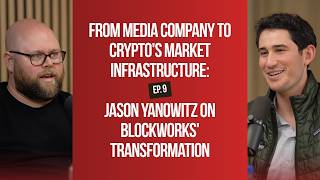
From Media Company to Crypto's Market Infrastructure: Jason Yanowitz on Blockworks' Transformation
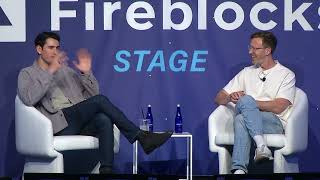
Stablecon 2025 - Fireblocks Stage: A Fireside Chat with Jason Yanowitz & Simon Taylor