Jason Yanowitz and Michael Ippolito on the Most Important Stories of 2021
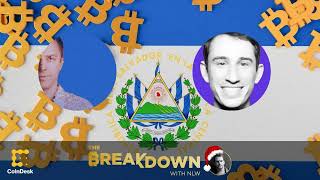
Blockworks co-founders Jason Yanowitz and Michael Ippolito review 2021's biggest crypto moments. Bitcoin solidified as a macro asset, NFTs exploded then cooled, and Layer-1 blockchains like Solana and Avalanche fragmented the ecosystem. They disagree on 2022: Michael expects a bear market while Jason bets alternative chains will rival Ethereum's value.
Chapters
I think that this quote unquote cycle will end with NFTs and DAOs getting way ahead of their skis, which I think they kind of are. And a lot of the capital will rotate back into DeFi. And like the thing that I'm paying attention to right now is I think DeFi is massively overlooked right now. Like even just the boring old DeFi 1.0. I know there's DeFi 2.0 and Rari and all these cool DeFi 1.0 is massively overlooked right now.
Welcome back to The Breakdown with me and Jason Yanowitz, Jason Yanowitz, Jason Yanowitz. It's a daily podcast on macro Bitcoin and the big picture power shifts remaking our world. The Breakdown is sponsored by NYDIG and produced and distributed by CoinDesk.
What's going on, guys? It is Friday, December 31st, and we have reached the end of The Breakdown's end of year extravaganza. Now, this has been an insane year on the show. Probably because it's been an insane year in the industry. We had highs, we had lows, we had some of the most transformational moments in the history of the crypto and Bitcoin space. From El Salvador to the great hash rate migration, this has truly been something to observe. Now, my guests today are Jason Yanowitz and Michael Ippolito. They are the co-founders of Blockworks, are two folks who I've watched in this space for years just continue to push themselves and the people they work with around them to produce more interesting things, to produce more interesting content, and to generally build an even healthier media space for crypto, Bitcoin, and macro media. Given how much content they create and curate and have other people create with their various publications and podcasts, it's no wonder that they have a really interesting and diverse perspective to bring to these end-of-year questions. So join me in welcoming Jason Yanowitz and Michael Saylor to the show.
And let's get into it. All right, what's going on? We are here with the Blockworks Boys. Michael, Jason, how are you guys? Welcome to the show.
Blockworks Boys.
All right, Blockworks Boys. I heard that too. I was like, we've never been called that.
An intro.
Never. How have you never been called that? It seems so obvious.
And I don't know, that's the trademark. Yeah, there you go. Yeah, yeah, exactly.
Well, either way, welcome to the show, guys. Uh, super excited to have you. Um, I think, you know, this should be super fun. Obviously you guys are in a position to have a really wide-ranging view on the industry, and that's exactly what these conversations are about. So let's, uh, let's dive right in and let's start with what you think was the most important story in crypto in 2021. And Michael, I'll just start with you because you're on the left side of my screen.
Sure. So you just set a pretty high bar, and I'm going to say something super obvious, but, um, but let me provide a little bit of nuance here too. But I think the biggest, most important thing to be aware of in 2021 is just that the store of value meme became a reality. And I think that Bitcoin became a bona fide macro instrument. So that's obviously pretty obvious, right? We've all seen like the money printer go brrr memes and that kind of stuff. But I think it actually had a really important takeaway, which is basically for the entirety of crypto and Bitcoin before this, most conversations started off with what if Bitcoin goes to zero? And I think with the store of value meme becoming cemented in The institutional framework is nobody asked, what if Bitcoin goes to zero anymore? And if you think about the average of Bitcoin's price being like everyone's collective opinion in this entire market, then the what if Bitcoin goes to zero thing was dragging it down quite a bit. And basically, now that no one thinks, hey, Bitcoin might not be worth $50,000, but it's definitely not worth zero, then the entire floor for the industry has been reset to a higher bar. So overall, I think by folks not asking that question anymore, what if Bitcoin goes to zero, it's allowed it to say, okay, well, Bitcoin is going to be a thing, it's here to stay, now what's next? And I think if you look at the— over the course of 2021, um, Bitcoin has been a really important thing that's happened. But if you look at a lot of the interesting other interesting developments, it's been in the Layer 1 space, in this whole metaverse narrative, uh, that kind of thing.
I, I would piggyback on that. I think the most important thing that's an interesting thing that's happened in crypto is just the diversification of sectors. Like, Nathaniel, I mean, you remember when there were 3 sectors in crypto. It was basically Bitcoin, ETH, and like privacy coins, right? Like we were excited about like Monero, right? And so, and I remember in like 2018 and 2019, the most interesting things, it was like custody solutions were launching. Like Anchorage was raising $10 million. And now you have different sectors, which is really, really interesting. You have DeFi, you have metaverse, you have these NFTs, you have DAO stuff popping up. Uh, and then also you have— I would tie that in with the different layer 1s actually got there. There are real ETH competitors. I don't want to call them ETH killers, but there are ETH competitors. In 2017, these were not— I would call them real, and now they're actually real. Things like Avalanche, things like Solana, uh, and that has furthered the sector diversification of the space.
How much do you guys think that the how distinct, I guess, are the actual sort of subsectors versus permeable barriers? I think this is relevant as people look at kind of, um, it's almost a way of asking like, how much do crypto Twitter debates actually reflect the real world? As are, you know, are these things competing in some sort of zero-sum way, or are they actually emerging into distinct, uh, you know, distinct use cases based on different trade-offs?
Um, I think there are a couple of different ways to answer that, uh, question. I think let's just say in extreme market— in like extreme volatility, then all correlations go to 1, right? So I think in like a parabolic rise or something like that, you'd see basically everything move up. Um, in a case of extreme fear where like the bottom fell out of the market, then everything would go down together. That being said, um, I think there's inter— let's call it, um like competition that happens within sectors, so intersection competition, and then how these different sectors move in comparison or relative to one another. So I think, you know, how different sectors move relevant to one another, I think you could see that they're actually very different. There is diversification happening. So if you look at blue chip DeFi, for instance, you could argue that that's been in something that looks like a bear market for the last 9 months or so. Bitcoin has largely traded sideways. I think it's been actually a pretty good last 6 months for something like ETH. The alternative layer 1s have done extremely well over that period of time. Metaverse assets have done extremely well. So I do think you can look at basically, you know, chop up whatever time period you want, like 3 months, 6 months, the last 12 months, you can see different sectors of crypto performing very differently. I think within sectors, so like looking at something like ETH versus Solana versus Avalanche versus Luna, whatever. I mean, maybe that's like the most interesting sector to look at. So those performances do look pretty different. But I don't— I think those are all pretty correlated at this point in time, to be honest. Like, I think the timing would be pretty different. Like, ETH had its run before, you know, Solana and Avalanche and Luna. But I think those are all pretty similar, to be honest.
So let me, let me frame it just slightly differently. I think that all makes sense. Are there any of these sectors that are or have the potential to be a set of users and use cases that are really different? And maybe let's hone in on NFTs, because that's really the interesting question to me in some ways. Are these all still crypto people who may be cycling in and out of things and changing their perspectives? Or do any of them have the potential to be a really like a kind of a breakaway group that doesn't care about other parts of the crypto industry?
Oh, I think if you approach it from that lens, there you don't have sectors yet, uh, because I kind of see NFTs right now— eventually the use cases will evolve— NFTs right now are community gatekeepers. And they kind of cross over and start working with what will eventually be social tokens as like the currency of that community. And then like the wrapper around all of these things is oftentimes DAOs, and the place that they all live in is becoming the metaverse. It'll become really tough to talk— like right now people talk about crypto gaming and NFTs like they're different. A year from now, that won't make sense because the assets within crypto games will be NFTs in the same way that within Axie Infinity, the Axies are NFTs themselves. The other side of that argument, though, is that, you know, look at what the NFTs are doing. Like, I think that there are a lot— you know, FTX is launching the thing with Steph Curry. Like, there are a lot of people who don't own any crypto assets except for an NFT. And so that's the counterargument to what I'm saying, I think.
Yeah. Do you have more, Michael?
No, no, I agree.
Yeah.
So I think it's super interesting. So I guess to play this out more is Yeah, does it follow from that when we look at, for example, these layer 1 battles, that there will actually be winners and losers, or is that not the natural conclusion? Because there's, there's a world in which there's a, uh, you know, different use cases. And I think maybe it's easier to think about the difference between something like Bitcoin, which has obviously chosen extreme decentralization, focus on censorship resistance, all that sort of things, versus, for example, layer 1 ETH competitors. ETH kind of sits in the middle where it's competing on both axes, or it's competing in both directions, where it's sort of sort of wants to be the base smart contracting layer of everything, but it's also got this aspiration to be, uh, you know, the kind of store value for the world. You know, what's your perspective on where these things shake out? Not in terms of who you think is going to win or anything, but what is the battle actually going to look like? Is everyone ultimately going to be competing when you add in Layer 2s for the same pie, or are there going to be different chains for different, uh, for different use cases?
Question of the year.
Rather big question. I mean, this is kind of the question of the year.
Yeah. Once you answer that and then, yeah, let me know.
Yeah, right. Yeah.
This—
you start Blockworks Ventures answering that question.
Yeah, exactly.
Well, I mean, I guess like, let me— let's ask it from the same way. Rather than putting you guys on the spot, you spend a lot of time observing the conversation around this as well, right? You guys cover it through the digital publication. You talk about it on your podcast. What have you observed about that conversation over this year? Perhaps how people's perceptions of that conversation have changed?
I, I mean, I can kind of present the two that are the, the narrative the way that I see it being framed, uh, at least on Twitter and different conversations right now. Uh, so basically there's a lot of, uh, I mean, even going back to 2017, uh, 2018, there was a lot of emphasis on this. I think everyone has seen potential in kind of the smart contract base layer, right? Everyone has kind of looked at that and said, okay, this makes sense fundamentally as an idea. We think there's a lot of value that's going to be built on these things. Um, and the question has always been, is there just going to be one, right? Are the network effects going to play out in such a way that all value is just built on one kind of underlying protocol, or is there going to be this like multi-chain world, right? And I think what you're starting to see is it's kind of stacking up as in like, there are some people who really support Ethereum and they say, okay, the, you know, whatever the, um, you know, the underlying aspects of the ETH protocol is, this is where we want value to be built. in, in this new world, in this new crypto economy. And the reason why we want it to be built on Ethereum is because it's been built with the principles of decentralization at the heart of everything. And the way we're eventually going to scale that is by building these Layer 2 solutions, right? That's where most of the apps are and users are actually going to eventually interface. And, uh, in the meantime, there have been, uh, you know, other Layer 1s that say, well, hey, we actually think we have good trade-offs, uh, better trade-offs actually, that we can, um you know, build these platforms and compete with you today, essentially. So that's how you've gotten like, uh, you know, Solana and, uh, Luna and Avalanche, uh, more recently, etc. Um, and I think what's really interesting is that, you know, a lot of the criticisms that are being levied at, um, these new chains from the ETH community were literally word for word levied at Ethereum, you know, back in the day. Um, and I think you've seen kind of guys like, uh, Su Zhu come out and say Hey, not everyone thinks about Ethereum the way that you guys all do, you know, you 2017 entrants, basically. I don't know, I kind of think he's got a point. Like, if you talk to a lot of the people that came into this ecosystem in 2020 or 2021, they actually had this really unique thing where they could come in and actually start using blockchains, right? They became users of these protocols, and it wasn't just like some hypothetical thing for them. Um, and one thing that I've noticed talking to some of these newer entrants is that they actually all still use Bitcoin or have Bitcoin and kind of have bought into that narrative, but they don't really love Ethereum actually, because it hasn't been available for them to use when they first got into the ecosystem. So in the same way where it's like Bitcoin's layer 2 solution was Lightning, and even though it works, it's kind of like, okay, but you're too late. We've all moved on to doing other things in the meantime. Um, I think there is a compelling— there's at least one very possible future where you're starting to see something like that play out and it's like, okay, well, Layer 2 ETH is going to take a while. And in the meantime, I already really like operating on Solana or Avalanche or Luna or whatever it is.
Yeah, no, it's super interesting. I've noticed some of the same thing in the conversation, which is, uh, which I think is fascinating and probably has a lot to tell us about just the shifting value set of people who are in this industry.
Niteg sponsors this podcast and they are the go-to 2 Bitcoin company for banks and credit unions, as well as corporate treasuries, fintechs, and hedge funds. Learn more at nydig.com/nlw. That's nydig.com/nlw.
Let me move to some of the other kind of more, uh, big picture questions as well. What's something that happened this year that you would have never predicted? Uh, and Jason, we'll start with you.
Um, something— I mean, the NFTs is the obvious. I feel like everything that happened this year nobody predicted. I think NFTs are the really obvious one. Like, I think NFTs, um, NFTs going completely mainstream, never could have predicted that. Um, I mean, I remember when OpenSea was like barely making it. SuperRare had raised a couple million bucks and like was almost kaput, right? And now to think that, like, OpenSea at some point will either IPO or like I don't know, be a multi-billion dollar company right now. And, you know, you've got all the— every single celebrity taking NFTs mainstream. That, I think, that's my thing. I also thought, uh, I mean, DeFi's really underperformed, um, and I didn't see that coming. I thought DeFi would have done better this year than it did.
So do you think those two things are related to one another in terms of just a limited number of people who are kind of driving the attention in the space?
Yeah, I do, actually. I think that a lot of attention right now has been— the attention of the past 12 months has been on NFTs. It's starting to cycle into DAOs, and both of those things in my mind are feeling pretty frothy. I think that DAOs and NFTs— I mean, depends if we're in a supercycle or what this cycle really is and what is a cycle really. But I think that this quote unquote cycle will end with NFTs and DAOs getting way ahead of their skis, which I think they kind of are. And a lot of the capital will rotate back into DeFi. And like, the thing that I'm paying attention to right now is I think DeFi is massively overlooked right now. Like, even just the boring old DeFi 1.0. I know there's DeFi 2.0 and Rari and all these cool DeFi 1.0 is massively overlooked right now.
Michael, same question for you. What's one thing that happened this year that you would have never predicted?
Um, Facebook changing its name to Meta. Honestly, I feel like that's, um, a slept-on thing, and people in our industry know and say, hey, that was a big deal, um, because it kind of supports this like emerging metaverse narrative. But let's remember that when Facebook announced Libra, that was like— that fired the starting gun on stablecoins. I'm pretty sure when they did that, you know, the whole market cap for stablecoins was like $4 billion or something back in 2019. You know, fast forward 18 months later, it's $140 billion in market cap. Um, and you know, there's still, you know, like a lot of regulatory scrutiny that's getting centered around stablecoins in general. I think a lot of lawmakers and people that thought, hey, this is like some fun experiment, kind of woke up and was like, wow, this is actually really quite serious. Uh, and I think Facebook gave it that legitimacy and credibility because people know what Facebook's capable of executing towards. So I think when Facebook pivoted to Meta. They said, we're going to invest $10 billion over the course of the next year. I feel like that's actually— that's huge, actually. I don't really know what comes of that exactly, but it certainly legitimized the entire narrative. And I think it's going to make people in crypto wake up and realize they have to compete against Facebook.
There is that. So I don't know, I swear that this question wasn't sort of meant to be apropos of that answer. But what do you think are the biggest risks to the crypto industry in 2022?
The obvious— I mean, I feel like everyone you invite on this is going to say the same thing. It's regulation, right?
You actually have said you have had different answers for all of these than almost everyone I've had so far. So, wow.
All right.
We're unique, Jason Yanowitz.
Yeah, there we go. I mean, the obvious one is regulation. And I guess maybe other people aren't saying that. I think regulation is the biggest risk and I think that's an obvious thing and we don't have to dive into it too much. I think the other big risk is actually to go off Mike's point, is Facebook building fast, much faster than, than crypto metaverse can actually build and just having more capital and having the actual hardware to build. I do worry that a risk to the crypto industry could be Facebook building the metaverse faster than crypto metaverse can build. And the key for Facebook is do they allow it to be open? Do they allow interoperability with ETH? And crypto-native things. If they do that, Facebook's going to win the metaverse battle. I hate to say it, Facebook's going to win it if they allow access to things like ETH. If they don't, crypto— then crypto has a chance because that, that's the value prop.
I was really surprised when Facebook, or when Meta became Meta, and everyone was like, oh my God, this is like an amazing thing, like, woo! I don't know, I, I feel like people took it for granted right off the bat that it was like, oh yeah, Zuckerberg's gonna because there was like one line in the announcement about how we're open to building on like open protocols or something like that. It's like, what about Mark Zuckerberg's history suggests to you that this is a guy that just likes to build on top of other people's stuff and like share the pie and all that kind of stuff? The DNA of Facebook is like, we're gonna build it and we're gonna own everything. I mean, they have like 3 billion users, right? The entire history of that company has been making gigantic grabs, like, uh, land grabs. And successfully executing on that. So there's just like nothing about the history of Facebook or the DNA of Mark Zuckerberg that suggests to me that he's just going to become like this, like, good-natured community participant of the ecosystem and push something forward for everyone. I'm like a little split on it, but I— it was surprising to me that everyone just saw it as a good thing right off the bat instead of a competitor.
I don't know.
I will say that it's rather notable to me that Libra kind of breathed its last breath for all intents and purposes right around the same time that Meta was announced. What's something that you are paying attention to that you're surprised that others aren't paying as much attention to?
I think one thing that I'm honestly confused by and look— but looking at and paying attention to that no one I feel like is talking about is permission to DeFi. On one hand, I'm like, oh my God, am I the enterprise blockchain guy from 2017, like screaming about enterprise blockchains? And I very well might be. Very possible. On the other hand, I'm looking at like Compound launching their, you know, Compound Treasury for institutions. It's KYC AML, right? I'm looking at 1inch announcing that they're launching, that they raised $175 million for permissioned DeFi. I'm looking at Aave Arc right, which is a KYC AML version of AAVE, even on Solana, right? It's a— Solrise is the first KYC DEX that I'm aware of. So on one hand, I'm like, it's either a DEX or it does KYC. Like, you don't do both. But on the other hand, I'm seeing all of these tier 1 DeFi projects who want institutional capital and they're launching KYC AML DeFi. And then I'm talking to the institutional funds saying we want to access things like AAVE. But we can't because our mandates don't let us because we don't KYC AML. If only they KYC AML'd us, then we could access it. So just permission DeFi is something I'm paying attention to.
Super interesting. Um, that leads us to the question that I'm ending on for, for all of these. And obviously we could go a lot longer because there's so much to dig into, but what's a prediction that each of you guys has for next year? Uh, and obviously that can be about anything. It's not a price prediction thing. Who wants to take it first?
I can take it. I have, I've got a little bit of a doomer prediction, actually. And I think it's like less likely that this ends up happening. But there was, there was a period of time where I was pretty convinced that if NFTs were able to be used as collateral, that that would be the end of this bull market. And I can explain why that is. Like, I think, I think most growth actually in crypto is some form of money illusion. Um, in the sense that, you know, typically like Bitcoin, or more recently Bitcoin and ETH lead, everyone feels very wealthy in that currency, Bitcoin, and then they chuck it into something else, right? The more speculative, risky part of the market. In 2017, that was ICOs. In this cycle, it's been NFTs. So if you go back to 2017, what happened in ICOs is that there was a forced selling dynamic, right, which eventually kind of popped the bubble. So again, Bitcoin and ETH goes up, Everyone feels very wealthy. They chuck that wealth into ICOs. The ICOs go even higher. Eventually, back then, those ICOs actually had real-world operational liabilities, right? They had to pay for like vendors, they had to pay salaries, whatever it was. And that created this forced selling dynamic. And then like the whole bubble kind of went over like this. Um, I think something very similar happened with NFTs in this cycle. ETH went up like this. Everyone was like, oh, that's a cool profile pic. Let me chuck 2 ETH into that. Right. So then that kind of sent, uh, the NFTs this much higher. And then I think if NFTs could ever be used as collateral, right, that's just basically a way of taking leverage out on a super illiquid instrument, right, which is the NFT. So if you could borrow, if you could put up your NFT as collateral and borrow against that NFT, that's just injecting a whole nother layer of leverage to the most risky, risky speculative part of the entire market. And that would create one more leg up, and then the whole thing would cascade and tumble down. Unfortunately, I think what's actually going to happen is much more boring than that. We might just get a crab market for another year where, um, macro concerns are kind of weighing down everything, right? And because I feel like that's what's, what's slowing everything down right now, which is, okay, uh, we thought we were going to get all this fiscal stimulus, right? We thought we were going to get Build Back Better, but that's actually not happening because now people are worried about inflation. And I think it's just kind of taking the air out of everything. So I think the most likely, um, scenario for next year is we just trade sideways basically for a year, and that's probably our bear market.
So boring, Mike.
I know, I feel like that's what's going to happen now.
So boring. I need a price prediction. 10x, what are we looking at here?
No, no, probably right where we are right now. That's my price prediction.
The worst possible prediction. Fine.
What do you got, Jason Yanowitz Yanowitz? You're gonna go more, more exciting than that?
Yeah, I don't know, I'll try to give give people something juicy because Mike's so boring. I think, I mean, these layer ones have pumped like crazy, obviously, like, you know, Solana, you know, Sam Bankman-Fried, one of the best tweets of the year. I'll buy all your Solana at $3, right? Solana rips up to $200. Most obvious trade of the year if you are a Sam, like, cult follower. And but if you actually look at the layer ones like Avalanche, Solana, Luna right now. Uh, what, uh, Luna is like 30 million, uh, 30 billion. Avalanche is like 25 billion. And Solana is like 50 billion, 55 billion. It's like a $110 billion market cap. ETH is $450 billion. So the cumulative market cap of all three of those L1s is less than 25% of Ethereum. And when I just think about what's happening on top of Luna right now, what's happening on top of Solana, uh, what's happening on top of Avalanche, it—
the—
that 25% number does not make sense to me. At a bare minimum, the cumulative market cap of Solana, Avalanche, and Luna should probably equal Ethereum, or should be close to it, right? And I think that would surprise a lot of people who have kind of written off L1s, saying that that bull run already happened. I think there's a still a long way to go.
I like it. This ended up being like the L1 conversation. I didn't anticipate that, but it's actually really good because I, I haven't been able to drag anyone into, into that, uh, that, that brawl space right now. So I appreciate you guys, uh, diving in.
Welcome to our, like, uh, our 10 PM chats.
Yeah, right. Um, I, I, you know, you guys know I'm a fan of you guys and the, and the content you create and the work that you do. So thank you for all that, and thank you for being here on The Breakdown. Uh, look forward to the next time, dudes.
Yeah, of course.
Cheers, man.
Thanks for having us, Stefano.
And there you have it. That is the end of the Breakdowns End of Year Extravaganza. It's also the end of 2021. I feel quite confident that this year will go down as one of the most notable, memorable, confusing, chaotic, and ultimately special and important years in crypto history. In Bitcoin history, and I'm really thrilled to have spent it here with you. Tomorrow we're off for New Year's. I hope wherever you are, you're going to spend some time with family or just with yourself thinking about what you want out of the next year and getting ready to go seize it with everything you have. So until January 2nd, until 2022, be safe and take care of each other.
Peace.
More from Jason

From Media Company to Crypto's Market Infrastructure: Jason Yanowitz on Blockworks' Transformation


Stablecon 2025 - Fireblocks Stage: A Fireside Chat with Jason Yanowitz & Simon Taylor






Lessons From Building A Crypto Media Company — Jason Yanowitz | The Danny Miranda Podcast 179