From Media Company to Crypto's Market Infrastructure: Jason Yanowitz on Blockworks' Transformation
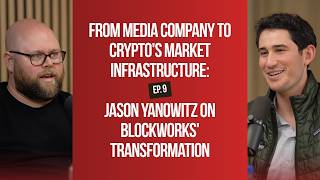
Blockworks co-founder Jason Yanowitz explains how the company pivoted from crypto media and events to a data-and-software platform for institutions. Starting with a $25M revenue media business, Blockworks built three core products: a data API, a Token Transparency Framework for disclosures, and an IR platform. Yanowitz targets $100M ARR by 2028 through enterprise sales to Stripe, Robinhood, and JPMorgan.
Chapters
Last time you were on the show was early 2021, which is pretty crazy to think about because this is 5 years later and your business looks fundamentally different than when we spoke last time. Then you were media and events and solidly media and events. I don't even think you had launched your news business yet. Now you call yourselves a data and software business. Talk a little bit about that transition from media and events to data and software.
Yeah. First off, good to be back. So the goal of Block— so we've been doing Blockwork since December of 2017. So it's 8 and a half years now, and which, you know, feels like a lifetime to build a company, but also like more than a lifetime in crypto. And the original idea was to go build an information platform. We thought the crypto industry, which, you know, we miss who used to work in it.
I don't miss it.
Yeah. Well, we miss you, Jason Yanowitz. We miss you. It was a really retail-driven industry, right? You know, back then. It was like a lot of consumers, a lot of the information was kind of siloed on Reddit and Twitter. And there was like maybe one podcast. There was a news company that used to work at CoinDesk. Other than that, there's really no good information. So our thesis was, look, eventually the space is going to become this big institutional asset class. You know, institutional investors— JPMorgan, BlackRock, State Street, endowments, pensions, family offices, financial advisors— they'll eventually come into the industry. The asset class will be treated as an institutional asset class. And if that happens, the gray-haired folks are going to need a better source of information. They're going to need something that looks and feels more like Bloomberg, CapIQ, FactSet, Refinitiv, and less like, you know, CryptoPanda on, on, you know, Reddit and Twitter. So, uh, that's what we built. So there's two ways to build that company there. You can either start with data or you can, you can start with what we call the, uh, the top of the stack or the bottom of the stack. Top of the stack is qualitative information. It's events, media, it's, it's soft information, right?
News.
Um, and then you can also, or you can start with the bottom of the stack, which is hard information, quantitative information like data. All of our competitors started with data because data, data is way sexier. You can go raise from VCs, you can go, you know, like we're building a data company, you can get higher multiples, all that kind of stuff. The space back then was too small, though. It was like it was— there's just no institutional market. So we started with the media business first. We built out a good events brand. We converted the event attendees into newsletter subscribers. We converted the newsletter subscribers into podcast listeners, and we built to, we bootstrapped the business for the first 5 years, got to $25 million in revenue, profitable. And it wasn't until 5 years in that we thought the market was big enough to go build the data product. So we got into data really, really late actually. But now this is the first year ever that data and recurring revenue will make up more of our revenue than the media and events side.
So if we go back and look at your initial business plan that you and Michael put together, data was always on the roadmap. You always knew that was coming.
It was always the thought was always, can we serve institutional investors. Thesis was crypto will become an institutional asset class. Then, okay, there's going to be the institutional investors come in. Can we serve them better information, whatever, whatever information it was?
Yeah. My biggest frustration when I was at CoinDesk was you guys existing purely because all I wanted was for us to go after the institutional investor class. I mean, I had a colleague, Noel. We launched, you know, institutional crypto. We wanted to do an institutional show. It just never quite became the priority because we were getting millions and millions of page views on our pricing pages. And so we wound up being more consumer. Yeah, but that was always one of my frustrations. Do you remember the very first time you and I interacted with each other?
Yeah, yeah, yeah. I think I, I think I, I think I did something really dumb, which is I think you guys were at a conference coming up. You were, you actually were sponsoring one of our something that we were doing to try to drive attendees. I'm pretty sure I tweeted out something about how much you guys sucked.
Yeah, you pulled the sponsorship the night before I was going to sign the insertion order to advertise for Consensus. I think it must have been Consensus '19. No, it was Consensus '20. It was the pandemic year. Yeah, you got drunk and tweeted out how much we sucked.
I don't know, I got drunk. I don't know.
That's what you told me.
We had a couple of beers.
Yeah, you had a couple of beers and you were like, CoinDesk sucks. And I was like, yeah, well, this insertion order, done.
You have to, as a media, you know, we were, it was just a media company back then. You have to be feisty. You did. You have to, this is something that CoinDesk, I think got really wrong is there was no spirit. There was no, there was no humanity behind the brand. Right.
And so especially when the, when some of the people left who had been there for a long time.
Right. And you still have some great humans, Nick Day and like, you know, you know, a couple people maybe are left still, but like there were, I always thought one of the problems with CoinDesk and I see this with like a lot of the traditional media companies today is they actually have really good talent and humans, but they don't humanize the brand. Right? And so there's a difference between having, you know, there's these media companies, they say, we have a, what are you talking about? We have all these creators in-house. We have all these talent. Like, you know, this person in-house has 10,000 followers. You gotta humanize the brand. And you guys didn't do that. And so I think that ends up hurting. I think you have to do that for the new age media companies.
Yeah, the day after that happened, you bought a subscription to AMO, $10 a month. And I'm pretty sure your subscription renews at $10.
I'm so sorry, Jacob Yanowitz.
I'm pretty sure it still renews 6 years later at $10 a month. That's right. I appreciate that. All right, so talk about some of the decisions that you've had to make, cuz again, you started as this event.
Yeah.
And event to the podcast and the newsletters, and then you build this news business, then you go into data. Talk about some of the hard decisions you've had to make in the run-up to building this data business because Blockworks today does not look like Blockworks 6 years ago.
Yeah, totally. So Jane, so we had built the, um, let's take it to 2020 COVID. We had built a great podcast business, events business, and newsletter business. We're doing, $25 million in revenue, kicking off about $7 million to the bottom line. So it's a nice business. In January of 2021, we launched the, the news business. The news business, we're competing against CoinDesk and other folks like that. The biggest thing— so that was 2021. 2022 was also a great year. 2023, the market completely fell out of like the bottom, fell out of the market. And, um, that's when we said, let's, let's really go all in on this data business.
22.
So May of 2022, we launched the, the re— it was just a research platform cuz we knew how to create content. Mm-hmm. We didn't know how to create data. Right. And it's a, it's a different muscle internally and there's a different cultural dynamic and you have to build an engineering and a product and a design team. We didn't know how to do any of that. So, uh, we started with research to figure out if there was demand and we white labeled other people's data. So that was the first thing is like, how can we How can we put data in front of our customers as cheaply as humanly possible? And today we would just use cloud code, but back then it didn't exist. Um, uh, the progression then is we raised our first outside capital, so we'd bootstrapped the business to, you know, until then. We then raised $12 million at $135 million post-money valuation, um, with the thesis and the story that we were gonna go become this data company. And we were lucky enough that we had some good investors who, who bet on us. Data product starts working in 2023, really starts moving in 2024. And then in 2025, everything shifted and the, and the, you know, the market was hot again and data became really hot, right, with these AI, you know, AI companies and data, you know, data is the new oil or whatever it is. And maybe now compute is the new oil. But we had to make a— we had to basically decide to burn the boats and go all in. And so we cut all of our external podcasts. We trimmed our newsletters from 6 or 7 down to 2. And we made the tough— we cut— we had two conference brands, Permissionless and Digital Asset Summit. We cut Permissionless and we made the tough decision. We actually cut our entire news business. So we got out of reporting the news. We still, you know, we kept research, we kept podcasts, we kept two of the newsletters, kept one of the conference brands. But yeah, we cut— yeah, we cut. And, you know, we, we ended up— there's probably half the business ended up moving on as part of that. And we've completely rebuilt as more I mean, most of the people we hire today are engineers, data scientists, and, you know, designers and stuff like that.
And was, was the decision— because you've been profitable for basically the entire life of your business— was the decision a function of a pure-play data business carries a much higher multiple at the time of an exit, or was it that this was a distraction having media and events? And so let's refocus on data as the play.
Yeah, it's definitely not a distraction. Spending too much time trying to optimize sponsorship and advertising revenue is a distraction. But the, the events and podcasts are basically the growth engine that, that makes it so the data business can grow faster than any of our competitors. Right. So if you think of like, you know, the slope of growth of our business, like y mx b, like our m, our slope is higher, right, because we own the media and the events business. But the real to maybe talk about the product for a second. Like, we originally thought the biz— the product of data was selling data to institutional investors. So we thought the— we thought the crypto funds, we thought the family offices, the financial advisors, the Susquehannas, Two Sigmas, Jane Streets, you know, BlackRock, whoever— we thought they would buy the data and they did buy the data. But investors are actually pretty crappy end customers. They're, they're, they're actually quite frugal. And the way that the— the way that a fund is set up is like a 2 and 20 model, right? So all of the profits are out of the, the usually the 2. So if you have a $100 million fund, you're only making $2 million in fees and you eventually get the 20 when the fund grows.
Right.
But you're actually— the $2 million is not that much money for to go spend a bunch of money on software. So the product was growing and we were actually getting all these new customers, but the ARR was not that crazy. I'm talking like hundreds of thousands of dollars, which is not a sustainable business. So what we realized, and this is— this was the story that all the crypto data companies were selling, which was like, we're going to go build the Bloomberg for crypto.
Everyone wants to be the Bloomberg of—
everyone wants to be the— yeah, exactly. Bloomberg, like white whale of a business. It's like saying I want to go build the next Apple or Google. Like, people don't understand how good the business of Bloomberg really is, right? So anyways, taking us into the product a little more, we, we realized at one point about 18 months ago, maybe 12, yeah, probably beginning of 2025, that if you actually took the same underlying data and we were slicing it like this, if you sliced it like this differently, take the same data but slice it differently and deliver it differently, you could actually shift who your customer set is. So instead of the investor being your customer, which I think when we had talked, when we caught up last, like that's who our customer was, was the fund. Our customers now, the, the enterprise. So any company building in crypto is our customer. So this could be a Coinbase, it could be Polymarket, it could be KPMG. Our thesis is that all capital markets will eventually move on to these public blockchains. These companies are going to need to figure out how to track their revenue, track their users, track their financials. And so, you know, our average deal size 2 years ago was probably $20K. You know, let's call it $20K to $25K ACV. Average deal size now is well, well into the hundreds of thousands of dollars, multiple, you know, recurring 2 to 3 year deals. And it's with, it's with companies who operate in crypto. So yeah, ARR grew, you know, several hundred percent that year, another several hundred percent now. And that's why we were just able to raise this, this big round.
Which is the next question. So you just raised an extended A round, is that right?
Yeah. All right.
At a $192 million valuation. Yeah. How much did you raise?
Not telling you that.
Okay. So you say the purpose of this is to build the Morningstar of crypto.
What is the CNBC headline? That is not— that is not, I would say, our end goal.
Okay.
Yeah, that was, that was an editor at CNBC, I think, chose that for the clicks. But which, you know, I thought it was actually a really well-written article and the reporter Liz did a fantastic job. But I think their editor must have chosen that headline. Here's, here's the thesis of the business. In traditional capital markets, you have all these assets, right? You've got stocks, bonds, currencies, commodities, Apple, Tesla, whatever. You have the assets and then you have the information of these companies that sit at the center of all the assets, right? Which are the information platforms. And Morningstar is one of those companies. But you have Dow Jones, S&P, Refinitiv, Bloomberg, CapIQ, Morningstar, all of these different businesses. And oftentimes the information platforms themselves are actually much larger than any of the assets themselves. Obviously, there's the outlier. 1% of the stocks maybe are bigger, but the information providers are actually a lot bigger. Our thesis is that is one, on capital markets will eventually move on-chain. Like, I will, I will die on that sword that capital markets will all eventually move on-chain. Two, you can— a lot of these companies, if you go talk to them, they're very, very, very bloated and it's very tough for them to move and to shift directions. And three is, and I think some of them have great moats like Bloomberg. You're not displacing Bloomberg. Some of the other ones, I think, um, some of their data businesses resting on their laurels a bit. And then 3 is, you know, we— 70% of our code is now written with combination of Claude Code and Codex. Our usage of tokens, we've spent more on tokens in the last 3 months than we have in the history of the business. Uh, our ability— our products are getting shipped 6.5 times faster this year than they were last year. None of those businesses have that. So if you think about those companies are too bureaucratic to move quickly. AI products are allowing us to move way faster and more and way more efficiently and way cheaper. And all capital markets will move on-chain. We think we can take the best of the products of the Moody's and the Morningstars and S&P's and the Dow Jones and create the next, the next big information platform.
So what are you going to do with the money?
Mostly continue shipping on the data side. But the second thing that's maybe more interesting is we'll consolidate the industry. So if you look at crypto, it's been Crypto used to be this, like, new, interesting, hot new industry. And you were, you were there for that. And now it's, now it's more boring, right? It's just good old institutional adoption. Stablecoins. All the DeFi protocols are getting embedded into every fintech in the world. Stablecoins are eventually going to pass, you know, traditional legacy rails. And that's a— it's a different phase of the industry. What happens when industries move into, let's call it phase 2, is massive consolidation happens. So every founder operating in crypto has to ask themselves one question, which is, do I want to be consolidated or do I want to consolidate?
Right.
And we, we decided, like, you know, we got some interesting, you know, I think there are people, you know, who wanted a US-based— there's a lot of, you know, the Asian exchanges are coming to the US. They want to own maybe a US information platform. So we got some interesting offers last year, but we decided, hey, let's go be the consolidator. And if you look at the space, there's probably 50 different crypto data companies out there. Yeah. So we're going to look to get pretty aggressive on the acquisition front.
You brought customers onto the cap table. Why did you decide to do that?
I always wanted to raise what I'd call— maybe not a good term, but like a party round, which is getting— I think there's real strength in having the support of the whole industry. Behind you as an information platform. You could never do that though if you were in the news business, right? Because then you're biased, then you're biased news, right? And so in our, in our 2023 fundraise, we only let 3 investors invest. We had an angel who we trusted, we had a venture firm who we trusted, and we had a growth fund who put in the majority of the $12 million. That was it. That was the cap table. So once we got out of the— getting out of the news business had all of these downstream impacts. It totally changed what we can do on the product side, actually, which we can talk about. But really, it let us do this party round. So yeah, we've about 20 of our customers, the founders and operators from 20 of our customers invested in the round. So, you know, CEO of Kraken, you know, Coinbase Ventures, MoonPay, you know, founder of Solana, like a lot of our customers, the founders and operators, operators of a lot of our customers invested. So we feel, we feel happy with that.
You feel secure knowing that they're kind of there. They have a stake in your survival.
So, well, I feel secure, but also I know— so we ended up calling 35 of our customers and saying, are you going to spend more money with us next year, less money with us next year, the same amount of money? And anyone who said more money or the same amount of money, we said, we'll let you invest in the round. And so that was, that was how we came to that decision.
Cool way to do it. I'm gonna try that with my sponsors if I ever raise money.
Yeah, exactly.
All right, let's talk product. So you've got, if I go to your website right now, there are 3 kind of core products that I saw, right? Which is you've got your data business, you've got token transparency framework, you've got your IR product.
Yep.
So why don't we start with the data business? Talk to me about what, what is that? Who's buying that? You mentioned a lot of the enterprise companies, Why are they buying it? Like, talk through that.
Yeah, maybe to think of for people who are more in the media world and less in the crypto world, which I guess is the entire set of your audience.
It's you and me, baby.
You and me. Like I said, we miss you, Jacob. So there's a real problem in crypto. So for many years, the problem in crypto was that, you know, you had the investors and the institutions calling us scammers. Warren Buffett saying that we're, you know, crypto is no better than rat poison. Jamie Dimon saying that, you know, all of crypto is a scam. You had—
He fired people. Remember that?
Of course. Yeah. People, you know, many people I know got debanked from JPMorgan. Right. So the debanking was totally real. Right. Elizabeth Warren and the goons, you know, pushed most of us off of the legacy, you know, the traditional financial rails. So that was a real thing. The regulators hated us. Right. Gary Gensler pushed a lot of the industry offshore and the technology kind of sucked. Right. A lot of the chains didn't work, and yeah, a lot of the technology sucked. So regulators hated us, the institutions said we're scams, and, uh, and the technology didn't work. So, you know, it's kind of a tough place to be. Now though, uh, the technology actually works pretty well. Um, the regulators love us and the institutions are our customers. So now we have no excuses anymore. And I'd say the enemy of the industry is ourselves. And we have to look internally. And if we think about, you know, I'd say my co-founder's name is Mike. If Mike and I think about the crypto, like, we're more bullish than we've ever been as on both the technology and the asset class. But we think that the real issue in the industry is trust. We think there's a major trust issue still. And I don't know what your audience thinks of crypto, but I guess they think it's— they're in the former camp. They think it's whatever Gary Gensler thought it was or whatever Jamie Dimon. And so there's a huge trust issue. And what Blockworks is today is a platform that sits in between the issuers and the investors. So on one side you have the issuers of the assets, mainly the tokens, right? Although now you have these publicly traded crypto companies too— Coinbase and Circle and Figure and MicroStrategy and folks like that. So you have the issuers of the assets and they need ways to build trust in the market and tell their story. Very similar to, you know, if you go to— if you're issuing a bond, you got to go to Moody's. Hey, Moody's, rate my bond so I can go raise raise this debt. You also have the investors who have no— they want to deploy the capital, but they have no way of getting institutional-grade information to underwrite the assets. So boom, two problems. We sit at the center and we— it's kind of— we solve both those problems. So how do you do that? You have to have data first. So everything that we do, you mentioned Token Transparency Framework. We have podcasts, events, newsletters. And, you know, this investor relations platform, we're coming out with a couple of new cool products soon. It's all on the back of our data. So we have one of the largest data platforms in the industry. We can pull in every single— so the way that a transaction works, so I send you money on Ethereum, there are just— that's— you're just going to see zeros and ones. So you have to take the zeros and ones and you have to turn them into— I'm sure you remember, like 0x5D, like an Ethereum address. So you take the zeros and ones, you turn them 0x5D. What we do is we actually turn that into real information like, hey, you know, a hedge fund manager in New York just bought $100 million of Solana tokens. Hey, you know, Uniswap, your cohort retention analysis is 11% after 60 days. Hey, Polymarket, your financials are showing that you're, you know, 27% of your traders are now moving over $1,000 a month. We make all that data possible. That's what, that's what Blockworks does. So every product that we have is on top of that data. We have, we have about 3 trillion rows of data pulling in from 130 different pipelines across nearly 100 different sources of data. And that allows us to— we can sell the underlying data as an API business, but more importantly, we can build software products on top of that data. So that's what— that's where we get into the investor relations product. Investor relations product is— so in traditional capital markets, you have You have investor relations as an idea. You ever go to like, you know, you can go to like Coca-Cola's website and they'll have an investor relations tab, investors.coca-cola.com. You have quarterly earnings calls, you have quarterly reports. We're in earnings season right now. So you have Google is doing earnings, they beat earnings. That doesn't exist with on-chain markets. That doesn't exist with tokens. Well, what's about to happen is so we had the Genius Act, which unlocks stablecoin growth. We're about to have this act maybe called Clarity. And the SEC is putting in place these, you know, different frameworks for how to grow these token markets. So the issuers of the assets need a better way to run their investor relations. We have the only platform in the market that lets you do quarterly earnings calls, quarterly reports, track your investors, figure out which of your investors are selling. You can— it's basically a command center for investor relations. You can build, you know, investors.solana.com, right? Very similar to capital markets. Then the third thing is, and that's our fastest growing product right now. The third thing is the SEC is about to mandate that all tokens formally basically disclose information about their, about their company. Who are the founders? Where are you located? Are you located in the Caymans? Are you located in New York? Right. Who, what are your products? What's your revenue? Everyone is scrambling in the industry right now. We've built the, the single best platform in the industry for issuers to do disclosures. So we've been— we've actually worked on it with the SEC. We started building it in July of 2025. We went into the SEC, said, how would you build this? They gave us guidance. We just went back to the SEC 3 weeks ago. So that'll probably be our fastest growing revenue line once disclosures are— token disclosures are mandated by either Clarity Act and/or the SEC.
So talk through the business models of these, right? These three, these three products, right? You have access to the data and I could buy that. I suppose I can have access to IR if I'm a token issuer. I need to have an IR platform and then I need this disclosure side. Like, what is the business model for each of them?
Yeah, three. So three-sided revenue line. Everything we do should have the ability to monetize it in three different ways. The investors, the companies, and importantly, and you'll understand this better than most, the places where people trade, the places of distribution. Right. So let's take, you know, the token transparency framework, for example. So here's how— here's the way to monetize it. The issuers. So we have two— we have two disclosures, things that you can fill out. For people who are familiar with finance, there's things called an S-1 and a 10-Q. So the S-1 is you file it when you're going to go public. 10-Q is like, you know, you got to fill it out.
So if I'm launching Jacob Coin, S-1 would be me announcing Jacob Coin.
So if you were a publicly traded company, the SEC will mandate that you do this. We have what's called the B-1 and the B-2. So the B-1 is like the S-1 and the B-2 is like a 10-Q.
Okay.
So when you launch Jacob Coin, you should fill out— you should fill out the B-1.
Okay.
But why would you fill out the B-1? Why would you ever be transparent? So anyways, I'll get— and I'll get to that in a second. So we monetize the issuers. The issuer pays X amount, let's call it $25K a year to do the initial filing. And then let's call it $5K a quarter to continue doing the quarterly filings. So that's the issuer side. That's one. Number two is you can monetize the investors. So the investors want access to the data and they want it quickly. They want speed, right? Because the speed— a lot of the alpha is in the speed. So the investors Oftentimes they'll pay for like an API access to it. And then, okay, so you've got the, the investors you've monetized oftentimes with an API or via access to our platform, the issuers you've monetized. And then interestingly enough, you can monetize a third way by selling, licensing the data to the exchanges. So right now this would be the Coinbases and Krakens and Binance and Bybit of the world. But eventually it's maybe you can trade crypto on Twitter, maybe Google builds out a whole crypto suite. Maybe, you know, Charles Schwab is now getting into crypto, maybe TD Ameritrade. So they want, in the same way that they want disclosures, information for equities, they're going to want disclosures, information for tokens. And those are high value, you know, let's call it $400,000 to $500,000 a year, you know, licensing and mostly API type deals.
So The data business is primarily like a seat-based API business where people are pulling in data into either, either into their platform or paying per seat for your platform, right?
Uh, yes, but seat-based, uh, seat-based pricing models for software are completely a thing of the past and will eventually go away. So we're moving—
talk about that. Why?
Um, it's, you know, when, when, when the main consumer of your product moves from humans to AI agents, you can't monetize with a seat. So you have to monetize with either how much data they're consuming or how much they're doing with the data. So it's called usage-based pricing. So I think the whole SaaS industry will be forced to move to usage-based pricing.
And the idea is the same way how with Claude, if I'm using a lot of tokens, I have to pay more. It'd be the same thing with yours where if I want to pull a lot of your data into my instance of Claude, I guess using an MCP or something, I would have to pay more. Yeah, you would track that.
It's a way more fair model. Like, there's some software companies that will get completely crushed, and there are some— the basically the valuable software providers will actually probably do better from this, and the software providers who are completely useless will, will lose. And it actually really makes sense if you think about it, because let's say, let's say, um, You know, Craig, Craig Fuller is one of our advisors, right? So Craig's got Sonar FreightWaves. Like, let's say, let's say Amazon is buying Sonar data. Amazon is huge, like, you know, multi, you know, hundreds of billions of dollars. Like the, the, what they get from buying Sonar data is at such a different scale than if like some little hedge fund was trading off of the Sonar data. Right. So Craig should charge Amazon even if there's only, let's say there's 2 humans at Amazon who buy their data. You know, he should be charging them at least $1 million a year. Whereas, you know, someone could— if there's 10 seats, but it's like, you know, $50 million market cap company, like you just can't charge them that much.
And so with the Framework business, so you kind of throw out numbers of $25,000 in the first year, $5,000 each year after each quarter after that, basically as they issue their quarterly earnings. What's the TAM there? Like, is it every single crypto asset? Is it every single asset that's put on the, you know, every capital market asset that's put onto the public chains, like what's the TAM of that? That—
yeah, right now, right now it's all, all crypto. Like we want to win the market for crypto-native assets. So, you know, we could, you know, if we win the market for crypto-native assets, that's probably a $5 billion business right there. Eventually, though, I think I really do believe all capital markets come on-chain. So stocks, bonds, currencies, commodities, it's all going to flow into these public blockchains. And you can look at, you know, we're recording this the week that Stripe just had Stripe Sessions, right? The entire conversation at Stripe Sessions is about stablecoins and agentic payments. What ledger do you think agentic payments is going to happen on? It's not happening on, you know, I don't know, Swift or something like that. Like it's not happening on these, these rails that are built in 1971. So, you know, Visa, Robinhood, MasterCard, they're all talking about stablecoins in their, in their earnings calls this week. So yeah, right now it's just tokens and then eventually it becomes— I mean, we've now we're in late-stage sales conversations with some of the crypto equities to do a lot with them, run and to run their earnings. And this is where the— our events business and our podcast business comes in. The way that people do earnings calls is incredibly boring and archaic, right? So if you, if you go watch an earnings call, A beautiful way to fall asleep, really beautiful way to fall asleep is to watch an earnings call. There are the best founders today in the public markets are thinking about how do you change how you do earnings calls? Look at a company like Figure. Mike Cagney started SoFi and then Figure. 100% of their— it's about 90% of their data moves on a public blockchain. So you can actually see all of Figure's data in real time on dashboards. Look at how Robinhood Robinhood's doing it. They have earnings call, earnings days, and then Vlad will just go on all these podcasts. That's how— that's what the future of this stuff looks like. So we can actually leverage our in-person event experiences to build things like Investor Days for our clients. And we can also use our podcasts as that's probably the— yeah, there's only two media digital mediums that really matter anymore, short-form video and podcasts.
So, so you said before, so we've talked about you moving away from news, but you did keep some podcasts. You got rid of all the third-party podcasts. Now it's just the ones that Blockworks owns. You just kind of talked a little bit about the rationale behind that. Are podcasts direct revenue drivers in 2026, or are they purely marketing for the core data business?
They make like 7— they make like mid-7 figures, but we'll try to take that down. Like, you know, each year we've tried to take the percentage of podcasts and events down. And, you know, things still do well. Like we just had Digital Asset Summit rented. You know, we had a Javits Center, big, big venue. Like we had 3,000 people, you know, did several million in revenue. But like, that's not— you need to figure out how to convert to be successful doing what we're doing. We have to be able to figure out how to convert high margin, high cash flow, but really low multiple dollars into really high multiple dollars. That's the name of the game. So it's fine to still make some money from podcasting and still make some money from newsletters and still make some money from events, but only if you are able to take those dollars and convert them into the data and software and recurring revenue.
So back when we did the first AMO Summit, you and Craig were on stage. We talked about what I, what I coined the SaaS-ification of media, which was a really fancy name for building a data business. And you talked about how you raised a venture round and so you really didn't get penalized for having media dollars on your, on your P&L. Whereas Craig was like, no, I'm at late stage now. Like my investors will absolutely penalize me for having media dollars versus being a pure play data business. Yeah. Just because of the, you know, where you raise your money and when you raise this second round, did having media dollars make it hard at all to raise that money? Because you're not pure play data if you're making mid-seven figures. In media?
That's a really good question. Yeah, Craig was right about that. Yeah, Craig was totally spot on. I think the later, the later stage you get, the more that media gets, gets hit, right? It was interesting. It was having media revenue was not helpful for the raise. Having investors did not like seeing media revenue, nor did they like seeing events revenue, but they really loved when we build our customer acquisition cost, I'm sure, you know, Craig has been on here talking about negative CAC. Like, we had many investors who said, show me the CAC, show me what your CAC is. And when we build our CAC, it's a negative CAC model. So they love that, you know, we're going to hit $50 million of ARR without ever having hired a single marketing person. When, um, I guess we could do it if it's a blowout year, maybe this year, but probably next year. Okay. Um, Uh, we, I don't know when we'll— we don't have any marketing people on staff, right? So we like, I don't— I think that's very intriguing to VCs who have seen, you know, the historical model for VC was you go raise, you know, $100 million, you spend $50 million on engineering and $50 million on marketing. Well, we don't— we've never spent a dollar on marketing. So that is intriguing. What's not intriguing is being like, oh, we did $20 million of you know, ad revenue last year. And they're like, well, I don't, I don't care about that. Like, we had investors asking us to show them P&Ls with media stripped away. And I was like, but the media makes good money. And they're like, I don't care.
Do you think— I've heard people talk about not having a marketing person or not, you know, spending a single dollar in, in marketing. We both have built ad businesses, which is basically trying to convince companies to spend. With us to help them grow their businesses? Do you think that your business could have grown faster if you did spend money? Like every industry in the world pays to acquire customers. Probably.
Probably. But yeah, probably.
So why not?
We don't need to right now. One day we probably will. I would say when we expand out of crypto, because we are so like there is not a single crypto company that does not know Blockworks, right, at this point. So I don't need to spend money on marketing where when we will need to spend is when we're trying to get— when we're really focused on having like Franklin Templeton and Stripe and, you know, like Revolut become our customers, which is— we're close to that. That's probably a year away.
But yeah, I, I interviewed the CEO of Farm Journal earlier this week. I was at an Omidas event and I asked him like, what was a product that really just like you tried to launch and it failed? He goes, we tried We were trying to launch a lead gen business. And what we realized was the farmers already know all the tractor companies. The tractor companies already know all the farmers. They don't need lead gen. They already know each other. They need something different. And so I found that, I thought that'd be an interesting thing 'cause obviously in B2B media we all think like lead gen is the product. Yeah.
Crypto and the farmers.
Crypto and the farmers. They got a lot of similarities. A lot of similarities. You said mid-seven figures in advertising. You obviously, you want to shrink that. Is it that you want to shrink that? Because if you do shrink that, negative CACs becomes harder.
Well, we'll do eight figures in— if you add sponsorship and ads across events.
And, but it is— so is the idea to always keep it at that, like, let's say $10 million number and grow the rest of the pie, or shrink that down where 9, 8, 7, 6, 5?
Yeah, if you want to— if you want the really honest answer, is there's a there's a tough conversation happening internally at Blockworks right now, which is we— do you need to burn the boats in order to scale, in order to go all in on software? Like, is media and advertising a crutch for the, for the software business? Because the media, the media and events business, we've been doing this almost 9 years. It prints, right? And the margins are very, very, very good. So it's, it's easy to keep it going, right? And, and it works like our advertising really converts for advertisers. But do you need to just cut it now to, to, to really align the whole company on this recurring data revenue? There's a, there's an argument that yes, you should just cut it. But there's also an argument like when I look at, you know, Amazon and Walmart and Uber and DoorDash, like You know, I really believe in advertising. Like, I personally really believe, you know, ChatGPT, I think, is like their test— back to ever to $100 million in ad revenue in the history of the world. And it's clearly a subscription product. But like, if I think about Blockworks, when we're doing, you know, $1 billion in recurring, like, we should, we should have ads probably. So, and the real answer is that's the debate internally.
I mean, look, Bloomberg is hands down the greatest data business probably on the planet. And they have an advertising business.
I know, but should they have an advertising business? They lose their media business. So they do a bill.
They don't anymore. I don't think you're going to say they lose money. I actually don't know if the media business loses money anymore. Oh, really?
I didn't know that.
Okay.
So they do 12, 11 or 12 or 13 billion in recurring, right? A billion in, a billion in ad revenue. Like, I would argue that that is a public good. Like they do. Everyone's like, oh, you've got the— they've got the funnel. Like Bloomberg, people aren't buying terminals because you have a news business that shows a chart of the— of a Bloomberg terminal. That's not why you buy a terminal. So I actually think like a lot of the generalist media companies will just be almost seen as public goods, more like a Con Ed and less like a business that should be run.
Kind of a depressing world if we're just public goods and don't have a viable business model.
Uh, yeah, I mean, that's what's going to happen.
You think so? Why?
The business model of— I mean, I mean, there's a— there are outliers, right? Like you just told me, I thought Bloomberg was losing money. Maybe I'm wrong.
As far as I know. But to be fair, they rolled out a subscription business, so they did turn on digital subscriptions and they have hundreds of thousands of digital subscribers paying.
That's true.
So like they used to be a, a negative, you know, some kind of negative CAC part of the business.
Where do you get your news?
Wall Street Journal.
Yeah, you are a relic. Most—
I mean, 4 million people pay for the Wall Street Journal.
That is going to change, I promise you. I promise. I do not— I don't know if it's in 2 years or 3 years or 5 years or 10 years, but like, if we're zooming out and talking about a 10 to 20 year time horizon, I promise you where you will get your news. If you are a 20-year-old who's then 30 or a 30-year-old who's then 40, you are going to consume it on Perplexity and Twitter. Like, you will not— going to the homepage of the Wall Street Journal is over. Oh, I agree with you. It's cooked.
But that doesn't mean that the subscription is cooked. So you are not wrong. I will likely— there will come a point where I, 'cause I'm a Claude user, so there will likely come a point where I get all my news in Claude. I go to Claude and I go in the morning, 6:00 AM, Claude sends me a note and says, here is your daily Jacob briefing.
So then what's Wall Street Journal's model there? Having a ton of journalists on— staff who then they do a $10 million deal with Claude so that—
No, it's individual to bring your license model. So you want, you want to bring Wall Street Journal into Claude, then you need to buy a subscription to the Wall Street Journal. And I get to— you then get to connect that to Claude. But Claude is not training off of that content. Now ChatGPT has a $50 million a year license with News Corp. So that's a bit of a different thing. I'm sure Claude will do some sort of a deal because that's big scale. But that is, I think, the model for a journalism-based publication is it's going to be hardwalled, right? I actually don't think— I think you're right, an advertising news business is a dead business. I'm not bullish on that. But I do think that it will be a bring-your-own-license model. So I buy a subscription to the Wall Street Journal. Once I do that, once the Wall Street Journal can validate that I am paying for the work, what I do with that afterwards should be my right. If I want to consume that in Cloud, great. If I want to consume that on Twitter, and Grok, great. But I think those— I think those publishers are going to prevent all those platforms.
I would like that future. I think that's a great future. But the problem is the AI labs are going to go to the news businesses and offer far too much money for that to happen. So you're, you're, you're a news business, right? And you say, I want to, you know, I'm going to turn on these individualized things. And, you know, Jacob's going to—
his—
Jacob's agent is going to go buy my Wall Street Journal subscription for $10 a month. Oh my God, beautiful. I actually like that feature too. Problem is Perplexity is going to go to, you know, Wall Street Journal or Fox, you know, whatever, and say, hey guys, here's $100 million a year. You can't turn that down. You're going to turn down $100 million a year business.
That's tough.
Yeah. You know, license licensing deal. There's no shot.
So and I think that's going to be and that's always going to be one of the problems with this model. Is a licensing business where you get one lump sum, pure consumption. But you've just talked before about how your business is going to become more of a consumption business. These publishers might turn around and make the exact— couldn't turn around and make the exact same move. Great, $100 million gets you— But news is a commodity now when it's news the way news has been written.
You used to own a scoop, right? You owned a scoop for a day if you were a newsletter, then you owned a scoop for 3 hours, then you owned a scoop for for, you know, an hour, then you own a scoop for a minute, and now you own a scoop for literally 10 milliseconds on Twitter, right? So what's the value of having the depth and context, which maybe— I hope so. But here's like, okay, so, um, depth and context would— so look, by the way, we need, we need good— I, we need to figure this out. I'm just pessimistic on it. Like we as America and as the world needs great journalists. And look, I think that it's good. I don't think these business models are sustainable for a lot of these.
There are a few long-tail publications. You're not wrong. It's the third, fourth, fifth, sixth business publication, right? The, the third, fourth, fifth crypto publication. But I do think every industry will have one or two. Every industry will have one or two because of their ability to go deep enough where none of the AI companies are going to do a licensing deal with them.
Oh, you're talking B2B now?
I'm just talking— I mean, yes, if we talk the Wall Street Journal, I don't think the Wall Street Journal is ever going to have a problem. I don't think the Financial Times is ever going to have a problem.
Okay. So there's probably— there will always be Fox, There's 3 categories. New York Times, Bloomberg, and The Journal.
There's 3 categories.
Put that aside.
We got the big boys.
Yep.
They're gonna be fine. Some of them will get licensing deals, some of them will bring your own license, right? FT invested in a company last year where they are now allowing, it's a data business where they're now allowing you as an individual subscriber of the data business to go buy an FT subscription and bring that into that platform.
Mm-hmm.
You never need to go to the FT again. You can just use your platform.
Okay. So that's what you're talking about.
Yeah. Right. Then you got the other side, which are the ones I love, right? Which are the niche players. And this could be both consumer and business, but it's super niche where the AI companies don't even think about doing a licensing deal with them. But if I am an individual and I want that content in Claude, I'm going to buy a subscription and just instead of reading it on random site Jacoblikes.com, it's going to be bring that into Claude. Then you got the middle, which are the tier 2, tier 3, tier 4 publications that produce the same content as everybody else. The proliferation of content on the internet, that's, you know, Donald Trump did X, right?
Right.
And you got a hundred headlines.
The middle of the bell curve will get totally slaughtered.
There come, a million of the bell curve was gonna die.
Anyway, I agree. I would just say I'm a little more worried than you are. So, okay, so we talked about middle of the bell curve. We're in agreement.
Yep.
Gets cooked. Beginning of the bell curve. I am a little more pessimistic than you because I think the AI companies have so much money that they can put these deals that are too enticing to turn down in front of them. And it's a— they'll basically bleed them out. Then the third bucket is B2B media, which I have historically loved. I know Sean Griffey is a board advisor. Like Jed Nak has been like one of the early supporters. We talked about Craig. Like, I really love B2B media. The problem is that we are witnessing the greatest behavioral change in B2B buyers in the history of the world.
I agree with that.
So if you looked at, you know, last year, 6% of B2B buyers said that they used ChatGPT, that they used an LLM to make a buying decision. It's now up to 68%. So we went from 6% to 68% in one year. In one year, 94% of B2B buyers say that they at one point or another have consulted with an LLM for which enterprise software you'll buy. Yeah. So that didn't used to be the case, right? So it used to be you had to go to— that's, that was the value of B2B.
You go to a publisher, you see the brand, you download a whitepaper, you watch a webinar, and this proves intent, and then you become a lead and.
Right. —that's the business. And here's— so that, that'll really hurt the advertising business of these B2B publishers. And okay, but then you say, okay, you know what, but like, at least they still have the B2B folks who are consuming the information. And my— I would push back on that because 5 years ago, you know, the social— let's use Twitter, specifically Twitter, because I think that's the main competitor to all these news businesses. 5 years ago, Twitter was— it was retail, it was consumers, right? It was individuals. And then COVID happens and COVID forces people to basically get addicted to their phones and to Twitter. And now what's happened is, you know, the 55-year-old CFO, you want to know where that person consumes their news or their information? It's Twitter. It's Twitter. And it used to be that Twitter was for the 25-year-olds and then B2B media was for the 55-year-olds. And now Twitter's for— Twitter's, Twitter's user metrics are just grew 40% quarter over quarter. Right. So it's his name. Who's the new head of product there? Nikita. Yeah, he's Nikita. And people, you know, hate Elon and all this stuff, but like, they are dominating right now. They are going to compete with YouTube. That platform is exploding and you can't fight it. And it's, it's, it's worrisome for B2B media companies because when I look at the B2B enterprise buyers, they're spending their time on Twitter too.
Yeah, look, my concern for B2B media is for the advertising and marketing services companies. And it's a lot of B2B media, right? Like even what Sean built with Industry Dive, what John and George built with Aging Media, like pure play kind of marketing-oriented businesses concern me because there was no better intent than which customer data platform should I buy? Like what's best for my business than me asking that question and getting an answer back from Claude, right? That is the highest intent. And if I ask a follow-up question, then I ask a follow-up question, right? And if I'm a customer data platform and I'm trying to reach those types of people, okay, when someone asks 3 questions about a CDP in a 7-day period, send them my ad. There is, there is no higher intent. So you and I are aligned on that entirely. My concern with the platforms, um, like a Twitter or anything like that is because these AI platforms make it so easy to generate content and to produce content more and more. I spend too much of my day on Twitter, like I am addicted to this platform. I don't know if it's half of the content I consume is fake, if 70% of the content I, I, I consume is fake, if 90% of the content I consume is fake. And if I am a billion dollar a year business CFO, how much am I willing to bet my business on a platform that might be half fake? And I think once that doubt— right now it's novel, right now it's this exciting new thing, it's so fun, it's so this or that— but if it's a difference between your job or you're not, or it's paying $300 for the Wall Street Journal and knowing that to some extent there is a journalistic integrity assigned to this, and that they are going to— because we have this crazy group of people who do believe in their ethics— am I really not going to pay the $395? And then connect that subscription into Twitter and know that I can trust it definitively. And that for me is, it's the fear of, if you think about basic emotions, that the fear of losing one's job is the thing that will make them pay to not lose their job. And that is the reason I disagree about Twitter becoming like the information brain of the world is we just don't know what's gonna be real or not until Nikita figures out how to basically ban all AI-generated content, which would then crater his usage numbers. You do know what's fake.
You internally, you read something and you're like, this is AI slop.
There is a saying about when someone reads a newspaper and they trust the newspaper implicitly until they write a story about a thing they know and they get it wrong. Right. And then they don't trust it implicitly because they know definitively.
Right, there's a, I forget the term. Yeah, yeah, yeah.
I think the same thing happens on the internet. And I think the same thing happens on Twitter where unless I know definitively that's wrong, my brain goes it's right. And I don't mean mine individually, I mean mine as a humanity. Our brains just think it's right, which is why we trust the things that come out of these platforms so egregiously, which is why the saying is you can't trust what's on the internet, right? Or, yeah, so I, I like— I'm, I'm by no means a doomer about this technology, or nor am I a, uh, do I disagree with majority of what you're saying, but I just, I push back.
I agree with you, the buying decisions won't be made from Twitter. Yeah, but Twitter will compete with the time that people spend reading the articles. And then the, the, the platforms like the, the LLMs will compete for the buying decisions. Yeah, I think time is competing. Yeah. Twitter competes with you reading an article on, you know, insert B2B media platform. That's Twitter's competing with that. And then Claude and Chat and Gemini and Perplexity compete with the buying decision happening through the B2B media. Yeah, that's my argument.
I don't, I don't disagree with that. But this is, this is where I come back to. I think that 5 years ago, if you had asked me, do I think that an advertising-first-based business works? I would've said yes. If someone asked me today, should I launch an advertising-based business first, like as a primary, I would probably question that. Yeah.
By the way, I'm, I sound super pessimistic 'cause I'm a little, I am worried about, you need great journalism for honestly society to thrive. But yeah, I'm concerned. There are ways to make it work. Like you know, I don't know if you want to talk about this TVPN acquisition, but there are— when AI slop dominates a platform, I actually genuinely believe all this AI slop is going to drive higher quality stuff to rise to the surface. I think you're so right. Look at the biggest podcasts in finance and tech today. All In, All In, TVPN, Patrick O'Shaughnessy, Invest Like the Best, Cheeky Pint. What do they all have in common? Super highly produced. Yeah. In person only.
Why do you think we're in a studio right now?
Exactly. And that's how you have to differentiate. Well, so it's ironic.
And then I will get back to the questions I did want to ask you, but this has been a fun little detour. I am actually more bullish on print in the year 2026 than I have been, I think, in the past, like since I launched AMO.
I just subscribed to my first print magazine in my life. Actually.
What do you subscribe to? Colossus. I, I bought the first issue. I haven't subscribed yet, but I, I, it looks beautiful. I have it on my desk. So the reason I believe that print actually is, uh, has a place in the future is when, when you question whether the information you see on the internet is true, when you start to doubt that, you're going to look for things to prove quality. Highly produced shows like this— I'm not going to put myself in the same camp as TBPN, but highly produced shows like that, like, that makes you trust them. Right? I think the same thing's gonna be with print. To actually go out and have to find a printer, get a layout designer, all that sort of stuff, is going to be a validator of trust, where someone's gonna go, oh, wait a second, these people are putting together a print product? That content must be good. 'Cause who really would choose to put crappy content in a magazine? Totally. So I think actually, you know, these highly produced shows, I think a magazine, those things actually might have a future. You know, I think I had Nicholas Thompson, who is the CEO of The Atlantic, on stage a couple years ago, and I asked him, why did you go from 10 to 12 times? And he goes, well, when AI destroys the internet, at least I got my magazine still. People will trust that. So that's right. You know, I guess we'll see. Yeah. Colossus is a beautiful product. Yeah. Beautiful.
They should just charge 10 times more than they're charging. That would be my take.
And that's the way everybody should charge 10 times more than they're charging.
Yeah, yeah, yeah, yeah, yeah.
That was, uh, something I think I saw Sam Parr once tweet. Uh, the, he goes, he goes, everyone's launching subscriptions. You're not charging enough. That's right. Like 10x what you're charging.
But not just subscriptions, events too. Like everything. There's only two business there's only two types of conferences that'll, that'll exist, right? In my belief, it's the extreme, extremely exclusive premium high end. And then it's the ones that are able to get so big, they're essentially marketplaces that get set up for 3 days and then shut down. So, and I think the mistake I see on the event side is people have a, you know, they're charging $500 for a ticket and then they increase it to $2,000 a ticket. You should increase it to $10,000 a ticket. And if you can't increase it to $10,000 a ticket, um, you know, other than if you operate in the media industry, or maybe you can't charge $10,000 a ticket, but in most industries there is a way to charge $20,000 a ticket, and you just need to get a little more creative for how to get there.
So the audience just heard that you were gonna buy an AMO Summit ticket for $10,000. That's what the audience heard.
If you set up an event that was like upstate, I get to play tennis.
I have an idea about that.
I get to play, you know, put it on, like I get to, you know, sit down with what, what's the Nicholas from The Atlantic? Mm-hmm. And you know, all these people. Yeah. I'd probably pay 10 or 20,000 bucks.
Well, I'll show you my notebook after this. Sorry. There you go. So speaking of events, uh, you had Permissionless, which, uh, in my, again, slightly competitive mindset, cuz I still had a, always had a soft spot for, uh, CoinDesk. I saw as your attempt to build a, your version of a Consensus. Yeah. You no longer do Permissionless. And I know you talked about kind of shutting a lot of things down, but what didn't work with Permissionless that you decided to shut it down?
So Digital Assets, I mean, DAS was the institute, our institutional brand, and then Permissionless was kind of like our crypto degen retail brand. And, and it was also like our DeFi brand to what's called like decentralized finance. DeFi ended up taking off, but with the institutions, right? So then permissionless was really just this like retail degen brand. And it's like B2C versus B2B. Like people didn't want to pay for a 23-year-old to be walking up to their booth being like, I just graduated college. Like, right, they wanted the— they want the hedge fund manager. So yeah, we made, you know, top line, it did like I think it was maybe $16 or $17 million in 2022 and then just kind of went each year got smaller and smaller and then we just decided to cut it.
What goes through your mind when you're making these decisions to cut? Because our industry doesn't actually have the best reputation for cutting things like, you know, media kind of has a nostalgia to things. They kind of hold on to things. You cut half your business basically, right, between Permissionless and a lot of the news. Like, talk about the thought process that goes into making that decision.
Uh, each product that we have should individually be able to generate $10 million a year profitably. So if we—
$10 million in revenue profitably or $10 million profit—
$10 million in revenue profitably. So if we don't think something can get there, you, you have to at least have the conversation. Should we shut it down? And if you think about Blockworks as a, you know, a, you know, maybe a $500 million business, yeah, you can kind of keep all these things. But if you want to take Blockworks public and you want Blockworks to be a $10 billion business, It's like, well, what is this little conference that's like a total pain in the ass doing for us? So I think that's why, like, you know, if there are— I don't know your— the audience type, if it's more like executives or if it's founders, but like, I think it's helpful for founders to get extreme clarity on the actual end outcome of the business. Like, not, not on the, you know, we're just running this, seeing how it goes, working our hardest. Like, you should have extreme clarity on like, do you want to sell the business? Do you want to sell next year? Do you want to sell this year? Do you want to raise private equity, do you want to raise venture, do you want to go public, do you want to sell? Like, do you want to try to sell to a strategic? So like, you should have that really baked out because then the— you get more clarity of decision-making around like product decisions, I'd say.
And so does the Digital Asset Summit incrementally become more of like a user conference for your customers?
Yeah, yeah, yeah. That's a good way to think about it. It's— it's right now it's the single largest ARR growth driver for, for us as a business. Okay. So, uh, we just had Digital Asset Summit, made several million in revenue. We, we have really great margins on that, but the best thing about it is it's gonna drive about $8 million of incremental new data revenue for us. Um, and so what this actually looks like is, you know, maybe using like two examples. One would be our token transparency framework. The product team said we really wanna get in front of, you know, the SEC again. And, you know, they didn't respond to my last two emails, or we really want to get in front of the CFTC, but we don't know them that well. Boom. So we invited, you know, them to speak. We end up— the speakers were the chairman. We got the chairman of the SEC to speak and the chairman of the CFTC. Boom. So then we get an hour of their time after they speak to, you know, do a one-on-one meeting. Boom. That leads to a meeting in D.C. where we get to go to their office on the commercial side. Hey, it'd be really nice to work with like Fidelity. Great. We invite the head of digital assets at Fidelity to speak at the conference. We are then able to line up an hour-long meeting with them. And, and now we've got a big commercial deal coming from it. Now, the purists who are listening to this would say that's church and state, editorial sales. And I, I disagree. I just fundamentally disagree that you have to be so strict with that. If we were still in the news business, we couldn't do that. Now we're in the software and data business. I'm putting our customers on stage. I don't need to think about this stuff. And my proxy for like, if we're blowing it with church and state, and is like, are attendees continuing? Is it still a good event? Or is the NPS of the event going up? And it is, so.
You also have an advisory business, which is like a white glove kind of, talk about what that business does.
Yeah, yeah, so consulting's like a totally crap business. It's even, there's, you know, maybe the only business model that's worse than ads and sponsorships is consulting. We have what's— we have essentially a consulting arm that serves as— if you've heard the term like the Palantir folks, like, you know, forward deployed engineers, or it essentially serves as our solutions engineers, which has now been rebranded to forward deployed engineers because Palantir got so hot. They basically go into companies, they— into our customers they figure out the whole business. They basically work at that company and they try to develop products that could work for them. So maybe there's a, you know, lending is really hot in crypto today, like Aave and Morpho and Spark and MakerDAO and all those guys. So, you know, let's say they port into some of those businesses. They might realize this is a real example that these folks have a real problem managing their credit and their risk. No surprise, because these things have scaled to, you know, tens of billions of dollars of loans outstanding. So they say, hey, let me just like help you guys do consulting and help you guys. Boom. Okay, that's nice. Maybe we get paid like $100K or $200K a year. But the real benefit is that they're able to then pass that back to our product team and say, hey, can we build a product around this? This customer A, B, and C all have the same problem. Can we build a product? And so that's where a lot of our product development comes out of that team.
So consulting doesn't make a ton of money, but it gives you a ton of great ideas.
Yes, exactly.
So if we look at the business earlier, you said if you blow it out this year, $50 million ARR.
I don't— but I don't think we'll actually do— I— that is like if you blow it out. I mean, if it's a crazy year, I would guess that's, you know, probably 20% too high.
Okay. So $40 million in ARR this year. When you and I spoke in October, when you shut down the news business, I think that was in October. Yes. Right. You said you were projecting to finish the full year at $35 million in revenue across the board. Yep. Is that true? Did you hit that number? Yeah. So, but that's revenue across everything.
Across everything. Right. So we— I don't— I think the exact— the recurring revenue was such a low percentage of that.
Well, yeah, I think it was— yes, it was a smaller percentage of that. If you assume that events and sponsorship and podcasts was like, you know, $10 million, right, or $12 million, then the rest was must have been recurring. So you think the fastest part of the growth now is that ARR? Exactly. And you think over the next few years there's a path to $100 million and beyond?
Yeah, yeah. The goal, the goal is $100 million of ARR in 2028. $100 million.
So that's— you're going to double the business in 2 years, more than double the business in 2 years. Yeah.
I mean, we'll go from, you know, about $500K of ARR to $5 million of ARR to maybe around $40 million of ARR to next year. Let's call it— who knows these crypto markets, right? But, you know, $60 to $70 or $80 million of ARR to— yeah, the goal is over $100 million of ARR.
How exposed are you to the crypto markets? Like from a cyclical perspective?
We're exposed, but we're way less exposed than we used to be, right? So we're exposed in the same way that, you know, like, and, you know, a healthcare company is exposed to a healthcare downturn or an AI company is exposed to, you know, an AI downturn. But we're no longer exposed in this like nasty, vicious, volatile way that we used to be, which is, you know, for people who aren't listening, like oftentimes media companies in crypto, like I'm curious if this was the same at CoinDesk, but for us, like if it was a bear market, like our revenue could fall 70%. It was nasty.
Our— I mean, ConsenSys did $17 or $18 million in 2018 and 2019. I think it cut in half. Yeah. So exactly.
So yeah, I mean, we're in a bear market right now. We're in the absolute bottom of the bear market. We just had our best quarter in history. So And the business is still profitable? Yeah, still profitable.
And is that something, you know, kind of going back to that conversation about marketing, a lot of tech companies avoid profitability. They say if you're profitable, you're not growing fast enough.
Yeah, yeah, yeah. That's what our board is pushing us to run around breakeven, which is we're, we're, we're gonna run it like maybe we'll probably try to hit like either breakeven or like, well, maybe we end a little like make $1 or $2 million this year.
And so why, why, why the, is just 'cause you want to grow faster?
Well, you— if we were losing— oh, why not run it way more profitably? Yeah, because we need to just invest the money into engineers and data. But also, like, so imagine how a company used to get built in tech, right? You would raise a bunch of money and then you'd spend half of it on engineering, half of it on marketing. You don't need to spend that. We don't need to spend the money on marketing. But also, you don't need to spend the money on engineering anymore either with Claude and Codex. So then you—
so let's, let's go to the topic now of M&A. You raised money in part to help fund acquisitions because you have a lot— you either are the, the— what was the phrase you used?
The aggregator, or you get aggregated, consolidated, or you get consolidated. So what are you looking for in the acquisitions? Yeah, yeah. We want— there's basically different types of data in crypto and we need to pull it all into, into the company, into our data stack. So there's market data. This would be data that like the, you know, Coinbase and Kraken have data that they spit off. It's like the data exhaust of the exchanges. So you're buying— you'd be buying their data from them. You could— there's companies that exist to buy that have basically our market data companies. There's on-chain data, which is where we do the best right now. There's sentiment analysis data like what's the sentiment on Twitter? There's people at the very bottom of the stack that turn the zeros and ones. Right now we buy from other people, we buy data from other people. We could verticalize the whole data stack. So, you know, if the transaction happens on a blockchain, that's zeros and ones, then someone has to convert that into 0x5D sent to 0777. We don't own that layer of the stack right now. Eventually we should. So there's a, there's a lot of, and then each blockchain has different data complications. Like there's, there's a, there are 3 niche data companies for Solana. There's like 4 niche data companies for Ethereum. There's like 2 amazing data companies that are the best for all staking data. It shouldn't be, it's like a bunch, you know, it's a bunch. It doesn't make sense to have the market like how it is right now.
Who are probably in the crypto space, who are your closest competitors, the ones you don't want to name drop, but you will?
Probably Messari is our biggest competitor right now. And is— does the—
can the industry support multiple—
question, by the way, the ones you don't want to name name, but I'm going to force you to.
Yeah. So Messari, which was founded by my former boss when I was at CoinDesk for, I guess, for all of like 4 months before whatever. Um, can the industry support a Blockworks and a Messari, or is it a winner-takes-all kind of model?
I, uh, I actually don't— I believe that most industries, that the idea of a duopoly is a, is, is a fallacy. And that, um, it was kind of this era of tech where we thought you could have a bunch of duopolies and, and, you know, Uber and Lyft, right? Like Airbnb and VRBO. Like, Well, how's Lyft doing today? How's VRBO doing today? So I think the goal of a founder of a— the goal of a venture-backed business, which should be to— it should be to own the entire market.
So it is truly a winner takes most. I took a Lyft home actually from the airport yesterday, ironically. So winner takes most kind of—
Uber's market cap, I think, is 30 times larger.
Yes. No, it absolutely—
at one point it was. That's very similar to what we have. So yeah, look like the industry can support multiple, but you should, the goal should be to win the whole market.
So one of the reasons you have the media business and one of the reasons you have the events business is it kind of gives you distribution. You have that negative CAC kind of scenario we've talked about. Bloomberg is the largest data business I think out there, one of the largest out there. They've got unbelievable distribution because they've got their terminal in, I don't even know how many people's offices, right? And not just hedge funds, but you know, Every CEO probably has a terminal in their office, so they've got probably the single greatest distribution, but they just don't really pay that much attention to crypto. S&P doesn't pay that much attention to crypto. Like these players don't yet pay a ton of attention. What happens when Bloomberg decides to pay attention to crypto and they turn and they— what is your competitive moat when Bloomberg, which everyone wants to try to compete and no one has ever beaten them. Yeah. Yeah. When they turn on you.
We sell our data to Bloomberg like they're, they're, they're customer. Like they're, they're not— I don't think of them as being a competitor because the customer segment is different. Right. So they sell to the investor. They can keep that market. CapIQ, FactSet, they sell to the investor. They can keep that market. And by the way, they have done it. They turned on crypto in 2017 and then they fired the whole team. Right. And then they built the crypto team back. In 2020 and 2021. And then what they do, they fired the whole team. And then what they, what they do in 2025, 2024, they built the team back. And what did they do in 2025? They fired the whole team again. Nearly the whole team again.
So is that because they're looking at it the wrong way? They're looking at it as like purely just asset class. And when asset class is up, good. Asset class is down, bad.
No, I think there's a real credibility problem with crypto. Like people think it's a scammy there's a real reputational problem with crypto and hopefully we can play a role in fixing that. But kind of like, why would we be associated with this thing? So for 2 years, Bitcoin was the most searched asset on the entire terminal. So the demand is there. I— yeah, there's a real reputational problem with crypto that's changing, right? We had like— right. We had Genius Act, like stablecoins are you know, obviously taking off, like, you know, the industry is becoming changing, but I still think there's a real reputation problem.
So do you— is the path for Blockworks— do you see the business can get to the point where I could buy Blockworks stock on NASDAQ, or do you think that it's going to be an S&P or a Bloomberg or one of these massive companies buys you?
I think when we IPO, it'll be both on a NASDAQ or an NYSE, but it'll also trade on a public blockchain.
But the answer to the question is, is you think IPO for your business? Business. That's the future. You're not going to sell to a strategic. No. When do you think you're going to IPO? When do you think you'll be big enough?
Oh man, I don't know.
But you said it, founders have to have an end date in mind and know exactly where they're going.
You get to $100 million revenue in 2028, 2029 or 2030.
You'd might be my first. No, I guess you'd be my second public company guest at that point. I had Neil Vogel was on the show once and he's now the CEO of the very recently converted IAC to People Inc. So what does come next over the next few years? Like, is it just, just heads down, more product? Like, how do you think about that?
We dominate the crypto native market, I would say, and you can build a nice business there, but we have to really start selling into the enterprises. So we have to do better selling into Stripe and Robinhood and Revolut and JPMorgan. And, you know, so that, that's a big, that's a big market for us that we need to really do better at selling into. Um, that's, that's one focus is like enterprise sales. Second focus would probably be, yeah, rolling up this pretty fragmented data industry. And third would just be we need, we need more data. Data is super valuable. Um, we, yeah, we just need more data.
So you mentioned enterprise sales for a second. So you got really good at selling sponsorships. You got really good at selling ads. What is different about selling enterprise software subscriptions compared to selling sponsorships?
A lot. So we mentioned, you know, we rolled off about half the company. Like, you know, we also turned over about half the sales team. Like, this has been a very big change internally, I'd say. We had a leadership team of, I don't know, maybe 7 people. And we, um, we, we, we let the all 7 people go. Um, like we've, we, we turned over the whole team basically. So we talked, we turned over the whole leadership team. We turned over about half the company.
So what is different about selling those two things? Because you're selling— you sell—
it's a different sale. Like, you know, one is the sale of advertising is like, we'll get you in front of the right people. And there's very— it's very tough to measure like ROI. It's kind of fluffy and like, uh, you selling a product, you have to deliver value every single day to a number of different stakeholders inside the business. It's just a different— it's actually pretty much every single thing is different. Yeah.
So on my way here, uh, you sent me a brain dump of all these things we could talk about, and, and there's like 15 bullets in there, and I'd already written my questions down. But one of the things that kind of jumped out to me, and I wrote it down, was, um, you wrote that the Substack era is mostly cope. Yeah. What did you mean by that?
Um, I think everyone's got a dream of going out on their own and doing something, which I applaud, and Um, but there's a narrative, I think, where it's like, you know, all these— I am worried that, as we've talked about in this conversation, that Twitter and AI will really hurt media companies. I do not believe that Substack is going to really hurt these media companies. Uh, you have, you know, let's call it, I don't know, 100,000 people writing Substacks. I think there's about 20,000 of those that are paid Substack, that have a paid Substack, and there are 45 of them who make $1 million a year. So you have 45 people out of 100,000 making just $1 million a year. So that is not, that is, that math don't math, right? That math don't math. And that's not a million bucks going to the person. That's, if you're doing a million bucks, you oftentimes have an editor, Maybe you have a free— a couple of freelancers. You got to have someone create your images. I love— I love— well, I'm an investor in Beehive, so I like Beehive more than Substack. But yeah, the math. The math. No math. Math is math.
All right. I want to end the show with the last 2 questions I ask every— every operator that comes on. First is, what is some advice that you would give operators looking to decide where to place their next big bet? Uh, niche.
I still— I— the thing that B2B media really gets right is like riches are in the niches and you got to go— you have to own— like the story of Blockworks is basically owning one niche and then going a little bigger and then owning that niche and then going a little bigger. So, you know, crypto was so frickin niche in 2017, but we didn't just do crypto, we did institutional crypto. And I would just say like Unless you are a founder who can go raise hundreds of millions of dollars of capital to go attack a massive market, start, start with, start niche.
My second question is, what is one thing that you are absolutely obsessed with right now? And it can be professional or personal, just something you just, it jazzes you up.
I'm, I mean, I'm hope, I'm guessing a lot of people say this and maybe it's a boring answer, but like I'm, I'm hooked on Claude code. Like, I'm probably— I probably spend 3 hours a day in Claude right now. I've got all these personal apps on my phone. I've just built an app that, you know, shows me everywhere that I've walked in New York. So it builds a cool map. I've got a new child at home and it helps me build the schedule for her day. I've got an app to— I get these things called cluster headaches. I've built a personal— I couldn't find a headache app that I like, so I built a personal cluster headache app. I'm just obsessed with this. Like, I think you can build personalized technology for every human. It's really cool. Well, I love it.
Jason Yanowitz, thanks for coming on the show.
Thanks, man.
More from Jason

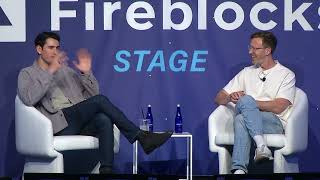
Stablecon 2025 - Fireblocks Stage: A Fireside Chat with Jason Yanowitz & Simon Taylor

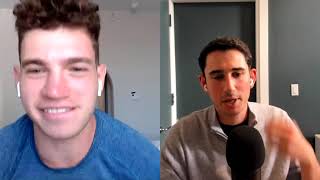
Lessons From Building A Crypto Media Company — Jason Yanowitz | The Danny Miranda Podcast 179