Building Brands in a Bear Market with Jason Yanowitz
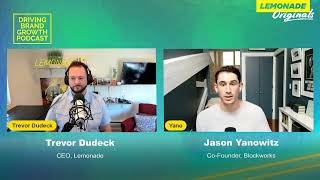
Jason Yanowitz, co-founder of Blockworks, explains how to build a crypto media brand during a bear market. His company launched Blockworks Research, an institutional analytics platform priced at $2,500 per seat that aggregates fragmented token and governance data. Yanowitz argues bear markets are ideal for capturing market share and that crypto projects should ship products and announce as if in a bull market.
Chapters
Lemonade Originals.
All right, welcome to another episode of Lemonade's Driving Brand Growth podcast. I'm joined by Jason Yanowitz, co-founder of Blockworks. Thanks for being here, bud.
Thanks for having me. Appreciate it.
Yeah, absolutely. Um, well, I am excited to catch up with you. I was lucky enough to attend Permissionless and, uh, just wanted to you know, sort of extend my gratitude from an audience, you know, attendee perspective. I thought you guys did a great job, and I'm sure there were like a million things going on in the background to pull that all together and fires to put out like there always are with, you know, big events. But how do you feel after, you know, getting that in the can, so to speak?
It was nuts, right? So we've been hosting events for 4 years now, longer than 4 years actually. And this was, you know, a lot of our events are 500 people, 800 people. This was a several thousand person event, right? So we've never taken a swing this big. And yeah, I mean, just the logistics and operations that go into hosting a several thousand person event, or it is no small task, but we have like such an amazing team. And yeah, it was great, right? Coinbase came in as the title sponsor. It was really fun to have them support. OpenSea built this whole NFT gallery there. It was just a really fun event. But I'd ask you, I know this is your podcast, you're asking the questions, but I'd ask you, what was your favorite part of the conference? Like, what, what did you think of the conference and what was your favorite part?
Yeah, I, you know, I felt like, again, for one thing, like, whatever event you're going to, there's always just like, you know, a perspective of like, how well organized is it? Are there things that like distract you from what you're there to enjoy, whether that's listening to someone on stage or networking with people. That is my number 1 compliment just because that again takes you out of the purpose of being there. If it's like, oh, this thing's running late or that issue over here is very obvious and you're watching people stress out about it, it takes you out of the world you want to escape to for that event. I feel like you guys did a great job. Again, I know you're solving things in the background, I'm sure, but perspective from the attendee was seamless. I just really enjoyed the cadence of like, okay, there was stuff going on on the big stage, there were the little breakout areas. I really liked in particular, it was like during the day, okay, I'm going to learn, I'm going to do a little bit of a little bit of networking, but more so like, I'm gonna get good information, good content, good learnings. And then you guys had a lot of events set up and planned so that no one had to figure out what they were doing, like in those evening times. And that was where I feel like I got some of the best experiences. And actually some folks from your team, you know, invited us out to a couple of those, those particular events that met some great people at, just that we never would have anywhere else, right?
Oh, that's good to hear.
A couple of them are in talks to become clients. So, you know, knock on wood that happens. And, you know, we honestly couldn't have had it go better.
Amazing. Amazing. Yeah, I'm happy to hear that. Yeah, I mean, the goal of the event, the goal actually just, the event came out of a problem in the industry that we saw, which was there was no event that brought the entire industry together, right? You have some amazing events like, Solana hosted this awesome event in Lisbon in November. Avalanche had an event in Barcelona. Bitcoin Magazine hosts Bitcoin Miami, right? But there are all these, like, all the events, like the Ethereum Denver, ETH Denver. But all of the events are, like, very focused on one asset class. And when you get there, you realize, like, okay, this is great. Like, our whole team went to Bitcoin Miami in July of 2021. We walked away saying, wow, phenomenal event. But, like, there's so much else going on that's interesting outside of Bitcoin. But there was no one place for the entire industry to kind of come together and for you to hang out with all your crazy internet friends. And so we decided to build that. It was really fun.
I couldn't agree more. Like literally we went through sort of this exercise of, okay, where are we gonna, what events are we gonna go to? 'Cause we don't tend to go to a lot as a company, as like a marketing agency. So for us, it's a little more strategic. Yeah, we want our team to learn, but we also wanna meet potential clients and that's a big part of going to an event. And just going to something that was focused on one chain or one company or one product just feels weird, right? There's so much going on. Now again, like you said, no shame on those other ones, but that was what I was looking for. So it definitely checked that box for me. I was also there when you guys announced Blockworks Research, which I wanted to ask you a little bit about how that's going and just ultimately your vision for it, because I thought that was really cool.
Yeah, of course. Just zooming out for a second, everything that we do at Blockworks ties back to the core thesis, which is the core thesis of Blockworks is that crypto will become one of the largest asset classes in the entire world. As that happens, the number of investors who come into the industry will grow exponentially and will grow by orders of magnitude. And those investors are going to demand a much higher level of information, right? When, when Mike, my co-founder, and I both got into the industry, the information was basically siloed across like Reddit and Twitter. And for the industry to progress, uh, and advance in a responsible way, there just had to be better information. And so that's what we're building with Blockworks. And so the reason I share that is like Blockworks today is really looks like a media company. It looks like a digital media company and a publisher. We own and operate and have built some of the largest conferences in the industry, one of the largest newsletters, the largest podcast network. We have what I believe to be the best editorial team where we break news and cover the space in a really responsible way. Um, and that's what— and really what we've built over the last 4 years is this huge community, uh, an audience of investors who rely on us for information. The reason I say that is a prelude to the research product. We feel like we solved a big need, which is better, almost top-of-funnel news or information. It's like news and podcasts and newsletters and conferences and just this hub for investors to understand what's going on in the industry. What still feels like is missing in the industry is when you want to go deeper, when you want to dig into the tokenomics of a project, when you want to figure out the governance of a project, when you want to get much better data on some of these projects and ecosystems, it exists, but it's really siloed across a bunch of different places. When I'm researching a project or an ecosystem or a company or a DAO or whatever it might be, inevitably, you end up with 60 different tabs open. I know you know that feeling. Everybody in crypto knows that feeling. What we're building with Blockworks Research, we launched it about 2 weeks ago, We already have a couple hundred folks signed up, which is super exciting. And it's this institutional-grade research and data platform where you pull all of that stuff into one place— data, charts, governance, tokenomics, price information, but also qualitative information about the project. It's really exciting to have all that place and all that information in one place for what we believe to be the first time.
And it's interesting because I was going to ask you just, you know, I'm always curious, like, where people get their information for anything, whether it's crypto or just their news. And, you know, as an agency, like, we do a lot of social listening and, you know, research for projects, um, you know. And if it kind of came out of that, you know, need, which you've, you've, you know, answered and described a little bit, but also, um, just sort of, you know, how you've, you've pulled together those different sources so that other people don't have to. Like, how How difficult was that in designing the project— sorry, the product— and also just figuring out what are the good sources? Because the space is still new.
We have an amazing engineering team, an amazing engineering and product team. We've also hired— we've built an amazing research team as well. So it's basically just a combination of the research team, the product team, and the engineering team. I think I'm very biased, but they're really world-class at what they do. And we spent several months building the initial team and building the initial product. But I think the most important thing is we're not done and we're never going to be done. Right. So we call this V0 internally. So we launch V0, we launch what we feel is almost like a beta of the product. But it works. We have a couple of hundred people who have already bought seats. Each seat is $2,500 a year. You, Trevor, could buy a seat for $2,500 a year. Or, you know, you, the head of investments at JP Morgan, could come in and buy 100 seats, right, which might cost you much more than 20, you know, 100 times $2,500 a year. So we've got a couple hundred seats that have already been purchased, um, and we're really, really excited about it. But we very much see it as like V0, and we're still continuing to add, you know, better dashboards, better tokenomics information, better governance. Really, I mean, the pain point that we're trying to solve is also the pain point that we're encountering, which is the data is all over the place. So, you know, we— but that's our job. That's one of the value propositions that we provide is like figuring that out for you and pulling it all into one place.
Do you feel like in a time like this where we're, you know, in— you know, I don't even know, like, do we label it bear market? Do we say we're in bear market discussions? You had this great post yesterday, which was or sorry, was it yesterday or a couple days ago? Uh, sort of like, how do you know when you're in the bear market? Which I thought was great, by the way. Um, uh, but when you're in a moment like this, you know, do you feel like the data, the information, the research, the media, um, gets better, gets worse, gets harder to find? Like, what's your perspective on that, just based on sort of the world events?
It gets, um, the quantity goes goes down, but the quality goes up. I would say, uh, everybody's a crypto expert when prices are going up, right? Everybody's a genius investor, uh, yeah, everybody's a genius investor when you're, you're investing behind this hurricane of global macro stimulus that's been going on for, uh, I guess you can say one decade, but really decades, right? Everyone's a genius investor then. Um, and really what's happened is like you could throw shit at the wall and everything would stick. Now, you throw shit at the wall and most of it slides down. Only the really, really good products are going to make it. Only the really, really good investors are going to do well in this period. Thankfully, Blockworks launched in December of 2017. If you think back to the last bull market, the top, the absolute tip-top of that bull market before it all imploded was December 2017. That's when we formed the company, right? And so we built through 2018 and 2019. And so I think we learned a lot of valuable lessons that I think maybe some of the newer companies and individuals will learn in this next bear market. Um, but yeah, I mean, I— you referenced that tweet. We, we were, we're definitely through stage 1 of the bear market where people are kind of saying, is this a bear market? Like, are the narratives dead? You've got these mini narratives that kind of pop up week to week. That, that's stage 1, right? Stage 2 is when there's just max pain. A lot of the folks who are gigalongs and permabulls, they become forced sellers. That's the stage that we're in. Celsius, Three Arrows, there's a lot of basically stuff getting uncovered right now. There's a lot of pain, I would say, in the market. Stage 3 is where folks look to buy, which is The part that I think a lot of people are forgetting about is when you want to walk away, when people start quitting, when the investors stop allocating, when the media kicks you when you're down and says, this is all a scam. Stage 3 is the tough part. Stage 2, right now, it's chaos. Chaos is fun. Chaos and pain, this is excitement. Stage 3 is the toughest because it's boring. It's quiet. All your favorite follows on Twitter, go away. Like, even your favorite podcast, they'll move to like once every 2 weeks instead of twice a week. Uh, that's the tough part to get through, and that's— we haven't reached that part yet.
How do you guys plan to like approach that softer spot as a, you know, media organization? When—
yeah, I mean, when others basically sit down, we're gonna stand up. So we see this We see the bull market as a time to really just race and sprint and like keep up with the market almost. Like no one— it's very hard to get ahead in bull markets if you're structured the way that we're structured, right? We've never raised any outside venture money. We've bootstrapped the whole business. We like, we're not gonna go head to head with someone who raised $100 million, right? That's just not in a bull market. In a bear market, this is when we win. Like in a bear market, we're gonna capture market share. Everyone's laying off 20% to 30% of their team, we're continuing to hire. We're really, really excited about what this means for us. I think that Blockworks comes out of this really well positioned. Let's say we have x% market share today, it's going to be x times 3. Yeah, in a weird twisted way, I am looking forward to just a period of quieter times.
I tend to agree with you. Smaller agency compared to like the bigger, you know, holding company agencies. And so I always look at it that way too. Like these are those opportunities where, you know, the huge brands are cutting their budgets and, you know, not that we don't work with some of those as well, but, you know, we have bootstrapped it. We haven't taken on investment. We're not answering to a VC group. You know, we have the ability to kind of pick our own path and look at the opportunities that present themselves, but also create opportunities, right? And that's what's really cool about these times is like looking at the needs that are uncovered. And sometimes those get uncovered because of the problems or those challenges that you described, right? You don't see them until that happens. But I think it's exciting.
I think like advertising is a good example of one way, one place where you can gain market share if you're a company like Blockworks is If you are just providing brand awareness, there are a lot of big brand awareness deals that happen in a bull market, $700 million spent on a 20-year deal to sponsor a stadium. Those deals don't happen in a bear market. You have to be driving results. That's where Blockworks does really, really well is when someone like an Aave or Coinbase or whoever it may be, like one of these hundreds of clients, they come to us and they say, I have no interest in brand awareness. I want to come to you. I want Here's my product. I need to spend this much money to convert this many users. You have podcasts, newsletters, conferences, webinars, research, et cetera. You tell me how to do it. And that's where we really shine. Right.
Because you're putting them in front of someone who, if they're there, they're actively looking for this information. They're actively supporting a project or a product. So it all makes sense. It's not just someone in kind of a tourist mode, right? So 100% agree. And, and, you know, I've also heard you talk a little bit about this as well, but like having, uh, more companies, whether they're in, in blockchain or whether they're a brand in just kind of normal Web2 category, um, whatever it may be, but just— and I, I talk about this a lot as well— thinking and acting more like a media company, um, and just the importance of really carrying yourselves that way so that you can approach the way you share information, the way you make content, the way you market yourselves in the mentality that you guys do because you are a media company, obviously. But for a shoe brand or a clothing company or someone who is just another technology piece of the puzzle in Web3 may not think of themselves that way, but how How powerful do you think it can be when you sort of switch that, you start to look at your output as sort of like a media arm to the company?
I mean, every company is a media company, whether they know it or not. The thing that the internet did is it broke down barriers for communication. There used to be, what, 1950s, 1960s, there were like 3 television channels, 3 media companies, 3 television channels. Excuse me, 3 television channels, more media companies. And you, to get something across, you either had to go on one of the television channels, you had to go on like the radio, or you had to like put your newspaper out into the world. Now you have YouTube, you have Medium, you have Instagram, you have Twitter, you have podcasting. Any company, any individual can become a media company if they'd like. And so yeah, I mean, you don't have to invest in a printing press, you don't have to invest in a satellite or a sales team anymore in order to distribute your story, right? You can one person can have a million followers. And that's a crazy thing. And I think, yes, still a lot of, I think a lot of companies and like, I hate this word, but like the proverbial like Web2, right? Like the Web2 world understood that. And you look at folks like HubSpot, right? HubSpot's content marketing arm is absolutely brilliant. And Salesforce owns one of the largest conferences in their industry. It's not a conference that they have to go sponsor, they own the thing, right? And so that's, A lot of the Web2 companies have kind of mastered this. You still haven't seen it in crypto. Like, some crypto companies try to launch their own podcast. Nobody does it well. Eventually they'll figure out how to do it. Um, but that's— I mean, yeah, that's kind of one of the ways that we step in and help folks too. Um, but I'm— that's— I think they'll figure it out. I think crypto companies will end up figuring out how to have their own media arms, which is really content marketing, is a So sexy way of saying just content marketing, but—
And that's why I bring it up is I do feel like it's a gap, you know, and to your point, not that they won't figure it out, you know, through folks like yourselves and ourselves, but it is a powerful thing, like just switching that sort of narrative in your mind as a leader of those businesses to say, why don't we start looking at who we're trying to reach? Let's say, you know, we know a big part of our audience is not onboarded to crypto yet for our token or whatever it is that we're pushing. How important is it for that Crypto 101 information to be a constant tap that is being pushed out there on top of how our product works and how it rewards people, right? I think that's an easily forgotten piece, right? People are constantly marking to, you know, more savvy, um, basically the same liquidity pool that everyone else is, right? So how do we start to get outside of that, um, and, and make sure everyone else starts to get outside of that too? Because if we don't, we'll never expand this universe.
I would probably actually disagree with you on that take, um, which probably I You're in the majority. I think most folks would disagree with me here. I don't think that marketing towards like, or like creating content for the 101 crowd, the like trying to write content for the non-crypto folks to get them into crypto, like that's not the way that tech adoption happens. Adoption only happens when you can basically convince someone that your product is better than what they're currently using. And so like maybe an example of the internet is, um, is like credit cards, right? You could write, you could write infinite amount of articles about like why credit cards are safe, like why they, why, why someone should use a credit card. But at the end of the day, if you're like 50 years old or 60 years old and like someone's telling you to use a credit card instead of cash, you're just going to say, I'm not doing this. Like, I don't feel comfortable putting my money transacting online, right? It just doesn't feel safe to you. There's no amount of articles that you could write about the security of a credit card that would make you feel safe. You only use the credit card, you only make that pivot once it becomes a much better experience for you. Once you are trying to order something online and someone's like, we only take credit card, we don't take ACH payments, we don't take a check in the mail, you have to— and that's where we need to get with crypto. It's not like there needs to be more 101 content in my mind, The products need to get better so that they're better than JPMorgan and banking with JPMorgan and Wells Fargo. No, you can't make the argument that that's a good user experience. It's a brutal user experience, but we still don't have a better product. And so that's what needs to happen. We need to build better products. We don't need to build more 101 content.
No, I think that's a fair perspective. I think about it as like it's actually more granular. If we dive into it, it's like depending on who you're trying to reach, you know, let's say it's, it's like, okay, part of our, part of our audience is, you know, a very savvy audience that understands crypto and understands our product. And to your point, like we're trying to show them we have, we have a better version of what you already use. That's great. But let's say we've got some that are maybe on the fringe, like there's going to be a percentage that are like, for example, we're working with a client who's got an environmental token that ultimately is really just a vehicle to help remediate land and do these great things. Right. But it's actually a pretty complex concept. And so like explaining that and, and really explaining to like the corporate people who are going to be their probably their biggest audience in some ways because that's who's going to sponsor these projects. To do carbon offsets, um, they need a lot of education because not only are they just unaware of exactly what crypto is, how it works, how it can benefit them, how the technology is being used here to sort of like be a vehicle, you know, for something they, they already know is good, um, but how, how do we show them that we've, we've done that, we've solved that, right? Um, so I think there's just like unique cases as well, right? But I, I do think your, your perspective is is well said, which is we haven't quite— crypto can't own the idea that it's created the better product to that extent yet, that it's totally ready to just say, it's here, we built the better mousetrap, it's ready to go. There's work to be done.
Totally. Yeah, I agree.
Yeah. Great. Well, I'm also curious to just like, going way back, like, what, what got you into this space? You know, like, how did, how did you sort of come into understanding blockchain and being interested in it?
I think there's a couple of different origin stories for different folks and like there's never one like boom, aha moment. And if someone's smart enough to have this like aha moment the first time they ever hear about it, like, you're way smarter than I am. I had a couple of aha moments and it finally pulled me in. So the first one was I was living in Budapest, Hungary in 2015. The folks I lived with out there and just studied with, the Hungarian students, their parents lived under this communist regime. Hungary under the Soviet Union, 1950s, 1960s, really crappy place to live. They love this concept of self-sovereign money. They love this concept of money that was not controlled by the government, that you couldn't police. That was the first time I really got into Bitcoin from the ethos perspective. And really fell in love with it there. And then when I moved to New York in 2016, I got a job working in venture, started looking at some like different crypto deals. Um, and then in 2017, the market really started ripping, and that's when I started paying attention to Ethereum, right? And I actually remember this one Sunday afternoon event. I heard from this woman Amanda Guterman at a company that's called ConsenSys that is still around today. They're this big incubator accelerator hub for for Ethereum, and they've created products like MetaMask and Infura that some folks might know. And yeah, I just heard her talking about Ethereum and said, oh my God, this is the future. So yeah, that was it.
It's funny, right? Like, sometimes it's not— to your point, it's not anything all that crazy. It just sort of makes sense, like, after you see it a couple of times or you get exposed to a piece of it a couple times, it just starts to click, right?
Um, exactly.
Yeah, that's what I found to be interesting.
Yeah, I mean, it doesn't click for most folks, by the way, until you use— yeah, so like, I have, uh, I like— that's the biggest advice I would have in this bear market. Like, by the way, we're definitely in a bear market. It's just— let's answer that question. Like, and how far— yeah, how far in are we going, you know? But I think, um, The, the best— one of the best things to do in a bear market is like, is just use these products, you know, things slow things down. Use the products because you're curious about them. Don't use them because there's like, you know, in the bull market there's all these like high APYs attached to them because of the liquidity mining incentives. That doesn't exist anymore right now. Um, use the products because you're curious about them and you'll see like it's a— it's an amazing user experience using something like Uniswap or Aave or Compound for the first time. It's It's like, yes, it's really just an eye-opening experience.
It totally is. And I mean, like, your perspective can be anywhere, but like, even just as a business owner, like, the fact that I still, you know, can't go to Wells Fargo, you know, after 5 o'clock on a Tuesday and deposit a check from a client, you know, uh, is, is insane, right? Like, there's just all these, like, very simple use cases that, um, that blockchain solves. Um, and I think, like, that's what's always interesting to me is You know, it can be this big, scary thing, but I'm always like excited when people kind of have that user experience of like, oh wow, I'm here on a Sunday and I just sent money and it was this easy, right? That's just like, you know, the tip of the iceberg. To your point, there's much better experiences that will give you exposure to all the capabilities, but sometimes it just starts really small, right?
Exactly. Exactly.
Um, curious, like, just thinking about this time, and you've said this as well, like, it's— this is the time to build. Um, and I feel like that was a really great sentiment at Permissionless too, you know, because it was like, hey, you know, yeah, market's down, but obviously wasn't quite where it was right now, but it was still sort of like, yeah, you know, we're not— we're not in a bull market, but what is everyone feeling? And it was like, this is where, you know, the, the the big brands really are sort of the, uh, the companies that are here to build and here to sustain and stay are going to, to be forged and, and made. Um, what do you feel is like most important, or maybe has been most important, for Blockworks in building a brand in the Web3 space?
Well, I think, I think there's like maybe two, two things to answer there. One is like building a brand in crypto, but also maybe building in the bear market. I would say. And one thing I'm curious actually about, Trevor, the majority of your listeners, like the people who are listening to this, are they, you know, are the folks listening to this deep into crypto or maybe crypto adjacent or like, uh, it's one big jam?
Like, okay, yeah, yeah, it's, it's quite mixed because we still have a lot of, um, you know, traditional brand clients, what, you know, Web2, um, and, you know, some of those are kind of slowly moving over to Okay, how do we figure out our 12 to 24 month, like, entry into Web3? And, you know, what's that going to look like for a legacy brand that has a lot of, you know, a lot of brand equity at risk and has to be very careful? And then we have a lot of, you know, startups and blockchain-based native blockchain companies that are, you know, obviously not trying to be convinced of that. And we're working with them to grow their brand, grow their product, to launch their product, what have you. So it is quite mixed.
The reason I ask is because I think one thing that's important to remember in bear markets is like, A, this isn't just siloed to crypto. All markets are down a lot. Um, but B, yes, and the reason I only mentioned prices in bear markets a lot is like it does impact building and it does impact— in bull markets, people, the talent floods into the industry. In bear markets, people tend to leave the industry actually. Um, but I would— if folks who are listening to this like remember the dot-com bubble, it's almost like a an all too often used analogy, but like, uh, Amazon's one that people look at a lot. Like, Amazon peaked in the internet bubble in late 1999 around $90 a share. 2 years later, at the trough, you could buy Amazon at $6 a share, right? That's a 93% downturn. And that's when people were kind of walking on Amazon's like soon-to-be graves, right? But we all know what happened with Amazon. And so I think what we look for, uh, when thinking about partnering with clients or from the investment side is like start to look for little downturns of life. And I'll tie this back to your question about building a brand, but like start to look for little, little signs of life in the bear market, like little, little projects that you think could turn into big ones. And yeah, I mean, you look at things like MySpace— well, obviously we know what happened to MySpace— but like LinkedIn, Facebook, eBay, PayPal, LinkedIn, they all emerged in that kind of 2002 to 2004 period as the internet was finally coming back to life again. And that's what's gonna happen with crypto in the next 12 to 18 months. Could be longer, could be shorter, is companies are gonna come back to life. So when I think about building a brand, I'm a new startup. For us, we have a brand, right? So we need to build it, but I'm more curious, I'm more thinking about how do our clients build their brands? And if you're a company that has 3 people or something and you're a startup, how do you build your brand? You need to show the public that even though it's a bear market, you still have signs of life. Ship your products, make your announcements like it's a bull market. Don't— I see too many people saying like, ah, should I make this announcement or not make this announcement? Maybe I'll hold off until the bear market is over. Like, how— like, get on the podcast, post that Medium piece, like post that Twitter thread, like just ship things and, and make the announcements, uh, and push your marketing like it's a bull market because people are looking for signs of life in a downturn. So that's my long-winded answer there.
Yeah, I'm going to slow clap that because for me it's like something I preach again, not just because I have a biased interest in people spending money on their marketing, but because it's what I believe too. You know, it's like the number one thing. It doesn't matter if we're talking about crypto or any other type of company. You know, things are bad, you start to cut marketing dollars, right? And, you know, sales or marketing efforts, like anything in that category, right? It just seems to be the number one thing companies tend to go towards. And I get it, but I've always had the reverse thought of, I'm gonna increase those things, like, because why would you turn off, right, the faucet to the potential fuel for your fire, right? It just doesn't make a lot of sense, you know, just logically taking that step back. But I think your point is really well made specifically for projects, 'cause we're getting a lot of those conversations. Oh, you know, we're gonna push this. We're not sure if we should announce. We don't know if we can get the, you know, the sales that we're looking for. And, you know, I get that when you're kind of nervous about exactly how much you need to make on something. But at the end of the day, if you're here for the long term and it's not all about that, be active in the community. You know, make sure people know you're alive, make sure you have a pulse. And definitely make sure that it's, it's, uh, not designed to just cut that off after you get what you need, right? Which is, you know, we sell our NFT or we, you know, we get our, our liquidity event or whatever it may be. And that's what I see a lot of in terms of mistake as well, is, you know, kind of run up to some event and then things go quiet and then all the narratives get built for you. And that's what you really have to be careful of, right?
Yeah, if you're waiting to announce a new product or waiting to announce the launch of something until the bear market is over, you should probably rethink your business plan, not rethink your marketing strategy, right? There are probably a lot of bull market companies that were, uh, predicated upon these like NFT launches, right, at a super high— you know, I was talking to one founder the other day earlier this week and, uh, she said, look, I'm not doing my NFT drop we were pricing the mint was like 1.5 ETH per NFT. And I was like, that's not a— that, that's a, that's a you guys problem. That's not a market problem. Like, you guys should revisit— there probably should never have been NFTs getting minted in, in, by the way, 10,000 PFP collections. Like, if it's a smaller collection, that's fine, but like 10,000 PFP collections at 1.5 ETH, um, and so that's a business model problem of you're basing the business off of one NFT drop. And that's a strategy question. It's not a market problem.
Right, exactly. And that's where I think there's like— it's like we all appreciate that the excitement that's happened for a while leading up to this has brought new people into the space. And a lot of these projects can start with like an NFT project— or these companies, I should say, can start something like that. But when everything is based on it, you know, it's like we live or we die off of this, you know, we fund everything off of this, you know, we make the game that we're promising to make based off of this, or whatever it may be. Um, to your point, there's a lot, a lot more, uh, that you need to rethink there, and just a lot more that can go wrong, frankly. Like, even if you felt like—
exactly—
a structured plan, you're just kind of setting yourself up for potential you know, problems. Yeah, but completely curious on, um, just going deeper on some of the marketing, um, how do you guys approach community building, um, specifically for, for yourselves? Like, how, how active do you feel like you need to be? Or, you know, is that something that is done a little differently on your side?
Yeah, I would, I would approach that in two different ways. Like, one is we have an amazing community. I think we, we basically built microbrands at Blockworks. So you have like Blockworks the brand, but then you have Permissionless, right? That's a brand in and of itself. We have Empire, my podcast, that's a brand in and of itself. Really loyal like audience who listens to that. Um, and so we basically built these kind of sub-brands, um, that are owned and operated by Blockworks. So I think there are different communities for each one of those. The other way I think I would approach that is like we have taken really, really strong measures to actually build community in a more tangible way, right? So we have a Discord that has several thousand people on it. It's just like booming Discord. It's active every day. There are different channels, like an NFT channel, DeFi channel. But we've been taking that a step. I've been in there. You're in there. There you go. So we really care about that. But just like anything we do at Blockworks and what anyone else should do, it's like, don't just have community for the sake of having community. We have monetized the community. In a way that we think is valuable both for the community but also for us, which is at Permissionless, instead of launching our VIP tickets, we launched 555 NFTs actually instead of VIP tickets. Those NFTs were called Permis. We partnered with an illustrator or an animator, excuse me, from Pixar and custom built these NFTs from the ground up, right? Our CTO wrote the smart contracts. We designed everything in-house, we did everything in-house, and we launched these things called Permis. And at one point, the price of these Permis went up to 7 ETH. ETH per, per Permy. Now they're trading probably like 2 ETH or something, and I think they minted it like 1 ETH. So anyone who bought a Permy has doubled their money. But B, they have all this utility that comes with the NFT. They have a lifetime pass to the conference, they got to skip all the lines at the conference, they got to meet Dez Bryant in this private NFT gallery at the conference, they got a VIP ticket to the conference, uh, and we're expanding that access across Blockworks, right? They have access to the research product, which usually costs $2,500 a year, you get access to the product for free if you have a Permi. Right. So you go to the research product and you just log in with your MetaMask, actually. And it reads— we created something where we read your MetaMask and see if you have a Permi sitting in there. And so it's not just community for having— for the sake of having community. It's community because it drives the business as well. Super smart.
Yeah. And that's what I appreciate for sure, is it's baking in a lot of like actual utility. And I feel like there's been a number of like situations where I see, you know, people launching stuff that very clearly, like for an event, for example, should just be an NFT-accessed, you know, piece of technology. And either they, you know, are afraid, they don't know if they have enough to bake into it, or they don't know how to get it done or what have you. But to your point, like you guys probably had those fears too, but you just did it. You figured it out, right? Because you knew it was better for the community and it was going to be a better, better value, right?
Exactly. Yep.
Yeah, I love that. Well, um, as we start to wrap up here, I got one last section for you. It's a couple fill-in-the-blanks, so I'm going to give you, uh, a prompt and then, uh, see, see how you want to fill in the rest. Um, so first one is, and this is, uh, me speaking as you So I'm most excited about—
I am most excited about two different things. One is Blockworks, which is my like self-plug for Blockworks. I'm just still— I mean, we've been building this for 4 years and like, I just— the opportunity in front of us is absolutely massive to build the best information platform in crypto. And I'm excited that the talent market will open back up a little bit and that it'll be a little easier to hire. People. But I'm also excited— maybe a more crypto-native answer is I'm excited for DeFi to go to the next level, right? We've got all these primitives and protocols like Uniswap and Aave and Compound and Maker that had took off in DeFi summer of 2020. NFTs, metaverse gaming stuff really stole the show from them, but they've been quietly building all these amazing things. And like debt markets are coming to DeFi and just better collateral— excuse me, debt collateralization. Things are coming to DeFi and there's some really interesting things that will come out of that. So that's what I'm looking forward to.
I'm with you on the talent side, by the way.
It's been hard to compete. Exactly. Exactly. Yeah. I'd love to have the opportunity to work with I would love the opportunity to work with just better creators and, um, with just amazing creators. Uh, one of the things that we— one of the kind of arms of Blockworks is this like newsletter business and the podcast business. And the one— one of the things that came out of the last bull market is, uh, there are basically these like specific verticals and sectors within crypto, um, for the first time ever, right? It used to be like, I work in crypto, and now it's like, oh, I work in NFTs, or like Oh, I love crypto. Now it's like, I love DeFi or NFTs or Bitcoin, or— right? So there are these sectors that have emerged, and one of the strategies at Blockworks is building sector and vertical-specific content. So it's not just having a crypto podcast, it's having a DeFi podcast, an NFT podcast, a Bitcoin podcast. It's having a DeFi trading, uh, alpha newsletter, right? And so we're going to build these vertical and, and, uh, niche kind of more like vertically specific newsletters and podcasts. We want to work with really talented content creators on, on that side. So that's, that's what I'd like to work with.
I love that. And every day I feel like I see a new, um, like, call them like financial category, right, influencer popping up with a focus, you know. And they all have crypto in their vocabulary now, which I think is really, really cool. So just on social in general, like, I'm just particularly excited about seeing more of that. You know, start to pop up.
Um, okay, next one is, uh, for me, a perfect Friday night looks like, um, a perfect Friday night for me looks like hanging with like my fiancée and a couple of my friends, uh, and just watching, watching, you know, the Celtics beat the Warriors, or, you know, watching, uh, oh, that was eating some eating some good food and, uh, yeah, just, just relaxing. And that's one thing I'm really trying to do in the bear market is, yeah, actually have my Friday— actually have Fridays and Saturdays and Sundays back. Um, I got into the habit of the 7-day-a-week type of thing, and so I'm trying to slow things down a little bit. So it doesn't matter what I'm doing, as long as maybe I'm not working on a Friday night, that would be a good Friday night.
That's, that's a good message.
Yeah.
Um, all right. I'm really good at getting a—
building something that probably— I think probably my unique skill set is like taking something that doesn't exist in the world and putting it out into the world and like creating it. So saying like, we want to build a research product, this thing doesn't even exist yet. I want to go turn it into reality and put it out into the world. I'm probably less good at Okay, now the research product exists. We need to scale this from like $500K ARR to like a $50 million ARR type of business. That's why we have an amazing team to help do that. But I think probably I'm uniquely set up to put things out into the world that don't exist yet.
Love that. Last one. If I was stuck on an island, the two things I would need are?
You know, there's probably a better answer here. The two things that came to my mind were, um, were mangoes and sushi.
That's an interesting combo.
And I love mangoes and I love sushi. I got my— I could eat sushi like breakfast, lunch, and dinner. And then I got like my little sweets, you know, but still kind of healthy. So I got my mangoes.
So I thought you'd say like, yeah, Blockworks newsletter. That's what I thought would be 100% answer.
No, I mean, if I'm stuck on an island, like, I'm, I'm honestly like I probably don't care about crypto if I'm stuck on an island. Yeah, no, that's true. Yeah.
Awesome, man. Well, I don't have anything else for you. I'm going to let you get back to the craziness, but I've really appreciated your time and your insights.
This has been awesome, Trevor. I really appreciate you bringing me on. And if anyone wants to connect who's listening, I'm on Twitter @JasonYanowitz and got my DMs open. Love to chat with folks.
Yes, absolutely. You are very active. Take, take him up on that.
All right, thanks, buddy. Trevor, take care. Lemonade Originals.
More from Jason
From Media Company to Crypto's Market Infrastructure: Jason Yanowitz on Blockworks' Transformation

Stablecon 2025 - Fireblocks Stage: A Fireside Chat with Jason Yanowitz & Simon Taylor

Lessons From Building A Crypto Media Company — Jason Yanowitz | The Danny Miranda Podcast 179