Blockworks Co-Founder: How I Built A Massive Media Machine
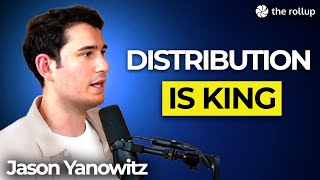
Blockworks co-founder Jason Yanowitz built a media company by splitting into five niche brands anchored by personalities, avoiding venture funding to protect editorial trust, and using AI voice cloning to generate ad reads in seconds instead of hours.
Chapters
There's a massive shift with media. We talked about advertising rates. That's one of the shifts. And talking to like— force— you have to talk to a core and a niche audience. The other shift is that the people follow people now. They don't follow brands.
If the current kind of L1, L2, infra, altcoin market continues with where it's going, that, that pool of capital is just going to continuously shrink as far as like people wanting to spend on marketing ads. Welcome back to The Roll Up. We are your hosts. I'm Andy.
I'm Robbie. And this is your home to learn from the biggest guests, the brightest minds at the tip of innovation.
Our goal is to help spread the collective knowledge of everyone in our community.
We are breaking crypto out of its echo chamber and taking it to the real world.
Sit back, relax, and enjoy a quick word from some of our awesome partners who make this show possible. Crypto UX? Broken.
AI?
Can't trust it. Let Magic Newton set you free. It puts your on-chain transactions on autopilot. Does all the work for you 24/7 so you can go do what you want. The vision of Magic Labs, the creators of embedded wallets, used and backed by the best. See for yourself. Simpler crypto UX. Verifiable AI agents. Newton.xyz. Introducing Asset Runes, the future of decentralized finance. Stablecoins natively on Bitcoin. Hedge against volatility. Diversify your portfolio. All directly from your Bitcoin wallet. Secured by ZK technology. This is Asset Runes. Available now. Exclusively on StarkNet. All right, we're in the city, man. Thanks for coming out. Looking forward to talking about crypto media today. We've been in the space for a while. Yeah, doing a lot of podcasts, newsletters, research, data, etc. I think— I mean, I just want to have an open conversation about just trials and tribulations.
Oh, man.
Yeah, man. I mean, there's a lot. I mean, so prior to jumping on air, we're just kind of talking about the state of things now. You guys have evolved to doing data and that's been, you know, sort of a big revenue, unlock one of your biggest quarters this quarter. Maybe just walk us through the evolution to start of Blockworks and kind of how you thought about it from the jump to where it is now. And then I think that'll open us up a whole bunch of places to kind of— Yeah, yeah, pick in.
Yeah, yeah, easy. So it's fun. It's fun. We're recording this. We're on Broadway in New York right now. First off, good to have you in the city. We're recording. So Mike and I— Mike is my co-founder. We started this actually two blocks away from here, basically just the original thesis was that I was, I was into Bitcoin. Mike was working in consulting. I was working in venture. And the original thesis was that I don't know when you got into the industry, but folks who were in the industry in like 2016, 2017 will remember this. It was an extremely retail-driven industry. Still is today, obviously. But it was all the activity was mostly on actually Reddit back then, just starting to— once our Bitcoin channel got taken over. By the Bitcoin Cash people. That's when everyone moved to Twitter and that's how kind of crypto Twitter got created. But it's very retail-driven industry. Mike and I had this idea that eventually the industry would become this big institutional asset class. Crypto would become this big institutional asset class and the industry would grow by orders of magnitude. And as that happened, the number of people who came into the industry would probably look less like, honestly, you and me, maybe more like 50, 60-year-old gray-haired capital allocators. Financial advisors, sovereign wealth folks, institutions, pensions, financial advisors, RAs, that kind of crowd. And they were going to need a better source of information. And so our— the whole idea of Blockworks was, look, if the institutional investor comes into the industry, they're going to want something that looks and feels more like maybe Bloomberg, Wall Street Journal, FactSet, CapIQ, Refinitiv, a little less like crypto Bobby on Twitter and CryptoPanda on Reddit. Right. And so that was— we said, let's go build the information stack.
Yeah. Yeah. And I mean, we're seeing that now, right? I mean, these types of players are coming in, in mass. I mean, today Circle is up, what, 40% from their IPO yesterday, which is absolutely nuts. And the entire industry is just growing up. It feels like, you know, like the type of people that are coming in require a different type of of content or a different type of experience.
Yeah.
And I think that you guys have— I mean, I feel like you especially have recently kind of like shifted to being like, okay, like I'm going to try to become more of that type of a face per se. Like, like, like, let's just say Jano in 2020 was probably a bit more like degen and, you know, younger as well versus Jano in 2025.
Yeah. Um, I mean, that definitely was younger. The, the difference though is that, uh, actually that's not true. We were So when we started the business, there were all these other media players, right? You had everyone from the big players like— so CoinDesk was the 800-pound gorilla. They owned this event called Consensus. It was the massive, massive, massive conference in the industry. They had like probably 150 to 200 employees. You couldn't— it almost seemed impossible to compete with them. Yeah. And you also had other players, Cointelegraph. The month that Mike and I quit our jobs, that same month, Messari launched, The Block launched. Decrypt launched, Bankless was getting off the ground, would soon get off the ground. You also had other players who are now defunct, Protos, all these different people. So it was a really, really, really crowded space. We weren't playing at that point yet in research and data. We were just doing media and events. Actually, at the time we launched just with events, we said, how in the world could we ever compete in this super crowded market? Well, you got to pick a niche. You got niches make riches, we thought, and we got to pick a niche and first dominate that niche. So what we thought was missing was the institutional serving the institutional audience. So that was actually the first audience that we really broke into. And that was the, that was really until 2021, the only audience that we talked to was the institutional audience. Then actually when the bear market hit in '22 and '23, that's when we pivoted more into crypto nativity and that's when we started saying, look, there's this huge pool of capital that is really being underserved by good content. And those are the crypto native people. We thought folks like The Block and CoinDesk and Cointelegraph were also— they had originally underserved the institutional market. We thought in '23 they were underserving the crypto native market. But actually our bread and butter was the institutional crowd.
Yeah.
Yeah.
You know, it's funny is like every, every crypto company back in '17, '18, they always started with block, like blocks, you know, blockchain or like it was, you know, The Block or—
You can tell if someone was founded in 2017, 2018 if they start with coin or block. Yeah.
Yeah. Yeah.
It's funny.
So Now evolving into media, right? So we've, we've been doing our media stuff for about 4 or 5 years and we've kind of experimented across a multitude of ways of monetization. I actually think it's one of the harder businesses to, to monetize properly, efficiently, and scalably, uh, you know, over the long term while maintaining like integrity, reputation, uh, and, and doing it the right way. Um, the balance there is something that I'm curious as to how you've seen Blockworks, Curate, uh, and your, your, you know, personal brand as well. Like when it comes to kind of monetizing media, what, what was your like trajectory? So you started with, okay, let's sell ads, you know, or let's do this. And then now it's gotten to be this podcast network. Kind of walk us through your like monetization business kind of, uh, thought process as you evolved over the years.
So maybe we can, maybe the best place to start is not talking about Blockworks, but talking about the media industry as a whole, right? Because you and I both slot into the broader theme of media, which is that media has been getting crushed. There's no way around it, right? Media has been getting absolutely crushed, and that's largely driven by social media. And so if we— and really basically just attention moving online. So media companies were some of the best companies to own, right? Some of the, the families of the United States, the, the big billionaire families, they owned and operated media businesses and newspaper conglomerates and empires, right?
Yeah.
And when the internet came around, actually some of the media businesses were the first people to move online. Like New York Times was one of the first people to really spin up a website, like a professional website. And that still think things were still going well then. What ended up happening was when social media came around, those Twitter, Facebook, Instagram, they had the ability to target a user much, much, much better than any digital media brand did. Right. So that drove down the— so media monetizes advertisements and sponsorships through this thing called a CPM rate, which is cost per milli, which is how much money are you making per thousand, per thousand users on your site or reading your newsletter or whatever it may be. So let's say the CPM rate on something like CNN used to be able to charge $20 CPM over the last 20 years. Their CPM has gone from $20 to $2. Yeah. And the reason for that is social media ate their lunch, right? It's far more— everyone knows this. It's far more— if you're a startup, it's far more effective to use your marketing budget on Instagram ads or TikTok ads than it is to go buy ads from CNN.
Yeah.
So when we got into— when we started Blockworks, the first and very, very, very first thing we said was we don't want to take outside venture money. You can't use venture money to scale media businesses. We really strong. We really, really, really strongly believe that you can't use venture money to scale media businesses. And the historical reference we looked at here was in the 2010s. I'm sure you guys have looked at this. There were all these big upstart media brands— BuzzFeed, Vice, Vox, Complex, Huffington Post. 9 out of 10 of them failed. And the reason they failed is because they tried to use venture money to scale trust. So what is, what is the roll-up? What is Blockworks?
It's just trust.
It's just trust with, with an audience, right?
Audience trust.
So what those guys got wrong is that they thought you could spend a dollar to buy, right, a unit of trust. Yeah, you can spend a dollar to buy engineers. You can spend a dollar to buy a go-to-market team for your SaaS product. You can't spend a dollar to buy one unit of trust. Trust has— and credibility and reputation has to be earned over years and years and years and years. And so what we— when we got into Block— started Blockworks, we were like, we're not going to raise venture money. We started with events. The reason we started with events is because those are profitable and you can make a lot of money and they kick off a lot of cash flow. Then we got into media. Media you monetize with advertisements. And to tie it all back to the original story is the CPM rate of media has trended down every year for the past 25 years.
Really?
Except if you have an audience that nobody else in the world has. That is the only way that you can charge an out— that you can keep your CPM rate high. So CNN will go from being able to charge $20 per 1,000 users to 10 to 5 to 2. Eventually they'll be charging pennies for the 1,000 users on their site. Blockworks and the rollup, I'm sure too, can charge these outsized amounts because if you're Coinbase, you can't go to Instagram and say, hey, I want to reach the hedge fund manager who owns Bitcoin and is interested in staking their Ethereum. You can go to Blockworks and say that to us and we'll find— so that, that was the advertising business. And then obviously we got into data and research.
Yeah, I mean, the CPMs in, in the crypto space, we've also noticed just over the years, they've— I mean, even, you know, $40, $60, $80, you know, teams depending on the niche specificity of what they're trying to achieve, you know, it's like orders of magnitude higher. And then you speak to CMOs who are like, who come from the traditional world, right? And they have a readjustment to advertising in this space because it's so niche and there's only so many options as well as only like so many people to kind of talk to.
Well, so the reason for that is— so we, we— so in 2019, in the bear market, 2018 and 2019, that was by far the toughest period Blockworks has ever gone through. And Mike and I had to stop paying ourselves. It was like, you know, it was very, very, very tough period. And so we were like, let's go. Nobody in crypto had any money. And when did the rollup start? It was started after that, right? Okay. So 2018 and 20— in the bear market of 2023, people— nobody asked the question, is crypto going to work? Yeah, we all— but in 2019, Mike and I would have drinks like, what do we, what do we do if crypto doesn't work? Should we go get a job at Netflix or something? Like, should we go get a job at Uber?
Yeah.
So we started to try to sell to the people who had money, which at the time was the D2C brands. So if you listen to any podcast back then, it was like Squarespace, Athletic Greens, BetterHelp. All these brands were advertising. The problem is if you talk to a marketer Squarespace, they can buy ads on any ad platform in the whole world. Yeah, right. They can do radio, they could do TV, they could do billboards. So the, the crypto— they don't care that someone in our audience owns crypto.
No.
So you have to— if you are selling media assets in crypto, you, you can only sell in a profitable— the only business model that makes sense is selling to people who care that you have a niche crypto audience. And that's why it's amazing right now there's a second wave of advertisers coming into the industry for the first time in history. Yes. Which are the financial institutions. You can now go to Fidelity and to BlackRock and say, hey, by the way, I've got a bunch of financial advisors in my audience who they care about Bitcoin. New, new, a new advertising segment has been unlocked for the first time in 10 years.
And what also contributed to this was we, we had an era, right, where— and I think it still is pretty prominent— where Google, Facebook, Instagram, WhatsApp, etc., they didn't allow for crypto and blockchain advertising at all.
Right.
So like that wasn't even an option at all either.
Right.
That was a huge amount of spend that, that could have been spent like trying to target, you know, different financial, financial people on YouTube or, you know, channels, etc. that just completely was, was trapped out. So it was kind of put into like this more organic, you know, niche community.
Yeah. That money flowed into the rollup, Bankless, CoinDesk, Blockworks, etc.
Yeah. Which is way different.
Yeah, exactly.
So the, the previous, if you will, era of, of, you know, advertising spend you know, prior to this new entrants, right, being these institutions, being these larger, you know, financial services companies, players like that was a lot of crypto protocols. And prior to jumping on the actual air, we were talking about how a lot of the kind of altcoin market and L1, L2, infra, a lot of it is, is not performing. And there's been a lot of you know, VCs are underwater. There's not a lot of returns there. Protocols, you know, they're not making revenue there. So like that, there's like this, this shift happening as well within the crypto space while these much bigger entrants with much deeper pockets are coming in. So it's kind of like this like, like conflicting set of, of actors, right? It's like it's not that the, that the crypto protocols are dying out per se, but it's like I think they're wisening up to like perhaps what they're spending their money on. Like we saw, right, the Ethereum Foundation is like, all right, treasury, you know, this, that, and the other. So I'm just curious like how you're seeing the media landscape now with regards to kind of these protocols, um, and a lot of like the last couple of years of, of, um, customers and, and clients. And like, where do you see that trend going?
Yeah, for them. So every couple years in, in, in any industry including crypto, the bucket of advertising dollars shifts from one group to the next. And how an industry grows is you have a massive amount of venture that comes in. You have an excess pool of capital floating around in those companies. Those companies are all competing. It's a— right, because usually markets end up having two companies that end up winning. Two of them end up like Uber, Lyft, VRBO, Airbnb. Usually markets end up having these two companies that end up winning. But you have 50 companies competing for those 2 slots. They all raise a bunch of venture money and they spend a remarkable amount of money on advertising and media and marketing. Right. So that flows into companies who sell advertising and marketing. And then what happens is those companies get big enough, they own the 1 or 2 spots, they don't have to spend as much money. But then there's a new market that gets created. They start spending. So actually, if you take a snapshot of Blockworks' revenue going into 2020, it was— there's no Solana, there's no Uniswap, right? There's no hyper liquid spending any money like that. It was the CeFi companies.
Yeah.
Fireblocks, Anchorage. I bet our top 5 spenders at that time were Fireblocks, Anchorage, Copper, BitGo, Coinbase Custody, folks like that. Right. Those folks. And then what happened is those folks started to— the market actually figured out who were the winners there, right? It ended up being some of those players. But at the time, it was really unclear who's going to win the custodian game, who's going to win the prime brokerage game. You know, other companies like this were BlockFi, you know, other, other people like that, Genesis, people like that. So then what happened is those people pulled back their marketing spend because Anchorage is like, I've kind of won in this space. And Fireblocks, like, I've kind of won. But then a new group emerged, the L1s. L1s are all competing with each other. Boom. Now the L1s are actually spending a little less money on marketing for the first— so for 3 years it was the L1s were spending. I'm sure you guys made a lot of money in advertising from the L1s. Now 2025, they're spending a little less money, right? Because, well, yeah, and the L2s, because now the chain race is starting to get figured out a little bit. But now there's a new group coming in, right? We just closed a $1 million deal with an ETF provider. Yeah. Now there's the ETFs coming in, the institutional capital coming in. There's also, uh, things moving to the app layer, right? The RWA players— that game is not figured out. Yeah, they'll spend a lot of money on advertising, marketing, media, things like that over the next couple of years, and then same thing, some, some new group will come in.
Well, you just have to be aware of where the market is and where it's going.
Exactly. You know, the advertising sales team at New York Times or even, uh, Barstool Sports or something, they're break— they're broken down into, uh, segments, right? They'll be like the fintech sales team or the consumer goods sales team or the D2C goods team. You can't, you can't do that in crypto because if we had a custodian sales team like a seller who was just focused on custodians, that seller might have brought in $7 million one year, but then within 2 years maybe it fell down to $1 million and the person doing L1s would have taken all them. So you actually have to have these really flexible ads. We have a 10-person ad sales team. You have to have these very flexible sellers.
If the current kind of L1, L2, infra, altcoin market continues with where it's going, that, that pool of capital is just going to continuously shrink as far as like people wanting to spend on marketing, ads, etc.
Maybe, but there's 3 things that they want, right? So if you think about, uh, if you think about why these folks spend money, there's 3 different buckets. There's number go up technology, right? They want their token to go up. That's an obvious one. They want users and they want developers. So what you, what you also— we're talking very much from the ad sales perspective, but But from the content perspective, you also have to have a range, right? You have to have a range. You have to have content and an audience that's interested in buying tokens and things like that, right? To be able to market to that crowd. You also maybe need, if you're a crypto media brand, a market that has a content channel and an audience of potential users like on-chain users. You also have to have an audience and content that serves the developers, right? So then you can basically in a bull market, the only thing that someone wants is number go up, right? And actually users too. In a bear market, nobody's trying to talk to users and number go up. They only care about the developers and the founders trying to build on their thing. So you actually have to— unless you want to be at the whim of these markets moving up and down, you need different content brands. And that's why we've moved from Blockworks as a single brand to Blockworks as a house of brands.
I was actually kind of like at ends with that strategy. Like we kind of attempted it a little bit, thought about it. But we've just kind of kept coming back to being like, okay, we just want to go all in on like getting our show as big as possible and kind of own the real estate of like Rob, Andy, the Roll-Up, and be able to leverage that in the future for different opportunities. We talked yesterday, you talked about how, you know, went from media to events to research data, potentially like on-chain protocols, something that I've thought about as well. I've just thought about the Roll-Up and media as like this, this, and I think you said it as, as a launchpad. I thought about it as, as just like this foundational business, like, okay, dropped out of school, started doing like online media stuff, online marketing stuff, then got into crypto, bought a bunch of crypto, started the roll-up. And this has just been like, okay, now I'm in a much better financial spot. I'm able to then now take a bigger swing. And so my thought has been more around, okay, growing the— growing our brand and our name more than trying to orient around different brands. But you're saying that basically we can— with one brand, there's only, there's only so much surface area for these types of, of, let's say, market segments which advertisers will want to speak to. With the house of brands, you can have more market segments for advertisers in a, in a, in a variety of niches. And that's, and that's how you've seen success.
Slightly. I would adjust that slightly.
Yeah.
I don't think we're talking a lot here about the advertisers. I don't really think about much from the advertiser's view. Actually, I think about it from the audience's view.
Right.
And what kind of content they will actually love. And there's a historical precedent and it's going to keep— it's going to keep happening, which is there's a messy middle for media where media companies go to die. So it's an extreme— it's not— I was going to say extremely easy. It's not the hardest thing in the world to get a media company to like $10 million in revenue.
Yeah.
Once you pass $10 million in revenue, you enter the messy— you enter the messy middle. And the messy middle is this area where your audience is growing to the point where you're trying to— you're trying to grow the audience. And so you end up serving them more and more general content and you don't even realize you're doing it. But every quarter, you more and more general content, more general content. Maybe you add— you're in crypto, maybe you had some fintech news, maybe you had some payment stuff, maybe you had some like news about stocks because there's all these, you know, crypto public stocks. But before you know it, you're just a— you're just serving them general content.
Yeah.
And what ends up happening is you lose this dedicate— you lose your edge, your content edge, because when the rollup started, for example, you guys were like deeply, deeply, deeply embedded into like, I don't know, probably like covering L2s or something like that, like technical. And then as you go, you're going to start to try to compete with Bankless and you're going to try to then compete with Blockworks and then you're competing with CoinDesk and then you're competing with Bloomberg crypto team and then you're just a generalist media company.
Yeah.
And you lose your edge. And when the second that you go generalist, there's an upstart media brand that's creating really, really, really niche content where a user can find that niche content is going to be better for the user. So what we said was, you know, we had gotten— we've been doing this for a couple of years longer than you. We had started to get into that messy middle, right, where you're entering the revenue range of like, you know, $30, $40, $50 million in revenue, which is awesome. But you start creating all this generalist content. Yeah. So what we did is we broke it into a house of brands where we now own different brands. So SupplyShock— SupplyShock just talks to the Bitcoiners. Yeah. Diehard Bitcoin community. Lightspeed just talks to the Solana community. 0xResearch just talks to the research community. 1000x just talks to the traders. Empire just talks to founders and builders. Now, obviously some founders and builders will listen to the trading podcast. Some traders listen to Empire. But that's, that's how we think the right— that's how we think that you scale a media business.
Yeah, I think that as, as we've grown, right, we've thought about it in, in, in the bear. We were like, okay, we want to become very technical, earn the respect of the important people in the space. Founders, developers, etc. I think we did a pretty good job of that. But now we're looking at where there's a lot of infra exhaustion. You know, there's a lot of technical exhaustion in some capacity, at least.
Yep.
People just want apps, they want revenue, etc. And so now we're looking at the space and trying to figure out, okay, how do we, how do we grow the audience? And then how do we also grow the rep, the revenue in a meaningful way? And, and I'll tell you, it's been a little difficult. Because we're kind of like, okay, we did really well last year, like blew it, like blew it well beyond what we thought. This year is going well, but like it's hard to see like the 5x from here in terms of like pure revenue or pure like audience growth unless you just get a massive bull run.
Right.
Yeah. So I'm kind of struggling with that.
So there's two ways to scale advertising, right? If advertising is a— it's either grow the audience or grow the rate that you can charge an advertiser. Yeah. For the thing. So that means you either need to— how do you grow? You either 5x— how do you grow revenue 5x? You either 5x the audience growth.
Yeah.
Or you can 5x the amount that you can charge.
Yeah.
And we think— we thought that you could— if you 5x the audience, you end up getting stuck in this messy middle where you're just trying to create— like, yeah, if I— we could 5x— we could, we could actually probably 20x our audience overnight. Yeah. I start writing about stocks, we start writing about fintech, we write an article about Trump, We could write an article about Trump. We have great SEO. We'll get a million page views. Right. But the— but you're actually hurting your relationship with the audience if we start writing about Trump. Right. So I'm not saying Trump— if Trump did a crypto thing, we'd write about it. But like, you know, general news. So for us, it's like, go create, go create niches. And you see this, by the way, this isn't like we're not geniuses, right? Barstool does this. There's Barstool. The holding company brand, Barstool has 47 different podcasts, right? Morning Brew.
47.
Yeah, I think they have 47 different podcasts. Morning Brew, right? Morning Brew has their— you need a flagship brand. You need like, like Bankless has the Bankless podcast, but they also have these other sub-brands like Barstool has like Pardon My Take and some flagships, right? Call Her Daddy as well. And so, you know, Morning Brew has their daily newsletter, but then you also expand out into other things. And that's how someone like Morning Brew is able to grow from $20 million in revenue to, I don't know, $80, $90, $100 million in revenue. Yeah. Axios has all sports, local.
Yep.
You know, their deals newsletter. So that's how we think about it.
The other thing that's been like on my mind for the last 2 years is like figuring out what the exit is. So I have a lot of friends that work in e-commerce, right? They're kind of much more behind the scenes, right? They build these businesses, they, you know, build a lot of revenue, they sell physical products, sell the entire brand for a multiple of the revenue. Media is a bit more difficult, especially in our case per se, because it's, it's, it's, it's our face there. Yeah, it's our brand. Blockworks is similar but different, right? I think the house of brand strategy allows a bit more of that. But like, what are your thoughts on, on exits for media companies as a whole, specifically for like podcast type of media companies as well, which are a bit more oriented on you know, the brands of the hosts.
Yeah. Yeah. Why would you ever want to sell? Why would you ever want to exit? Media companies are the best companies in the world to own, right? They are a launchpad to go do other products.
Yeah.
So yeah, like everything we were talking about so far, it's not the, not the best business model. No surprise, right? Advertising sponsorships, not the best. But what it can do is it can kick off a lot of cash flow.
Yeah.
And you can own this relationship with your audience. If you talk to a founder first-time founder, they're going to say, I'm really focused on the product and making the engineering stack. You talk to any second-time founder, they say, I'm focused on the distribution. You've built the hard thing. We've built the hard thing, which is distribution. Now it's what can you do with that distribution? Monetizing an audience with advertising and sponsorships is the lowest value thing that you can possibly do with that distribution, right?
Yeah. So do apps, softwares, etc.
A million more valuable things that you can do. So we look at there's a massive trend, I think, in media right now, which is combining this top of the funnel stack with something at the bottom of the funnel. So this could be, you know, Barstool Sports, not just monetizing with merch and ads and sponsorships. It's betting and gambling, right? So at the bottom of the Barstool stack is gambling. There's a food blog that was really popular in New York. I don't know if you've heard of it called Infatuation. They got bought by Chase. Seems like a really weird acquisition. Chase, JPMorgan buying a food blog. Why do they do that? Because infatuation. The food blog is the top of the funnel. At the bottom of the funnel, Chase put the Chase Sapphire Reserve card, right, to drive into the— it's a credit card signup platform now. So that's the future. Media for us serves as the top of the funnel. You build a really, really, really strong relationship with your audience where they trust you and you have credibility. And then for us, we put our data platform at the bottom. So the first several years of Blockworks, really from 2017 to 2022, we launched in May 2022, our research and data platform was building the trust and credibility with the audience.
Introducing SummerFi, one of DeFi's oldest and most battle-tested platforms. SummerFi automates your exposure to DeFi's highest quality yield so you can sit back and enjoy this summer. Deposit stablecoins like USDC or USDT and let SummerFi route your funds into optimized low-risk lending strategies. With over $100 million in instant liquidity and support for over 34 protocols across Ethereum, Arbitrum, and more, you always stay in control. Choose from a wide range of curated strategies reviewed by independent risk experts, all in just a few clicks. So why work hard for your yield when you can be lazy? Start earning now at summer.fi, the home of the Lazy Summer Protocol. Protocol.
Innovating finance, global, institutional, and on-chain. Deep liquidity to drive capital efficiency. Now maximize yields on institutional-grade liquid staking with mETH. Unlock trillion dollars of capital via fBitcoin. All of this secured by Mantle's treasury of billions in stables and ETH capital pools. This entire ecosystem is coordinated by a vast network of seasoned VCs that are aiming to create the next generation of banking and financial technology. This is Mantle.
I put out a separate tweet that was around, you know, if there's other profitable companies in the space that aren't like blockchain related. And I mentioned the rollup Blockworks, Unchained, you go on, you know, you know, why don't these launch tokens? And Kaido, I think, has actually done that in a way, right? Kaido has no on-chain tracks. There's no blockchain, there's no app on-chain. It's just a pure private company that makes— I mean, they— there's rumors about what they charge and whatnot, but it's very clear that they make a— they have a profitable business and then they just launch this token. For it, which now ties into the business. You mentioned on-chain IPO. I had Pranav from VanEck on here. They're super excited about that. You know, he mentioned like, what if OnlyFans did an on-chain IPO instead of doing an actual IPO? I was like, okay, it starts to make sense. Anyhow, kind of getting to like the meat and potatoes here, like, is it sensible to think that in the future a media company like Blockworks, like The Roll-Up, or any of these kind of more private commercial businesses whether they get to this stage big enough to IPO or not, you know, is there potential to launch a token to like tokenize the, the ownership of this as a form of exit or as a form of contributing to the operations?
Yeah, there is. I wouldn't use it as a form of exit necessarily, but what will— if you think about IPOs, IPOs used to happen at a, at a, at a medium stage of a company, right? You, You get to maybe like X amount of revenue and you IPO. Now what's happened, especially after 2007, 2008 and the global financial crisis, is it is so, so, so hard to IPO, right? It is so hard to IPO because of all the regulations, the costs and the size of your business that you need to be. It's really difficult to become a public company. Crypto has been around for 15 years. How many crypto public companies do we have? Real crypto businesses too. You have Circle and Coinbase. That's it. That's crazy. You have other ones, right? Public Miner, Galaxy, Exodus. But like, those aren't, let's say, real crypto business. You only have two, Coinbase and Circle. And so I think this is obviously a broken system. Companies are staying private longer and longer and longer. You look at Stripe, which is like $100 billion business or $50 billion or something. Yeah, that should be a public company. Why aren't they? Like, they should, you know, that should be pulled forward. And so I think, well, I think moving on-chain is the obvious next step here. I don't think all businesses, like, I don't think you guys should go public on-chain. We're probably a little too small as well right now.
Yeah.
But should the barrier be $500 million to be a public company? $500 million in revenue? Yeah, I don't think so. I think that's too big. Right. So should Anchorage and Fireblocks and BitGo be public? Well, they're all doing like $100 million in recurring revenue. Yeah, to me that's a pretty darn good business that public market investors should have access to. So I think the solution here is building— I mean, internet capital markets is the right term for it because someone like— yeah, someone like the roll-up. I don't know if you guys are the size, Blockworks. I don't know if we're the size, but when you get to $100 million in recurring revenue, that should be— there should be public market investors that there's, there's demand from public market investors to buy the equity on a liquid basis in that, in that company.
Yeah.
So I think what will happen is like the Anchorages and Fireblocks and Bitgos of the world, not saying them, but companies of their size will launch tokens on-chain. Yeah, yeah, yeah.
And that's going to completely— and I use Kaito as the example— that's going to completely change the way we think about tokens.
I mean, we talked to a lot of lawyers after Kaito. Yeah, because we said this is— I mean, this— that's a great model. Yeah. Lawyers told us it was illegal and that we shouldn't be doing it in the United States. So that was the— that was also the answer. But as these— as these regulations get a little more— not— I won't use the word lax, but buttoned up and it's more clear of how companies can move on-chain. Yeah. Yeah. I mean, if I like Blockworks could IPO one day, we could also IPO on-chain. I think that's a more— I mean, let's— let's think about who the buyer of the—
of Blockworks equity—
of Blockworks equity would be. Yeah, we can do a roadshow. We can hire JPMorgan or Goldman, go do the roadshow, go talk to the institutional crowd. But what about the— we'll do 15 million downloads this year on our podcast. What about the 15 million podcast listeners who listen to our episodes? I bet they would be way more interested to buy Blockworks Equity than some random institutional investor investing out of like, you know, Los Angeles pension fund.
Yeah, 100%. You know, this is going to be— this is going to be the the trend for like, we say tokenized equities, but it's more like, it's not like tokenizing Tesla stock and bringing it on-chain like we saw in DeFi. It's like, no, no, no, companies going and opting out of doing an IPO because of the restrictions and the difficulties and opting into doing an on-chain IPO, which is going to be—
They're not mutually exclusive, too. I think some companies could IPO on-chain and they could IPO in the traditional sense of an IPO. Yeah.
Yeah. And then that's going to be interesting dichotomy as to like where there's value and like, you know, kind of dividends, revenues, etc. But that's kind of a side thing.
Like, let's say, let's say in an IPO process, let's say Blockworks wanted to sell 20% of the business in an IPO.
Yeah.
Well, what if we sold 10% and we hired Goldman, we did the roadshow, we did 10% of our business, we IPO'd on Nasdaq and 10% of our business we IPO'd on Ethereum. Yeah, right. Yeah, that's a great—
that's possible.
Yeah, that's great. That's great.
So kind of coming back to the media side, then looking at the scope of media in the space and even outside, I do feel like media in crypto has a lot more nuance than kind of traditional media does. Nuance in the sense of knowing who you're speaking to, nuance in the sense of the culture as well. And just like the entire way of going about of creating content in crypto has a different form than non-financialized forms of media. And then even when you look at like the traditional finance world now, again, I brought up that you have done a pretty damn good job of putting your company and yourself in that, in that little crevice in between what I would say more buttoned up traditional media and traditional finance and then crypto. I'm just curious, like, where do you think the big— like, for a company like The Rollup or a company like a similar, you know, even like a competitor to Blockworks, where is the opportunity right now with the institutional kind of like capital, institutional interest? Is it an information thing? It's a research thing. It's a data thing. You know, you mentioned all these angles, like where is the opportunity for institutions, for crypto media companies?
I'd probably break that into two buckets. The opportunity for the institutional crowd right now is, is in— we call it their soft, soft information and hard information or top of funnel and bottom of funnel. Same. We use them, you know, you can, they can be interchanged here. Top of the funnel would be like podcasts, newsletters, news stories, tweets, things like that. The bottom of the funnel is where we're really, really, really investing in right now. And that's our research and data platform. And that's what the institutional crowd— the institution. So there's 3 things to building an information platform. There's the facts, there's the insights, and there's the distribution. If you want to build a successful media company, you can just do 1 or maybe even 2 of those. If you want to build an information company, you need all 3 of those. So there's— we talk about the facts as being well-sourced articles, on-chain data. That's the cold, hard truth of the industry. Then there's insights, which is layering on the context. Yeah, podcasts, you know, partnering with like big names to bring them in-house. Avi and Jonah from 1000X, like that's the insights layer.
Yeah.
And then the distribution is being able to distribute it to the right people in the right, in the right mediums, in the right channels. So for us, the opportunity with the institutional crowd is definitely with the research and data. I would say the— sorry, and being a connecting point. So The institutions, if I'm at Franklin Templeton, I don't want to just go talk to Fidelity and BlackRock and VanEck, right? Because they're talking to each other all day long anyways.
Right.
So the reason I think DAS was so successful this year is it brought together these two really unique audiences of the institutional crowd and the crypto crowd.
Right.
So they actually get to, you know, meet. And that's what— that's why events, even though events are— they get their low multiple business, they're really, really, really interesting thing that is— it does— is very core to our business because it brings together these two distinct audiences. Zooming out, you're asking the question maybe at the first half of the question of like, where's the opportunity for media? Yeah, uh, media is changing right now. Like, just me— there's a massive shift with media. We talked about advertising rates. That's one of the shifts. Um, and talking to like— force— you have to talk to a core and a niche audience. The other shift is that the people follow people now. They don't follow brands. So the brand of the Roll-Up and the brand of Blockworks probably is less important over time than the people who work inside of these businesses. Yeah. And a good example of like old school would be The Atlantic.
100%.
The Atlantic doesn't even put their journal— their writers' names right on the stories. Yeah. You just— it's just The Atlantic article, that is super old school. New is, yeah, we, I mean, we, we've studied, I mean, the content we maybe is different than ours, but Barstool Sports, like, that's what the future of media looks like, is for us it's partnering with the big name people who can own their own distribution and where they have these kind of cult followings, loyal people like Felix. Felix, who runs the Forward Guidance podcast, he He is the single best person to go follow if you want to follow macro.
Yeah.
And macro at the intersection of macro and crypto. And he's got— I mean, there's the Forward Guidance Telegram group. It's got like over 1,000 people in it and they're just locked in. I mean, that thing's like— there's like 1,000 messages in that group every day. It's firing. So we want to build brands around these core personalities. Lightspeed, right? Lightspeed's got— so all of our brands kind of follow a similar model. You've got an operator inside of the brand. And then you've got like a, we need to find a bigger, a better word for this, a KOL, an influencer, a big name, a thought leader, whatever, you know, word you want to put on that. You get the operator and the, and the, and the thought leader. So Mert combined with Jack, that's Lightspeed. Me combined with Santiago, that's Empire. Right. And so you need that for these different brands.
So media, as far as, I mean, I've, I've, I've noticed this just from like the engagement perspective as as well. Like, the brands don't get nearly as much engagement as, like, a, you know, any content from my account or from your account. It's very clear. Um, also, people just buy from people, and people associate that more than anything.
Um, trust in institutions and brands is at an all-time low, right, in society. So I think people follow people, not brands. And that, that's why it's important to build a collection of people inside of your business, right?
Yeah, that, that are like, uh, that have their own voice.
That have their own voice. Yeah, exactly. Exactly. So the old school model of being like a journalist, like veiled behind the scene of being a journalist and just like writing the news. Yeah, it's an— it's a— there's a place for it, but the place is diminishing. Yeah. And because the business model doesn't make sense, right? Yeah. So if you like, for example, if you work at Blockworks, you need to build your own distribution. And if you can't, there's a lot of other places that are probably good for you. But like, we, we need people who create content at Blockworks to, to build their own distribution, to build their own channels out. Yeah.
Then you've just got this kind of like spider web, if you will, just all these different niches being hit. Um, and, and these people are going out there and, and then effectively building your core brand Blockworks for you as a result of wanting to build their own brand, i.e., their own podcasts or whatever it is, you know, to get more listeners or to do opportunities on their own as well.
By the way, there's aligned incentives here. The single greatest thing that you can do for your career, let's say you're a 24-year-old reporter, 24-year-old data analyst, 24-year-old researcher, is to build your online brand. It's the single greatest thing you can ever do for your career. It is not writing a better article. It is not building a better research report. The single greatest thing you can do for your career is to build your— is to build your online social presence and online brand. It has unlocked it will unlock more doors than you could ever imagine. And so when we have a research analyst or a reporter, we don't have to say, you know, there's a financial incentive to go build your brand. It's, hey, we will put the full force and strength of Blockworks' distribution and brand and the 85 other people who work here who also have distribution to boost you. And in turn, you got to serve the mission as well. And it's, uh, if you can build it well, it becomes this kind of unstoppable force. Yeah.
I mean, I think, I mean, you see on Twitter, you see the Blockworks, uh, be on tons of different accounts from a variety of different niches. And, and it just feels like this— these people that are, that are interested in collaborating for the sake of the brand. But as you say, then helping to grow their, their own personal brand. I mean, it opens up opportunities like, as you say, like no other. I mean, I came to New York, what, 2 months ago? Had I came here with— on a completely different life track, and just kind of plop down, you know, working a job or something, it'd be a way different experience. The last 2 months have been nuts, right? Just, you know, this, that meetings there, dinner there, that going on. It's just been like, wow, you know, as far as opportunity goes. And I don't know, it's just— it's, it's good. It's good to be grateful for that. Right. And it's, it's powerful.
I mean, it's good for you. It's the single greatest thing you can do for your business is to build an online presence and I mean, I ask a lot of our new hires, we have this like online, we have a kickoff basically with new hires whenever they join. I always ask like, how did you find out about Blockworks in the first place? Probably 9 times out of 10, more than that, 95% of the time they go, oh, I follow, I followed a new data analyst the other day. Oh, I followed Dan on Twitter for years. I see him tweeting. Oh, I follow you on Twitter. Oh yeah, I saw, I saw Mike on LinkedIn. That's it. They come through social.
So you guys have been, uh, doing a lot of— so all the podcasts are like longer form, uh, conversations.
Yep.
Um, and you guys, you know, you guys do some short form stuff, but like if I was to give a constructive criticism, I think the short form stuff for Blockworks could be improved.
Agreed, 100% agree.
And I mean, we're gonna come to Permissionless and do a full live stream, do a ton of shit, and we're gonna, you know, we're gonna do a ton of clips, help there. And I think that I've seen it on Twitter just the last like 2 weeks, you guys have been kind of like pushing a bit more. What's your thought as far as like the attention span, like, like effectively appealing to the short-term attention span for people now with content versus like these longer-form podcasts?
The right model for podcasts. So first off, we are just at the beginning of growth in podcasts. 5 years ago when Mike and I were really focused on pod— it was like podcasts we thought were going to be the medium. We're like this. We are. We were obsessed with the medium. Still are, actually. Yeah. People were like, podcasts? Like, that's crazy. Like, that's crazy. Like, go do newsletters or something. Like, podcasts are the most important medium outside of social, we believe, for content distribution. So what's the right model? Well, podcasts started with like Tim Ferriss and like, you know, Gary Vaynerchuk, like just doing these kind of interview shows. Then what it emerged, what it built out into is like pretty highly produced shows like The Ringer.
Yeah.
Gimlet, Wondery, they would hire a bunch of producers and that model's bad. That's a bad, that's like factually a bad model for podcasts is like highly produced. Then we went back into like, you know, what we're doing here, which is like interview-based, whatever. I think the future of podcasts ends up looking a lot like, actually I think Barstool's done this well. I keep mentioning them. TVPN, those guys are doing it well. Which is these like, who's the, Theo Vaughn is doing it well. Actually, Joe Rogan got it right. Basically these long, like really long authentic podcasts where the user or the listener can tap in if they like the episode and if they want to. Like for me, if I see a guest episode, like let's say, let's say I see like Patrick Collison going on a podcast. I don't want a 45-minute podcast. I want a 3-hour podcast. Yeah, give me that 3-hour podcast. So I think the future of these podcasts is like long, authentic, not cut up, not produced. Authenticity, authenticity, authenticity combined with super short, clippable, bang, bang, bang, bang. So the future of podcasts is give me a really long, authentic show where you're getting into a bunch of stuff, you're not clipping it. Someone goes to the bathroom, boom, leave that in, whatever. Someone starts eating some food, boom, leave it in. Yeah. Combined with like 10 to 20 short clips for me. Each episode. Yeah, that's the future of podcasting. Yeah.
You think that like the Joe Rogan style and these longer forms where you can just have these, these deep conversations, right? Okay. But then we— you, you orient the conversation in such a way that there are enough moments that can get somebody's attention to then pull them in to watch the entire thing if they just see a clip.
Exactly, exactly. The clips are how you grow. And it's, um, the reason for this model is because there's an oversupply, not an oversupply, but the supply of podcasts, of podcasts have grown, right? So it used to, when it like, let's take the extremes here. When it was just Tim Ferriss doing a podcast, you had to let you subscribe to Tim Ferriss. You listen to every Tim Ferriss episode. More and more, that's not how it will go. I doubt any listener just listens to every episode of The Roll Up or every episode of Empire. There's too many good podcasts out there. So what they actually do is they have guests that they want to listen to. And they see like, oh, The Roll Up did an episode with Balaji. Boom, I'll plug in for that. And if you're plugging in for that, you clearly like Balaji. So you want to hear, I don't want to just hear Balaji's take on the network state. I want to hear like, what's he doing with his money? Where's he living these days? Why did he leave the US? What's it, right? So there's a, you want to get into every single question and every single thing with that person and let the user, let the listener decide when they want to opt in and opt out of it.
So on that note then, when I brought up the, the, uh, okay, Blockworth could do more short form, and I was like, okay, we're kind of, you know, prioritizing it, trying to do as much clips as, as possible. Like I said, at Permissionless, the thing that, that, uh, I, I sometimes think about and struggle with is like, okay, how much are we going to care about views and like watch time? And like, you know, you know, how much are we going to optimize our, our, our business for like getting these, these like very clippable, you know, like, like high-view content versus just making like really good content that we like enjoy and like and know is good that may not perform as well. So it's kind of like a bit of a tale of two cities here, if you will, or, you know, two different kind of opposing forces where one is like, okay, we want to optimize entirely for views, click-through rate, you know, all that kind of stuff. And then two is kind of like, okay, we just don't really care about that, but we want to optimize for the most— for the best content possible, which they can kind of overlap, and oftentimes they do, but like, how much do you care about like the views or the downloads? And like, how much does that affect your, you know, your strategy?
We care about it, but we will never let the— we will never let views and downloads— we'll never sacrifice content for views and downloads, is what I'd say.
So, and stuff like that, like crazy, just—
yeah, like you got to do it to a certain extreme. Like, yeah, like thumbnails on YouTube are a good example. Yeah. You could do, you can do insane thumbnails with like me with my shirt off with a crazy face. Yeah. Like this.
100x.
Yeah.
Yeah.
That podcast is going to get listened to more. But also my audience will cringe when they see that.
For sure.
So I'm, if you were building, let's say we were building Blockworks for the next 12 months, we want to sell it. Yeah. Boom. Doing every single one of those growth hacks.
Yeah.
But if you want to build Blockworks for the next 10 years, You, you, you figure what you figure out what makes sense for your audience. Yeah. Yeah.
Yeah.
I mean, that's how we thought about it as well, but it can be, um, by the way, you can do, you can grow so fast without doing all that stuff, doing that stuff. Like TVPN is a perfect example. Like TVPN, they're streaming hours a day and they've, I mean, that show's probably grown 100x in the last like 2 months. So you can grow crazy fast without all these things. Yeah.
Yeah, I agree.
Yeah. So that's— I think that's what— that's how we think about it. Yeah.
I think the live streaming thing is also another interesting concept because that actually—
it's all moving to livestream. Yeah, it's all— it's all going live.
I mean, look, I'll be honest, we saw TVPN, we saw a couple of these other guys and we're like, all right, like, this is crushing.
We're just—
we got to go.
We're getting into it too. Like, livestreaming is the natural— the reason for that is saying to YouTube for us.
Yeah.
The reason for that is that so, A, there's no natural distribution of podcasts. Right? There's no— Spotify and Apple don't help people find the shows.
No, it's just if you're subscribed.
Yeah. So the, the natural— the only way to get your show out there is to do these short-form clips, which is what you're doing and you're telling us we need to do better.
It's like spamming it though. It's kind of annoying.
I know. I saw I did that thing and there's like 6 clips of me already.
We're just trying to get you to promote that to your audience.
Exactly.
So even just one retweet—
streaming embeds the podcast directly into the distribution channel. Which is why streaming is so amazing. The other— Yeah. So the other reason for this is the news cycle used to move, you know, there used to be like a weekly news cycle. Then it became a daily, then it became like every couple of days. Now it's a daily news.
Yeah.
Now it's like how many news cycles happened yesterday? You had the— you had— in the morning it was Circle. Yeah, right. By the afternoon, nobody was talking about Circle. It was all Elon and Trump. Now, obviously, that's an outlier thing, but like The news cycle moves so quickly. And I was listening to, um, to Portnoy talking about this at Barstool. He's like, we used to get out episodes about NFL, you know, NFL Sunday, you'd get it out on, on Monday afternoon. Cause that's how long it took. Then he, he's like, we rushed it. We would get it out Monday morning. He's like, now, uh, he's like, then we moved to live streaming right after the games. He's like, now we just live stream during the games. That's what people want. By the time Mondays happen, No one's actually talking about the Sunday games anymore. They're on the Monday news story.
Yeah.
So that's the same with crypto.
Yeah. I mean, I think the live— and so what the livestream actually does on Twitter and YouTube is YouTube, it puts you at the front of somebody's— any, any subscriber or if somebody who's kind of like watched some of your content in the past puts you right on the front page, you go to—
they're all optimizing for livestreams.
Twitter, you're up in the top bar in the mobile or on desktop, you're in the sidebar.
Yeah, they're all— because they want to keep people on the platform. The number one thing that metric they care about is how many people are on the platform and how much time are they spending on the platform.
Yeah.
And livestreams drive that.
And this model that, that like obviously, you know, you know, we mentioned Barstool, TVPN, some of these others have pioneered with like multiple guests, shorter segments, clips. It's like the amount of distribution, like we've just been trying it for like 2 weeks or like 3 weeks now. Now we've scaled it to 3 times a week and, and like we've gotten into different niches of crypto and Twitter that we would never have been in in the past with our podcast.
Totally.
Podcast is one person, one topic, and it's not very like, like, and also we, again, we prioritize technical content because we wanted to be, we wanted to establish this kind of like respect, this knowledge. Um, and now our clips are going into all these different little, little pockets. Totally. And people are engaging with them because it's like, it's not, I mean, it's just fun content too.
It's great.
So yeah, I think, I think we're going to lean into it heavier. I mean, I think we're, we're, we're going to try to get to 4 or 5 days a week.
Yeah. Now imagine where this goes with AI. So I think what people are thinking about with AI is like, how can you pump out more articles? Like, and that ends up just being content slop. Like, that's not a good— that's— it's like, oh, how can you like write, you know, 100 articles a day for SEO? Like, that's content slop. What about, uh, big news story happens? So Trump and Elon happens, right? Or Circle IPO happens. You probably had a couple people in your head where you're like, oh man, I really love to hear that person's take on this.
Yeah, for sure.
Oh man. Like, you know, I really, Like I was at a thing last night and this guy's like, he's like, you know, I actually really want to hear Friedberg's take on this. Friedberg from All In.
Yeah.
He's like, it kind of sucks. I got to wait till tomorrow to hear like the All In podcast. Well, what if Friedberg had cloned himself? Yeah. And there was probably, what, 300 episodes of All In at this point. So, you know, this AI knows what Friedberg's take is going to be from 300 hours of listening to Friedberg. It's got his video and his audio. What if Friedberg had boom within 20 seconds, turn on his take, 5-minute clip goes out of his take on Trump. Yeah, there's like 700 hours of me on, on YouTube at this point. Yeah, right. So like something happens, boom, Bybit hack. What if Jason Yanowitz could be a clip of me on Twitter and Twitter saying what I think? Yeah. Now if it's the AI is going to get like probably 98% of what I actually think. Honestly, it will. And we don't like to think that, but like, it actually will.
So, yeah, Rand Paul has been doing that. I don't know if you've seen this.
Yeah, I've seen this. Yeah, right.
He showed me.
We use the same company, ElevenLabs.
We'll see how, how trippy and weird that AI stuff gets. I don't know how much you guys have been optimizing for it. I think I've seen some tweets about using ElevenLabs and I mean, so all, all of Blockworks are ads.
If you listen to an Empire episode right now or a Bell Curve episode, that's not Mike and me reading the ads. Yeah, that's, that's an AI Jason reading the ads. Yeah. So what, from ElevenLabs? Yeah. Yeah. So what, so they've cloned, so our team cloned me, so, and they cloned Mike too. So what used to happen is, you know, Coinbase is like, or, you know, whoever the advertiser is like, hey guys, I want you to advertise this new staking product that we have. And then they send it to the producer, producer sends it, is like, you know, hits me up, is like, hey, you got to record this ad. So I record the ad and then I send it to the producer, producer sends it to Coinbase. Coinbase is like, ah, yeah, but you screwed up this one thing, sends it back to the producer, sends it to me. I got to get more time on my calendar. It was taking like 2 hours a week to record these ads. Total pain in the ass.
Yeah.
So now what happens is Coinbase sends it to the producer, producer puts it in, puts the words into Clone.me, Clone.me says it, sends it back to Coinbase. They're like, that looks great. And by the way, next week when Coinbase has a new product they want to promote, they can just send it to the producer. We can change the ads. It takes 30 seconds.
My production manager, like, joked about this 2 weeks ago because I was recording an ad here and I was like, bro, I am very, very like, just like doing this is, is just a big pain. It feels like 2020 work in a way. Like my head is in a whole different landscape as far as like where I'm trying to focus.
Yeah, it's not a good— it's not just not like cloning. It's just cloning.
And he was like, dude, we should just find something that is like—
and so any public personality on the internet, by the way, is going to clone themselves and will be cloned by other people, by the way.
Really?
You'll be, you'll be like someone— if I can clone myself, someone else can clone me. Yeah. You know, so it's just inevitable.
Okay, well, that's— I appreciate that tip. I'm going to clone myself.
Go clone yourself.
Jano, appreciate your time, man.
Yeah. Thanks, man.
Speak soon. Yeah.
More from Jason
From Media Company to Crypto's Market Infrastructure: Jason Yanowitz on Blockworks' Transformation
Stablecon 2025 - Fireblocks Stage: A Fireside Chat with Jason Yanowitz & Simon Taylor

Lessons From Building A Crypto Media Company — Jason Yanowitz | The Danny Miranda Podcast 179