Bitcoin's Super Cycle | Crypto talk with Jason Yanowitz
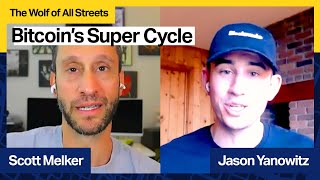
In this episode of The Wolf of All Streets, host Scott Melker interviews Jason Yanowitz, co‑founder of Blockworks, about the rapid expansion of Blockworks from an events‑focused startup to a full‑fledged crypto media, data, and research firm. They discuss the surge in job applications, the shift toward B2B media, the importance of translating crypto for traditional finance audiences, and the insights Blockworks gains from its newsletters, podcasts, and web traffic. The conversation moves to institutional crypto adoption, highlighting recent moves by Morgan Stanley, JPMorgan, and other banks, and the distinction between retail hype and institutional infrastructure. Yanowitz predicts a Bitcoin "super‑cycle" with prices potentially reaching $250k‑$300k, emphasizing that modern infrastructure (custody, OTC desks, insurance funds) reduces downside risk compared to earlier cycles. They debate the impact of CBDCs, the role of ETFs, the legacy financial clearing system (DTCC), and the need for better crypto infrastructure. The episode also covers the evolution of crypto media, the value of deep‑dive podcasts, the post‑GameStop retail empowerment, and practical advice for newcomers: start small, experiment, and use regret‑minimization as a decision framework. Throughout, Yanowitz stresses the long‑term career prospects in crypto and the eventual ubiquity of crypto infrastructure akin to the internet.
Chapters
Esto. What is up, everybody? I'm Scott Melker, and this is the Wolf of All Streets podcast. Now, from the very first episode of this podcast to today, there's been one company that has been by my side, and that company is Blockworks. And today's guest, the co-founder of Blockworks, and actually is the person responsible for this podcast, he's the one who reached out and convinced me that I should do it, but I've been waiting for a very long time to actually have him on the show, and not because he's the person who convinced me to do a podcast, but because Jason has a really unique vantage point on how the crypto space is growing, how media and data will play a pivotal role moving forward. So Jason Yanowitz, I'm glad we finally got to do this. Thanks so much for coming on.
Scott, thanks for the hype-up intro. I'm not sure I'm deserving of it, but it's nice to be here.
Yeah, man, you got to go big. So before we get into the questions, once again, you're listening to The Wolf of Wall Street. Podcast, which airs twice a week, where I talk to your favorite personalities from the worlds of Bitcoin, finance, trading, art, music, sports, politics, basically anyone with a good story to tell. This podcast is powered by Blockworks, the fastest-growing media company in the digital asset space. Blockworks has 20 Bitcoin and crypto podcasts. I'm excited to be a part of their network. Visit blockworks.co for access to the highest quality information in the space. I promise you will not be disappointed. Now that I've talked about them, you can also check me out at thewolfofallstreets.com. I owe, I'm less important. So anyways, let's get on to what actually matters here, our conversation. So you guys are building like crazy over at Blockworks. Obviously I have the intimate knowledge of what you guys are doing, but I saw you tweet yesterday that you had over 100 applications in a single day for jobs. That's insane. What, what are people, uh, rushing to do with you guys, and, and what's it like going through all those applicants?
Yeah, we got, uh, yeah, we had 118 applicants yesterday in It's crazy. So we have, we have, uh, we're hiring like crazy. We just doubled the size of the team in the last 60 days and we're going to double again this year. So it's, um, I don't know, we were joking before we hit the record button that we kind of missed the bear market days when we could get 7 to 8 hours of sleep a night and, uh, things were a little bit calmer, but it's crazy. Like we usually get, I don't know, 5, 10, 20 applications a day. Things have started ramping up. 118 applicants yesterday for, we're hiring reporters, we're hiring journalists, content creators, podcast hosts, newsletter writers. We're hiring editors. We're hiring on the marketing side of things. So we need someone to come run our social media with all the content that we're putting out. We're hiring sales, right? So we can get into the Blockworks business model, but we have a really great sales team. So yeah, it's crazy. And then we got about 20 people who emailed us, just said, I'm your perfect candidate. You don't have any roles open for me, uh, based on my background, but they were just pitching us on, on different roles, which is It's cool to see that as well.
That's awesome. I'm curious if you see it as a function of increased interest in crypto specifically, or is it a result of people losing jobs throughout the last year and there being sort of a less robust employment market, or do you think it's a combination of both?
It's not people losing jobs because I think those folks— like, people lost jobs a year ago when COVID hit, but the job market's coming back. And also, when you look at anecdotally, when you see job folks who have left their jobs or who got fired, the first thing they do is they don't go join a crypto company because of the nature of riskiness. Those are people who just got laid off and they might want to go to like a Fortune 500 or a large venture-backed company or something like that. We— one of the best parts about my job is I get to see a crazy amount of data on who is interested in crypto, because by the nature of being a media company, we have all of the— we have 20 different podcasts, we have webinars, conferences, newsletters. So I can actually see who the hell is interested in this stuff. So when people on Twitter say big banks or institutions or portfolio managers are interested, I can actually say, I know the 300 firms that are looking at this in real time because they're spending time on our website right now. So when you look at who— to see who's applying to our jobs, to tie this full full circle, the people who are applying are folks from traditional financial and capital markets, and some tech people, but a lot of people are leaving finance right now, which is— I mean, you just got to love to see it.
Yeah, you do. So I mean, you guys started basically— it's my understanding it was before I knew you, but you started basically as an event company, right? You were doing conferences and stuff. You got into podcasts. You've made a huge pivot of late, which is to be a full-on media company. Right? And so like your website and all the research you guys are doing, there had to be a reason that you decided to focus on that with all these other things that you have going on. So what are you seeing that made you guys decide that, you know, becoming a full-on media company, customer-facing, you know, public-facing was the right move?
Yeah, it's a good question. So we, I think to understand the context of this, you know, quote unquote pivot, which I don't even think it was really a pivot, it was more of just an extension of our existing business. I think you have to understand the beginning of our business, which was we had one goal when we set out to build Blockworks, which, you know, it used to be called Blockworks Group, right? It was an events business with one goal, which was to help investors from the traditional worlds of finance understand crypto. I used to work at this venture capital firm. I worked for these real old school Lehman Brothers, Bear Stearns guys. I know you have a bunch of buddies who used to work at those firms. These guys, they were angry, they were old school. I was the young guy at this venture firm. I tried convincing them to at least take a look at Bitcoin. One guy, I don't know, he's probably 65 years old, said, "All right, fine. Send me some information on Bitcoin." Naturally, I mean, you've been in the space for a while, what I did is I pulled up Reddit and I pulled up Twitter, and I sent him things from Crypto Panda and Crypto Bobby and CoinDesk, which Those are where I get my information. But if you're a 65-year-old gray-haired VC person from Lehman Brothers, you have zero interest in spending time on Reddit and Twitter, especially for this new asset class. That's what kicked off Blockworks Group, is just saying, all right, let's translate this. In 2017, there's all these ICOs and real schemey and scammy. Mike and I would go to these events all the time, and there's pumping ICOs. But we said, there's something here. So that was the original formation of Blockworks Group, was talking to this institutional audience and saying, instead of talking about the space in terms of like ZK-SNARKs and zero-knowledge proofs, let's say, look, it's a small market cap space with a lot of room for alpha. And when you say that, a hedge fund manager's ears perk up. And so what we've done for the last 3 years is just translate crypto into a way that traditional capital markets and financial markets people can understand it. So tying this full circle, When we launched our editorial business in January, we've already been doing this for 3 years or 2 years, but this was just— it's another way to get these folks to understand the space. And we can dive into it more and we can talk about our business and new business, but—
Yeah, I'm really curious as to what you've learned. You touched on it earlier. You said when people talk about institutional investors or whether it's retail or who it is and these companies that are involved, you said you're seeing it because they're spending time on your site. So I'm curious what insights you've gotten in the past couple months, maybe there's some that, uh, people are assuming and are completely wrong, right? Because in 2017, we heard institutional money's here all the time, and it wasn't, right? Um, this time it's different. So I'm wondering if there are any, like, perhaps rumors going around that can be dispelled, and if not, just what you are seeing in that, uh, as far as the trends with who is coming into the space and is interested.
Yeah. So let's talk about the last few years. So 2017, uh, the market absolutely rips, right? The thing goes from like $1,000 to $20,000. It was insane. Everyone's making money hand over fist, but what was lacking was not the interest in the space, but the infrastructure in the space. And so that's a key differentiator, which was you look at companies that are huge today. Like, I mean, I mean, Blockworks didn't exist back then. BlockFi didn't exist back then. BitGo was an inkling of what it is now. Fireblocks didn't exist. So all of these infrastructure providers who the traditional asset managers are using today, they didn't exist back then. So even if an asset manager wanted to get into the space, they couldn't, because they have a fiduciary responsibility to protect their assets. So when I'm going and holding my money on like— I'm not going to say where I hold it, but like, it's very different than where a hedge fund manager puts their Bitcoin. So that's what we saw over the last few years is the demand has increased, but the more important thing is the infrastructure increased. And that's the biggest differentiator between back then and now. Interest is really similar. Infrastructure is here. Now what we see today is— what's interesting is I think there's probably too much focus on the BlackRocks and Morgan Stanleys of the world.
I agree.
You know, the Morgan Stanley news was, was absolutely massive yesterday. They manage $4 trillion. Blockworks had really good coverage of that. They're using NYDIG and Galaxy. They have an investment in NYDIG, right? So that news is important, but what's way more interesting that we see is the long tail of funds. So I'm less interested in JPMorgan getting into crypto and Bitcoin. What I'm interested in is, are the thousands and tens of thousands of 2- to 10-person hedge funds around the world that are starting to allocate to Bitcoin.
Yeah, I agree. Also, the Morgan Stanley news, I was kind of looking into it. It's a bit misleading. I mean, it's very exciting that they're interested and that they're offering it, but they're only offering it to people who hold $2 million with Morgan Stanley into investment firms that have $5 million with Morgan Stanley. So in my eyes, something like that is yet another sort of white glove product, and it has very little to do with actual mainstream adoption.
Well, what happened behind the scenes there is there were a ton of folks who— a lot of people who hold like $100 million at Morgan Stanley didn't want to buy Bitcoin. But if you hold like $1 million, or $1.5 million, or $2 million, those are the group of people who are like, a little— they're down to take a little more risks. They want to multiply their wealth faster than— if you already have $100 million, you're not trying to make 40%, 50% returns in a year. You're just trying to preserve. But the people who have like $1 million, they see this light at the end of the tunnel where they're like, I could buy Bitcoin, turn that $1 million into $10 million. So what happened with Morgan Stanley is they had a lot— and this is from someone who's been working pretty closely with them— they had a lot of clients who had like $1.5 million with Morgan Stanley. And by setting that at $2 million, Cut them out. It says, hey, look, if you give us 5— if you give us more assets, we can help you buy Bitcoin.
So isn't that exactly my assumption? It's a great sales technique. Yeah, we just need $500,000 more of your money, and then we'll let you touch Bitcoin. The irony of what you just said, though, is that, well, if you follow the Michael Saylors, and the corporations, and the Teslas of the world, you would say it's the people with $100 million who actually need to buy a significant stake in Bitcoin to protect their wealth, because obviously holding it in other assets, it's going to either depreciate or be inflated away, certainly if they hold it in dollars. So I'm actually a bit surprised, or I would expect that more of those huge clients would want $3 million in Bitcoin if you have $100 million, something like that.
Yeah, very much so. Very much so. And I will say, one interesting insight that we have is that there are a lot of other Morgan Stanleys of the world, right? So even though we're kind of— I don't know, we like to turn our head at this. It is massive news, And what's, you know, we can literally, you know, kind of see a creepy amount of data on people, like who's, you know, what, excuse me, organizations are looking at our web, are reading our newsletter. And some of the companies that are reading our newsletter more than any other organization are JP Morgan, Goldman, right? BNY Mellon, State Street, BNP Paribas. And that's where it gets interesting. Morgan Stanley is now a one-off where they're like a first mover, but where it gets interesting is when every other investment bank is doing this and every other asset manager is doing this, because then that just makes it so that Bitcoin's another asset class. It makes it much more boring because the upside potential is decreased, and Ari Paul has talked a lot about this.
I was just going to say, I read Ari Paul's thread just the other day. I included it in my newsletter where he basically said, Listen, the disproportionate upside opportunity was 2015 to 2018, right, or whatever. Even if you got caught in the bubble, you still had those opportunities to buy at $3,000, $4,000. And maybe Bitcoin itself as an asset now becomes a bit more stable, has more upside than stocks, but it's not this, like, get-rich sort of opportunity that it was before. I think that's true, but I think it also discounts the rest of the space to some degree. There's plenty of coins and projects and companies that are going to do 100, 500, 1,000x multiples that are being built, don't you think?
I do think so. I mean, if you look at— I think it's important to just remember though, if you look at CoinMarketCap over the last 11 years, there have been— I mean, I've been in the space long enough since I got— I'm not like a real OG, but I've been in it since 2015. Long time. There's always been— there have been coins that have gone like this and cycled through and cycled through. In 2017, I was so convinced that there were other things that were going to overtake Ethereum and Bitcoin and all this stuff, and I got caught in the hype cycle. And look what's remained. It's Bitcoin and Ethereum, right?
Right.
And so I think there is that potential for the 500x, but like, there's also— you know, it's a risk-return.
It's also a 0x.
Yeah, yeah, exactly.
And we know that most of them will do that.
Yeah, it just depends what type of like person you are, right? You trade, and I know you also most like hold most of your coins, and then you— some percentage of your portfolio you trade, right? And so it just depends what type of person you are, right?
So they're all coming. I mean, they're reading your website, they saw Morgan Stanley, so that's going to happen.
Yeah, here's a crazy stat. We usually have— a year ago we were adding 10 to 20 people to our newsletter a day. We have this daily newsletter, an ex-hedge fund trader writes it. I'm very biased, but I'm convinced it's by far the best newsletter in the entire space.
It almost pisses me off. Aside from—
I actually read yours. Okay, so 10 to 20 people were joining our newsletter a day. Yesterday, we added 365 people in one day to our newsletter. Last Wednesday, we added 528 people. In one day to the newsletter. And the open rate, I mean, it's nothing like, uh, the Wolf Den's open rate, but, uh, you know, our, our open rate is skyrocketing as well. It's now past 40%. We have over a 40% open rate.
That's crazy. Adding free newsletter.
Yeah, hundreds of people a day, which is just, um, you don't really see things like this.
No, I think the standard's like 10% or less. Yeah, I think that for, for a free newsletter, for a daily free newsletter, if you get 10-20% to open, you're doing exceptionally well. Okay, so they're all coming. So what happens when they get here? What happens when every one of these investment banks, every single investment manager opens the floodgates to their clientele for Bitcoin?
There are two paths that this goes. I think, OK, so there are a few ways to answer that question. One is the thing that everyone cares about is what price is Bitcoin going to? And I'll throw out numbers. I think this goes to at least $250,000 in this cycle. At a bare minimum. What you could see is it goes to $250,000, $300,000, and then it falls back down, like it's done in every other cycle. That's important to remember. Think 10Xs from the bottom or from the top or whatever it is, and then it comes back down. This time though, could be different, because if you look at who's been buying historically, and if you just look at the data, it's primarily retail. Like we talked about in 2017, there was retail infrastructure, but not institutional infrastructure. in the same way that GameStop goes up and it comes down, like if you look at 2017, it was retail, it was my high school buddies and cousins and stuff like that, Bitcoin goes up and then people get scared and then the media scares them and then they sell because they don't actually care about Bitcoin. But this time, you have insurance funds, you have pension funds, you have sovereign wealth funds. Not only are they not flipping it, they're legally not allowed to flip it. They legally cannot sell it. They take so long to do due diligence. I know an insurance fund that hasn't announced that they've bought Bitcoin yet. They did due diligence for 3 years before buying Bitcoin. I do due diligence for like 48 hours. It's just— it's because once they buy it, they can't sell it. And that's the difference. So we could go to $250K and go down, or we could go to $250K, and this could be a supercycle, and and we keep on ripping up to 7 figures?
Well, I mean, I think that rationally, it makes sense because of what you just described. It will have cycles, but they'll be minimized, at least minimized to the downside, because we have a more well-established floor with an asset that has reduced supply. So it's hard to compare it to stocks or other things when you know that every single day that passes, there's going to be less of it mined, and there's more of it being removed from the market. So I agree with you. I don't think that we go to $250 and see an 85% drawdown.
Yeah. I mean, the thing to understand that more and more people are catching on to is, in the same way that the US dollar is designed to go down, the value is literally designed to go down, people in crypto and Bitcoin think that's a bad thing. It's not a bad thing. It's created the US economy, which is the most powerful economy in the world. It's fine. That's the way that we designed it, and it's actually good, right? But it's just important to understand that. So in the way that the US dollar is designed to go down, Bitcoin is fundamentally designed to go up, and more and more people are catching on.
You talk about the debt-based system as being good, and I understand it's good because it functions, but most people don't understand that, and so they don't buy an asset to hedge against that. That's good if you work in the system but also store your value elsewhere, but it's been very hard to do that throughout time. Bitcoin maybe works well as a complement to to that system if you understand it and decide to store your wealth there, right?
Totally. Totally.
Yeah. And so for me, that's important to clarify because the system's made that way, but it's not made that way to protect wealth for your average person.
Yeah. Let me actually flip this on you and ask you a question here, which is, I think you went to Penn? Yeah, I went to Penn. Like, you went to Penn undergrad? Like, one of the best schools in the world. I'm sure a bunch of your buddies went and worked in finance and—
Everyone.
—worked in Wall Street. I went to Emory down in Atlanta. I had a close group of 6 friends. 5 of them went and worked in investment banking. That's what you do in that world. I'm just curious to get your take on what your friends' opinions, who have been working in finance for 20 years, what do they think about Bitcoin right now?
It's a mixed bag, to be honest, but I would say that the number going up as dramatically as it has of late has made the conversations a lot a lot easier for me. In 2017, they definitely laughed. Speculative bubble, it's going to pop. One of my friends says it's going down to $3,000. When it was at $20, he was right, so I can't— it's hard to say much. The thing is they left it for dead, and it's sort of the cycle we all talk about is that they started to get interested again at $20. Holy crap, when it blew through $20 and $40, maybe I'll get serious about this, but I'll buy it a little lower on the dip, and now they're thinking about buying it in the $50s and 60,000s, but I would say that they take it more seriously as an asset now. The "it's going to zero" conversation is gone. That remained for the first years and years and years that I was doing this. I do think that there's been a narrative shift, or at least an opinion shift, where the asset and those of us who participate in this market are taken more seriously than we were before. It's nice. It's a vindication because I was definitely the crazy guy in the padded room screaming to myself about Bitcoin and nobody was listening. So yeah, what's your experience? Are your friends, are they coming around, or were they young enough that they already were listening?
My friends are in their 40s. Yeah, I mean, I— no, actually, surprisingly enough, they're not coming around because I think, I think that folks don't really understand what it is, and that's the biggest issue. Right. And so like, that's, I mean, one of the things that Blockworks is trying to fix is just putting this, like, if you go on, if you go on Coin— I'm actually not going to mention different media companies, but like, if you go on a lot of these websites right now, it's like, proof of stake mechanism launches on Hobi sidechain, Binance smart contract. And like, my buddies go on those sites and they're like, what the hell am I reading? Right. And so like, that's one of the things we're trying to fix, but No, I mean, they're not buying it because at $20,000, they said, great, when it falls back down to $15,000, I'll buy it. When it hit $30,000, they said, great, when it goes to $20,000, I'll buy it. And now it's $60,000. And guess what they're waiting for? When it goes back to $50,000. Right. And so, you know, that's just how it works. And at this point, I've stopped kind of trying to, to be the hype man for it.
But they would consider buying it, which I think, at least for me, that was the difference that they would. Usually, there's a host of excuses, though.
You know what happens, Scott, is like, I think there's this basically cycle that people take. Everybody takes it. Like, truly everybody I've ever met takes this cycle, which is they say— they find Bitcoin, right? Bitcoin's being talked about on CNBC, or Bloomberg, or their friend sends them a message about it. They get interested in Bitcoin. Then they find Ethereum, and they say, guys, I think I found the new Bitcoin. I get texts all the time being like, what do you know about Ethereum? I think I found the new Bitcoin. I'm like, first off, I don't think you found anything. They find Ethereum. Then what happens is they say, in 2016, 2017, it was enterprise blockchain. They say, oh, Ethereum— Of course. I love the blockchain.
Yeah.
Ethereum is going to change XYZ. So back in 2017, it was Ethereum is going to change enterprise blockchain. And so they'd start talking about enterprise blockchain. They say, look, Bitcoin doesn't matter, blockchain matters. We all know that's kind of foo-foo now. Now what it is, is they say, all right, I don't like Bitcoin, I found this thing Ethereum. Actually, I don't like Ethereum, I like this thing called DeFi. I like NFTs. Then they get into the space, they start buying it, someone exits scams on them in DeFi or something like that, not to say DeFi is not great, but and then they come all the way back around to Bitcoin. For some people, that takes months, and for some people, that takes years.
Right? I never thought about that cycle. That's totally true. And the same friend of mine who said it would go down to $3,000 is now, like, super, super into NBA Top Shot. Exactly. Yeah. Just like you said, he loves NFTs. One day a few weeks ago, he's like, I found this site. I'm going to go in here. I'm in line for these packs. I don't know what's happening, but, like, I'm flipping them for 4 times the amount of money, and it— You know, it's a lot of fun. It harkens back to our days, certainly people my age, of like trading baseball cards and— Totally. —things like that. But I think you're right. And NFTs and DeFi open two completely new avenues for completely new kinds of people to find sort of a footing in the crypto space, I think.
Very much so. I mean, you're just talking about user adoption and another way that people can can use this stuff, right?
Sick of paying ridiculous fees to trade crypto? It's time you try Voyager. It's hands down my favorite place to buy and trade crypto and is 100% commission-free. Voyager gives you easy access to more than 50 top crypto assets, and you can instantly transfer cash from your bank account so you never miss a trading opportunity. Even better, you can now automatically earn interest on crypto holdings. Currently, they're offering up to 6.5% APR on Bitcoin and up to 9.5% on USDC. Yes, you heard that correctly, up to 9.5%. and there are no limits or lockups, which means your funds always stay liquid. Find out why so many people are making the switch to Voyager. Visit investvoyager.com or search for Voyager on the Apple App Store or Google Play Store and get $25 in free Bitcoin when you use the promo code SCOTT25. That's S-C-O-T-T-2-5. This episode is brought to you by Mina, the world's lightest blockchain. Mina is a layer 1 crypto protocol that replaces the traditional blockchain with a zero-knowledge proof, ensuring a super light and constant size chain that allows participants to quickly sync and verify the network. Their upcoming mainnet launch is right around the corner, and there are opportunities to participate in community leaderboard challenges for rewards. Visit minaprotocol.com/wolf to find out how you can get involved and earn tokens ahead of mainnet. DeFi is where all the excitement is, but participating in it can be a nightmare. Not anymore with Matcha. Matcha makes it ridiculously easy to create a wallet, onboard new users, execute trades, and source liquidity. The best part is that it's cheaper than Uniswap and delivers the best prices on the market by aggregating all the available liquidity and routing to the best source. My favorite part of Matcha is it offers high-level trading features like limit orders, liquidity depth visualization, gas efficiency, and more. Sign up for Matcha now at matcha.xyz/wolf. That's M-A-T-C-H-A dot X-Y-Z slash W-O-L-F. And join the tens of thousands of traders who are already a part of the movement. So I'm curious what other trends you're seeing, because now you have so much access to this data and so much insight as to who's here Do you see a huge retail boom when you talk about 300 people signing up for a newsletter in one day? Is that, you know, 200 people that work at Goldman and Morgan Stanley, or is it like, you know, is it my mom and dad and friends who are casually interested who are coming to check out some basic information on the space?
Yeah, for— so, uh, the trends that I'm seeing— so let's talk about it in 3 buckets. The non-Blockworks-related trends that I'm seeing, I just talked to Got off a call, I think it was 2 days ago, with one of the biggest VC firms in the space. And they said, in the same way that— so in 2018, everything that they funded— or excuse me, in 2018 and 2019, everything that they invested in was infrastructure companies, custodians, picks and axes, lenders. Yeah, exactly. Picks and axes. 2019 and 2020, What they invested in was DeFi, right? 2020 and 2020— and then a year, 12 to 18 months, you see that play out, right? 2020 to 2021, what you're seeing is they're investing in all of these platforms that try to take crypto into the mainstream, which is NFT platforms, ticketing platforms, things like that. And for anyone who's listening who's been in the space for a while, My gut reaction to that is we've already done that. That stuff doesn't work, right? 2016 or 2017, there's like all these ticketing platforms. It doesn't work. What I've come to realize after pushing back and getting in some like nice little debates is the analogy that you can draw is if you look at in 2000, there was this massive dot-com run-up and then they all went— they all— it all burst. Pets.com was a great business, it was just too early. It's just 20 years later, we have Chewy or whatever it's called, and it's a phenomenal business. It's the exact same thing as Pets.com. There were ridesharing companies in the 2000s. Well, what you needed was an iPhone, but we didn't have an iPhone, so the ridesharing businesses didn't work. It doesn't mean ridesharing wasn't a great business, Uber and Lyft. So what I think crypto is waiting for is just its iPhone moment in the same way that the dot-com companies, they needed their iPhone moment, and crypto is still waiting for its iPhone moment.
Well, how far is that iPhone moment away, and what do you conjecture that that could potentially be?
I think things like NBA Top Shot, it's not an iPhone moment, but It's starting— I don't know what the iPhone moment is, is the honest answer, but things like NBA Top Shot, that's starting to see— it's like what an iPhone moment could look like when within one week, tens of— not just tens of thousands, hundreds of thousands of people are buying crypto and they don't even know it. Right, absolutely.
That, that's, that's, that's so true. I think that that actually is sort of the— it will be the inevitable consequence of central bank digital currencies as well, is when like there becomes this just familiarity with using digital wallets, transacting digitally, that'll naturally just start to flow into Bitcoin. At least that's what I'm hopeful of. But I think that could be a huge moment for crypto, if literally central banks just start saying, hey, man, we're going to transact digitally, right? I mean, then— because I've always argued that one of the biggest barriers to mainstream adoption is people just don't want to learn how to do it.
Yeah. I'm unbelievably not excited about central bank digital currencies. Oh, I think they're going to be horrible.
They're horrible, but I think they'll push people to Bitcoin.
Totally. Yeah. I tend to agree with you. I mean, eventually everyone will have a digital wallet, right? I don't know if you've been to China, but when you go to China, you have one app. You have an app, and you have a digital wallet. It's your— it's Uber. It's your credit cards. It's your bank account. It's where you shop. It's your messaging app, right? It's one app, and it's such a better system than what we have in the States. There are horrible data privacy things, and you lose a ton of privacy, and you trade— there are all these issues with it, right? But I think Americans have shown that a lot of Americans don't really give two shits about their privacy if it gives them more convenience. But I think what we will end up having is just a digital wallet, and it'll be crypto-based, and we'll use stablecoins. You'll hold your Bitcoin there. You'll hold your US dollars, which are CBDC. So that's what the future looks like.
So what kind of growth are you seeing specifically? Well, let's talk about in the podcast space, because you've been doing this for 4 years now, and you just decided to start your own podcast. So I want to talk about that for sure, if that's great. But I'm curious why— clearly you think that there's a lot of growth still in media, in crypto, if you're doing that, correct? So how's that going, and why did you make that decision? Yeah, I mean, the future of—
so Blockworks does one thing really well, right? And which is we help investors understand this space. We have a few different buckets of folks. You have asset managers, you have financial services professionals, you have markets professionals like traders and things like that. That's our target audience. The way that people are consuming content is changing. It's changing pretty rapidly. So if you look at other media businesses in crypto, they're either funded by billionaires. So there are 3 to 4 other media companies in crypto that we pay attention to. I'm not going to name the names. One of them has raised a boatload of venture capital and is not profitable. One of them— so they're losing money every year. Another one is funded by a guy who's worth probably like $10 billion at this point. Another one is owned by a guy who created the second biggest digital currency in the world. So he can bankroll them. And another one is owned by this, like, I don't know, someone in Russia who nobody knows who they're owned by. Right? And so like when I see that, I see opportunity. And I see businesses that maybe in the short term are going to make a lot of money. Like if you look at CoinDesk's traffic, CoinDesk is doing like 40 million page views a month right now. It's insane. It's amazing. And I'm kind of talking about these companies in a bad light right now, but like I love all of these media companies because I know how tough— Of course. Media is. And like, I'm friends with a lot of the people who run them, but like the way that we do things is just really differently, which is talk to 100 of your podcast listeners. I don't think they care as much about like, you know, some of the things that they're putting out that these other media companies are putting out. I think what they want are podcasts. They want content in a differentiated light. They want to go deeper on articles, not just have this like clickbait pumped out on Twitter all the time. So that's what we focus on. So long-winded way of saying, we're just really bullish on podcasts, on longer-form video, on deeper dive articles. If I had to summarize what I think other people in the space get wrong, it's I think that some of these other media companies out there try to dumb things down for their audience, right? And they treat their audience like they're, I don't know, don't understand the space. We think our audience is brilliant and we think our audience is highly intelligent. And understands markets incredibly well. And so we try to hire people and build teams and content that can actually service them, the smartest minds in the space.
So it's a pivot away from what obviously works for the majority, but doesn't actually add any value, which we know it's like clickbait, fake news, 1-minute videos.
It's not that it adds no value. It's just, it's a shit business model, right? Digital media is a horrible business model. B2B media is an amazing business model. B2B media is focusing on the decision makers, focusing on the investors. Digital media like BuzzFeed, Vox, Vice Media, they went out and raised hundreds of millions of dollars, or they got bought by billionaires. They lose so much money every year. And so it's, you know, that's not the game we're trying to play.
I worked at Vice for 6 weeks, actually.
Sorry to bash your experience.
No, no, there was a reason it was only 6 weeks, to be quite honest with you. My boss was, one of my bosses was Gavin McInnes, the Proud Boys guy. Oh, very fun. It was definitely an experience. Guy used to like run around the office naked, sexually harassing the female, and male actually, so to some degree, employees. It was really, really an adventure. I'm curious, your experience starting a podcast, because I thought it would be super easy. I didn't really know much about them, and then I got there and realized it wasn't quite as simple as I thought. You've done a million of these conversations from this side. Do you find it a challenge to sit on the other side of the mic? I love it.
So Empire is— the whole idea for Empire is, I don't know if any of your audience listens to How I Built This with Guy Raz, It's awesome. Excuse me, it's this NPR podcast, but basically I went on a hike with Pete Rizzo in December. Pete is responsible for building CoinDesk. CoinDesk probably wouldn't exist if Pete Rizzo didn't exist. He was sharing all of these insane stories from like 2014 and 2015 and 2016, and like stories of the founders in this space, and stories of like Mike Belshi from BitGo holding $20 million worth of Bitcoin under his couch, just these insane stories. We always focus on what's happening in the market, and we focus on the news, and we focus on the trends, and we focus on the funding announcements, and the product launches, and that's all great, but what I find more interesting is the stories behind the founders, because building a company is really fucking hard, and there's like, we always hear the good things, but there are bad things too, and that's what Empire tries to do. Is just uncover some of these stories. So I've loved it. I've sat down with folks like Bobby Ong, one of the co-founders of CoinGecko, and Joe Lubin of Ethereum, and Flori Marquez of BlockFi, and the stories they share about the trials and tribulations that go into these companies is just incredible.
I also find it to just be this incredible opportunity to learn from someone for an hour who would have maybe never even given you the time of day if you had called without a podcast. Everyone likes to hear themselves talk, right? I invite them, they say yes.
I mean, it is a nice little networking play too.
Yeah, it's like a college— it's like a free college education from the best professors in their field. I just find podcasting to be incredible. I want to go back to what you were saying about the CoinDesk traffic numbers, because they're insane. Also, I spoke with— TradingView is a top 100 website in the world. I mean, given that's for stocks, forex, and crypto, but a lot of the growth is in crypto. I mean, these numbers are insane. Yeah.
I mean, TradingView is a top 100 website in the entire world. CoinGecko, CoinGecko literally just does crypto data. They're a top 500 company or top 500 website in the entire world. They're passing up companies like Wall Street Journal. It's amazing to see. So I'm going to pull up some of the data right here.
They're not that complex. I mean, CoinGecko is amazing. I use it literally. I mean, I go back and forth between them and CoinMarketCap. I mean, I use them both daily, but I'm just literally going to check like simple data. What's the market cap? What's the trading volume? What's the price? It's not like there's— I'm sure they offer them, but I don't use them for deep insights.
Jason Yanowitz Totally. Yeah. I mean, it's awesome to see. I think mainstream media, financial media is just looking behind them and seeing these crypto companies come up to them and they're scared. It's nuts how much traffic these companies are doing. I just pulled up CoinDesk's traffic right now. In September, October, November, they were doing about $10 million a month, and they were slightly behind Cointelegraph. Who is doing like 10 to 11 million a month. Now, last month, CoinDesk had 40 million page views. Cointelegraph had 16 million page views. It's just insane. Wow. 1/6. Yeah. And like, if we look at, um, yeah, they passed them. And I'll tell you what the Wall Street Journal did. The Wall Street Journal— okay, so Wall Street Journal is a little, a little ahead of them. Wall Street Journal did 70 million. But if you look at the Wall Street Journal, They have a flat chart. They're completely stagnant. So if you go a year ago, they were doing $70 million. Today, they still do $70 million. CoinDesk, and if you look at— I'm not going to share Blockworks' traffic, but we're like, it's an absolute hockey stick of a graph. Yeah. That's insane.
That's insane. What's insane is that we're even talking about them in the same breath as the Wall Street Journal. It's insane. If you had told me that 3 years ago, I would have laughed, that like we could have a conversation comparing metrics of traffic between CoinDesk and the Wall Street Journal.
Yeah. What's nuts is after the GameStop saga, if you open the app, your iPhone and looked in the App Store, the top 9 of the top 10 apps were trading apps. Yeah. They were trading apps, right?
Yeah. But I know Coinbase is up there. Binance.us was in the top 10 in the United States because I've had those conversations.
Exactly. Incredible. Yeah. I mean, I love it. I mean, it's good and bad. Trading is becoming a little more entertainment than it is, but it's amazing. It's so fun to see, and it's cool to see, like you used to just have large portfolio managers at hedge funds trading. Now my, I don't know, cousin can trade, even though he or she knows nothing about Bitcoin or stocks.
A lot of those people actually made money for once. I'm curious your take on the aftermath of GameStop. Since you brought it up. I mean, obviously at the time there were a lot of hot takes and thoughts, and whether it was actually Reddit pumping the stock or whether there was a fund behind that, I don't know. But what do you think about the fallout, and if there's going to be any like regulatory reaction to what happened?
Um, there won't be regulatory— there, there's— there won't be a regulatory discipline to GameStop. There will be regulatory discipline, um, that comes down on the hundreds of other GameStops that are going to happen. I can guarantee you there are at least a dozen more GameStops coming this year. What the biggest turning point— it was actually a pivotal moment. I know it got a lot of hype, but the hype was well-deserved because it was the first time literally in history, history of the capital markets, that the retail community had more power than the institutional community. Community, right? And that is an insane paradigm shift. So what will end up happening is there's just going to be more of these. You just saw the— my favorite one so far this year was the— I think it was the Bank of Japan. The Bank of Japan is kind of like the Fed in the States, but some of a portion of their company trades on the public markets. The Bank of Japan stock was pumping because of a Reddit group. That's insanity. That's literally the central bank of a country was pumping because of Reddit. So that's the aftermath.
Right, but I know that there won't be regulatory reaction against GameStop, but the question is, A, there were obviously hedge funds that were bad actors, right? I mean, Melvin Capital was basically bailed out by the sell button being turned off, but will there be regulatory, you know, a regulatory reaction that hurts retail for doing exactly what hedge funds and banks have been doing since the beginning of time? Because there's not— a short squeeze is not new. What's new is that a bunch of dudes on Reddit did it.
Yeah, I don't think it matters, actually. I don't— I— yeah, I don't think it matters. I mean, there will probably be some things that come down, but like, what it— it just opens people's eyes to the fact that, um, Ah, shit. There's a clearinghouse that— this really wasn't Robinhood.
No, I mean, Robinhood literally would've been insolvent trying to fill the orders. It was Citadel or something, or something through Citadel. Yeah.
What happened is, so there's a company called the DTCC. I bet 9 out of 10 people in your audience doesn't know what the DTCC is because they shouldn't know what it is, but it's the Depository Trust Clearing and something else, right? Right. Every single time you trade a stock in the United States, it goes through the DTCC. There are no other— And it ain't fast. And it ain't fast, right? So you want to talk about monopolies, we're talking about coming down on Amazon, and that's not the monopoly. The monopoly is the monopoly that's happening in the financial markets with companies like the DTCC, where literally every single stock that's traded in America goes through them. When you buy a stock, when I buy 10 shares of Apple, those shares are held with the DTCC. So that's the system that's falling apart. The other one is the same clearing, like public.com, Webull, Robinhood, they all canceled GameStop. Robinhood was just the first, so they got shit on. But the problem there is not Robinhood, it's the clearinghouse behind Robinhood that I forget the name of the company, it starts with like an A. But that's the problem. And so I think what people will realize is like, you just move to DeFi, and you move to Bitcoin, and you move to crypto, because it's a different infrastructure. You can put these sexy graphic designs on top of the traditional markets, but guess what? You're still building on top of ACH, which is a 50-year-old payment system.
Yeah, it's absurd. But we have seen that the OCC has at least written on crypto of late. They said that banks could custody, theoretically, cryptocurrencies. But more importantly, to your point there, that they they can start testing stablecoins as competitors to SWIFT and ACH. So do you think that crypto eventually gets incorporated to these systems and replaces them, or do you think that we continue to run parallel and competitive, or both?
No questions asked, absolutely not. They will not adopt it. They will not. Have you ever seen the technology that goes into the ATM system in the United States? Is literally built on code from like the 1960s. Trying to get these companies to change their code base is like pulling a 10,000-pound truck like directly up a 90-degree hill. It's not hard, it's impossible, right? And so when you say they're like looking at crypto and things like that, I don't care about that, 'cause it won't happen. What I get excited about is when when Caitlin Long gets her banking license in Wyoming, and when Jesse at Kraken gets their banking license, because that's fundamentally a different company, like a different infrastructure that's being built. Coinbase will be the top 5 company in the entire world before we know it, right? Whether we like that or not, I know a lot of people don't like Coinbase, but they will be one of the most powerful companies in the entire world. Because they're built on crypto infrastructure, not on this legacy infrastructure.
And they make money no matter what the price does, which is nice.
Yeah, the exchange business is a nice little—
Go down to $3,000? No, right? Sure, why not? Why not? Yeah, I mean, I agree. And I think that regardless of your thoughts on Coinbase, it's definitely bullish for the space. And it's probably better to cheer them on if you want Bitcoin to continue to— to appreciate. I'm getting calls from my hedge fund friends asking me about Coinbase. We're doing work on this company, what do you think? Totally. And I have to agree with you that it's going to be huge.
Totally. I mean, what we're doing is we're climbing the wall of doubt right now, right? And not my term, I think Nick Carter said it first, but you have things like Tether, right? Everyone's scared about Tether. And then that FUD gets dispelled. And then you have things like GBTC and BlockFi. And I just interviewed Flori, the co-founder of BlockFi. That is just more FUD, I can assure you, after I was curious and questioned it. And it's just fear and uncertainty and doubt. And when these companies like Coinbase go public, or eToro just announced like blank-check SPAC, $10 billion, Now, they're public companies. What becomes interesting is if you're a large pension, a lot of these pensions and sovereign wealth funds— or not the sovereign wealth funds as much, but the endowments, they can only buy public stock.
A lot of the times. Sure, they need an ETF.
Or x percentage of their portfolio has to be allocated to public stocks. So now, you're going to have endowments and pensions buying not just Bitcoin, but buying equity in Coinbase and being incentivized to increase the value of Coinbase. That's pretty interesting.
It is interesting, and it allows them a way, obviously, to have proxy exposure without dealing with custody and having to buy the underlying asset. I mean, a lot of people viewed that to say that MicroStrategy is an ETF proxy, right? But all that said, I think we see an ETF this year. I don't know what your opinion is on that, but I mean, we're over a trillion-dollar market cap. I don't see how they can they can withstand the pressure for much longer.
Yeah. I mean, there was never going to be an ETF until institutions started buying. Yeah, of course. Once they start holding it, they're incentivized, they're in with the regulators. VanEck just has a new ETF proposal with the SEC. SEC has 45 days to respond once they receive an ETF proposal. We'll see. I don't know. They've been denied or the proposals have been withdrawn every time. Every 3 years. Yeah. Yeah. But this time, the difference is, well, there are just, what, 2 or 3 Bitcoin ETFs approved by the Ontario regulators. And they're crushing. And they're crushing. So if you're a regulator in the States, why do you want to be left behind? Kind of our thing now.
I don't know if you want to, but it is kind of our thing. Yeah. I think then when you talk about endowments and pensions, to me, that's sort of like the ETF is the final boss in that arena. I just don't see a huge pension fund or Penn's multi-billion-dollar endowment plowing into Bitcoin on Coinbase. Maybe, I just don't see it, but I think that they would buy an ETF. Yeah. I tend to wholeheartedly agree. So if that happens this year, it's over. We're done. Billion-dollar Bitcoin.
Yeah, we can walk away. Yeah, we can walk away. And the podcast is done.
No more podcasting. Well, so I'm curious though, with all this institutional involvement and that being the story here, does that leave behind the little guy who this was all intended for in the first place? I mean, we get so excited about institutional adoption, these big names and companies buying it. We get excited about that because it obviously increases the value of our portfolio. But at the end of the day, my passion for Bitcoin when I really got into it was still about a way for your average person to store wealth and protect themselves. Do you think that that gets diminished at all as more big money and more regulation and control comes into the market? I don't think so.
I think one thing is like Hal Finney, RIP, absolute legend. Hal Finney, in one of his earliest Bitcoin notes— and for those who don't know, Hal Finney was OG, as OG as you can go to Bitcoin.
OG to day 1. Yeah, of course.
Yeah. I would really recommend people go read about Hal Finney if they haven't already. But in his early Bitcoin talks, in the first month after Bitcoin was released out into the world, he talked about a world where the banks actually hold most of the Bitcoin, but the difference is you have a way to opt out. That's the most important thing, is that you have optionality to opt out of the system. Now, Bitcoin's a bearer asset. Yeah, eventually, most of the Bitcoin will be held by the big banks and by Grayscale and people like this. That sucks, but does it suck? That's just the world we live in. I think it was ignorant to think that everybody was going to self-custody all their own Bitcoin. I don't know, I just think that Bitcoin offers just the optionality to opt out of the system is the most important part of this whole thing. There's that, and then there's the ability— It's the first time in history, there's never been an asset in history where retail has had so much opportunity to front run the institutions.
It's amazing.
Even at $250,000, $100,000, we're still going to be front-running the institutions, because what happens is you— I mean, you know this well, like when a large hedge fund says— say there's an announcement tomorrow, which actually there's going to be some huge announcements coming soon that funds are raising $1 billion just to buy Bitcoin, Bitcoin-only funds. They can't go buy Bitcoin right then. It takes them like 6 months to allocate, to get sign-off, Once you raise a fund, well, then you have to go do all of this other work to go buy the Bitcoin. So yeah, we're a long way away.
Bitcoin was at like in the $40,000s or something, and Michael Saylor announced he was raising another billion-dollar note. And I said something to the effect on Twitter, I was like, you're literally getting a public service announcement in advance by days of this happening, and you're trying to short? I don't understand. How can you bearish on an asset? And we know that a billion-dollar purchase is going to move the price. Price a few percent. But you're getting announcements of exactly what's about to happen. It's incredible. It's like you said, there's never been anything like that in history. Yeah.
It's pretty— I mean, I don't know. I've recently come to the realization that I will work in this industry for the rest of my life, which is a— I don't know, it's a cool realization to come to. Just Knowing that it's not really about the price and this thing's going to continue going up. I'm pretty young right now, but I think I'm going to spend my entire life working in this industry. Before we know it, we're talking decades out, but it won't be the crypto industry in the same way that there's no internet industry. There used to be literally an internet industry, like Google and Amazon, late '90s, Now there's just the internet. Right now, there's a crypto industry. Before we know it, every company will be a crypto company in the same way that every company is an internet company.
Uses the internet. Yeah. I mean, yeah, you got to have a website whether you're an internet company or not. You talked earlier about the difference this time being in infrastructure. Do you think that— and obviously, so that meant that As you said, an institution couldn't come in in 2017 and buy $1 billion worth of Bitcoin and put it on a ledger and hope for the best. And there was no institutional-grade custody, obviously. So literally, we could talk about it, but it wasn't going to happen. Now, obviously, we have OTC desks and exchanges that have liquidity for that kind of price movement. Do you think that we have all the tools that we need now to scale the industry? Or do you think that there are still gaping or glaring holes in the infrastructure that we're going to see built over the next few years?
Both. I would say yes. The infrastructure is built. The infrastructure is there. In the same way that the infrastructure was there in 2008 to build Facebook, or 2004 and 2008 to build Instagram, What's the better analogy here? The infrastructure was there to build Instagram, but it wasn't there to build Snapchat. And the infrastructure that was required to build Snapchat was good enough for Snapchat, but it wasn't good enough for Oculus and virtual reality and AR, right? And the infrastructure that is needed for Oculus was good enough for Oculus, but it is not good enough for self-driving cars, right? And so it's like, there's no end, there's no point at which we're like, the infrastructure, it's there, it's complete. Today, Fireblocks announced $133 million raise. Last week, BlockFi announced, what was it, a $350 million raise. That's ludicrous. We have the infrastructure required to buy and sell these things, but all these platforms are going to break, and they know it, and they've admitted it, and they said, there's nothing we can do.
To handle. Coinbase can't stay online for an entire day. It's 2021.
Yeah, but I don't blame them, actually, is the difference. Coinbase, if you talk to the engineers over there, it's not like they don't know this. It's so freaking hard to build these systems. Brian Armstrong talks about this. They did a lot of modeling in 2015 and 2016 to predict the 2017 bull run, their numbers were off by a factor of 10, and they projected the most optimistic scenarios possible. That's going to happen again this time around. People think we're in the bull run. This is like the tiny first inning, second inning of this bull run right now. This is a supercycle that is going to drive so much demand, we can't even wrap our heads around it.
I mean, it's really incredible to think of it because I mean, in 2017, $60,000 Bitcoin was such an impossible dream. And now you just double it, and we're well into 6 figures.
Yeah, it's insane. I mean, I don't know. I'm just happy looking at all the companies out there that have built through this bear market. And it's just cool to see all the people who stuck around. I don't know. It's just fun. How could you not love this, right? How could you be bearish on this space right now?
I can't. I definitely can't. So I know we're up against it with time. I'm just curious, what would you say, or what do you say, because you're on the front lines of this, to someone who's still skeptical and looking to get into the space? Like, what very basic advice or convincing can you, can you do to tell them, hey man, you know, try it out?
I would just think about it— it's like Jeff Bezos says this thing, it's like The way that he makes decisions in his life is when he has tough decisions is regret minimization. That's actually why I first bought Bitcoin is I said, would I rather put $100 into this thing and have it go to zero, or put $100— would I be more pissed if Bitcoin went from $100 to zero than I would be if Bitcoin went from $100 to $1,000?
I didn't know— Yeah, right.
So like, my suggestion is— I think someone made this suggestion on your podcast the other day, which is you don't have to know what DeFi is. Just go open a MetaMask wallet and start messing around with it. You don't have to know what Bitcoin is. Just go buy some Bitcoin and, and play around. Understand what it is. Lose a little money. Have some fun. Because I, I think that would be my biggest suggestion, is just have a little fun with it. Take a little bit of money that you can afford to lose, not even 1% of your portfolio, 0.1%, throw $100 into a Coinbase account, and just play around. We have this article, if you Google The Investor's Guide to Bitcoin Blockworks, I personally built this guide that people share with non-Bitcoiners. It's literally built to help non-Bitcoiners understand this space. Every single piece is written by an asset manager, institutional investor, talking about why they're interested in the space. So first, go buy some Bitcoin, then start to understand it. And if you're still not convinced, just think through that regret minimization. And that would be my recommendation.
I love it. Hey, man, you can go to Vegas with $100 and call it entertainment. Now you're going to lose it and get a few free drinks. What's your risk? View it as an experiment and money that you don't mind lighting on fire.
Have some fun. This life is too short to be so focused on the money. Go have some fun and buy some Bitcoin.
Absolutely, man. I love it. It's a great way to finish. So I really appreciate it. Where can everybody follow you, keep up with you, and sign up for the newsletter, and obviously keep up with what Blockworks is doing as well?
Yeah, I'm boring, so you don't need to follow me. I'm on Twitter @JasonYanowitz. He's not boring. Everyone should really go check out our newsletter. Uh, it's blockworks.co, blockworks.co/newsletter. Subscribe to it and then reply to the newsletter. I get all the replies. Reply to it, say, hey, I heard you on Scott, I really like the newsletter. Hey, I heard you on Scott, I subscribed and I hate this thing. And I'm going to reply to you and I want to learn from it. So yeah, I hope— and my DMs are open on Twitter. So yeah, get in touch, would love to hear from folks.
Awesome. I try to steal as much of your content as humanly possible from our newsletter. That's great. Yours comes out at night, so I can do it in the morning. Yeah, yeah. So love it, man. Well, thank you once again. I'm glad we finally, uh, got a chance to do this. I think we've been talking about doing this for about a year. Yeah, well, here we are.
So yeah, I appreciate it.
Thank you, man, for having me on. Appreciate it.
More from Jason
From Media Company to Crypto's Market Infrastructure: Jason Yanowitz on Blockworks' Transformation


Stablecon 2025 - Fireblocks Stage: A Fireside Chat with Jason Yanowitz & Simon Taylor