Future of Financial Media & Digital Assets w/BlockWorks Founders Jason Yanowitz & Michael Ippolito
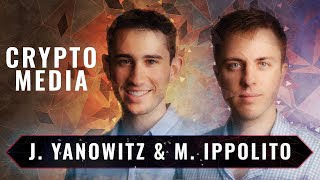
In this Hidden Forces podcast episode, host Demetri Kofinas interviews Blockworks co‑founders Jason Yanowitz and Michael Ippolito. The conversation begins with personal recollections of how the two met in 2019 and their experiences during the COVID‑19 lockdown. They recount the bootstrapped origins of Blockworks in late 2017‑2018, when they launched an events‑focused advisory firm with virtually no marketing budget, leveraging LinkedIn outreach to fill a 220‑person crypto conference during a bear market. The founders describe the pivotal moments that shifted their business model: realizing events alone were not sustainable, specializing in capital‑markets‑focused crypto content, and partnering with Anthony Pompliano, which birthed the Pomp podcast and sparked a broader podcast network (including Charlie Shrem, Ted Sideris, Nick Carter, Epicenter, etc.). They discuss the broader transformation of crypto media, noting the early reliance on Reddit/Twitter and mainstream outlets like CoinDesk, then the rise of opinion‑driven podcasts (Pomp, What Bitcoin Did) that made the space accessible to non‑technical audiences. The hosts argue that media has shifted from retail‑centric, token‑focused coverage to a Bitcoin‑centric narrative aimed at institutional investors. Blockworks now positions itself as a financial‑media brand that bridges the gap between crypto and traditional finance, producing editorial content, webinars, and newsletters tailored to registered investment advisors (RIAs), hedge funds, banks, and other institutional players. They explain their content strategy—mapping yearly thematic “on‑boarding” topics (e.g., custodians, prime brokerage, Coinbase‑style services) and producing highly specific, audience‑focused pieces—while maintaining a revenue model based on sponsorships and premium subscriptions rather than traditional advertising. The episode ends with a teaser for an overtime deep‑dive into Blockworks’ editorial process and business model.
Chapters
The Hidden Forces Podcast features long-form conversations broken into two parts, the second hour of which is made available to our premium subscribers along with transcripts and notes to each conversation. For more information about how to access the episode overtimes, transcripts, and rundowns, head over to patreon.com/hiddenforces. You can also sign up to our mailing list at hiddenforces.io. Follow us on Twitter @HiddenForcesPod and leave us a review on Apple Podcasts. And with that, please enjoy this week's episode. What's up everybody? My guests on this episode of Hidden Forces are Michael Ippolito and Jason Yanowitz, the founders of Blockworks, a financial media brand that delivers breaking news and premium insights about digital assets to millions of investors. I got a chance to meet Jason and Michael for the first time about a year and a half ago, and I remember being impressed not only by their hustle, but also by their ingenuity and ambition in launching what was at the time the only crypto blockchain-focused events and podcast production company that I was aware of, but which has since evolved to become something much bigger. I invited them on the program today to discuss the recent launch this week of their new online editorial site. It was an opportunity for me to learn not only about their journey as entrepreneurs in the crypto space, but also about what it's been like to create a media company from scratch in an industry that has seen such explosive growth in investor interest over the last 12 months. If you are remotely interested in blockchain technology, decentralized finance, cryptocurrencies, or just generally fascinated by the culture in crypto, you will absolutely love this conversation. It's full of captivating industry insights and anecdotes, including stories about how Michael and Jason bootstrapped the company without any outside funding and created a stable of talented podcast hosts like Ted Siedis, Peter McCormick, Preston Pysh, and most famously Anthony Pompliano, whose podcast they started together and which has since become the most popular podcast in crypto. It's also a great conversation if you want to understand the process by which people not only come to learn about this industry, but how they go about educating themselves, where they get their information, and which voices speak the loudest and with the greatest credibility in the industry. The second half of our conversation focuses primarily on understanding the content model of Blockworks and comparing it to its competitors, as well as the various business models that are deployed in the space and how the team at Blockworks thinks about monetization. You can access that over time along with the episode transcript, through the Hidden Forces Patreon page at patreon.com/hiddenforces. And you can learn more about our content offering and subscribe to our mailing list at hiddenforces.io. And with that, please enjoy this awesome conversation with my guests, Jason Yanowitz and Michael Ippolito. Jason Yanowitz and Michael Ippolito, welcome to Hidden Forces.
Great to be here, Demetri.
Demetri, I appreciate it.
It's great having you guys on. So, do you guys remember when we first met? Like when it was, the time period?
Oh man, feels like an age ago in my lifetime. Doesn't it?
Doesn't it?
Yeah, it really does.
Really does.
Do you have any memory of it or do you want me to tell you? Also, do you remember how we met? Who put us in touch?
You tell the story better, Jason Yanowitz.
So, I looked back because I had forgotten. I look back in my emails, Nick Carter put us in touch over the summer of 2019, and I could have sworn it was the summer of 2018, or it was the spring of 2017 or something like that. I thought it was a much longer time ago. It's only been a year and a half since we've known each other.
I mean, to be fair to you, time doesn't exist under quarantine and COVID. Totally new set of rules.
Have you guys felt that way too? I have for sure.
Yeah. It's like a black hole. It's like a weird black hole.
Yeah.
It's also like an emotionally difficult time for a lot of people. Especially if you're social and you have friends and you miss seeing your friends, it's really, really tough. I actually went recently and visited a couple of friends just to see them and it felt like a field trip. I was so stoked. And not only did we meet in the summer of 2019, but the last time we hung out was February 19th. And I actually just did a recording with Grant Williams and Ben Hunt, who I hung out with on the 14th of February in studio we recorded. So basically, we last hung out around the same time as I did with those guys, and that was right before quarantine hitting New York.
Yeah.
So a lot has happened since we last spoke. And we're going to get into that because the reason that you're here has to do with something that happened. But I'm curious to know what your lives have been like during quarantine. How did you live out your lives beginning in March when lockdown started in New York?
Yeah, that's a good question. I mean, so I'm living in New York right now in kind of a small New York apartment downtown in Battery Park area with my girlfriend. And it was pretty crazy because the first thing that happened was actually pretty work-related, right? Shutting down the office. And I remember I was looking back at emails. We talked to our team, I think it was on a Tuesday or a Wednesday, and we said, we're gonna shut down the office, for the next 2 days and we'll keep you posted about if we're coming back on Monday. And we haven't gone back since. And I remember the big turning point was actually, I think Tom Hanks got COVID and then the NBA shut down. And since then, I mean, I've basically been cooped up in my New York apartment. I went out and lived in the suburbs for a little bit. But yeah, I mean, just like everyone else, like it's been a physical toll just kind of being cooped up, but also a mental toll. I completely hear what you're saying, Dmitry.
Yeah. What about you, Michael?
Yeah, well, Jason's been living with his girlfriend. I've actually done the mature thing, the adult thing, and I've moved back in with my parents for the last 10 months or so.
How has that been for you?
You know, honestly, I joke about it all the time, but it's been wonderful. It's been really nice. So I actually left home when I was 14 because I went to a boarding school. So I haven't lived with my parents, you know, in over a decade. So it's actually been really nice just living with them kind of as an adult. So it's been an interesting experience, but it's also been like you mentioned before, it's been kind of isolating. I have this whole life that I built in New York, right? A bunch of friends that I kind of see on a regular basis. And you can stay in touch with people and you can talk with people on Zoom, but it's really not the same as an in-person interaction. Actually, Jason and I, I recently went back to New York and Jason and I met up for a little socially distanced dinner and drinks. And we made this joke like, "Hey, it's interesting seeing you in 3D." You know, because we talk every day over Zoom, you know, multiple times, but it was just something different about seeing him in person and 3D. So it's been a weird experience.
3D.
Yeah, I know, 3D.
I agree with Mike about something. I went back.
The full experience of Jason's sensorial corpus.
Exactly, it's quite an experience. I went back and lived with my parents in San Francisco for a bit in, I think it was September, which was fascinating because that's right when I thought I was escaping New York. And that's right when the fires hit. San Francisco. And when that whole day when I remember I had woken up, I was working East Coast hours, so I'd woken up at like 5:30. I'd gotten on a Zoom at like 6:00 AM. And by 10:00 AM, I looked outside and it was still dark. And I was like, my, the clock on my computer must be messed up because it's 10:00 AM and it's pitch black outside. Sure enough, I go outside and the sky is completely orange. Could barely see the sun. But I agree with Mike, it was amazing to spend quality time with my parents. And just thankful that they're still healthy. And yeah, it's kind of scary. I got to see how much I'm turning into my dad, which was the real eye-opener.
That's true for all of us, I feel like.
It's inescapable.
Yeah. Well, that's wonderful that you guys have such a good relationship with your parents. Every family's different. And the scenes in San Francisco were heartbreaking, and in California with the fires. We've been through a lot this year.
Yeah. It's been a year. I remember seeing those. I mean, Jason saw them in real life, but I just remember seeing it on Twitter. It was for about a day and everything was just orange and it looked like, "Oh my God, we're living through the apocalypse." And that was kind of juxtaposed over everyone being stuck in their homes and isolated. And it's just been a weird year for sure.
Speaking about weird years, it looks like we've embarked on another one. We're recording this on Thursday, January 7th. Yesterday was the electoral voting in the Senate. Of course, everyone knows now that there was a relatively small mob of what, maybe a few thousand people? It's hard to know what the size of the group of people were that got into the Capitol. It sounds now that there were 4 people that were killed or shot. It's unclear. Anyway, it was super, super just disturbing, the entire scene. And the reaction, and then subsequently Twitter. Did Twitter suspend Trump's account or did they simply block two of his tweets?
I think they suspended. I think they blocked two tweets and then suspended it.
And suspended him for 12 hours, right?
Yeah.
We are really living in some really unsettling and unnerving times. So there's a lot to, I guess, look forward to in 2021. But one of the things that there is to look forward to, which is why you guys are here, is something that you're launching, which is what I want to talk about. It's very exciting and I'm very happy for you guys, as you know. I think part of the reason why I feel like it's been so long since we first met is because you've made so much progress. It's really impressive. So maybe before we discuss what Blockworks is doing now, maybe you could give us a brief background for yourselves. Where did you come from? How did you get into the space? Then what was, I would like to ask, what was Blockworks early on and also when I first met you guys, and then that'll get us maybe into a conversation about the next phase of its evolution.
Yeah, that sounds great. Well, I think we'll have to share some of the embarrassing early founder stories here, but the real backstory— So I'm from San Francisco, Mike's from the Boston area, but the real founding story here is I first heard about Bitcoin when I was living in Budapest, Hungary, actually. A bunch of the Hungarian students were into Bitcoin because it was self-sovereign money, right? And moved to the city, forgot about it. I was working in venture. I ended up going, and it'd be nice to hear if Mike kind of remembers it in the same way, but I ended up going on a Sunday to a blockchain event where I heard this woman, Amanda Guterman, who was the CMO of a company called ConsenSys at the time. She was planning on speaking about Ethereum and how life-changing Ethereum was going to be. But before that 2:00 PM Sunday event, there was a 1:00 or 1:15 event on creating a side hustle in consulting. So I get there, I get up there a little bit early. I ask to go into the side hustle consulting meeting. I hear from this guy who's created a $500,000, $1 million a year business just doing consulting on the side. I then walk into hearing Amanda Guterman talk about how life-changing Ethereum is gonna be. Come home prancing home to the New York apartment. I was actually living with Mike at the time. I burst in the doors and got to sit Mike down because Mike was working consulting. I said, look, man, I'm going to start a consulting firm based around helping Fortune 500s implement blockchain. Well, I'll let Mike say what his reaction was.
My reaction was that doesn't sound like that good of an idea to me, to be honest, because my background was I was working at a boutique consulting firm at the time. It's a great company called Applied Value. But I know firsthand the challenge when it comes to consulting is you're basically selling your brand and your own reputation. And it's really difficult to do that if you don't have it. But what Jason Yanowitz catalyzed there was an interest from both of us in this space. And it's just the classic story that you've probably heard so many times about people going down the rabbit hole. And what we did then was we just started listening to podcasts, reading articles online, getting more plugged into the Twitter community, which is a, There are problems with it, but it's a great community to learn.
Remind me again, what year and date was this exactly, and month, like approximately, when you started going down this rabbit hole?
This was probably October or November of 2017. So this was right around like peak, if you remember, ICO mania back then.
Yeah.
And one of the challenges that we had, it was really, really difficult to find good information, and it was really difficult to sort out what was the good information from the bad. And also, when we eventually started going to events and trying to plug into in-person communities, it was so hard to figure out what was real and what was not. You kind of had gut instincts about a lot of it. You saw these coins and tokens going up 10,000%, and you had this gut instinct that this can't be real or sustainable. But every time you went to one of these events, you'd meet one or two people. And you were like, wow, there is really something interesting here. And, you know, the light bulb moment actually came on when we were at a particularly expensive event. And we had just paid like a couple hundred bucks each or something to go sit and listen to these people on stage. And we were just so pissed off. We were like, oh my God, I can't believe I spent this money. But then we were looking around this room and there were 200 or 300 other people in this room. And we were like, You know what? Every one of these people paid the same amount that we did, and I see a couple sponsors here. I bet this event made like 50 grand. And somehow we connected the dots that, you know, events are a good way to make money while also building an interesting brand for yourself. So that was kind of the connection that initially formed the business was we formed, to answer your initial question, Dmitry, we started as an events business. Initially, the idea was we were going to start an events business that would eventually help us do consulting. Obviously, it's changed a lot since then, but that was the initial concept.
Did you have any background whatsoever in events and in putting on events in the real world?
I mean, I'll let you— that's a hard no. Hard no.
No, that's also a no for me. I had done some businesses in college that were kind of sales-related, so I had some sales stuff under my belt and some social media stuff. No, in terms of event hosting. But the goal again was not an events company nor a media company. Our real name of the company, Demetri, is Blockworks Advisors, right? So if that tells you anything about what our ambitions were, we were going to be an advisory firm that used events to build our community. And we didn't get rid of event, the advisory side of things until— actually, kind of funny story here. It was, I think, a day before are, you know, we're jumping ahead here, but we ended up hosting an in-person event in February, I think it was, or end of February.
2018.
We had incorporated the business on December 10th, 2017. We went to Staples. I think there was a whiteboard for $20. We asked them if there were any whiteboards for cheaper. We went into the back to try to find a whiteboard that had scratches on it so that we could negotiate with the Staples to get one for like $15.
Came home.
I'm sure that was a lot of fun.
Oh yeah.
I mean, we still have that whiteboard.
We still have it.
We still have that whiteboard, by the way.
Cherish it.
Cherish it. It was great. We set our 2018 goals, right, to do some advisor work for some Fortune 500s and things like that. And we launched an event. And I had been posting on LinkedIn, and one of the posts ended up really blowing up. It compared like Bitcoin to Amazon. It got like 140,000 like or views or something. And so what we did for this first event was We sent no emails. We made no calls. We spent $0 on marketing. To this day, we've spent $0 on marketing at the business. All we did is Mike and I would wake up at like 4:00 AM every single morning before we went into our day jobs, and we would just message hundreds of people on LinkedIn. Hundreds of people. It was the definition of do things that aren't scalable. Of the, I don't know, 10,000 people that we messaged, There was kind of a half of them would accept you, 10% would buy tickets. We were selling tickets for I think $25 a pop at that time. And we ended up getting 220 people to come to our first event.
That is so impressive. As someone who has put on events, I've put on conferences, I've put on theatrical productions, to get together a crowd of 220 people in the midst of the crypto bear market, like the beginning of the bear market, you're saying February 2018. The price of Bitcoin and Ethereum and all those tokens had collapsed by this time. To be able to put together that many people is just really impressive.
Thank you. Yeah, I think Jason Yanowitz called the top because we probably incorporated our business within, I don't know, 10 or 15 days of the all-time high up till that point. And until very recently, you know, we've been building this business. You know, we've been operating in a bear market, which, you know, we can get into later. But I actually think it's been a blessing in disguise for us.
Dmitry, you asked if we had ever hosted events. I mean, it was your definition of— I think we can admit this now that it's, you know, 3, more than 3 years later, but definition of fake it till you make it. And I remember the day before the event, we got Mike's consulting firm to sponsor the event so that we could have, you know, good hats off to Mike for, uh, and his relationship with this firm. But the— our name was still Blockworks Advisors, and Mike came to me the day before the event and said, we can't have the name be Blockworks Advisors, my firm will think that we're competing with them. So that's why we changed the name to Blockworks Group, which we've recently just shortened to Blockworks. But I remember Mike got on stage and we had messaged people saying, you know, we host these events all the time. So Mike gets up on stage to greet everybody at that first event. Keep in mind, first event we've ever hosted. And Mike goes, welcome, welcome, welcome to another Blockworks Group event. It's so nice to see so many familiar faces in the crowd. I'm so happy that all of you could come back for another Blockworks Group event. And we got Netflix to come and like record the event, and it was a very funny, funny kind of moment.
Brilliant guys. Brilliant. Yeah, no, that's a great lesson in how to bootstrap anything. Generate a lot of hype, create the idea that you're way bigger than you are, and just Come at it with passion and hustle, it never fails. Well, of course it fails, but it's really a great way to go. So now it's the beginning of the crypto bear market. You guys have started an advisory firm that you quickly pivoted to call not an advisory firm because you didn't want to be competing with your sponsor for your main event, which you also got Netflix to stream or to record, which is— I'm not even going to go down that rabbit hole to figure out how you did that. So now here we are. What's the next move? How did you guys evolve from there?
Yes.
So on that, on that first event, uh, you know, Jason and I came off and we were obviously, we were really excited. You know, we laid out kind of plans for world domination, right? Which was us going to be, you know, we were each going to kind of work at our full-time jobs for the next year or so, you know, use that income to kind of funnel into the business, you know, do events kind of here and there until we could go for it full time. That lasted about 1 month. We hosted this mid or the end of February of 2018. By May 1st, both of us had left our jobs and went full-time with Blockworks Group. It was such an exciting time. And honestly, those were the earliest days where we had arguably the least traction we've ever had, but it just felt so, so, so exciting. And I actually remember we had our next event on May 10th, so it was 10 days after we had Both left our jobs, taken a bit of a risk, gone full-time. We hosted this event. I remember it was at like a random place at a warehouse type place in Brooklyn. May 10th, height of Blockchain Week 2018. We're like, "Oh my God, this is gonna be so successful. We're gonna make a bunch of money, blah, blah, blah." It was the only event that we have ever lost money.
How did you, this is kind of like an industry insider questions, but how did you source your spaces? How big was that space? And how many people RSVP'd and how many people actually showed up? Do you remember?
How do we source the spaces? That was me Googling around quite a bit. There are a couple of different—
Spacefinder was around. Space—
Yeah, exactly. But I mean, you know, it's kind of tough because we had really specific, you know, we wanted a space that would do for about 200 people. Those spaces are expensive. You know, there are all sorts of different types of spaces, right? There are kind of, you know, a one-stop shop, right? Which is what we had on our first space where they have catering and, and staff and service and everything built in. For the second space, there was four walls, right? So we had to source everything from, you know, literally getting chairs, right, to getting audio equipment, to getting stage chairs and a stage, to getting, you know, we had two different caterers. Yeah, so that's a whole fiasco.
Yeah, that's, I mean, the space is, that's a whole work of art right there. I don't mean the actual space itself, which there are so many beautiful spaces in New York and you can get easily carried away. Wanting to make your event beautiful and not spare any expense, but there are so many opportunities to negotiate prices and create marketing opportunities with companies that may have spaces. It's really exciting and a lot of fun, as I'm sure you guys know. So anyway, regardless, you got this space. It was the only event you lost money. Was it at least a success when it comes to people showing up? Was it just that you lost control of the costs?
It was a success in that we learned a lot about where the business was going. What we learned was, so the panels, I think I moderated that event, they were all over the place. You had one thing on supply chain and blockchain, you had one thing on like capital markets, you had one thing on legal and regulation. It was all over the place. And we were still under the impression at that point in time that our business was going to make money by selling tickets to events. And what we had done was we had jacked up the price for this event, right? I think We had gone from like a $25 ticket to $50, or maybe call it $50 to $100 or something like that. And really what we learned is that you had to specialize to get people to come to events, to get sponsors to pay for them, to get people to buy tickets. And so the big takeaway from that event was let's specialize. And what we specialized in, I had worked in venture before that. Mike was really interested in kind of the investment space. His consulting firm had kind of a private equity arm. And so what we started specializing in, that was kind of the catalyst for us doing capital markets. And so fast forward to our June, we hosted another event June 28th at a location in like a building in Chinatown, and it was called Capital Markets and Digital Assets or something like that. And that event was big for us because that's when we met Pomp, which kicked off the podcast side of our business.
Anthony Pompliano.
Anthony Pompliano.
Yeah, the Pomp.
So how big was this event?
It was the same size as the other ones, but it was really important. Like, I mean, one of the things that— imagine we had just gone full-time with this, right? We're two relatively young guys at the time. We just quit our job and we lost money. It was demoralizing. It was great because we ended up coming away with these two big takeaways, right? We really need to specialize, and that's been a guiding light for our content production going forward. And we want to focus on the institutional side of the space. So those takeaways were were great in retrospect, but at the time, you know, it was really demoralizing. So this next event was a big win for a couple reasons. One, immediately apparent, because it was the same size, but we ended up making a bunch of money on it. But two is because we met Pomp, and Pomp was a kind of pivotal point for Blockworks because that really got us into the podcast side of things.
But I'll share how we met, I'll share how we met Pomp. We're really ruthless about cold calling and cold emailing back in the day, and honestly, still are pretty ruthless about it. But we cold emailed Pomp 8 times, maybe even 9 times. And on the 9th time, I think Pomp was in Japan at the time. And, you know, he was kind of this big name on Twitter and he was a fund manager, I think pre-Morgan Creek days or maybe Morgan Creek. And he finally responds to us and says, "Look, guys, please stop emailing me." I'll come speak at your damn event if you stop emailing me.
That's hilarious.
And so he comes, he speaks at our event. We've got a few other folks from like Genesis and Grayscale and things like that. We also got our first sponsorship when a woman reached out, Alexis Johnson, and said, hey, one of my clients will pay $8,000 to sponsor your event, which was mind-boggling amount of money for us at the time. And that really kicked off the sponsorship side of our business. And Pomp, we auto-subscribed him to our email, to our Sunday newsletter that I had been writing. I don't know, a couple hundred subscribers. And I'll never forget, we're sitting, Mike and I continued living together at that time. We had moved to Brooklyn and sitting in on a Sunday night and I get an email from Pomp. He replies to the newsletter and says, "Hey, this is really interesting. What do you guys do?" And I'm freaking out. I started yelling to Mike, "Oh my God, Pomp reached out." Maybe he wants to buy us, maybe he wants to invest in us. We're gonna sell this thing. And it was a total hoopla of just craziness. And so we end up going in to meet Pomp and that's when the idea for a podcast, that's when he ran the idea for the Pomp Podcast by us.
This would've been the second time that you guys met?
Second time, exactly.
Second time.
Second time.
But at the time, didn't Anthony have a podcast called Off the Chain?
No, no.
He hadn't started. When did Anthony start his podcast?
No, so we started that. That was our, I mean, we created the jingle, the graphic design.
When did that podcast launch? Because I had it in my head that that podcast was—
That was August of 2018.
Right. That's about when I thought it was.
Correct.
Okay. So yeah, that makes sense. So the podcast with Pomp launched out of nothing. Pomp had never done— had he ever done anything related to media ever before in terms of being on air?
Pomp is a natural media guy in that he— I think he had about 150,000 followers on Twitter at the time. He has a natural understanding of the media game. So the next evolution of his Twitter following was he had no newsletter at the time or anything like that, was he launched a podcast and he ran it by us and we ended up creating the jingle. We said, well, I think Mike might have a better—
What was the jingle again? Is it the same one he has now on the podcast?
Yeah.
Same one?
Yeah, same one. So, I mean, Pomp called us into his office and was like, look, I want to make a podcast. So I think he already had kind of a vision for what he wanted to do, but he needed help. Honestly, what he needed was kind of two young hustlers to help him do the operational stuff that he didn't know how to do or didn't want to do. And that's what we helped him with. So when Jason kind of references the jingle in the graphic, that jingle got made with an old buddy of mine and me on GarageBand. And we literally thought that thing up and like did it that night.
I'm forgetting how it goes again. How does it go?
I'm putting that in.
Please, this is your punishment. This is your punishment, Michael. Hum it.
Yeah, yeah, no, sorry, the premium subscribers only. You gotta stick around to hear me hum the jingle.
I can't get it in my head for whatever reason. Okay, so go ahead.
Yeah, so the jingle, getting like the artwork logo type stuff, and we did the editing, the post-production sort of editing, and the responsibility for Pomp was basically creating A+ content and growing it. And really crucially, what we initially did for Pomp and what we've continued to do for now a whole network of different podcasters is we help monetize because the skillset to build an audience and continue to grow that audience is often not the same skillset that it takes to kind of turn that thing into a business and successfully monetize it. So what we've done and invested in as a competency is to really help people that have that talent work with hosts that are really great at building up that audience, kind of shore things up on the operations and production side of things. And we also help them monetize by connecting with sponsors. But that's a huge business for us now. And, and that really all got started with Pom.
That's a super fun story. I mean, I have so many more questions about how you guys moved from there to where you are today, but I don't want to, I don't want to get too bogged down in the details of that. So let's just kind of sum it up here. You started as a consultancy company, or that was the idea. You began putting on events in order to drive business towards the consultancy business, and then you decided that maybe events was the business, and then it turned out that you realized that that wasn't the direction. Now you embarked on this path of using, scaling your know-how for develop— I don't even want to know. I'm not even going to ask how you guys figured out how to do podcasts and all that stuff. It just sounds like it's kind of par for the course, like everything else, you hustled and figured it out. Then you began, I imagine, to integrate, to bring on additional podcasts, right? You have Charlie Shrem, you have Ted Sideris with Capital Allocators, which is a very successful finance investing podcast. Nick Carter also has his podcast with you guys. You recently brought on Epicenter, Peter McCormick also very recently, a huge deal because that's the other thing that's really interesting. And actually this is kind of maybe where I want to go next and it has less to do with Blockworks and more to do with the transformation of crypto media, because before the popping of the 2017 ICO bubble and bubble in general cryptocurrencies, there was a particular media landscape. There was one or two podcasts that were very popular. There was CoinDesk, there was some of the same publications that were out today, but ever since then, the media really moved away from what was a focus on— tokens, altcoins, et cetera, and it became increasingly singularly focused on Bitcoin. That of course speaks directly to the success of Peter's, of McCormick's What Bitcoin Did, which came out actually after Pomp. So how have you guys, separate from Blockworks, and then we'll integrate it into Blockworks, what has been your perception of the transformation of the crypto media space over the last, I guess, 2 years?
Yeah, I'll share an anecdote that kind of ties into this. So I worked at a venture firm in New York, and I remember that I worked for these old school Lehman Brothers, Bear Stearns guys. And I remember one of them had asked me about Bitcoin, and he said, "Can you send me some information?" And so I start Googling around. I look at like CoinDesk. The two main media companies at the time were CoinDesk and Cointelegraph, but really where the good information was, was on Reddit and Twitter. That's where the best information was. And so I remember sending, I'm this young guy, I'm 22, I send these old gray-haired, 60-year-old Bear Stearns kind of angry guy, send him some information on Bitcoin, and I send him a link to a Reddit thread and some tweets. And you can imagine getting laughed out of that room. But that was the extent. Of crypto information. Then later in 2018, Pomp launches and Laura Shin had the biggest podcast.
Totally, by far.
Yeah.
Yeah, was a mainstream reporter.
Also, exactly that. She was like a Forbes—
She was the first mainstream media person to get into crypto.
Her style was also very much objective media type person.
Very much so.
Middle of the road, very different from what evolved after that.
Very much so. What ended up happening is folks like, you know, Anthony Pompliano, Pomp, and Peter McCormick, they launched podcasts within a few months of each other. What they did was they looked at the successful podcast models of a little more opinion-based, a little less editorial-focused, right? So instead of really very objective reporting and like fact-checking everything, it was more about kind of Joe Rogan style, right? Joe Rogan, the Tim Ferriss, those type of really popular A-list podcasts. They did that for crypto and Bitcoin. And what that enabled was a way to learn about the space from really, really intelligent minds in a way that was engaging, right? Because one of the biggest problems with media at the time was you go on these websites and it was talking about like ZK-SNARKs and zero-knowledge proofs. Yeah, Mike and I had been in the space for a while at that point. Honestly, we weren't even interested in that stuff. If we weren't interested, I can sure as hell guarantee that anyone outside of the space who's trying to learn about it wouldn't be interested.
That's what the Epicenter guys would talk a lot about. That was my favorite podcast to listen to. I had a chance to be on it not long ago. Great guys, and like I said, you've recently brought them on. Those are the kind of conversations you would hear about it. The scaling debate was a big part of what interested a lot of people. Actually, I think that brings us to McCormick and I think the representative role that his podcast played. I think what was really brilliant about Peter's podcast when he began it, if I remember correctly, he was basically this guy coming and saying, "Hey, look, like everybody else, I bought Bitcoin, but I also bought a lot of these altcoins and I really got screwed in the decline." "And so I've taken this opportunity now to really understand Bitcoin because I've learned some things about it and maybe this is actually the way to go. And so I'm putting it out here. I don't know anything. I want to learn. And so I'm going to invite people on to do that." And I think there were a lot of people who shared that perspective and for whom that message resonated. And I think that was a big part of the transition, where people were really disillusioned with what happened in 2017 and they were looking for something to believe in, something to look into. And increasingly the media began to focus on Bitcoin singularly. I mean, that became a big thing. And the same thing goes with Pomp, which is why I thought I had it in my mind that Pomp started his podcast earlier, because he used to talk about things that weren't related to Bitcoin and increasingly his focus became Bitcoin as he went on. That to me was the big thing that shifted in the space, the movement towards Bitcoin. Would you agree that media became increasingly focused on Bitcoin in the 2018, 2019 period? Yeah.
I want to hear Mike's take on this, but my take is that it's not just media. Everybody makes a journey, right? And everybody kind of follows a very similar path. And it'd be interesting to hear what your listeners think of this, but nearly everyone I speak with comes into crypto in the same exact way. They hear about Bitcoin because the price is going up. They buy some Bitcoin, they get into Bitcoin. They then hear about this thing called Ethereum, right? They hear that Ethereum is like Bitcoin 2.0. You can build things on top of it. It's the world's supercomputer. They get really interested in it. Back then, the evolution of that was, oh my God, well then Ethereum is going to change every single industry, right? Fortune 500s, IBM, all these companies are going to implement and build things on top of Ethereum. Then you start realizing that Ethereum is more focused on DeFi, decentralized finance. That's its real main use case. And that blockchain, not Bitcoin, Which is, if you remember, that's what everyone used to say, blockchain, not Bitcoin, which really, if you dig into it, makes no sense at all. That is not really the narrative and that doesn't really exist. What ends up happening is people always end up coming back to Bitcoin. When you say Pomp used to talk about other things, then he came around to Bitcoin, same with Peter McCormick, that's just everyone following the evolution of their journey of learning about it, which usually happens in the same way. Bitcoin, then Ethereum, then kind of other enterprise use cases, back to Ethereum, then finally landing where they started on Bitcoin.
Hmm.
Yeah, I would broadly agree with that. And I think just zooming out for a second, the business of every media company, whether you're a podcast or you're CNN, is you're building an audience and then you're monetizing it. And when you're talking about crypto as a space, up until I would say very recently, it's been almost exclusively driven by a retail audience, right? So it makes a lot of sense that the media companies and brands that existed came about to serve and speak to that audience. And you know, you can kind of see it by some of the names that people have seen in the news, the Paul Tudor Joneses and the Stanley Druckenmillers and MassMutual and a lot of these institutions. They're not trading altcoins. They're buying Bitcoin. And we're starting to see broadly a transition from a retail space into an institutional space. And part of what needs to happen with that transition is media companies need to figure out that the growth in this space is going to be very different than how it used to look in this really small in-community talking about altcoins and all that kind of stuff. And what it's going to transition to is media companies have business models and they're going to figure out that the big audience is actually the group of people that doesn't exist yet in crypto because it's still such a small space. And Bitcoin is a really, really core part of that story.
I mean, that's a really great point. I think that's pretty accurate. And also Bitcoin lends itself to the institutional argument, I think, much more readily. So what is the opportunity associated with Blockworks today? What are you guys— tell me a little bit about what you're doing, what you are launching and what will have launched by the time that this episode airs and what the market is and how you see all of that.
Yeah, absolutely. So to sum up our origin story and what we are now, we started as an events company and what we've transitioned to is a financial media brand. Specifically, what we do is we focus on bridging the gap in between the institutional part of crypto as it exists today and the broader world of financial services. So as you see, there are different cohorts that are going to continue to move into this space. Like Jason Yanowitz kind of alluded to, what I call the corporate crowd, the enterprise blockchain people. There's the tech crowd, which is more developer-focused. But then there's this whole wide world of finance. And there are different buckets there that usually just get grouped into institutions. But there are kind of the macro traders, right? So there's like the Stanley Druckenmillers and the Paul Tudor Joneses of the world. But there are also RIAs, right? There are financial planners, there's wealth management, there are investment banks, there are commercial banks, there are insurance companies, there are broader asset managers, there's VC, there's private equity. There's this whole wide world of finance people. And what they need is a source of information that speaks to them about how they care about this space and why they should be interested. I'll share an anecdote. You know, we recently had Rick Edelman on one of our webinars. He's one of the largest RIAs in America. And, you know, he was expressing this frustration that it's so difficult to talk— the community does such a bad job of educating RIAs on what's going on because what an RIA cares about is, look, I've got this practice.
A registered— just for anyone who may not know, a registered investment advisor.
Yeah, thanks. That's a registered investment advisor is, you know, basically, I kind of describe as a financial planner plus plus, and they tend to manage the wealth of high net worths, and they sometimes deploy more sophisticated investment strategies to do that. But basically, it's someone who manages the wealth of someone else. Right. So if you manage or run an RIA, that means you serve clients that tend to be more high net worth oriented and you're giving them advice and usually actively managing their money for them. Right. So what these people care about— and now their clients are coming to them and saying, hey, look at what Bitcoin is doing. Teach me about— is this something that I should get involved in? Why? Maybe why haven't you gotten me involved in this already? You know, I wanna get a piece of this stuff. So what RIAs think about is, okay, how do I serve my clients? How do I talk to them about what's going on in this space? What do the operations kind of look like on the backend of an RIA, right? Like the RIAs all have deals with the brokerage companies, right, for tracking and reporting. And most importantly of all, that's how most RIAs get paid, right? They're managing the money of someone else and they get a percentage of the amount that they're managing on someone else's behalf. And the way that gets measured is the amount that's kept on a brokerage, right? So basically what you have is all these RIAs that are wondering like, how do I communicate this stuff to my clients? How's it gonna work in my practice? And when they come to a lot of media sites, they're getting this information about DeFi and zk-SNARKs and these protocols and they just kind of throw up their hands and they say, this isn't for me. This isn't what I wanna know. So what we're launching is an editorial product that speaks to these group of people in their language. We talk directly to the RIAs, the investment banks, the macro hedge funds about the issues that matter to them, their practices, and we relate what's going on in this interesting new space to their actual businesses.
So I want to get into that more. Before we do, explain to me and to the audience, for people that know or may not know, I want to hear your perspective. What is the experience today for someone who— Well, I guess the question also is, before I even ask that, how do you think about this market? How do you segment it? Is it by focus? Is it by acumen? Is it by age? How does the typical 25-year-old— I presume, first of all, there are very few 25-year-olds today that are not familiar on some level with Bitcoin. In fact, it seems today that almost everyone knows, has heard about cryptocurrencies. I guess my question is, what— Let's focus in on the person that you're targeting. How do you describe such an individual and if you've an avatar for them, and how does he or she go down this journey and where does he or she go? How does someone educate himself today or herself today if he or she is trying to understand or learn about Bitcoin as an investment? What does that process look like?
Yeah, that's a great question. And honestly, Demetri, the answer is it's really hard to create that avatar. In like the traditional media sense where you say, "Hey, the audience that I'm targeting is of a certain age group and in a certain geographical place," and all that kind of stuff. Because really at the end of the day, we are still in such early innings. Like if you drew one of those classic innovator or adoption curves, we're still in the very, very earliest part of that phase. So the real answer to that is that there is no avatar. There really is no avatar and it's a certain amount of people that have developed their own kind of natural interest and curiosity and want to learn more. The way that we approach it from a content creation standpoint is we basically sit down and map out what are the big themes that are going to play out in crypto or digital assets over the course of the next year. And going on that lesson that we kind of learned early in our business, we try to get as specific as possible. So one of the themes that we're focusing on this year is onboarding, onboarding the traditional financial space. And if you look at almost every big business that has been built in this ecosystem so far, it is an onboarding business. And what I mean by that, it is businesses that help take funds in the financial system and they take them from the financial system and they put them in crypto. So, a really great, easy to understand kind of example of that is Coinbase. Coinbase. That's the ultimate onboarding experience. But there are other types of onboarding businesses as well. Lolli is an interesting example of that, where it helps onboard new users by— it's basically a rebate program that you get paid out in Bitcoin. But it's everything. It's the custodians, it's Prime Brokerage, it's derivatives in a certain way, because that gives access to a new class of investor. What we do is we try to sit down and be as specific as possible, what are the areas What are the things that are gonna happen in this space from a higher level, right? From a market participant type level. And then we religiously or relentlessly just produce content that focuses on those areas.
And Demetri, if I can just add to that, like Mike said, you know, this is all a bet that, you know, this space gets bigger, right? And as the price of these assets goes up and the space expands, right? We're recording this on, you know, January 7th, yesterday, the crypto market cap of the entire space just hit $1 trillion for the first time ever. It's a big milestone. At some point, Bitcoin itself will hit $1 trillion for the first time ever. As these prices go up, lots of new people come into the space. So there could be 10 million new people who come into the space, 100 million new people who come into the space. Not that we don't care. We're not focused on 90% of those people. There are other ways for those folks, your 18-year-old cousin, your 22-year-old nephew to go learn about Bitcoin. Like Mike said, we're focused on the hedge fund manager, the 50-year-old gray-haired hedge fund manager whose LPs are pinging her to say, "How can I get exposure to Bitcoin?" Those folks need to learn about it in some way or another. I just pulled up in the background one of our competitors' sites. If you look at the titles, of what's on the articles they're writing. It's, you know, Trade Santa is giving away Christmas gifts. Cyber Veins NFT platform to launch on Huobi's ECO chain. Reef Finance debuts as the first Polkadot project on Binance Launchpool. I can guarantee you, if you're a 50-year-old family office investor or an RIA and you see those articles, you're closing that site and you're walking away. Our goal is to make that not happen.
Guys, I'm going to move the rest of our conversation into the overtime. I want to really use the opportunity to delve into your content model, your editorial process, how you guys build content. I'm curious to see how you do it. I'm also curious to understand your business model and whether you see this opportunity as just another way to reach a really valuable audience? Are there, for example, have you looked at existing content companies, publishers, newspapers like the Wall Street Journal and Bloomberg, for example, which do have verticals in crypto, or at least Bloomberg does? And how do you compare yourselves to them? Because it sounds like what you guys are describing is a more narrow audience that resembles something like what the traditional financial newsletter business and industry targets. To the point about content, then we'll move it into the overtime. I'm also curious to understand the scope of your ambition to create new mediums of content. How do you envision educating your readers? Will they be just readers? Are you going to have audio? Are you going to combine audio, video? How are you going to do it? I'm really curious about that. For anyone who is new to the program, Hidden Forces is listener supported. Speaking of business models. We don't accept advertisers or commercial sponsors. The entire show is funded from top to bottom by listeners like you. If you want access to the second part of my conversation with Jason Yanowitz and Michael Mauboussin, as well as the transcript and rundown to every episode we've ever done, head over to patreon.com/hiddenforces. There's also a link in the summary page to this episode with instructions on how to connect the overtime feed to your phone. So that you can listen to these extra discussions just like you listen to the regular podcast. Jason, Mike, stick around. We're going to move the second part of our conversation into the subscriber overtime.
Sounds great, Demetri.
Thanks, Demetri.
Today's episode of Hidden Forces was recorded in New York City. For more information about this week's episode, or if you want easy access to related programming, visit our website at hiddenforces.io. Hiddenforces.io and subscribe to our free email list. If you want access to overtime segments, episode transcripts, and show rundowns full of links and detailed information related to each and every episode, check out our premium subscription available through the Hidden Forces website or through our Patreon page at patreon.com/hiddenforces. This episode was produced by me and edited by Stylianos Nicolaou. For more episodes, you can check out our website at hiddenforces.io. Join the conversation at Facebook, Twitter, and Instagram @HiddenForcesPod, or send me an email at dk@hiddenforces.io. As always, thanks for listening. We'll see you next week.
More from Jason
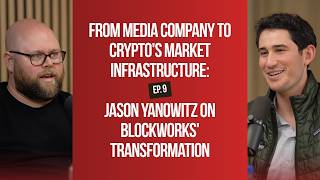
From Media Company to Crypto's Market Infrastructure: Jason Yanowitz on Blockworks' Transformation
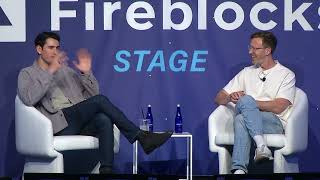
Stablecon 2025 - Fireblocks Stage: A Fireside Chat with Jason Yanowitz & Simon Taylor