Jason Yanowitz - Blockworks Group - Blockchain Events And Advisory Group
Jason Yanowitz, co-founder of Blockworks Group, built a company hosting exclusive events and dinners for institutional investors to cut through blockchain misinformation. He went from a history degree at Emory through venture capital to founding Blockworks after diving into Bitcoin in 2016, betting that tokenization and decentralized networks will shift value from applications to the protocol layer.
Chapters
Welcome to Almost Here, Around the Corner Future Technology Podcast with Richard Jacobs. Future technologies poised to transform our lives for better or worse are the focus of this podcast. Almost here means these technologies are now here and starting to be used, or just around the corner. From Bitcoin to artificial intelligence, 3D printing, blockchain, virtual reality, and more.
Hello everyone and welcome to Future Tech Podcast. I'm your host Juliette Lamarre, and joining us today is Jason Yanowitz. He is the co-founder at Blockworks Group. Welcome Jason.
Juliette, thanks for having me.
Absolutely. So why don't you go ahead and kick us off with a little overview about Blockworks Group?
Of course. So the big problem right now that we're trying to solve is there's a boatload of information about blockchain and its impact on really everything. But the sources, the information out there, it's not very well organized. It's highly fragmented. And the people in the space really don't know where to go, don't have a reputable source of knowledge. And the fact is that investors, executives, maybe a portfolio manager at Fidelity who's looking to deploy $100 million in space is not going to learn about an asset if it comes from a Twitter account called crypto whale, right? So that's the problem that we're trying to solve.
And, and how are you going about solving it?
Yeah, so right now our focus is on hosting events and hosting kind of exclusive dinners for a multitude of different people. So we host very, very specific catered events towards different target markets. So it might be 100 different Fortune 500 CEOs and CTOs and CIOs looking to learn about the impact of blockchain on their company's supply chain. It might be, you know, we get 200 institutional investors in the space who are dipping their toes in the crypto investing space. It might be a fund is looking for— a crypto fund is looking for to get LPs, LPs interested in investing in digital assets, and we'll set up a dinner for them. So really, we're just in an education provider and a connector in the space.
Education is so important. I know that when I was first learning about blockchain, it feels like such an alien concept, but at the same time, it's so simple. And you're sitting there struggling with yourself of, you know, am I stupid? Do I understand this? To, oh yeah, I totally get it. And it's funny how in technology that seems to be a unique aspect of the learning process.
Yeah, I mean, the, the information out there right now— look, if you want to go learn about venture capital, or if you want to go learn about coding, the information is all out there. If you want to go learn about blockchain, you're going on Reddit and Twitter right now. It's a completely absurd concept. So you have a lot of companies trying to do this right now, right? You have great companies like CoinDesk who are putting out a boatload of news, but maybe not the most insightful news, um, And so what we're trying to do is put out really insightful news. We're building out an entire content platform, and then we're trying to put on events and dinners that rather than having 5,000 people file into a room, or rather than getting, you know, 50 different ICOs pitching their products, we're trying to host these events and these dinners and launching this content that's actually really valuable for people.
Well, it's going back to the original way that people learn is from one another. And when you are on, you know, Reddit or some kind of chat room or group, you have a lot of people there that are maybe trying to mislead you, or they just want to talk because they think they know what they are talking about, but they might not. And it is way easier for people to grasp concepts when they are in a face-to-face, person-to-person type dinner situation. It is much easier to know if you trust that person because that is, that is that layer of humanity that we can see and and pick up on nonverbal cues. It's so important, I believe, to learn like that. And that's— you bring up a great point. When you are trying to learn, you're not going to, you know, a blockchain school. You're not going to be able to just Google it because there's so many different opinions out there and so many things. It's like, what's real? You don't know.
Yeah, but I completely agree there. But on that point, like, what we're seeing happen over the past decade or two, um, and this trend will continue, is It's a crazy concept to think of everything becoming digitized, right? Like a— and decentralized. But, um, and I am stealing this from Chris Dixon, who's at, uh, Andreessen Horowitz. He's, uh, him and Katie Hwan just launched the new $300 million crypto fund over there. It's right now we say put digital in front of things that are becoming digitized, but in, you know, 10, 20 years, as every single kid coming up these days learns coding in school. We all have, you know, these supercomputers in our pockets. Digital will be the norm. We won't say put digital in front of things that have become, you know, gone online.
Absolutely. So tell us a little bit about your background, Jason. How did you get involved with, with Blockworks? How did you come to found this company?
Yeah, so I'm a history fanatic, always been really interested. So I went to Emory University down in Atlanta, studied history, always really interested. In technology and how technology impacts people and culture and society, but on the flip side, how people and culture and society pull technology, right? And so I went into— worked in venture capital right after graduating from Emory, working at a venture capital firm in New York investing in late-stage technology and biotech. After that, left to build out the business development team at an amazing data analytics company called Sisense. That's working on enabling kind of the business users rather than just IT to use data and to be able to actually, you know, drill down and analyze this data. And the whole time I'm thinking about how culture and people in society are pulling— kind of just requesting something else, right? Our financial services system, for example, the plumbing is around— has been around since the '70s, right? But, you know, we all have, like I mentioned earlier, these supercomputers in our pocket. And so I started looking into different ways that people, you know, we're going to go towards globalization and decentralization. And obviously type in decentralization on, you know, Google in 2016, and there are these crazy articles being written about Bitcoin. Um, went down the Bitcoin kind of rabbit hole in 2016, um, originally just from like an investment standpoint, and then started, uh, doing kind of the event circuits in New York and found out that this crazy technology out there called blockchain is going to enable— you know, Bitcoin was peer-to-peer payments without any, you know, third-party intermediary. Realized that blockchain is going to enable peer-to-peer everything without intermediaries. So I really went down that rabbit hole and got so obsessed and enthralled with this, uh, this decentralized topic basically, and blockchain in general, that left SciSense to build Blockworks Group full-time.
Wow. So this is something that you've been in the trenches and that you really, you know, you're really seeing a future with, which brings us to, you know, you felt this revolution inside yourself. Where are you seeing this whole blockchain wave? Where is it going?
Yeah, I mean, to put it simply, I've never felt so confident that this blockchain and tokenization concept is the future architecture of what people call the Web 3.0. With that being said, you know, the unbundling of data silos like Facebook and LinkedIn, you know, putting things going like we said earlier, digital, right, with everything. We've seen glimpses of this in games and collectibles. Like, I don't know if you were following the CryptoKitties trend, but we've seen glimpses of it. But we're really, really a long ways away from— until we store all of our data and assets on decentralized LinkedIn, decentralized Instagram, decentralized Google Docs. The combination of this shared data layer with a tokenized incentive system will create a really competitive ecosystem, and we're already seeing capital flow into the space and entrepreneurs flow into the space. Yeah, like I said, it'll take a while before it's the, it's the new architecture.
And besides education, That's a big one. What other challenges do you personally feel are standing in the way or that we're, you know, we're working on, we're almost conquering?
Yeah, I mean, when capital comes into the space, uh, scams come into the space. Um, we originally launched Blockworks Group, my partner Michael and I, because every single event we were going to had turned into this ICO pitch fest where a random company from Malta was paying the event organizers $20,000 getting up and pitching a room of investors their ICO. And because everyone, you know, this FOMO— the FOMO is real, right, in blockchain and crypto. And especially in 2016— or excuse me, 2017— no one wanted to sit on the sidelines, so they're throwing absurd amounts of money at these random ICOs. And even we still see— not saying EOS is not legitimate, I definitely believe in what they're doing— but they just raised $4 billion. Which is completely absurd. Um, they barely even have a working, uh, network right now, and they raised $4 billion. And so the biggest challenge is separating the fact from the fiction in the blockchain space, and that's what we're doing.
Oh, it's, it's, it's true when you say it's, you know, anytime there's a good thing, there— it's going to attract maybe some not so tasteful things, um, simply because people don't know what they're doing. And when that lack of education that is an easy place for people to come in. And even if they're not trying necessarily to do something malicious, you know, they're not going to think their ideas through as much because it's not being regulated or policed in such a way where they have to be responsible. So whether it's intentional or not, these things are popping up unfortunately everywhere.
Exactly. But I mean, we are seeing, uh, for the first time ever regulation coming into the space, and it's, you know, beyond needed, right? The SEC has taken a You think of the SEC as being pretty old school, and they are, but they're taking a— I wouldn't call it an innovative approach necessarily, but a modern approach, which is the other, the other week they came out with a statement on Ethereum and Bitcoin talking about utility security, or excuse me, utility tokens versus security tokens. And so it's language like this that will enable the space to become real, for lack of a better word.
And that's what's really— that's what's missing is, is the reality portion. I think that's also why a lot of people are holding back because they think, well, this isn't real, and it's because of these roadblocks. And I think a lot of people don't necessarily want to be real because change is scary. Are you— what are you feeling about pushback in that regard?
I think that people have trouble sometimes taking— stepping back and seeing what's actually happening. So I'll kind of address two fronts here. One is that we're in the United States, which is the hardest country in the entire world to understand Bitcoin and blockchain. Why? Because things work here. The government works, money works, everything's free-flowing, and everything's easy. But you go somewhere where there's hyperinflation, you go somewhere where there's censorship, and blockchain makes a lot more sense. Um, the other aspect is that we've been seeing these, uh, technology make, uh, everything, especially transactions, more efficient. Technology gives greater transparency of info and inclusion of a larger percentage of the global population involved in marketplaces. So, I mean, going back to 1602, the Dutch East India Company launched the first ever organized exchange. And since then, technology, like I said, has made things more efficient, greater transparency, larger inclusion of the entire world. Um, the misperception though is that technology doesn't cause this change. The change happens because society and culture and user behaviors demand it. So the world has become global— globalized, but the financial system has plumbing in place from the 1970s. The stock market is closed more hours than it's open, and it's 2018.
Mm-hmm. Yeah, that's a good— that's a really good point.
Yeah, it's, it's, it's kind of ludicrous that we have these supercomputers, these iPhones, and these in our pockets, but if I want to trade my shares of Apple on a Saturday at 2 PM, the market's closed and I have to wait until Monday. So all this is doing, this is not going to completely change the world in my belief, it's just making things more efficient, more globalized, greater transparency.
Absolutely. And this is bringing us to, you know, we were talking before about the value chain.
Yeah, of course. So, I mean, throughout this, there's this thesis that we at Blockworks Group really believe in, and it was first articulated by Joel Menegro, who used to be an analyst at Union Square Ventures. He now left Union Square Ventures to launch Placeholder VC with Chris Dixon, who wrote probably the best book on crypto investing so far. And it's basically just the, the idea that information technology, we've continuously seen a trend towards open platforms and, and open architecture, and that what is happening is, if we think about today's internet stack in terms of how value is distributed, it's composed of these thin protocols— so value doesn't really accrue in the protocol— and these fat applications. That's what kind of his terms there. So what's actually happening is in the age of blockchain, that'll flip. Value will accrue at the protocol layer rather than the application layer. Now what What in the world does that mean, right? Was my first thought when I read that. All it means is that if you go online right now and you go to Blockworks Group, you know, our website blockworksgroup.io, there's an HTTP in front of it. That's, that's a HTTP is a protocol upon one of the protocols upon which the internet is built on. The, whoever made HTTP doesn't make any money. No value accrues at the protocol layer. The value accrues on the applications that are built on top of this protocol, like the Googles and the Amazons and the Netflixes and the Facebooks of the world. But what's happened is data has become really, really centralized and really siloed, basically. Like, if you think about the winners of the internet— Facebook, Amazon, Netflix, Google— all of their businesses are based on leveraging these closed and proprietary datasets. These companies amass massive datasets and then monetize by charging us, the users, directly and placing targeted ads and skimming fees off the top of transactions. But these business models don't work if the company doesn't control the data, and that's what's happening. So by replicating and storing user data across an open and decentralized network, which is made possible by blockchain, rather than individual apps on top of the protocol, um, that will kind of flip where the value is stored. So long-winded, long-winded answer to to that value question, but that's where we see things going here at Blockworks Group.
I mean, there's so many different directions you can go, and I love that you're really focusing down on the ones that are truly important to you. You know, being in this space and really creating something that is solving a lot of problems, what are some of the biggest lessons that you've learned throughout this process?
I mean, I've learned a lot about how the current structure of the internet and the architecture is set up with SMTP and IP and HTTP. But no, about beyond that, it's just that greed is really, really real, and that greed causes misinformation, and that it's our job to sift through this information— misinformation— because in order for this to actually take place and create a better world, which we believe that blockchain will make the world a better place, um, we need to help capital, because capital is needed to improve this technology. We need to help capital sift through the misinformation and basically give them access to people who are actually trying to change the world with this kind of decentralized blockchain concept that's going on right now.
Such a, such a wonderful goal and, and betterment of the world, really. So with Blockworks, Going back to Blockworks, what kind of events do you have coming up? How can people stay in touch with you? And if they want to host an event, is that an option?
So we don't white label our services. We typically— we've done it once before, but look, we throw events every 6 weeks in 2 different cities right now, New York and San Francisco. We're expanding to London soon. If you're in New York or San Francisco, we'd love to have you at an event. Next New York event is on regulation and compliance in blockchain investing. We have some of the biggest names in the space. If anyone's familiar with, you know, tZERO or Medici, which is led by Patrick Burns, the CEO of Overstock, we've got the COO and general counsel of Medici. We've got the chief innovation officer of AIG talking about what AIG is doing with blockchain. We've got Josh Klayman, who's— anyone who's been in the blockchain space knows a lot about She's one of the best lawyers in the space. Got a couple of venture capital firms talking about tokenizing VCs, what in the world that actually means. In San Francisco, we've got an event on September 13th focused on venture capital and kind of building decentralized applications. But rather than droning on, because I could for a while, about these events, check us out at blockworksgroup.io. It's just block works with a W-O-R-K-S group. Um, get in touch with us. We'd love to have you at an event, or if you're in the blockchain space or building something, we would love to have you speak or sponsor or your partner or get involved in some way.
Fantastic. And you're also over social media. I see here your Instagram, YouTube, and Facebook, so people can find you there. Are you active on those networks?
We are very active across all of social media. We put out content daily. We've got an amazing content team here. I write every single day. My co-founder writes every single morning as well. And we put out some pretty thought-provoking pieces. I know he recently, Michael recently wrote a piece on why blockchain will not be useful for supply chain. And that sparked a controversial debate on LinkedIn. But yeah, get in touch with us. All of our writings are on our website, which links to our blog. We've got an Instagram page where you can see pictures of our events. We've got YouTube, a YouTube page. Where you can see actual video talks from guys like Anthony Pompliano at our events and Michael Buccella at BlockTower and Grayscale and Genesis at our events. And yeah, get in touch any way possible. We love bringing new people and educating people. And our goal hopefully is to educate them, but I'm sure people always leave our events having met some great new people, having learned a lot, but hopefully with more questions than they have answers.
Absolutely. Well, Jason, thank you so much for coming on the program and answering some of our questions and leaving us with a lot more answers than we had before.
Glad I could help, Juliette. Thanks so much for having me on.
That was Jason Yanowitz. He is the co-founder at the Lockworks Group. They're fantastic. Check them out. I'm on their Instagram page right now. Follow them everywhere. Thank you all so much for tuning in. This has been Juliette Lamar with Future Tech Podcast.
You have been listening to Almost Here, Around the Corner Future Technology Podcast with Richard Jacobs. Subscribe to this podcast, post a review, to discover more future technologies that are poised to transform our lives for better or worse, such as Bitcoin, artificial intelligence, 3D printing, blockchain, virtual reality, and more.
More from Jason
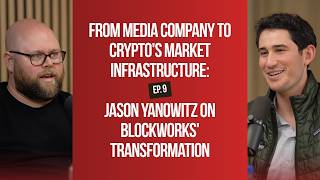
From Media Company to Crypto's Market Infrastructure: Jason Yanowitz on Blockworks' Transformation


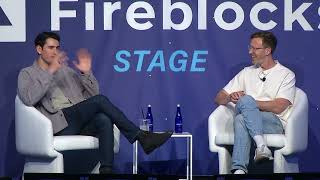
Stablecon 2025 - Fireblocks Stage: A Fireside Chat with Jason Yanowitz & Simon Taylor