Kelly Schols Interview - CPI Plumbing
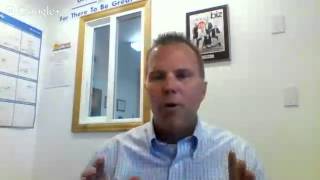
This is a recorded interview (host Kenny Chapman) with Kelly Schols, president and primary owner of CPI Plumbing in Mount Vernon, Washington. Kelly describes his path from starting in the plumbing trade at age 16 (sweeping floors) to joining CPI in 1990, buying out his partner and becoming owner in 2001, and navigating major economic downturns (post‑9/11 in 2001 and the 2008 crisis). The company shifted from ~95% new construction toward a service-focused model during the 2008 downturn, supported by memberships (Service Roundtable, Service Nation Alliance), education, and deliberate partner collaboration. The interview also promotes an upcoming LiveLook strategy event (Sept 29–30) hosted at Kelly’s company.
Questions this video answers
1990.
2001.
Mount Vernon, Washington.
September 29 and 30 (year not specified in transcript).
Chapters
Welcome, everybody. I'm Kenny Chapman, the Blue Collar coach. Thank you so much for joining us today and taking a look at this interview. I've got a really special interview set up for you today. Today I have Kelly Scholz with me, the president and primary owner of CPI Plumbing in Mount Vernon, Washington. You might not have heard of Mount Vernon and that's okay. Before I started working with Kelly, I hadn't heard of Mount Vernon either. But he informed me it's about hour north of Seattle and I've been on site multiple times with him. We do a lot of work together. He's in our mastermind group. And yet probably the most exciting thing for you is the fact that he's hosting the Blue Collar Success Group's live look inside the strategy event. Coming up on September 29th and 30th, we're going to spend two days looking at Kelly's company, pulling back behind the covers what really makes this very successful business work. And you're going to have a firsthand look at that. Access to his people, access to his technicians, access to what he's doing to really grow this business. Then on day two, we're going to get down and dirty. We're going to roll up our sleeves as a group and we're going to do some planning and strategy to help you model and create the things that you see that really work here. So you get some coaching with us, you get some time with Kelly and his team. But today I just wanted to give you a little bit of a background as to what makes Kelly work. How did he build CPI into this market dominating machine in a relatively small market? He does more in revenue revenue than many of our clients in much bigger markets. So I'm interested in how that happens. So please join me in welcoming Kelly Schultz. Welcome, Kelly, to the interview here, buddy.
Thank you, Kenny.
Awesome. Awesome. Well, so let's just kind of dive in, Kelly. So let's talk a little bit about. We all have kind of this path that gets us into the business and I know that most of our clients and contractors are somewhat interested in. How did Kelly Scholz end up as a plumber?
Well, I started in the business when I was 16. I was working on a dairy farm, really didn't like it. And my girlfriend's dad at the time owned a plumbing company so he asked me to come to work for him. So at 16 years old, I came to work and started sweeping floors and dumping trash cans and putting material away in the warehouse.
Wow. So we won't ask Kelly how many Years ago, that was that. He was 16, starting sweeping floors in the warehouse. But much like a lot of of us and a lot of you watching today, we all have different paths. I kind of personally got into this industry on accident in a way, too. I mean, I certainly bought a small drain cleaning company. That's how I started. But I didn't know what I was doing. I had no business being in business. And generally we kind of start there. You come into this company working for your girlfriend's dad at 16. Very few people end up making that a lifelong career path. So how do you go from a broom in hand at 16 to ultimately the president of this organization many years later?
Well, actually, this is a different company than the one I started with. There was a partner in that company, and his name was Steve Olson. He sold out of there a few years later and bought into what is now CPI Plumbing Heating. Few years after that, he talked me into coming to work for him at CPI. So in 1990, I came to work for him at CPI and by 2001, he retired and I bought him out at CPI.
Okay, okay. So you had a little leadership in him, perhaps, that you were kind of following. Like if he bought into this company and then you decided to follow him over, how, how did that happen? Why was this a guy that you knew you wanted to work with or follow to another organization?
Well, it was actually, he wanted me to follow him. After he left the previous company, I moved to Southern California, was living down there. He started calling me about six months after I moved down there and called me every month for two and a half years trying to get me to come back to Washington to help him run his company. When I finally came back and saw what was happening and what he was doing with the company, I got excited and he gave me an opportunity to buy into the company if I would come back to work for him. So In January of 1990, I packed everything up and moved back to Washington.
So you're living in Southern California, enjoying the sun down there out of the drizzle of the Pacific Northwest, but you saw something and you wanted to change your life a little bit at that time anyway. So you took this as an opportunity and said, I'm going to go back and I'm going to jump into this thing and see what we can build, huh?
Yeah, I was down there. I was just partying a lot. I was just working to get by. I had no direction, no focus, and knew I wanted to clean myself up and find a direction and focus came back to work for him and a few years later ended up buying him out. And I won't tell you how many years now, but total now I'm the owner and president of the company.
Okay. So one of the things I want our viewers to really get is I'm sure just through this interview you can feel Kelly's energy. He's a very easy going guy. He's very driven, though, and he's very clear about his goals and what he wants to accomplish. And so, like, for me, as I've known Kelly three or four years now, and it's almost hard for me to put my arms around the fact that he was working to get by, that he didn't have a clear direction, that he wasn't exactly, you know, he didn't have his life totally lined out exactly how this thing's going to play out. Because since that time he's created that type of a life where he knows what he's doing, when he's doing, how he's going to do it, why he's doing it, how he can continue to create more wealth and abundance in his life, both professionally and personally, in the face of challenges and hardships that many people face throughout the journey. So those of you listening, don't ever get caught up. Every time I'm doing expert interviews, I want to make sure that you don't go. Well. Kenny and Kelly might be able to do that, but that's not me. Yes, it is you and it can be you. You just might not have a path. That's one of the reasons that we created this event called livelook, where you're going to be able to see, talk to Kelly, see his organization, what he's built. So if you think about kind of a turn, obviously that's a major, I call them defining moments. Some people talk about turning points. That was a clear line in the sand type of a decision for you, right. For you to pick up everything, move back and ultimately buy into this plumbing company. Would you say that's one of the major turning points in your career?
That was one of them, yes. When I came back to Washington from California, I had $300 in my pocket. I owed $500 on a 72 Chevelle and I had the clothes on my back. It's not that way anymore. That was one of the major turning points. Another one came in 2001 when I bought Steve out and he retired. Here's my mentor that had been my mentor since I was 16 years old, who was stepping away, basically giving me the selling me the company and say, here you go kid, have at it. Well, in 2001, I don't know how many remember what happened, but that's right about the time September 11th happened. So the economy was on a downturn and nobody, I mean nobody knew what was going to happen. And here I am buying a multi million dollar plumbing company going, oh my God, what do I do? Right, sure.
Well, and like you said, a big point of that is you've got all this external challenge, plus you're losing a mentor and somebody that you've had to be able to bounce off yourself. So when did you, you know, I know you belong to the Service Roundtable. We're advocates of the Service Roundtable. We encourage all of our clients to, to be a part of Service Roundtable as well as work with us and our mastermind groups and all the coaching and the training and using our video membership, all those things are very synergistic. And obviously with you bringing in myself and other coaches in your organization, you're education focused now. But when did you really start realizing, man, there must be a better way or I've got to do something different? Because you were 100% new construction when that downturn took place as well, weren't you?
Yeah, in 2001. Well, we weren't 100%, but we were about 95% new construction. And at that time, when the downturn did take place, you know, I turned to the only other person I really knew to turn to, and that was my brother. He's been very successful in the automobile industry. And I asked him, you know, what, what I needed to do. And he said, the first thing you need to do is you need to educate yourself. He goes, you need to buy self improvement motivational tapes, anything you can get your hands on and educate yourself to become the type of person and leader you want to be. So I did. I bought Brian Tracy's Universal Laws of Success and Achievement. And I listened to that for about a year and a half to two years every day in my truck. And it helped tremendously. And from then until the next big downturn, we did really well. I mean, things were cruising along good. We were starting to get into service a little bit more, but we were still mainly new construction. We were making good money. I had beautiful wife, two kids, vacation property, built a brand new house. A lot of things were going really well. And then 2008 happened. That's when the next economy hit.
I love your story. You talk about how you and your partners are sitting around because another Thing I want our viewers to realize, Kelly does have two other minority partners in this organization. So there's an old adage, they say the fastest ship to sink is a partnership. So that's true in a lot of cases, but that's not been true of CPI as you tell it better than I do. But you guys are sitting around and one of your partners spouses worked in the banking industry and you guys are looking at what's taking place. Share with our viewers how that transition happened or how you even saw some handwriting on the wall that many, many people see?
Well, yeah, one thing like, you know, you talk about partnership to me, you know, power and numbers and you're only as good as the people around you and I've always believed in that. So as far as having partners, you know, I look at it as a blessing. You got more people, more ideas, better input and a lot more strategy and different things going on. So we'd always met, you know, once a month, just kind of get together, talk about different things and a lot of new construction going on. We were doing a lot of developments at the time and we were seeing the prices of homes, I mean it was ridiculous what was happening with them. And we were talking about it and Brad's wife working in the bacon industry would come home and tell him about people making $10 an hour buying three $400,000 homes and we're just going, wow, you got to be kidding me. And then 40 year, 50 year interest only loans and we're going, wow, this is not going to last. And we had already joined Service Roundtable and I was starting to read some of the posts like in Florida where condos were just hitting the ground, just falling off, you know, and we're looking at this going, guys, we need to make a change and we need to make a change quick. Like I say, we're a part of Service Roundtable, we are not Service Nation alliance yet. So we made a conscious choice that we were going to put all efforts on deck and transform our company into a service based company. Went to the Service Roundtable meeting in Vegas conference where I met you and joined Service Nation alliance and things from there just progress forward and has kind of taken us to where we are now.
Well, I love that perspective and I think many of our viewers really need to hear what Kelly said about partnerships and part of it is obviously communicating and how you communicate with each other and clear defined roles and expectations and things like that. But there can be some of the most powerful companies that I work with personally have Multiple partners at the helm, and there's always a clear leader. You ask any of Kelly's partners, there's no question who the president is and who makes the final call. But he has very, very bright people around him as well. And he's done that intentionally, so I want us to be mindful of that. The other part here is obviously he's into education. He's members of different organizations. He's been in our mastermind group for well over a year now and invest in the training and the education. As you guys have kind of built this thing from making the transition from new construction into service, you got clear about education, you got clear about who you wanted to be and how you wanted to position yourselves in the market. What do you think is such a unique advantage? I know I'm in so many businesses and yours is one of the best out there. How did you turn that and say, we're going to be people, focus, client focus, profitability focus, and like, pull all this stuff together? Was there anything that kind of stands out of how you guys have been able to accomplish what you have?
Well, when the economy was starting to crash in 2008, 2009, we had another incident that happened is we dropped out of the union. And a year after dropping out of the union, I get a pension liability notice in the mail that we owe $548,000. So not only is the economy the worst it's ever been in our lifetime, but now we get a pension liability notice that we owe a half a million dollars. So we had to do a lot of soul searching. We had to figure out what we were going to do, how we were going to do it, how we were going to move forward. So we had a planning strategy meeting where we sat down for two days with no interruptions, sat down and figured out what we were going to do, how we were going to do it. And part of it was, you know, educating ourselves, becoming better leaders, joining Service Nation Alliance, A lot of more self development for myself. Bought your books. You know, when I saw you speak on stage and we talked the first time, I knew that I wanted to be a part of what you were doing. So I bought your books, I bought your tapes. I've listened to all of them. I've used them all. It's helped me become a better person, a better leader, and I've.