10 Most Common Mistakes Entrepreneurs Make
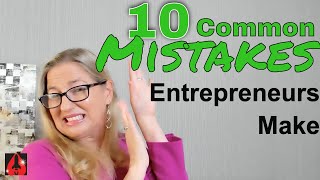
This content was created by Kimberly Crowe. This content was uploaded by Kimberly Crowe. This is a YouTube video titled "10 Most Common Mistakes Entrepreneurs Make" created on November 6, 2020, featuring Kimberly Crowe from Entrepreneurs Rocket Fuel. In this video, Kimberly discusses common mistakes entrepreneurs make, such as focusing on busyness over business, not creating multiple income streams, and failing to build a team, among others.
Chapters
Hey, folks, it's Kimberly with Entrepreneurs Rocket Fuel. And today I'm going to be talking about 10 common mistakes I see entrepreneurs make in their business. Now, these common mistakes are very common. I've seen them a lot with a lot of different entrepreneurs. But you know what else? I've seen them with me, I've made these mistakes. I've made some of them multiple times. So we're going to talk about them and talk about them out loud. So maybe I won't make them as often, and maybe you can avoid making some of them as well. All right, so we're going to start with color coding your files or the busyness of business. So busyness B U S Y N E S S instead of business B U S I N E S S is, is just one letter different, but it is monumentously different because monumentally different. Because making your business something about just staying busy all the time and being like, finishing your day and being like, oh my gosh, I got so, so much done. I got a lot of email done and I color coded my files and I got really organized and all of that. Fantastic. But did you really make any sales? Did you further your business at all? Did you actually bring in new revenue or drive toward new revenue or build toward new revenue during the day? A lot of people will talk about how busy they are at work, myself included. Like, I'm super busy all the time. And then I'm like, all right, what part of busy today did I actually advance the cause of my business? Did I get out there and get seen and heard in a big way? Did I make connections with potential clients or contacts? Did I further my relationships with joint venture partners? Did I do anything in particular that would bring in revenue specifically? And that does not mean that I put everything on spreadsheets and made it look beautiful and change the color of each of the cells and all that stuff? Because that actually doesn't drive revenue and we fool ourselves and think that it does. So that is a big mistake. Very, very common mistake that I see entrepreneurs make. All right, so the next one is forgetting balance in your life. In other words, not having boundaries around work. This is a common mistake and one I have made multiple times myself. So forgetting to balance your life with your work life and your fun life and your home life and your maybe you're going back to school, maybe you're doing something else that doesn't have anything to do with work and you want to make sure that. Or maybe it's something that's just a big hobby that you enjoy. As a matter of fact, a lot of entrepreneurs do not block vacation for themselves. And I don't mean vacation where you take your laptop and you're working most of the time, which is very common for entrepreneurs. What I'm talking about is like some uninterrupted time where you are definitely not working. As a matter of fact, if you don't already have vacation time booked on your calendar, I'm going to challenge you to pause the video and book time on your calendar right now in the coming months or possibly as much as a year out of vacation time. Just blocked vacation time for you to just be on vacation. I mean, if you work at corporate, they give you vacation time. So if you're the crappy boss that never gives your employee, which is you, vacation time, not so hot, right? So if you don't block vacation time on your calendar, you're making a big mistake. That's a big mistake that entrepreneurs make. So go right now, pause the video. I'll wait. Go book vacation time.
Are you back? Awesome. All right, let's talk about the next one that is not creating multiple streams of income. Now what that means is that oftentimes entrepreneurs will sell one particular product or service. Let's say you're a life coach and you sell life coaching. Awesome. Maybe you have a program that's a year long program. Fantastic. Or maybe it's six weeks or whatever, but you only have one offering to sell. Or maybe you sell by the hour coaching. Fantastic. But are you really offering more than one solution out there? Because people learn in different ways and people want to engage in different ways. So do you have a free bee a downloadable? If you don't, you should check out the rest of my YouTube videos on downloadables. They're right in there and they're fantastic about how to create a magnetic downloadable. Now that's free and that's awesome, but really we want you to create additional streams of income. So do you have a paid product that people can buy at the seven to $14 level, maybe $20 where they can just buy something and maybe that's a book or maybe that's like a video course or something like that where they can come in and engage with you at the 7 to maybe 14 or $20 level? And then do you have something at the 100 to $2,000 level, maybe 500 to $2,000 level where they can buy a six week course with you and it' something like that. And this could be a live program that you teach live and then you give them the recordings of it. It's a phenomenal opportunity. As a matter of fact, I'll put a link to ultimate course formula how to create and sell an online course in 60 days or less in the show notes here because I highly recommend that if you don't have one already, creating an online course so that you can generate income while you are sleeping. Phenomenal opportunity, right? And that can drive leads into your business. Maybe they're not ready to buy your $5,000 coaching package yet, but they'd be willing to buy a 500 dol course to learn more about you and to engage with you in a group setting because they're not ready for that one on one. Alright, so that's multiple streams of income. Let people engage with you at different levels, have other opportunities as well. Like as you're doing it, maybe you have a membership course where or membership where they can join a Facebook group and stay there for $9 a month or something like that. And then it's recurring revenue for you and at the same time it's an opportunity for people to engage, learn more about you and pay on a different sort of level. But they'd be willing to pay, they just can't do that $5,000 product right now. Worse, if you only have the membership program and it's not generating six or seven figures for you and it's your primary income, then if you have no, no other offering, then you're never going to be able to have that financial freedom that you want to have. Maybe you can do it on $50,000 a year and maybe that's what your, your membership platform is Engaged is doing. Fantastic. But I would encourage you to have something else as well, like go ahead and offer that higher end program at some level. All right, so multiple streams of income and you could create other little side well that have nothing to do with your primary business, that can just generate income in case the primary business slows down. Like let's say for example, your primary business is a restaurant and you got shut down for Covid. Bummer. Do you have a passive income strategy or other ways to earn income that aren't from your business? You didn't do anything wrong, but your business is shut down. Now if that happens, do you have another way to earn income that isn't from your spouse or significant other? All right, next mistake that entrepreneurs make, trying something one time and then giving up. That's right. Trying something one time and then being like man, that didn't work. Let's give up. I Suggest. In fact, I was just talking with somebody who's going to be a joint venture relationship manager, right? And they're doing three. They've started three people at once that they're working for. And I was like, fantastic. And they're like, I don't know, it's kind of a headache, kind of crazy. And I was like, not really. Because now, you know, like, if it doesn't work out with one of your potential clients, then, but it works out with the other two. What if that one potential client was your only client and you were like, maybe JV management is not for me. Not true. Now you have two other clients who are like, oh, my gosh, you're the best. You're awesome. I can't wait to work with you again. Really great opportunity for you to be able to see that. Trying something multiple times, it might not work the first time. You know, it doesn't sometimes just go figure. But it might not work the first time, but it works the other time. So don't just try something one time and then give up. Like Facebook ads. Oh, I posted a Facebook ad and it didn't work. It didn't get me any leads. And so now giving up. Well, Facebook ads could work if you stuck with it and maybe got a guide or a mentor or somebody that can help you out and learn how to do it. And that brings us to our next one. Not having a mentor. Like, trying to figure it all out yourself. If you can have a mentor where you can ask questions, I mean, Google is great for short answers and things like that. Like, how do I create a YouTube channel? Fine, now you can figure out how to create a YouTube channel. But if you don't have a mentor or a guide or a coach, like, let your nerd be heard. Or the. Who are the amazing people behind my podcast that if you don't have a mentor or a guide or a coach who can say, this is what you need to do on YouTube, or this is what you need to do for your podcast, or Kimberly, for you specifically, I would recommend this. That doesn't come from Google, right? That's just a search that you can do and, like, generically find out how to create a YouTube channel. But if you have a mentor or a guide or a coach, somebody who knows their stuff and can guide you personally, not having that can really be a detriment, and it can make you very, very unsuccessful. All right, next is failing to take action, waiting for the perfect time. Now, this is really big when you are creating a video, right? Like, you want to be perfect. You want to have perfect hair. You want to have a perfect makeup on. I've had people be like, I'm going to do that YouTube live right after I get a new outfit, and then I get perfect makeup, and my hair looks great. And then I got to go buy some new outfits, and then I got to lose 10 pounds, because that's camera adds 10 pounds. But then I got to buy more new outfits because now I've lost 10 pounds. And now that I've lost 10 pounds, I'm like, that was easy. Maybe I should lose 10 more pounds. And then you lose 10 more pounds. And then you got to buy a new iPhone because the iPhone's out of date, because you don't have an iPhone that works anymore, because the new cameras there. So you got to buy a new iPhone because it took you that long to lose the weight and buy the new outfits and get the perfect hair. Don't do that to yourself. Failing to take action and waiting for the perfect time. There will never be a perfect time. You just got to get started. And by the way, if you'd waited all of that time and then started, you'd be like, oh, my gosh, I didn't really want to say that. I wanted to say this. And it didn't turn out so well. And you really want to get the practice along the way. So just go ahead and take action. Step your foot in, dip your toe in, dive all the way in. Do a cannonball if you must, but get started. Waiting for the perfect time is not the answer. All right, next is not failing to build a team. I think we're on number six, failing to build a team. Maybe seven. Failing to build a team is really, really a negative for an entrepreneur. You got to build a team, and it can be a paid team. In fact, I recommend it paying somebody else. Like a virtual assistant as a 1099. Maybe a virtual assistant in the Philippines, like my amazing assistant, Mercy. I highly recommend getting an assistant right away because you can take the small things off your desk and focus on the larger things. Not only that, you can take the things that you hate off your desk and focus on the things that you love doing. For example, if you're really good at Facebook. I'm talking about myself here. I can do Facebook. That's one that I can do. But you suck at Pinterest and Instagram and LinkedIn and all of the others because you just don't focus on them. And Twitter and I don't even know the rest of them. I can't even spell Snapchat until my son taught me about it. I can't do any of those and I'm not good at them. So I offload them onto my personal assistant, Mercy, who actually takes the from Facebook and repurposes it and redesigns it appropriately for Pinterest and Twitter and Snapchat and all of the rest of them. I don't know how many there are. There's zillions of them. Okay, so not having a team. So if you can't afford a VA, which you can get a VA for a very reasonable cost, go to OnlineJobs ph, that's OnlineJobs ph, and check out who's there. I think it costs you $85 to be able to get a. An account. Super. Totally worth it. Definitely do it. And then, then hire yourself a VA and get somebody else to help you with all of the hard work. And then you can offload some of the stuff that you don't love and some of the stuff that you don't, you shouldn't be spending your time on to your va and you can be a lot more productive very, very quickly. If you can't afford a va, check out your children, see if they can do some of the stuff for you. My son really knew how to use Snapchat. Fantastic. I didn't have to do it and I didn't have to offload it to my assistants. He was the one who actually brought us into that. So wonderful opportunity for you to offload to somebody else, right? Build a team. You don't have to pay them. If you have a partner or if you have, if you have a business partner or if you have a partner in life, or if you have children or if you have parents that want to get involved or if you have friends that want to get involved, maybe they want to learn about it or help you out in some way. Maybe you can get some free labor. If you can't, go ahead and invest in a virtual assistant, you're going to have some. So be happy that you did right. And once you pay for it, you feel like you can, then you, then you get something out of that. You're not asking for favors. And if you really don't know how to do something, go ahead and outsource it to somebody else. Like if you don't know how to do your website or you built your website, now there's a bunch of broken links on it, go ahead and buy somebody for a hundred dollars to rebuild your website or something like that and maybe they just rebuild one or two pages of it for $100. Awesome. At least it's not you that had to do it. Fantastic. So build a team. Have people available that you can rely on to be able to do your stuff so you don't have to do it all. Next is not asking for help. We talked about that one. Not asking for help and meaning, like not being able to reach out to a mentor. Already talked about that one. Number nine, not knowing your numbers. Bad one. Lots of entrepreneurs make this mistake. They just look the other way. And it's very, very hard to know how your business is doing if you're looking the other way. Even when you go to time and your tax attorney is like, okay, so what did you make this year? And where's your revenue? And where's your, you know what, what are your expenses? And you're like, oh, here are all my expenses. It's everything that I spent money on this year. And then you really don't actually know how much money you made, right? And you don't know how much went into your bank account, how much paid for your bills and how much you know, like you don't know how much you made. So you got to know your numbers, know your top, if the minimum is three numbers to know your top line number, which is your revenue, that's your invoices that you sent out, got paid, or checks that came in, or PayPal that paid you. And it's from all the different sources, right? So maybe you got them all different ways. Maybe you got paid by Venmo, by somebody. All of the different stuff that came in that paid you for what you do for a living, that is your top line revenue, that is the amount of money that came in, but it's not the amount that went into your bank account. Why? Because there was some cost of doing business. So the cost of goods sold, meaning the cost of what you sold exactly, is what's the difference between top line and, and gross margin. Now, the bottom line is actually profit, and we're going to talk about that in a second. But the cost of actually doing that for a customer is the cost of goods sold. So maybe it takes you to be able to help somebody with Facebook ads. Maybe you actually have to pay for those Facebook ads. Or if you, if you help somebody with life coaching, maybe you actually have to, maybe you have to pay for like workbooks to be produced, physical workbooks to be produced for them. If there's any money that is spent on actually having that client that you wouldn't spe if you didn't have that particular client, then that is a cost of goods sold to that client. So the cost for that, that revenue to be generated. All right, so that's cost of goods sold. And that comes off the difference between those two things. Like let's say I sell widgets, right? And it cost me $7 to sell to make a $20 widget. The difference is $13. That's my gross margin. All right? It cost me $7 to make a widget and. But I charge $20 for that widget to my clients. That means that the difference in there now ability, profitability is the difference between your gross margin and after your expenses and what actually went into your bank account. All right? So what's left over after you pay all of your bills? So that's your website, your team. If you have clickfunnels account, you gotta pay for software. If you've gotta pay for your CRM, if you've gotta pay for all the different costs of doing business. If you have rent or utilities or things like that that you're taking off of the cost of doing business, of just being in business now. And it's not directly related to one client or one particular sale, but you have to spend that money anyway. So the third, the third number on the bottom is actually called the bottom line or profitability. So you got to know your numbers, alright? So that is very, very important. That's number nine. Number ten is actually super important as well. And that is being authentic. The big mistake that a lot of entrepreneurs make is not being themselves. They're trying to show up as somebody else. Somebody that they've either like, they've heard this works really well, or if they use this, this program or practice that they'll be able to be super successful. And so they're trying to show up or they're trying to show up as perfect, right? Like not authentic. Like, oh, I got all my, I got all my ducks in a row. I actually do not have my ducks in a row. Just so you know, I've never had my ducks in a row. My ducks, best case scenario, are in a huddle. That's how I show up in the world sometimes. I can get my ducks in a huddle and then everything's awesome, right? But I don't show up as perfect because I make mistakes and I'm real and this is who I am and this is my authentic self. And if you meet me in person, this is pretty much who you're going to get because I show up as much as I can as authentic as possible. You know what? Be you. Because you're the only you that there is in the world and we need you. We need you to show up as yourself to tell us what you have to tell us to contribute what you have to contribute to this world. And you know what? Else be you. Because everyone else is taken. So you might as well be you. We want you to be as authentic and honest and vulnerable and real as possible. So please do that. Don't make that last mistake. That's a biggie. All right, ladies and gentlemen, this has been the 10 big mistakes that entrepreneurs can or 10 most common mistakes. I think that's what it was. The 10 most common mistakes that entrepreneurs can make in their business. I hope this helps you avoid some of the pitfalls. I'm Kimberly from Entrepreneurs Rocket Fuel and I look forward to working with you. Cheers.