10 Things you Need to Know Before Investing with Anyone
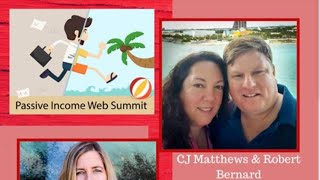
Robert and Carolyn Matthews discuss passive income strategies in real estate during COVID-19. They cover ten key considerations before investing with anyone, including how to vet partners and structure deals to protect yourself.
Chapters
She's passionate, she's fun, and she's inspiring. Let's welcome our host, Kimberly from Entrepreneurs Rocket Fuel's Web Summit. And a warm welcome to you. Thanks for joining us. And we've got an exciting guest coming right up. Kimberly, take it away.
Well, hello, folks. We are back. We are here with another amazing web summit. And to kick it off, we're gonna have a really cool speaker named Robert and C. Hold on. I got some feedback coming from over here. Hold on just a second. We're going to turn that down. All right, cool. I just want to be sure it was all working. And it is. We are live, and it's getting exciting. Robert and cj, we're super glad to have you with us. Say hello. Hi.
Hi, there.
Awesome. All right, cool. So we are back with the Passive income Web Summit, ladies and gentlemen. The theory behind this one is that we are all kind of at home doing Netflix and boring stuff, and we don't really know, like, what else we can do. And so my thought was that during COVID we could set up all these passive streams of income so that when we go back and we start traveling again and we get busy again and our kids are back in school and we got all kinds of things that we're doing that these passive streams of income are pouring into our bank account and we go back to our regular lives. Wouldn't that be awesome? Don't you think that'd be great? So that was the idea behind all of this, is that while in lockdown, we're going to set up passive streams of income to so that we will get paid for weeks and months and possibly years to come from the efforts that we make now because we're setting it up during this kind of weird time. So Robert and CJ have agreed to come on and chat with us today about several things that we need to think about when setting up passive streams of income. So welcome to the program.
Thank you.
Yeah, we're very glad to be here with you, Kim. You're one of our favorites.
We're like, yeah.
Okay, cool.
So we're going to get started.
I like how you put us first.
First thing, right, you guys pick up speakers. You're going to just, like, it's going to just wow the entire crowd, and we're going to attract, like, millions to this one. Plus, we're actually going to have these. You want to join live and interact, because we're going to play with all of you. It's going to be super fun. But also they're going to be recorded so you can watch it afterwards. And we'll have a whole bunch of cool opportunities for you guys to see it again and again and again. All right, cool. So before we get started, I do want to hear. Go ahead, cj.
You know, the only thing I was going to say was the reason I like that you did us first is because of our topic. You know, after this, you know, at least you're going to have these things in place. And we'll tell you what those things are in a minute.
Yeah, this sets the foundation for the event. Really? Yeah.
I love it as a kickoff. Fantastic. So before we get started, I really want to know about you guys. Like, tell me your story, how you got involved in this, and then we'll kick it off.
Wow. Do you want to start? You want me to start?
You can start.
Okay.
Ladies first. Ladies first.
Yeah.
You're trying to think of like. So just to let you know, I've been investing in either online, I, you know, online stuff, or real estate since 1999, so. 1999, like it's 1999 and I'm only 28. Right. I'm just kidding. And you know, there were a lot of ups and downs in that. And Robert and I met and he had been doing his own type of real estate investing and had a lot of education. And when we got together, it was like, wow, this is really fabulous. And we always joke around, have a great time. And so that's kind of how I got into it. I was a life coach and did real estate investing and, you know, insurance and all these different kinds of things that had, for lack of a better word, residual income. So passive thing. When I learned about like, oh, that's how passive income works, then it was a beautiful thing. How about you, baby?
So my story is I was an aerospace engineer. And you know, my saying is I was smart enough to be a rocket scientist, but stupid enough to be an engineer. And I read rich dad, poor dad one day back in about year 2000 and just decided I couldn't work for anybody anymore. 2003 became self employed and independent at that point in time and pretty much just have owned businesses on and off and done real estate investing. And that's just kind of where we're coming from. From, like at this point, we're just an education company.
Yeah, we, I mean, we serve people. You know, my background is in coaching and business coaching and taking businesses to the next level. Now, Robert, you really understated. You have a freaking mba.
I do have, yeah.
And, and he's got a secondary master's degree in what? Like, it's something fancy?
Well, experimental methods are wind tunnel testing, so. Yes.
Yeah. So don't. No underrating. And then your specialty in your MBA was.
Well, I call it the wealth creation mba. So I looked at building a business like entrepreneurship, real estate, and taxes. So my specialty are taxes.
Taxes, right. This guy loves reading about taxes.
I'm like, okay, somebody does. Because some of us don't. And then we just need to rely on the experts to be able to pull that off for us. So. And I have a. I have a soft spot for engineers. I really do, because my former life, I was in staffing, and all we placed were software engineers and programmers and designers. And so I can spot an engineer like 100 miles away. I really can. I can see them coming. And I love it when they sort of break out of that and they become a little bit more extroverted and a little bit more introverted. So. Awesome. So I love your style. Okay, perfect. So what are we going to be talking about today? Well, you have a ton of information for us, and we're going to cover some of it, but we're also going to give you guys access to what C.J. just lifted up. There's like a whole sheet that they have, and we're going to give you access to that at the end. So hang on tight. And there's really. There's nothing to sell here. It's just a matter of education and giving you guys some great information. So it's going to be awesome. But where do we want to get started?
So let's talk about kind of the basics about this.
Is that passive investing.
Passive investing is that really when you hand your money over to somebody, you really want to protect yourself and your investment as much as possible. I mean, we know that all investments are not 100% guaranteed. Like, we're not going to use that word. But there's definitely some due diligence you.
Can use and risk factor as well. So some people, like, for us, because we've been in the business for so long, there are things that other people wouldn't do because it's too high of a risk for where they're at or how much money they have. And one of the things is only invest with money that you can afford to lose. Like, my favorite word that I statement is don't bet the farm. Right. Like, if you lose this money, can you still go on?
Yeah.
And that's a really big trick in any kind of investing and especially Passive investing. Because when you're passive, you're either doing the work on its own and you're setting it and forgetting it, or you're having somebody else do the work, which is another beautiful way of getting the same result. But without you having to do the.
Work.
Even though you've got a schedule and an expectation of when the money came, might come in, you really can't depend on that. This should be the money that you have. After you've paid all your bills, you got your emergency fund set up, and then you start investing.
Okay, so, like, this is the extra money that some people have and some people don't. What if you don't have that extra money?
Right. So a lot of what we talk about is if you're coming into a syndication, if you're partnering with somebody else, like, you're providing the money, they're doing the work. Other way around, which is you're doing the work and somebody else is providing the money. So usually that, you know, we think in real estate, I think in software, like apps and things like that, somebody else needs the money, and we invest in that. So it's either time or money that we're talking about with this. So you can do it with no money. And that's how I started out in 1999. I was a single parent. Really no job. I was getting paid, you know, minimum wage, believe it or not, with a college education. And.
I went to work and I learned how to invest and then went around to people that I knew and didn't know and told them what I was doing, Are they willing to split it with me? And so I did the work, and they got to benefit from my labor. So it's either time or money, either one of those. And right now we've got a lot of time. So if you don't have the money now, you've got the time. Yeah.
And look, if you bring it, if you find the deal, that doesn't mean that you're gonna have to work forever, Right? Like, if you actually bring the deal to people that have the money, you can actually make a request to be a part of that deal ongoingly so that you can still receive cash from it in addition to maybe a finder's fee. So like CJ Said, either, you know, either bring the money or you use the time to find the deal. So no money, bring a deal.
Awesome.
Great tip. Okay, so what. What's rule number one? Rule number one is don't pet the farm.
Yes.
Exactly.
I like it a lot.
Yeah, that's what I say. And then that's for sure. And then the second thing that we talk about is do your due diligence. So if somebody brings you a deal or you're looking for a deal, it totally depends on how you found it, whether or not, you know, somebody else that's in the deal, is the deal in a place. And when we talk about a deal, it can be anything. It can be software, it can be real estate, it could be a retail.
Store, it could be.
A book. You know, one of the big things.
An audiobook, perhaps.
Yes, exactly. All of those. There are just a ton of ways to create passive income by doing the work first, and then you get the residuals or the royalties afterwards. I like it. Audio books, things like that, those are all beautiful things. This right here, podcast, this is another way, or a summit is another way of creating that so that you do the work. Now. This is a great example of that. And later on, the passive income comes in through whatever you offer or other products that are out there. And so to me, I think this is a great way of creating that. So.
And let's talk about due diligence.
Yeah, good. Yeah, I got off.
I know you did.
It's a soapbox. I have to. Let me put it aside.
How did that get out into there?
Look, here's the deal, is that you really need to understand where you're investing your money and how that deal is going to work. Right. Like if you invest in an apartment complex, we have a long list of items that we go through and inspect before we actually close on that deal. Okay. That's called a due diligence. Now, I talk about a retail store. I actually bought a gift store one time, and I didn't do my due diligence because all the old jars of food were in the back. Right? Like, I didn't go through all the lines of jars of food. So how do I know about to talk about due diligence now? Because it was about $50,000 I had to throw out of bad food by not doing my due diligence. So this is really critical to know what you're doing. And look, if you don't understand the deal, go find somebody. Find someone who's been there, done that for that kind of deal that can analyze it for you. Okay. And if they can't explain it to you, then maybe it's not a good deal.
Yeah, yeah. And here's the real truth. There are people out there like Robert, who will go through the deal with you. You know, and it may be worth your time and money. Like if you think it's a good deal but you're not sure and you're looking for money, what we call money placement. It's good to find somebody that has a different set of eyes and analysis that you can ask questions. And over time you'll learn enough that you'll be able to do that on your own. But you got to start somewhere. And sometimes it's better to start with somebody in your corner than. It's like buying a house. Right. You know, you have an inspector go through the house so that they can tell you every little detail that's wrong with it so you're prepared and you can make a better decision. Some people say, oh, that's too much for me, I don't want that. And other people will say, oh, I can handle that. And they'll go ahead and they'll purchase the house. Same idea. And a lot of us, an apartment. Even if you're not buying an apartment, you go through and you do an inspection, right?
Yep.
So same thing. So do your due diligence. The third one is make sure the risk is worth the reward.
Yes. Our rule of thumb is that you need to be paid more for if you take more risk. So an example is like if you have mortgages on a house, the first mortgage would pay the least amount of rent because it's in first place and it has the first rights to that house, so to speak. But if you're the third person showing up and putting a third mortgage on the property. Right. That interest rate's gotta be. You gotta be paid respectively because you're in third place. You have to make the other two mortgages whole before you have a right to foreclose. So just make sure that there's a good balance between the money that you're investing and what you're getting paid for. Yep.
And we also talked about your risk versus our risk kind of, you know, everybody's risk is a little different. Now. Some people say, hey, it's too good to be true. I'm going to say that's rare. Usually it may be that that is too high a risk for you. We have a lot of investors that we work with that use their self directed IRAs and they're satisfied at a 6%. They think, Whoa, that's it, 6%. If we told them, hey, we have a deal at 11 or 12%, they would be like, no, too, too good to be true. So you know, it's all in your knowledge base as well. So again, do that. Going back to doing the due diligence will tell you what your risk factors are for you. So what's the upside and exit strategies?
Yeah, you should know how you're going to get your money back before you enter the deal.
Right.
You know, this is really important. You should know, like when we talk about upside, like, what is the. What is the reward for being in the deal? To know what that is. Okay. As well as what, you know, what's the exit strategy? Are they planning to sell the. You know, sell in five years or refinance and then you get paid back out again? You know, like, what does that look like? And what should be the expectations?
Now here's the other thing that's important to ask whenever you're working with somebody else, like you're. You're giving your money to do passive. Somebody is also going to ask you if you're doing the work and they're giving you the money. And what happens if this does not work out? What plans do you have? Always have a plan B or a plan C or have more.
I'm so glad you said that. I don't mean to break in, but this is kind of where things sort of melt down, right? Like, one person is like, hey, man, I've done all this work and now this, this person that I'm working with, all they brought is the money and I'm doing all this work and all this hustle. And that's kind of a bummer for me. But that happens after things go well, right? The other person's investing the money and they're like, I don't if they're gonna hustle or not, right? So they're taking the risk up front and they are putting the money in, but then later the hustle pays off. And that's awesome for the person who's putting in the money, but the person who's hustling sometimes feels like that wasn't fair, but it is because there's risk involved, right? So I'd like that you have a bit plan B. Like, what if it doesn't work out? What if you invest and the person doesn't hustle? Or what if you hustle and the person's money doesn't, like, follow through? And it's like not a fun deal anymore. So what do you do about that?
And these are things.
What's a good plan B?
So plan B? Yeah, Plan B's can be things like, okay, we, let's. We're going to use real estate because of course it's the easiest example, and a lot of people can relate to it because we've all watched hgtv. Fix and flip, Right? So fix and flip. Like you're going in and you're. You buy the house and you know that it's going to take 60 days to do the repairs and the paint and stuff to the house.
All right?
So off you go and you break down a wall and you discover. Or you do something with the floor in the bathroom, and all of a sudden you discover there's a lot more work that needs to be done.
Always.
So, yeah, usually we plan for contingency plans, but we're going doing the basics. So let's say it's going to cost you more time, but it's also going to cost you more money. So what's plan B? All right. Not going to be able to get this done at the time we thought. So what do we do now in the meantime? Oh, Covid is hit or something like that. The price of the house is less and we're just not going to make the profit. Should we, A, sell at a loss, B, hold it and rent it out, or C, wholesale it, C, wholesale it to somebody else who can finish it out and we wash our hands of it.
Or you do owner financing. There's about farmers.
Right. So these are all the plan B. Yeah, exactly. So if you know what you're doing and who you're working with, they will have some exit strategies, depending on what comes. You know, they have contingency plans. You know, you. They already know that. If, A, then B, this is what we're going to do.
Yeah, like having a backup contractor. If the contractor doesn't show up, then you have a backup contractor. And you should always have more money if you're putting the deal together. You should always have more money lined up in the background, just in case.
Always you make contingency plans. So I know we're going into some depth and we could coach people on this all day long, but we're just trying to, no matter what. We're using real estate as an example, but that also applies to software apps. That applies. That applies to, oh, Airbnb, which is real estate.
Oh, we're talking about Airbnb here on the summit. Yeah, yeah.
And that's a great one. Now we are in Las Vegas and in Henderson and right now, Airbnb. It's a good time to get into Airbnb or prep to get into Airbnb, but unfortunately, we're not able to really rent out airbnb. It's. It's hard for people to start out again. Las Vegas doesn't allow it anymore. It's like zero. And so they're trying to change that, but.
But the laws can change and that's why you need contingency plans.
Yeah. So a lot of people who. So there were people here that when that law came through, had a plan B for the house and they did a workaround on that. And here's the secret. I just want to tell them the secret because I gotta say.
Okay.
I don't want to leave people hanging. You know that open loop thing we talked about?
The open loops. That's awesome.
You know, here's what they did. Their plan B was they would rent out the house to one person for one month because that was legal. Now, what those people did during that one month, and so they worked it out. And I'm not going to go too far into it because I don't know that it's legal or not legal, but. But they would rent it for a full month and then there would be a discount included for it. Does that make sense?
Yes. And we actually are going to have an expert come and talk about Airbnb. But that is a great strategy. I'm actually looking for it now. Mercy, if you can check our schedule and find out when that is, that would be awesome. Just real quick, I have an assistant on our thing and if you have any problems while you're on the summit, you can email her at supportrfsummit.com that's supportrfsummit.com. her name is Mercy. She's amazing. Going to ask her to find out when our speaker is coming to talk about Airbnb. So she'll drop that in the chat so you all can see. Okay. Sorry, go ahead.
No, I mean, I was looking forward to that because we love Airbnb. And here's another thing, just a side real estate investing thing. If you're in an area where there's a lot of out of town investors, that's perfect for. Especially for things like Airbnb or things like that.
Right.
Because you can represent them in a way that works. But if you are somebody who's investing and you have the money and you want to passively invest, or here's what we suggest. And I learned this from the real estate radio guys, Russ and Robert. Not this Robert, but another one. And what they said is, live where you want to live, invest where it makes sense.
Yeah, I like that.
Okay, so one more time. Live where you want to live, invest where it makes sense.
That's totally true. So I have, I actually do have 14 rental properties. I'm not super proud of them because they haven't outperformed where they should, but I do have 14 rental properties. I wouldn't live in any of them. I mean, live in that area. Not that they're slums, they're, they're just, they're in an area that's not in the middle of everywhere, you know, And I'm in San Diego. I mean, it's gorgeous out there.
Right, right.
Rental properties in San Diego do not pay. Right. Because it's not necessarily, I don't think it's smart to invest. Although I might have somebody come in and talk about investing here and they might be like, oh, San Diego is a great place.
I don't really know.
I don't know.
But it all depends. It depends on how you get the house. Sometimes the win is in how you purchase the property.
Always where you win on the front end.
Yeah. Now you can turn it into something else later, but really that's your best bet. Anyway, let's go on to number five. Wait, we did four. We said upside or exit strategy. Right. And both of those. You're examining both of those. Now this one is a big one that Robert loves and he wanted to make sure it got in here because he says, what are the tax implications when you exit? Because I don't know about you, but I have been bitten in the, uh huh.
You can say ass.
I just wasn't sure. Like, can I say that word? Yep. Bitten in the ass. From a tax standpoint when, when I inherited a house in California and I had to sell that house just to pay the tax implication. Now if you can prevent that, prevent that. Don't, you know, don't get stuck selling the house just so you can pay the taxes. Yeah, there's lots of ways to look about that, but I'm gonna let you talk about that. That's your expertise, babe.
Yeah. So there are really three things you should, that I think people should know about before they invest. One is that if you have a short term hold, like it's less than a year that you're investing, it's gonna be taxed at your highest tax rate. Okay. That's pretty much what you consider to be taxed at. And it's gonna be taxed at earned income. So that's just one thing to be aware of. That's going to eat into a lot of your profits. Okay. And your investment profits, if you hold it for Longer than a year, it's going to be tax and capital gains, which is usually a much lower rate. So you really want to hold things for a year and a day if possible from a tax point of view. The, the third thing about this though, this is where a lot of people get bit is that they'll buy real estate and there's a thing called cost segregation and bonus depreciation right now where they take all this depreciation and not pay any taxes this year, the first two years that they own the property. But shortly thereafter when they go to sell the property in five years, this thing called recapture, which means they have to pay back all that depreciation.
That they took in the beginning, thinking, oh, I get to keep that forever and you don't, unfortunately. And that's, you know, there are ways to get around that.
It's just deferred when you have to pay it, right. So hopefully you're paying it when you're in a lower tax bracket. Is that how that works?
Well, really, I mean, there's things to think about like your ira, if you can invest inside of an IRA or a qualified retirement plan, you can do pretty much all that inside, tax free inside those types of plans. So that's a really great strategy, especially for small business owners is set up what we call an EQRP and they can put away up to like $63,000, $63,000 tax, you know, like tax free and let it grow tax free. So that's a beautiful thing. But. Or you could do a 1031 like kind exchange if you plan on being in real estate for until you die and you can defer the taxes till your death. So that's also a beautiful thing. Is 1031 like kind exchanges?
You know, actually I did hear somebody say that you can like the whole point is to like defer, defer, defer until you die out of it and then your kids get the property at the step of value or something like that. I don't even know what that means, but I'm like, oh, I sound important.
Now that I can.
Totally knew what we're talking about.
Value. That step up value is super. And trust, you can put things in trust and things like that. That's a whole nother topic. So if you, you know, all we're trying to do here with passive income is one, create another income stream. Because you don't want to rely on just one income stream at any point in your life. You just don't.
By the way, royalties, unfortunately, they are really highly Highly taxed. Yeah.
Get out of town.
Really?
No.
Yeah, you try to get out of that.
That's why you, that's why you want real estate to offset your taxes.
Yeah.
Okay.
Okay. Now are we on number six, loaning money with other people in a deal?
Yes. And look, we've got 10 or more of these things and I don't think we'll be able to get through all of them. But we just, you know, when you sign up with us and you know, Kim will give you the link, we'll give these all to you, but we know that we're not going to be able to like cover all of them in this period of time that we have. So if you're loaning money with other people in a deal, is there a PPM or not? Now let's talk about that really quick.
Wait a minute. What's the ppm?
A private placement memorandum. And let me tell you, I did not know what that was until three years ago.
I don't know. Okay, lay it on me. What's up?
Security is an issue item. It's an SEC item, okay? And it's prepared by a securities attorney and it basically says this is what the deal is, this is what the risk is, this is who's gonna partner, who's gonna be able to participate in it, and, and kind of what the rules are around it. It's really a contract is what it is, ppm. And it's basically it, it's, it's to, it's. The SEC just wants to make sure that everyone knows what they're getting themselves into. Okay. And to use by, we call them syndicators or people that put a deal together. But if you're putting money into a deal and there's more than one investor, if you're pooling money together, really, you should have a PPM going on, a private placement memorandum that you can be a part of. And if you're an accredited investor, that's awesome, you can join, no problem. Sometimes they limit the number of non accredited investors in a private placement memorandum. So there's a couple different.
There's three different types.
So.
Yeah. So here's the thing. I just really. Everybody's like panicking, like, oh shit, I just. Did I say another swear word?
Sorry.
The situation. But that's what they're thinking, right? They're like, oh no, I invested with someone and they didn't have a ppm. You do not have to have a PPM for everything. That's not really, it's not. If you're just doing a deal one to the other, that's fine. It's under $100,000, that's fine. But if it's a group of people, you know, investing 1050-75,000 apiece into this group, it's creating a fund and you just want your money and the people that are doing it to be able to do a ppm. Okay. But if it's less than $100,000, you really honestly, you don't need one. If you're just loaning money and you have loan paperwork, that's a different type of thing.
If it's just, you know, one to one. If you, if you're. Or your IRA or your retirement plan is just loaning on a single piece of property, it's probably not required to do a ppm, but. Exactly. If you get a pool of 10, 20, you know, more than really five people or so. Really. And that it just shows that you're dealing with a legitimate syndicator. If they have a private placement memorandum because they're not cheap, but they're totally worth everything that you know that they are worth the paper they're written on. In this case.
Yeah.
To keep people out of trouble with the sec.
Right. So we just want people to know about that so they don't get into some big deal that. That didn't have a PPM and probably should and also just know the difference. Again, you don't need it for everything. But if you're somebody with money and you're going in to invest, and if you find a deal and you're getting more than three people, you may need to make sure that you're getting enough money that you can buy a PPM for yourself. Just something to look into. And that not only applies to real estate, but any kind of fund that you're putting together.
Yep.
So, all right.
We'Ve got some other things that go into SEC here, but.
I want to go into the little secrets. I want to go into number nine.
All right, so you know what?
You guys aren't gonna skip any of it because I know CJ said if you sign up for us with us, but all she really meant is if you click on the link and get our downloadable. So there's nothing really to sell here. It's just they are clearly masters at what they do and they are super couple that is able to protect you and help you with your wealth creation and the way that you design it, but they're not selling anything today. It's just going to be the downloadable and you're probably going to get on their email list, right?
Yes. So be prepared. We will give you emails. Not like a ton. Not like a ton. And you know, one of the things we do offer a lot of people that like are in need is we offer discovery call. So if something like that shows up, you can go to our website and, and request information. Yeah, request information, contact us. And also we do a 20 minute discovery call that, that may help you out. And I just want people to know that, you know.
And we're also producing a podcast coming out so you can sign up for a podcast. And we have a YouTube channel so you can see our fun smiling faces.
And it's all for free?
Yes, it's really free.
Okay, you want to talk about this?
So I want to talk about.
Okay, so in the real estate world, we use mortgages to secure our deeds of trust to secure property. Okay. But if you loan money on a piece of equipment, let's just say it's $100,000 piece of medical equipment, you can actually use what's known as the UCC Dash 1 to put a lien on that property and that basically.
Property, meaning the personal property, which could be list personal property, because I think we're talking.
Okay, listen, list personal property. So everything that's not real estate is personal property.
So medical equipment, cars. Cars. How about books?
With books, maybe that's really intellectual property. Okay, but, but basically anything that's physical, that's not real estate is considered personal property. So if you wanted to borrow money or loan money against somebody, somebody could put a UCC one against like a snowmobile, could be the thing that basically secures that loan. Okay, but you can put a UCC one on any personal property and that's kind of a, you know, like a way. Yeah, just another way of securing your interest in a deal.
Right. Medical equipment would be the example for me.
Yeah, or if you're like loaning to a retail store, you could put a UCC one on all the fixtures and furniture and all the equipment inside the store that could all have UCC1s on it as well.
And look, the reason that we're mentioning all this is because we're going to talk about a lot of different ways to create passive income. Now you're either going to be doing the work or investing in somebody who's going to be doing the work, because that's why it's called passive income. So we just want you to be aware of all these little things that could help you out in protecting your Money and helping you get any money back in case again things go sideways and you either have to take over or you need to claim your money back in some way.
Right? Yeah.
So.
We talk, we even talk about doing background checks. I think this is important because a lot of people like you nowadays. When you go to rent a big house or something like that, people will do background checks on you. Like if you see his background check, it's like this. You see my background check, it's like that thick. It's super thick. Now, not that you've done anything. No, I haven't done anything wrong. I've just done a whole lot.
Right.
Amazing. What is on. I know, see, but I'm more into. I'm more into trust and asset protection. So my stuff doesn't show up on public records.
Right. Mine all does. Right. So you need to know if you're going to do a background check, you need to know 1. How to read the background check dealy. Right. Because if you looked at mine, you would go, oh, dang. Right.
And you got it. You got to sift out the things that are false in it.
That's the other thing when you go through my. And mine is just a great example because I have a very common last name that I married into and there's a ton. My first name is Carolyn. My last name is Matthews with two T's. And there's a ton of us out there. Some of us, some of those Carolyn Matthews are not good people. And so it just like I could have some relation to that. So they put it into the background check. And that's probably why mine's so thick. So it's important that you learn how to read those or take the time to read it and see what is real, what is false.
Yes. And you just got due diligence once again, digging a little bit. But we really like truthfinder.com I found that one to be extraordinarily thorough.
Yes. Like criminal records, social media, they'll give you the social media accounts and you go look up people. And I tell you what, social media, you can find out a lot of people's personality by social media, whether you want to do a deal with them or not.
So what your mother always told you is true. You got to watch what you put out there. Right.
So, yeah, I just, just, you know, you really want to know who you're doing deals with and vice versa. Even if you're getting money from somebody, you just want to know if they're overly sue happy. I mean, or if You're.
That's a good one. Yeah, I didn't think about that.
You know, or if you're. If you're investing with somebody, you want to make sure that they don't have, like, a ton of lawsuits out there that they have filed. Again, you know, like, you just want to know if they filed bankruptcies, if, you know, like, what's going on or get any explanations, because, like, you know, some people, especially in 2008, 2009, 10 filed bankruptcy, but it was to save their house. It's strictly to stop the foreclosure. It wasn't about that they'd gotten themselves into a ton of debt or anything. No. And ask the right questions. Yeah.
So even though what you're reading, you need to interpret, and that's. But it's important to do the background check, because some of the best conmen or women are.
They're congenial, they. They've got, you know, personalities, or they wouldn't be in the business. Right. So you can't trust everything that somebody tells you. And there's no problem with doing background checks. Right. I mean, nowadays people do background checks when they're dating, you know, so if you're gonna. Look, if you're.
If you.
If you're gonna do it for just dating, you might as well do it for your business as well, right?
Marriage. Marriage and money.
Yeah.
I'm thinking of all kinds of other pieces to that. So.
Okay, next.
So that's research the people and companies you're investing with, and then your next one is get added to the insurance policy for real estate. What does that mean?
So real estate, you typically have insurance against the property, building down or liability insurance. Okay. And you can actually, as an investor, you have a right to be added to the insurance, typically. Okay. And that's called Atema, as my interest may appear. So you would.
As their interest may appear. Atima.
Sorry. As their interest may appear. Right. You would put your name or your IRA's name, what were the entities. If it was a corporation that you're loaning money to for, you know, like, whatever that name is, would go on there. And then that should also set you up to find out if the insurance is not being paid. Right. If the insurance stops, you should get a notice as well. And that's a real, real sign that, hey, something's not right with the property.
You got to call signal. It's a red flag.
It's a red flag.
Awesome. We're going to talk a little bit more about this, and Mike Wolf is Coming up next to talk about turnkey rental properties. So I want to know more about that. But while we're, while we go into the next one, because the next two are also about rentals, rental properties. I want to know from the audience, do you have rental properties and if you do, what states are they in or what countries are they in? Because we actually have a multicultural population on here, multi country population on here. We've got people from Nairobi, we have people from Switzerland, we have people, I don't even know what time of night it is there at that time. I'm really glad you're with us here on our website. But okay, so if you have rental properties or you have questions about rental properties or if you're wanting to get into rental properties, just shoot a note in the chat box, let us know who you like, where you are with this so that we can answer your questions on that in this part and then also in our next one. So I'm going to let you guys go. So we were talking about getting added to the insurance for real estate. Now that's when somebody else has it and you're investing in it. Is that so?
Yeah. If you're like the, if you put in the money to be invested and you've got like a mortgage, a security deed, if the insurance policy pays out, you got to make sure that you're getting paid first. Right. That that mortgage is covered inside the, the insurance policy. Yeah. You just don't want all the insurance money going to the other person that maybe put the deal together. Right. And having them walk away. You've got a burnt shell of a house, you've got a mortgage that you can't collect on and they've got all the money.
Yes. So this is to protect your interests such that if that were to happen, you get paid as a lien holder, they know to contact you or if, if they just were collecting all the money but they weren't paying the insurance and the taxes. Like you want to make sure the taxes are being paid as well. That's also another red flag that things aren't going well when the taxes aren't being paid. So yeah.
And something else about the insurance is it also protects you because, you know, people go for the, they do research and they go for the deeper pockets. So if you have been, let's say you just invested, you know, in your name only, you didn't do it through a trust, you didn't do it through anything. So that is, that's the big, that's the big Thing also is on the other side, somebody gets hurt, something happens, they, they can't come to you because there's an insurance policy.
See that between them, they can. Once the insurance policy runs out. But that's a whole other story. Just make sure. You just have, make sure you have insurance and that. Make sure it's, it's adequate insurance. Okay.
I'm laughing because it's like everyone's like.
Oh, no, I've never done this.
That's scary.
It makes sense. It makes sense, but it's things you wouldn't think to ask. I mean, I certainly. But because all of my parental properties, I mean, thank goodness they're all in my name, but should something happen. That's a really good point. Point that the insurance company goes directly to whoever's named on the insurance, not just like everybody who's an interest owner, it's who's named on the insurance. So that's a really good point.
Right. And Kim, if you just, you just put up a red flag for us, which is all my properties are in my own name.
Oh, well, they're actually in a trust.
Okay.
We're just like, okay, individual trust. Right.
Okay, we'll, we'll, like, we'll talk later.
No, they are in a trust. It's just that I was like, it's not that I'm sharing them with other people, so. But that's a really good point. And we need to talk later because I, you actually raised a lot of things that I didn't. I was like, I need to know that one and that one and I might be in school over there too. We are definitely gonna hook up later and figure out how to fix some of the problems that I got going.
Yeah. And that's part of what we do with the discovery call and stuff like that is that there's just a lot of people out there that, you know, they get into it and they get in, you know, at one level, and then all of a sudden they cookie cutter it up. And all of a sudden all those problems that weren't going to be big issues with one property, all of a sudden, could you exponentially grew that out? So, you know, she's not wrong.
And you don't know what you don't know until, like, you hear something like what we've just talked about today. And that's why it was so important. I'm glad we went first. And there's lots of, you know, we've, there's lots of solutions and there's lots.
Of investments that are. That are well thought through and very done very legitimately and very with a lot of integrity. So we don't want to scare people off, but you should just know kind of some of the warning signs. And we also want to put in that we are not attorneys and we're not CPAs.
Although I want to, like, so if you know of anybody, you know of anybody that needs an actor. Not like I'm an actor either, but I just always wanted to be on TV once or twice, right?
Oh, you'd be great. You know I have a TV channel, right? It's called Entrepreneurs. Well, no, it's called Entrepreneur Experts Cafe. And it's up on tv. It's on Roku. We're gonna interview you. You're gonna be a TV star. It's gonna be awesome.
Thank you.
I want to put in your link so that people can get all of these, and it's 10 plus. I think it's 14 total tips. So let me know if you guys got that and if somebody would click on the link and make sure it's working and then just let us know that you were able to get to that link, that would be awesome.
If it isn't working, we can fix it pretty quick.
It is working. I just want to make sure that people respond in the chat. I'm just saying it's working for me in the US In San Diego with us. Sun is shining actually right in on my feet, so it's heating me up. But. But yeah, if you would, if you type a note in the chat that it's working, that would be awesome. And then we know that we have people that are responding. If you need mercy to put it in again or you need that a different way, you can. You can have email supportrfsummit.com.
Right.
Supportassiveincomewebsummit.com too. But I don't want to confuse people. That's kind of a lot type. So my normal summits are called Entrepreneurs Rocket Fuel Web Summit. So it's my other one.
Let me get it all together.
I know that was a lot of information. Okay, so if people want to work with you directly, like, how do they do that? What's the best way to be able to do that?
To go to your smartwealth.com and then go to the Contact Us page.
Sing Song.
I like it.
That's how we open up our podcasts that way. So, yes. And they can also, if they just want to learn more from us, they can go to the YouTube channel your smart wealth and find us there as well, so. But our webpage is set up now and there's lots of ways to contact us and get a hold of us there. And we will have a book coming out as well called the YouTube smart ultimate retirement formula book for small business owners.
Awesome. When is that coming out? Is it coming out in the next 60 days?
That would be tight, but we're working on it now.
The reason that I asked that is because I am just locking down right now, as we speak, another speaker who's going to talk about how you can create your book for royalties in 60 days. And she's got. I think she's going to be our last speaker on tomorrow, 3:00pm Pacific Standard Time. You know her, it's Melody Meyer. She's awesome.
About how to create a book in 60 days. The book you've always been meaning to write and just never gotten around to and that you can create it and then in. And then earn royalties like forever in a day. It'll be fantastic.
Yeah, we'll check that out. Yeah, for sure. There's a bunch of people that we saw that you have, you have some great guests.
Fabulous.
Yes. I'm really looking forward to, you know, popping in and hanging out and set up for success.
So we brought the super team in in order to make that happen. And you two have just been a riot. I really, really, really appreciate you coming in and kicking us off because we did need to get our heads on straight to figure out, you know, like how we, how we do this passive income stuff and, and make sure that we don't step in any holes that we shouldn't be stepping in kind of thing.
Right. And again, you can set it up and people will want to participate. People are looking for a place to deploy their money because the stock market right now, you know, it took a tumble, it came back. Nobody trusts it anymore. You can, you know, it used to be your. You earn dividends. Now nobody knows what they're getting. You know, it feels like the system is broken in the stock market and people are definitely looking for other places to put their money.
Yeah.
We do have a saying that cash flow equals retirement.
Yeah.
So if you actually have to be there, this goes for all entrepreneurs. We have a lot of entrepreneurs. We also have some people who are in corporates, working in corporate and doing a great job. Honest days work for an honest day's pay. Awesome. But if you're trading time for money, you can't actually be on the beaches when Covid opens up and hang out there and watch money Pour into your bank account unless you have positive income streams. Am I right?
Yes, exactly.
Amen.
Hear, hear.
Amen.
Yeah, no, it's a true story. And the thing is I love eight to five people, you know, because they are doing a great job. They, they can take their money and they can invest. But those eight to five people need people like us. And what happens when the 8 to 5 doesn't last? You get the pink slip or something else happens? What's your backup plan for that? And by having passive income you can breathe a little easier. Yeah, there's a learning experience involved in being an entrepreneur and being the person who's in charge of creating the passive income. And that's a beautiful, it's a beautiful thing. I just want to encourage you to have more than one form of income.
Absolutely.
Actually, that is a really good message and well, we're going to repeat that all actually mercy, you're going to have to take that down because we're going to use that. We're going to actually make a hashtag out of that. Save one more time.
Have more than one form of income.
Multiple streams of income. Multiple streams of income.
Yeah.
Some people are like, okay, no, I've got a job and it's fine. And I've got a 401k and yeah. And all. And is a 401k considered another stream of income because it is an investment kind of.
No, it's not. Because it doesn't throw off cash. It only throws off cash once you retire. Yeah. So it's not really a form of passive income. It doesn't really place like. I'm also going to suggest that people.
Passive savings account.
Yes, exactly. It's really good for tax free deferment of taxes, which you want what you want. But the other thing I'm going to suggest is people like the old, not the new Cash Flow 101, but the old Cash Flow 101 from Robert Kiyosaki. Because you start out with a job in that, you start out with an 8 to 5 job in that game and you learn all about multiple streams of passive income to get out of the rat race. Because that's what we're really here for. That's what this summit's really about, is getting out of the rat race and being on the beach.
And let's define that. So we talk about retirement a lot of times and people think, oh, that means, you know, going off into the sunset in your golden years. No, no. Retirement is having enough cash flow that you can do whatever the hell you want, whenever you want at any time. Right. So I want to go to the beach this week. I can go. Right. And for entrepreneurs, you know, you have the eight to five handcuffs. But entrepreneurs, a lot of times the business owns them. They don't own the business. And that is not retirement. Your time is still being owned by somebody else. You cannot make the decision. I'm taking now.
Being owned by your customers. Yeah. Sucky place to be because now you have, like, 25,000 bosses. Well, if you have 25,000 customers, that's kind of.
We teach people how to basically systematize their business to be able to make it so it works independently of them.
Yeah.
So that's a big part of our.
So they can work in it because a lot of us have passion for what we're doing. They just don't want to be owned.
Right.
That's really what retirement is, is the ability to, you know, to go do what you want when you want to and have enough money to do all that. And that's where passive income is super huge.
Well, that's fantastic. I was going to ask. Is there. Do you. We're at time now, so we got to wrap up. We have another speaker coming in nine minutes, and I have to use the restroom, so I got to go.
Bio break, everybody.
I know, right? So we're gonna. We're gonna be right back at the top of the hour. We have a speaker every hour on the hour. I think we're going until 7pm Pacific Time tonight. So you guys want to stay tuned. But before I let you guys go, do you have any final words for our crew?
Get some passive income. Yeah, Pick something.
That's a good one. Pick something.
I would. Look, if you have. Here's what I'm gonna say. If you have not read Rich Dad, Poor dad yet by Robert Kiyosaki, start there. Because that's the mindset. You really got to get into the mindset that there are ways to build a pipeline instead of dragging the buckets of water.
Yeah. Pipeline versus.
I like that a lot. All right, ladies and gentlemen, I'm Kimberly Hobscheid. This is the Passive Income Web Summit. If you haven't already joined the fun and invited all your friends to join the fun, I don't know why you wouldn't. It's totally amazing and super fun, and we're gonna see you all day today and half a day most of the day tomorrow. And we're still lining up speakers, so stay tuned, guys. Robert, C.J. thanks so much for all you do. We're super happy. All right, guys, we'll see you. Take care of our way out of here. See if I can get that to play. Is that playing? Can you hear that?
All right.
That was an amazing expert. We're here with Kimberly, who is the rocket fuel for entrepreneurs. She's on a mission to help you launch your business to new heights. Nobody lives out loud better than Kimberly.