Four Types of Stages to Make Money, Grow your Influence and Increase Your Reach
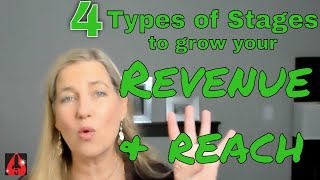
YouTube talk by Kimberly Crowe advising entrepreneurs on four types of "stages" to expand reach and revenue: (1) Speak to Sell — talks with a call-to-action to capture and nurture leads or sell from stage; (2) Paid Speaking Gigs — speaking engagements where the speaker is paid regardless of sales; (3) Authority Stages — prestige stages (e.g., TEDx) that build credibility but typically do not allow selling or payment; (4) Rehearsal Stages — practice environments (e.g., Toastmasters, speaker networking groups) for feedback and improvement. The video also contrasts live vs recorded and virtual vs in-person formats and offers practical tips about permissions, feedback types, and using stages strategically.
Chapters
Hey folks, I'm Kimberly Crow, the creator of Entrepreneurs Rocket Fuel and the co founder of Speakers Playhouse. Today we're going to talk about four types of stages you can get on in this new world. All right folks, so we are oftentimes being told that we need to get our message out there. If you haven't been in entrepreneurs, rocketfuel.com Facebook Our Facebook community is absolutely phenomenal and has a lot of opportunities for entrepreneurs to learn how to grow and scale their business. However, one of the big methodologies that we use to get seen and heard in a bigger way is getting on stages. Uh oh, what happened? We have Covid, right? And that wiped out a whole lot of opportunities to go someplace and speak on a live in person stage in front of a big audience. Yes, it did temporarily put a sort of wrench in. That works. Absolutely. There were a lot of stages that were planned with 100, 200, 300, 500, 1,000 people that were scheduled to attend events. All got canceled because of COVID But we're over a year past when that shutdown originally happened when we're recording this video. And I'm here to tell you that there are tons of stages that have emerged up and around Covid. Safe procedures. So one of the big ones, Zoom, right? And that can be in the format of a lot of different things. Networking groups, opportunities to do three day events, and many other opportunities that are on Zoom where you can get in front of a large audience and speak. But not only that, podcasts, radio shows, TV shows, web summits, webinars, all kinds of virtual stages for you to get on. Now we haven't gotten to the four types of stages that I'm going to talk about, but I wanted to share with you that there's a lot of different mediums that you can get on in order to be able to get the word out about who you are and what you do. So whether it's a podcast or, or a radio show, TV show, it is an opportunity to get in front of a large audience, one to many, where you're speaking and sharing your message with a large group. But there are also live and recorded opportunities, right? You could record something in advance or you could do a live event. Whether you're speaking live on Zoom, even though it's virtual, it is live. It's real time. It's not pre recorded with fancy intros and fancy outros and titles and all that stuff. Or sometimes it is live with some of that stuff. If you have high tech, totally cool. But it is not happening in the moment, meaning that there's no interactivity with the audience who's potentially watching it. You can do a hybrid where you do something live and then offer the recording after the fact. But we're talking about the difference between live and recorded when it's originally broadcast. So this is recorded. There is no audience while I'm recording it. Although there will be an audience after it goes live on YouTube. And if you haven't subscribed, we would love to have you subscribe to the YouTube channel as well. But that's still not the four types of stages. So we have live, we have recorded, we have virtual, meaning not in front of an audience who's physically there. And then we have in person stages. All right, so in person stages still exist during COVID although usually they're Covid compliant environments. Meaning that you don't have people physically sitting in front of you and those people that are physically near you if they are in the room with you. Hopefully you're social distancing, using Covid requirements compliance and being sure that you're staying safe out there. So hopefully you guys are doing that. But there are plenty of networking opportunities. I know that if you are selling hiking boots right now and you want to join a hiking group and you want to talk to the group about your hiking boots, that is definitely a potential opportunity for you to speak live and in person with a group like that. Right? So because there's plenty of meetups where people are going outside and hiking, same thing for anything that would be an outdoor sport. Right. So if you supply products or services to those folks, a meetup and in person meetings can be a really, really great way to get the message out about who you are and what you do. That's still not the four type of stages we're talking about. The four types of stages we're talking about are types of talks that you're going to be giving to during the performance on stage. So there are generally speaking, four types. The first type is very common. It's called speak to sell. And speak to sell is often when somebody gets on a stage and they share content and then at the end of their content they have an offer, right, Come buy my stuff. But it doesn't have to be an offer to come buy my stuff. It can be an offer to join our Facebook group. It could be an offer to email me or have a one on one session or, or call me or schedule something or download my free gift or a variety of different things. So it can be a call to action. That is not necessarily buy my stuff now, but hopefully it is buy my stuff in the future. Right. I'm going to nurture you, I'm going to share a lot of information with you and then eventually, if you want to do business with me, you will be in my funnel to be able to do business with. Okay, so speak to sell is the first type of stage that you want to seek as an entrepreneur because you want to be able to share who you are and what you do and get your message out there. But there's three other types of stages that we are as entrepreneurs often ignoring opportunities for. So speak to sell. The primary goal is to have a call to action, to have something for them to do so that you can nurture them into a sale. Alright. It may actually be selling from the stage. Absolutely nothing wrong with that. If your offer converts from the stage and you don't need to nurture them into something else and you have an offer, fantastic. And it can be nurturing them into a sale down the road. All right, Type number two. Type number two is actually paid speaking gigs. How would you like to get paid just to get on a stage? Well, perhaps you already have been paid to get on a stage. If you were ever a corporate trainer or if you taught a class and charged admission to come to the class, or if you had a meetup where you charged admission to come to the meetup. That is technically a paid speaking gig. Of course, a lot of paid speaking gigs are ones where if you are speaking on a particular subject and you're an expert in that subject, perhaps a corporation is going to hire you to speak on that subject. I have a business partner, Ginny Trask, who I work with, who speaks on to the travel industry about how to travel people safely during COVID She is an expert in that area. She's traveled over a thousand people safely during COVID and encouraged travel that is Covid compliant. Now, if you are in the travel industry really, really hurting, that would be a valuable talk for you to hear. So she gets paid to actually come present her methodology to make sure that the travel industry knows how to travel people safely. Alright, so paid speaking gigs are when you get a check or paid before you actually get on the stage and you're going to get paid whether you sell something at the end or not. Now, paid speaking gigs are the second type, but it doesn't mean that you can't also offer a call to action frequently you cannot. If a corporation is paying you to come speak about travel, you're not at the end going to throw up any information about like a PowerPoint slide about how great you are and how they should come by your stuff. Probably not going to happen if you were written a check for 2,000, 5,000, $10,000 to get on that stage and te necessarily want you to convert. However, if people come up to you afterwards and they're like, hey, I would really love to be able to buy your stuff, well, but then by all means you can get their information and follow up with them later. Now, if somebody is in Q and A, they raise their hand and they ask, hey, how can I get a hold of you? Because I would really like to buy your stuff. If you are on a paid speaking gig stage and you have not been already pre authorized to sell or give contact information, don't do it. Feels like a trap because the audience is asking for your contact information, but you should not be giving it out unless you've already gotten permission from the host to be able to do that. So a great answer for that is, that's a great question. I would love to connect with you after this event. Or our host can get us in touch with each other. So just reach out to our host who is sponsoring the stage and they can get you in touch with me directly. All right. That way you haven't given out contact information, you haven't sold from that stage. You've just offered them an opportunity to take the next step with you if you your host will connect you. All right. So type number two is paid speaking gigs. Isn't it awesome that you're going to get paid for getting on a stage in the first place? Totally cool. You actually make a lot more money with speak to sell in many cases if you have an offer to convert. But getting paid speaking gigs can be very powerful stage for you to get on. Type number three. Type number three, you're not going to get paid for. Typically it's called an authority stage. An authority stage is a stage where you get instant authority and credibility just by standing on the stage and giving your talk because you are seen as an expert in that particular area. An authority stage may not be a paid speaking gig and it may not be a speak to sell offer, but you are being asked to be on a particular stage of prestige to be able to speak with perhaps other speakers or an interview host who has authority and influence in that particular market. And by being invited on that stage, you instantly get authority. Now, that authority may lead to sales down the road. Hopefully it does, but it is not necessarily either Getting paid to get on that stage or a speak to sell stage. So type number three is an authority stage. A very common stage that is an authority stage is actually TEDx. You cannot speak to sell during TEDx. In fact, if you try to speak to sell, it will never go up on the website. Speak to sell is not an option for a TEDx stage, but TEDx stage can build your authority like mad. If you have a million views on your TEDx talk then, and it's not a speak to sell, then it can be very powerful. Authority builder saying, yes, I have a TedX, it has over a million views or even 500,000 or even a thousand, or even none. If you say I have a TedX talk and it's out there, that is an authority builder right there. You also do not get paid for getting on a TEDx stage, right? You don't get a check for doing TEDx. You are, it is building your authority and credibility in a particular area but you are not paid. It's not a paid speaking gig and it's not a speak to sell opportunity. It's type number three, the authority stage. So keep that in mind when you're looking for stages. Stage number four, very, very important stage. It's actually a rehearsal stage. A rehearsal stage is a nice, fun, warm, soft environment where you can practice a talk and get feedback from people who will be able to listen and give credible feedback to you and be able to share with you how you can improve your talk. These are amazing stages to get on. A very common stage for this is Toastmasters. If you don't already belong to a Toastmasters group, absolutely find a Toastmasters group. There are beginner Toastmasters groups that can get you just. There are advanced Toastmasters groups that can really help you up your game if you are going. If you join a struggling club, you may be able to speak a whole lot more often. If you're joining an advanced club that has a lot of members in it, you can get really, really great feedback from the variety of members that are in there. So I highly encourage Toastmasters. It's a phenomenal stage. Also, there are networking groups that are for speakers that allow for practice talks. We definitely encourage you to use those as your rehearsal stages. As a matter of fact, Speakers Playhouse is a rehearsal stage. You can come in, practice an opportunity to introduce yourself, share who you are and what you do in the world and then get on a stage and get some feedback on that from the audience members. Now perhaps you're not getting written feedback. Perhaps you're doing a podcast or something like that. There's actually three kinds of places you can get feedback from a rehearsal stage. Number one, the lowest level is like a chat box, right? Or a comments box. If you do a recording and you throw it up on Facebook and down in the bottom, people commented, that's feedback for you, right? So take that feedback. It's the lowest level of feedback, not because it's not valuable, but because it's the least interactive. Type number two, to be able to get feedback on a rehearsal stage is being able to get your interview host to be able to give you feedback. Somebody that you were in the conversation with or that is there who is listening specifically to give you feedback, right? They're listening to interact with you directly and they're going to be giving you feedback. And type number three is your audience, your greater, larger audience. Now, your greater, larger audience may actually be buying units. They may be opportunities, people who are potential customers for you. But your feedback from them may not necessarily be direct feedback on your talk. But you're looking for them to give you body language feedback. You're looking for them to nod, to lean in, to laugh, to smile, to feel engaged. If you're talking about something that should incense them, are they being incensed? Do they look hopeful? If you're saying something that's supposed to give them, feed them hope, are they missing it completely? Are they checking their watch? Those kinds of body language cues can be your feedback. And then finally, having an opportunity to get on a rehearsal stage can give you practice. Every stage is actually rehearsal stage. I've been on over 5,000 stages. My best talk is my next one, right? This one wasn't perfect either. It is a sort of a rehearsal stage for me because I practice and then I get feedback from the comments. People can give me feedback that I email this directly to and give me feedback on my performance and what I did right and what I did wrong, what I can improve for next time. And that will enable me to give an even better talk the next time. All right, folks, I'm Kimberly Crow with entrepreneurs Rocket Fuel, Facebook Group and Community and Speakers Playhouse. If you're looking for a place to be able to find new stages, to network with other speakers, to get speaking gigs or to find guests for your stage, we would encourage you to join us for Speakers Playhouse. Check it out@speakersplayhouse.com and if you're an entrepreneur and you're looking for a community to belong to that can give you support and guidance and counsel, that can give you opportunities to network and find other like minded entrepreneurs. Check out Entrepreneurs Rocket Fuel on Facebook or entrepreneursrocketfuel.com Facebook. I'm Kimberly Crowe and I look forward to playing with you. Cheers.